


Search results
Search for "AgNPs" in Full Text gives 59 result(s) in Beilstein Journal of Nanotechnology.
Nanoparticle delivery systems for HIV pre-exposure prophylaxis (PrEP): advances and challenges
Beilstein J. Nanotechnol. 2026, 17, 839–853, doi:10.3762/bjnano.17.60
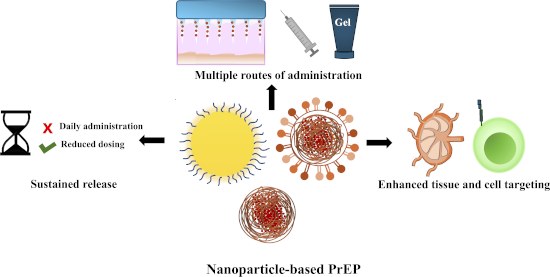
- nanoparticles (AgNPs) may also show antiviral effects such as inhibiting viral entry and replication [68][70]. The intrinsically high surface-to-volume ratios of these nanoparticles and the capacity for surface functionalization provide the prerequisites for engineering multivalent interactions with targeted


Restorative potential of laser-synthesized silver nanoparticles with Salvia officinalis for periodontal disease treatment: an in vitro study
Beilstein J. Nanotechnol. 2026, 17, 781–795, doi:10.3762/bjnano.17.55
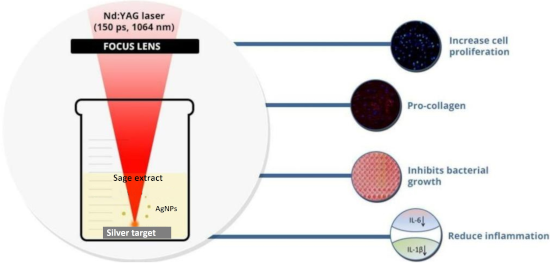
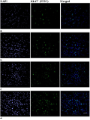
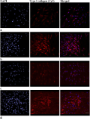
- local damage, systemic associations highlight the urgent need for innovative therapies. Herein, we present an eco-friendly synthesis of silver nanoparticles (AgNPs) by picosecond pulsed laser ablation in liquid (PLAL), using Salvia officinalis aqueous extract (sage extract) as both medium and stabilizer
- . AgNPs were synthesized at two laser pulse energies (2 and 6 mJ), in sage extract and deionized water, and characterized by dynamic light scattering, transmission electron microscopy, and inductively coupled plasma optical emission spectroscopy. Synthesis at 6 mJ in sage extract (SageAgNPs6mJ) yielded
- inflammation. This dual antibacterial and regenerative action demonstrates the high potential of sage-assisted PLAL-synthesized AgNPs as a safe, sustainable strategy for periodontal disease treatment. Keywords: cell proliferation; periodontal disease; pulsed laser ablation in liquid (PLAL); Salvia officinalis



Environmental applications of silver nanoparticles: state-of-the-art review and emerging trends
Beilstein J. Nanotechnol. 2026, 17, 697–736, doi:10.3762/bjnano.17.49
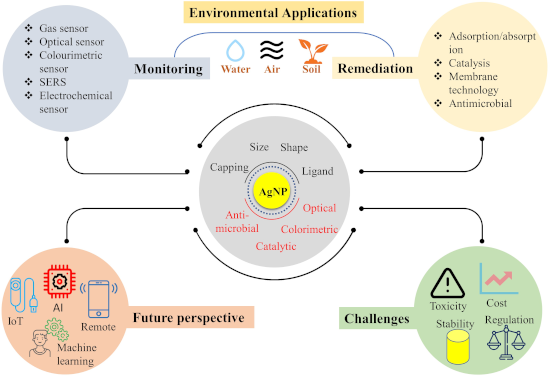
- Soni Prajapati Akash Kumar Ranjana Singh Department of Biochemistry, King George’s Medical University, Lucknow, India Academy of Scientific and Innovative Research, Ghaziabad, India 10.3762/bjnano.17.49 Abstract Silver nanoparticles (AgNPs) possess inherent catalytic, antimicrobial, and optical
- ultrafiltration membrane technologies used for management of water pollutants. In addition, AgNPs-assisted nanosystems in fibrous filter membranes and photocatalytic composite coatings for the removal of volatile organic compounds, particulate matter, and gaseous pollutants are reviewed. Furthermore, AgNP
- the responsible, scalable application of AgNP-based technologies to address contemporary environmental challenges. Keywords: AgNPs; air application; environmental pollutants; soil applications; synthesis; water application; Review 1 Introduction Environmental pollution has intensified globally due


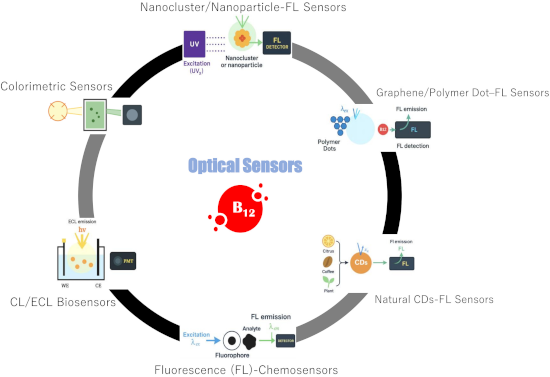
Optical bio/chemical sensors for vitamin B12 analysis in food and pharmaceuticals: state of the art, challenges, and future outlooks
Beilstein J. Nanotechnol. 2025, 16, 2207–2244, doi:10.3762/bjnano.16.153


Rapid synthesis of highly monodisperse AgSbS2 nanocrystals: unveiling multifaceted activities in cancer therapy, antibacterial strategies, and antioxidant defense
Beilstein J. Nanotechnol. 2025, 16, 2105–2115, doi:10.3762/bjnano.16.145
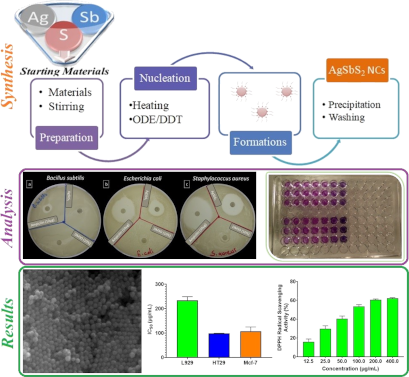
- , cardiovascular diseases, and diabetes [11][12]. Historically known especially for its antimicrobial properties, silver has been used since ancient times. Silver nanoparticles (AgNPs) are synthesized by different synthesis mechanisms; they are non-toxic to eukaryotic cells, including human cells, but highly toxic
- potential pathways behind the observed cytotoxicity. Several studies have reported that AgNPs cause intracellular accumulation, which triggers the overproduction of ROS. This oxidative stress can result in mitochondrial dysfunction, lipid peroxidation, DNA fragmentation, and the activation of apoptotic
- with AgNPs, supporting oxidative stress as a key factor in nanoparticle-induced cell death [48]. Therefore, it is plausible that the cytotoxic effects of AgSbS2 NCs observed in this study are at least partially mediated through ROS-dependent apoptotic mechanisms. Future investigations focusing on


On the road to sustainability – application of metallic nanoparticles obtained by green synthesis in dentistry: a scoping review
Beilstein J. Nanotechnol. 2025, 16, 1851–1862, doi:10.3762/bjnano.16.128
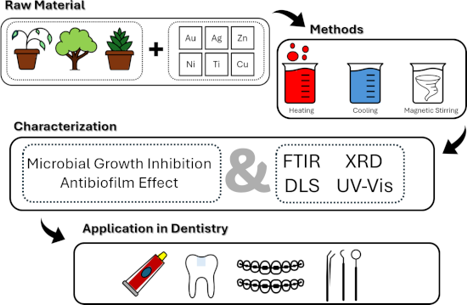
- widely studied nanomaterials are metallic nanoparticles, particularly silver (AgNPs), gold (AuNPs), and copper (CuNPs), and various metal oxide nanoparticles such as zinc oxide (ZnO-NPs), due to their high surface-to-volume ratio, chemical stability, and distinctive optical and antimicrobial properties
- recently become the focus of significant attention [18][19]. The eco-friendly applications of AgNPs in the biomedical, pharmaceutical, cosmetic, sanitation, and electronic sectors have driven extensive research into their biosynthesis [20][21][22]. Silver nanoparticles exhibit unique physical and chemical
- properties that enhance their versatility across multiple applications [23][24][25]. Biosynthesized AgNPs have been assessed regarding their antimicrobial, antioxidant, and anticancer effects, as well as for their therapeutic potential in treating dermatitis and other conditions [26]. Studies have


Laser processing in liquids: insights into nanocolloid generation and thin film integration for energy, photonic, and sensing applications
Beilstein J. Nanotechnol. 2025, 16, 1428–1498, doi:10.3762/bjnano.16.104
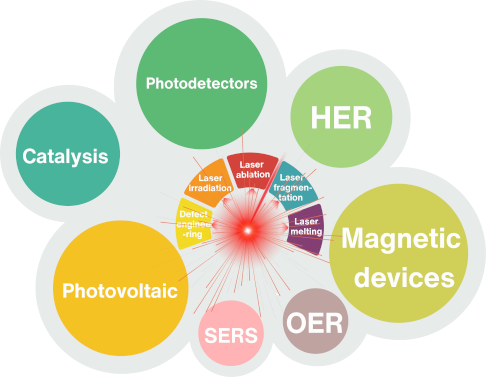






Photochemical synthesis of silver nanoprisms via green LED irradiation and evaluation of SERS activity
Beilstein J. Nanotechnol. 2025, 16, 1417–1427, doi:10.3762/bjnano.16.103
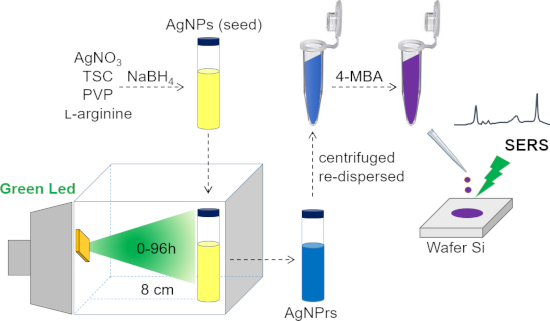
- AgNPrs. Optimal conversion was observed after 72 h of irradiation, producing well-defined AgNPrs with an average size of 78 nm. The SERS activity of the AgNPrs was evaluated using 4-mercaptobenzoic acid as a probe molecule. Compared to spherical AgNPs, AgNPrs exhibited a significantly higher SERS
- yield. The SERS performance of the synthesized AgNPrs, evaluated using 4-MBA as a probe molecule, demonstrated significantly enhanced Raman signals compared to the initial AgNPs seeds, highlighting their potential applicability in SERS-based sensors. Results and Discussion Synthesis of seeds The UV–vis
- spectra of the AgNPs seed shown in the Figure 1a displayed a single peak at 400 nm, indicating the presence of spherical silver nanoparticles with small sizes, consistent with studies in the literature [4][6][7]. The sample exhibited the characteristic yellow color of AgNPs. The TEM image and size


Synthesis and antibacterial properties of nanosilver-modified cellulose triacetate membranes for seawater desalination
Beilstein J. Nanotechnol. 2025, 16, 1380–1391, doi:10.3762/bjnano.16.100
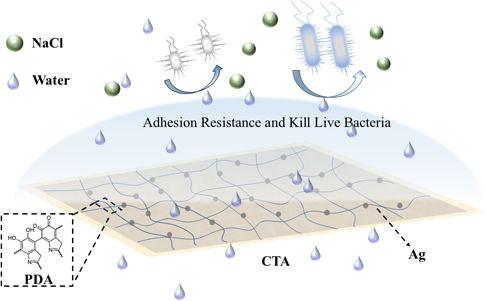
- lifespan of the membranes. The widely used antimicrobial nanoparticles can be categorized based on their composition and properties as follows: metallic nanoparticles, carbon-based nanomaterials, oxide nanoparticles, and composite nanomaterials. Zheng’s group used an in situ synthesis method to embed AgNPs
- into polyacrylonitrile (PAN) nanofibers, the fabricated Ag/PAN-TFN FO membrane demonstrated excellent antibacterial activity against Escherichia coli and Staphylococcus aureus with improved water flux and salt rejection. The in situ synthesis method ensures a uniform distribution of AgNPs within the
- layer. EDS is again used to analyze the elemental composition of the coating. It can be seen that the coating has been compromised and Na+ has penetrated the coating. Furthermore, the AgNPs partially aggregate or migrate within the PDA layer due to changes in the local chemical environment (Supporting


Chitosan nanocomposite containing rotenoids: an alternative bioinsecticidal approach for the management of Aedes aegypti
Beilstein J. Nanotechnol. 2025, 16, 1197–1208, doi:10.3762/bjnano.16.88
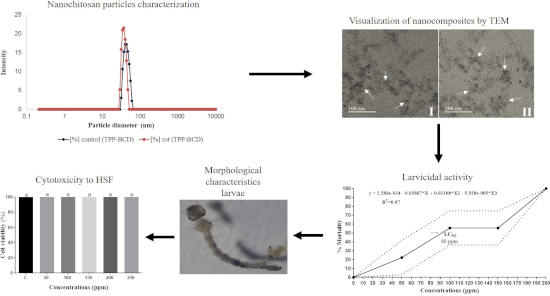
- studies have reported similar improvements in larvicidal activity through nanocarrier systems based on botanical insecticides. For instance, silver nanoparticles (AgNPs) synthesized using aqueous leaf extract of Ambrasia arborescens demonstrated markedly higher toxicity against Aedes aegypti larvae (LC50



Synthesis of biowaste-derived carbon-dot-mediated silver nanoparticles and the evaluation of electrochemical properties for supercapacitor electrodes
Beilstein J. Nanotechnol. 2025, 16, 933–943, doi:10.3762/bjnano.16.71
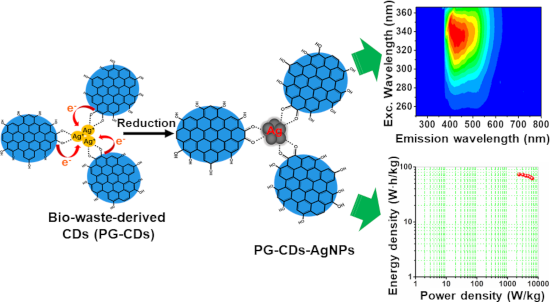
- of Korea 10.3762/bjnano.16.71 Abstract Herein, biowaste- (from Pongammia pinnata leaves) derived carbon dots (CDs) have been utilized as a mediator for the production of silver nanoparticles (PG-CDs-AgNPs) as a superior supercapacitor electrode. The methodology presented here is inexpensive and
- environmentally friendly as CDs play a role as capping, reducing, and stabilizing agent without addition of any chemicals. PG-CDs-AgNPs showed a particle size of 10 nm having excellent fluorescence emission in the blue region, and it has been explored as an electrode material for supercapacitor applications. The
- as-synthesized PG-CDs-AgNPs electrode exhibited the maximum specific capacitance of 540 F/g in a three-electrode study. The asymmetric supercapacitor (ASC) device with PG-CDs-AgNPs as the positive electrode reached the maximum specific capacitance of 200 F/g having a superior energy density of 71 W·h


Graphene oxide–chloroquine conjugate induces DNA damage in A549 lung cancer cells through autophagy modulation
Beilstein J. Nanotechnol. 2025, 16, 316–332, doi:10.3762/bjnano.16.24
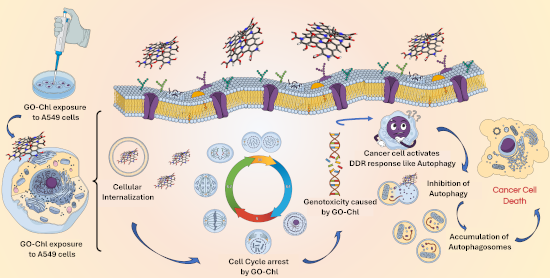
- exposure to starch-capped silver nanoparticles (AgNPs) [11]. Gemcitabine-encapsulated poly(lactic-co-glycolic acid) (PLGA) nanoparticles have been shown to enhance cell death in chemoresistant PANC1 cells, human pancreatic epithelial carcinoma cells [12]. Also, TiO2 nanoparticles can sensitize A549 cells



Nanocarriers and macrophage interaction: from a potential hurdle to an alternative therapeutic strategy
Beilstein J. Nanotechnol. 2025, 16, 97–118, doi:10.3762/bjnano.16.10
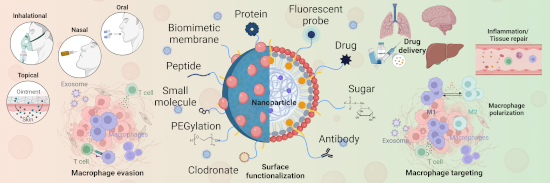
- ]. In RA, the predominance of M1 macrophages in inflamed joints drives synovitis and cartilage destruction. Yang and colleagues developed folic acid-modified silver nanoparticles (FA-AgNPs) to target M1 macrophages via folate receptor-mediated endocytosis. Once internalized, these NPs scavenged ROS
- , induced M1 apoptosis, and facilitated M1 to M2 polarization. In murine models of collagen-induced arthritis, FA-AgNPs significantly reduced joint swelling, improved cartilage integrity, and outperformed standard treatments like methotrexate [67]. Stabilizing macrophage polarization for long-lasting


Instance maps as an organising concept for complex experimental workflows as demonstrated for (nano)material safety research
Beilstein J. Nanotechnol. 2025, 16, 57–77, doi:10.3762/bjnano.16.7

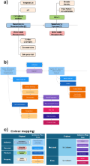
- based on differences in the particles’ sulfidation levels [35]. We note that the same reasons underpinned its selection for the discussion of instance maps in [28]. The instance map in Figure 3 delineates all steps of the synthesis of sulfidised silver nanoparticles (AgNPs). AgNPs are synthesised with a
- polyvinylpyrrolidone (PVP) surface by reduction of silver nitrate in ethylene glycol with 10k PVP. The PVP-AgNPs are characterised regarding some of their physical attributes such as the particles’ shape, size, and crystalline phase. The particles are then sulfidised using different specified concentrations of the PVP
- -AgNPs resulting in increasing levels of sulfidation measured by the S/Ag ratio. Thus, four different NPs need to be distinguished and tracked in the subsequent toxicity experiments, leading to a need for unique identifiers for the nanomaterials. Instance mapping is, thus, being extended to support and


Facile synthesis of size-tunable L-carnosine-capped silver nanoparticles and their role in metal ion sensing and catalytic degradation of p-nitrophenol
Beilstein J. Nanotechnol. 2024, 15, 1576–1592, doi:10.3762/bjnano.15.124
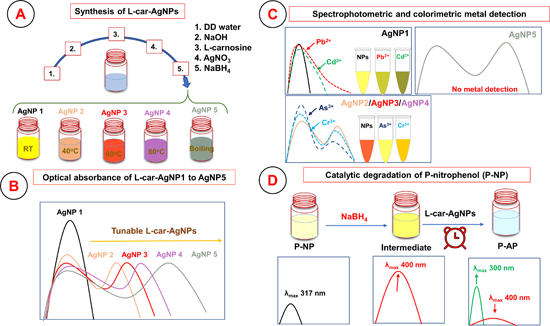
- ʟ-carnosine in synthesizing tunable plasmonic silver nanoparticles (ʟ-car-AgNPs). The formation of ʟ-car-AgNPs was confirmed via UV–vis optical absorption spectroscopy, showing single and double plasmonic peaks, depending on the synthesis conditions. Physicochemical characterization using TEM, FTIR
- , and Raman spectroscopy, as well as EDX and XRD revealed controlled aggregation, successful capping, and crystalline growth of the ʟ-car-AgNPs. The ʟ-car-AgNPs exhibited promising sensing capabilities with limits of detection of 141.79 ppb (1.2 μM) for Cd2+, 131.33 ppb (0.63 μM) for Pb2+, 215.35 ppb
- -car-AgNPs for both heavy metal ion detection and catalytic degradation of P-NP, indicating their suitability for environmental monitoring and remediation applications. Further optimization and research are needed to expand their environmental applications and to understand their interaction mechanisms




Green synthesis of silver nanoparticles derived from algae and their larvicidal properties to control Aedes aegypti
Beilstein J. Nanotechnol. 2024, 15, 1566–1575, doi:10.3762/bjnano.15.123
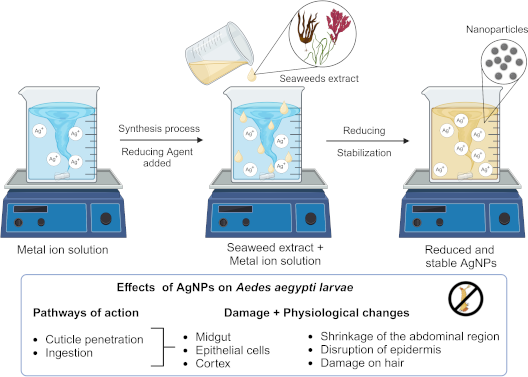
- for ways to control these insects, avoiding the use of conventional chemical insecticides that are proven to be toxic to nature. In the last years, there has been growing evidence for the potential of silver nanoparticles (AgNPs) to be ecologically benign alternatives to the commercially available
- chemical insecticides against vector-borne diseases. Natural seaweed extracts contain metabolites such as polyphenols, terpenoids, and alkaloids. These compounds act as reducing agents and stabilizers to synthesize biogenic AgNPs. The green synthesis of AgNPs has advantages over other methods, such as low
- cost and sustainable biosynthesis. In the perspective of using AgNPs in the development of novel insecticides for vector control, this review deals with the eco-friendly synthesis of AgNPs through seaweed extracts as reducing and stabilizing agents. In addition, assessment of toxicity of these


Nanoarchitectonics with cetrimonium bromide on metal nanoparticles for linker-free detection of toxic metal ions and catalytic degradation of 4-nitrophenol
Beilstein J. Nanotechnol. 2024, 15, 1312–1332, doi:10.3762/bjnano.15.106
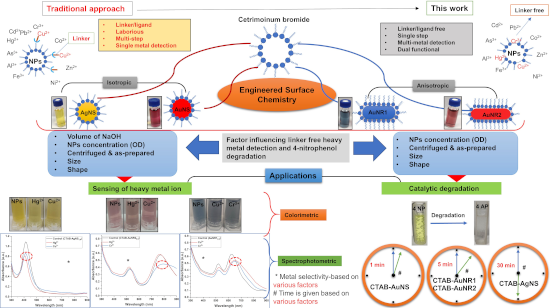
- interaction with ligands [23]. Previously, post-synthesis surface-modified CTAB-capped gold and silver nanoparticles were used to detect various compounds, including heavy metals [9][24]. Moudgil et al. showed that that poly-ʟ-lysine-coated CTAB-AgNPs are selective and sensitive for detecting Hg2+ [9]. GSH
- -modified isotropic and anisotropic CTAB-AgNPs were used to detect cobalt ions. The author found that only rod-shaped particles enabled visual detection of cobalt [25]. Yagyu et al. showed the efficient removal of radioactive cesium using Prussian blue [26]. Also, 4-nitrophenol was degraded using CTAB




Unveiling the potential of alginate-based nanomaterials in sensing technology and smart delivery applications
Beilstein J. Nanotechnol. 2024, 15, 1077–1104, doi:10.3762/bjnano.15.88
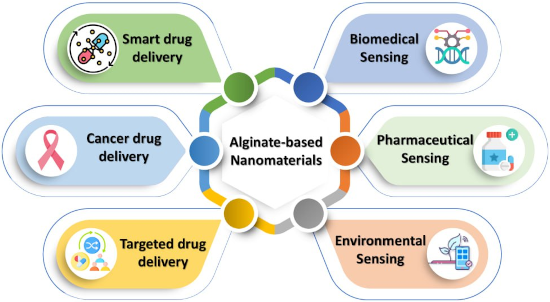
- alginate present, PABA covalently attached to the hydroxy groups of alginates to form a PABA-SA semi-interpenetrating network on which AgNPs were concurrently deposited (Figure 5). As a result, very stable polymer-based AgNPs were formed. The Ag@PABA-SA nanogel was tested as a colorimetric probe for


Curcumin-loaded nanostructured systems for treatment of leishmaniasis: a review
Beilstein J. Nanotechnol. 2024, 15, 37–50, doi:10.3762/bjnano.15.4
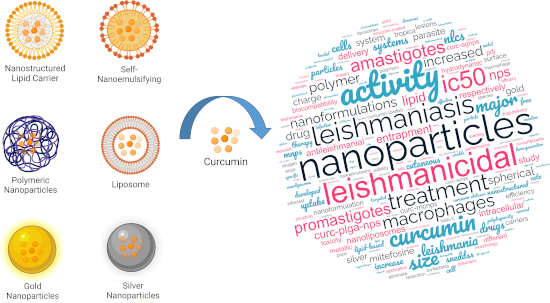
- synthesized curc-coated silver nanoparticles (curc-AgNPs) for the treatment of cutaneous leishmaniasis [124]. Curc-AgNPs presented a spherical shape, 32 nm of diameter, and a zeta potential of −19.8 mV. This nanoformulation prevented the in vitro growth of L. major promastigotes and inhibited their viability
- carried out for 50 days with different concentrations of curc-AgNPs (20–60 μg/kg). The results indicated a decrease in lesions when compared to the negative control. Furthermore, a significant decline in L. major load was observed in 4 weeks. A different study evaluated the leishmanicidal performance of
- , the found activity may be mostly attributed to curc-coated NPs. The same behavior was observed in Miltefosine-AgNPs developed by Kalangi and collaborators. Silver nanoparticles alone (50 μM) did not demonstrate an antileishmanial effect on the promastigote stage of the Leishmania parasite. However


Antibody-conjugated nanoparticles for target-specific drug delivery of chemotherapeutics
Beilstein J. Nanotechnol. 2023, 14, 912–926, doi:10.3762/bjnano.14.75
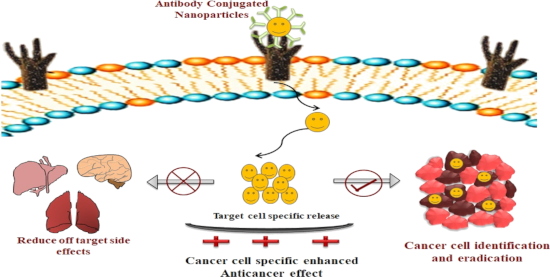
- targeting ability after in vitro protein corona formation, while the activity was preserved after in vivo protein corona formation [82]. Protein corona formation on antibody-conjugated NPs can have both negative and beneficial effects. Nayak et al. adsorbed bovine lactoferrin (BLf) onto AgNPs and studied
- the effect of this protein corona. They observed a higher internalization of BLf-AgNPs than of bare AgNPs, which indicates that the protein corona improved the intracellular efficiency of the NPs. Moreover, the BLf corona also increased the bioavailability of the NPs in THP1 cells and resulted in



Silver nanoparticles loaded on lactose/alginate: in situ synthesis, catalytic degradation, and pH-dependent antibacterial activity
Beilstein J. Nanotechnol. 2023, 14, 781–792, doi:10.3762/bjnano.14.64
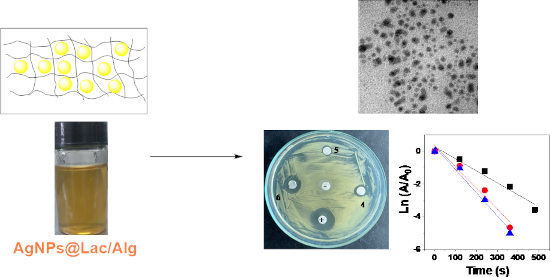
- Biotechnology and Food Technology, Industrial University of Ho Chi Minh City, Ho Chi Minh City, Vietnam Faculty of Chemical Engineering, Industrial University of Ho Chi Minh City, Ho Chi Minh City, Vietnam 10.3762/bjnano.14.64 Abstract We present the in situ synthesis of silver nanoparticles (AgNPs) through
- ionotropic gelation utilizing the biodegradable saccharides lactose (Lac) and alginate (Alg). The lactose reduced silver ions to form AgNPs. The crystallite structure of the nanocomposite AgNPs@Lac/Alg, with a mean size of 4–6 nm, was confirmed by analytical techniques. The nanocomposite exhibited high
- Silver nanoparticles (AgNPs) have raised significant interest for their wide range of applications in biomedicine [1][2], treatment of wastewater [3][4], and catalysis [5][6]. The utilization of eco-friendly sources, such as plant extracts [7][8], fungi [9][10], and bacteria [11], for synthesizing AgNPs


Plasmonic nanotechnology for photothermal applications – an evaluation
Beilstein J. Nanotechnol. 2023, 14, 380–419, doi:10.3762/bjnano.14.33
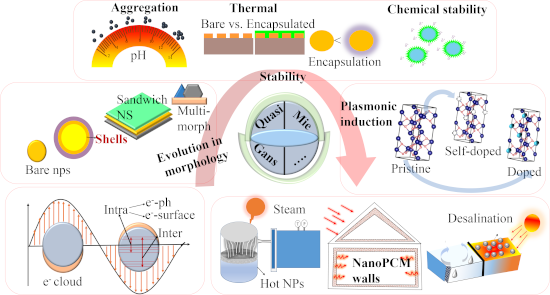
- initial thermalization step) up to 1000 °C, the increase in nanoparticle temperature was found to be only 20 °C [84]. This implies by no means a weak efficiency of heat production due to plasmon relaxation, as high temperatures (230 °C for AgNPs for example) are possible, depending on the various factors




Antimicrobial and mechanical properties of functionalized textile by nanoarchitectured photoinduced Ag@polymer coating
Beilstein J. Nanotechnol. 2023, 14, 95–109, doi:10.3762/bjnano.14.11
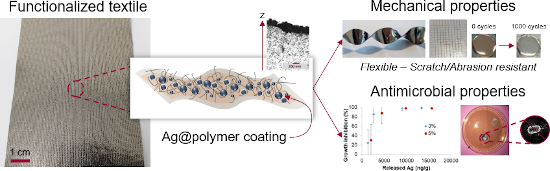
- , and textiles need to be cleaned on a daily basis. Silver nanoparticles (AgNPs) possess well-documented antimicrobial properties and by combining them with a physical matrix, they can be applied to various surfaces to limit microbial contamination. With this in mind, a rapid and easy way to implement a
- replication [21]. Silver nanoparticles (AgNPs) have the added benefit of being ionic silver vessels, combining the latter’s antimicrobial properties with their own characteristics [16]. Pal et al. [22] demonstrated that triangular AgNPs seem to exhibit increased biocide activity compared to their spherical
- counterparts, while Martínez-Castañón et al. [23] stated that smaller AgNPs are more effective in penetrating the cell wall. AgNPs were also found to be efficient antifungal agents [24], in particular against the infectious Candida albicans yeast species [25]. The potential applications of AgNPs as



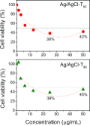
In search of cytotoxic selectivity on cancer cells with biogenically synthesized Ag/AgCl nanoparticles
Beilstein J. Nanotechnol. 2022, 13, 1505–1519, doi:10.3762/bjnano.13.124
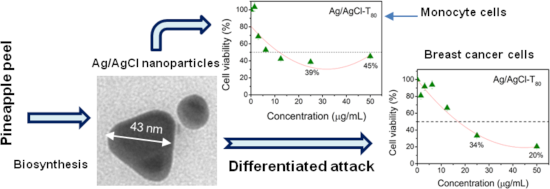
- where plant extracts are used to synthesize nanoparticles. The nanoparticles can be produced in a simple, inexpensive, and scalable way, with low reaction time and in aqueous media. Since no toxic by-products are generated, these methods are eco-friendly [1]. Silver nanoparticles (AgNPs) are commonly
- synthesized by green methods and, in some cases, are combined with other metals [2]. AgNPs have potential uses in biomedicine. Several authors have reported the ability of AgNPs to act as antibacterial [3][4] or as cytotoxic agents in certain cancer cell lines [5][6]. This type of application has attracted a
- the Ag+ ion of the AgNO3 salt to Ag0. In this way, silver nuclei are generated and join to form nanoparticles, which are stabilized (via capping) by the same metabolites that are involved in the oxidation–reduction process [9]. Various plant parts have been used to generate AgNPs. Amongst these parts





Biomimetic chitosan with biocomposite nanomaterials for bone tissue repair and regeneration
Beilstein J. Nanotechnol. 2022, 13, 1051–1067, doi:10.3762/bjnano.13.92
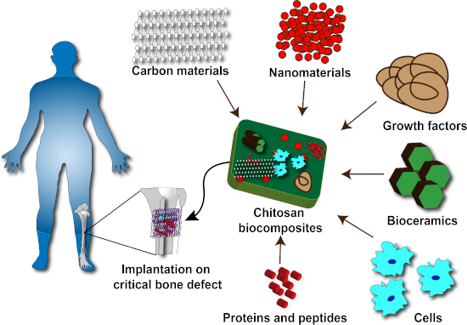
- formation on rat calvaria defects indicate a strong healing effect and new bone formation on chitosan/absorbable collagen sponges [51]. Chitosan with metal nanomaterials for bone tissue engineering Chitosan–silver nanocomposites Silver nanoparticles (AgNPs) have gained much attention in bone-related implant
- research due to its intrinsic antimicrobial properties. Xie et al. (2019) developed AgNPs composites containing polydopamine–hydroxyapatite–chitosan by adding AgNPs to hybrid materials, which significantly reduced microbial infection in the implanted place [109]. Polydopamine and chitosan play an important
- role in the controlled release of AgNPs at the implanted site and also behave as biocompatible scaffolds. Wang et al. (2019) developed a system containing hydroxyapatite and silver-based composites and electrodeposited those onto titanium implants and chitosan to regulate silver ion and calcium ion



