Search results
Search for "HIV" in Full Text gives 18 result(s) in Beilstein Journal of Nanotechnology.
Nanoparticle delivery systems for HIV pre-exposure prophylaxis (PrEP): advances and challenges
Beilstein J. Nanotechnol. 2026, 17, 839–853, doi:10.3762/bjnano.17.60
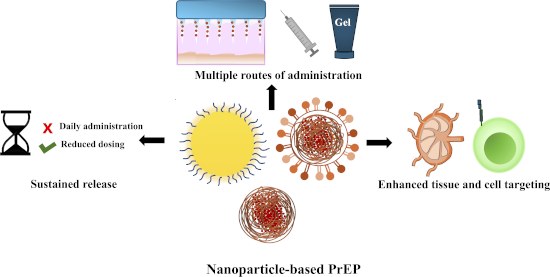
- Sonia Zahara Bjorn M. Reinhard Dept. of Chemistry and The Photonics Center, Boston University, Boston, MA 02215, United States 10.3762/bjnano.17.60 Abstract HIV pre-exposure prophylaxis (PrEP) encompasses antiviral drugs or formulations that aim to prevent the establishment of a permanent
- approaches in the context of LA-PrEP are discussed. Keywords: HIV; nanoparticle; PrEP; targeted delivery; Review Introduction The facts that an estimated 40.8 million people are currently living with HIV and new infections occur at a rate of approx. 1.3 million per year underline that HIV/AIDS is still a
- major global health crisis [1]. The Joint United Nations Program on HIV/AIDS (UNAIDS) reported that 31.6 million patients used antiretroviral (ARV) therapy (ART) in 2024 [1]. Despite significant progress in the management of HIV, more efforts are necessary to further limit the spread of HIV through


Synthetic-polymer-assisted antisense oligonucleotide delivery: targeted approaches for precision disease treatment
Beilstein J. Nanotechnol. 2025, 16, 435–463, doi:10.3762/bjnano.16.34

- apoptosis rates in human cancer cell lines [134]. Klajnert and coworkers further explored the ability of Mal and Mal-III-modified PPI G4 dendrimers to protect anti-HIV ASOs from nucleolytic degradation under physiological conditions (Figure 9) [135]. Similarly, Maly et al. investigated the self-assembly
- process of PPI-Mal G4 and PPI-Mal-III G4 dendrimers conjugated with multiple anti-HIV ASOs. Dendriplexes with diverse sizes and morphologies, including 1D rod-like and 3D diamond-shaped structures, were successfully prepared by altering the physicochemical properties of the carriers and the


Nanomedicines against Chagas disease: a critical review
Beilstein J. Nanotechnol. 2024, 15, 333–349, doi:10.3762/bjnano.15.30
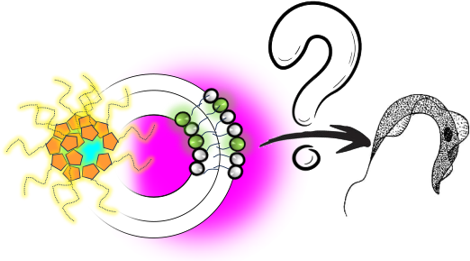
- lipid-based nanoparticles for delivery of mRNA are currently being investigated to protect against other viral diseases such as Zika, influenza, human immunodeficiency virus (HIV), respiratory syncytial virus cytomegalovirus, and bacterial diseases such as tuberculosis [102]. Another example of

Antibacterial activity of a berberine nanoformulation
Beilstein J. Nanotechnol. 2022, 13, 641–652, doi:10.3762/bjnano.13.56
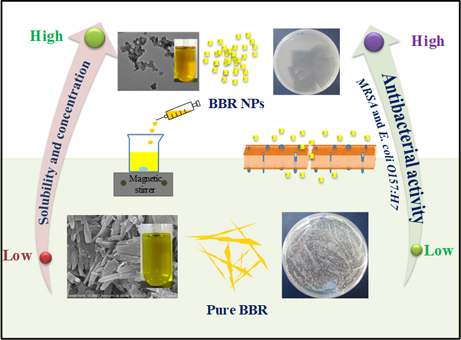
- activity against different viruses, including human cytomegalovirus [17], enterovirus 71 [18], H1N1 influenza virus [19], and human immunodeficiency virus (HIV) [6]. BBR has been shown to inhibit viral replication by specific targets and increase the host immune response for viral clearance [20]. Recent



An overview of microneedle applications, materials, and fabrication methods
Beilstein J. Nanotechnol. 2021, 12, 1034–1046, doi:10.3762/bjnano.12.77
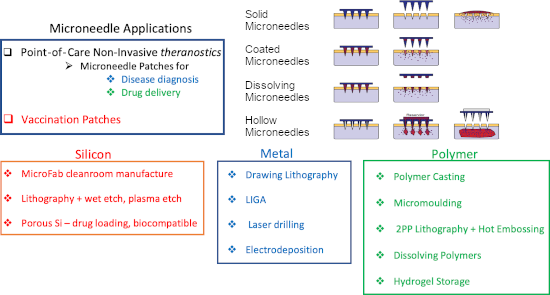
- self-applied, to improve the pharmacokinetic profile of therapeutic component delivery, remove the risk of needle stick injury, and reduce “sharps” and other biohazardous waste. For example, disposable microneedle patches could reduce the transmission of HIV by promoting the growth of self


Comprehensive review on ultrasound-responsive theranostic nanomaterials: mechanisms, structures and medical applications
Beilstein J. Nanotechnol. 2021, 12, 808–862, doi:10.3762/bjnano.12.64


A review on nanostructured silver as a basic ingredient in medicine: physicochemical parameters and characterization
Beilstein J. Nanotechnol. 2021, 12, 440–461, doi:10.3762/bjnano.12.36
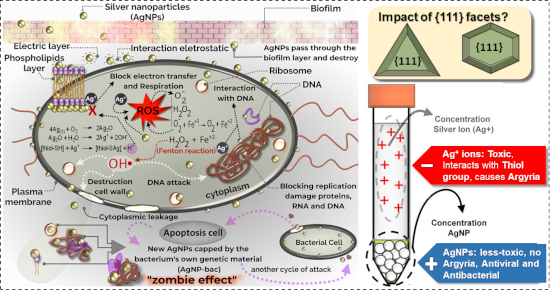
- viral pathogens, such as the human immunodeficiency virus (HIV), due their high genetic variability which changes rapidly. Viruses have the fascinating ability to adapt to their host, move to a new host, and escape antiviral measures, and similarly, bacteria can also become resistant to antibiotics [19
- macrophages to produce activated ISGs and pro-inflammatory cytokines, such as interleukins (IL-6, IL-8) [76][115][116][117]. Several studies have shown that AgNPs can act against various types of viruses, viz. human immunodeficiency virus type 1 (HIV-1) [111][118], monkeypox virus (MPV) [112], herpes simplex


Imaging of SARS-CoV-2 infected Vero E6 cells by helium ion microscopy
Beilstein J. Nanotechnol. 2021, 12, 172–179, doi:10.3762/bjnano.12.13
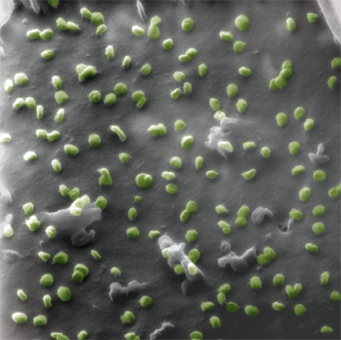
- ), these junctions can also be observed (arrowheads). We assume that this resembles the tubulating cell membrane, which is stabilized by BST-2 to prevent viral scission. This alternative BST-2 interaction was already described for HIV-infected cells via immuno-TEM [42] but has not yet been observed for


Applications of superparamagnetic iron oxide nanoparticles in drug and therapeutic delivery, and biotechnological advancements
Beilstein J. Nanotechnol. 2020, 11, 1092–1109, doi:10.3762/bjnano.11.94
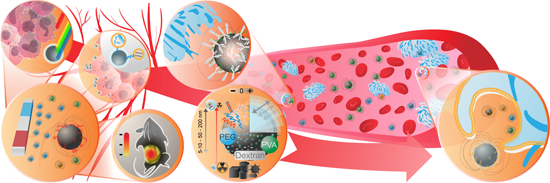
- endosomal escape [113][114]. For the specific treatment of cisplatin-resistant nasopharyngeal carcinoma, Weng et al. [115] produced SPIONs covered with cisplatin and with TAT peptide (a HIV-derived cell penetrating peptide). Their nanoparticles had an increased endocytosis rate, which, combined with the


Key for crossing the BBB with nanoparticles: the rational design
Beilstein J. Nanotechnol. 2020, 11, 866–883, doi:10.3762/bjnano.11.72
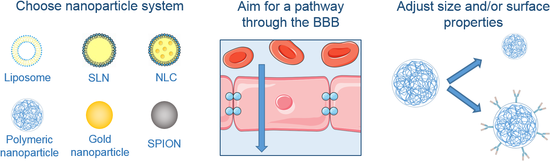
- transcytosis through the AMT pathway. Multiple CPPs have been used to deliver nanoparticles to the brain such as the HIV-1 trans-activating transcriptor (TAT) [77][106][107], penetratin [108] or SynB [109]. Finally, conjugating nanoparticles with positively charged polymers or proteins such as chitosan or


Luminescent gold nanoclusters for bioimaging applications
Beilstein J. Nanotechnol. 2020, 11, 533–546, doi:10.3762/bjnano.11.42
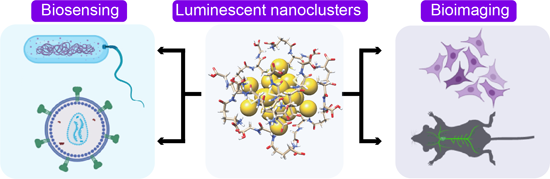
- a fluorescent gold nanocluster immunoassay (AuNCIA) for early and sensitive detection of human immune deficiency virus (HIV) infection in vitro and HIV-infected patient samples [85]. For this study, glutathione-capped AuNCs were coupled with streptavidin (Au-SA) using EDS/NHS coupling. The strong
- noncovalent interaction between streptavidin and biotin was exploited. To achieve the immunoassay, an antibody–antigen–antibody sandwich approach was utilized (Figure 3). The substrates were first coated with capture antibodies that will interact strongly with HIV-1 p24 antigen, a target viral protein
- expressed in abundance in the early stages of HIV infection. Then, a biotinylated detection antibody was added, which resulted in a sandwich complex leaving the biotin accessible for streptavidin binding. Finally, the interaction between the biotin in the detector antibody and the streptavidin in Au-SA NCs


Internalization mechanisms of cell-penetrating peptides
Beilstein J. Nanotechnol. 2020, 11, 101–123, doi:10.3762/bjnano.11.10
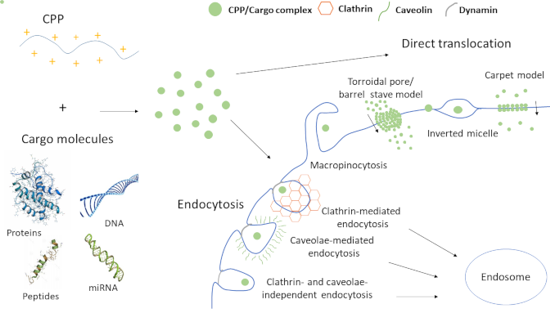
- membranes of different cell types, while showing low cytotoxicity and no immunological response [6]. This class of peptides was first introduced in the late 1980s, with the discovery of the TAT peptide, encoded by the human immunodeficiency virus type 1 (HIV-1) by Frankel et al. [9], who showed that the TAT
- secondary amphipathic CPPs are the proline-rich peptides [7]. Nonamphipathic peptides are rather short peptides, such as HIV-TAT, which have a high content of positively charged amino acids such as arginine or lysine. Studies suggest that at least eight positive charges are necessary for efficient uptake to
- their stability and cellular uptake. MPG bears three domains: (i) a hydrophobic domain derived from the fusion domain of HIV-1 gp41, (ii) a lysine-rich nuclear localization sequence (NLS) derived from SV-40 large T antigen with five positive charges and (iii) a spacer sequence. Studies performed at low


Mannosylated brush copolymers based on poly(ethylene glycol) and poly(ε-caprolactone) as multivalent lectin-binding nanomaterials
Beilstein J. Nanotechnol. 2019, 10, 2192–2206, doi:10.3762/bjnano.10.212
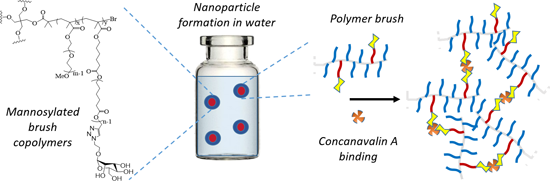
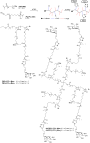
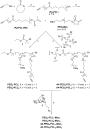
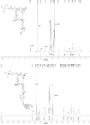
- interactions drive pathological events, such as cellular infections by viruses (e.g., HIV and Ebola [1][2]) and toxins (e.g., Shiga and Cholera toxins [3]). Carbohydrate–protein interactions in biological systems are mostly multivalent, which allows one to enhance their strength with respect to the weak single
- corresponding partially galactose-functionalized molecules [13]. Analogous copolymers were tested as ligands for DC-SIGN, a tetravalent lectin involved in the early stage of HIV infection [1]. Also in this case, molecules presenting the highest mannose density had the highest activity towards the lectin [14]. A



Enhanced inhibition of influenza virus infection by peptide–noble-metal nanoparticle conjugates
Beilstein J. Nanotechnol. 2019, 10, 1038–1047, doi:10.3762/bjnano.10.104
- been questioned [5], and in any case the emerging resistance of the influenza virus is leading to reduced effectiveness [6]. The promise of peptide-based antiviral drugs has been established by the approval of the Food and Drug Administration (USA) of Enfuvirtidie against HIV [7]. The potential
- therapeutic use of other antiviral peptides has been demonstrated in HIV [8][9], hepatitis C [10], herpes simplex [11][12], influenza virus [13][14][15]. The infectivity of influenza A viruses, including the H1N1 subtype, is strongly inhibited by a peptide called FluPep [15]. FluPep was originally identified




Targeting strategies for improving the efficacy of nanomedicine in oncology
Beilstein J. Nanotechnol. 2019, 10, 168–181, doi:10.3762/bjnano.10.16
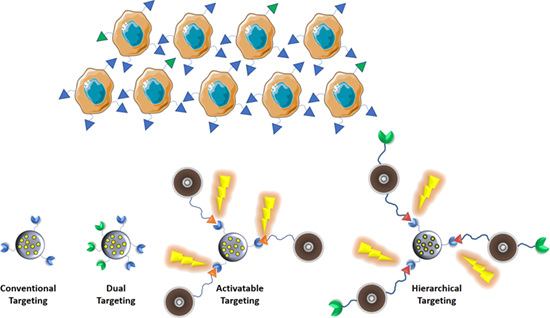
- vacuolating virus 40 (SV40), GRKKRRQRRRPQ in the TAT peptide present in human immunodeficiency virus (HIV), or KRPAATKKAGQAKKKKL in the case of nucleoplasmin [45]. These peptides have been anchored on the surface of different nanocarriers providing excellent results [46]. The aptamer AS1411 selective for
- vectorization for enhancing the cell growth inhibition. In these cases, the goal is to drive the payload to the nucleus after selective internalization in the cytoplasm. Nuclear delivery with the HIV trans-activator of transcription (TAT) peptoid in combination with the vasculature and tumor cell membrane


Review on nanoparticles and nanostructured materials: history, sources, toxicity and regulations
Beilstein J. Nanotechnol. 2018, 9, 1050–1074, doi:10.3762/bjnano.9.98



Nanoscale isoindigo-carriers: self-assembly and tunable properties
Beilstein J. Nanotechnol. 2017, 8, 313–324, doi:10.3762/bjnano.8.34
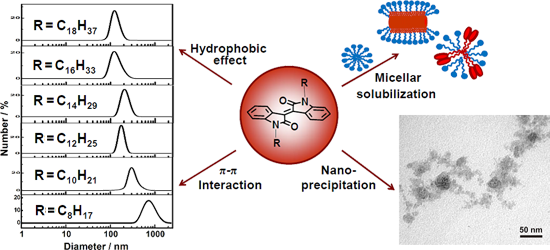
- pharmaceutical and synthetic protocols [12][13][14][15][16][17][18][19][20][21]. It is known that isatin and isoindigo derivatives possess antibacterial [12][22], antifungal [23][24], and antiviral activity [25][26]; they are promising platforms for the design of anti-HIV agents [27] and they are also used in




Preparation of alginate–chitosan–cyclodextrin micro- and nanoparticles loaded with anti-tuberculosis compounds
Beilstein J. Nanotechnol. 2016, 7, 1208–1218, doi:10.3762/bjnano.7.112
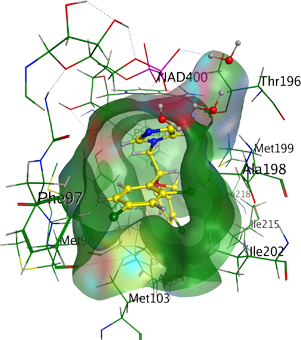
- ; quaternary system; sodium alginate; Introduction Tuberculosis, together with HIV infection, is a leading cause of death with 1.5 million deaths in 2014 worldwide [1]. The biggest challenges regarding a successful treatment of tuberculosis infections are the necessary high dosages and various side effects of