


Search results
Search for "antimicrobial properties" in Full Text gives 41 result(s) in Beilstein Journal of Nanotechnology.
Environmental applications of silver nanoparticles: state-of-the-art review and emerging trends
Beilstein J. Nanotechnol. 2026, 17, 697–736, doi:10.3762/bjnano.17.49
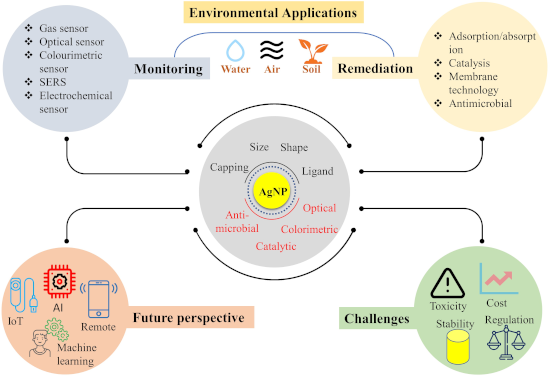
- rates of 0.056 and 0.166 min−1, respectively. In addition, the antifungal activity against A. alternata and F. oxysporum indicates it as a decontaminating agent [46]. The antimicrobial properties of nanosilver are highly dependent on size, shape, and surface functionalization [47]. A prior
- . Nanosilver has emerged as a promising material for water treatment, offering efficient and cost-effective solutions for removing, monitoring, and disinfecting water sources [71]. Nanosilver’s catalytic and antimicrobial properties make it a highly efficient material in treating water pollutants. 3.1.1
- Antimicrobial properties and disinfection. Nanosilver showed broad-spectrum antimicrobial activity (bacteria, viruses, and fungi) and can serve as an effective disinfectant for water applications [7][72]. Various mechanisms, including disruption of cellular membranes, interference with DNA replication, and the


Durable antimicrobial activity of fabrics functionalized with zeolite ion-exchanged nanomaterials against Staphylococcus aureus and Escherichia coli
Beilstein J. Nanotechnol. 2026, 17, 262–274, doi:10.3762/bjnano.17.18
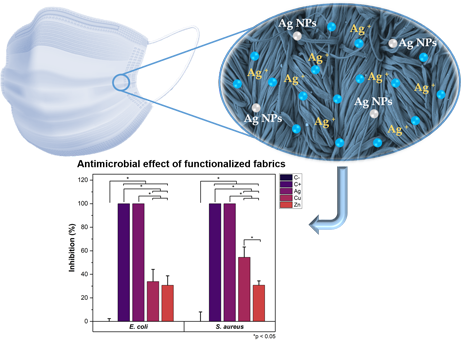
- Científica y de Educación Superior de Ensenada (CICESE), Carretera Ensenada-Tijuana, No. 3918, Zona Playitas, Ensenada 22860, México 10.3762/bjnano.17.18 Abstract Nanoparticle-based functionalization has emerged as an effective strategy to enhance the antimicrobial properties of textiles. In this study
- are currently explored for various biomedical applications, including disease prevention, diagnosis, and the improvement of antiviral drug delivery systems [5][6]. In some cases, the antimicrobial properties of NPs lead to creation of new “nano-antimicrobial” materials [7]. The mechanism by which
- synthesis methods, and relatively low cost [4][10][11]. One of the most extensively studied nanomaterials in terms of antimicrobial properties is colloidal silver as its antimicrobial action affects various parts of microorganisms. In addition to silver, copper has attracted significant attention for its




Rapid synthesis of highly monodisperse AgSbS2 nanocrystals: unveiling multifaceted activities in cancer therapy, antibacterial strategies, and antioxidant defense
Beilstein J. Nanotechnol. 2025, 16, 2105–2115, doi:10.3762/bjnano.16.145
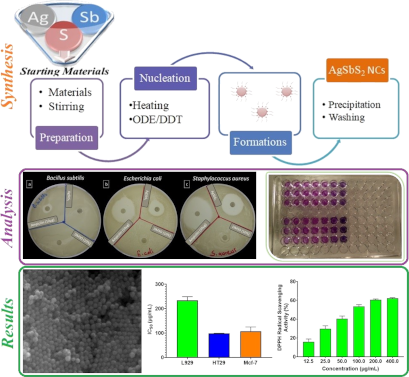
- , cardiovascular diseases, and diabetes [11][12]. Historically known especially for its antimicrobial properties, silver has been used since ancient times. Silver nanoparticles (AgNPs) are synthesized by different synthesis mechanisms; they are non-toxic to eukaryotic cells, including human cells, but highly toxic


On the road to sustainability – application of metallic nanoparticles obtained by green synthesis in dentistry: a scoping review
Beilstein J. Nanotechnol. 2025, 16, 1851–1862, doi:10.3762/bjnano.16.128
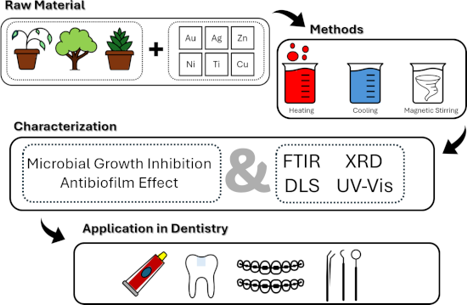
- widely studied nanomaterials are metallic nanoparticles, particularly silver (AgNPs), gold (AuNPs), and copper (CuNPs), and various metal oxide nanoparticles such as zinc oxide (ZnO-NPs), due to their high surface-to-volume ratio, chemical stability, and distinctive optical and antimicrobial properties


Synthesis and antibacterial properties of nanosilver-modified cellulose triacetate membranes for seawater desalination
Beilstein J. Nanotechnol. 2025, 16, 1380–1391, doi:10.3762/bjnano.16.100
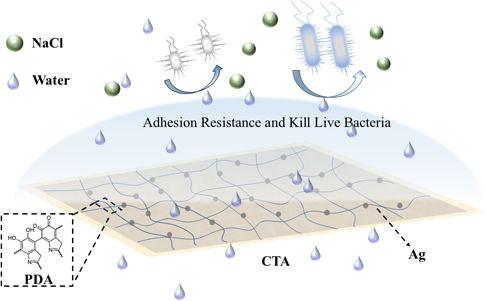
- nanomaterials can be engineered to optimize their antimicrobial activity, making them versatile tools in the development of advanced membrane technologies. Quantum effects, such as localized surface plasmon resonance in metallic nanoparticles, can further enhance antimicrobial properties by generating reactive
- the PDA layer (Figure 4e). These Ag nanoparticles, typically appearing as discrete entities, are interspersed among the PDA microspheres, contributing to the membrane’s antimicrobial properties essential for mitigating biofouling in desalination applications. The cross-sectional SEM images, along with


Enhancing the therapeutical potential of metalloantibiotics using nano-based delivery systems
Beilstein J. Nanotechnol. 2025, 16, 1350–1366, doi:10.3762/bjnano.16.98
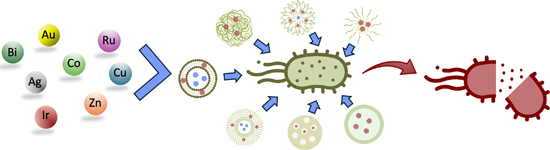
- on the most relevant elements. Silver complexes Silver complexes have been extensively studied for their antimicrobial properties, which are mainly attributed to the high solubility of silver(I) ions. Among them, silver-N-heterocyclic carbene (NHC) complexes are particularly relevant as potential
- nanofiber composites, resulting in materials with promising antimicrobial properties [119]. One of the composites exhibited a stable and continuous release of the Cu(I) complex during the first 12 h, followed by a slower but controlled release for up to 20 days. Antibacterial efficacy tests against E. coli


Functional bio-packaging enhanced with nanocellulose from rice straw and cinnamon essential oil Pickering emulsion for fruit preservation
Beilstein J. Nanotechnol. 2025, 16, 1234–1245, doi:10.3762/bjnano.16.91
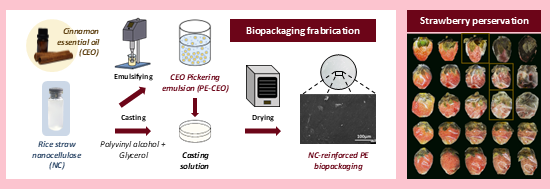
- cinnamaldehyde and other phenolic compounds in CEO, which act as natural UV absorbers [50]. The antimicrobial properties of the biopackaging were assessed by a time-kill assay against E. coli and S. aureus after 24 h of exposure (Figure 4c,e). rBP exhibited slight inhibitions of E. coli and S. aureus (<20
- 600 nm and its thickness as (Equation 4). where Ab600 represents the absorbance at 600 nm and t is the biopackaging thickness [49]. Antimicrobial properties. The antimicrobial activity of the films was evaluated using a time-kill method. Escherichia coli ATCC 25922 and Staphylococcus aureus ATCC 29213



Chitosan nanocomposite containing rotenoids: an alternative bioinsecticidal approach for the management of Aedes aegypti
Beilstein J. Nanotechnol. 2025, 16, 1197–1208, doi:10.3762/bjnano.16.88
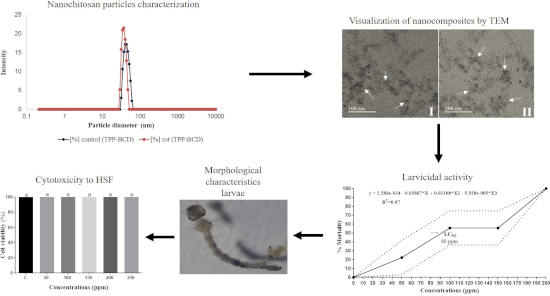
- impacts associated with traditional synthetic insecticides [9][10]. Chitosan nanoparticles, derived from a biodegradable and nontoxic polysaccharide, have proven effective in reducing post-harvest deterioration of fruits and vegetables, in addition to exhibiting well-documented antimicrobial properties

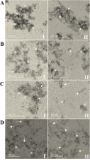


Efficiency of single-pulse laser fragmentation of organic nutraceutical dispersions in a circular jet flow-through reactor
Beilstein J. Nanotechnol. 2025, 16, 711–727, doi:10.3762/bjnano.16.55
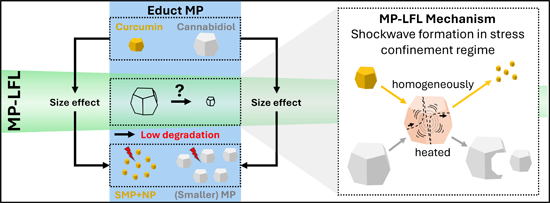
- that curcumin mostly functions as a radical scavenger at higher concentrations [63]. Further studies also report the photodegradation kinetics of phenolic compounds with antimicrobial properties to be inversely dependent on concentration [64]. For CBD with the same mass concentration of 0.1 wt % of


Clays enhanced with niobium: potential in wastewater treatment and reuse as pigment with antibacterial activity
Beilstein J. Nanotechnol. 2025, 16, 141–154, doi:10.3762/bjnano.16.13
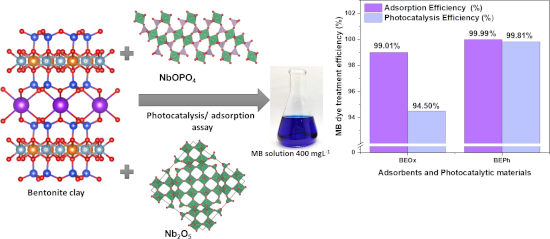
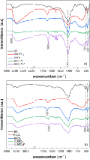
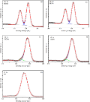
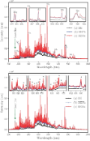
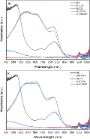
- characterized through colorimetric analysis (CIEL*a*b*) and UV–vis spectroscopy. Antimicrobial activity test The antimicrobial properties of the BEPh, BEOx, A-BEPh, A-BEOx, A-BEPhP, and A-BEOxP samples were investigated against the bacteria Bacillus cereus (ATCC 10876) (Gram-positive) and Proteus mirabilis



Natural nanofibers embedded in the seed mucilage envelope: composite hydrogels with specific adhesive and frictional properties
Beilstein J. Nanotechnol. 2024, 15, 1603–1618, doi:10.3762/bjnano.15.126
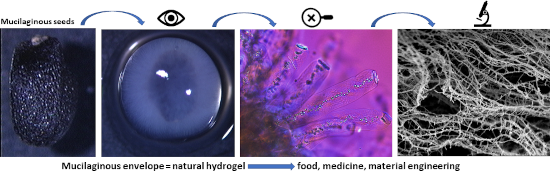
- encapsulation of medical substances. A very important advantage of diaspore mucilages are their antimicrobial properties [105][106][110][111]. Phenolic compounds are secondary plant metabolites, which demonstrate a wide range of structures, from simple molecules to polymeric compounds. They can be produced in


Unveiling the potential of alginate-based nanomaterials in sensing technology and smart delivery applications
Beilstein J. Nanotechnol. 2024, 15, 1077–1104, doi:10.3762/bjnano.15.88
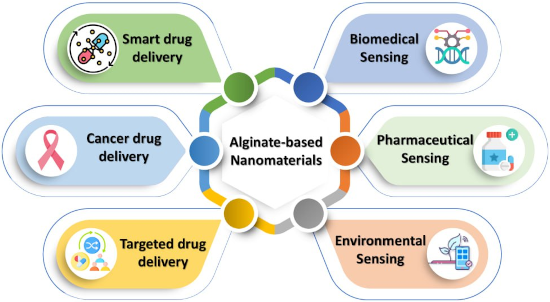
- used to detect hydrogen peroxide using cyclic voltammetry and chronoamperometry, with a linear response and detection limits of 0.91 M and 0.02 M, respectively. In most sensing applications, sodium alginate is used as a capping agent, which binds molecules to show its compatibility and antimicrobial
- properties. Oxidative and sensitive materials are loaded into sodium alginate gel, and the absence and concentration of hydrogen peroxide in water and milk can be analyzed by a colorimetric method [117]. In another work, an alginate hybrid silver magnetite nanocomposite (Fe3O4@AMALG12@Ag) with enhanced


Silver nanoparticles loaded on lactose/alginate: in situ synthesis, catalytic degradation, and pH-dependent antibacterial activity
Beilstein J. Nanotechnol. 2023, 14, 781–792, doi:10.3762/bjnano.14.64
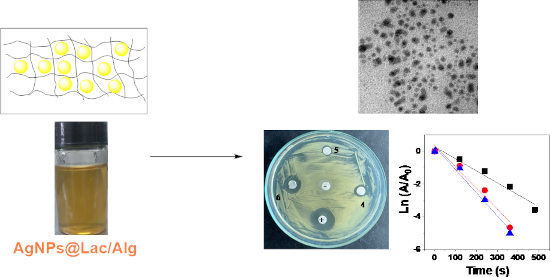
- properties of AgNPs can be influenced by factors such as size, pH value, and ionic strength of the medium [28][29][30][31]. Extensive research has been dedicated to control the size and shape of AgNPs through the application of various capping agents. In addition to their antimicrobial properties, AgNPs are


Quercetin- and caffeic acid-functionalized chitosan-capped colloidal silver nanoparticles: one-pot synthesis, characterization, and anticancer and antibacterial activities
Beilstein J. Nanotechnol. 2023, 14, 362–376, doi:10.3762/bjnano.14.31
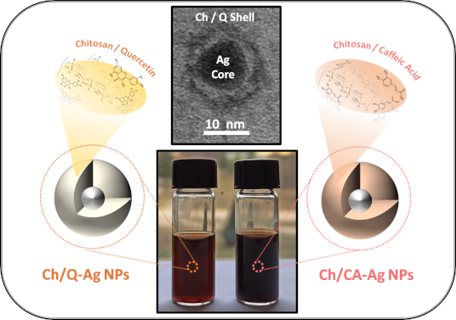
- , especially in medicine [1]. Nanomaterials, especially metallic nanomaterials, show good antibacterial and antimicrobial properties due to their physical and chemical properties and are, thus, an alternative approach to antibiotics [2]. In addition, low bioavailability and water solubility problems are the


Antimicrobial and mechanical properties of functionalized textile by nanoarchitectured photoinduced Ag@polymer coating
Beilstein J. Nanotechnol. 2023, 14, 95–109, doi:10.3762/bjnano.14.11
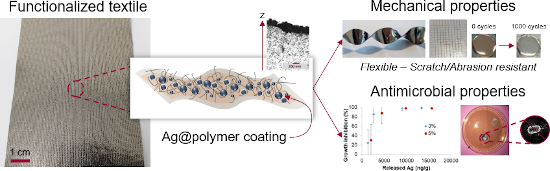
- , and textiles need to be cleaned on a daily basis. Silver nanoparticles (AgNPs) possess well-documented antimicrobial properties and by combining them with a physical matrix, they can be applied to various surfaces to limit microbial contamination. With this in mind, a rapid and easy way to implement a
- the textile support. After assessing their optical and mechanical properties, the antimicrobial properties of the functionalized textiles were tested against Escherichia coli (E. coli) and Candida albicans (C. albicans) strains. In addition to being flexible and adherent to the textile substrates, the
- nanocomposites exhibited remarkable microbial growth inhibitory effects. Keywords: antimicrobial properties; C. albicans fungus; E. coli bacteria; photoinduced functionalized textile; silver/polymer nanomaterials; Introduction The proliferation of microorganisms is a major concern for health organizations



Green synthesis of zinc oxide nanoparticles toward highly efficient photocatalysis and antibacterial application
Beilstein J. Nanotechnol. 2022, 13, 1108–1119, doi:10.3762/bjnano.13.94
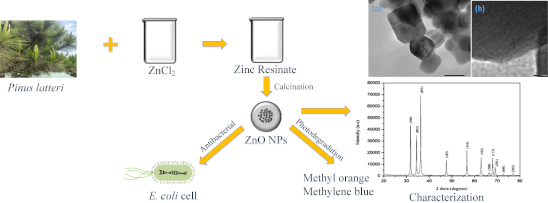
- applications. Nava et al. [26] prepared ZnO NPs using Camellia sinensis extracts and applied ZnO NPs to degrade methylene blue (MB). Ambika et al. [12] synthesized ZnO by a green method using a precursor from the Vitex negundo plant extract and zinc nitrate, and antimicrobial properties of ZnO NPs were




Recent advances in green carbon dots (2015–2022): synthesis, metal ion sensing, and biological applications
Beilstein J. Nanotechnol. 2022, 13, 1068–1107, doi:10.3762/bjnano.13.93
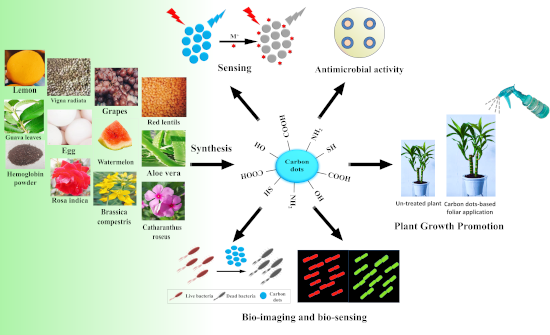
- had surface groups such as carboxyl and hydroxy groups. Aloe vera has intrinsic antimicrobial properties, so the bactericidal activity of these CDs was investigated by the agar well diffusion method, and the sensing ability towards Fe3+ was also reported [67]. Kavitha et al. used date palm fronds with


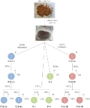


Biomimetic chitosan with biocomposite nanomaterials for bone tissue repair and regeneration
Beilstein J. Nanotechnol. 2022, 13, 1051–1067, doi:10.3762/bjnano.13.92
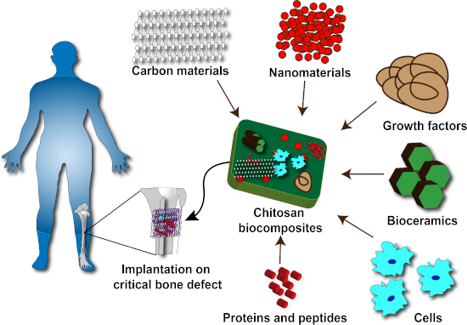
- , uniform raw materials quality, and are abundant. Chitosan is a natural polymeric substance and an extensively studied material for bone tissue engineering due to its biocompatibility, biodegradability, and antimicrobial properties [7][8][9][10]. Chitosan in combination with silver, gold, copper, titanium
- research due to its intrinsic antimicrobial properties. Xie et al. (2019) developed AgNPs composites containing polydopamine–hydroxyapatite–chitosan by adding AgNPs to hybrid materials, which significantly reduced microbial infection in the implanted place [109]. Polydopamine and chitosan play an important
Bioselectivity of silk protein-based materials and their bio-inspired applications
Beilstein J. Nanotechnol. 2022, 13, 902–921, doi:10.3762/bjnano.13.81
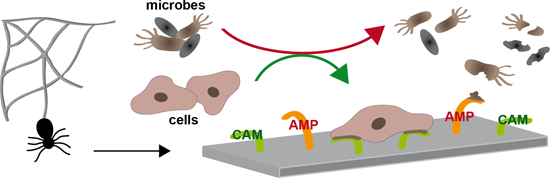
- sequence motifs and the structure–property relationships of tailored silk materials. Thus, intrinsic antimicrobial properties of materials based on recombinant silk proteins can also be analysed in greater detail. Modifications with specific functions, for example, AMPs against biofouling, enzymes, and


Engineered titania nanomaterials in advanced clinical applications
Beilstein J. Nanotechnol. 2022, 13, 201–218, doi:10.3762/bjnano.13.15
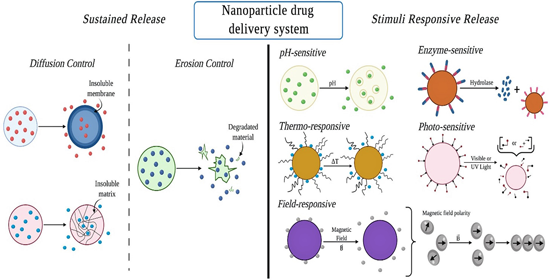
- (GNP2) presented good osseointegration [61]. In another recent study, TiO2 nanotubes (TNT) were grown on the surface of medical-grade titanium alloy and then coated with silver nps (Ag nps) to improve the antimicrobial properties of the implants. Moreover, to avoid direct contact of Ag nps with human
- TiO2 nps [83]. TiO2 supported on silica nanospheres was checked for its antibacterial activity against E. coli, and the result demonstrated a more effective growth inhibition than that of commercial TiO2-P25 under ultraviolet and visible light [84]. Copper is well known for its antimicrobial properties
- , researchers apply TiO2 nanomaterials into polyester fabrics used for orthopedic bandages, plasters, artificial tendons and ligaments, heart valves, artificial kidneys, and surgical gowns and masks. In one study, the antimicrobial properties of polyester fabrics were analyzed after modification with metal


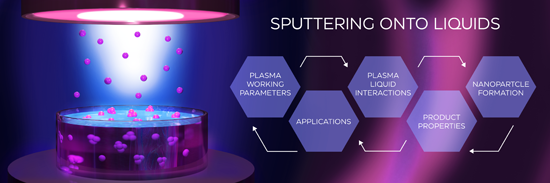
Sputtering onto liquids: a critical review
Beilstein J. Nanotechnol. 2022, 13, 10–53, doi:10.3762/bjnano.13.2






Self-assembly of amino acids toward functional biomaterials
Beilstein J. Nanotechnol. 2021, 12, 1140–1150, doi:10.3762/bjnano.12.85
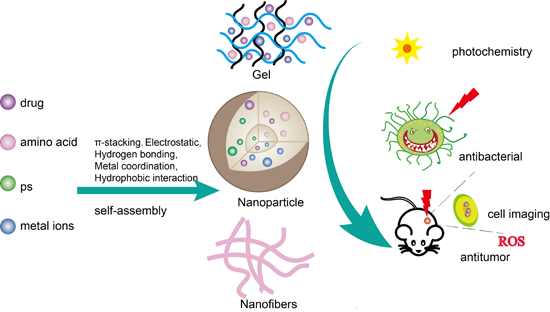
- nanoparticles (Ag NPs) hold great promise due to their broad-spectrum and robust antimicrobial properties [65]. The main mechanism is that Ag nanoparticles diffuse into cells and destroy cell walls [66]. However, Ag NPs are cytotoxic, which limits their application [67]. Song et al. [68] developed a broad

Silver nanoparticles nucleated in NaOH-treated halloysite: a potential antimicrobial material
Beilstein J. Nanotechnol. 2021, 12, 798–807, doi:10.3762/bjnano.12.63
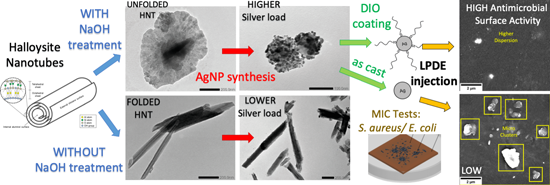
- 10.3762/bjnano.12.63 Abstract Despite all recent advances in medical treatments, infectious diseases remain dangerous. This has led to intensive scientific research on materials with antimicrobial properties. Silver nanoparticles (Ag-NPs) are a well-established solution in this area. The present work
- analysis and differential scanning calorimetry. The antimicrobial properties of the Ag-NPs were investigated against E. coli and S. aureus. The potential of the Ag-NPs for industrial application was tested by dispersing them into low-density polyethylene. The importance of the chemical affinity between
- antimicrobial, and that it is possible to imbue a polymeric matrix with the antimicrobial properties of Ag-NPs. Keywords: antimicrobial activity; DIO coating; halloysite; nanocomposites; silver nanoparticles; Introduction The number of people dying from bacterial infections has been significantly reduced with




A review on nanostructured silver as a basic ingredient in medicine: physicochemical parameters and characterization
Beilstein J. Nanotechnol. 2021, 12, 440–461, doi:10.3762/bjnano.12.36
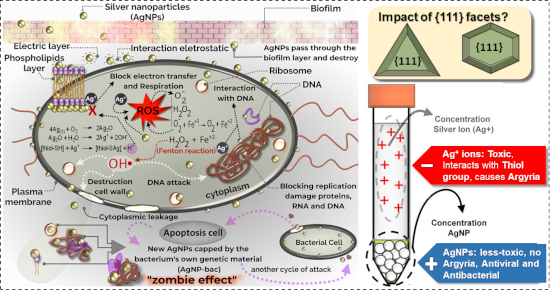
- , and toxicological levels, the identification and quantification of AgNP species as well as the silver ion (Ag+) content should be considered, as their behaviors and mechanisms are distinct [59][60]. Although the Ag+ ion has antimicrobial properties (such as AgNPs), it is rated as one of the main


Antimicrobial metal-based nanoparticles: a review on their synthesis, types and antimicrobial action
Beilstein J. Nanotechnol. 2020, 11, 1450–1469, doi:10.3762/bjnano.11.129
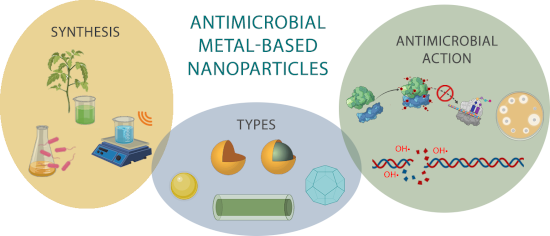
- agents. Although the most studied nanoparticles with antimicrobial properties are metallic or metal-oxide nanoparticles, other types of nanoparticles, such as superparamagnetic iron-oxide nanoparticles and silica-releasing systems also exhibit antimicrobial properties. Finally, since the quantification
- community has been focusing on the study of nanomaterials, mainly metal-based nanoparticles (NPs), to test their antimicrobial properties and feasibility to eradicate contamination sources and diseases [5]. The chemical, physical, and biological properties of NPs have been improved on the nanometer scale
- regarding their surface area, size, distribution, and morphology [6][7][8]. Research evidence shows that antimicrobial properties clearly depend on the synthesis method used to obtain the NPs. These synthesis procedures can be classified into physical, chemical, and biological methods [9]. In general





