


Search results
Search for "carbon nanomaterials" in Full Text gives 56 result(s) in Beilstein Journal of Nanotechnology.
Missing links in nanomaterials research impacting productivity and perceptions
Beilstein J. Nanotechnol. 2025, 16, 2168–2176, doi:10.3762/bjnano.16.149
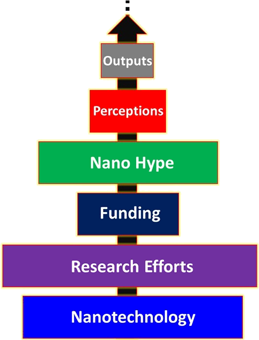
- . The event brought together leading scientists and key stakeholders from the Indian government to deliberate on the impact and potential of carbon nanomaterials. The idea was further refined during the organization of the New Materials in Carbon Capture and Environmental Remediation (NMCCER 2024
Toward clinical translation of carbon nanomaterials in anticancer drug delivery: the need for standardisation
Beilstein J. Nanotechnol. 2025, 16, 2092–2104, doi:10.3762/bjnano.16.144

- Michal Bartkowski Francesco Calzaferri Silvia Giordani School of Chemical Sciences, Dublin City University, Glasnevin, Dublin, Ireland Life Science Institute, Dublin City University, Glasnevin, Dublin, Ireland 10.3762/bjnano.16.144 Abstract Carbon nanomaterials (CNMs), including graphene, carbon
- enhancing therapeutic delivery, particularly in areas such as cancer treatment. This perspective highlights critical considerations in the development of CNM-based nanocarriers, spanning from initial design to clinical implementation. Keywords: carbon nanomaterials (CNMs); carbon nanoparticles (CNPs); drug
- of NMs have been extensive; including niche applications such as enabling nightvision; particular Yb(III) and Er(III) doped nanoparticles have been found to upconvert NIR light into visible light, thus enabling mice to visually perceive infrared light [12]. Carbon nanomaterials as nanocarriers Carbon



Nanotechnology-based approaches for the removal of microplastics from wastewater: a comprehensive review
Beilstein J. Nanotechnol. 2025, 16, 1607–1632, doi:10.3762/bjnano.16.114
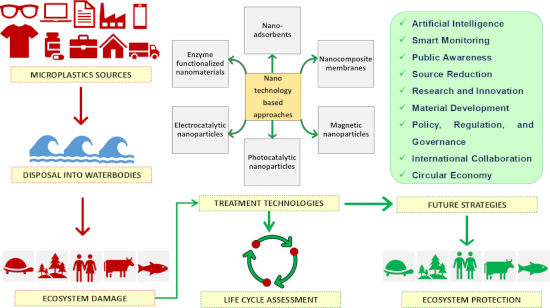
- production costs limit their practicality for widespread use in large-scale water treatment facilities [114]. Zeolite and carbon nanomaterials: Research has shown that zeolite membranes can retain both their adsorption capability and structural stability across a range of environmental conditions, making
- , making them reusable and cost-effective in the long run. However, the high production cost of carbon nanomaterials may hinder their adoption in large-scale water treatment systems. Environmental concerns also arise due to the potential release of these nanoparticles, which may pose risks to both human
- health and ecosystems. Additionally, carbon nanomaterials often aggregate in water, diminishing their adsorption efficiency, and their fabrication typically involves advanced techniques and costly equipment, which further limits widespread use [114]. The mechanism involved in the removal of MPs using


Feasibility analysis of carbon nanofiber synthesis and morphology control using a LPG premixed flame
Beilstein J. Nanotechnol. 2025, 16, 581–590, doi:10.3762/bjnano.16.45
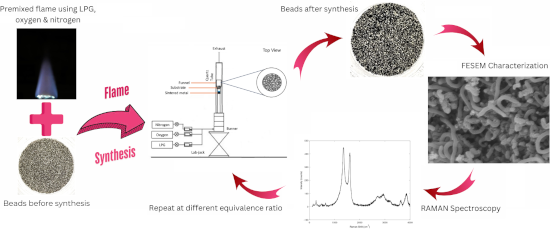
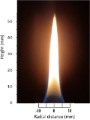
- combustion mode where the fuel and oxidizer are thoroughly mixed before ignition. LPG is a cheap industrial material used as a carbon source to produce carbon nanomaterials [6]. The application of CNFs includes, but is not limited to, energy storage in batteries and supercapacitors, electronics, drug
- configurations, fuel types, and catalytic materials can be employed to produce desired growth and morphology. Flames potentially enable the synthesis of carbon nanomaterials in large quantities at significantly lower cost than that of other methods currently available [8]. In some applications, CNFs can be of



Interface properties of nanostructured carbon-coated biological implants: an overview
Beilstein J. Nanotechnol. 2024, 15, 1041–1053, doi:10.3762/bjnano.15.85
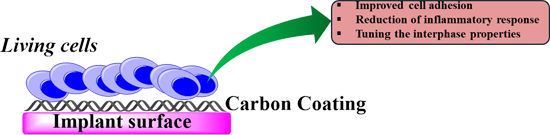
- is strictly related to the desired carbon nanomaterials. Metal catalysts with high carbon solubility primarily involve carbon segregation and precipitation throughout the metal bulk [84], while metal catalysts with low carbon solubility act from the metal surface inward [63]. PVD routes are numerous



Green synthesis of biomass-derived carbon quantum dots for photocatalytic degradation of methylene blue
Beilstein J. Nanotechnol. 2024, 15, 755–766, doi:10.3762/bjnano.15.63
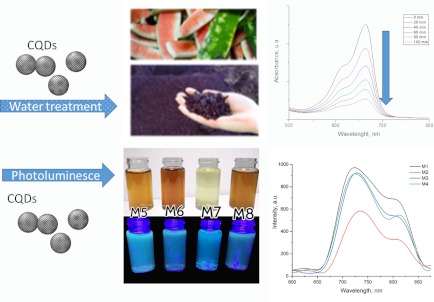
- , carbon nanomaterials exhibiting fluorescence, such as carbon oxide dots, exhibit a diverse array of structural elements, including sp2 carbon hybridization or partial hybridization commonly observed in carbon oxide dots [30][31]. The PL down-conversion spectra of the CQDs synthesized from grape pomace


Nanoarchitectonics of photothermal materials to enhance the sensitivity of lateral flow assays
Beilstein J. Nanotechnol. 2023, 14, 988–1003, doi:10.3762/bjnano.14.82
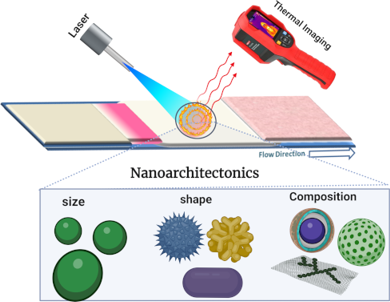
- . Since iron oxide nanoparticles absorb in the NIR region, irradiating them with a proper source will produce heat, which makes them suitable for theranostic purposes [32][42][43]. Carbon nanomaterials: Carbon-based materials have been identified as promising candidates for photothermal applications


A graphene quantum dots–glassy carbon electrode-based electrochemical sensor for monitoring malathion
Beilstein J. Nanotechnol. 2023, 14, 701–710, doi:10.3762/bjnano.14.56
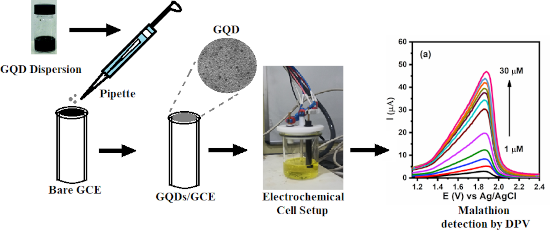
- lowers the detection limit [18]. In an effort to combine the properties of carbon dots and graphene, graphene quantum dots (GQDs) with a size smaller than 100 nm and only a few layers of graphene (3 to 10 layers) have been developed as a new class of carbon nanomaterials [19]. Scientists have explored


Metal-organic framework-based nanomaterials as opto-electrochemical sensors for the detection of antibiotics and hormones: A review
Beilstein J. Nanotechnol. 2023, 14, 631–673, doi:10.3762/bjnano.14.52


Molecular nanoarchitectonics: unification of nanotechnology and molecular/materials science
Beilstein J. Nanotechnol. 2023, 14, 434–453, doi:10.3762/bjnano.14.35
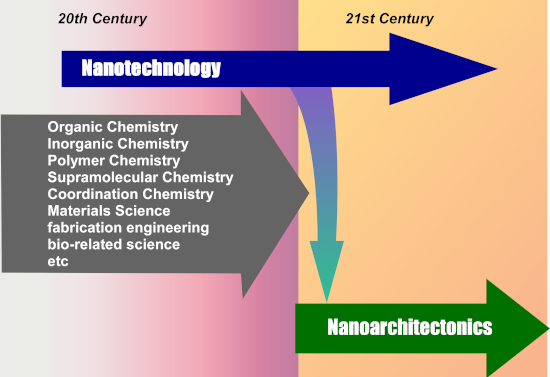
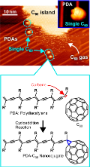
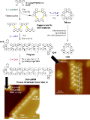
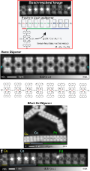
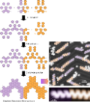
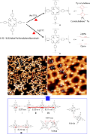
- . Unlike conventional solution synthesis, low-temperature local probe chemistry allows for a free control of the radical state. This kind of local probe chemistry as a synthesis technique opens up the possibility of nanoarchitectonics synthesis of carbon nanomaterials. The tip-induced addition of single





Structural, optical, and bioimaging characterization of carbon quantum dots solvothermally synthesized from o-phenylenediamine
Beilstein J. Nanotechnol. 2023, 14, 165–174, doi:10.3762/bjnano.14.17
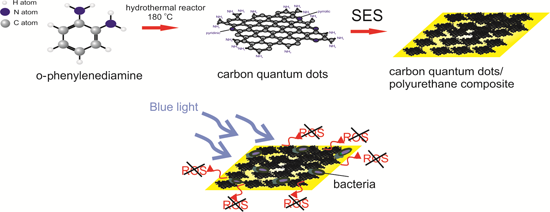
- , 11000 Belgrade, Serbia 10.3762/bjnano.14.17 Abstract Carbon quantum dots as a novel type of carbon nanomaterials have attracted the attention of many researchers because of their unique optical, antibacterial, and anticancer properties as well as their biocompatibility. In this study, for the first
- ; Introduction Carbon quantum dots (CQDs) as a novel class of carbon nanomaterials can be prepared by using different methods and precursors [1][2]. Most of the common preparation procedures are bottom-up methods [3][4]. Depending on the used precursors and solvents, the structure of the CQDs can be modified


Design of surface nanostructures for chirality sensing based on quartz crystal microbalance
Beilstein J. Nanotechnol. 2022, 13, 1201–1219, doi:10.3762/bjnano.13.100
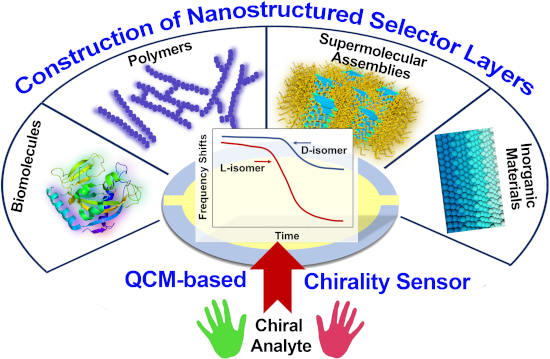
- molecular handedness. Chiral modified carbons Carbon nanomaterials possess attractive features since they are low cost, capable to be produced in large-scale, and have good stability and bio-compatibility, which makes them an excellent candidate for sensing applications [147][148][149]. Some carbon


Application of nanoarchitectonics in moist-electric generation
Beilstein J. Nanotechnol. 2022, 13, 1185–1200, doi:10.3762/bjnano.13.99
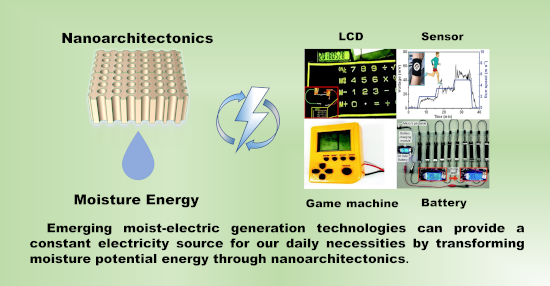
- , photolithography, embossing, deposition, and sol–gel nanofabrication, all of which can provide high specific surface areas [19][24][25][26][27][28]. Nanomaterials can also be divided into inorganic nanomaterials and organic nanomaterials. In inorganic nanomaterials, metal nanomaterials and carbon nanomaterials
- 143.25° to 10.15° (Figure 3d), and the contact area between carbon nanomaterials and water molecules is greatly increased. This leads to a stronger interaction between water molecules and the materials. Also, the treated carbon nanoparticles possess a large number of functional groups with O–H, C–O and C
- water molecules move on the surface of the material (ν), the higher the output voltage (ΔV) [10]. This conclusion was also drawn in reports regarding carbon nanomaterials [9]. The fluid in the real device will also evaporate while being absorbed. Hence, theoretically there will be a dynamic balance


Recent advances in green carbon dots (2015–2022): synthesis, metal ion sensing, and biological applications
Beilstein J. Nanotechnol. 2022, 13, 1068–1107, doi:10.3762/bjnano.13.93
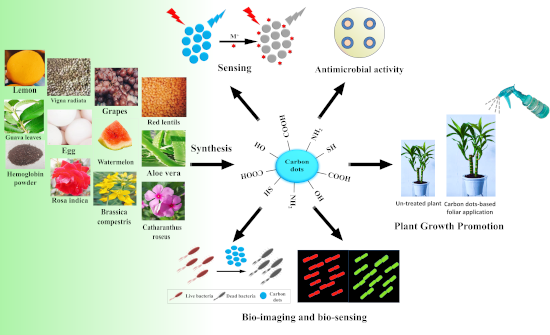
- environmentally friendly synthetic route for CDs from corn stalk shell [78]. This process transformed biomass, which was previously thought to be waste material, into carbon nanomaterials with tremendous potential. Another method for the synthesis of biocompatible fluorescent CDs from the extract of leaves of the
- carbon nanoparticles during electrophoretic purification of single-walled carbon nanotubes [1]. Sun et al. synthesized fluorescent carbon particles smaller than 10 nm, which were named “carbon dots” for the first time in 2006 [2]. Due to its significant fluorescent properties, this class of carbon
- nanomaterials has proved to be useful for applications in a variety of disciplines, including chemical or biological sensing, bioimaging, drug delivery, photodynamic therapy, electrocatalysis, and photocatalysis, with advantages over commonly used semiconductor dots or conventional fluorescent probes such as




Biomimetic chitosan with biocomposite nanomaterials for bone tissue repair and regeneration
Beilstein J. Nanotechnol. 2022, 13, 1051–1067, doi:10.3762/bjnano.13.92
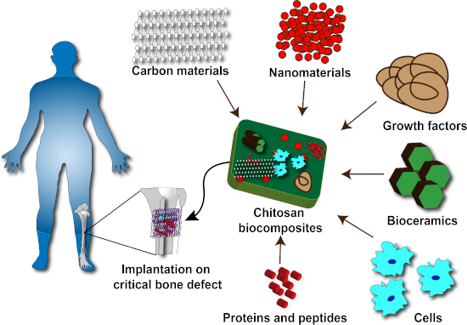
- bioimplants were placed and examined after four weeks of surgery. On the 14th day, histological studies revealed that cells had infiltrated into the holes. Meanwhile, degradation of the scaffold matrix was observed and represented as black spots in Figure 3 [107]. Chitosan with carbon nanomaterials for bone
- mechanical characteristics. Nanocomposites formed by chitosan and metals, such as silver, gold, copper, titanium oxide, and zinc oxide were studied in the treatment of bone tissue defects and have proven to be effective in bone tissue repairing processes. Also, chitosan combined with carbon nanomaterials
A nonenzymatic reduced graphene oxide-based nanosensor for parathion
Beilstein J. Nanotechnol. 2022, 13, 730–744, doi:10.3762/bjnano.13.65
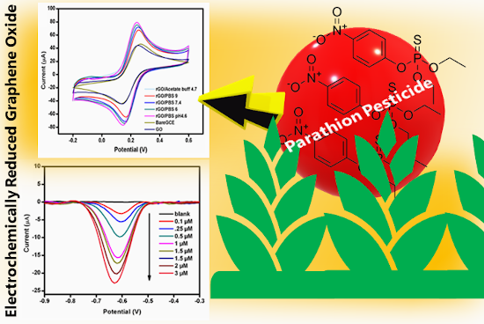
- , selective, sensitive, and point-of-care (POC) analytical tools for monitoring environmental pollutants [2][11]. They can also detect residual OPs based on their electrocatalytic activity and affinity toward nanomaterials, such as nanoparticles, carbon nanomaterials, and metal oxides [11]. In a few reports
- , hybrid carbon nanomaterials such as ferrocene-thiophene modified by carbon nanotubes, zinc(II) phthalocyanine-boron dipyrromethene attached single-walled carbon nanotubes were used for the direct detection of pesticides [12][13][14][15]. So far, only limited electrochemical nanosensors modified by


Sputtering onto liquids: a critical review
Beilstein J. Nanotechnol. 2022, 13, 10–53, doi:10.3762/bjnano.13.2






Assessment of the optical and electrical properties of light-emitting diodes containing carbon-based nanostructures and plasmonic nanoparticles: a review
Beilstein J. Nanotechnol. 2021, 12, 1078–1092, doi:10.3762/bjnano.12.80
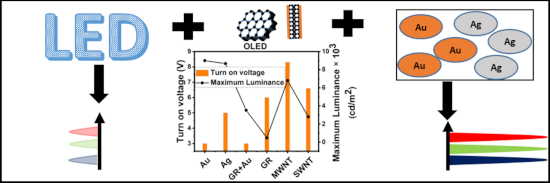
- plasmonic NP are used at the cathode to enhance the overall emission of the LED. Plasmonic AgNP have been inserted in Al (150 nm)/LiF (1 nm) cathode layer and a PL enhancement was observed [109]. In fact, the presence of AgNP tuned the carrier injection rate between cathode and Alq3 EML. Carbon
- nanomaterials, such as graphene and SWNT present interesting alternatives to overcome the drawbacks of metal and metal nanocomposite cathodes in OLED. Klain et al. have reported one possibility by doping graphene with n-type Ca [110]. The 1 nm Ca layer deposited by evaporation onto the surface of graphene


Progress and innovation of nanostructured sulfur cathodes and metal-free anodes for room-temperature Na–S batteries
Beilstein J. Nanotechnol. 2021, 12, 995–1020, doi:10.3762/bjnano.12.75
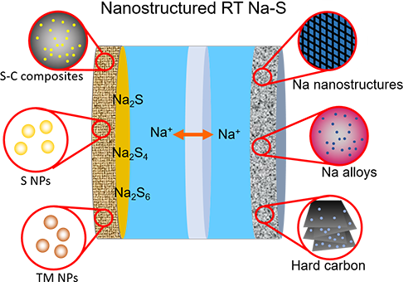
- design a cathode material that improves the conductivity of the system [4][11]. Common approaches are based on the incorporation of conductive carbon nanomaterials [23]. The volume expansion of sulfur during the discharge process is caused by the formation of the discharge product Na2S. This expansion is
- antimonene, silicene, and phosphorene [73][83][84]. These sheets are usually integrated with graphene and other conducting carbon nanomaterials to afford mechanical support, flexibility, and electrical conductivity, which results in high capacity values (500–2000 mAh·g−1) over at least 100 cycles [73][75][76




Towards 3D self-assembled rolled multiwall carbon nanotube structures by spontaneous peel off
Beilstein J. Nanotechnol. 2020, 11, 1865–1872, doi:10.3762/bjnano.11.168
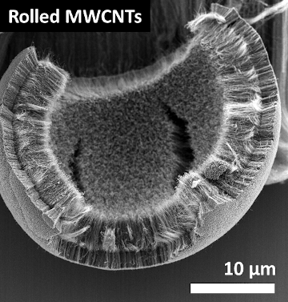
- ; multiwall carbon nanotubes; nitrogen doping; peel off; rolled carbon nanotubes; Introduction Carbon nanotubes (CNTs) are popular materials used in various applications [1]. These tubular hollow carbon nanomaterials have proven to be useful in multiple scientific fields [2][3][4][5][6]. Complex structures



Nanomechanics of few-layer materials: do individual layers slide upon folding?
Beilstein J. Nanotechnol. 2020, 11, 1801–1808, doi:10.3762/bjnano.11.162
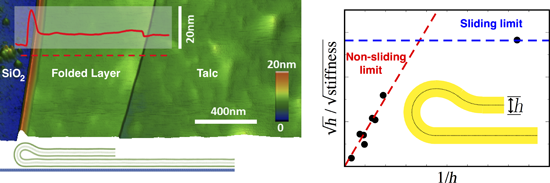
- Pessoal de Nível Superior (CAPES); Fundação de Amparo à Pesquisa do Estado de Minas Gerais (FAPEMIG); the Brazilian Institute of Science and Technology (INCT) in Carbon Nanomaterials; and Universidade Federal de Ouro Preto (UFOP-Grant Custeio).
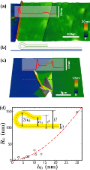
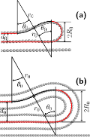

![[Graphic 5]](/bjnano/content/inline/2190-4286-11-162-i8.svg?max-width=637&scale=1.18182) =
= ![[Graphic 6]](/bjnano/content/inline/2190-4286-11-162-i9.svg?max-width=637&scale=1.18182) as a function of 1/h for the nine measured talc samples. h is a directly measured ...
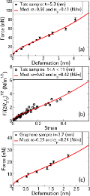
as a function of 1/h for the nine measured talc samples. h is a directly measured ...
PEG/PEI-functionalized single-walled carbon nanotubes as delivery carriers for doxorubicin: synthesis, characterization, and in vitro evaluation
Beilstein J. Nanotechnol. 2020, 11, 1728–1741, doi:10.3762/bjnano.11.155
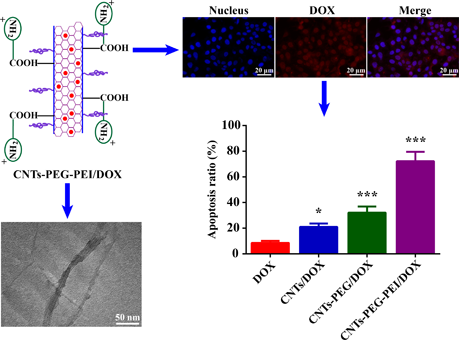
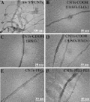
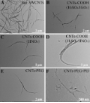
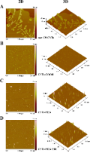
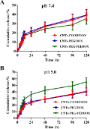
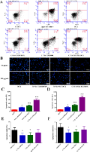
- the successful conjugation of amino groups onto the surface of CNTs-PEG-PEI. XRD results (Figure 4D) show diffraction peaks of different carbon nanomaterials at 26° and 42°. In comparison with the raw SWCNTs, the diffraction peaks of CNTs-COOH samples become notably sharper. Furthermore, the




Nickel nanoparticles supported on a covalent triazine framework as electrocatalyst for oxygen evolution reaction and oxygen reduction reactions
Beilstein J. Nanotechnol. 2020, 11, 770–781, doi:10.3762/bjnano.11.62
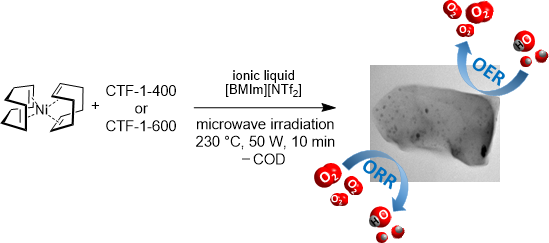
- thermal stability of the CTF support is another advantage, as this is often a problem of many other catalysts. CTF-1-600, as a metal-free electrocatalyst, showed better performance than N-doped carbon nanomaterials, which required an overpotential of 0.38 V vs RHE at 10 mA/cm2 [57], better performance


Identification of physicochemical properties that modulate nanoparticle aggregation in blood
Beilstein J. Nanotechnol. 2020, 11, 550–567, doi:10.3762/bjnano.11.44
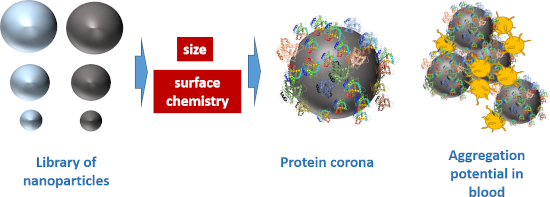
- incubation time. This process does not involve platelet activation and appears related to the ability of particles to act as bridges among platelets, similar to that observed by other authors with other carbon nanomaterials [11][13]. This was confirmed for large nanoparticles (Figure 10), while for medium




Flexible freestanding MoS2-based composite paper for energy conversion and storage
Beilstein J. Nanotechnol. 2019, 10, 1488–1496, doi:10.3762/bjnano.10.147
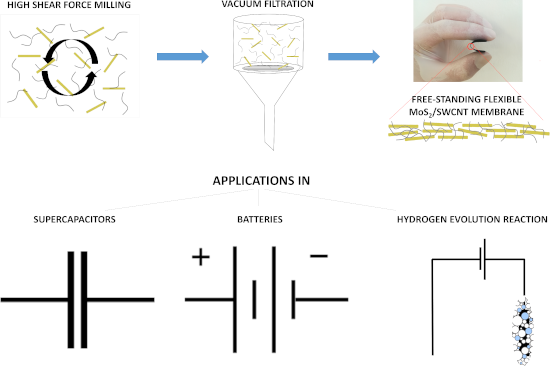
- , our material exhibits a capacitance of 33 mF·cm−2 at a current density of 1 mA·cm−2. This value is competitive with other reported materials based on carbon nanomaterials. This material can also be used as a hydrogen evolution reaction catalyst. The as-prepared materials exhibits an onset potential of





