


Search results
Search for "charge density" in Full Text gives 154 result(s) in Beilstein Journal of Nanotechnology.
Glycerol photoelectrochemical oxidation reaction at carbon nitrides/BiVO4 materials
Beilstein J. Nanotechnol. 2026, 17, 806–817, doi:10.3762/bjnano.17.57
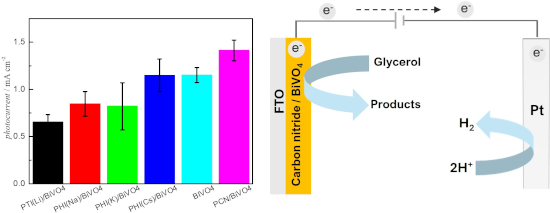
- (III) nitrate (Sigma-Aldrich, ACS reagent, 99.99%) solution (0.02 mol·L−1 in ethylene glycol) by applying a −1.8 V vs Ag/AgCl/KClsat potential for five cycles (2 s at open circuit between the cycles) until reaching a charge density of −0.04 C·cm−2 at each cycle (total charge of −0.2 C·cm−2) [33]. The




Tailoring Ag–Pt nanoalloys through solid-state dewetting: structural and optical insights
Beilstein J. Nanotechnol. 2026, 17, 748–759, doi:10.3762/bjnano.17.52

- in both the real and imaginary components of the dielectric function (ε1 and ε2), leading to the quenching of the plasmon resonance [66]. Moreover, Pt d-electrons do not participate in the collective charge density oscillations in Ag–Pt alloys [37][67][68]. To further confirm the formation of




Defects and defect-mediated engineering of two-dimensional materials: challenges and open questions
Beilstein J. Nanotechnol. 2026, 17, 454–488, doi:10.3762/bjnano.17.31





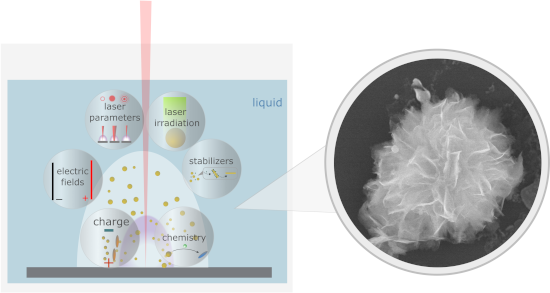
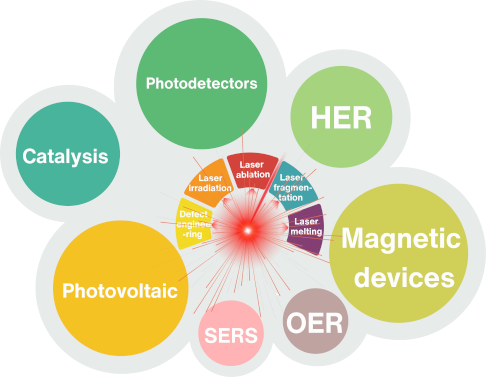
Laser ablation in liquids for shape-tailored synthesis of nanomaterials: status and challenges
Beilstein J. Nanotechnol. 2025, 16, 1963–1997, doi:10.3762/bjnano.16.137
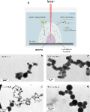
- is induced due to the difference of charge density at the sharper end of the structure. As a result, the assembly of the droplet-like shapes form organized dendritic structures instead of loose aggregates due to a stronger repulsion by the sharp ends of the nanodroplets as compared to that of the




Exploring the potential of polymers: advancements in oral nanocarrier technology
Beilstein J. Nanotechnol. 2025, 16, 1751–1793, doi:10.3762/bjnano.16.122
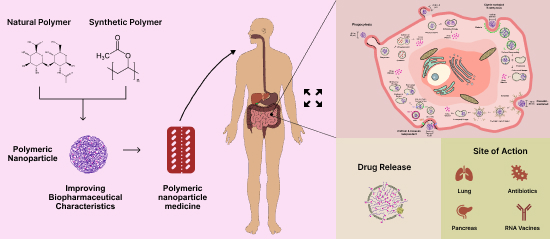
- the charge properties and the interaction between chitosan and sodium tripolyphosphate (TPP) molecules. At low pH, the amino groups become protonated, causing the molecule to adopt an extended conformation due to charge repulsion. The TPP molecule is also protonated, generating a lower charge density
- . At pH 4, both TPP and chitosan undergo deprotonation, with the protonation of chitosan being less affected, leading to a strong TPP–chitosan interaction that prevents rifampicin release. Conversely, at basic pH, the increased TPP charge neutralizes the charge density in chitosan, causing the collapse


Multifunctional anionic nanoemulsion with linseed oil and lecithin: a preliminary approach for dry eye disease
Beilstein J. Nanotechnol. 2025, 16, 1711–1733, doi:10.3762/bjnano.16.120
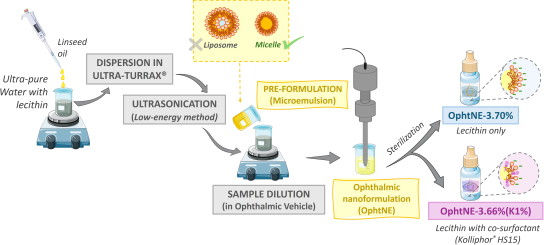
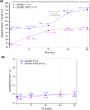
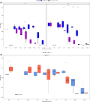
- -formulations exhibited zeta potential values exceeding −30 mV, as shown in Table 3. The lecithin concentration significantly influenced the negative charge density on the droplets’ surface. This effect was evident in the pre-formulation containing 2% (w/w) lecithin (O/W (L-2%)), where the surfactant coating
- droplet uniformity with a monodisperse profile [93]; (3) maximizing lecithin’s performance in forming LO droplets through monolayer micelles [81]; (4) avoiding excess surfactant molecules to maintain biocompatibility [94][95]; and (5) maintaining a negative surface charge density greater than −30 mV for
- of this co-surfactant aimed to stabilize and slightly reduce the negative charge density in the droplet surface [99]. Furthermore, the combination of lecithin with another hydrophilic surfactant has a greater capacity to form micelles [43]. Kolliphor was selected due to its common use in ophthalmic



Prospects of nanotechnology and natural products for cancer and immunotherapy
Beilstein J. Nanotechnol. 2025, 16, 1644–1667, doi:10.3762/bjnano.16.116
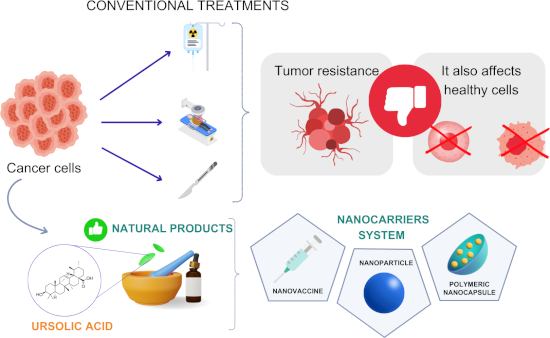
- polymeric membranes, non-ionic surfactants, macromolecules, and phospholipids [176][177]. The properties of the pharmaceutical form are governed by size, shape, core structure, and ligands, which can alter factors such as solubility, charge density, hydrophobicity, stability, and binding affinity [178]. The


Laser processing in liquids: insights into nanocolloid generation and thin film integration for energy, photonic, and sensing applications
Beilstein J. Nanotechnol. 2025, 16, 1428–1498, doi:10.3762/bjnano.16.104






The role of biochar in combating microplastic pollution: a bibliometric analysis in environmental contexts
Beilstein J. Nanotechnol. 2025, 16, 1401–1416, doi:10.3762/bjnano.16.102
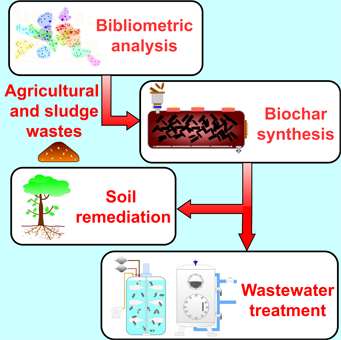
- and surface area, compared to other materials [37]. Biochar produced from carbon-, oxygen- and nitrogen-rich straw at low pyrolysis temperatures retains a large number of functional groups, which enhance charge transfer potential and adsorption stability through increased surface charge density



Synthesis of biowaste-derived carbon-dot-mediated silver nanoparticles and the evaluation of electrochemical properties for supercapacitor electrodes
Beilstein J. Nanotechnol. 2025, 16, 933–943, doi:10.3762/bjnano.16.71
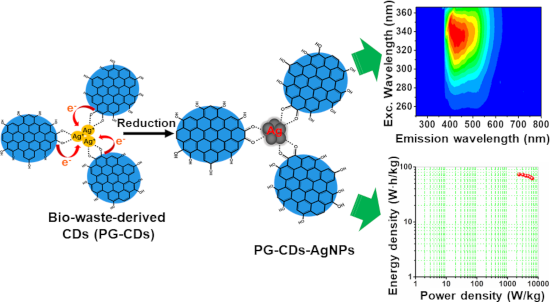
- -storing EDLC-type mechanism. Given the low charge density of K+ ions, which facilitates its access to the electrode during the electrochemical reaction, it may be concluded that this occurrence may have an impact on the performance of the electrochemical reaction. The deintercalation and intercalation of


The impact of tris(pentafluorophenyl)borane hole transport layer doping on interfacial charge extraction and recombination
Beilstein J. Nanotechnol. 2025, 16, 678–689, doi:10.3762/bjnano.16.52
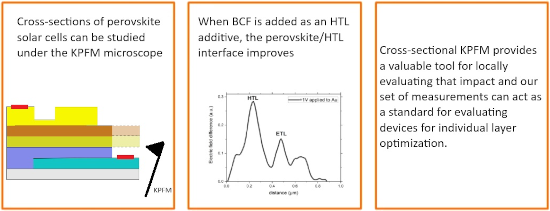
- the solar cells. By plotting charge density profiles we can more clearly point out the sum of photo-charge that has been extracted at the perovskite interfaces and accumulated under open-circuit conditions. Unlike the measurements under bias, here we excited a large number of charges within the
- absorber, which diffuse, get extracted, and aggregate at the interfaces, giving rise to a large charge density magnitude we can plot. In order to generate the photo-carrier density profiles, we applied the Poisson’s equation: Here, ε0 is the permittivity of free space, ε is the relative permittivity of
- HTL interface. The relative ability of these interfaces to efficiently extract (and block) charges depends on the energetic alignment with the perovskite and the defect-induced interfacial recombination that occurs there. These factors determine the charge density that will ultimately accumulate on


Polyurethane/silk fibroin-based electrospun membranes for wound healing and skin substitute applications
Beilstein J. Nanotechnol. 2025, 16, 591–612, doi:10.3762/bjnano.16.46
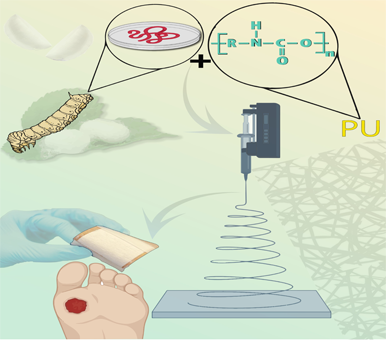
- electrospun polymer fibers is affected by electric field intensity, solution viscosity, charge density of the solution, and solution supply rate [56]. The size of the fibers also affects the performance of electrospun nanofiber composites [57]. Numerous polymers and precursors including polylactic acid, PU



Synthetic-polymer-assisted antisense oligonucleotide delivery: targeted approaches for precision disease treatment
Beilstein J. Nanotechnol. 2025, 16, 435–463, doi:10.3762/bjnano.16.34

- (e.g., generations 5 and 6) significantly improved the delivery efficiency of ASOs into HeLa cells, as evidenced by increased luciferase activity in a splicing correction assay. This was attributed to the higher charge density and molecular size of the higher-generation DPLs, which facilitated more
- ][106], architecture [107][108], degree of amine/phosphate complexation [109], and surface charge density of the polymers [110] strongly affect the transfection efficiency and toxicity of these cationic platforms. In this section of the review, we discuss the progress and challenges associated with the
- G4) with low and high surface charge density, that is, open shell and dense shell, respectively [133]. In addition, reduced systemic cytotoxicity was achieved through partial modification of PPI G4 with oligosaccharides such as maltose (Mal) and maltotriose (Mal-III), while maintaining optimal


Theoretical study of the electronic and optical properties of a composite formed by the zeolite NaA and a magnetite cluster
Beilstein J. Nanotechnol. 2025, 16, 44–53, doi:10.3762/bjnano.16.5
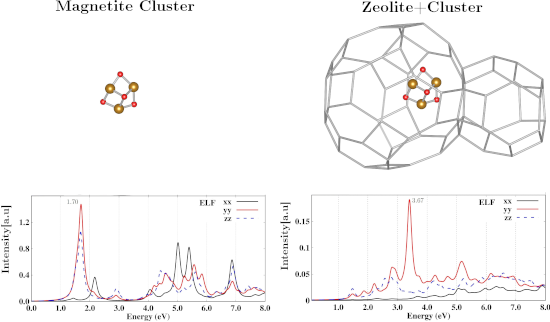
- magnitude of the largest vector in charge density Fourier expansion is Gmax = 12.0. The energy to separate the valence states of the core states was set at a value of −7.5 Ry; thus, the Al [1s2 2s2], O [1s2], Si [1s2 2s2], Na [1s2], and Fe [1s2 2s2 2p6] electronic states are considered as core states, and




Interaction of graphene oxide with tannic acid: computational modeling and toxicity mitigation in C. elegans
Beilstein J. Nanotechnol. 2024, 15, 1297–1311, doi:10.3762/bjnano.15.105
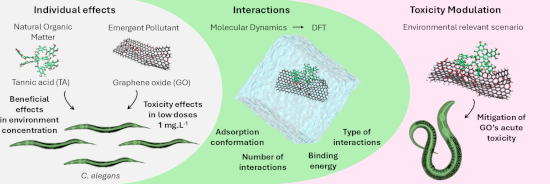
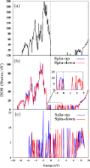
- configuration in water without TA. Figure 4a and Figure 4b show the charge density plot of the functions f+ and f− of GO before and after NPT MD simulation in an aqueous environment at 300 K. We observed an augmentation of sheet folding and the occurrence of broken bonds, which increased the reactivity of the


Can neutral clusters: a two-step G0W0 and DFT benchmark
Beilstein J. Nanotechnol. 2024, 15, 1010–1016, doi:10.3762/bjnano.15.82
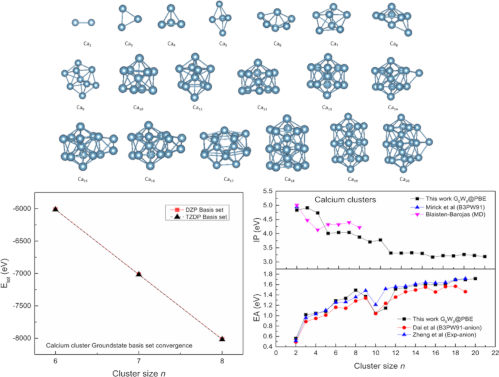
- functionals, as it can be more efficient in terms of computational resources and time. The threshold for the force was set at 0.1 eV/Angstrom for better convergence, whereas the charge density difference tolerance, which is essential for convergence, was set at a value of 10−9. The ABACUS code employs the


Recent progress on field-effect transistor-based biosensors: device perspective
Beilstein J. Nanotechnol. 2024, 15, 977–994, doi:10.3762/bjnano.15.80
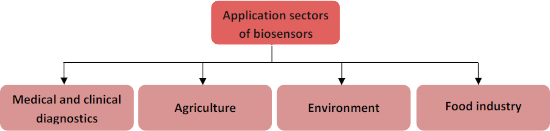
- . The first transduction mechanism is known as charge modulation, in which charged biomolecule species bind to the surface of the gate insulator and modify the charge density of the channel surface, and thus the surface conductivity by Coulomb interaction. This acts as a gating mechanism, and
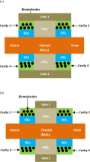
- coupling [55]. The variation of capacitance depends on the intrinsic charge density and the dielectric constant of the target biomolecule [48]. The cavity specification and thereby the sensor device design is also related to the diameter of targeting species, which varied from micro- to nanoscale (Figure 4




Exploring surface charge dynamics: implications for AFM height measurements in 2D materials
Beilstein J. Nanotechnol. 2024, 15, 767–780, doi:10.3762/bjnano.15.64
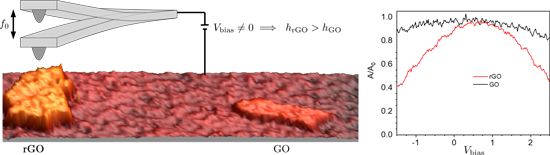
- a semi-infinite medium with permittivity ε2 and bulk conductivity σ2 embedded in a medium with permittivity ε1 and conductivity σ1. A well-known key feature is that, for an homogeneous bulk system, an arbitrary initial charge density, ρ(r, t = 0), decays in time as ρ(r, t) = ρ(r, t = 0)·exp(−t/τ
- to avoid possible singularities, we assume that all non-negligible charge density is located in a region of height a inside the sample (from z = 0 + ε→0+ to z = −a, see Figure 6). We note that, as long as a is finite, we must handle three-dimensional quantities (charge density and conductivity). Only
- , the two-dimensional charge density is defined as n(x, y, t) = lima→0aρ(x, y, z = 0, t). Now, applying charge conservation (continuity equation), Ohm’s law, and Gauss’ theorem to the gray surface element in the sample plotted in Figure 6 leads to [78]: Ez(x, y, z, t) is the z component of the electric


Laser synthesis of nanoparticles in organic solvents – products, reactions, and perspectives
Beilstein J. Nanotechnol. 2024, 15, 638–663, doi:10.3762/bjnano.15.54
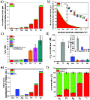
- the ionic strength of the added salts and the obtained gold particle size (Figure 2). The surface oxidation increased with the anion’s surface charge density until a plateau of around 60% was reached. A further increase in ionic strength showed no change in surface oxidation, which was attributed to





Study of the reusability and stability of nylon nanofibres as an antibody immobilisation surface
Beilstein J. Nanotechnol. 2024, 15, 83–94, doi:10.3762/bjnano.15.8
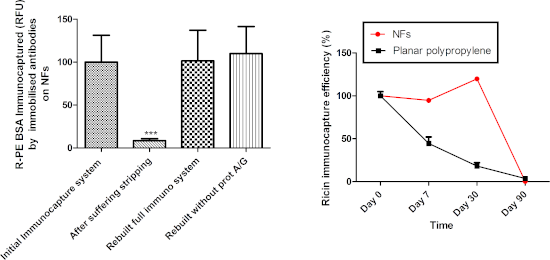
- an environment of high ion concentration capable of interacting with any charge density group, disrupting the hydrophobic bonds between protein A/G and antibody and the hydrogen bonds between protein A/G and nylon, as well as the bare nylon nanofibres. Results of stability study As this system is


Berberine-loaded polylactic acid nanofiber scaffold as a drug delivery system: The relationship between chemical characteristics, drug-release behavior, and antibacterial efficiency
Beilstein J. Nanotechnol. 2024, 15, 71–82, doi:10.3762/bjnano.15.7
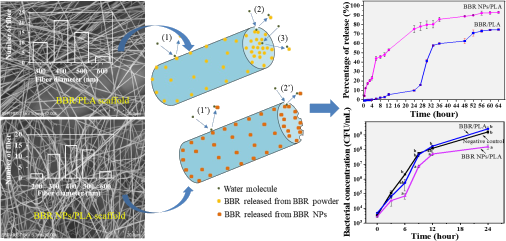
- positively charged quaternary ammonium groups of BBR, increasing the charge density of the blend solution. As the higher charged solution jet, the elongation force imposed on the jet was higher, forming smaller fibers [3][34]. Interestingly, although the same amount of BBR drug was incorporated in the BBR


Density functional theory study of Au-fcc/Ge and Au-hcp/Ge interfaces
Beilstein J. Nanotechnol. 2023, 14, 1093–1105, doi:10.3762/bjnano.14.90
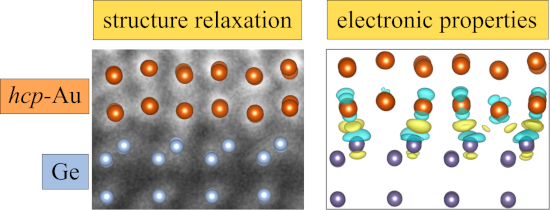
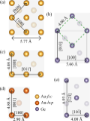
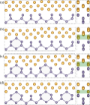
- provide surface energy details for gold and germanium crystals and the charge density differences for the Au/Ge heterostructures. Methodology Interfacial energy and the work of separation in DFT calculations In contrast to the bulk phase of a material, the surface atoms have an incomplete set of neighbors
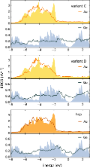
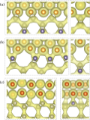
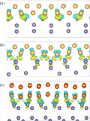
- Au atom (the difference arises from different number of unbound germanium electrons in a given crystal surface). Even deeper insight into the formation of these bonding states can be gained by investigating the charge density and charge redistribution at the interface. Figure 12a shows the charge
- accumulation (yellow) and charge depletion (light blue) regions with respect to separate Ge and Au slabs terminated with vacuum (see Appendix B for details). One can observe charge accumulation between the interface Ge and Au atoms, as expected for bond formation. Figure 12b presents the charge density map for





Isolation of cubic Si3P4 in the form of nanocrystals
Beilstein J. Nanotechnol. 2023, 14, 971–979, doi:10.3762/bjnano.14.80
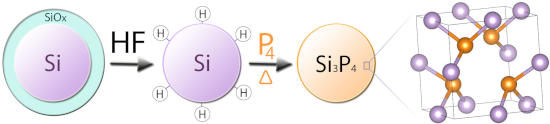
- , and for charge density at 240 Ry. IR spectra of Si NPs (a) upon etching and (b) before etching. XRD diffraction patterns of (a) Si, (b) SP900, (c) SP670, and (d) SP400. The asterisk denotes a peak from the copper admixture, as discussed in the main text. The vertical lines correspond to the


Bismuth-based nanostructured photocatalysts for the remediation of antibiotics and organic dyes
Beilstein J. Nanotechnol. 2023, 14, 291–321, doi:10.3762/bjnano.14.26
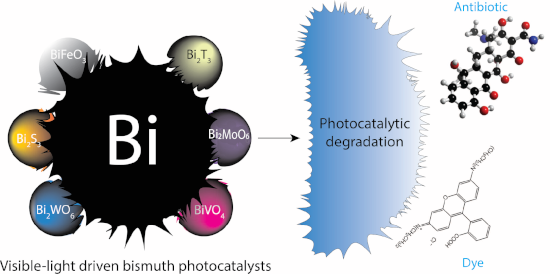
- semiconductor and a noble metal with an appropriate work function. A unidirectional charge transfer is enabled by the Schottky potential barrier, increasing charge density and separation [72]. Shen et al. [166] created a Schottky junction by synthesising NiSe2 nanosheets on top of BiVO4 nanosheets using a


Batch preparation of nanofibers containing nanoparticles by an electrospinning device with multiple air inlets
Beilstein J. Nanotechnol. 2023, 14, 141–150, doi:10.3762/bjnano.14.15
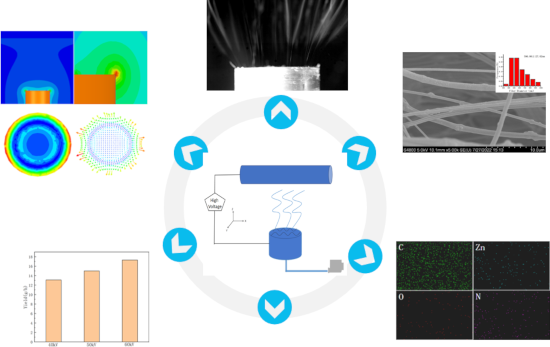
- shrink and bend as much as possible, and the change of external electric field would interact with the accumulated charges on the polymer fluid surface, making the charge density on the charged fluid surface uneven. Accordingly, the formulas to calculate these three forces are as follows: where ρ is the





