Search results
Search for "coordination" in Full Text gives 270 result(s) in Beilstein Journal of Nanotechnology. Showing first 200.
Nanoglasses: a trail towards uncharted regions of vitreous materials and their properties?
Beilstein J. Nanotechnol. 2026, 17, 1047–1062, doi:10.3762/bjnano.17.72

- from the amorphous state at low temperatures into a supercooled liquid at increased temperatures is impossible as a discontinuous change of the coordination number (for amorphous Ge) or the excess volume (for glass–glass interfaces) would be required [32]. As of now it remains unclear, how the


Influence of an external electric field on the catalytic CO oxidation of nanoscaled CeO2 and its La3+ and Gd3+ congeners
Beilstein J. Nanotechnol. 2026, 17, 1028–1038, doi:10.3762/bjnano.17.70
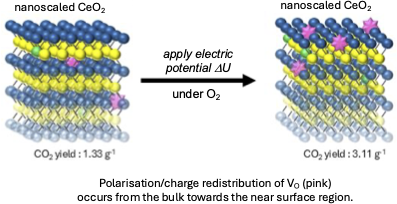
- example, Ce1−xMxO2−δ (M = metal) [3][16]. Under these conditions oxygen vacancies (VO) are formed. The incorporated dopant elements thus allow one to modify the coordination environment in the CeO2 lattice by creating oxygen vacancies, decreasing the energy of VO formation, and improving charge migration


Development of Protium heptaphyllum essential oil-loaded nanocapsules: experimental design and biological activity
Beilstein J. Nanotechnol. 2026, 17, 974–990, doi:10.3762/bjnano.17.67
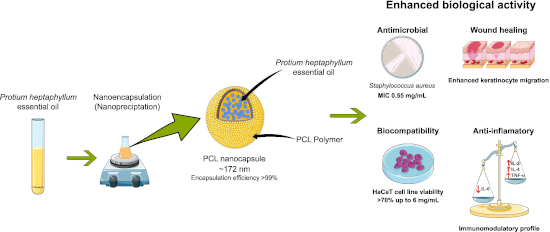
- , Botany Coordination, Museu Paraense Emílio Goeldi, Belém, PA, Brazil Environmental Health Laboratory, Environment Section, Evandro Chagas Institute, PA, Brazil Laboratory of Cytogenomics and Environmental Mutagenesis, Environment Section, Evandro Chagas Institute, PA, Brazil 10.3762/bjnano.17.67




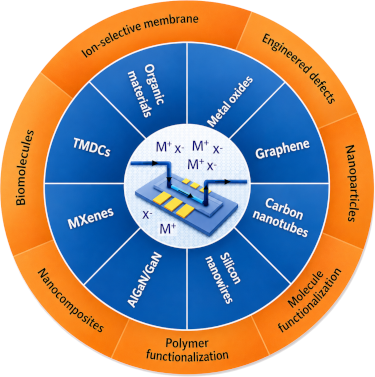
Materials challenges in solid-state sensors for continuous monitoring of ions in water
Beilstein J. Nanotechnol. 2026, 17, 935–973, doi:10.3762/bjnano.17.66



Light-driven ammonia electrooxidation via carbon nitride–ruthenium molecular interfaces
Beilstein J. Nanotechnol. 2026, 17, 854–862, doi:10.3762/bjnano.17.61
- Jan Holub Pablo Jimenez-Calvo Group of Coordination Chemistry, University of Chemistry and Technology, Prague (UCT, Prague); Department of Inorganic Chemistry, Technická 5, 166 28, Prague, Czech Republic Chemistry of Thin Film Materials, Materials Chemistry Section, Friedrich-Alexander-Universität
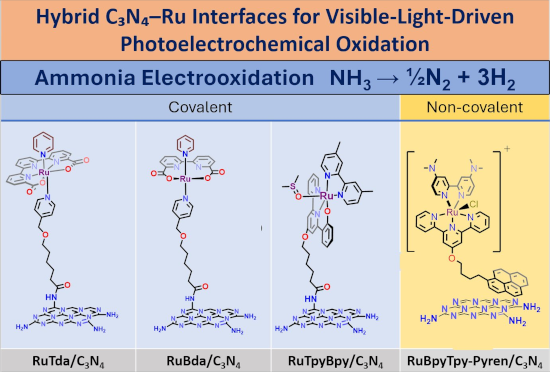
- : C3N4 absorbs visible light, separates charge carriers, and provides a structurally tunable aromatic surface, while the metal complexes, e.g., RuBda, RuTda, or RuTpyBpy, accept photogenerated holes and drive the demanding six-electron oxidation of ammonia through well-defined coordination chemistry. Two
- without releasing oxidized intermediates such as hydrazine or hydroxylamine. Second, ammonia is a strong σ-donor that coordinates readily to Ru(II), positioning the substrate in the inner coordination sphere for successive proton-coupled electron-transfer steps. Third, the ligand environment around Ru can


Cross-scale design of chemosensor arrays: from molecular self-assembly in water to paper-based devices for metal ion detection
Beilstein J. Nanotechnol. 2026, 17, 828–838, doi:10.3762/bjnano.17.59
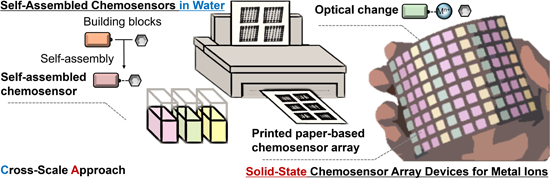
- optical signals. In particular, coordination with metal ions enables cross-reactive sensing, allowing for simultaneous detection of multiple analytes based on pattern recognition. This perspective summarizes advances in self-assembled chemosensor systems for metal ion detection and further developments to
- chemosensors for metal ion sensing The general strategy of metal-ion recognition primarily relies on multivalent coordination between target metal ions and donor atoms (e.g., nitrogen, oxygen, and sulfur) of binding sites [44]. Upon metal ion capture, the chemical information is visualized using optical units
- optical properties of catechol derivatives correspond to the protonation and deprotonation forms [54]. The coordination with metal ions promotes the deprotonation of catechol derivatives from neutral structures [53]. Herein, we focus on phenylboronic acid as an optical manipulator of catechol derivatives


afspm: A framework for manufacturer-agnostic automation in scanning probe microscopy
Beilstein J. Nanotechnol. 2026, 17, 653–667, doi:10.3762/bjnano.17.45
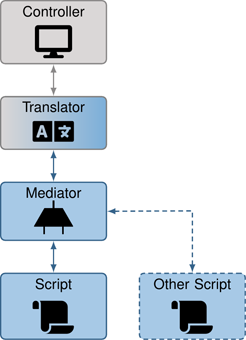
- logic developed for SPM. In the future, our presented framework may benefit from integration with (or adaptation to) the Bluesky suite of Python packages [17]. That project’s focus on interoperability and coordination for multi-instrument experiments may prove useful as afspm progresses. Furthermore




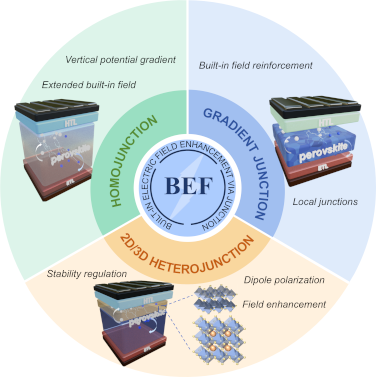
Recent progress in enhancing built-in electric fields of perovskite solar cells via junction engineering
Beilstein J. Nanotechnol. 2026, 17, 602–621, doi:10.3762/bjnano.17.42




Impacts of annealing on structural and photophysical properties of zinc phthalocyanine adsorbed on graphene
Beilstein J. Nanotechnol. 2026, 17, 576–585, doi:10.3762/bjnano.17.39
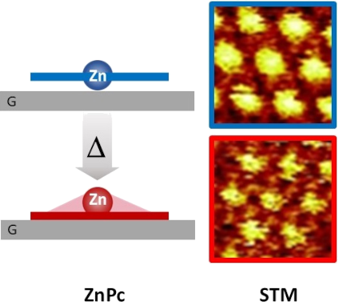
- adsorbed ZnPc to reactants in a supernatant solution. This can be expected to influence the formation of metal–ligand coordination complex of an adsorbed ZnPc with pyridyl groups. Such a process has been recently reported using pyridyl-functionalized perylenes (BPDI4Py, Figure 5, see details in the cited
- phthalocyanine (ZnPc, Sigma-Aldrich). The host–guest monolayers were successively drop-casted from toluene solutions with ≈2:1 relative molar concentrations, respectively. The coordination with BPDI4Py was conducted in situ, on a fresh guest–host ZnPc:TSB35-C12 sample after complete solvent evaporation. A ≈8 µL


Electrochemical determination of ciprofloxacin using a MIL-101/reduced graphene oxide-modified electrode
Beilstein J. Nanotechnol. 2026, 17, 541–554, doi:10.3762/bjnano.17.35
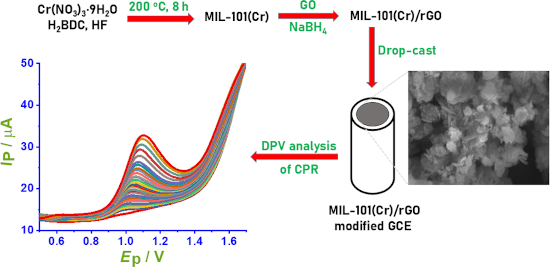
- integration of MIL-101(Cr) and rGO, while preserving the Cr3+ oxidation state and the characteristic coordination environment of the MIL-101 framework. The SEM images of rGO, MIL-101, and the MIL-101/rGO composite are shown in Figure 4. The rGO sample (Figure 4a) displays a typical wrinkled, sheet-like


Upcycling agroindustrial waste into graphene oxide supports for gold nanoparticles: toward sustainable nanomaterials
Beilstein J. Nanotechnol. 2026, 17, 489–504, doi:10.3762/bjnano.17.32
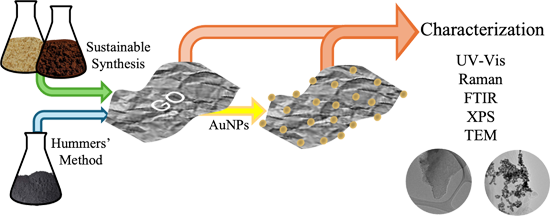
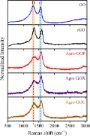
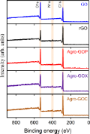
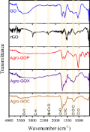
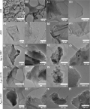
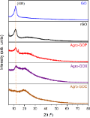
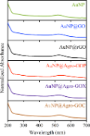
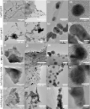
- coordination to AuCl4− than hydroxy and carboxyl groups. Moreover, residual biomass-derived carbonaceous layers or amorphous carbon deposits may partially mask the GO surface, physically blocking otherwise reactive sites. The combination of these factors reduces the effective density of accessible nucleation



Defects and defect-mediated engineering of two-dimensional materials: challenges and open questions
Beilstein J. Nanotechnol. 2026, 17, 454–488, doi:10.3762/bjnano.17.31
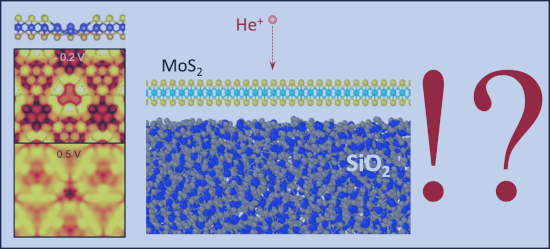
- ), reducing the likelihood of O2 reactions with these defect sites. Reactivity is also highly site-specific and controlled by the local coordination and electronic structure of surface W atoms. The effective charge of W is affected by the number of surrounding vacancies. W atoms surrounded by three or more S





Nanoinformatics: spanning scales, systems and solutions
Beilstein J. Nanotechnol. 2026, 17, 423–427, doi:10.3762/bjnano.17.28
- lines and primary cellular models. Another example demonstrated the use of the instance map approach for the coordination of materials and data flows in complex multi-partner collaborative projects, providing information on both materials and data flows in a user-friendly approach to metadata capture

Eco-efficient materials for agricultural crops based on a mineral rich in MOR- and HEU-type zeolites
Beilstein J. Nanotechnol. 2026, 17, 381–395, doi:10.3762/bjnano.17.26
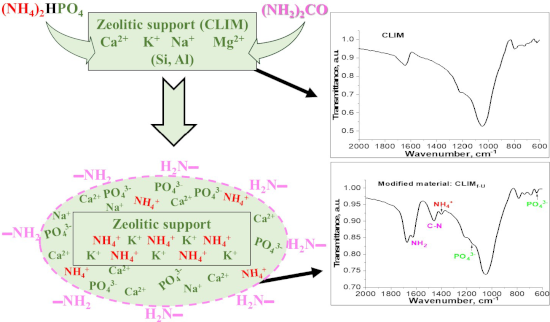
- + complexes, indicating the presence of bidentate and tridentate coordination modes [18][26][29][36]. The monodentate configuration has one hydrogen atom, out of four, that interacts with one oxygen atom of the framework; the bidentate configuration has two hydrogen atoms interacting with two different oxygen




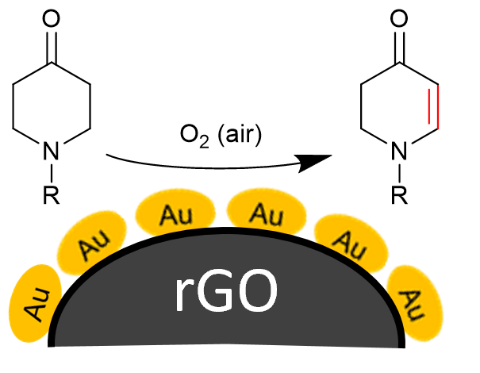
Gold nanoparticle-decorated reduced graphene oxide as a highly effective catalyst for the selective α,β-dehydrogenation of N-alkyl-4-piperidones
Beilstein J. Nanotechnol. 2026, 17, 218–238, doi:10.3762/bjnano.17.15
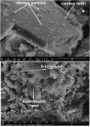
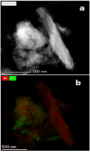
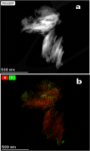
- (C–O, C=O, –OH) that can form hydrogen bonds or coordination interactions with citrate ligands and Au species [29][30]. These localized polar sites promote adsorption. Second, charge inhomogeneities on rGO arising from structural defects, residual oxygenated patches, and edge terminations create


Safe and sustainable by design with ML/AI: A transformative approach to advancing nanotechnology
Beilstein J. Nanotechnol. 2026, 17, 176–185, doi:10.3762/bjnano.17.11
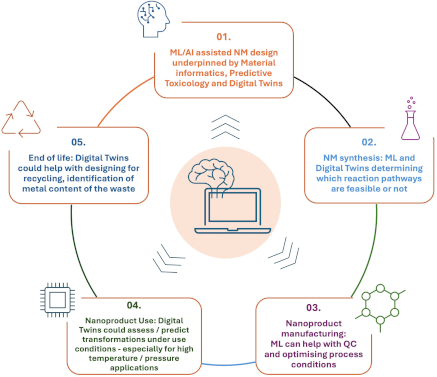
- information for researchers and policymakers and ensuring transparency and thereby trust in the assessment outcomes [32][33][34]. Strengthening interdisciplinary collaboration Greater coordination between academia, industry, and regulatory agencies is needed to comprehensively address environmental, health


From shield to spear: Charge-reversible nanocarriers in overcoming cancer therapy barriers
Beilstein J. Nanotechnol. 2026, 17, 159–175, doi:10.3762/bjnano.17.10
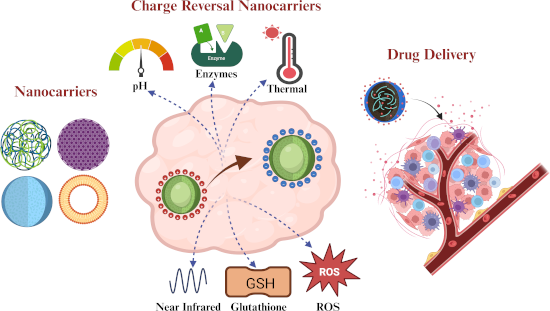
- radiation compared to that under conventional methods. These dual-functionality CRNs improved drug delivery precision and enhanced the overall effectiveness of radiotherapy [61]. A study by Liu et al. developed the nanoscale coordination polymer Hf-nIm@PEG (HNP), which integrates hafnium ions (Hf4+) with 2


Optical bio/chemical sensors for vitamin B12 analysis in food and pharmaceuticals: state of the art, challenges, and future outlooks
Beilstein J. Nanotechnol. 2025, 16, 2207–2244, doi:10.3762/bjnano.16.153


Microplastic pollution in Himalayan lakes: assessment, risks, and sustainable remediation strategies
Beilstein J. Nanotechnol. 2025, 16, 2144–2167, doi:10.3762/bjnano.16.148
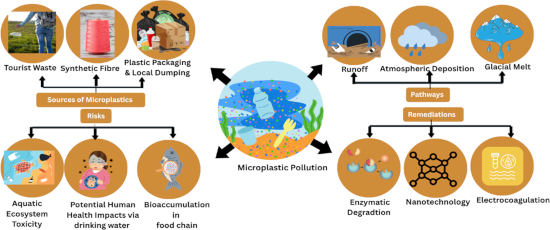
- , and funding local efforts. For these community-driven strategies to scale up, however, more government support, inter-border cooperation, and coordination with formal waste management systems are necessary. 8.3 Suggestion for monitoring and regulations The increasing presence of MPs in the environment
- , international collaboration is necessary. The 2022 UN Global Treaty on Plastics, which was signed by 175 countries, is a major milestone toward legally binding global agreements on plastic waste management [140], including MP cross-border policy coordination and research, supported by efforts such as the global


The cement of the tube-dwelling polychaete Sabellaria alveolata: a complex composite adhesive material
Beilstein J. Nanotechnol. 2025, 16, 1998–2014, doi:10.3762/bjnano.16.138
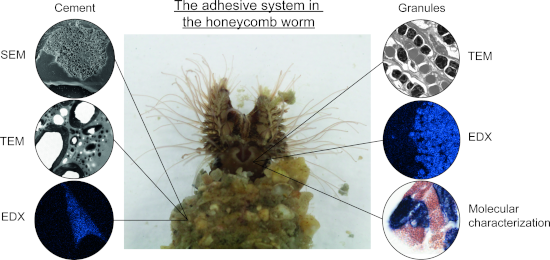
- their byssus [40]. For instance, His residues in the His-rich terminal domains of preCols, the collagenous proteins that make up over 95% of the byssal threads core, can form metal coordination cross-links with zinc ions [41][42]. In the byssal plaque, mfp-4, the protein linking the plaque to the thread



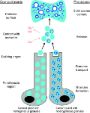
Laser ablation in liquids for shape-tailored synthesis of nanomaterials: status and challenges
Beilstein J. Nanotechnol. 2025, 16, 1963–1997, doi:10.3762/bjnano.16.137
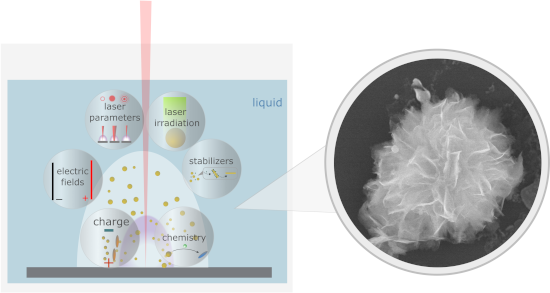
- nanoparticles, typically those with diameters of only a few nanometres, because their high proportion of surface atoms with low coordination and broken bonds leads to increased surface energy [13]. Furthermore, in assembled nanocrystals, the surface energy can be different in different directions, which induces
- concentration the growth of spherical NPs is favourable. As a mechanism, the authors suggest the coordination of the interaction of Ag species, ejected from the target with Br ions from the solution by the CTAB stabilizer molecules. Similar action during NP growth can be expected upon addition of some metal





Evaluating metal-organic precursors for focused ion beam-induced deposition through solid-layer decomposition analysis
Beilstein J. Nanotechnol. 2025, 16, 1942–1951, doi:10.3762/bjnano.16.135
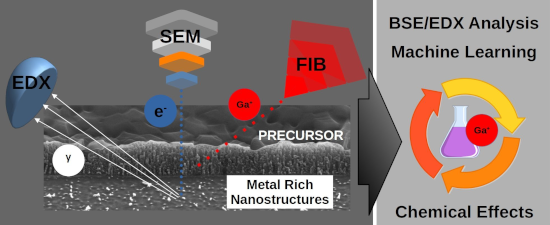
- % [5][15][22][23][24][25][26]. This shows that the electron beam-induced decomposition is influenced by the ligand and also by the coordination center. Due to the key role played by secondary electrons in the decomposition of FIBID precursors, FIBID precursor compounds are limited to those used and


Current status of using adsorbent nanomaterials for removing microplastics from water supply systems: a mini review
Beilstein J. Nanotechnol. 2025, 16, 1837–1850, doi:10.3762/bjnano.16.127
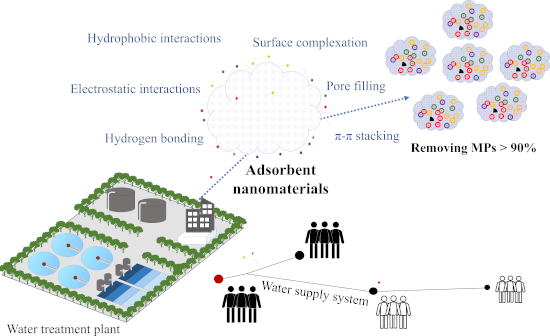
- (pore sizes of 0.3–3.4 nm) and adsorbed MPs through coordination and hydrophobic interactions [60]. Haris et al. introduced a magnetic C@FeO nanopillar adsorbent on a 2D-MOF, achieving approximately 100% removal of MPs (sizes <5 μm) after 1 h, significantly faster than conventional methods [61


Phytol-loaded soybean oil nanoemulsion as a promising alternative against Leishmania amazonensis
Beilstein J. Nanotechnol. 2025, 16, 1826–1836, doi:10.3762/bjnano.16.126

- /). Funding The authors wish to thank the Brazilian National Council for Scientific and Technological Development (CNPq) for financial support (Grant: 308382/2017-0, 311209/2020-3) and Coordination for the Improvement of Higher Education Personal (CAPES) (code 01).


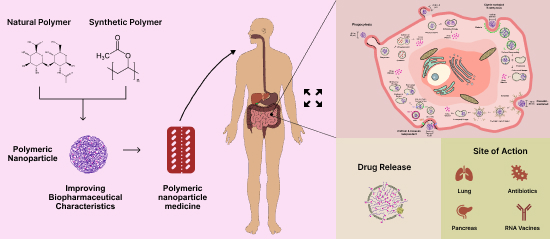
Exploring the potential of polymers: advancements in oral nanocarrier technology
Beilstein J. Nanotechnol. 2025, 16, 1751–1793, doi:10.3762/bjnano.16.122