Search results
Search for "degradation mechanisms" in Full Text gives 15 result(s) in Beilstein Journal of Nanotechnology.
Environmental applications of silver nanoparticles: state-of-the-art review and emerging trends
Beilstein J. Nanotechnol. 2026, 17, 697–736, doi:10.3762/bjnano.17.49
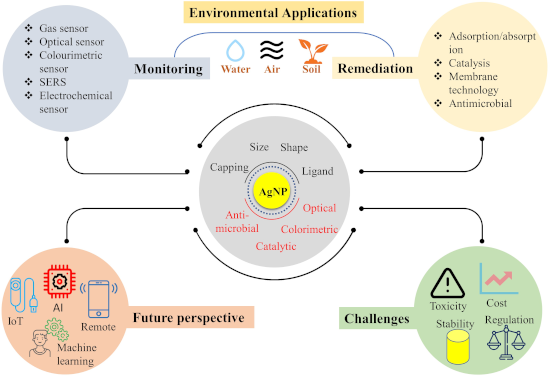
- , respectively [114]. The dye-degradation mechanisms are primarily governed by the generation of ROS, which further degrade dyes, with the synergistic effect of both AgNPs and iron oxide nanoparticles [114]. AgNPs stabilized with Terminalia arjuna showed degradation of dyes as well as nitrophenols. High


Recent progress in enhancing built-in electric fields of perovskite solar cells via junction engineering
Beilstein J. Nanotechnol. 2026, 17, 602–621, doi:10.3762/bjnano.17.42
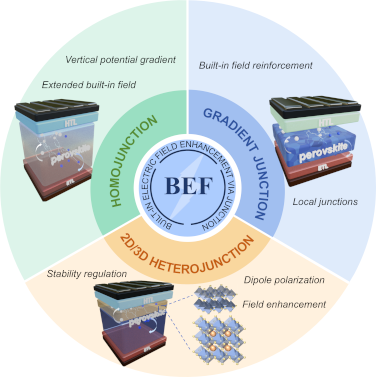
- profile. Thus, clarifying the degradation mechanisms enables the design of suppression strategies that are precisely matched to the spatially coupled nature of graded junctions. 2D/3D heterojunctions Interface stabilization for BEF continuity Unlike homojunctions and graded junctions, 2D/3D heterojunction



Ambient pressure XPS at MAX IV
Beilstein J. Nanotechnol. 2025, 16, 1677–1694, doi:10.3762/bjnano.16.118
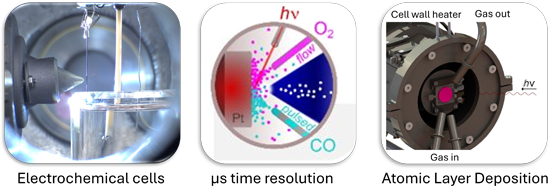
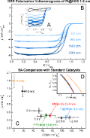
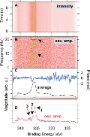
- provides unique insight into surface reactions, charge transfer, and interface stability, which are central to the performance and degradation mechanisms of electrochemical systems. Electrochemical interfaces can be studied by APXPS using two primary cell types, namely, membrane-based flow cells and “dip





Photocatalytic degradation of ofloxacin in water assisted by TiO2 nanowires on carbon cloth: contributions of H2O2 addition and substrate absorbability
Beilstein J. Nanotechnol. 2025, 16, 1567–1579, doi:10.3762/bjnano.16.111
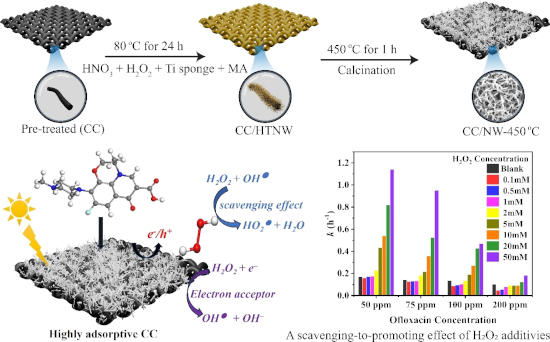
- is insignificant in the current investigation. OFL may be compromised by those reactive species (Equations 12–14). The potential photocatalytic degradation mechanisms of OFL are thus delineated as follows and demonstrated schematically in Figure 8b. The effects of the substrate with high adsorption


Transient electronics for sustainability: Emerging technologies and future directions
Beilstein J. Nanotechnol. 2025, 16, 1545–1556, doi:10.3762/bjnano.16.109

- constituent (Figure 1e) [27]. Crucially, the utility of transient systems is not confined to the biomedical domain. Their degradation mechanisms are equally applicable in broader environmental settings where biocompatibility constraints are relaxed. In contexts such as soil, compost, freshwater, or marine
- . Third, precise lifetime control remains a critical challenge, necessitating not only improved encapsulation strategies but also dynamic, stimuli-responsive degradation mechanisms. Given the intricate nature of biological environments and the variability of therapeutic requirements, materials used in


Laser processing in liquids: insights into nanocolloid generation and thin film integration for energy, photonic, and sensing applications
Beilstein J. Nanotechnol. 2025, 16, 1428–1498, doi:10.3762/bjnano.16.104




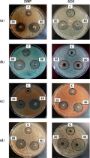


Integrating high-performance computing, machine learning, data management workflows, and infrastructures for multiscale simulations and nanomaterials technologies
Beilstein J. Nanotechnol. 2024, 15, 1498–1521, doi:10.3762/bjnano.15.119
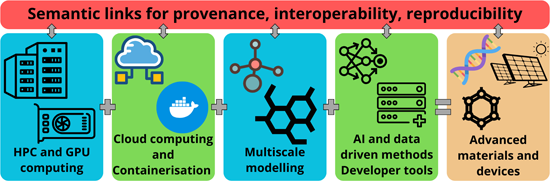
- ]. The digital twin serves as a powerful tool for predictive modelling, optimization, and design of materials, allowing researchers to assess performance under different conditions, predict degradation mechanisms, and optimize material properties. It also facilitates virtual experimentation, reducing the


One-step synthesis of carbon-supported electrocatalysts
Beilstein J. Nanotechnol. 2020, 11, 1419–1431, doi:10.3762/bjnano.11.126

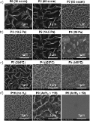
- explained by the aforementioned removal of carbon at the Pt-NPs surface and slower degradation of the Pt/CNW catalysts as observed in Figure 8. However, the degradation mechanisms behind the ECSA loss on both Pt/CNW and HiSPEC4000 are quite similar, as seen from the exponential decay of ECSA in Figure 8. In




Quantitative analysis of annealing-induced instabilities of photo-leakage current and negative-bias-illumination-stress in a-InGaZnO thin-film transistors
Beilstein J. Nanotechnol. 2019, 10, 1125–1130, doi:10.3762/bjnano.10.112
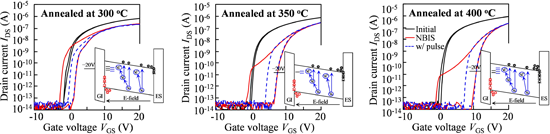
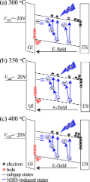
- before and after 104 s NBIS without and with a 10 V gate pulse; (d) hysteresis of IGZO TFTs as a function of NBIS duration. Possible degradation mechanisms of NBIS-induced instability in the devices annealed at (a) 300, (b) 350, and (c) 400 °C, respectively. The electrical parameters of a-IGZO TFTs


Nanocomposite–parylene C thin films with high dielectric constant and low losses for future organic electronic devices
Beilstein J. Nanotechnol. 2019, 10, 428–441, doi:10.3762/bjnano.10.42
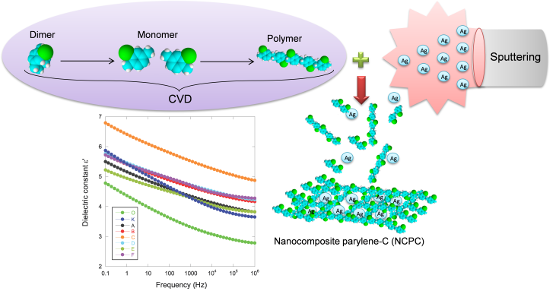
- candidate as a coating dielectric material to protect the sensitive organic layer from oxygen and water vapor [28], which are among the greatest degradation mechanisms contributing to the electrical instability of OFETs [29][30][31][32] and oxide TFTs [33]. It is inferred that parylene C presents a broad




Multimodal noncontact atomic force microscopy and Kelvin probe force microscopy investigations of organolead tribromide perovskite single crystals
Beilstein J. Nanotechnol. 2018, 9, 1695–1704, doi:10.3762/bjnano.9.161
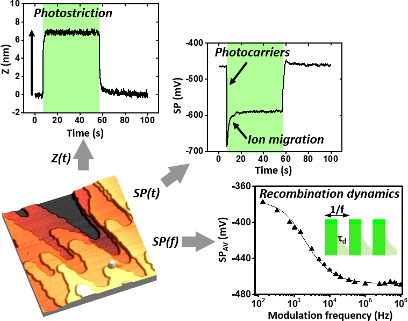
- (BELSPO-PAI VII/5), the FRS-FNRS PDR Project “Hybrid Organic/Inorganic Nanomaterials for Energy COnversion and STOrage Devices on FLEXible and Stretchable Substrates (ECOSTOFLEX)”, and MP 1307 COST Action “Stable Next-Generation Photovoltaics: Unraveling Degradation Mechanisms of Organic and Perovskite


Sugarcane juice derived carbon dot–graphitic carbon nitride composites for bisphenol A degradation under sunlight irradiation
Beilstein J. Nanotechnol. 2018, 9, 353–363, doi:10.3762/bjnano.9.35
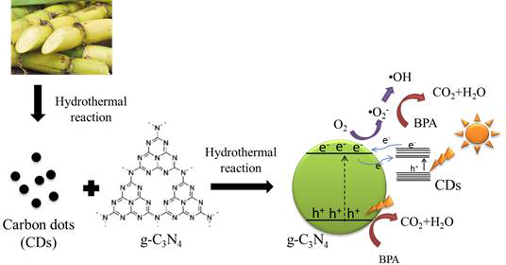
- (PL), X-ray photoelectron spectroscopy (XPS), transmission electron microscopy (TEM), etc. The influence of the weight percentage of CDs and a scavenging experiment were carried out to illustrate the potential degradation mechanisms. Overall, the incorporation of CDs into g-C3N4 was efficient towards


Multiscale modeling of lithium ion batteries: thermal aspects
Beilstein J. Nanotechnol. 2015, 6, 987–1007, doi:10.3762/bjnano.6.102


The cell-type specific uptake of polymer-coated or micelle-embedded QDs and SPIOs does not provoke an acute pro-inflammatory response in the liver
Beilstein J. Nanotechnol. 2014, 5, 1432–1440, doi:10.3762/bjnano.5.155
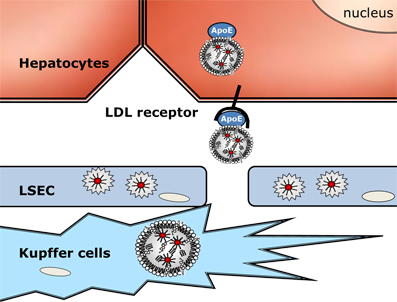
- the mononuclear phagocytic system (MPS) [7]. Consequently, larger nanocrystals are exposed to cellular degradation mechanisms of macrophages, e.g., the acidic environment of lysosomes and even more harsh conditions in phagosomes containing also hydrogen peroxide [8]. This might disrupt the surface


Design criteria for stable Pt/C fuel cell catalysts
Beilstein J. Nanotechnol. 2014, 5, 44–67, doi:10.3762/bjnano.5.5
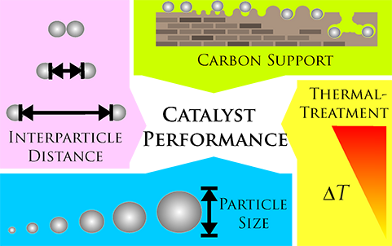
- in particular the catalyst stability are evaluated. Based on our results, a set of design criteria for more stable and active Pt/C and Pt-alloy/C materials is suggested. Keywords: catalyst design criteria; degradation mechanisms; fuel cell catalyst; nanoparticles; stability; Introduction The
- factors that influence the activity of the catalyst was obtained in recent years such as alloying platinum with transition metals [4][5][6][7] or varying the particle size [8][9][10][11][12][13][14], many questions regarding the fundamental degradation mechanisms of such systems remain [15][16]. A stable
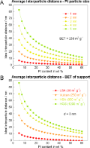
- observed platinum surface area loss. For standard Pt/C catalysts, indications for a variety of different degradation mechanisms are reported and summarized in the literature [3][15][16][17][40][41][42]. In Figure 1 we provide a short summary of catalyst degradation mechanisms that have been suggested to