


Search results
Search for "electrolyte" in Full Text gives 301 result(s) in Beilstein Journal of Nanotechnology. Showing first 200.
Electrochemical sensing of sildenafil in pharmaceutical formulations using an (S,N)-doped reduced graphene oxide-modified electrode
Beilstein J. Nanotechnol. 2026, 17, 1087–1102, doi:10.3762/bjnano.17.74
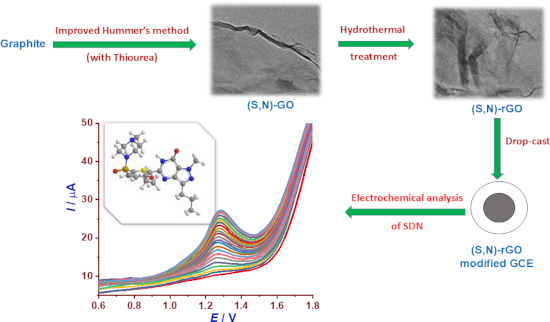
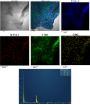
- area, and facilitate electrolyte diffusion. The formation of folded nanosheet structures also creates abundant edge-plane-like defects and active sites, which are beneficial for electron-transfer reactions and analyte adsorption during electrochemical sensing. The elemental mapping images and EDX
- electronic structure. These heteroatom-induced effects facilitate charge transfer across the electrode/electrolyte interface and lower the activation energy for the oxidation reaction. Furthermore, the aromatic structure of SDN can interact with the π-conjugated graphene surface through π–π stacking
- pH 4.0 was selected as the optimum supporting electrolyte for subsequent experiments. As shown in Figure 5c, the oxidation peak potential shifted linearly toward less positive values with increasing pH, following the equation: The slope of 0.0317 V·pH−1 is close to half of the theoretical Nernstian



Materials challenges in solid-state sensors for continuous monitoring of ions in water
Beilstein J. Nanotechnol. 2026, 17, 935–973, doi:10.3762/bjnano.17.66
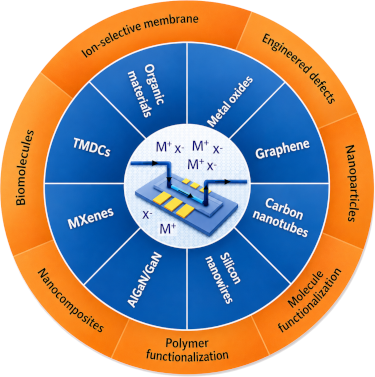
- approach allows for detection at nanomolar levels and is widely applied for Pb2+, Cd2+, and Cu2+ monitoring in natural waters. The geometry is typically planar and flow-through compatible, but periodic electrode renewal and electrolyte control are necessary for consistent field use [82]. Pb2+ and Cd2
- potential at an electrolyte–gate interface [85]. FET platforms can lead to fast, miniaturized, CMOS-compatible devices (complementary metal-oxide-semiconductor, a common fabrication process for integrated circuit chips) [8][9][10]. Figure 1c–i illustrates the major FET geometries, each differing in how the
- be correlated with the analyte concentration (Figure 1c). An ion-sensitive FET (ISFET) is a modified MOSFET designed so that its insulator (often a metal oxide) on top of the channel is directly exposed to the solution. The electrolyte and a reference electrode form the gate (Figure 1d). The sensor


Light-driven ammonia electrooxidation via carbon nitride–ruthenium molecular interfaces
Beilstein J. Nanotechnol. 2026, 17, 854–862, doi:10.3762/bjnano.17.61
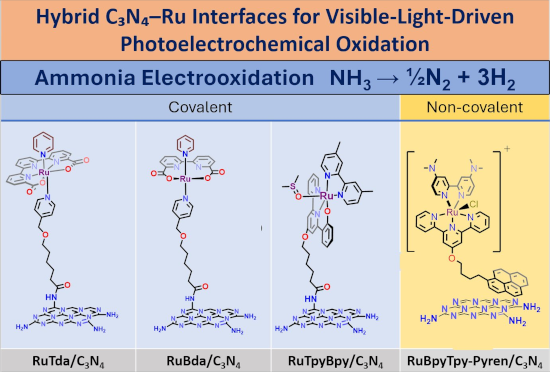
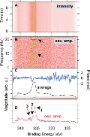
- separated free charge carriers, a thermally and field-assisted step driven by the intrinsic electric field at the semiconductor–electrolyte junction; (3) the resulting free electrons populate the conduction band, while holes remain in the valence band; (4) carriers diffuse through the bulk toward the
- 5.6 s−1, surpassing by a few orders of magnitude the activity of the best non-covalently immobilized benchmark. Importantly, transferring the electrode to a fresh electrolyte and performing a rinse test confirmed that catalytic activity follows the electrode rather than dissolved species, confirming


Glycerol photoelectrochemical oxidation reaction at carbon nitrides/BiVO4 materials
Beilstein J. Nanotechnol. 2026, 17, 806–817, doi:10.3762/bjnano.17.57
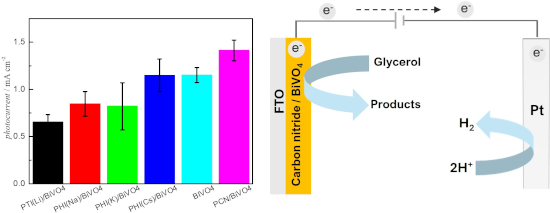
- oxidation depicted higher photocurrents and provided a protective effect against photocorrosion. The photoelectrochemical activity and selectivity of glycerol oxidation on BiVO4 are influenced by several factors, including pH [26], electrolyte cation and anion [28], BiVO4 surface crystallography orientation
- even after the PCN layer deposition, the typical FTO morphology is clearly observed. The Bi and V signals appear above the other elements, confirming that BiVO4 is the species in contact with the electrolyte and suggesting the formation of a heterojunction. Finally, the scattered-colored dots in the
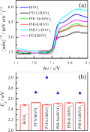
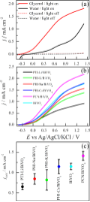
- investigated for water oxidation (in the supporting electrolyte alone) and subsequently for glycerol oxidation after the addition of 1.0 mol·L−1 glycerol (Figure 6a). Notably, in the presence of glycerol and simulated light (glycerol/on), the anodic photocurrent onset potential is negatively shifted by 300 mV




Advancing nanolithography: a comprehensive review of materials for local anodic oxidation with AFM
Beilstein J. Nanotechnol. 2026, 17, 275–291, doi:10.3762/bjnano.17.19
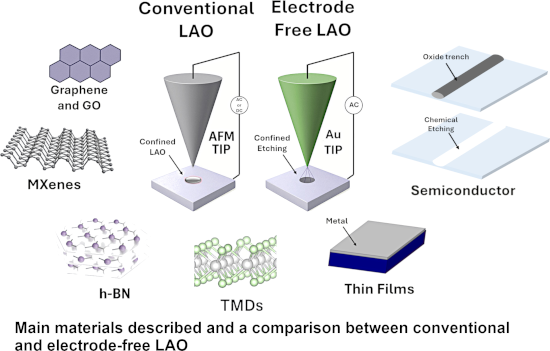
- technique. 2.1 Mechanism of LAO The key to LAO lies in the formation of a nanoscale water meniscus between the AFM tip and the sample surface, as depicted in Figure 1b. Under ambient humidity, the water layer serves as an electrolyte, enabling electrochemical reactions. When a positive voltage is applied to


Reduced graphene oxide paper electrode for lithium-ion cells – towards optimized thermal reduction
Beilstein J. Nanotechnol. 2026, 17, 24–37, doi:10.3762/bjnano.17.3
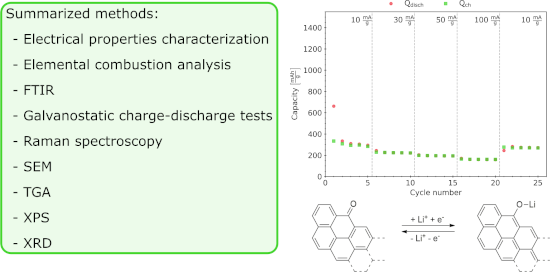
- the literature, it is the ketone group that is characterized by reactivity and participates in redox reactions [6][24][25]. The suggested redox reaction scheme is depicted in Figure 1b. During discharge, lithium ions are transported through the electrolyte to the cathode material, where they react
- [31] and flake edge exposition on the rGO paper surface, improving accessibility of the redox sites for electrolyte and lithium ions. Microwave methods, which also lead to changes in morphology (i.e., expansion) of the material, require thermal pre-treatment since GO weakly absorbs incident microwaves
- 1 M LiPF6 solution in EC/DMC (Sigma-Aldrich/Merck) served as the electrolyte. A Whatman GF/A filter was used as a separator. The current rates were calculated based on the targeted current density and active mass material, in this case, the mass of the positive electrode (the investigated graphene



Ambient pressure XPS at MAX IV
Beilstein J. Nanotechnol. 2025, 16, 1677–1694, doi:10.3762/bjnano.16.118
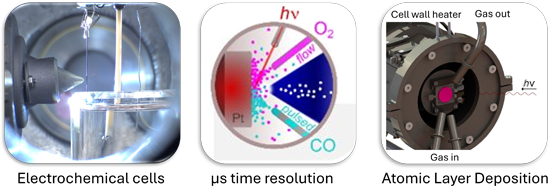
- electrochemical (EC) cell; a liquid microjet is also used to a smaller extent. In the EC setup, a three-electrode setup is immersed and retracted from a beaker of liquid electrolyte, forming a thin, electrochemically active meniscus on the working electrode that can be probed using APXPS or XAS, see Figure 1
- some case-studies that use the dip-and-pull method available at HIPPIE. The measurements can be performed in situ or operando. In the first, easier, case, the electrochemical reaction is performed with the sample immersed in the electrolyte, then all potentials are dropped, and the sample is pulled for
- APXPS measurements at the vapor pressure of the electrolyte. This method is used mostly for corrosion studies. In the second case, the potential is held during the XPS analysis, and a thin electrolyte film (meniscus) is maintained at the interface of the working electrode (WE) during measurement. This





Photocatalytic degradation of ofloxacin in water assisted by TiO2 nanowires on carbon cloth: contributions of H2O2 addition and substrate absorbability
Beilstein J. Nanotechnol. 2025, 16, 1567–1579, doi:10.3762/bjnano.16.111
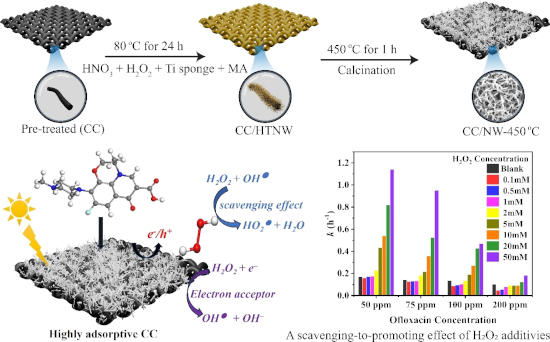
- × 2 cm in size) was taken as working electrode, the Pt electrode as counter electrode (3 cm × 3 cm in size), and a saturated calomel electrode as reference electrode; the electrolyte is 0.5 mol/L aqueous Na2SO4 solution. No bias potential was applied for the photocurrent evaluations. Results and
- effective degradations of OFL with a high initial concentration, say, 100 ppm and 200 ppm. The photocurrent response in Figure 7b increases with increasing H2O2 concentrations in the 0.5 M Na2SO4 electrolyte, because H2O2 acts as an electron acceptor, facilitating charge separation and the generation of ROS


Laser processing in liquids: insights into nanocolloid generation and thin film integration for energy, photonic, and sensing applications
Beilstein J. Nanotechnol. 2025, 16, 1428–1498, doi:10.3762/bjnano.16.104






Enhancing the photoelectrochemical performance of BiOI-derived BiVO4 films by controlled-intensity current electrodeposition
Beilstein J. Nanotechnol. 2025, 16, 1289–1301, doi:10.3762/bjnano.16.94
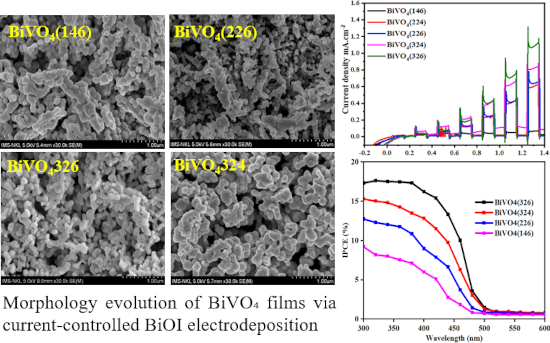
- electrochemical workstation (CHI650E, CH Instruments, USA). The three electrodes included a working electrode (BiVO4 photoelectrode, 1.0 × 1.0 cm2), counter electrode (Pt plate), and reference electrode (Ag/AgCl). The electrolyte used in the photoelectrochemical measurements was 0.50 M Na2SO4 (pH 5.6), and the
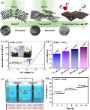
- electrolyte (Figure 6c). The photocurrent density initially peaked at approximately 1.6 mA·cm−2 and stabilized quickly at ≈1.2 mA·cm−2, maintaining this value consistently for 600 min (10 h) of operation. This stable behavior demonstrates the excellent PEC durability of the BiVO4(326) photoanode and confirms



Better together: biomimetic nanomedicines for high performance tumor therapy
Beilstein J. Nanotechnol. 2025, 16, 1246–1276, doi:10.3762/bjnano.16.92
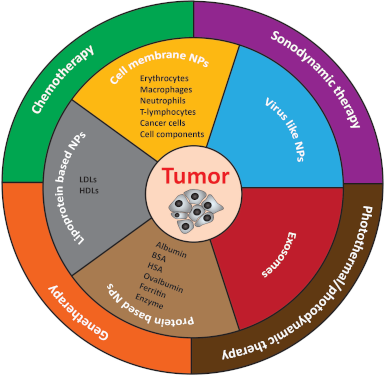
- essential to maintain hemostasis by binding various biomolecules circulating in blood. They not only maintain the electrolyte and osmotic pressure but also deliver a variety of molecules across the body [73][74]. Peptides possess different functional groups on their surface that can act as a template for







Soft materials nanoarchitectonics: liquid crystals, polymers, gels, biomaterials, and others
Beilstein J. Nanotechnol. 2025, 16, 1025–1067, doi:10.3762/bjnano.16.77
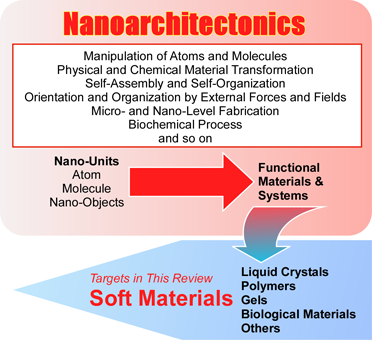
- . The following examples illustrate the potential of nanoarchitectonics based on plastic crystals. Solid electrolytes can be used safely in secondary magnesium batteries but show lower ionic conductivity compared to conventional liquid electrolytes. A class of solid electrolyte known as organic ionic
- crystals. The aim of this research was to create a new solid electrolyte made of organic ionic plastic crystals with magnesium salt incorporated for the use in next-generation secondary batteries (Figure 9) [248]. A series of organic ionic plastic crystal/Mg salt composites were prepared with varying
- as new organic solid electrolyte materials. However, their practical application remains elusive due to insufficient mechanical strength and ionic conductivity. Yoshizawa-Fujita and colleagues introduced a lithium salt, lithium bis(fluorosulfonyl)amide, and an inorganic solid electrolyte






Shape, membrane morphology, and morphodynamic response of metabolically active human mitochondria revealed by scanning ion conductance microscopy
Beilstein J. Nanotechnol. 2025, 16, 951–967, doi:10.3762/bjnano.16.73
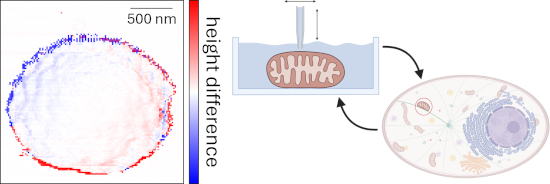
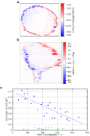
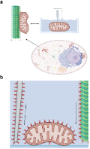
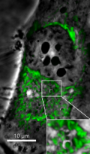
- nanopipette with a sub-micrometer aperture, which is brought near the sample surface via piezo actuators in an electrolyte bath. A voltage applied between two Ag/AgCl electrodes, one in the pipette and the other in the bath, generates an ion current. If the pipette approaches the sample, the ionic current
- as quantity to be measured by a feedback loop. This current is generated by applying a voltage between two Ag/AgCl electrodes, one located in an electrolyte bath containing the non-conductive sample and the other within the nanopipette (Supporting Information File 1, Section S7, Figure S20). When the



Synthesis of biowaste-derived carbon-dot-mediated silver nanoparticles and the evaluation of electrochemical properties for supercapacitor electrodes
Beilstein J. Nanotechnol. 2025, 16, 933–943, doi:10.3762/bjnano.16.71
- energy demand. Therefore, a notable research focus has been given to advancements in renewable energy storage systems. Secondary batteries and supercapacitors are promising alternatives for energy storage applications [1][2]. Through the electrostatic polarization of electrolyte solutions, supercapacitor
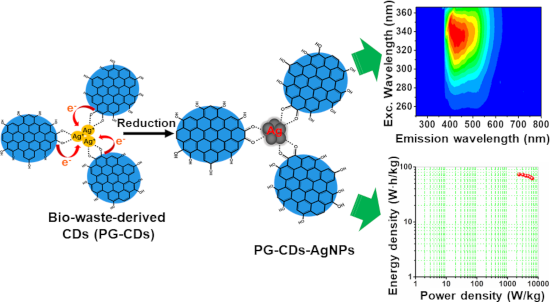
- distribution of PG-CDs-AgNPs was responsible for the enhanced surface area [35]. The pore size distribution plot of PG-CDs-AgNPs suggests the mesoporous characteristics (Supporting Information File 1, Figure S1b), which, via the diffusion of electrolyte ions, is highly efficient for electrochemical charge
- . Electrochemical properties of the synthesized electrode Three-electrode analysis Firstly, utilizing a three-electrode configuration in an aqueous electrolyte (1 M aqueous KCl), the electrochemical properties (capacitive characteristics, charge transportation, and charging/discharging) of PG-CDs-AgNPs were


Synchrotron X-ray photoelectron spectroscopy study of sodium adsorption on vertically arranged MoS2 layers coated with pyrolytic carbon
Beilstein J. Nanotechnol. 2025, 16, 847–859, doi:10.3762/bjnano.16.64
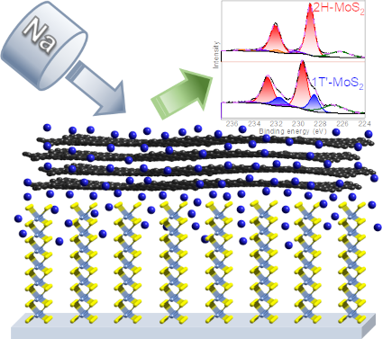
- heterostructures [32] demonstrated an advantage in studying the interaction of lithium with carbon and other elements of the materials. It should be noted that anode materials with alkali ions introduced during electrochemical reactions in SIBs are difficult to study because of the presence of electrolyte


Functionalized gold nanoflowers on carbon screen-printed electrodes: an electrochemical platform for biosensing hemagglutinin protein of influenza A H1N1 virus
Beilstein J. Nanotechnol. 2025, 16, 540–550, doi:10.3762/bjnano.16.42
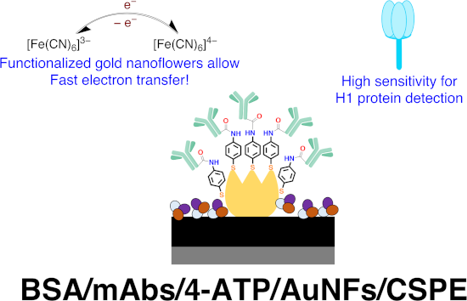
- ohmic resistance of the phosphate-buffered saline (PBS) electrolyte solution. The circuit is connected in series to the parallel combination of a capacitor (Cdl) representing the double layer capacitance of the electrode–solution interphase and a resistor (Rct) accounting for the faradaic charge


Pulsed laser in liquid grafting of gold nanoparticle–carbon support composites
Beilstein J. Nanotechnol. 2025, 16, 349–361, doi:10.3762/bjnano.16.26
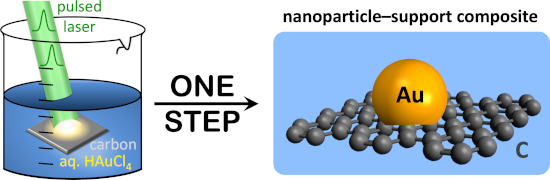
- resistances (R) and capacitances at all interfaces and the electrolyte. In our EIS measurements, the most relevant circuit element is the charge transfer resistance (Rct) between the gold nanoparticles and the graphitic carbon support, measured at open circuit potential so that electrochemical reactions do
- not obfuscate the electrical characteristics [2]. The other circuit elements are the electrolyte resistance (Rel, the x-axis intercept), which was small because of the high ionic conductivity of the 1.0 M aqueous KHCO3 electrolyte, the Warburg impedance (Zw) due to mass transport limitations of the
- redox species to the electrode, and the ubiquitous capacitance at the interface between the electrode and the electrolyte. This capacitance is non-ideal at the porous, non-flat gold nanoparticle–carbon fiber paper electrode, necessitating incorporation of a constant phase element. In a Nyquist plot


Characterization of ZnO nanoparticles synthesized using probiotic Lactiplantibacillus plantarum GP258
Beilstein J. Nanotechnol. 2025, 16, 78–89, doi:10.3762/bjnano.16.8
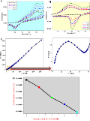
- (CV) and electrochemical impedance spectroscopy (EIS) were carried out at room temperature using a three-electrode cell with 0.1 M KCl electrolyte. The ZnO NP electrode was measured at scan rates from 10 to 50 mV/s. The measurements revealed reversibility and electrode load efficiency along with
- reduction currents and increased peak oxidation, indicating rapid electron transport at the contacts between the electrolyte and electrode. Pseudo-capacitive behavior was observed in both electrolytes, where ionic conductivity influenced capacitance [17][18]. The addition of dextrose increased the redox



Electrochemical nanostructured CuBTC/FeBTC MOF composite sensor for enrofloxacin detection
Beilstein J. Nanotechnol. 2024, 15, 1522–1535, doi:10.3762/bjnano.15.120
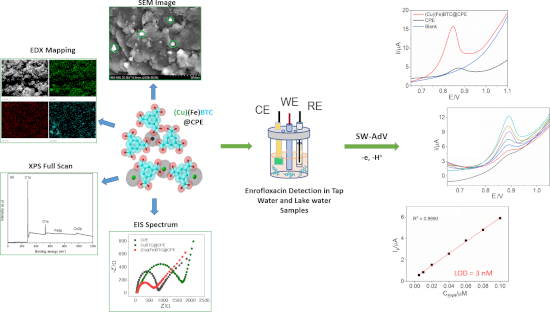
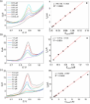
- current of approximately 6 µA. Therefore, the optimal weight percentages of 5% CuBTC and 5% FeBTC were chosen for electrode fabrication in the subsequent experiments. Effect of supporting electrolyte on the ENR signal The electrolyte plays a crucial role in the oxidation reaction of ENR. Four electrolytes
- peak in PBS is higher, sharper, and more symmetric compared to that in BR. Therefore, PBS was selected as the optimal electrolyte for subsequent experiments. Effect of pH of the electrolyte on the ENR signal The effect of pH on the ENR signal was investigated by performing SW-AdSV using the (Cu)(Fe)BTC
- K2HPO4 in double-distilled water. The pH of the solution used for the optimization of electrolyte solution was changed from 6.0 to 9.0 by controlling the amount of these phosphate salts. Enrofloxacin stock solution was prepared by dissolving ENR powder in double-distilled water. The ENR solutions with





Effect of wavelength and liquid on formation of Ag, Au, Ag/Au nanoparticles via picosecond laser ablation and SERS-based detection of DMMP
Beilstein J. Nanotechnol. 2024, 15, 1054–1069, doi:10.3762/bjnano.15.86

- simulants was observed at a 325 nm Raman excitation. Our findings reveal that a higher ablation yield was observed at IR irradiation than those obtained at the other wavelengths. A size decrease of the NPs was noticed by changing the liquid environment to an electrolyte. These findings have significant
- . Stability tests revealed that NPs in the electrolyte (NaCl) solution displayed a quicker decline in SERS signal than those obtained in DW, despite satisfactory initial signal strengths. However, gold NPs in DW demonstrated optimal long-term stability, maintaining uniform SERS intensities over 60 days
- the generation of the NPs. The presence of electrostatic repulsion among charged NPs generated in an electrolyte solution reduces the average size of the NPs. Rehbock et al. [21] pointed out the size reduction in Au NPs from 30 nm at 3 µM to 7 nm at 500 µM in the presence of aqueous NaCl solution


Intermixing of MoS2 and WS2 photocatalysts toward methylene blue photodegradation
Beilstein J. Nanotechnol. 2024, 15, 817–829, doi:10.3762/bjnano.15.68
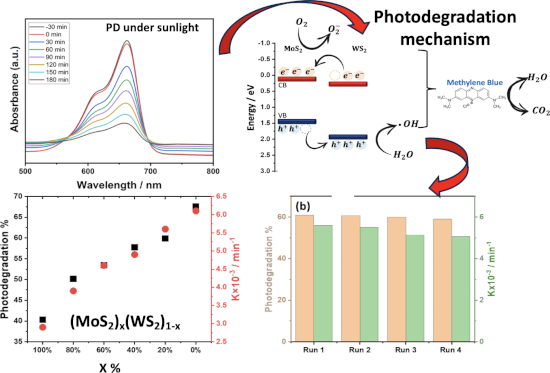
- cost-effective technology. By harnessing impinging photons, the photocatalytic degradation of pollutants takes place at the interface between the photocatalyst surface and the MB-contaminated electrolyte. The photon energy is the driving force for breaking down the MB compound leading to its removal [9


Electrospun polysuccinimide scaffolds containing different salts as potential wound dressing material
Beilstein J. Nanotechnol. 2024, 15, 781–796, doi:10.3762/bjnano.15.65
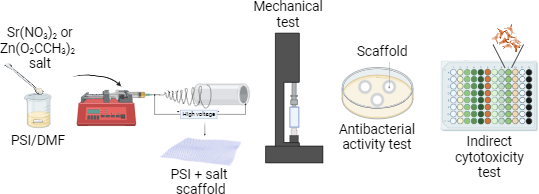
- increased, which was also observed by Sim and collaborators in the case of polymer electrolyte films containing LiCF3SO3 [51]. At 1634 cm−1, rising peaks also appeared as the concentration of salts increased. It was presumably the peak corresponding to bending vibration of water, H–O–H (Supporting



Simultaneous electrochemical determination of uric acid and hypoxanthine at a TiO2/graphene quantum dot-modified electrode
Beilstein J. Nanotechnol. 2024, 15, 719–732, doi:10.3762/bjnano.15.60
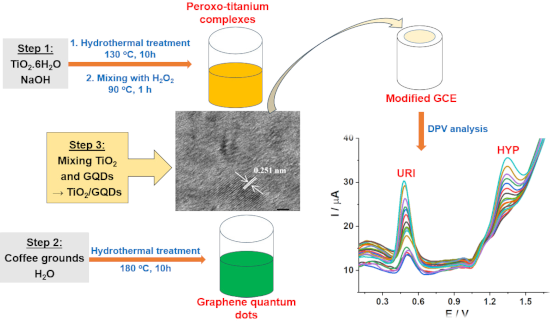
- electrode (GCE, 3 mm diameter), a platinum wire auxiliary electrode, and a Ag/AgCl reference electrode was used. Electrolyte solutions were prepared using doubly distilled water. Britton–Robinson (BR) buffer solutions with pH between 2 and 6 were prepared by mixing boric acid solution, phosphoric acid


Cholesterol nanoarchaeosomes for alendronate targeted delivery as an anti-endothelial dysfunction agent
Beilstein J. Nanotechnol. 2024, 15, 517–534, doi:10.3762/bjnano.15.46
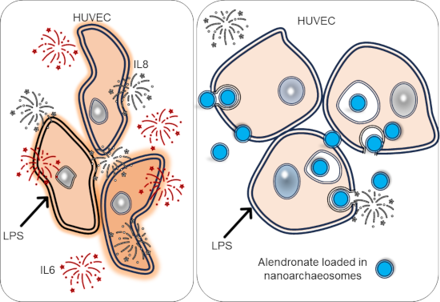
- tract, osteonecrosis of the jaws (BRONJ), and serious musculoskeletal pain and cardiovascular risks [13][59][60]. Its intravenous delivery poses the risk of nephrotoxicity, fever, flu symptoms, and electrolyte imbalance [61]. Together, these disadvantages complicate its exploitation as an anti





In situ optical sub-wavelength thickness control of porous anodic aluminum oxide
Beilstein J. Nanotechnol. 2024, 15, 126–133, doi:10.3762/bjnano.15.12
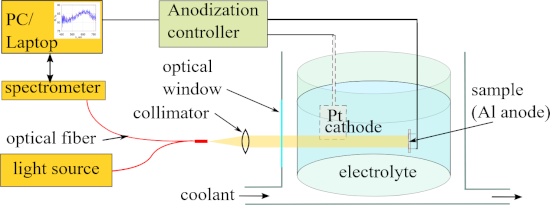
- . Automation software was designed to terminate the anodization process at preset PAAO thickness values. While the concept was illustrated using the widely used method of anodization in a 0.3 M oxalic acid electrolyte with a 40 V potential, it can be readily customized for other protocols. PAAO layers with
- heating, electrolyte flow [19], arrangement of the electrodes, and crystallographic orientation of the aluminum substrate [20]. In this work, we continuously recorded the reflectance spectra from a PAAO-coated aluminum surface during anodization. In a similar reflective interference spectroscopy (RIfS
- -center distance, and ≈30 nm pore diameter corresponded well to the expected results of using anodization in 0.3 M oxalic acid electrolyte and 40 V voltage [24][25]. PAAO is not a homogeneous material; instead, it consists of a porous layer and the barrier layer on top of the Al substrate (Figure 1b). To





