


Search results
Search for "free energy" in Full Text gives 147 result(s) in Beilstein Journal of Nanotechnology.
Breaking barriers: nanosystems to overcome solubility and permeability challenges of second-generation tyrosine kinase inhibitors
Beilstein J. Nanotechnol. 2026, 17, 1063–1086, doi:10.3762/bjnano.17.73
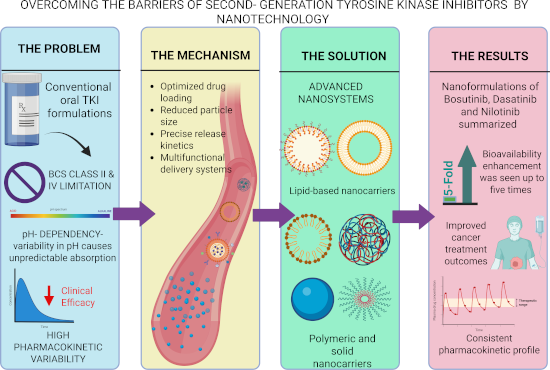
- amorphous form. To prevent the amorphous form of a drug from reverting to its thermodynamically stable crystalline state, it can be converted into a solid dispersion (SD) by entrapping the drug within a polymer matrix with a higher Gibbs free energy than the crystalline form, thereby providing a greater


Nanoglasses: a trail towards uncharted regions of vitreous materials and their properties?
Beilstein J. Nanotechnol. 2026, 17, 1047–1062, doi:10.3762/bjnano.17.72

- convex energy functional not describe equilibrium. For single-phase states, in fact, any convex free energy functional leads to spinodal-type decomposition due to thermodynamic instability. However, it should be realized that this does not hold for two-phase states where the common free energy functional
- of the two coexisting phases is given by a free energy functional that might have convex or concave shape, depending on the specific thermodynamics of the phases and their interactions. It is noted that the situation has analogues to the equilibrium between coherent phases, where the coherency strain
- energy is described by convex free energy functions similar to Figure 1 (see, for example, the work by Cahn and Larché [28]). Thus, while single-phase states with convex free energy functions would be unstable with respect to the formation of a two-phase state by spinodal decomposition, no such


Ultrasonic irradiation in the synthesis of nanohydroxyapatite: a chemically friendly technique for improving hemocompatibility and antibiofilm applications
Beilstein J. Nanotechnol. 2026, 17, 991–1015, doi:10.3762/bjnano.17.68
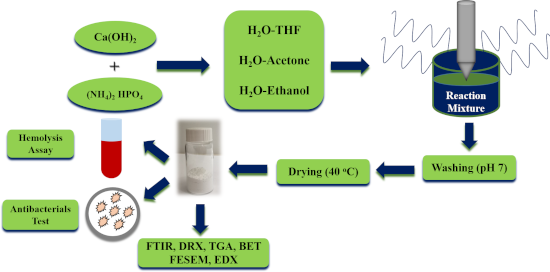
- dynamics of both phases. The formation of hydroxyapatite and calcite is thermodynamically favored, as indicated by their negative standard Gibbs free energy values (ΔG°f). The predominance of the hydroxyapatite phase is consistent with its higher thermodynamic stability within calcium phosphate systems
- inhibits excessive crystal maturation and promotes the nucleation of ultrafine phases. These properties are decisive for the functionality of the biomaterial; by maximizing the density of active sites and the surface free energy, protein adsorption and chemical affinity with biological substrates are




Materials challenges in solid-state sensors for continuous monitoring of ions in water
Beilstein J. Nanotechnol. 2026, 17, 935–973, doi:10.3762/bjnano.17.66
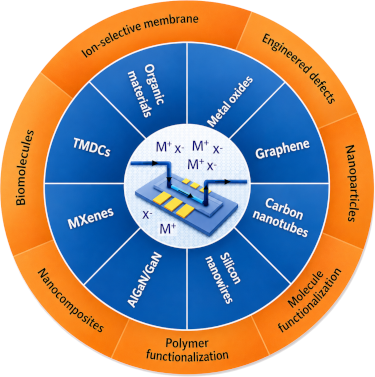
- atoms tend to rearrange, react, or adsorb species to reduce surface free energy, leading to non-ideal, defect-rich surfaces. These defects often cause the film to be n-type doped and form surface states inside the bandgap, affecting charge trapping, catalytic activity, and sensing behavior. Due to their



Light-driven ammonia electrooxidation via carbon nitride–ruthenium molecular interfaces
Beilstein J. Nanotechnol. 2026, 17, 854–862, doi:10.3762/bjnano.17.61
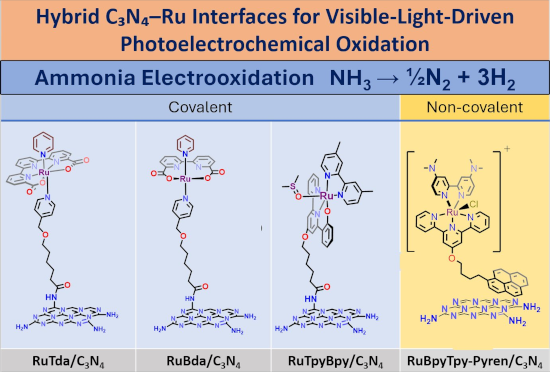
- density, liquid ammonia stores 1.9 times more energy per liter than liquid hydrogen, making it an attractive medium for carbon-free energy storage and transport [35]. G) The case for photoelectrocatalysis: combining light and bias Photocatalysis and electrocatalysis each address part of the energy


Decontamination from water pollutants and pathogens by electrospun nanofibers doped with heavy-atom-free borafluorene-BODIPY photosensitizers
Beilstein J. Nanotechnol. 2026, 17, 668–682, doi:10.3762/bjnano.17.46
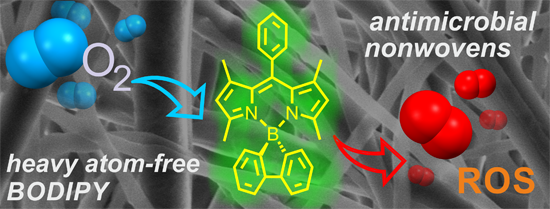
- ® software and embedded algorithms. The components of the high-resolution spectra were represented with Gaussian (70%) and Lorentzian (30%) lines, while the background was represented with Shirley’s function. Water contact angle measurements and surface free energy determination The wettability of all
- surface free energy (SFE), which in its basic form employs two probe liquids with known polar and dispersive components. In this study, water and diiodomethane were used to determine the values of and , while formamide was applied as an additional reference liquid to verify the repeatability and
- reliability of the contact angle measurements (parameters related to formamide were not directly included in Equation 3 and Equation 4). The total surface free energy was calculated as the sum of the dispersive and polar components, , where γs denotes the total surface free energy, and and represent its



Fractional shot noise of an SU(N) Kondo system
Beilstein J. Nanotechnol. 2026, 17, 515–540, doi:10.3762/bjnano.17.34
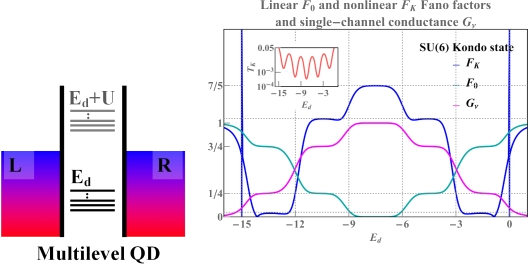
- the calculation of non-diagonal correlators occurring for interacting systems, we use a simple extrapolation of the Wilson coefficient from the case of an isolated system to a system weakly coupled to electrodes. This allows us to determine the FL free energy and, hence, the thermodynamics and
- derivatives with respect to the local level positions. Static two-body susceptibilities and three-body correlation functions are expressed through derivatives of the free energy with respect to site energies. δnν denotes deviations from the ground-state distribution, δnν ≡ nν −⟨nν(0)⟩. In the mean-field
- approximation, the free energy corresponding to the Hamiltonian in Equation 2 is a sum of slave boson free energy , and fermionic contribution (). The diagonal fermionic susceptibilities at low temperatures , are given by Equation 37 and Equation 38. Commonly used quantities serving as a measure of relative


![[Graphic 127]](/bjnano/content/inline/2190-4286-17-34-i187.svg?max-width=637&scale=1.18182)

Ferroelectric nanodot reservoir for neuromorphic computing
Beilstein J. Nanotechnol. 2026, 17, 352–364, doi:10.3762/bjnano.17.24
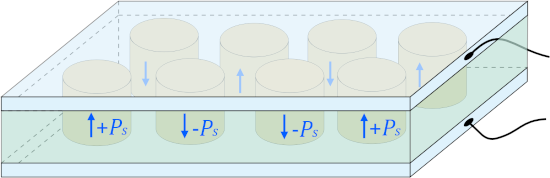
- free energy [22][23][24]. This intrinsic multistability facilitates analog and digital information encoding, retention, and logic operations within a single physical unit, and is one of the key reasons for their growing relevance in neuromorphic computing and multivalued logic architectures [17][25


Structure-dependent thermochromism of PAZO thin films: theory and experiment
Beilstein J. Nanotechnol. 2026, 17, 186–199, doi:10.3762/bjnano.17.12
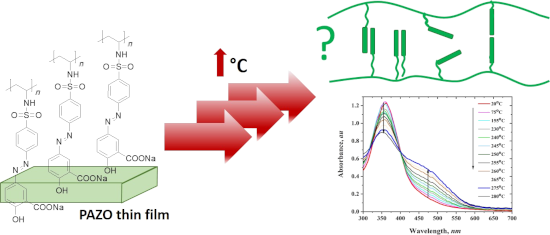
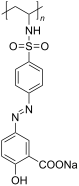
- ΔEel, ΔEth, PΔV (work term), and ΔS between the products and reactants were used to evaluate the gas-phase free energy of the supramolecular complex formation/aggregation, ΔG1, at T = 298.15 K according to: Solvation effects were accounted for by employing the solvation model based on density (SMD) [31
- )). Solvation free energies of the products and reactants were used to calculate the free energy of the supramolecular complex formation in chloroform following the standard thermodynamic cycle approach: A positive ∆Gε (ε = 1 or 5) implies a thermodynamically unfavorable supramolecular complex formation


Capabilities of the 3D-MLSI software tool in superconducting neuron design
Beilstein J. Nanotechnol. 2026, 17, 122–138, doi:10.3762/bjnano.17.8

- are Maxwell and London equations with proper excitation. Based on them, the inductance can be evaluated using the free energy functional. Therefore, the basic equations for 3D-MLSI are static London and Biot–Savart expressions for magnetic field , vector potential , and full energy E. The only free



Laser ablation in liquids for shape-tailored synthesis of nanomaterials: status and challenges
Beilstein J. Nanotechnol. 2025, 16, 1963–1997, doi:10.3762/bjnano.16.137
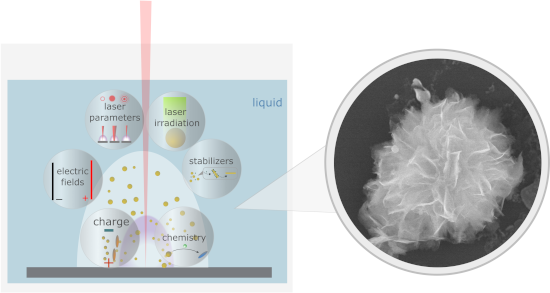
- surface free energy is determined as work per unit area required for the formation of a new surface [12]. Therefore, it is a fundamental parameter that determines nanoparticle growth and stability of different particle shapes. The surface energy is dependent on a multitude of parameters, including NP size
- liquid. Such seed NPs are typically having well defined crystalline structure, surface composition, and specific surface free energy. The assembly and growth of the NPs is explained by the decrease in surface energy. If a liquid contains surfactant molecules or ionic species, their selective adsorption
- at specific facets of seed NPs can be expected to be governed by the decrease of surface free energy [36][37]. The density and binding energy of the ligands can significantly differ for different crystal planes. As a result of specific adsorption, the crystal facets with adsorbed ions become blocked





Dendrimer-modified carbon nanotubes for the removal and recovery of heavy metal ions from water
Beilstein J. Nanotechnol. 2025, 16, 1522–1532, doi:10.3762/bjnano.16.107

- ). Furthermore, thermodynamic parameters such as changes of enthalpy (ΔH), entropy (ΔS), and Gibbs free energy (ΔG) were calculated by plotting the graph of ln Ke vs 1/T and using the van't Hoff equation (Supporting Information File 1, Figure S2 and Table S4). Positive ΔH and negative ΔG values confirm that


Crystalline and amorphous structure selectivity of ignoble high-entropy alloy nanoparticles during laser ablation in organic liquids is set by pulse duration
Beilstein J. Nanotechnol. 2025, 16, 1141–1159, doi:10.3762/bjnano.16.84
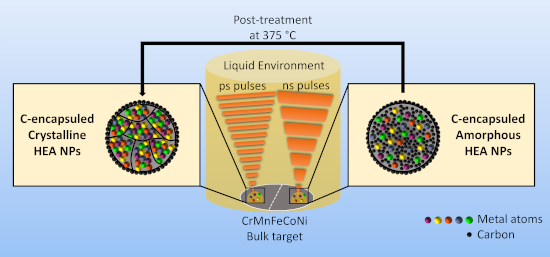
- nanomaterials, usually consisting of single-phase solid solutions made of five or more elements, forming relatively simple face-centered cubic [6][7][8] (fcc) or body-centered cubic [9][10] (bcc) crystal structures, stabilized by the configurational part of Gibbs-free energy. It is worth noting that high




Facile one-step radio frequency magnetron sputtering of Ni/NiO on stainless steel for an efficient electrode for hydrogen evolution reaction
Beilstein J. Nanotechnol. 2025, 16, 837–846, doi:10.3762/bjnano.16.63
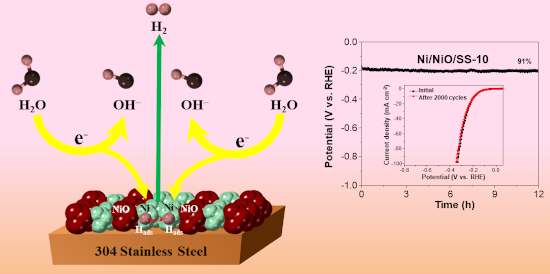
- fabricated metal/metal oxide-based nanomaterials using various solution-based methods for alkaline HER because of the efficacy of metal oxides in breaking water molecules. In this context, Ni/NiO-based nanomaterials were evaluated as promising catalysts for industrial applications because of their Gibbs free
- energy of hydrogen/water adsorption. Also, inexpensiveness and high durability are positive aspects regarding large-scale applications. For instance, Oshchepkov and coworkers revealed that the efficacy of NiO in cleaving H–OH bonds accelerated the formation of hydrogen on a Ni metal catalyst [17]. Yan


Synthesis and magnetic transitions of rare-earth-free Fe–Mn–Ni–Si-based compositionally complex alloys at bulk and nanoscale
Beilstein J. Nanotechnol. 2025, 16, 823–836, doi:10.3762/bjnano.16.62
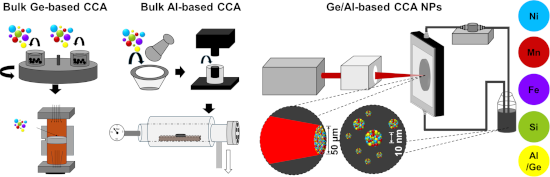
- combinations that control the configurational entropy of mixing, phase, and free energy of the material. Consequently, the magnetic phase transition of CCAs can be tuned by altering their chemical composition because of the different elemental interactions [17]. A significant advantage of using CCAs is their


Impact of adsorbate–substrate interaction on nanostructured thin films growth during low-pressure condensation
Beilstein J. Nanotechnol. 2025, 16, 473–483, doi:10.3762/bjnano.16.36

- structures. In the general case, the reaction–diffusion equation for the field x1(r,t) has the form The reaction term R(x1,x2) is responsible for adsorption, desorption, and diffusion of adatoms between neighbor layers. The adsorbate flow J is defined through the free energy ℱ of the adsorbed layer Here, D0
- in the adsorbate concentration on the current layer by the term Rt = kt(x2 − x1). The free energy ℱ in Equation 3 for the first adsorptive layer has the form [31][32]: The first term on the right-hand side of Equation 5 is responsible for the entropic non-interactive part, f0(x1) = x1ln(x1) + (1 − x1


Effect of radiation-induced vacancy saturation on the first-order phase transformation in nanoparticles: insights from a model
Beilstein J. Nanotechnol. 2024, 15, 1453–1472, doi:10.3762/bjnano.15.117

- the Gibbs free energy and kinetic rate theory [17]. Shen delineates five size-dependent regions that govern the material’s response to irradiation. Nevertheless, Shen’s approach remains qualitative, highlighting the need for a more comprehensive thermodynamic assessment to enhance our understanding of
- ) the nucleation of a new phase. We leverage this competition to develop a fundamental description, employing both a thermodynamic approach based on the calculation of Gibbs free energy and a kinetic approach based on chemical rate theory. Given the complexity arising from multiple factors, it is
- irradiation, which generate vacancies and interstitial atoms in both the interior and on the surfaces of the nanoparticle. Our approach utilizes thermodynamic calculations to determine the Gibbs free energy of a nanoparticle in various phase states with vacancy-type defects. Additionally, we consider the size


Interaction of graphene oxide with tannic acid: computational modeling and toxicity mitigation in C. elegans
Beilstein J. Nanotechnol. 2024, 15, 1297–1311, doi:10.3762/bjnano.15.105
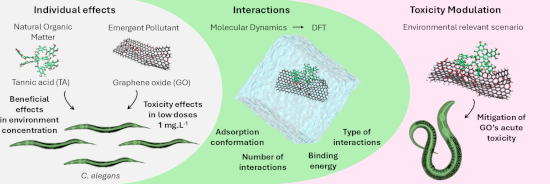
- so-called NPT conditions, for a period of 4.00 ns, with a time step of 0.25 fs, starting from the system in equilibrium at 300 K. The initial system consisted of a representative GO flake obtained from [73], with dimensions of 42 × 20 Å and an oxidation level of 12.5%, and the TA free-energy-minimum


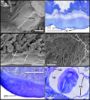
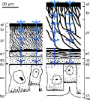
Comparative analysis of the ultrastructure and adhesive secretion pathways of different smooth attachment pads of the stick insect Medauroidea extradentata (Phasmatodea)
Beilstein J. Nanotechnol. 2024, 15, 612–630, doi:10.3762/bjnano.15.52





Controllable physicochemical properties of WOx thin films grown under glancing angle
Beilstein J. Nanotechnol. 2024, 15, 350–359, doi:10.3762/bjnano.15.31
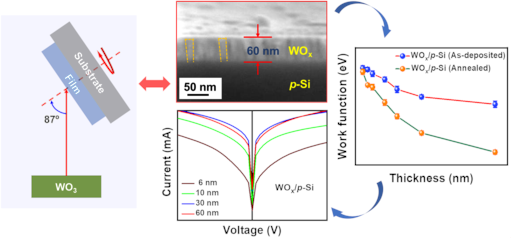
- inhibition of crystallization at lower thicknesses arises mainly because of a considerable contribution of the surface energy to the total Gibbs free energy of crystallization, resulting in a higher crystallization temperature and/or time [47][48]. It can be concluded that the annealing condition (i.e., 673


Nanomedicines against Chagas disease: a critical review
Beilstein J. Nanotechnol. 2024, 15, 333–349, doi:10.3762/bjnano.15.30
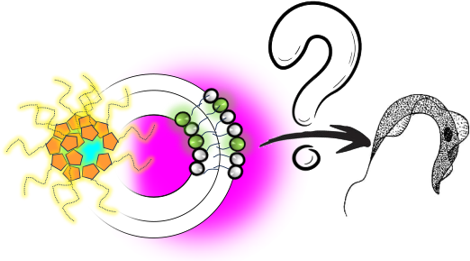
- advantageous because of the extraordinarily high BNZ loading, unexplored issues may arise from its huge specific surface area and interfacial free energy. Nanocrystals are thermodynamically unstable, with a tendency to aggregate, undergoing Oswald ripening and changes in the crystal polymorph, inducing

Multiscale modelling of biomolecular corona formation on metallic surfaces
Beilstein J. Nanotechnol. 2024, 15, 215–229, doi:10.3762/bjnano.15.21
- , enabling a comprehensive analysis of the AA–NP interactions. For a detailed explanation of the method used in this study, please refer to previous reports [2][24][28] where the method has been described in depth. Figure 4 and dataset [37] show the obtained free energy of adsorption in units of kBT. The
- , and a CG competitive adsorption model. The figure provides an overview of input and output data at each scale. Adsorption free energy profiles of SCAs on three aluminum fcc slabs as a function of the surface separation distance (SSD). These profiles were calculated using all-atom AWT-MetaD. The





A combined gas-phase dissociative ionization, dissociative electron attachment and deposition study on the potential FEBID precursor [Au(CH3)2Cl]2
Beilstein J. Nanotechnol. 2023, 14, 1178–1199, doi:10.3762/bjnano.14.98



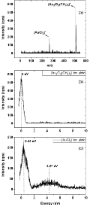
Density functional theory study of Au-fcc/Ge and Au-hcp/Ge interfaces
Beilstein J. Nanotechnol. 2023, 14, 1093–1105, doi:10.3762/bjnano.14.90
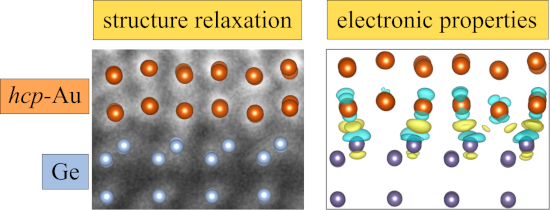
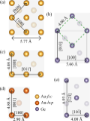
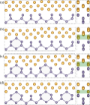
- and, therefore, unrealized bonding energy (surface energy). When two crystalline solids bind together, the atoms or molecules form an interface with preferred plane orientations determined by the strength of bonding, which can be quantified using the concepts of interfacial free energy and the work of





Ni, Co, Zn, and Cu metal-organic framework-based nanomaterials for electrochemical reduction of CO2: A review
Beilstein J. Nanotechnol. 2023, 14, 904–911, doi:10.3762/bjnano.14.74
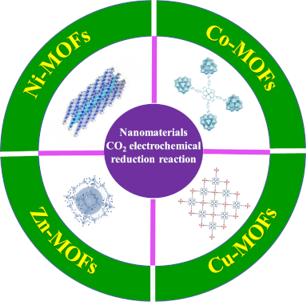
- . To gain insights into the reaction pathway and to provide explanations for the observed outcome, the research team employed computational science techniques. Density functional theory (DFT) calculations implied that Co-PMOF possessed the lowest total free energy leading to its superiority as a
- /by/4.0/). (a) A graphic representation of the preparation of MzZny/ZIF-8, (b) Faradaic efficiency for the CO production using different materials, (c) diagram of free energy for CO2RR. Figure 4 was adapted from [44], J. H. Cho et al., “Transition Metal Ion Doping on ZIF-8 Enhances the Electrochemical





