


Search results
Search for "nanoparticle synthesis" in Full Text gives 66 result(s) in Beilstein Journal of Nanotechnology.
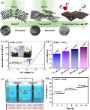
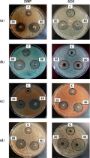
Restorative potential of laser-synthesized silver nanoparticles with Salvia officinalis for periodontal disease treatment: an in vitro study
Beilstein J. Nanotechnol. 2026, 17, 781–795, doi:10.3762/bjnano.17.55
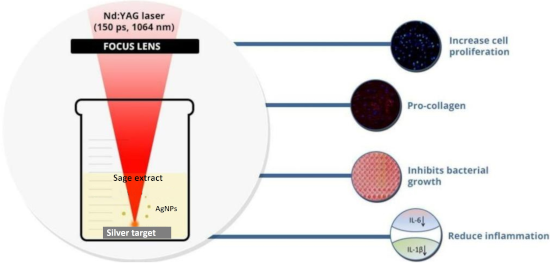
- not utilized in the nanoparticle synthesis itself. Importantly, none of these studies reported the exact silver concentrations used in treatments, which limits the assessment of their safety and potential clinical applicability. We have previously demonstrated that sage leaf extract obtained by
- ) was prepared prior to nanoparticle synthesis, as previously described [13]. Commercially available S. officinalis leaves (Serial No. 23380723, Institute of Medicinal Plant Research “Dr Josif Pančić”, Belgrade, Serbia) were ground, infused with boiling water, and cooled to room temperature. The extract
- energy on nanoparticle synthesis. The laser beam was focused through a lens having a focal length of 15.2 cm with the target placed at 16.2 cm from this lens, that is, under slightly defocused conditions. An automated x–y translation stage ensured continuous movement of the target during ablation so that



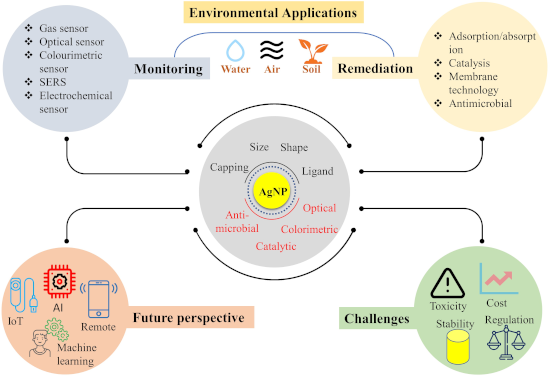
Environmental applications of silver nanoparticles: state-of-the-art review and emerging trends
Beilstein J. Nanotechnol. 2026, 17, 697–736, doi:10.3762/bjnano.17.49


Molecular engineering of individual dye-based nanoparticle photostability for ultrabright two-photon fluorescence
Beilstein J. Nanotechnol. 2026, 17, 688–696, doi:10.3762/bjnano.17.48
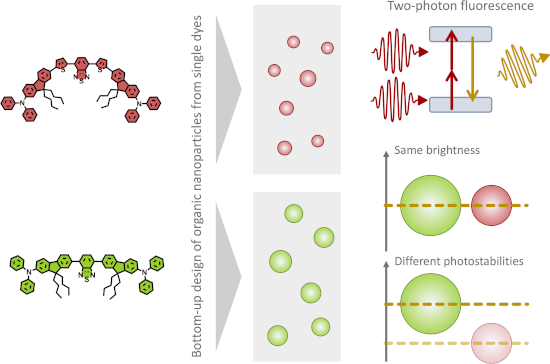
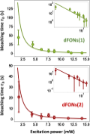
- faster photobleaching rate, as confirmed by direct time-resolved measurements and their quadratic dependence on excitation power. Together, these results validate the bottom-up design strategy used for nanoparticle synthesis and highlight the trade-off between absorption efficiency and photostability


Laser–material interactions in liquids for the synthesis of nanomaterials: current status and perspectives
Beilstein J. Nanotechnol. 2026, 17, 571–575, doi:10.3762/bjnano.17.38

- the underlying processes, motivating computational and experimental studies focused on the mechanisms governing nanoparticle synthesis. Theoretical and computational studies of LSPC have provided important insights into the emergence of cavitation bubble and nanoparticle formation mechanisms in LAL
- techniques capable of probing the initial stages of nanoparticle synthesis with high temporal and/or spatial resolution [32][33]. In particular, accessing the picosecond time window needed to capture the initial interaction of the ablation plume with the liquid environment, which defines the subsequent
Beam shaping techniques for pulsed laser ablation in liquids: Unlocking tunable control of nanoparticle synthesis in liquids
Beilstein J. Nanotechnol. 2026, 17, 309–342, doi:10.3762/bjnano.17.22
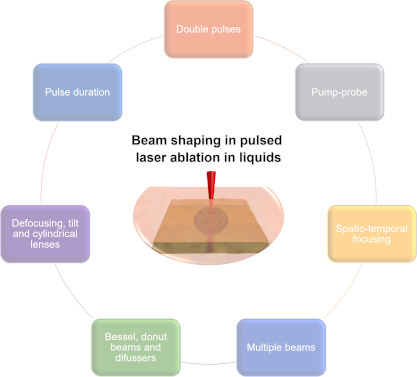
- 10.3762/bjnano.17.22 Abstract Nanoparticle synthesis via pulsed laser ablation in liquids has gained prominence as a versatile and environmentally friendly approach for producing ligand-free colloids with controlled composition, size, and morphology. While pulsed laser ablation in liquids offers
- ) [1][2][3][4][5] is an increasingly employed nanoparticle synthesis technique, first established in the 1990s [6][7]. This method involves focusing high-energy laser pulses onto a solid target submerged in a liquid medium [8]. As the laser interacts with the target, it triggers rapid ionisation
- combination, as shown in Figure 3. As a general strategy for imaging and material processing, beam shaping technologies represent a research field covered in numerous reviews [98][99]. In the subsequent sections, this review offers a more detailed discussion of beam-shaping methodologies for nanoparticle







On the road to sustainability – application of metallic nanoparticles obtained by green synthesis in dentistry: a scoping review
Beilstein J. Nanotechnol. 2025, 16, 1851–1862, doi:10.3762/bjnano.16.128
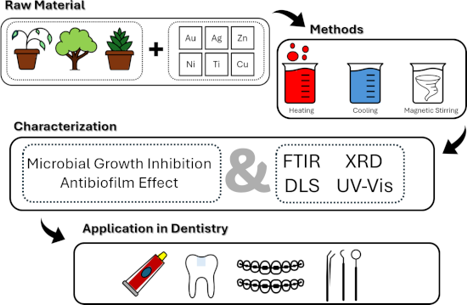
- provides a robust foundation for research into botanical extracts as reducing and stabilizing agents in nanoparticle synthesis [29]. Additionally, India has significantly invested in scientific research over the past decades, particularly in nanotechnology, biotechnology, and pharmaceutical sciences. The
- nanoparticles [39][40]. The Asteraceae family includes species rich in flavonoids like quercetin and luteolin, and sesquiterpene lactones, which have been associated with both nanoparticle synthesis and broad-spectrum biological effects, such as antibiofilm and anticancer activities [36][41]. Plants from the
- Zingiberaceae family, especially Zingiber officinale, provide gingerols and shogaols, phenolic compounds known not only for their anti-inflammatory and antioxidant effects, but also for their ability to support nanoparticle synthesis under mild conditions [42]. This review identified that two botanical families


Exploring the potential of polymers: advancements in oral nanocarrier technology
Beilstein J. Nanotechnol. 2025, 16, 1751–1793, doi:10.3762/bjnano.16.122
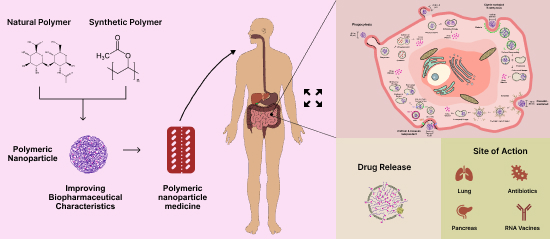
- permeability, critical factors for effective oral drug delivery, are discussed in detail. Furthermore, nanoparticle synthesis methods that enable controlled release profiles, optimized biodistribution, and improved therapeutic efficacy are also explored. Thus, polymers represent a dynamic platform for
- raises additional concerns regarding the stability and safety of the final product. In light of these challenges, the use of preformed polymers has gained prominence in nanoparticle synthesis, offering a more straightforward and biocompatible alternative particularly suited for pharmaceutical


Prospects of nanotechnology and natural products for cancer and immunotherapy
Beilstein J. Nanotechnol. 2025, 16, 1644–1667, doi:10.3762/bjnano.16.116
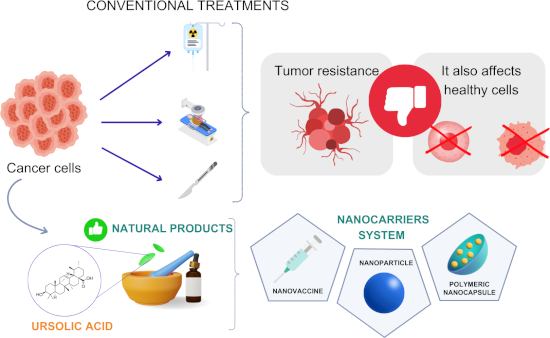
- characterized by two free functional groups responsible for drug binding, while a semiconductor shell helps reduce toxicity [106]. Quantum dot nanoparticle synthesis processes involve colloidal and plasma systems, which allow for the utilization of bioactive compounds such as fructose, chitosan, citric acid


Nanotechnology-based approaches for the removal of microplastics from wastewater: a comprehensive review
Beilstein J. Nanotechnol. 2025, 16, 1607–1632, doi:10.3762/bjnano.16.114
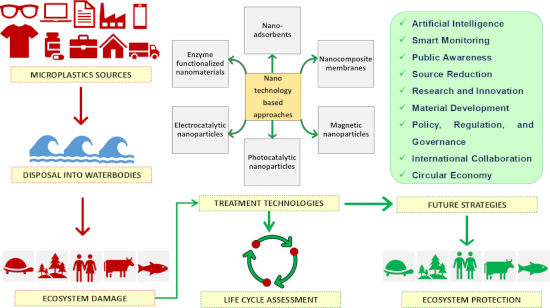
- various techniques for synthesis of nanoparticles. Nanoparticle synthesis is essential for tailoring materials that effectively remove MPs. Various approaches allow researchers to customize structure and functionality based on application needs. For example, the sol–gel process transforms a colloidal


Laser processing in liquids: insights into nanocolloid generation and thin film integration for energy, photonic, and sensing applications
Beilstein J. Nanotechnol. 2025, 16, 1428–1498, doi:10.3762/bjnano.16.104
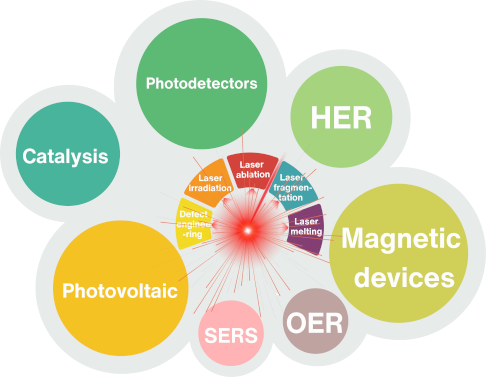
- examples of nanoparticle synthesis by laser ablation were discussed [7]. They have clearly depicted how the properties of the nanoparticles (NPs) depend strongly on size, shape, and size uniformity. Pulsed laser ablation in liquids (PLAL) is a promising method for producing pristine and supported materials
- potential in applications like catalysis. This technique has become a valuable addition to the toolbox of nanoparticle synthesis, offering enhanced precision and scalability for advanced materials and applications [6][29][30]. The synthesis of lead telluride (PbTe) NPs was successfully performed through
- quenching, and the challenges of oxidation in nanoparticle synthesis. Cost-effective methods for modifying the surface characteristics of Si nanocrystals (Si-ncs) and BaTaOxNy perovskite particles using laser fragmentation are reported in [39] and [40], respectively. In particular, laser fragmentation in






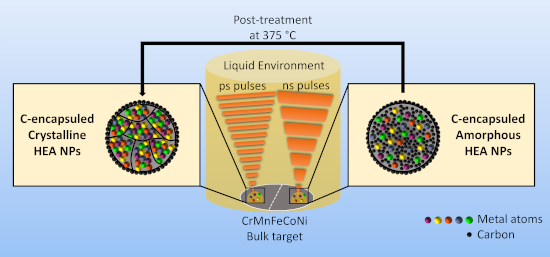
Crystalline and amorphous structure selectivity of ignoble high-entropy alloy nanoparticles during laser ablation in organic liquids is set by pulse duration
Beilstein J. Nanotechnol. 2025, 16, 1141–1159, doi:10.3762/bjnano.16.84


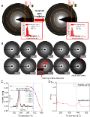


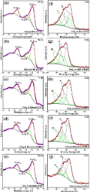
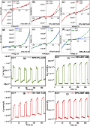
Morphology and properties of pyrite nanoparticles obtained by pulsed laser ablation in liquid and thin films for photodetection
Beilstein J. Nanotechnol. 2025, 16, 785–805, doi:10.3762/bjnano.16.60
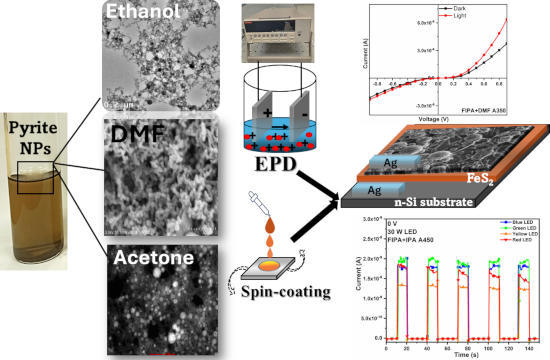
- nanoparticle synthesis by PLAL. For instance, it has been reported that the density and viscosity of the surrounding liquid influence the expansion of the plasma plume. The expansion dynamics of the plume differ due to the larger opposing force induced by the increased viscosity of the solvent, which in turn






Effect of additives on the synthesis efficiency of nanoparticles by laser-induced reduction
Beilstein J. Nanotechnol. 2025, 16, 464–472, doi:10.3762/bjnano.16.35
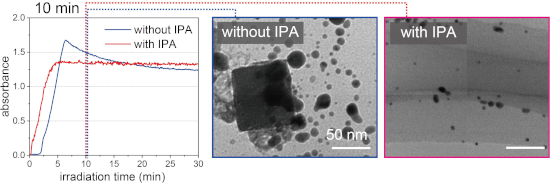
- , which have been difficult to synthesize using the LRL. In addition, the efficiency of nanoparticle synthesis has been dramatically improved, and the variety of materials that can be produced has increased. This expands the potential of nanoparticles synthesized by LRL to be used in industrial
- synthesis of various nanoparticles that maintain the crystal structure and composition of the source solid material. In contrast to those methods, laser-induced reduction in liquid (LRL) is a nanoparticle synthesis method based on reduction reactions induced by laser in solution. Synthesis of nanoparticles
- nanoparticle synthesis. It was assumed that the synthesis of nanoparticles would be promoted by removing the hydroxyl radicals formed by laser irradiation. Isopropyl alcohol acts as a radical scavenger, and reacts with •OH to produce a reducing radical (E0 = −1.8 V) [34]. Therefore, we added IPA to the


Size control of nanoparticles synthesized by pulsed laser ablation in liquids using donut-shaped beams
Beilstein J. Nanotechnol. 2025, 16, 407–417, doi:10.3762/bjnano.16.31
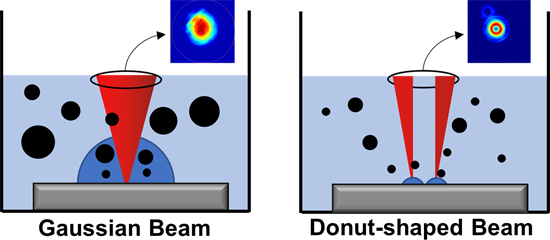
- investigate the laser ablation of a solid target, not the liquid, and link the ablation beam’s donut shape to NP quality. Future studies may examine how these modified plume shapes, plume dynamics, and bubble lifetimes impact nanoparticle synthesis, particularly concerning their size distribution and


Engineered PEG–PCL nanoparticles enable sensitive and selective detection of sodium dodecyl sulfate: a qualitative and quantitative analysis
Beilstein J. Nanotechnol. 2025, 16, 385–396, doi:10.3762/bjnano.16.29
- ]. Apart from that, quantitative and qualitative measurements of SDS in terms of laboratory use are necessary. The SDS is widely used in protein estimation via polyacrylamide gel electrophoresis (PAGE) [10]. Several research groups widely explore nanoparticle synthesis using SDS as a capping agent for
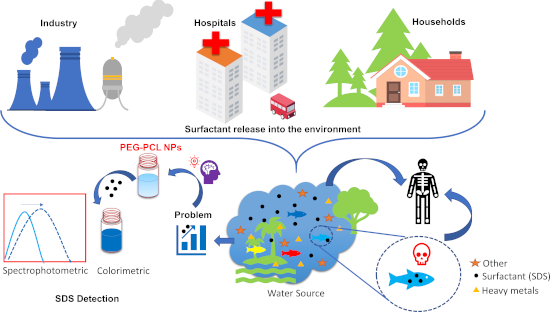
- surveillance and assessment. Schematic representation of PEG–PCL nanoparticle synthesis via ring-opening copolymerization (ROC). The diagram illustrates the stepwise chemical process of nanoparticle formation, highlighting key molecular transformations and reaction conditions involved in the polymerization


Development of a mucoadhesive drug delivery system and its interaction with gastric cells
Beilstein J. Nanotechnol. 2025, 16, 371–384, doi:10.3762/bjnano.16.28

- corresponding fluorescence intensity (FI) values (λex = 485 nm, λem = 530 nm) was used to calculate the amount of peptide within the nanoparticles. Based on the parameters used for the nanoparticle synthesis in this study, the encapsulation efficiency of the FAM-labeled peptide model within EudAlg NPs was (58.6


Pulsed laser in liquid grafting of gold nanoparticle–carbon support composites
Beilstein J. Nanotechnol. 2025, 16, 349–361, doi:10.3762/bjnano.16.26
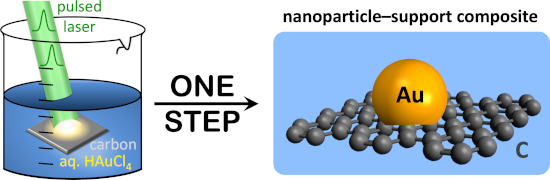
- unattached catalyst material, which is especially problematic with precious catalysts. Overall, separate nanoparticle synthesis–attachment produces composites with adhesion, durability, electrical contact, and concomitant energy efficiency issues. Here, we report a new one-step pulsed laser grafting process
- directly on submerged hydrophilic carbon fiber paper supports. The laser grafting process took 60 min, significantly less time than typical chemical gold nanoparticle synthesis and subsequent support attachment of several hours [34]. The use of nanosecond pulses in the pulsed laser grafting process has the
- surfactant-free gold nanoparticles directly on carbon fiber paper supports by integrating nanoparticle synthesis and attachment, obviating typical laborious nanoparticle synthesis, separation, and immobilization procedures. Pulsed laser-grafted composites exhibited zero measurable charge transfer resistance


Preferential enrichment and extraction of laser-synthesized nanoparticles in organic phases
Beilstein J. Nanotechnol. 2025, 16, 254–263, doi:10.3762/bjnano.16.20
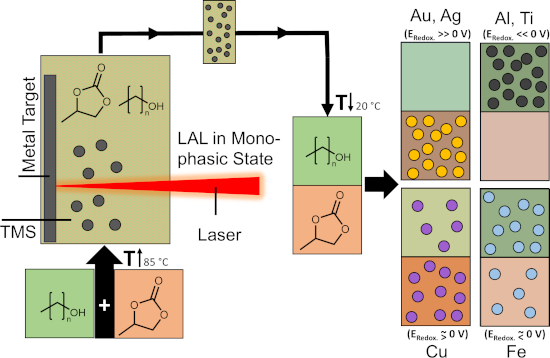
- nanoparticle synthesis was shown to produce gas phases consisting of hydrogen [11][12][13], carbon dioxide [12][14], and carbon monoxide [12][14], as well as carbon-based gases such as methane or C2 hydrocarbons [12][13][14][15][16]. In addition to gaseous by-products, the decomposition was found to produce




Facile synthesis of size-tunable L-carnosine-capped silver nanoparticles and their role in metal ion sensing and catalytic degradation of p-nitrophenol
Beilstein J. Nanotechnol. 2024, 15, 1576–1592, doi:10.3762/bjnano.15.124
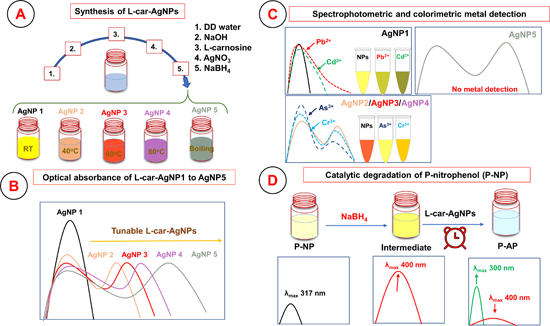
- /bjnano.15.124 Abstract ʟ-Carnosine is a dipeptide with notable antioxidant, antiglycation, metal chelating, and neuroprotective properties. Despite its many biological roles, applying ʟ-carnosine as a capping agent in nanoparticle synthesis has remained underexplored. This study explores the potential of
- capping and stabilizing agent is required for silver nanoparticle synthesis. Maiti et al. demonstrated that the dipeptide ʟ-carnosine interacted highly with pristine silver nanospheres [6]. However, its role as a stabilizing/capping agent was never explored for nanoparticle synthesis and advanced
- purification. Before the experiment, glassware was cleaned with aqua regia and rinsed twice with double distilled (DD) water. Methods Tunable plasmonic silver nanoparticle synthesis using ʟ-carnosine Silver nanoparticles with tunable plasmon wavelength were synthesized using a wet-chemical reduction approach




Green synthesis of silver nanoparticles derived from algae and their larvicidal properties to control Aedes aegypti
Beilstein J. Nanotechnol. 2024, 15, 1566–1575, doi:10.3762/bjnano.15.123
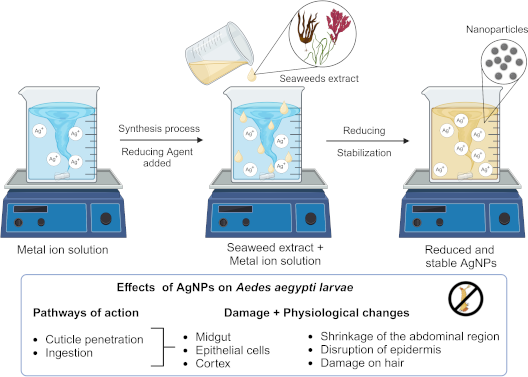
- reducing agent [34]. In this way, the green synthesis of nanoparticles has expanded in nanoscience and nanotechnology [35]. Synthesis of silver nanoparticles using algae Green nanoparticle synthesis is the design and development of strategies for the production of nanoparticles to reduce the use or


Nanoarchitectonics with cetrimonium bromide on metal nanoparticles for linker-free detection of toxic metal ions and catalytic degradation of 4-nitrophenol
Beilstein J. Nanotechnol. 2024, 15, 1312–1332, doi:10.3762/bjnano.15.106
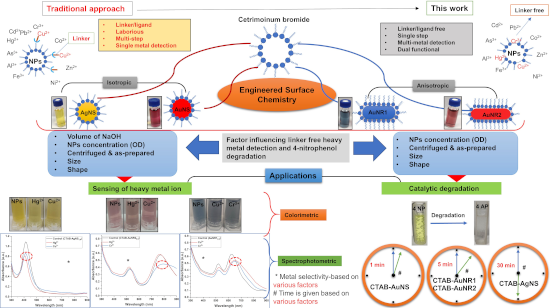
- NaCl (Figure 4g,h). Although centrifuged and as-prepared AuNR20.5 and AuNR21.0 showed a noticeable difference in the absorption spectrum compared to the control (Figure 4g,h). Previously, several reports confirmed the use of NaOH and NaCl in nanoparticle synthesis or surface modification for different




Dual-functionalized architecture enables stable and tumor cell-specific SiO2NPs in complex biological fluids
Beilstein J. Nanotechnol. 2024, 15, 1238–1252, doi:10.3762/bjnano.15.100


Unveiling the potential of alginate-based nanomaterials in sensing technology and smart delivery applications
Beilstein J. Nanotechnol. 2024, 15, 1077–1104, doi:10.3762/bjnano.15.88
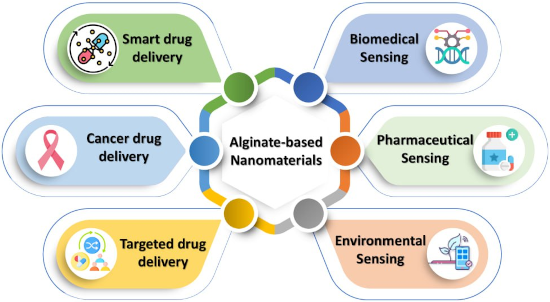
- alginate from marine sources adds to its appeal as a sustainable and renewable material for nanoparticle synthesis [103]. These nanoparticles have demonstrated potential in sensing applications, including temperature, humidity, water level, and various environmental pollutants. Heavy metal and volatile


Laser synthesis of nanoparticles in organic solvents – products, reactions, and perspectives
Beilstein J. Nanotechnol. 2024, 15, 638–663, doi:10.3762/bjnano.15.54
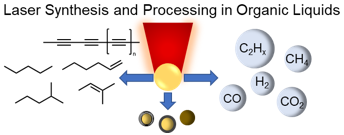
- reports from Fojtik and Henglein on nanoparticle synthesis [1] and Patil et al. on reactive target modification [2], pulsed laser synthesis and processing of colloids (LSPC) has been shown to be a scalable [3][4][5][6] and versatile technique for nanoparticle synthesis, comprehensively reviewed regarding
- generation of inorganic particles is a physicochemical approach that claims to synthesize particles without surfactants or molecular additives. In contrast to other approaches of nanoparticle synthesis, LSPC only requires the neat (elemental) target materials while no other precursors or ligand exchange
- example, polyynes or alkanes, or permanent gases forming persistent gas microbubbles. There have been various reviews regarding nanoparticle synthesis (mainly addressing findings reported for aqueous media) [7][54][55][56], fundamental physical processes during LSPC [57][58][59], and the potential use of





Potential of a deep eutectic solvent in silver nanoparticle fabrication for antibiotic residue detection
Beilstein J. Nanotechnol. 2024, 15, 426–434, doi:10.3762/bjnano.15.38
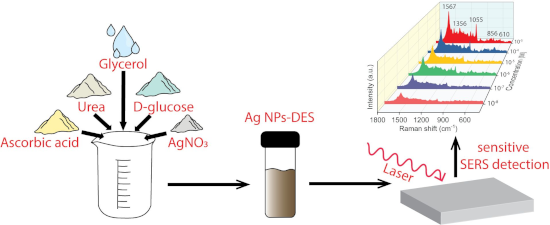
- Institute of Materials Science, Vietnam Academy of Science and Technology, Hanoi, Vietnam 10.3762/bjnano.15.38 Abstract Deep eutectic solvents (DESs) have recently emerged as an alternative solvent for nanoparticle synthesis. There have been numerous advancements in the fabrication of silver nanoparticles





