Search results
Search for "optical properties" in Full Text gives 453 result(s) in Beilstein Journal of Nanotechnology. Showing first 200.
Cross-scale design of chemosensor arrays: from molecular self-assembly in water to paper-based devices for metal ion detection
Beilstein J. Nanotechnol. 2026, 17, 828–838, doi:10.3762/bjnano.17.59
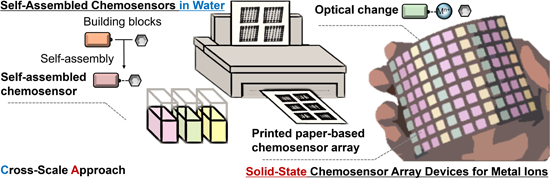
- bond chemistry require organic synthetic approaches in the chemosensor preparations [6][7][8][9]. Meanwhile, molecular self-assembly serves as a driving force for easy-to-obtain chemosensors through spontaneous preparation without a synthetic burden [17]. Moreover, the optical properties of
- requirements: They must exhibit different optical properties depending on the types of metal ions and their concentrations to obtain fingerprint-like response patterns, and they must be highly soluble [17]. Typical chemosensor molecules are covalently linked among the binding sites for analytes, optical units
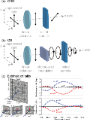
- (chromophores and fluorophores), and manipulator units, if necessary (Figure 2A) [42]. To construct a chemosensor array, the variation of optical properties is significant, while the modification of chemosensor properties is limited by the synthetic effort required. Molecular self-assembly is a valid approach


Glycerol photoelectrochemical oxidation reaction at carbon nitrides/BiVO4 materials
Beilstein J. Nanotechnol. 2026, 17, 806–817, doi:10.3762/bjnano.17.57
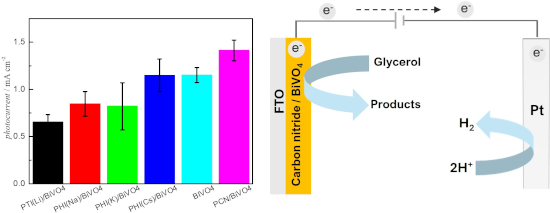
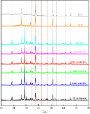
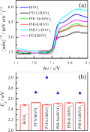
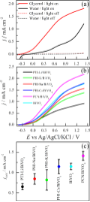
- acquired from 10° to 80° at a rate of 2°·min−1 with a step size of 0.02°. Morphological features and elemental composition were determined by field-emission scanning electron microscopy (FEG-SEM; Zeiss Supra35) coupled with energy-dispersive X-ray spectroscopy (EDS), operating at 15 kV. Optical properties




Tailoring Ag–Pt nanoalloys through solid-state dewetting: structural and optical insights
Beilstein J. Nanotechnol. 2026, 17, 748–759, doi:10.3762/bjnano.17.52

- boundary between these two classes is not always clearly defined. Examination properties, such as optical properties, can provide a valuable criterion for differentiation. In plasmonic materials, in most cases, nanocomposites exhibit two distinct resonance peaks, each corresponding to one of the
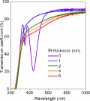
- (GIS). The final thinning of the samples was conducted by gradually reducing the acceleration voltage to 2 kV, thereby minimizing Ga-induced defects. The formation of the nanoalloys was confirmed by measuring their optical properties, with particular emphasis on plasmonic behavior. These properties




Environmental applications of silver nanoparticles: state-of-the-art review and emerging trends
Beilstein J. Nanotechnol. 2026, 17, 697–736, doi:10.3762/bjnano.17.49
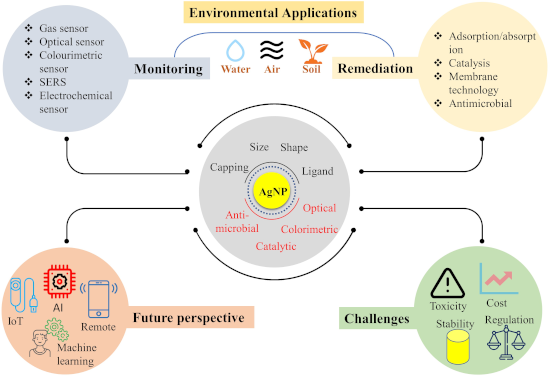
- environmental monitoring and remediation. For example, the optical properties of AgNPs are primarily governed by localised surface plasmon resonance (LSPR ), which occurs in the 380–450 nm region and depends on the nanoparticles’ size and shape. The unique optical properties of nanosilver were utilised to
- Soni Prajapati Akash Kumar Ranjana Singh Department of Biochemistry, King George’s Medical University, Lucknow, India Academy of Scientific and Innovative Research, Ghaziabad, India 10.3762/bjnano.17.49 Abstract Silver nanoparticles (AgNPs) possess inherent catalytic, antimicrobial, and optical
- properties, making them a strong candidate for environmental applications in water, air, and soil. Indeed, various reviews are available, though a significant gap persists in addressing all environmental pollutants. This review comprehensively and critically analyses the advancement in AgNP research spanning


Molecular engineering of individual dye-based nanoparticle photostability for ultrabright two-photon fluorescence
Beilstein J. Nanotechnol. 2026, 17, 688–696, doi:10.3762/bjnano.17.48
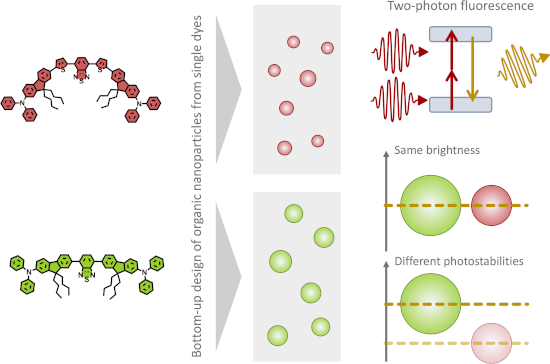
- extended by the addition of a thienyl motif between the benzothiadiazole and the fluorene, thus considerably redshifting its absorption and emission compared to dye 1. Optical properties of the nanoparticles Despite the seemingly minor differences between dye 1 and 2, they differ significantly in their
- optical properties in solution, and in those of their associated nanoparticles, as illustrated in Figure 1 and Table 1. dFONs(1) were prepared from dye 1 and emit around 595 nm with a fluorescence quantum yield of 0.33, while dFONs(2), prepared from dye 2, emit around 689 nm with a lower quantum yield of


Decontamination from water pollutants and pathogens by electrospun nanofibers doped with heavy-atom-free borafluorene-BODIPY photosensitizers
Beilstein J. Nanotechnol. 2026, 17, 668–682, doi:10.3762/bjnano.17.46
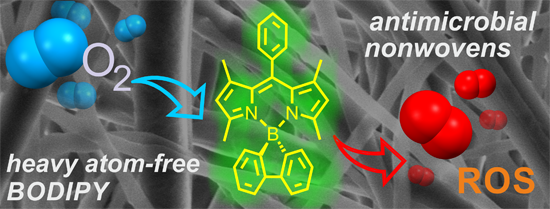
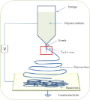
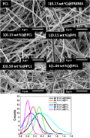
- , respectively. The surface polarity (Xp) was determined using Wu’s method (Equation 5), with γs being the total surface free energy: Optical properties The absorbance of the polymeric nonwovens doped with 1 was measured with an Evolution One Plus UV–vis spectrophotometer (Thermo Fisher Scientific) equipped with



Cellulose as a photocatalyst support material: extraction, structural features, and environmental applications
Beilstein J. Nanotechnol. 2026, 17, 635–652, doi:10.3762/bjnano.17.44
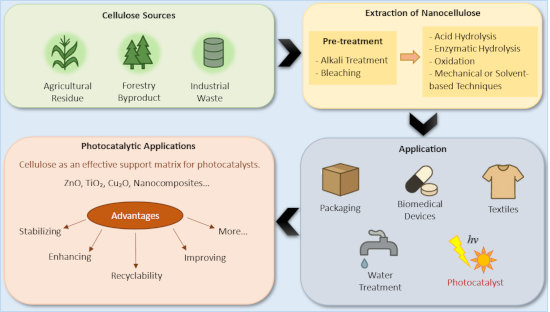
- degradation of pollutants [19]. In addition, the optical properties of transparent cellulose-based thin films enhance photocatalytic efficiency as their ability to transmit UV or visible light ensures greater light penetration, which in turn improves electron distribution and transfer to the TiO2 surface


Upcycling agroindustrial waste into graphene oxide supports for gold nanoparticles: toward sustainable nanomaterials
Beilstein J. Nanotechnol. 2026, 17, 489–504, doi:10.3762/bjnano.17.32
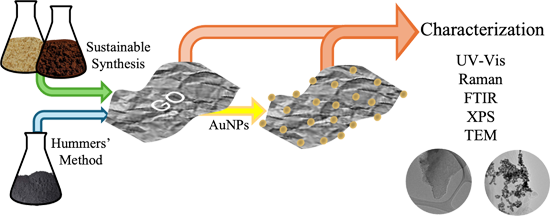
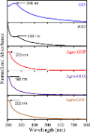
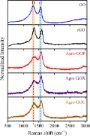
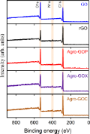
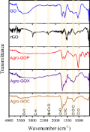
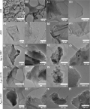
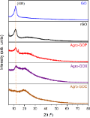
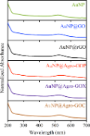
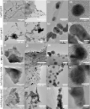
- UV–vis, ATR-FTIR, XPS, XRD, and Raman measurements, complemented by TGA and TEM to assess optical properties, surface chemistry, and structural and morphological features. Additionally, gold nanoparticles (AuNPs) were photochemically deposited onto Agro-GO to evaluate its potential for nanotechnology
- , ozone-free emission in the 310–450 nm range, λmax = 360 nm) for 60 min under continuous stirring. A purple dispersion was obtained, confirming the formation of AuNPs. Characterization techniques The optical properties of the samples were analyzed by ultraviolet–visible (UV–vis) spectroscopy with a Cary
- precursor and the processing conditions. This tunability provides a powerful means to tailor the structural and optical properties of AuNP@GO hybrids. Beyond its alignment with environmental sustainability goals, this approach provides a versatile, customizable platform for precisely modulating nanomaterial



Beam shaping techniques for pulsed laser ablation in liquids: Unlocking tunable control of nanoparticle synthesis in liquids
Beilstein J. Nanotechnol. 2026, 17, 309–342, doi:10.3762/bjnano.17.22
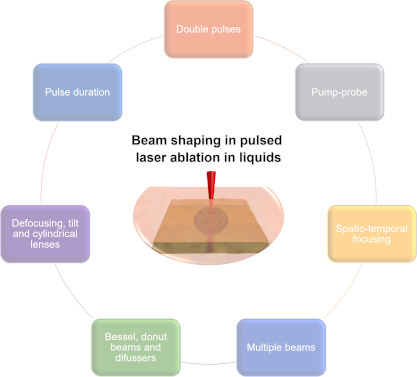
- tuning NP size, crystallinity, defects, and optical properties. Conventional batch PLAL setups often exhibit lower productivity than large-scale chemical or gas-phase syntheses; however, recent advances using megahertz-repetition-rate lasers and continuous-flow configurations have significantly increased
- . have demonstrated that the optical properties of Si/Au NPs, their structure, as well as their chemical composition can be modified by defocusing [143]. Defocusing 0.5 mm inside the target led to enhanced chemical stability of the colloids and increased concentration. Moreover, NP size control could be








Multilayered hyperbolic Au/TiO2 nanostructures for enhancing the nonlinear response around the epsilon-near-zero point
Beilstein J. Nanotechnol. 2026, 17, 251–261, doi:10.3762/bjnano.17.17
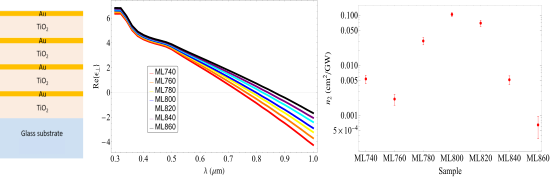
- , Université de Technologie de Troyes, 10004 Troyes, France EUT+ Institute of Nanomaterials and Nanotechnologies-EUTINN, European University of Technology, European Union 10.3762/bjnano.17.17 Abstract In this work, we present the design, fabrication, and study of the optical properties of multilayered metal
- of light. As a consequence, light does not differentiate between the constituting materials and only “sees” them as a single material. To study the interaction of light with these metamaterials, we use the effective media approximation to calculate the optical properties of these materials. These
- the nonlinear response of a Ru/TiO2 multilayered structure as reported in [22]. This sample was designed to have an ENZ point at 800 nm and was fabricated using atomic layer deposition. During the linear characterization of the optical properties, spectral ellipsometry showed that the ENZ point


Micro- and nanoscale effects in biological and bioinspired materials and surfaces
Beilstein J. Nanotechnol. 2026, 17, 214–217, doi:10.3762/bjnano.17.14

- bioinspired surfaces and their tribological characteristics (friction, wear resistance, and adhesion), as well as self-cleaning and optical properties, underscoring the overarching aim of the symposium to integrate biological phenomena and materials science towards biomimetic approaches. The fruitful
Structure-dependent thermochromism of PAZO thin films: theory and experiment
Beilstein J. Nanotechnol. 2026, 17, 186–199, doi:10.3762/bjnano.17.12
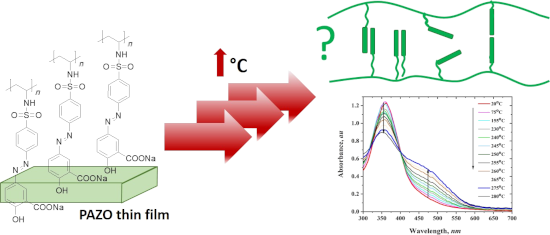
- thickness, and thermal treatment conditions. The observed changes in optical properties suggest that this response is governed by temperature-induced modulation of molecular ordering and aggregation state, which in turn alters the electronic transitions responsible for light absorption. Theoretical
- the molecular assembly governs birefringence in PAZO remains incomplete, leaving open questions about the fundamental mechanisms driving the observed photoresponsive behavior. This knowledge gap serves as the primary motivation for the present study. Here, we investigate the optical properties of PAZO
- Kasha) is based on the optical properties of the aggregates arising from the different molecular packing patterns. H-aggregates are usually characterized by side-by-side (cofacial) “sandwich” orientations of the monomeric chromophores, and the main absorption peak is generally blueshifted (“H” for


Chiral plasmonic nanostructures fabricated with circularly polarized light
Beilstein J. Nanotechnol. 2025, 16, 2245–2264, doi:10.3762/bjnano.16.154
- optical properties [112][113]. The absorption and scattering of a spherical particle are described using Mie theory [114], which solves Maxwell’s equations to predict how light interacts with the particle with a multipole expansion of the EM fields. For ellipsoids that are much smaller than the wavelength
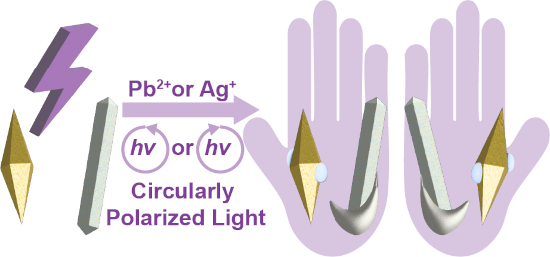
- method, the finite element method, and the boundary element method are used to describe the optical properties of PNS. Numerous comprehensive review articles exist to compare different simulation methods, so we will not delve into detail here. To understand how structural chirality forms using CPL
- that the shape of the metal seeds and the experimental conditions, such as depositing the seeds on a substrate or dispersing them in a solution, affect the distribution of hot carriers and the dissymmetry of the resulting chiral cPNSs. Simulations have also been conducted to understand the optical







Optical bio/chemical sensors for vitamin B12 analysis in food and pharmaceuticals: state of the art, challenges, and future outlooks
Beilstein J. Nanotechnol. 2025, 16, 2207–2244, doi:10.3762/bjnano.16.153
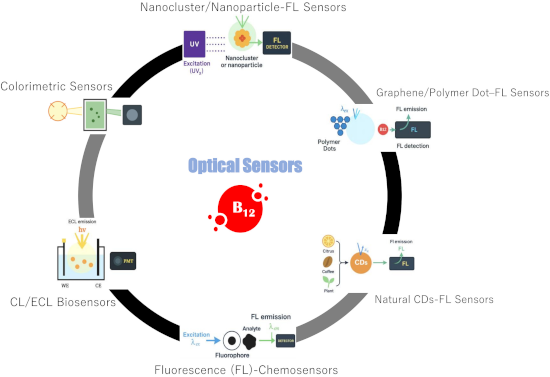
- sensitivity, specificity, rapid detection, and the ability for real-time analysis. CD- and QD-based biosensors with excellent optical properties such as photoluminescence enable the detection of VB12 at negligible concentrations and in real-world samples with complex matrices. Furthermore, integrating these
- output, utilizing the optical properties of the signal such as fluorescence, absorbance, refractive index, and Raman scattering for quantification and evaluation. The most prevalent types of optical sensing include colorimetric, plasmonic, fluorescence, and spectrophotometric methods due to their ease of


Ultrathin water layers on mannosylated gold nanoparticles
Beilstein J. Nanotechnol. 2025, 16, 2183–2198, doi:10.3762/bjnano.16.151
- century [3]. They are investigated, for example, regarding drug delivery [4], but they are also parts of actual products, for example, of sensors [5]. All this is based on the ease of synthesis, chemical stability, size tuneability, and unique optical properties [6]. The extreme dependence of the



Laser ablation in liquids for shape-tailored synthesis of nanomaterials: status and challenges
Beilstein J. Nanotechnol. 2025, 16, 1963–1997, doi:10.3762/bjnano.16.137
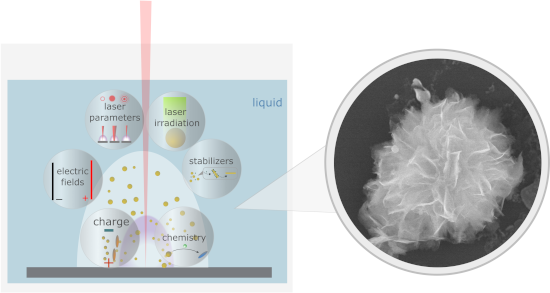
- development of such fields as energy generation and storage, sensing, and catalysis. Another application area of nonspherical NPs stems from the shape dependencies of their optical properties. The shift of plasmonic bands to the near-infrared spectral range observed for high-aspect-ratio nanostructures, such






Multifunctional anionic nanoemulsion with linseed oil and lecithin: a preliminary approach for dry eye disease
Beilstein J. Nanotechnol. 2025, 16, 1711–1733, doi:10.3762/bjnano.16.120
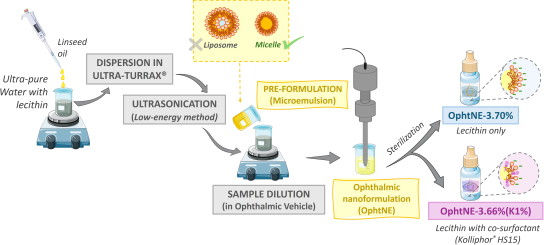
- nanoemulsion its characteristic milky opaque appearance. Similar optical properties have been documented in the literature for lecithin-based nanoemulsions with droplet sizes of approximately 150 nm [21][107]. The OphtNE-3.66%(K1%) nanoformulation appeared more translucent than the OphtNE-3.70% nanoformulation





Transient electronics for sustainability: Emerging technologies and future directions
Beilstein J. Nanotechnol. 2025, 16, 1545–1556, doi:10.3762/bjnano.16.109
- germanium-based alloys with various metals, as well as emerging heterostructure systems, to achieve tailored electronic and optical properties suited for diverse transient device architectures. Bioresorbable metals are also regarded as essential components for interconnects and electrodes in transient


Influence of laser beam profile on morphology and optical properties of silicon nanoparticles formed by laser ablation in liquid
Beilstein J. Nanotechnol. 2025, 16, 1533–1544, doi:10.3762/bjnano.16.108
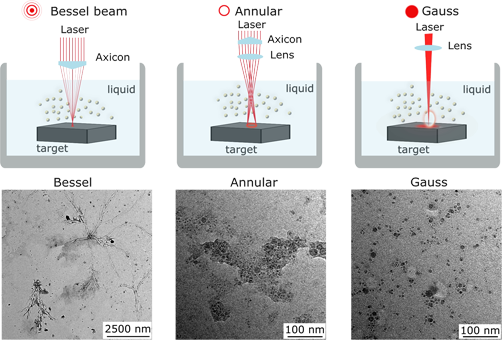
- . Optical characterization The optical properties of Si NPs dispersed in ethanol were investigated using Raman and UV–vis spectroscopy. Initially, Si NPs obtained using Bessel, annular, and Gaussian laser beams were characterized by Raman spectroscopy, and their Raman spectra (vibrational modes) were
- laser beams also showed different optical properties, which were characterized using UV–vis absorption and PL spectroscopies. The absorption spectra of the Si colloids prepared using Gauss, Bessel, and annular profiles are shown in Figure 6. In all the spectra, absorption in the visible and near
- -infrared regions has been detected. However, as can be concluded from Figure 6a, the absorption cutoff wavelength differs for each studied sample, indicating different optical and electronic properties of the formed nanostructures. The variation of the optical properties can be caused by structural


Nanomaterials for biomedical applications
Beilstein J. Nanotechnol. 2025, 16, 1499–1503, doi:10.3762/bjnano.16.105
- and can be adjusted to emit different colors based on their size. This reason makes them ideal for simultaneously spotting and examining various biological environments, which aids both laboratory and clinical research [16]. Gold nanoparticles are also an essential group in this field. Optical
- properties of these particles are highly dependent on their size and shape. In a diagnostic test, these nanoparticles remarkably improve imaging contrast and even create noticeable color changes, which is useful in biosensors [17]. Gold nanoparticles were being used in certain COVID-19 test kits that change
Laser processing in liquids: insights into nanocolloid generation and thin film integration for energy, photonic, and sensing applications
Beilstein J. Nanotechnol. 2025, 16, 1428–1498, doi:10.3762/bjnano.16.104
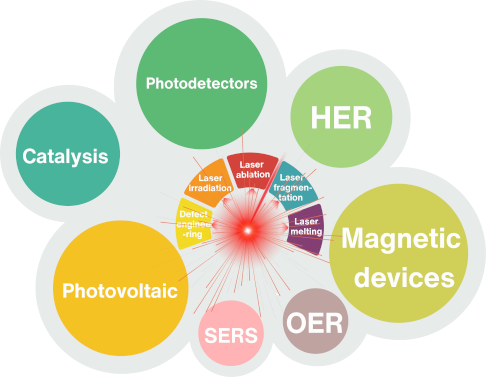
- pulse excitation (532 nm). The morphological changes induced by thermal and photochemical effects were found to influence the optical properties of these particles. Another commonly reported semiconductor material by LFL is zinc oxide (ZnO) [33][34]. The optical properties, particularly the UV emission
- characteristics, are influenced by the NP size and crystalline quality (Figure 3b,c). LFL also plays a crucial role in tuning the optical properties of NPs. Laser processing affects the defect density and optical bandgap of the particles, as demonstrated by changes in the optical transmission spectra before and
- after LFL treatment. By adjusting processing parameters such as solvent choice, the defect emission, including green defect emissions, can be controlled, providing further opportunities for tailoring the optical properties of NPs for various applications. The mechanisms behind nanoparticle formation






Photochemical synthesis of silver nanoprisms via green LED irradiation and evaluation of SERS activity
Beilstein J. Nanotechnol. 2025, 16, 1417–1427, doi:10.3762/bjnano.16.103
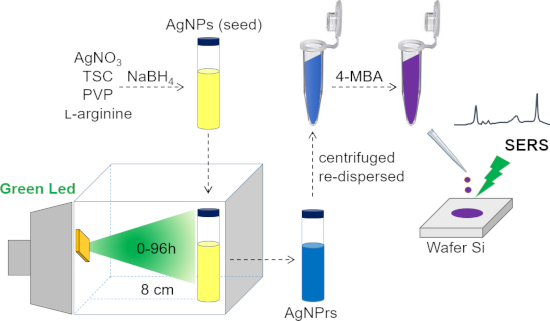
- , 12, 24, 48, and 72 h. During the irradiation process, the color of the solution gradually shifted from pale yellow to green and eventually to blue. Characterization The optical properties of the samples were characterized using UV–vis spectroscopy (Jasco V-670) with a scanning range from 900 to 200


Synthesis and antibacterial properties of nanosilver-modified cellulose triacetate membranes for seawater desalination
Beilstein J. Nanotechnol. 2025, 16, 1380–1391, doi:10.3762/bjnano.16.100
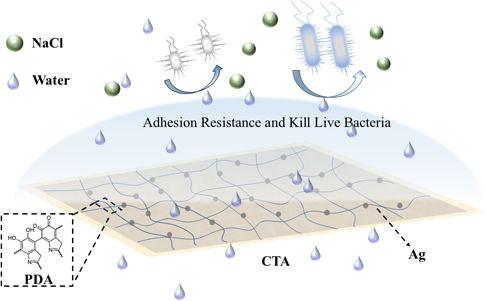
- ]. Upon the application of Ag[NH3]2OH to the surface, the membrane underwent a slight color change, acquiring a metallic luster (Supporting Information File 1, Figure S3). This change is likely attributed to the presence of Ag nanoparticles. Ag nanoparticles are known for their unique optical properties


Wavelength-dependent correlation of LIPSS periodicity and laser penetration depth in stainless steel
Beilstein J. Nanotechnol. 2025, 16, 1302–1315, doi:10.3762/bjnano.16.95
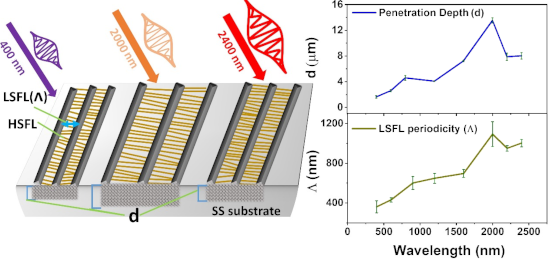
- geometry. It can also depend on the optical properties of the material, such as the refractive index, absorption coefficient, reflectivity, and laser parameters, such as the wavelength, pulse duration, fluence, incidence angle, and polarization [64]. Generally, penetration depth increases with increasing
- how metal surfaces respond to incident wavelengths [53][54]. This work advances our comprehension of LIPSS structures and their applications, shedding new light on the interplay between incident wavelengths and surface interactions. The paper concludes by emphasizing the importance of optical
- properties, laser parameters, and material characteristics in determining penetration depth, thereby contributing to the broader understanding of light–material interactions. Materials and Methods Materials A double-sided polished stainless steel surface (SS304) with a thickness of 100 µm was utilized





Enhancing the photoelectrochemical performance of BiOI-derived BiVO4 films by controlled-intensity current electrodeposition
Beilstein J. Nanotechnol. 2025, 16, 1289–1301, doi:10.3762/bjnano.16.94
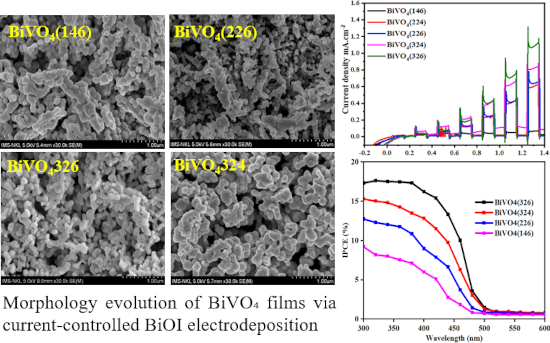
- optimize its conversion to BiVO4. By systematically adjusting the deposition current density and vanadium precursor concentration, we achieved fine control over the crystallinity, grain size, porosity, and optical properties of the resulting films. This level of tunability leads to substantial improvements
- performance owing to improved charge transport and enhanced surface reaction sites. Optical properties (UV–vis) UV–vis absorption spectroscopy (Figure 3) showed that BiVO4 samples absorb visible light, with absorption edges between 502 and 541 nm and optical bandgaps between 2.46 and 2.30 eV (Figure 3b