Search results
Search for "semiconductors" in Full Text gives 357 result(s) in Beilstein Journal of Nanotechnology. Showing first 200.
Nanoglasses: a trail towards uncharted regions of vitreous materials and their properties?
Beilstein J. Nanotechnol. 2026, 17, 1047–1062, doi:10.3762/bjnano.17.72



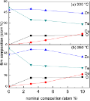
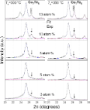
Synthesis and characterization of RF-sputtered ZnTe/Cu2−xTe thin films for solar cell applications
Beilstein J. Nanotechnol. 2026, 17, 1016–1027, doi:10.3762/bjnano.17.69
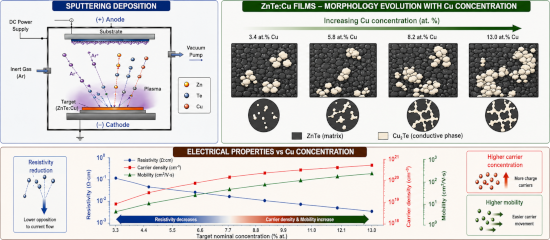
- be a key challenge. In recent years, composite and dual-doping approaches have emerged as promising alternatives to tailor structural, optical, and electrical properties in II–VI semiconductors. In our research group, composite systems such as CdTe:Cu2−xTe and CdSe:Cu2−xTe have been successfully



Materials challenges in solid-state sensors for continuous monitoring of ions in water
Beilstein J. Nanotechnol. 2026, 17, 935–973, doi:10.3762/bjnano.17.66
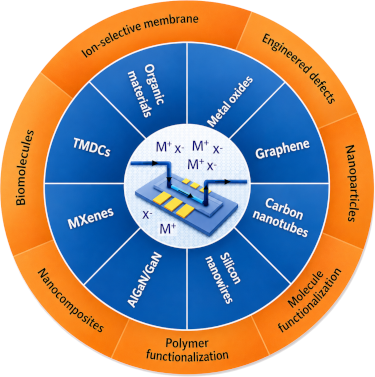
- mechanical integrity during repeated cycling to deliver long-term performance [107]. Inorganic materials Semiconducting metal oxides. Metal-oxide thin films (such as ZnO, SnO2, IGZO, In2O3) are classified as classic inorganic semiconductors with a wide bandgap (3–4 eV). The surface of a semiconducting metal
- oxide is its most chemically active region that can have a significant impact on the electronic structure of the material. Because metal oxides combine metal cations and oxygen anions with partly ionic bonding, their surfaces behave very differently from covalent semiconductors like silicon. Surface



Light-driven ammonia electrooxidation via carbon nitride–ruthenium molecular interfaces
Beilstein J. Nanotechnol. 2026, 17, 854–862, doi:10.3762/bjnano.17.61
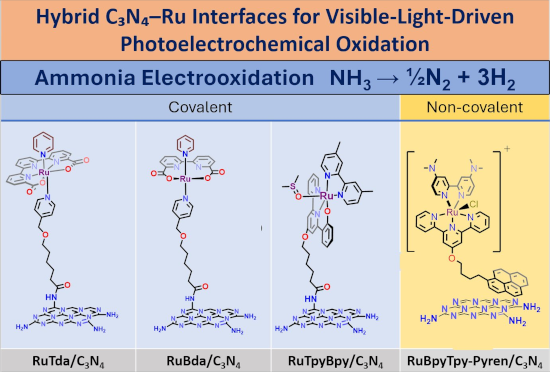
- semiconductors provide scalable light harvesting but lack precisely defined active sites. Anchoring molecular ruthenium (Ru) catalysts onto heterogeneous semiconductors, like carbon nitride (C3N4), offers a chemically rational strategy to bridge this gap, yielding hybrid photoelectrodes capable of driving
- and light-harvesting capacity of heterogeneous materials [1][2][3][4][5][8]. This perspective focuses on the well-known combination regarding water oxidation, that is, C3N4 semiconductors with molecular Ru-based catalysts as one promising multicomposite hybrid strategy. C3N4 acts as the light absorber
- surface; and (5) the surface-bound molecular catalyst drives the target redox reaction. Here, either water oxidation or ammonia oxidation at the anchored Ru centre. This distinction matters especially for C3N4. Unlike inorganic semiconductors with high dielectric constants, where exciton formation and


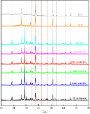
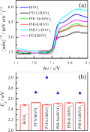
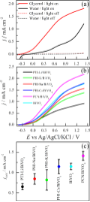
Glycerol photoelectrochemical oxidation reaction at carbon nitrides/BiVO4 materials
Beilstein J. Nanotechnol. 2026, 17, 806–817, doi:10.3762/bjnano.17.57
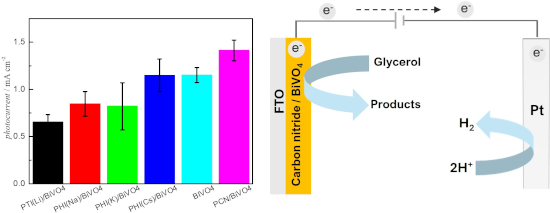
- structural defects [16]. CN materials have been extensively studied as environmentally friendly semiconductors with remarkable photocatalytic properties and facile synthesis [17][18][19][20][21]. Furthermore, it has been demonstrated that incorporating cations during CN synthesis can lead to different




Tuning the electronic properties of defect-rich MoS2
Beilstein J. Nanotechnol. 2026, 17, 796–805, doi:10.3762/bjnano.17.56
- eV, were acquired. Synthetic molybdenum disulfide crystals (2D Semiconductors, Phoenix, AZ, USA) were attached to the sample holders using silver conductive paint. To ensure cleanliness, the crystals were cleaved in situ by scotch tape. By the absence of carbon and oxygen signals in the XPS, a



Substrate-dependent pore formation in molybdenum disulfide monolayers under ion irradiation
Beilstein J. Nanotechnol. 2026, 17, 769–780, doi:10.3762/bjnano.17.54
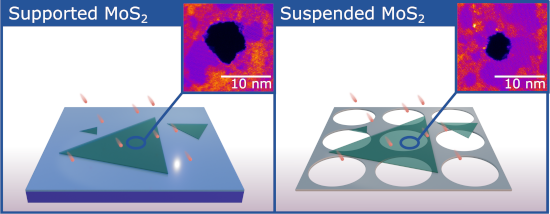
- in graphene/MoS2 heterostructures [59]. In contrast, coupling between 2D semiconductors and Au can be substantially stronger, which underlies the success of Au-assisted exfoliation and the formation of large-area, clean interfaces [60][61]. Motivated by this, we irradiated MoS2 exfoliated on Au to


Environmental applications of silver nanoparticles: state-of-the-art review and emerging trends
Beilstein J. Nanotechnol. 2026, 17, 697–736, doi:10.3762/bjnano.17.49
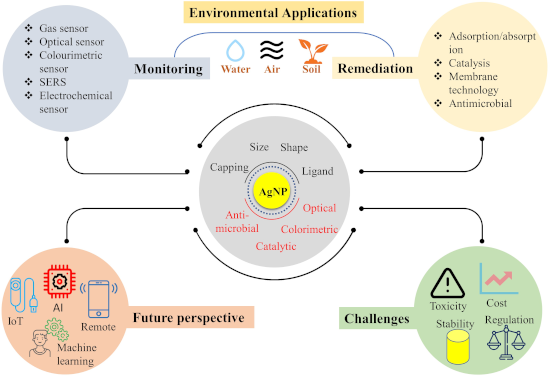
- to incident photon flux to allow meaningful cross-study comparisons and to quantify true photonic utilisation [130]. These mechanistic insights, grounded in ultrafast spectroscopy, EPR, and scavenger studies, reveal why AgNP composites often outperform pristine semiconductors and enable rational


Cellulose as a photocatalyst support material: extraction, structural features, and environmental applications
Beilstein J. Nanotechnol. 2026, 17, 635–652, doi:10.3762/bjnano.17.44
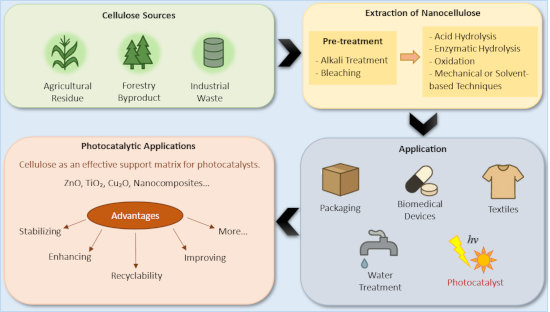
- photoactive nanomaterials, including metal oxides and nonmetallic semiconductors, to remediate and purify water, and the use of these hybrid systems is growing steadily in water treatment applications [15]. Photocatalyst immobilization on membranes addresses key challenges by preventing photocatalyst loss
- behind a positively charged hole, the oxygen-rich functional groups on the cellulose surface can interact with the electronic bands of the attached semiconductors and act as an electron mediator or sink [93]. The complex, porous internal architecture of a cellulose matrix also creates a “light-trapping
- recombination, thereby improving its efficiency and expanding its potential for practical applications [98]. Metal sulfide semiconductors such as CdS, MoS2, ZnS, and CuS often encounter the problem of photocorrosion, a self-oxidation process that significantly reduces their stability during photocatalytic


Impacts of annealing on structural and photophysical properties of zinc phthalocyanine adsorbed on graphene
Beilstein J. Nanotechnol. 2026, 17, 576–585, doi:10.3762/bjnano.17.39
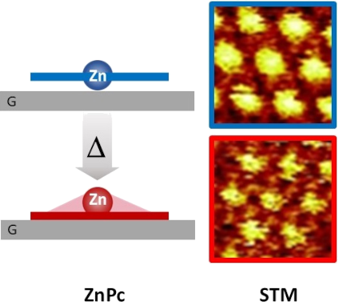
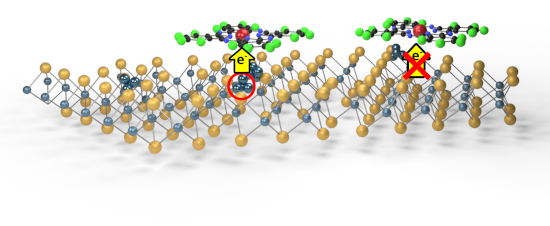
- formation towards 3D self-assembly. Keywords: graphene; optical spectroscopy; organic semiconductors; phthalocyanine; scanning tunneling microscopy; self-assembly; Introduction Combining the properties of graphene and molecular semiconductors in a given material organized at the molecular scale appears as
- ), a well-known family of organic semiconductors, have been the subject of intensive research [15]. This family of molecules offers many advantages for industrial applications such as nontoxicity, thermal and chemical stability, and strong optical absorption [16][17]. It has also become a paradigm in
- fundamental research on organic semiconductors. The flexibility offered by the choice of the coordinated central metal cation permits to vary their electronic, photonic, and spin-related properties. It also influences their stacking geometry, in particular as a result of the change in relative stability of


Laser–material interactions in liquids for the synthesis of nanomaterials: current status and perspectives
Beilstein J. Nanotechnol. 2026, 17, 571–575, doi:10.3762/bjnano.17.38
- materials, including metals [2][3], oxides [4][5], semiconductors [6][7], and organics [8][9]. In addition, LSPC enables the synthesis of multicomponent nanomaterials, such as binary [10][11], ternary [12][13], and compositionally complex alloys [14][15], with a high degree of control over their composition
Defects and defect-mediated engineering of two-dimensional materials: challenges and open questions
Beilstein J. Nanotechnol. 2026, 17, 454–488, doi:10.3762/bjnano.17.31
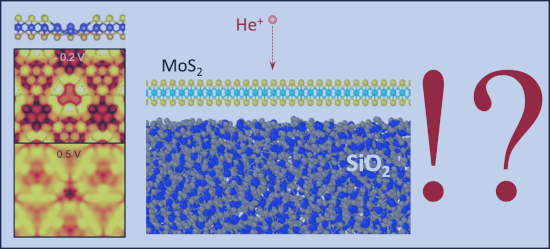
- purely adiabatic descriptions. The mechanism of this process is still poorly understood and requires more detailed studies, particularly on surfaces of semiconductors. Another factor that affects the mechanism and kinetics of oxidation is the exothermicity of the reaction. The O2 incorporation into S
- mark a decisive advance in the study of 2D semiconductors. Defects in TMDs and h-BN host localized excitonic states and robust single-photon emission [119], yet, their spectroscopic variability has remained enigmatic. Far-field optical probes have revealed striking spatial heterogeneity in emission
- edges; hence, a significant portion of the carriers can be ionized under operating conditions, that is, the ionization energy should be similar in magnitude to kT. In conventional 3D semiconductors, substitution of host atoms by those from the neighboring columns of the periodic table often results in





Beam shaping techniques for pulsed laser ablation in liquids: Unlocking tunable control of nanoparticle synthesis in liquids
Beilstein J. Nanotechnol. 2026, 17, 309–342, doi:10.3762/bjnano.17.22
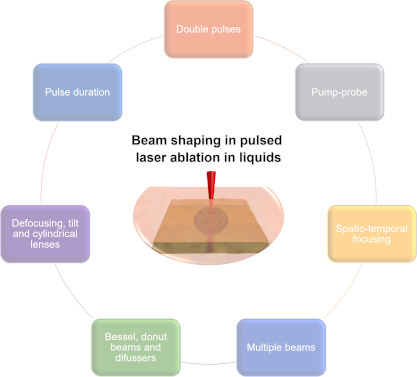
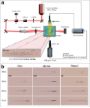
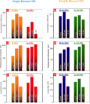
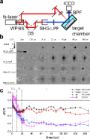
- ], including pure metals [40][41][42][43], semiconductors [44][45][46][47], or dielectric materials [48][49], in organic [41][50] or inorganic solvents [41][50][51][52]. Although initial NP production rates via PLAL were limited to a few milligram per hour, recent advancements in high-power, high-repetition







Advancing nanolithography: a comprehensive review of materials for local anodic oxidation with AFM
Beilstein J. Nanotechnol. 2026, 17, 275–291, doi:10.3762/bjnano.17.19
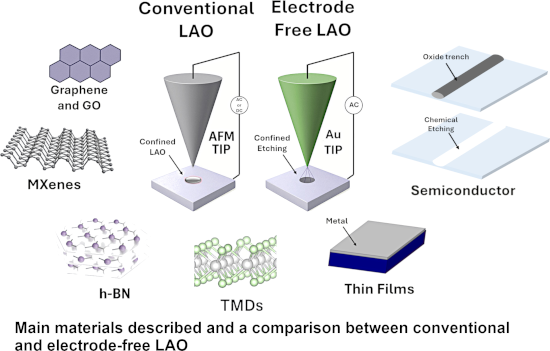
- technique for nanoscale patterning, leveraging the precision of scanning probe microscopy, relying specifically on atomic force microscopy. This review explores the materials utilized in LAO experiments, including semiconductors, metals, insulators, two-dimensional (2D) materials, and emerging
- heterostructures. Semiconductors such as silicon and silicon carbide remain foundational due to their controllable oxidation kinetics, while metals like titanium and aluminum offer opportunities for plasmonic and optical applications. 2D materials, including graphene, graphene oxide, and transition metal
- aims to highlight the capability of LAO to pattern two-dimensional (2D) materials such as graphene [20][21][22], hexagonal boron nitride [23] (hBN), transition metal dichalcogenides (TMDs) [21][24][25][26][27], metals [18][28][29], as well as traditional semiconductors such as silicon (Si) [6][10][30


Multilayered hyperbolic Au/TiO2 nanostructures for enhancing the nonlinear response around the epsilon-near-zero point
Beilstein J. Nanotechnol. 2026, 17, 251–261, doi:10.3762/bjnano.17.17
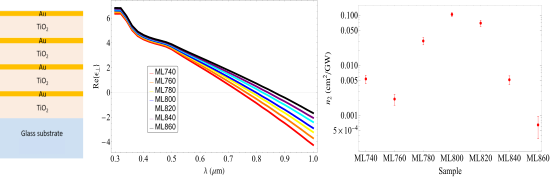
- ], Ag/MgF2 [11], and Ag/Ti3O5 [12]. Gold-based systems have also been prominent, such as Au/Al2O3 [13][14][15], Au/SiO2 [16], Au/TiO2 [17], and optical filters based on Au/TiO2 multilayers [18]. Beyond classic metal–dielectric structures, research has explored ZnO/Al:ZnO [19] and doped semiconductors


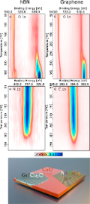
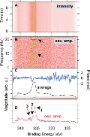
Ambient pressure XPS at MAX IV
Beilstein J. Nanotechnol. 2025, 16, 1677–1694, doi:10.3762/bjnano.16.118
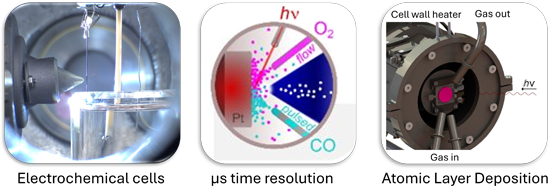
- remediation, and other light-driven processes. Atomic layer deposition Atomic layer deposition (ALD) is a critical thin-film technology widely used in semiconductors, nanoelectronics, energy storage, catalysis, and advanced coatings. It enables atomically precise control over film thickness and composition






Nanotechnology-based approaches for the removal of microplastics from wastewater: a comprehensive review
Beilstein J. Nanotechnol. 2025, 16, 1607–1632, doi:10.3762/bjnano.16.114
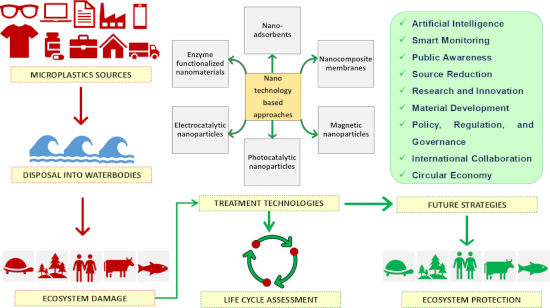
- radicals. These benefits are particularly significant when the particle size is reduced to around 10 nm. Utilizing nanostructured semiconductors in photocatalytic applications proves to be more efficient, as a larger proportion of the photogenerated electron–hole pairs is available at the surface
- . Nanoparticles, owing to their high surface-to-volume ratio, demonstrate superior catalytic performance compared to bulk materials. Furthermore, the particle size of semiconductors influences their bandgap energy and crystalline structure, which in turn affects their redox potential and the spatial distribution



Photocatalytic degradation of ofloxacin in water assisted by TiO2 nanowires on carbon cloth: contributions of H2O2 addition and substrate absorbability
Beilstein J. Nanotechnol. 2025, 16, 1567–1579, doi:10.3762/bjnano.16.111
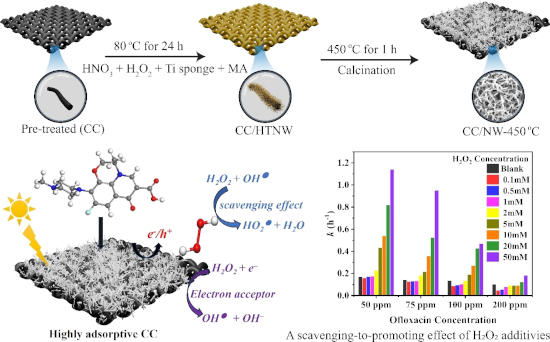
- Iram Hussain Lisha Zhang Zhizhen Ye Jin-Ming Wu State Key Laboratory of Silicon and Advanced Semiconductor Materials, School of Materials Science and Engineering, Zhejiang University, Hangzhou, 310027, P. R. China Zhejiang Provincial Engineering Research Center of Oxide Semiconductors for


Transient electronics for sustainability: Emerging technologies and future directions
Beilstein J. Nanotechnol. 2025, 16, 1545–1556, doi:10.3762/bjnano.16.109
- has prompted further exploration of chemically analogous materials, such as germanium [45][46], silicon–germanium alloys [45], amorphous semiconductors [45], indium–gallium–zinc oxide (IGZO) [47], and metal oxides such as zinc oxide [48], for their potential as bioresorbable semiconductors. These
- circuits, such as ring oscillators, entirely composed of water-soluble materials, supporting its applicability in future bioelectronic devices. Nevertheless, the currently known repertoire of bioresorbable semiconductors remains narrow, both in material selection and bandgap range. Expanding the library to
- -bandgap bioresorbable semiconductors based on magnesium–silicon alloys, such as Mg2Si, could be promising candidates to fill this gap (Figure 2a) [49][50]. However, further exploration is needed to discover and engineer additional semiconducting materials, including a broader range of silicon- or


Influence of laser beam profile on morphology and optical properties of silicon nanoparticles formed by laser ablation in liquid
Beilstein J. Nanotechnol. 2025, 16, 1533–1544, doi:10.3762/bjnano.16.108
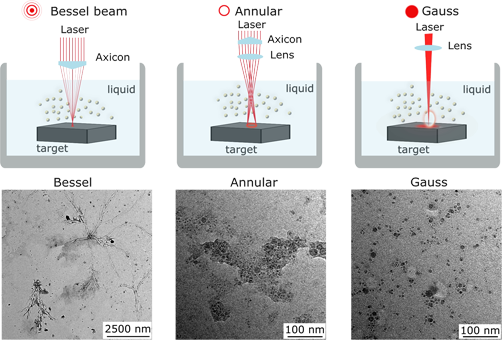
- resulting NPs appear more separated with no outer shell observed. Mostly, the formation of spherical NPs with clear surface boundaries was observed, which is typical for laser ablation of semiconductors. The interesting morphological peculiarity of the Si nanostructures produced with a Bessel beam was


Laser processing in liquids: insights into nanocolloid generation and thin film integration for energy, photonic, and sensing applications
Beilstein J. Nanotechnol. 2025, 16, 1428–1498, doi:10.3762/bjnano.16.104
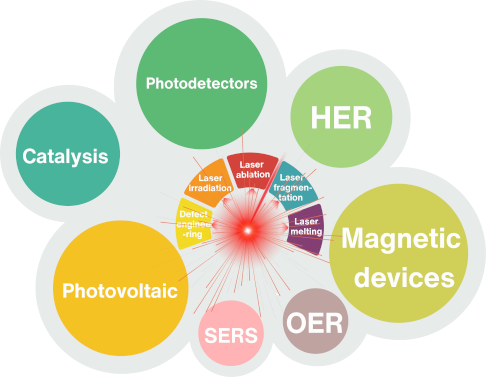
- . These techniques have been important for progress in this field of study. 1.1 Laser ablation in liquids Laser ablation in liquids (LAL) is a well-established technique for synthesizing nanomaterials such as metals, semiconductors, ceramics, polymers, and alloys. Several review articles published since
- engineering, and energy storage. LFL can be applied to a wide range of materials, including metals such as gold, silver, or copper, semiconductors, and perovskites materials. The method is versatile enough to cater to the synthesis of NPs across different compositions, making it a valuable tool for
- metals [45][46], oxides [47], semiconductors [48], and even carbides [41][49]. When compared to other particle fabrication processes, material versatility of this technique stands out. Further, the SMSPs obtained by PLML are unique in a way that they are spherical, mechanically very strong [50], and






Wavelength-dependent correlation of LIPSS periodicity and laser penetration depth in stainless steel
Beilstein J. Nanotechnol. 2025, 16, 1302–1315, doi:10.3762/bjnano.16.95
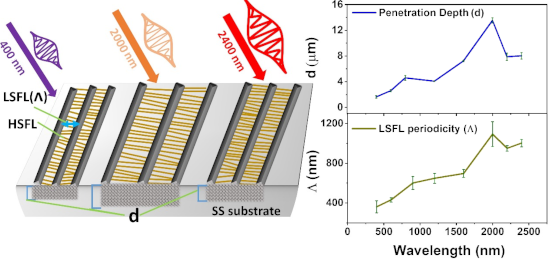
- different metals, semiconductors, and polymers [9][12][31][32][33][34][35][36][37][38][39]. LIPSS characterized by ripple-like subwavelength periodic structures on a material’s surface, are broadly classified into low spatial frequency LIPSS (LSFL) and high spatial frequency LIPSS (HSFL), based on their





Soft materials nanoarchitectonics: liquid crystals, polymers, gels, biomaterials, and others
Beilstein J. Nanotechnol. 2025, 16, 1025–1067, doi:10.3762/bjnano.16.77
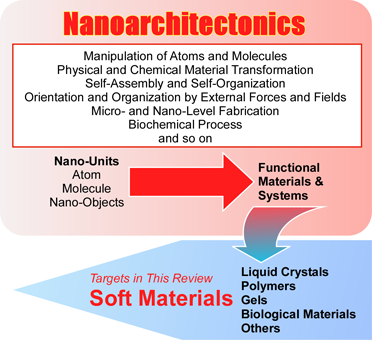
- compounds, including oligoacenes and oligothiophenes, exhibit excellent carrier transport properties in the aggregated state, rendering them promising candidates for use as organic semiconductors. It can be posited that liquid crystal compounds incorporating extended π-conjugated cores may be considered as
- liquid crystal semiconductors that exhibit anisotropic conduction of electronic charge carriers. The efficient transport of electronic carriers has been confirmed in nematic, chiral nematic, smectic, and columnar phases. It has been demonstrated that liquid crystals comprising extended π-conjugated units
- photovoltaic effect and polarization-induced electroluminescence. The transport of both holes and electrons in various liquid crystal phases of semiconductors represents a fascinating area of research [234][235][236]. The use of liquid crystal semiconductors in the construction of lightweight organic






Time-resolved probing of laser-induced nanostructuring processes in liquids
Beilstein J. Nanotechnol. 2025, 16, 968–1002, doi:10.3762/bjnano.16.74
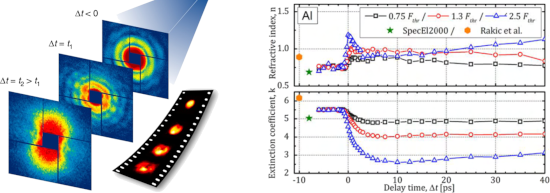
- of electrons (of the order of 10%) can be excited, which would lead to changes of the interatomic forces faster than electron–phonon coupling. This has been seen in semiconductors [24][112] in particular. The electron–phonon coupling will increase the temperature of the lattice, which will undergo


Ar+ implantation-induced tailoring of RF-sputtered ZnO films: structural, morphological, and optical properties
Beilstein J. Nanotechnol. 2025, 16, 872–886, doi:10.3762/bjnano.16.66
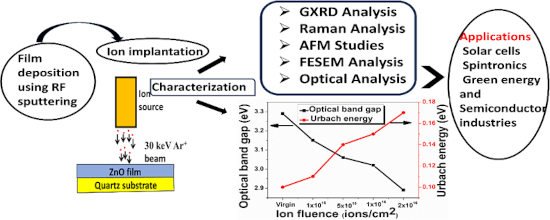
- , although the variation in surface parameters and optical characteristics can significantly impact the applicability of ZnO films in semiconductors, spintronics, solar cells, and green energy industries [3][18]. This motivated us to investigate the emergence of Raman longitudinal optical modes and their