Search results
Search for "silver nanoparticles (AgNPs)" in Full Text gives 34 result(s) in Beilstein Journal of Nanotechnology.
Nanoparticle delivery systems for HIV pre-exposure prophylaxis (PrEP): advances and challenges
Beilstein J. Nanotechnol. 2026, 17, 839–853, doi:10.3762/bjnano.17.60
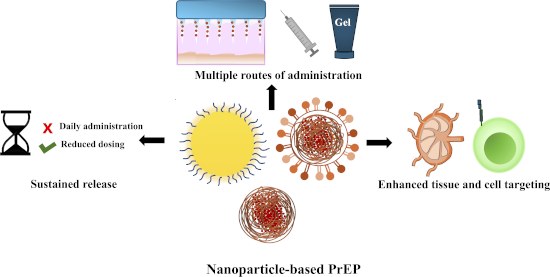
- nanoparticles (AgNPs) may also show antiviral effects such as inhibiting viral entry and replication [68][70]. The intrinsically high surface-to-volume ratios of these nanoparticles and the capacity for surface functionalization provide the prerequisites for engineering multivalent interactions with targeted
- systems. Some metallic nanoparticles (MNPs), such as gold nanoparticles (AuNPs), exhibit long-term stability, chemically modifiable surfaces, and potential for intrinsic antiviral activity [68][69]. AuNPs can, for instance, interfere with and block HIV gp120-CD4 interactions. Other MNPs, like silver


Restorative potential of laser-synthesized silver nanoparticles with Salvia officinalis for periodontal disease treatment: an in vitro study
Beilstein J. Nanotechnol. 2026, 17, 781–795, doi:10.3762/bjnano.17.55
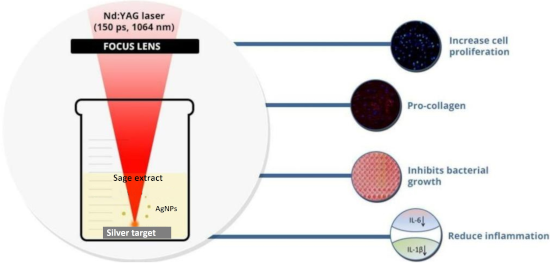
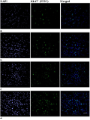
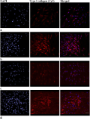
- local damage, systemic associations highlight the urgent need for innovative therapies. Herein, we present an eco-friendly synthesis of silver nanoparticles (AgNPs) by picosecond pulsed laser ablation in liquid (PLAL), using Salvia officinalis aqueous extract (sage extract) as both medium and stabilizer
- ; silver nanoparticles (AgNPs); Introduction Synthesis of silver nanoparticles (AgNPs) is a promising nanotechnology with numerous biomedical applications, especially in the field of tissue restoration and regeneration [1]. The most commonly used methods in AgNP synthesis are (i) chemical methods, which



Environmental applications of silver nanoparticles: state-of-the-art review and emerging trends
Beilstein J. Nanotechnol. 2026, 17, 697–736, doi:10.3762/bjnano.17.49
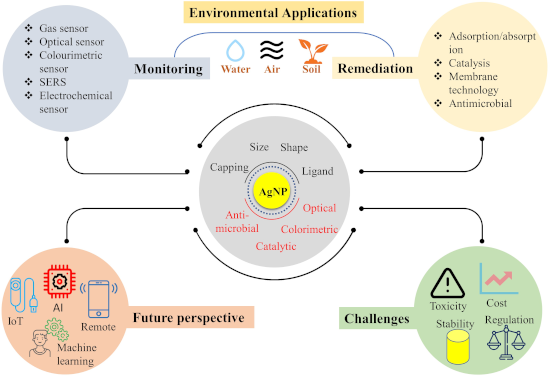
- Soni Prajapati Akash Kumar Ranjana Singh Department of Biochemistry, King George’s Medical University, Lucknow, India Academy of Scientific and Innovative Research, Ghaziabad, India 10.3762/bjnano.17.49 Abstract Silver nanoparticles (AgNPs) possess inherent catalytic, antimicrobial, and optical
- of the environment (i.e., water, air, and soil). Among the broad family of engineered nanomaterials evaluated for environmental applications, silver nanoparticles (AgNPs) have attracted exceptional attention owing to their unique combination of properties that directly address the requirements of


Rapid synthesis of highly monodisperse AgSbS2 nanocrystals: unveiling multifaceted activities in cancer therapy, antibacterial strategies, and antioxidant defense
Beilstein J. Nanotechnol. 2025, 16, 2105–2115, doi:10.3762/bjnano.16.145
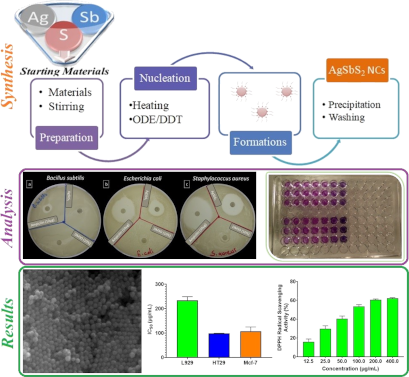
- , cardiovascular diseases, and diabetes [11][12]. Historically known especially for its antimicrobial properties, silver has been used since ancient times. Silver nanoparticles (AgNPs) are synthesized by different synthesis mechanisms; they are non-toxic to eukaryotic cells, including human cells, but highly toxic


Chitosan nanocomposite containing rotenoids: an alternative bioinsecticidal approach for the management of Aedes aegypti
Beilstein J. Nanotechnol. 2025, 16, 1197–1208, doi:10.3762/bjnano.16.88
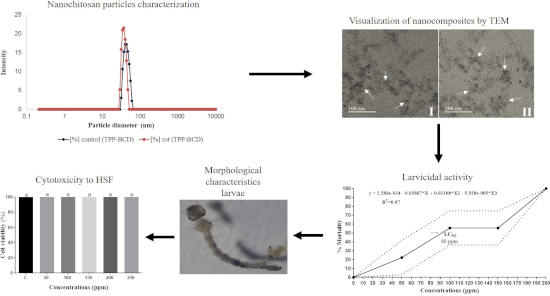
- studies have reported similar improvements in larvicidal activity through nanocarrier systems based on botanical insecticides. For instance, silver nanoparticles (AgNPs) synthesized using aqueous leaf extract of Ambrasia arborescens demonstrated markedly higher toxicity against Aedes aegypti larvae (LC50



Synthesis of biowaste-derived carbon-dot-mediated silver nanoparticles and the evaluation of electrochemical properties for supercapacitor electrodes
Beilstein J. Nanotechnol. 2025, 16, 933–943, doi:10.3762/bjnano.16.71
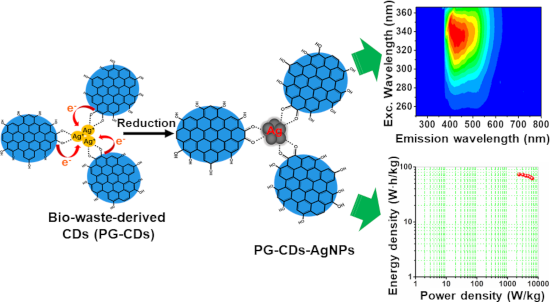
- synthesized cost-effective carbon-dot- (CD) mediated silver nanoparticles (AgNPs) for supercapacitor electrodes. AgNPs have garnered substantial interest due to their capacity to effectively facilitate biological, optical, chemical, electrical, and industrial applications [13][14]. AgNPs are widely utilized


Graphene oxide–chloroquine conjugate induces DNA damage in A549 lung cancer cells through autophagy modulation
Beilstein J. Nanotechnol. 2025, 16, 316–332, doi:10.3762/bjnano.16.24
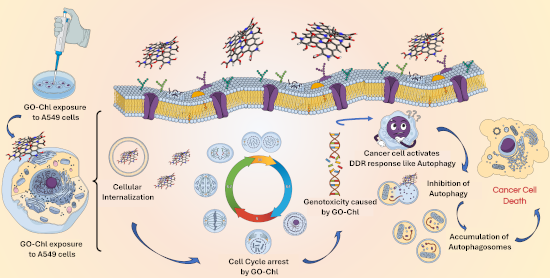
- exposure to starch-capped silver nanoparticles (AgNPs) [11]. Gemcitabine-encapsulated poly(lactic-co-glycolic acid) (PLGA) nanoparticles have been shown to enhance cell death in chemoresistant PANC1 cells, human pancreatic epithelial carcinoma cells [12]. Also, TiO2 nanoparticles can sensitize A549 cells



Instance maps as an organising concept for complex experimental workflows as demonstrated for (nano)material safety research
Beilstein J. Nanotechnol. 2025, 16, 57–77, doi:10.3762/bjnano.16.7

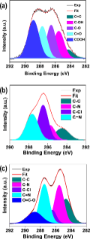
- based on differences in the particles’ sulfidation levels [35]. We note that the same reasons underpinned its selection for the discussion of instance maps in [28]. The instance map in Figure 3 delineates all steps of the synthesis of sulfidised silver nanoparticles (AgNPs). AgNPs are synthesised with a



Facile synthesis of size-tunable L-carnosine-capped silver nanoparticles and their role in metal ion sensing and catalytic degradation of p-nitrophenol
Beilstein J. Nanotechnol. 2024, 15, 1576–1592, doi:10.3762/bjnano.15.124
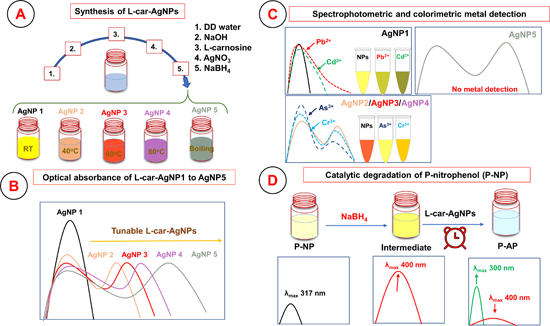
- sustainability and public health. Silver nanoparticles (AgNPs) have attracted the interest of researchers worldwide in recent years because of their promising use in environmental chemistry. The unique optochemical properties of AgNPs, including high surface area to volume ratio, optical absorbance, excellent




Green synthesis of silver nanoparticles derived from algae and their larvicidal properties to control Aedes aegypti
Beilstein J. Nanotechnol. 2024, 15, 1566–1575, doi:10.3762/bjnano.15.123
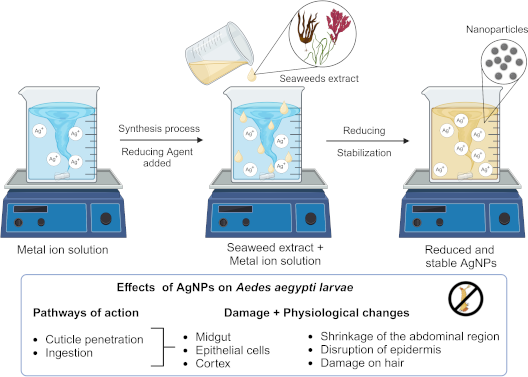
- for ways to control these insects, avoiding the use of conventional chemical insecticides that are proven to be toxic to nature. In the last years, there has been growing evidence for the potential of silver nanoparticles (AgNPs) to be ecologically benign alternatives to the commercially available
- chemical reduction of metal ions through biological compounds can be used to synthesize non-toxic and environmentally safe “green” insecticide alternatives in the form of metal-based nanoparticles [15]. A promising option are silver nanoparticles (AgNPs) obtained through synthesis from natural extracts
- . aegypti and their potential role for the control and prevention of arboviruses are presented. Finally, ecotoxicity and environmental risk assessment of AgNPs are further discussed. Review Synthesis of silver nanoparticles AgNPs are metallic nanoparticles in a size range between 1 and 100 nm with unique


Silver nanoparticles loaded on lactose/alginate: in situ synthesis, catalytic degradation, and pH-dependent antibacterial activity
Beilstein J. Nanotechnol. 2023, 14, 781–792, doi:10.3762/bjnano.14.64
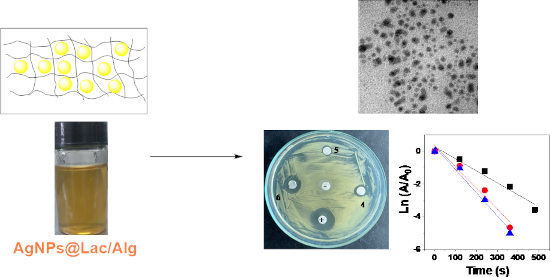
- Biotechnology and Food Technology, Industrial University of Ho Chi Minh City, Ho Chi Minh City, Vietnam Faculty of Chemical Engineering, Industrial University of Ho Chi Minh City, Ho Chi Minh City, Vietnam 10.3762/bjnano.14.64 Abstract We present the in situ synthesis of silver nanoparticles (AgNPs) through
- Silver nanoparticles (AgNPs) have raised significant interest for their wide range of applications in biomedicine [1][2], treatment of wastewater [3][4], and catalysis [5][6]. The utilization of eco-friendly sources, such as plant extracts [7][8], fungi [9][10], and bacteria [11], for synthesizing AgNPs


Antimicrobial and mechanical properties of functionalized textile by nanoarchitectured photoinduced Ag@polymer coating
Beilstein J. Nanotechnol. 2023, 14, 95–109, doi:10.3762/bjnano.14.11
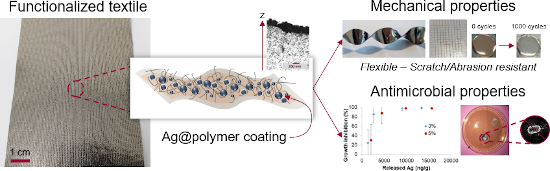
- , and textiles need to be cleaned on a daily basis. Silver nanoparticles (AgNPs) possess well-documented antimicrobial properties and by combining them with a physical matrix, they can be applied to various surfaces to limit microbial contamination. With this in mind, a rapid and easy way to implement a
- replication [21]. Silver nanoparticles (AgNPs) have the added benefit of being ionic silver vessels, combining the latter’s antimicrobial properties with their own characteristics [16]. Pal et al. [22] demonstrated that triangular AgNPs seem to exhibit increased biocide activity compared to their spherical



In search of cytotoxic selectivity on cancer cells with biogenically synthesized Ag/AgCl nanoparticles
Beilstein J. Nanotechnol. 2022, 13, 1505–1519, doi:10.3762/bjnano.13.124
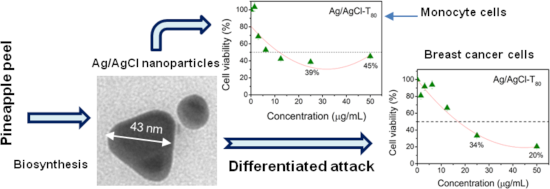
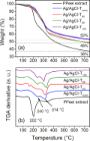
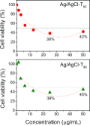
- where plant extracts are used to synthesize nanoparticles. The nanoparticles can be produced in a simple, inexpensive, and scalable way, with low reaction time and in aqueous media. Since no toxic by-products are generated, these methods are eco-friendly [1]. Silver nanoparticles (AgNPs) are commonly





Biomimetic chitosan with biocomposite nanomaterials for bone tissue repair and regeneration
Beilstein J. Nanotechnol. 2022, 13, 1051–1067, doi:10.3762/bjnano.13.92
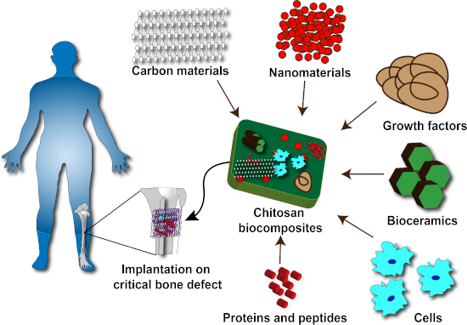
- formation on rat calvaria defects indicate a strong healing effect and new bone formation on chitosan/absorbable collagen sponges [51]. Chitosan with metal nanomaterials for bone tissue engineering Chitosan–silver nanocomposites Silver nanoparticles (AgNPs) have gained much attention in bone-related implant
Bioselectivity of silk protein-based materials and their bio-inspired applications
Beilstein J. Nanotechnol. 2022, 13, 902–921, doi:10.3762/bjnano.13.81


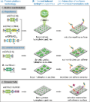
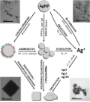
Fate and transformation of silver nanoparticles in different biological conditions
Beilstein J. Nanotechnol. 2021, 12, 665–679, doi:10.3762/bjnano.12.53
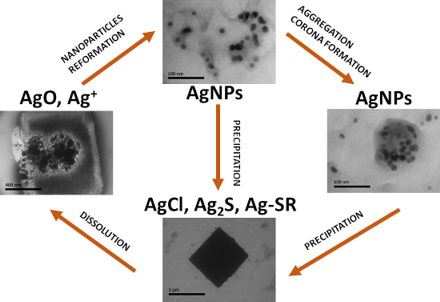
- de Zaragoza, Zaragoza 50009, Spain Centro de Investigación Biomédica en Red de Bioingeniería, Biomateriales y Nanomedicina (CIBER-BBN), Spain 10.3762/bjnano.12.53 Abstract The exploitation of silver nanoparticles (AgNPs) in biomedicine represents more than one third of their overall application
- vivo settings. Keywords: animal tissue; biological media; nanoparticle aggregation; nanoparticle dissolution; nanoparticle reformation; silver nanoparticles; Introduction The global consumption of silver nanoparticles (AgNPs) has been steadily increasing in the last decade and estimated to reach over
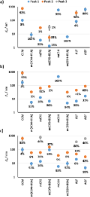
- images of freshly synthesized silver nanoparticles (AgNPs) coated with PLL, AOT, or PVP dispersed in ultrapure water at a concentration of 10 mg Ag/L. Scale bars are 100 nm. TEM images of liver obtained from (a) untreated and (b) treated healthy male Wistar rats. The rats were treated orally with a daily




Surface-enhanced Raman scattering of water in aqueous dispersions of silver nanoparticles
Beilstein J. Nanotechnol. 2021, 12, 497–506, doi:10.3762/bjnano.12.40
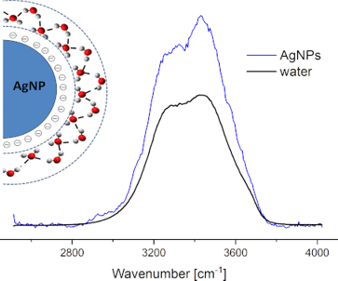
- Raman scattering (SERS) effect. In this work, we show the SERS effect for water molecules in the dispersion of silver nanoparticles (AgNPs) without any external electrical field. An enhancement factor was estimated to be (4.8 ± 0.8) × 106 for an excitation wavelength of 514.5 nm and for AgNPs with an
- effect weaker [20]. Silver nanoparticles (AgNPs) are gaining more and more popularity in various applications, such as electronics [22], photonics [23], and medicine [24]. Silver nanocolloids are also commonly used as an enhancing substrate in surface-enhanced Raman scattering (SERS) [25][26]. Since the


A review on nanostructured silver as a basic ingredient in medicine: physicochemical parameters and characterization
Beilstein J. Nanotechnol. 2021, 12, 440–461, doi:10.3762/bjnano.12.36
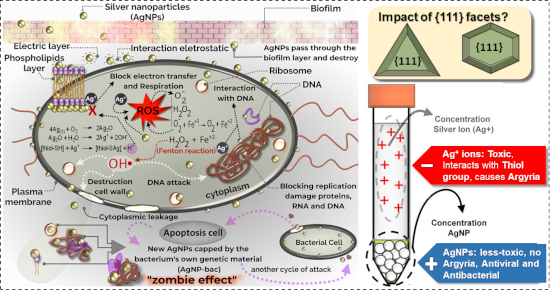
- . Thenhipalam 673635, Kerala, India National Institute for Quality Control in Health, Oswaldo Cruz Foundation (INCQS, FIOCRUZ), Rio de Janeiro, RJ, Brazil 10.3762/bjnano.12.36 Abstract Recent studies with silver nanoparticles (AgNPs) and the history of silver metal as a broad-spectrum bactericidal and
- , advised Alexander the Great (335 BC) to add silver to his water [1][2][3]. Since then, the bactericidal effect of silver nanoparticles (AgNPs) has been studied and several experimental evidences have greatly improved the understanding of its mechanism and effects on the human body and on the environment


Characterization, bio-uptake and toxicity of polymer-coated silver nanoparticles and their interaction with human peripheral blood mononuclear cells
Beilstein J. Nanotechnol. 2021, 12, 282–294, doi:10.3762/bjnano.12.23
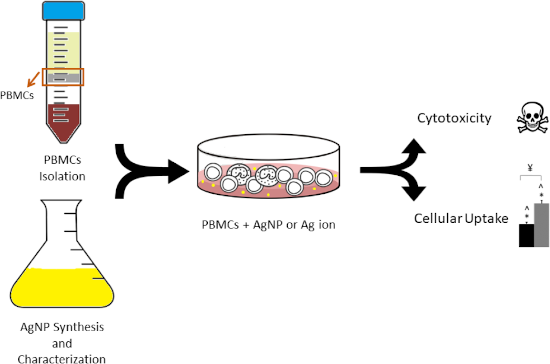
- , Columbia, SC, 29208, United States 10.3762/bjnano.12.23 Abstract Silver nanoparticles (AgNPs) are widely used in medical applications due to their antibacterial and antiviral properties. Despite the extensive study of AgNPs, their toxicity and their effect on human health is poorly understood, as a result
- applications [2]. NPs are present in numerous commercial products such as cosmetics, electronics, and textiles. Also, they are widely used in industry, including various biomedical and drug-delivery applications for the treatment of diseases [3][4][5][6]. Silver nanoparticles (AgNPs) are one of the most



A review on the green and sustainable synthesis of silver nanoparticles and one-dimensional silver nanostructures
Beilstein J. Nanotechnol. 2021, 12, 102–136, doi:10.3762/bjnano.12.9
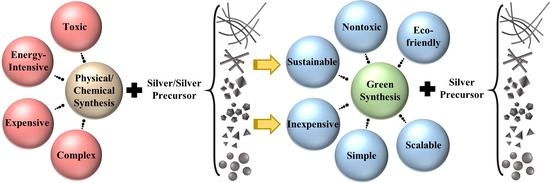
- characteristics including antimicrobial activity, electrical conductivity, thermal conductivity, optical characteristics, and mechanical properties. The antimicrobial characteristic of silver nanoparticles (AgNPs) has made them highly applicable in the biomedical and therapeutic fields [69][70][71]. Currently


Nanoparticles based on the zwitterionic pillar[5]arene and Ag+: synthesis, self-assembly and cytotoxicity in the human lung cancer cell line A549
Beilstein J. Nanotechnol. 2020, 11, 421–431, doi:10.3762/bjnano.11.33
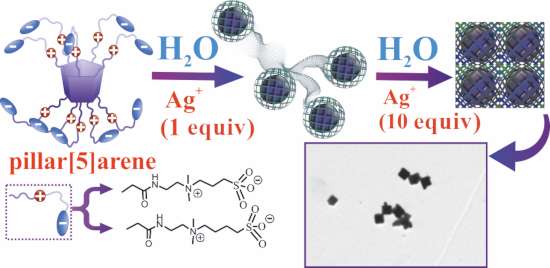
- thousands of years, the use of this metal has grown into an entire industry [1]. A separate area of this industry is the use of silver nanoparticles (AgNPs), which are the source of Ag+ ions in many commercial products, such as food packaging, odor-resistant fabrics, household appliances and medical devices




The role of Ag+, Ca2+, Pb2+ and Al3+ adions in the SERS turn-on effect of anionic analytes
Beilstein J. Nanotechnol. 2019, 10, 2338–2345, doi:10.3762/bjnano.10.224
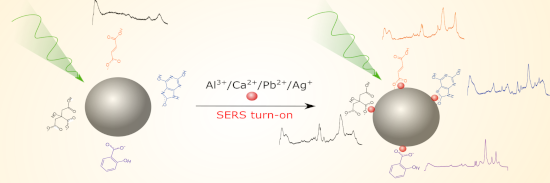
- nanoparticles (AgNPs) [9][10][11]. Muniz-Miranda and Sbrana showed that Ag+ adsorbed ions (adions) can be generated on a metallic surface by co-adsorbed nucleophilic anions (such as Cl−, I−, Br−, SCN−) leading to the formation of Ag+–phtalazine–anion complexes on the surface of AgNPs [9]. The role of Ag+ adions
- +–halide–organic molecule is formed that allows a charge transfer between the metal surface and the molecule leading to a resonant Raman scattering effect [6][7][8]. Evidence for surface complexes were provided by several SERS experiments on silver electrodes [3][8], but also on colloidal silver


Toxicity and safety study of silver and gold nanoparticles functionalized with cysteine and glutathione
Beilstein J. Nanotechnol. 2019, 10, 1802–1817, doi:10.3762/bjnano.10.175
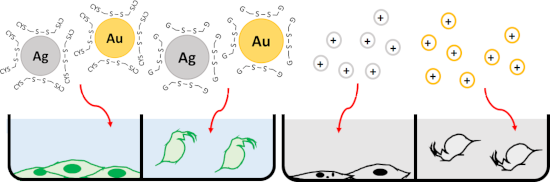
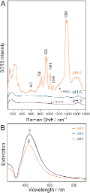
- Zagreb, Croatia 10.3762/bjnano.10.175 Abstract This study was designed to evaluate the nano–bio interactions between endogenous biothiols (cysteine and glutathione) with biomedically relevant, metallic nanoparticles (silver nanoparticles (AgNPs) and gold nanoparticles (AuNPs)), in order to assess the
- -chemical properties. Silver nanoparticles (AgNPs) are extensively used in antimicrobial coatings for medical devices, wound dressing, cosmetic products and food packaging due to their antimicrobial, antiangiogenic and anti-inflammatory properties [1][2][3][4][5]. Biomedical applications of gold


Gold nanoparticles embedded in a polymer as a 3D-printable dichroic nanocomposite material
Beilstein J. Nanotechnol. 2019, 10, 442–447, doi:10.3762/bjnano.10.43
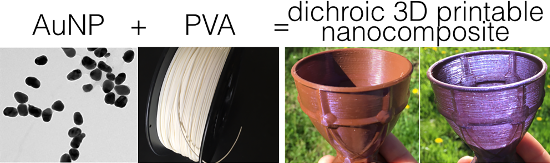
- due to gold nanoparticles (AuNPs) and silver nanoparticles (AgNPs) of different sizes and shapes [9][10]. However, only the Lycurgus cup, now stored in the British Museum, and six other broken pieces showing the same dichroic effect were found worldwide, hinting that the achievement of such an optical



The role of adatoms in chloride-activated colloidal silver nanoparticles for surface-enhanced Raman scattering enhancement
Beilstein J. Nanotechnol. 2018, 9, 2236–2247, doi:10.3762/bjnano.9.208
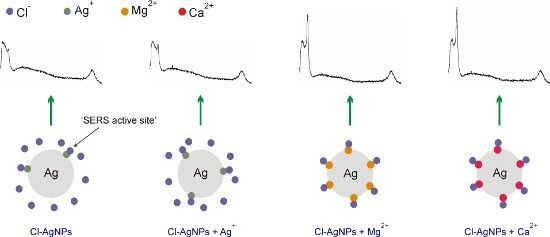
- understanding some fundamental principles behind SERS. In this study, we describe a fast (<10 min) and simple protocol for obtaining highly SERS-active colloidal silver nanoparticles (AgNPs) with a mean diameter of 36 nm by photoconversion from AgCl precursor microparticles in the absence of any organic