Search results
Search for "sorption" in Full Text gives 81 result(s) in Beilstein Journal of Nanotechnology.
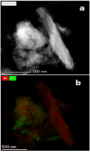
Eco-efficient materials for agricultural crops based on a mineral rich in MOR- and HEU-type zeolites
Beilstein J. Nanotechnol. 2026, 17, 381–395, doi:10.3762/bjnano.17.26
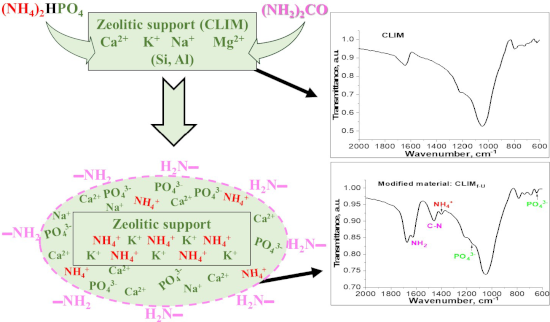
- time, even multicomponent zeolite-containing rocks (e.g., clinoptilolite, heulandite, mordenite, quartz, and plagioclase) retain high sorption and ion exchange activity, sufficient for a wide range of applications. Local extraction minimizes transportation costs, which is especially important for



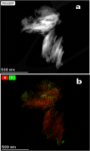

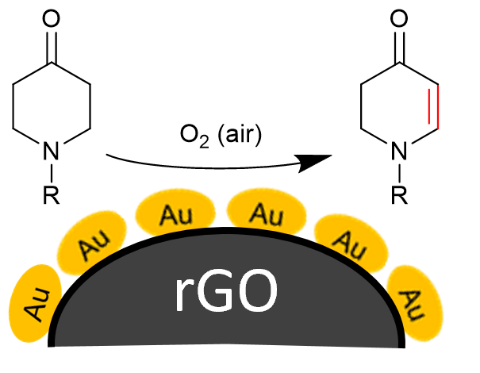
Gold nanoparticle-decorated reduced graphene oxide as a highly effective catalyst for the selective α,β-dehydrogenation of N-alkyl-4-piperidones
Beilstein J. Nanotechnol. 2026, 17, 218–238, doi:10.3762/bjnano.17.15
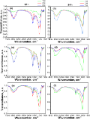
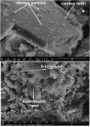
- , scanning electron microscopy (SEM) and nitrogen gas sorption surface area analysis using the Brunauer–Emmett–Teller (BET) theory were employed to evaluate the surface structure, porosity, and overall texture of the materials. The SEM image in Figure 2a reveals the typical structure of AC, characterized by
- small particles. The nitrogen sorption isotherms and their hysteresis loops in Figure 3 supplement the SEM analysis of the three carbon materials in terms of specific BET surface area, and pore volume and size. AC features a reversible almost type-I isotherm, given by microporous materials with narrow


Electromagnetic study of a split-ring resonator metamaterial with cold-electron bolometers
Beilstein J. Nanotechnol. 2025, 16, 2199–2206, doi:10.3762/bjnano.16.152
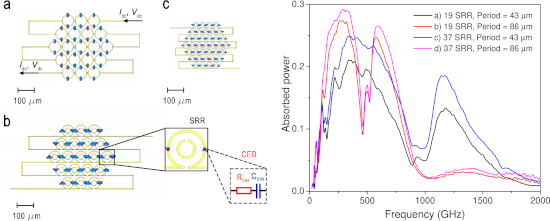
- with cryogenic systems such as 3He sorption fridges. Perhaps most critically, CEBs demonstrate exceptional hardness against cosmic rays [16], a paramount requirement for balloon and space missions. Our group has recently designed, fabricated, and characterized a metamaterial receiver with integrated


Quantum circuits with SINIS structures
Beilstein J. Nanotechnol. 2025, 16, 1931–1941, doi:10.3762/bjnano.16.134
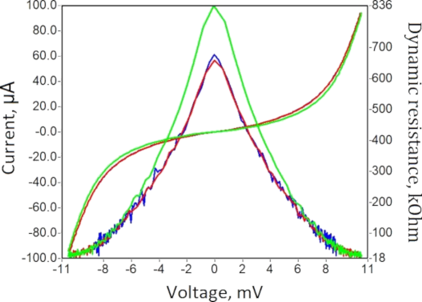
- in sorption 3He cryostat at 0.33 K, Figure 2b. The relatively low value of the resistance ratio (Rd/Rn – dynamic resistance/normal resistance) is associated with the high sensitivity of the interferometer to external noise. NIS thermometers The I–V characteristic and dynamic resistance of the NIS


Beyond the bilayer: multilayered hygroscopic actuation in pine cone scales
Beilstein J. Nanotechnol. 2025, 16, 1695–1710, doi:10.3762/bjnano.16.119
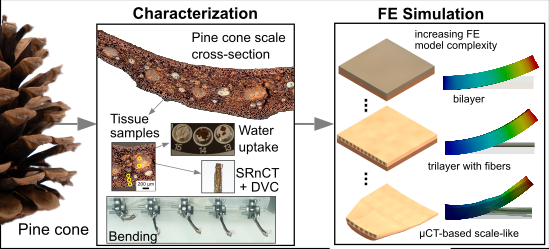
- function of relative humidity. There were distinct differences between tissues and a pronounced hysteresis between sorption and desorption. Finite element analysis was performed on geometries ranging from simplified bilayer models to complex remodeled scales. Simulation results showed an underestimation of
- correlation (DVC); finite element analysis; hygroscopic bending; plant biomechanics; sorption measurements; Introduction In recent years, the hygroscopic motion of plant structures has attracted increasing attention from researchers and engineers, both for fundamental biological research and bioinspired
- tissue involved and their arrangement, are very limited. The aim of this work is to characterize the anisotropic hygroscopic behavior of pine cone scale tissues and its effect on the bending motion. To this end, we first characterize their sorption behavior using gravimetric water uptake measurements


Nanotechnology-based approaches for the removal of microplastics from wastewater: a comprehensive review
Beilstein J. Nanotechnol. 2025, 16, 1607–1632, doi:10.3762/bjnano.16.114
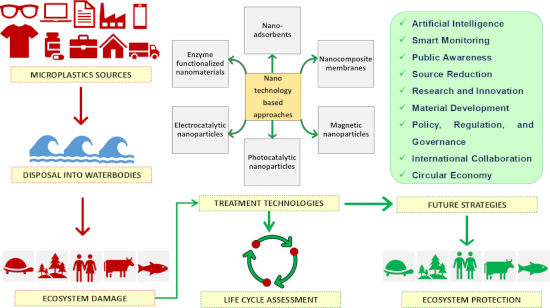
- , adaptability for functionalization and superior sorption capacity. Carbon materials with graphene-like structures, made up of sp2-hybridized carbon atoms, have gained considerable interest for their use in water treatment technologies. Their abundance of functional groups, expansive surface area, and inherent


A review of metal-organic frameworks and polymers in mixed matrix membranes for CO2 capture
Beilstein J. Nanotechnol. 2025, 16, 155–186, doi:10.3762/bjnano.16.14
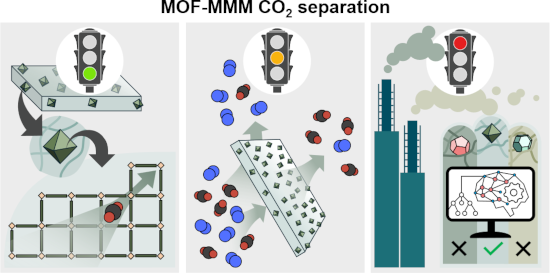
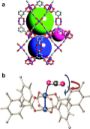
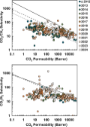
- (1) mechanisms of CO2 sorption in MOFs, (2) considerations related to the integration of MOFs in MMMs, (3) CO2 capture performance of MOF-based MMMs, (4) advancements in MOF-based MMM materials design through machine learning, and (5) considerations for the implementation of MOF-based MMMs in large




TiO2 immobilized on 2D mordenite: effect of hydrolysis conditions on structural, textural, and optical characteristics of the nanocomposites
Beilstein J. Nanotechnol. 2025, 16, 128–140, doi:10.3762/bjnano.16.12
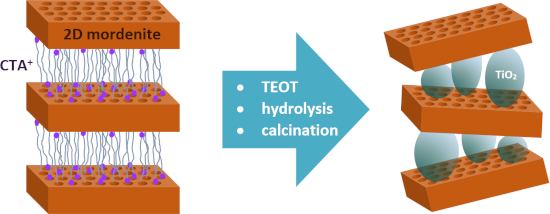
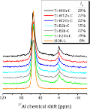
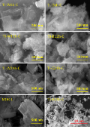
- complementary characterization techniques, including XRD, SEM-EDX, TGA, N2 sorption, NMR, XPS and UV–vis spectrometry. It was observed that treatment in 70% ethanol solution preserves the ordered layered structure of 2D mordenite because TEOT hydrolysis is slowed down. This, in turn, leads to higher
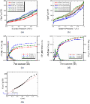
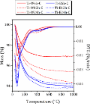
- . Nitrogen sorption and thermogravimetric studies Figure 5a,b shows the N2 adsorption/desorption isotherms of the studied nanocomposites. They demonstrate features characteristic of hierarchical porous structures possessing both micro- and mesoporosity. At low pressure, there is a sharp gas absorption
- were probed by SEM-EDX using a Zeiss Merlin microscope equipped with an Oxford Instruments INCAx-act EDX console. N2 sorption isotherms were recorded at 77 K using a QuadraSorb SI instrument. Before analysis, samples were outgassed under vacuum for 6 h at 300 °C. The surface areas were estimated within



Attempts to preserve and visualize protein corona on the surface of biological nanoparticles in blood serum using photomodification
Beilstein J. Nanotechnol. 2024, 15, 1654–1666, doi:10.3762/bjnano.15.130

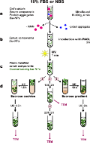
- surface composition of bio-NPs, which are quite diverse in blood serum [1][2][26]. The plane of sorption of bio-NPs on the grid may make some contribution to their appearance. We observed a large number of different morphological types of bio-NPs bearing a protein corona, which could be of irregular shape



Measurements of dichroic bow-tie antenna arrays with integrated cold-electron bolometers using YBCO oscillators
Beilstein J. Nanotechnol. 2024, 15, 26–36, doi:10.3762/bjnano.15.3

- malfunction. Typical closed-cycle sorption 3He cryostats, suitable for space and balloon-borne experiments, are limited by their working temperature to about 300 mK. For example, the LSPE-SWIPE custom-designed 3He cryostat cools the two focal planes down to 0.3 K. The ground-based BICEP Array cryostat with a
- mixed 4He/3He/4He sorption fridge, working at arbitrary elevation angle, is able to achieve a temperature of 250 mK [2]. The AliCPT cooling system is similar to the one of the BICEP array with the same lowest temperature of 250 mK [7]. So, electron cooling is a pathway to improve sensitivity with
- Microstructures of the Russian Academy of Sciences (IPM RAS), with subsequent measurements of the samples in the sorption 3He refrigerator of our laboratory. The 210/240 GHz receiving system is fabricated using a two-layer technology (two lithography steps). During the first photolithography step, a layer of


Isolation of cubic Si3P4 in the form of nanocrystals
Beilstein J. Nanotechnol. 2023, 14, 971–979, doi:10.3762/bjnano.14.80
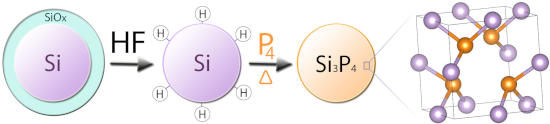
- be induced by a reaction of Si3P4 NPs with the air moisture resulting in a fluctuating ratio of SiO2/Si3P4 in the particles. The possibility of phosphorus sorption on the well-developed surface of NPs further complicates the determination of the ratio. As higher temperatures were found to promote


Non-stoichiometric magnetite as catalyst for the photocatalytic degradation of phenol and 2,6-dibromo-4-methylphenol – a new approach in water treatment
Beilstein J. Nanotechnol. 2022, 13, 1531–1540, doi:10.3762/bjnano.13.126
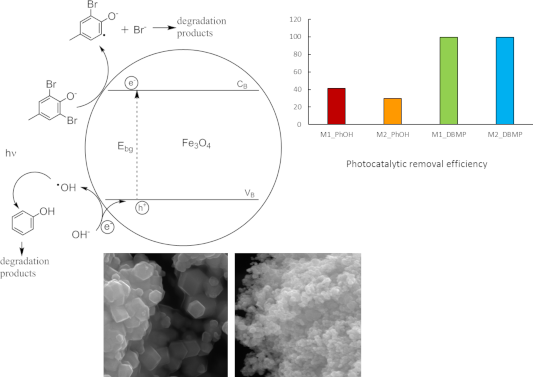
- the adsorption of organic compounds onto the surface of the catalyst. The sorption power depends largely on the properties of the organic molecule in question, as well as on the properties of the catalyst’s surface. The test reactions were carried out in aqueous solution at pH 8 (due to the hydrolytic


LED-light-activated photocatalytic performance of metal-free carbon-modified hexagonal boron nitride towards degradation of methylene blue and phenol
Beilstein J. Nanotechnol. 2022, 13, 1380–1392, doi:10.3762/bjnano.13.114
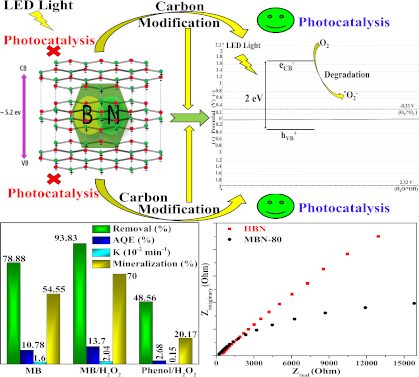
- a Shimadzu TOC-L CSH analyser. The surface area and pore characteristics were characterized by a Micromeritics (3FLEX 3500) gas sorption analyser. The surface charge was analysed through a Zeta-Meter 4.0 (Zeta-Meter, Inc, USA). The electron paramagnetic resonance (EPR) experiments were performed by


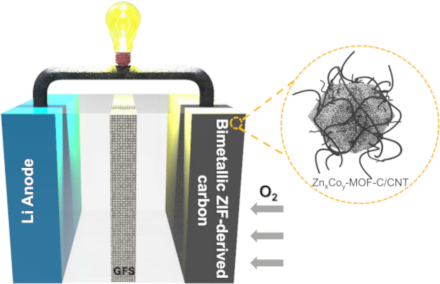
Nanoarchitectonics of the cathode to improve the reversibility of Li–O2 batteries
Beilstein J. Nanotechnol. 2022, 13, 689–698, doi:10.3762/bjnano.13.61
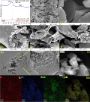
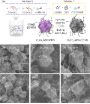
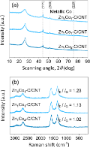
- insets in the bottom row are the corresponding selected area diffraction (SAED) patterns. XPS spectra of ZnxCoy–C/CNT composites: (a) Co 2p and (b) Zn 2p. (a) Electrical conductivity, (b) N2 sorption isotherms, (c) Dollimore–Heal desorption pore size distributions, and (d) TGA curves of ZnxCoy–C/CNT


A comprehensive review on electrospun nanohybrid membranes for wastewater treatment
Beilstein J. Nanotechnol. 2022, 13, 137–159, doi:10.3762/bjnano.13.10
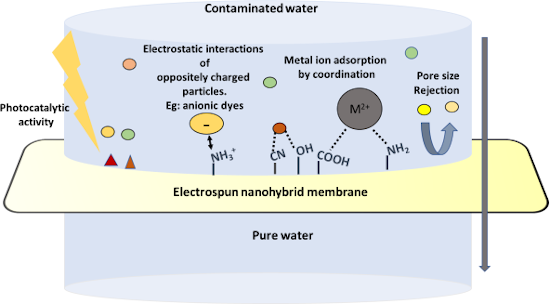
- membrane from PEO and CS with immobilized carbon quantum dots (CQDs) and Fe3O4 for the efficient removal of mercury ions from water [61]. The synergistic effect of nanofibrous polymer material and inorganic nanoparticles resulted in a maximum monolayer adsorption capacity of 148 mg/g. The Hg2+ sorption
- /TMPTMS alone without surfactant. The sorbent membrane was regenerated by simply using 0.1 M HNO3 as a desorbing agent [62]. Electrospun nanohybrids have also been utilized to remove radioactive metals. Talebi et al. investigated the sorption of Th4+ and U6+ ions by an electrospun nanomembrane of a
- Fe3O4 NPs to the composite mat helped in the easy recovery of the mats after application in oil–water separation, while PVDF provided mechanical strength. The membrane exhibited an oil sorption capacity of 35–46 g/g for four types of oils, namely sunflower oil, soybean oil, motor oil, and diesel oil [72




Tin dioxide nanomaterial-based photocatalysts for nitrogen oxide oxidation: a review
Beilstein J. Nanotechnol. 2022, 13, 96–113, doi:10.3762/bjnano.13.7
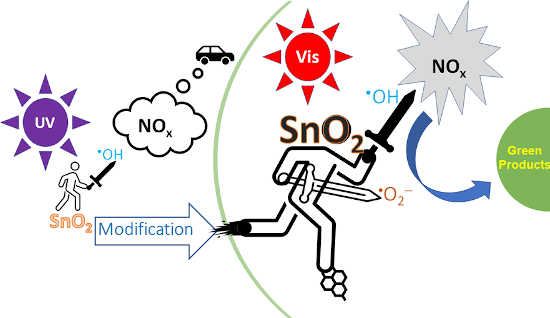
- in recent years. There are many methods for controlling and removing NOx, such as reducing the burning temperature, reducing the residence time at peak temperature, chemical reduction or oxidation of NOx, removal of nitrogen from combustion fuels, and sorption, both adsorption and absorption [7][8


Nickel nanoparticle-decorated reduced graphene oxide/WO3 nanocomposite – a promising candidate for gas sensing
Beilstein J. Nanotechnol. 2021, 12, 343–353, doi:10.3762/bjnano.12.28
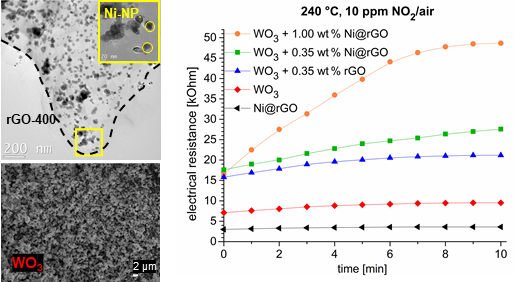
- forms a p–n heterojunction, which improves the gas sensing abilities significantly [25]. Carbon-based materials are also promising gas sensors, because of their high surface area and high chemical and thermal stability [26][27]. Pristine graphene is a good conductor but rather inactive for gas sorption


Characterization, bio-uptake and toxicity of polymer-coated silver nanoparticles and their interaction with human peripheral blood mononuclear cells
Beilstein J. Nanotechnol. 2021, 12, 282–294, doi:10.3762/bjnano.12.23
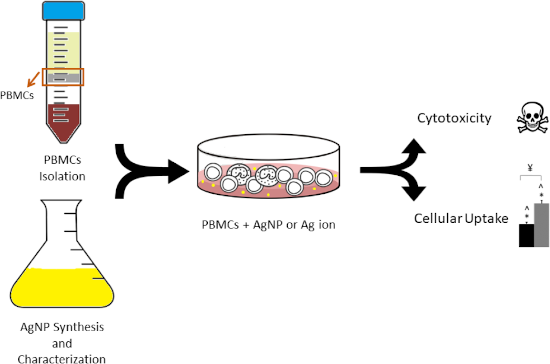
- the effect of cell type and the kinetics of cellular uptake or sorption [40]. Human PBMCs primarily consist of monocytes and lymphocytes (mostly T cells). Monocytes are known for their phagocytic properties and phagocytosis is suggested as one of the possible mechanisms for Ag uptake by cells [7]. As
- solution (1000 µg·mL−1, VWR analytical, USA) was used for the calibration curve. To measure and compare the loss of Ag (dissolved or PVP-AgNPs) on the ultrafilter membrane or sorption to the exposure tube, 500 and 1000 µg·L−1 concentrations of Ag (as AgNO3) was prepared in UHPW and RPMI medium. Samples



Bio-imaging with the helium-ion microscope: A review
Beilstein J. Nanotechnol. 2021, 12, 1–23, doi:10.3762/bjnano.12.1


Cryogenic low-noise amplifiers for measurements with superconducting detectors
Beilstein J. Nanotechnol. 2020, 11, 1316–1320, doi:10.3762/bjnano.11.115
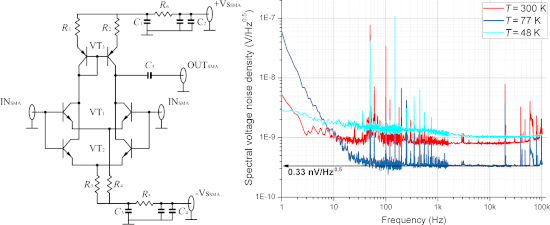
- applications are based on dry cryostats instead of coolants. The most common modern dry cryostats, including dilution refrigerators and He-7 sorption refrigerators, have a 50 K temperature stage as uppermost cooling stage where the DC cryogenic amplifier can be mounted. In this paper, we show the potential
- cryostat with He-7 sorption unit. The amplifier was fixed to the cooling plate with brass screws to have good thermal anchoring. The signal lines were connected to the cryostat CuBe coaxial cables. The amplifier gain curves measured at three temperatures are presented in Figure 4. The maximum gain of the


Structure and electrochemical performance of electrospun-ordered porous carbon/graphene composite nanofibers
Beilstein J. Nanotechnol. 2020, 11, 1280–1290, doi:10.3762/bjnano.11.112
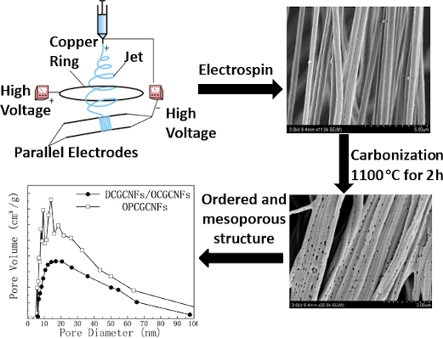
- composite, which was also a consequence of the increase in the amount of graphite in the composite. Nitrogen sorption analysis The pore structure characteristics and specific surface area of CGCNFs were determined by N2 adsorption/desorption isotherms at 77 K. Nitrogen adsorption/desorption isotherms and


Gas sorption porosimetry for the evaluation of hard carbons as anodes for Li- and Na-ion batteries
Beilstein J. Nanotechnol. 2020, 11, 1217–1229, doi:10.3762/bjnano.11.106
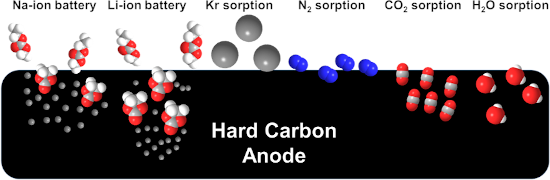
- pores is nontrivial, we herein employ Kr, N2 and CO2 gas sorption porosimetry, as well as H2O vapor sorption porosimetry, to investigate eight hard carbons. Electrochemical lithium as well as sodium storage tests are compared to the obtained apparent surface areas and pore volumes. H2O, and more
- importantly CO2, sorption porosimetry turned out to be the preferred methods to evaluate the likelihood for excessive irreversible capacities. The methods are also useful to select the relatively most promising active materials within chemically similar materials. A quantitative relation of porosity
- descriptors to the obtained capacities remains a scientific challenge. Keywords: alkaline-ion secondary battery; gas sorption porosimetry; hard carbon; irreversible capacity; ultramicroporosity; Introduction Lithium-ion battery (LIB)-based energy storage devices have been gaining high interest in the recent


Nickel nanoparticles supported on a covalent triazine framework as electrocatalyst for oxygen evolution reaction and oxygen reduction reactions
Beilstein J. Nanotechnol. 2020, 11, 770–781, doi:10.3762/bjnano.11.62
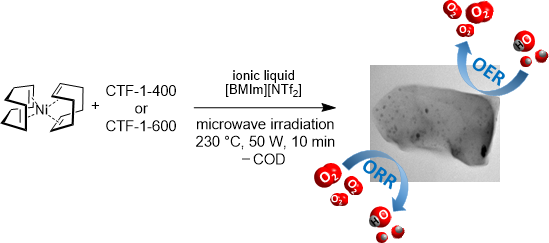
- Information File 1). As expected, both CTF-1-400 and CTF-1-600 (as-synthesized) showed limited long-range order according to powder X-ray diffraction (PXRD) measurements (Figure S1, Supporting Information File 1) [32][42]. Nitrogen sorption measurements for CTF-1-400 showed a type-I isotherm with 954 m2/g
- S13, Supporting Information File 1). The EDX point spectrum in Figure S12 for point 1 shows that the intensity of the Ni signal is stronger than the intensity of the O signal. An estimation of the atomic Ni/O ratio indicates that a significant amount of Ni at point 1 is not oxidized. N2 sorption
- ° and 100° 2θ with a scan speed of 2 s/step and 0.057° (2θ) step size. Nitrogen sorption measurements were performed with a Nova 4000e from Quantachrome at 77 K and evaluated with the NovaWin 11.03 software. The materials were first degassed under vacuum (<10−2 mbar) at 120 °C overnight. The Brunauer


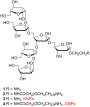
Preparation and in vivo evaluation of glyco-gold nanoparticles carrying synthetic mycobacterial hexaarabinofuranoside
Beilstein J. Nanotechnol. 2020, 11, 480–493, doi:10.3762/bjnano.11.39
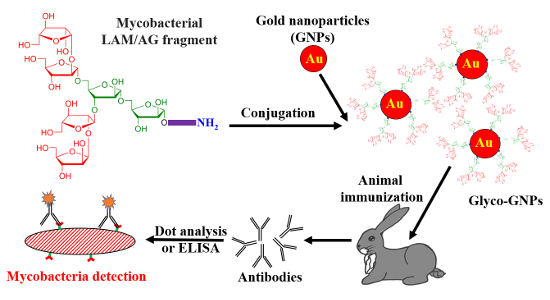
- polystyrene. This solution was replaced with 50 μL of primary antibodies (antisera to glyco-GNPs, or intact serum, or antiserum to LPS of Azospirillum brasilense Sp7 [99] as negative control) diluted 1:100 in PBS containing 0.02% Tween 20 and 0.005% PEG (for prevention of nonspecific antibody sorption). After


An advanced structural characterization of templated meso-macroporous carbon monoliths by small- and wide-angle scattering techniques
Beilstein J. Nanotechnol. 2020, 11, 310–322, doi:10.3762/bjnano.11.23
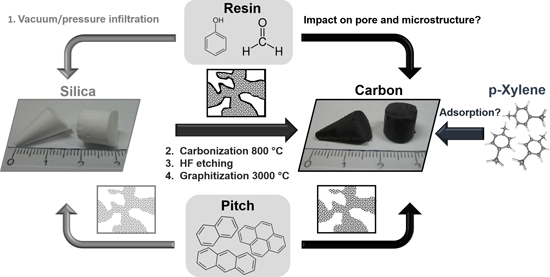
- mesoporosity of these monolithic carbon materials was studied by the sorption behavior of a relatively large organic molecule (p-xylene) in comparison to typical gas adsorbates (Ar). In addition, to obtain a detailed view on the nanopore space small-angle neutron scattering (SANS) combined with in situ
- adsorbates such as nitrogen, argon, krypton or carbon monoxide. We chose p-xylene as an adsorbate for vapour sorption to address the sorption at room temperature. To obtain a detailed view of the nanopore space, which exhibits micro-, meso- and macropores, but with an upper limit of ca. 100 nm, small-angle
- , thus removing smaller mesopores and leaving behind larger mesopores. Also, the mesopore size distributions of the carbon monoliths at 800 °C are very narrow, which indicates that the SiO2 walls separating the mesopores exhibit a quite uniform thickness. Figure 3 shows Ar sorption isotherms (87 K) and