Search results
Search for "surface roughness" in Full Text gives 274 result(s) in Beilstein Journal of Nanotechnology. Showing first 200.
Oxidative atmosphere-driven formation of single-phase spinel CuRh2O4 nanofibers for alkaline water oxidation
Beilstein J. Nanotechnol. 2026, 17, 737–743, doi:10.3762/bjnano.17.50
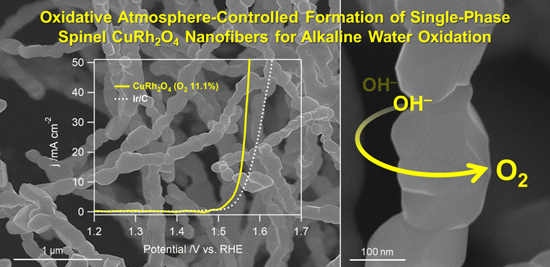
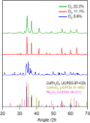
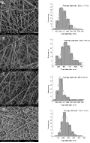
- Information File 1, Figure S3). The images show continuous and uniform nanofiber structures with well-distributed fiber networks. As the O2 concentration increased (from Figure 5a to Figure 5c), the surface roughness became more pronounced, suggesting that an oxygen-rich annealing atmosphere significantly




Probing tribological evolution in atomically thin MoS2 at different scales
Beilstein J. Nanotechnol. 2026, 17, 586–597, doi:10.3762/bjnano.17.40
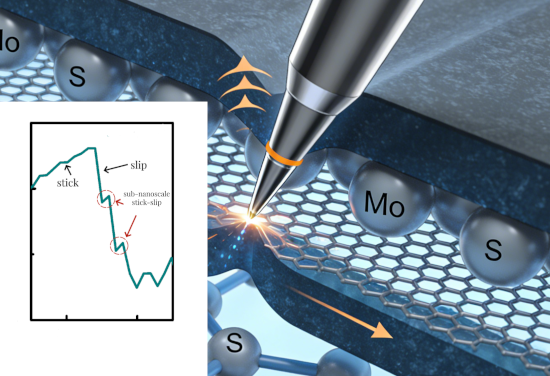
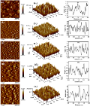
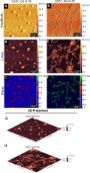
- mode using silicon probes (PPP-LFMR, Nanosensors) with a normal spring constant of 0.2 N·m−1 and a tip radius of ≈8 nm. Raman spectra were collected using a 533 nm laser (0.5 mW power) to avoid sample damage. The surface roughness (Ra) values of MoS2 were measured from the corresponding topographic
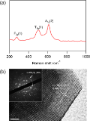
- about 23 cm−1 (Figure 1d) indicates the corresponding MoS2 area is composed of 3–4 layers. Combined with topographic data, the two regions in Figure 1a were identified as 1L and 4L, respectively. Surface roughness (Ra) measurements (within an area of 1 μm × 1 μm) showed that both 1L and 4L MoS2 reduce


Defects and defect-mediated engineering of two-dimensional materials: challenges and open questions
Beilstein J. Nanotechnol. 2026, 17, 454–488, doi:10.3762/bjnano.17.31





Polycatecholamine nanocoatings on stainless steel: the effect on attachment of human fibroblasts and platelets
Beilstein J. Nanotechnol. 2026, 17, 365–380, doi:10.3762/bjnano.17.25
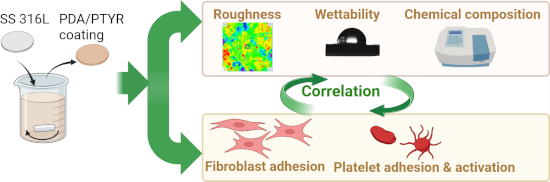
- angle was adjusted to visualize the protruding coating layer or the back wall of the cavity. Magnifications ranged from 5000× to 40000×. Roughness analysis Surface roughness was measured with a DektakXT stylus profilometer from Bruker with the NLite + package. A tip with a radius of 5 µm was used, and
- [30], and autoxidation in basic solution leading to films 2 nm or less [31][32]. In contrast, immersion processes produce approximately 1 µm films [33]. These results differ from our PDA coating thickness values due to divergent reaction parameters and, most probably, distinct initial surface
- roughness. So far, there are no studies reporting explicit thickness measurements for PTYR coatings, which were in nanometer range even after 24 h coating process in our study. The in vitro experiments indicated that human dermal fibroblasts could migrate and spread on both types of surfaces. But after 7 d




Gold nanoparticle-decorated reduced graphene oxide as a highly effective catalyst for the selective α,β-dehydrogenation of N-alkyl-4-piperidones
Beilstein J. Nanotechnol. 2026, 17, 218–238, doi:10.3762/bjnano.17.15
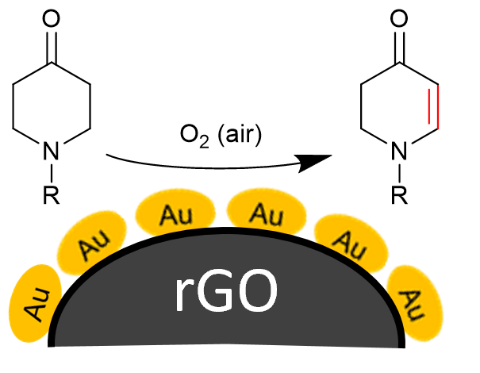
- vicinity to prevent aggregation. Uneven precursor distribution can lead to localized high concentrations of Au species, resulting in less controlled nucleation and the formation of larger clusters. Surface roughness and heterogeneity of the support influence the size and distribution, leading to increased


Time of flight secondary ion mass spectrometry imaging of contaminant species in chemical vapour deposited graphene on copper
Beilstein J. Nanotechnol. 2026, 17, 200–213, doi:10.3762/bjnano.17.13
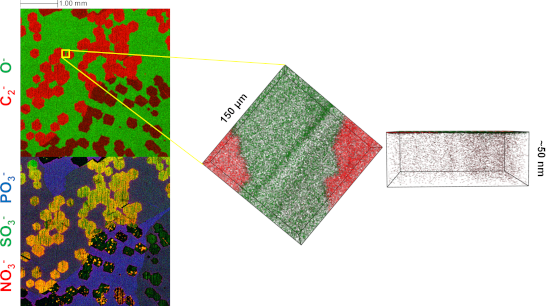
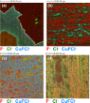
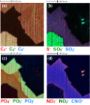
- elements such as carbon or oxygen. Surface carbon contamination on Cu foils, particularly for higher-purity Cu foils, typically originates from the cold rolling process, where oils are important to balance friction properties and cool the strip and rolls. Surface roughness of the Cu foils was measured with
- remove the top surface layer of the foil and reduce surface roughness (EP) or a wet back side oxidation process to introduce oxygen into the Cu foil prior to growth (BO). The electro-polishing solution was prepared by mixing H3PO4 (85 wt % in H2O, Sigma Aldrich) in a 7:3 ratio with DI water. The cathode
- % H2O2 solution (Fisher Scientific) heated to 100 °C for 300 s. The Cu foil was gently placed on the H2O2 solution such that the Cu foil floated, and the top side was not exposed to hydrogen peroxide. Subsequently, the Cu foil was rinsed in DI water and IPA and dried with flowing N2. The surface





Development and in vitro evaluation of liposomes and immunoliposomes containing 5-fluorouracil and R-phycoerythrin as a potential phototheranostic system for colorectal cancer
Beilstein J. Nanotechnol. 2026, 17, 97–121, doi:10.3762/bjnano.17.7
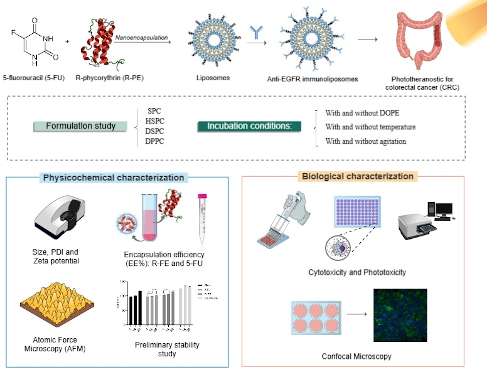
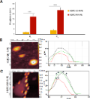
- ± 1.81 nm), negative zeta potential (−14.8 ± 0.81 mV) and antibody conjugation efficiency of 34.4%. Topographical AFM analysis showed that HSPC-IM-R-PE presented significantly higher surface roughness and viscoelastic contrast, indicating successful antibody anchoring. For cell viability in the HCT-116
- indeed altered following antibody functionalization, leading to distinct nanomechanical profiles, further reinforced by the observed changes in surface roughness, as follows. Herein, we highlighted that AFM roughness measurements were uniquely used to confirm antibody decoration onto the liposome surface
- , with no correlation to nanoparticle size obtained by DLS, since both assays were performed in different conditions (hydrodynamic vs dried samples for DLS and AFM, respectively). The surface roughness showed a significant difference when both formulations were compared (Figure 4A–4C). Herein, we used



Functional surface engineering for cultural heritage protection: the role of superhydrophobic and superoleophobic coatings – a comprehensive review
Beilstein J. Nanotechnol. 2026, 17, 63–96, doi:10.3762/bjnano.17.6
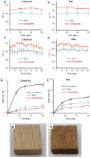
- .) and oak (Quercus robur) substrates. The addition of BC–MnO2 particles increased hydrophobicity across all formulations, with contact angles ranging from 97° to 121°, and further improvements were observed after aging due to increased surface roughness. It also provided superior color stability and
- weathering, especially at higher nanoparticle concentrations. Color stability increased, but a slight darkening and higher surface roughness was spotted, which may limit use for outdoor applications. Overall, the Paraloid–silica nanoparticle coatings effectively enhanced UV, moisture, and biological




Subdigital integumentary microstructure in Cyrtodactylus (Squamata: Gekkota): do those lineages with incipiently expressed toepads exclusively exhibit adhesive setae?
Beilstein J. Nanotechnol. 2026, 17, 38–56, doi:10.3762/bjnano.17.4
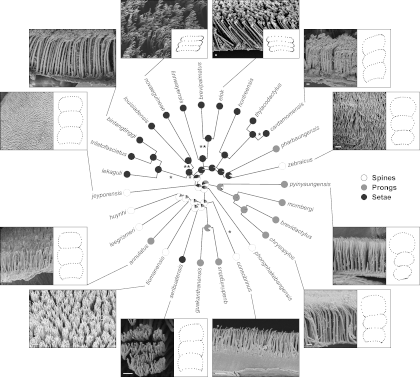
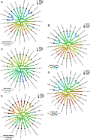
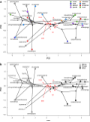
- surface roughness at a scale pertinent to the size and interactions of the epidermal microstructures are generally scarce [30][31][33][80][83][92] and non-existent for arboreal Cyrtodactylus. Among all ecotypes analysed, the crown habitat of trees apparently imposes the strongest selective pressure on


Ultrathin water layers on mannosylated gold nanoparticles
Beilstein J. Nanotechnol. 2025, 16, 2183–2198, doi:10.3762/bjnano.16.151
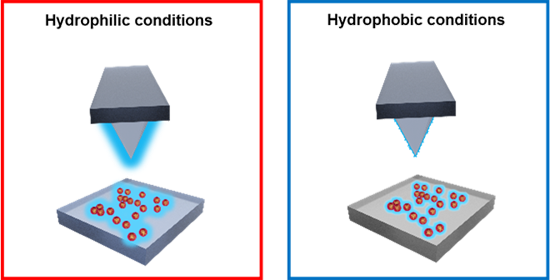
- overnight sample incubation to reach 90 ± 5% RH, corresponding to very wet climate or air during precipitation. In addition, we refer to “hydrophilic conditions” in AFM for hydrophilic surfaces (APDMES silicon) scanned by a silicon tip. We found a vertical resolution (∆z) of 0.04 nm and a surface roughness



Molecular and mechanical insights into gecko seta adhesion: multiscale simulations combining molecular dynamics and the finite element method
Beilstein J. Nanotechnol. 2025, 16, 2055–2076, doi:10.3762/bjnano.16.141
- , surface roughness, substrate deformability, and explicit long-range electrostatics for hydrophilic systems, which will necessitate thicker substrate models. The coupling between each molecular spatula and the FE seta was handled via a bridging domain (BD), described in section “Methods”. Methods






Beyond the shell: exploring polymer–lipid interfaces in core–shell nanofibers to carry hyaluronic acid and β-caryophyllene
Beilstein J. Nanotechnol. 2025, 16, 2015–2033, doi:10.3762/bjnano.16.139
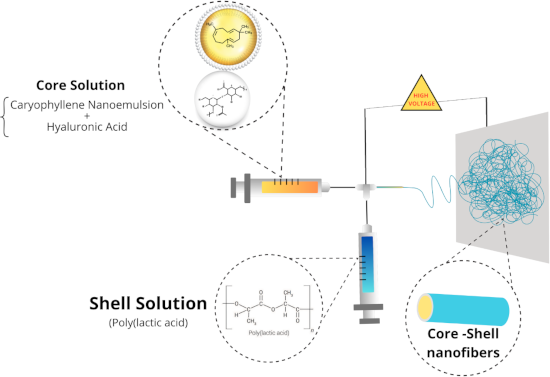
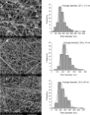
- unimodal distribution with a polydispersity index (PDI) range of 0.218. Most of the formed nanoemulsions are small in size and well distributed (Figure 1). The most favorable processing conditions for obtaining uniform fibers – free of surface roughness and with fewer beads – were determined based on




Mechanical property measurements enabled by short-term Fourier-transform of atomic force microscopy thermal deflection analysis
Beilstein J. Nanotechnol. 2025, 16, 1952–1962, doi:10.3762/bjnano.16.136
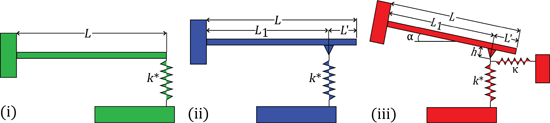
- probe, local surface roughness will yield a much smaller contact radius than the overall probe shape, it is still significantly larger than predicted by the models in Figure 5. In summary, we have used longstanding analytical models to convert the measured variation in cantilever resonant frequency with




Electrical, photocatalytic, and sensory properties of graphene oxide and polyimide implanted with low- and medium-energy silver ions
Beilstein J. Nanotechnol. 2025, 16, 1794–1811, doi:10.3762/bjnano.16.123
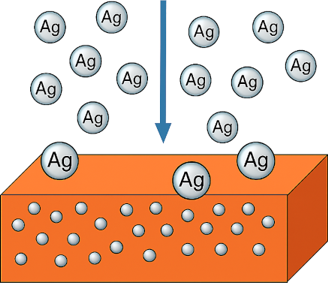
- sputtering and the increase in surface roughness during implantation may result in a shallower experimental profile than predicted. Differences can also arise from the finite depth resolution of RBS, which is influenced by energy straggling and multiple scattering effects, leading to a broadening of the
- in an overall decrease in surface roughness compared to the untreated material, regardless of the specific ion fluence. The minimum roughness was attained with an ion fluence of 3.75 × 1012 cm−2, measuring 64 nm. A comparable trend is evident when PI is implanted with 1.5 MeV Ag ions wherein a
- reduction in roughness is observable at any ion fluence relative to the reference condition. The lowest roughness in this instance was achieved with an ion fluence of 3.75 × 1012 cm−2. One possible explanation for the change in surface roughness measured by AFM may be surface sputtering. When there is


Photocatalytic degradation of ofloxacin in water assisted by TiO2 nanowires on carbon cloth: contributions of H2O2 addition and substrate absorbability
Beilstein J. Nanotechnol. 2025, 16, 1567–1579, doi:10.3762/bjnano.16.111
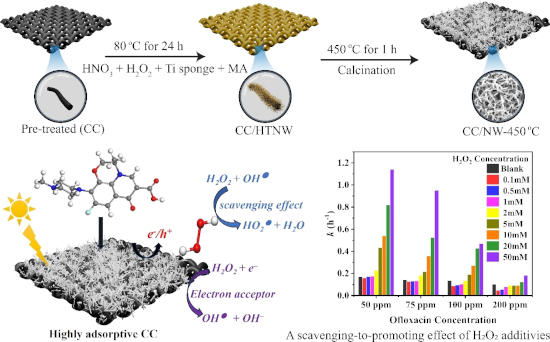
- ). Remarkably, the CC/NW-450 °C composite exhibits a contact angle of 0° (Supporting Information File 1, Figure S9c), showing complete wettability. This significant enhancement in hydrophilicity is attributed to the high surface roughness and porous hydrophilic nanowire architecture formed on the carbon cloth


The role of biochar in combating microplastic pollution: a bibliometric analysis in environmental contexts
Beilstein J. Nanotechnol. 2025, 16, 1401–1416, doi:10.3762/bjnano.16.102

- of these two models are based on different mechanisms, as described in Figure 6. MP removal by BC filter columns is primarily facilitated by the fixation of particles through filtration effects, entanglement due to surface roughness and hydrophobic interactions [47]. The negatively charged surfaces



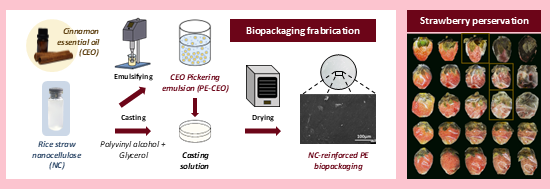
Functional bio-packaging enhanced with nanocellulose from rice straw and cinnamon essential oil Pickering emulsion for fruit preservation
Beilstein J. Nanotechnol. 2025, 16, 1234–1245, doi:10.3762/bjnano.16.91
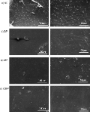
- in diameter and ≈1 μm in length. Pure BP films (Figure 3b) exhibited a relatively smooth surface with visible small pores, indicative of weak intermolecular interactions. The incorporation of NC into the PVA matrix significantly reduced surface roughness and void formation, suggesting enhanced



Influence of ion beam current on the structural, optical, and mechanical properties of TiO2 coatings: ion beam-assisted vs conventional electron beam evaporation
Beilstein J. Nanotechnol. 2025, 16, 1097–1112, doi:10.3762/bjnano.16.81
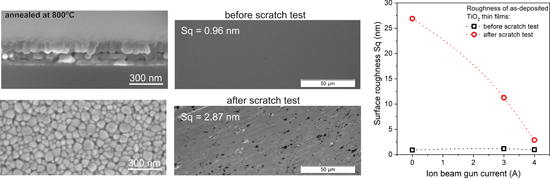
- high refractive index and thickness up to 400 nm are required. Although the density and the refractive index of crystalline TiO2 are higher than those of the amorphous phase, it is often preferred in optical devices due to its lower surface roughness and light scattering [65]. Nanoindentation
- scratches was reduced by half (Figure 8b). In contrast, when an ion beam gun current of 4 A was applied, the scratches almost disappeared, and the cross-sectional surface profile showed that they were only a few nanometers deep (Figure 8c). The surface roughness of the coating deposited without the ion gun
- ) without and with IBAD with ion beam gun currents of (b) Iibg = 3 A and (c) Iibg = 4 A after additional annealing at 800 °C. The dependence of (a) hardness and (b, c) surface roughness before and after abrasion tests on ion beam gun current for as-deposited and annealed thin films. (d) Hardness, packing




Single-layer graphene oxide film grown on α-Al2O3(0001) for use as an adsorbent
Beilstein J. Nanotechnol. 2025, 16, 1082–1087, doi:10.3762/bjnano.16.79
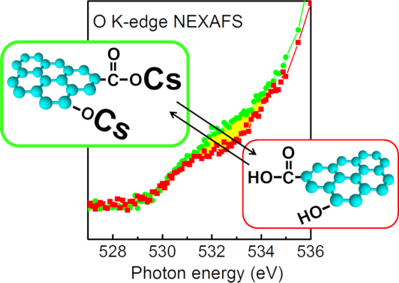
- intensity analysis and profiles of normal-incidence X-ray standing wave (NIXSW) spectroscopy [18]. In the SLGO film, the wrinkles disappeared and the surface roughness increased. The root mean square surface roughness (RMS) of the SLGO film is estimated to be less than 0.13 nm. The changes of the local


Ar+ implantation-induced tailoring of RF-sputtered ZnO films: structural, morphological, and optical properties
Beilstein J. Nanotechnol. 2025, 16, 872–886, doi:10.3762/bjnano.16.66
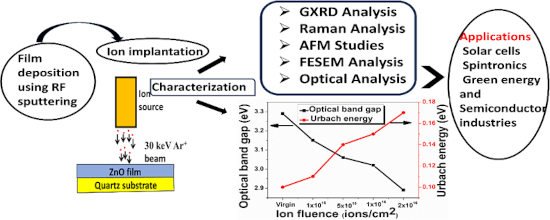
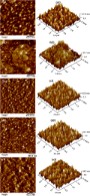
- in grazing incidence angle X-ray diffraction patterns. Atomic force microscopy images show grain size reduction and a fall in the surface roughness value of films after implantation. The implantation-induced structural modifications are further correlated with the variation in diffuse reflectance
- foreign ions in the ZnO film lattice can create an impact on its surface roughness and particle size. Previous reports available discuss the implantation-induced optical longitudinal phonon symmetry in ZnO films using heavy ions with high energy and low implantation fluences [12][13][14][15]. Singh et al






High-temperature epitaxial growth of tantalum nitride thin films on MgO: structural evolution and potential for SQUID applications
Beilstein J. Nanotechnol. 2025, 16, 690–699, doi:10.3762/bjnano.16.53
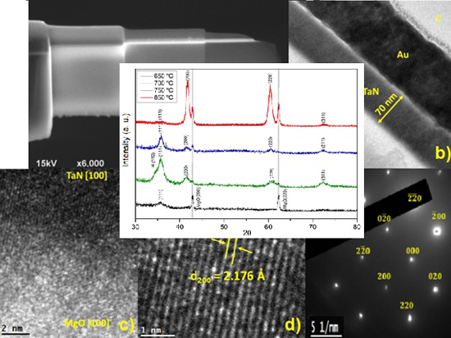
- makes this film an excellent candidate for superconducting applications, particularly in devices such as superconducting quantum interference devices (SQUIDs). Figure 7 presents an AFM image revealing the low surface roughness (2.2 nm) of even the film deposited at an elevated growth temperature of 850
- °C. This observation suggests that while deposition parameters significantly influence the structural and superconducting properties of the TaN thin films, they had only minimal impact on the surface roughness. Notably, the film roughness remains largely unaffected by variations in growth temperature
- surface roughness. Comparison of Ta 4f XPS peaks determined for different samples. (a) pN2 = 60 mTorr, (b) pN2 = 70 mTorr, (c) pN2 = 90 mTorr, T = 700 °C, and (d) pN2 = 90 mTorr, T = 750 °C. Ta 4f XPS spectra of samples deposited at (a) pN2 = 60 mTorr, T = 800 °C and (b) pN2 = 60 mTorr, T = 850 °C. XRD


Colloidal few layered graphene–tannic acid preserves the biocompatibility of periodontal ligament cells
Beilstein J. Nanotechnol. 2025, 16, 664–677, doi:10.3762/bjnano.16.51
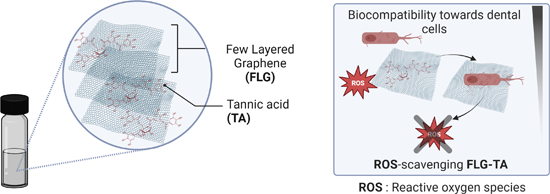
- . The cellular response on different graphene surfaces was previously studied, and it was demonstrated that substrate characteristics such as surface roughness, surface chemistry, and electronic properties can influence cell response [38]. The implications of these results are particularly significant




N2+-implantation-induced tailoring of structural, morphological, optical, and electrical characteristics of sputtered molybdenum thin films
Beilstein J. Nanotechnol. 2025, 16, 495–509, doi:10.3762/bjnano.16.38
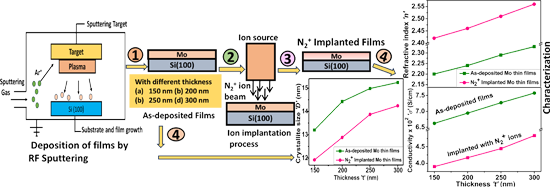
- particles are found to be small [43]. As the thickness of Mo thin films increases, smaller particles coalesce, which increases the surface roughness. The increase in roughness and particle size of implanted films results from structural modifications caused by N2+ implantation. AFM analysis reveals that N2
- thin films. Lattice constants and texture coefficients of as-deposited and implanted Mo thin films. Values of RMS surface roughness and particle size of as-deposited and implanted Mo thin films. The electrical parameters of as-deposited and implanted Mo thin films. Funding Usha Rani is thankful to


ReactorAFM/STM – dynamic reactions on surfaces at elevated temperature and atmospheric pressure
Beilstein J. Nanotechnol. 2025, 16, 397–406, doi:10.3762/bjnano.16.30
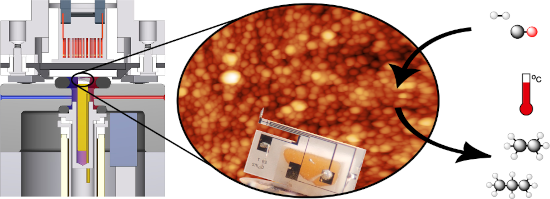
- the same color contrast as in Figure 5c). By observing the root-mean-squared (RMS) surface roughness (Rq) under UHV conditions of 0.17 nm in topography and 50 pA in the current signal, we determine that the surface is rather smooth and flat. In contrast, under oxidation conditions, the surface
- roughness in topography is increased to 0.63 nm because of the more challenging scanning conditions. However, the current signal surface roughness increases by an order of magnitude to 760 pA with respect to Figure 5c. This significant increase in surface roughness, which can be observed as the appearance
- voltage of −1 V applied to the sample. RMS surface roughness and RMS current for each image are, correspondingly, (a) 0.17 nm, (b) 50 pA, (c) 0.63 nm, and (d) 760 pA. AFM images of cobalt nanoparticles on a thick (50 nm) Al2O3 film taken (a) before reaction, at RT and high vacuum, (b) at 430 K and 2 bar


Tailoring of physical properties of RF-sputtered ZnTe films: role of substrate temperature
Beilstein J. Nanotechnol. 2025, 16, 333–348, doi:10.3762/bjnano.16.25
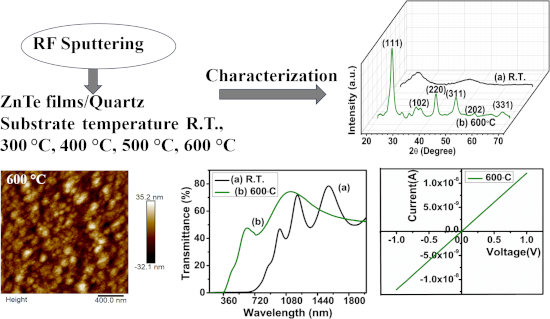
- ). The Rq value only gives information about the vertical fluctuation in height on a surface. To get more insight into possible surface growth mechanisms and variations in surface roughness, both vertically and laterally power spectral density (PSD) analyses were carried out. In PSD analysis, the surface
- frequency range is proportional to the surface roughness. Therefore, PSD curves corresponding to higher roughness should lie at higher ordinates compared to PSD curves for lower roughness. In our case, it was found that the films fabricated at 300 and 600 °C had the lowest and highest roughness