


Search results
Search for "tunneling" in Full Text gives 317 result(s) in Beilstein Journal of Nanotechnology. Showing first 200.
Materials challenges in solid-state sensors for continuous monitoring of ions in water
Beilstein J. Nanotechnol. 2026, 17, 935–973, doi:10.3762/bjnano.17.66
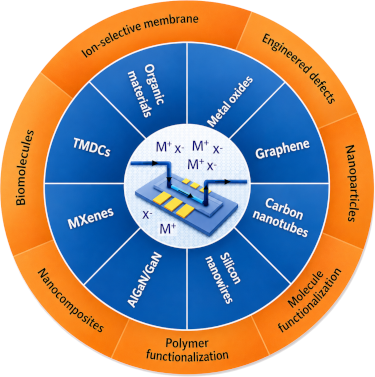
- conduction, then cross to another tube via tunneling/hopping, forming a percolation network. Modulation of the carrier density of CNTs can happen


Substrate-dependent pore formation in molybdenum disulfide monolayers under ion irradiation
Beilstein J. Nanotechnol. 2026, 17, 769–780, doi:10.3762/bjnano.17.54
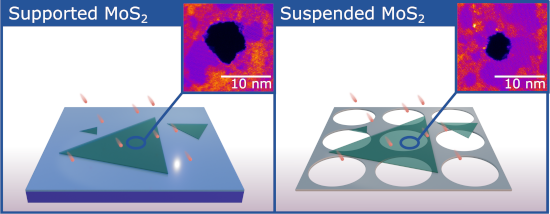
- , high-resolution scanning transmission electron microscopy (STEM) generally requires freestanding membranes, while atomic-resolution atomic force microscopy (AFM) and scanning tunneling microscopy (STM) demand exceptionally clean surfaces; also, substrate effects can further complicate interpretation


Impacts of annealing on structural and photophysical properties of zinc phthalocyanine adsorbed on graphene
Beilstein J. Nanotechnol. 2026, 17, 576–585, doi:10.3762/bjnano.17.39
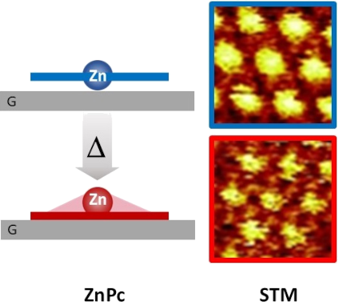
- -tunneling-microscopy and optical microspectroscopy of a 2D phase change experienced by a self-assembled zinc phthalocyanine (ZnPc) monolayer adsorbed on graphene. To probe the intrinsic properties of individual ZnPc molecules, they are spatially confined within the pores of a self-assembled 2D matrix. This
- formation towards 3D self-assembly. Keywords: graphene; optical spectroscopy; organic semiconductors; phthalocyanine; scanning tunneling microscopy; self-assembly; Introduction Combining the properties of graphene and molecular semiconductors in a given material organized at the molecular scale appears as
- compared with results of scanning tunneling microscopy (STM) and scanning tunneling spectroscopy (STS) [29]. Similarly to their thicker 3D counterparts, 2D metal-free Pc [30] or metalated Pc [31] assemblies adsorbed on various substrates have shown important phase changes induced by thermal treatments. In


Fractional shot noise of an SU(N) Kondo system
Beilstein J. Nanotechnol. 2026, 17, 515–540, doi:10.3762/bjnano.17.34
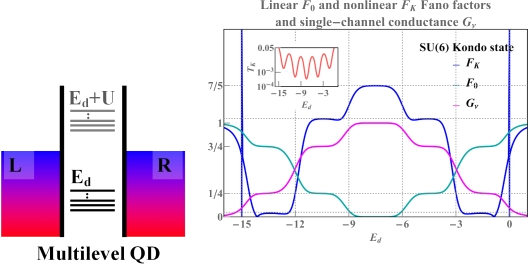
- Anderson Hamiltonian: The first term represents the orbital energies Eν = Ed (ν = 1, 2, …, N), the second, parameterized by U, describes Coulomb interactions, and the last two terms describe electrons in the electrodes and their tunneling to the dot (t). The Hamiltonian (Equation 1) also describes a


![[Graphic 127]](/bjnano/content/inline/2190-4286-17-34-i187.svg?max-width=637&scale=1.18182)

Defects and defect-mediated engineering of two-dimensional materials: challenges and open questions
Beilstein J. Nanotechnol. 2026, 17, 454–488, doi:10.3762/bjnano.17.31
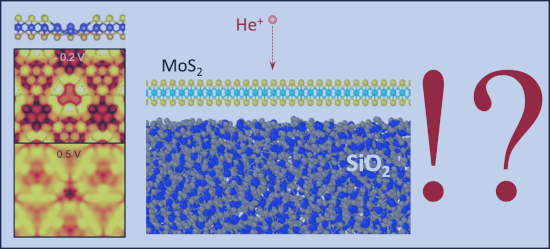
- (scanning tunneling microscopy (STM) and STEM) are slower and may introduce uncertainties due to the required change in the thermodynamic conditions during transfer from the processing chamber to the vacuum in the microscope. Are defect complexes in sub-stoichiometric/impurity-doped 2D materials more
- unambiguous identification of the emitters’ microscopic nature. Scanning tunneling microscopy luminescence (STML) offers a compelling solution. By combining atomically resolved imaging and spectroscopy by means of scanning tunneling microscopy/scanning tunneling spectroscopy (STM/STS) with localized
- state lead to additional tunneling channels, which is reflected in symmetric steps of the differential conductance in the dI/dV spectra [144]. In the absence of an external magnetic field, the excitation energies are directly related to the crystal-field split anisotropy of the defect in its atomic





Advancing nanolithography: a comprehensive review of materials for local anodic oxidation with AFM
Beilstein J. Nanotechnol. 2026, 17, 275–291, doi:10.3762/bjnano.17.19
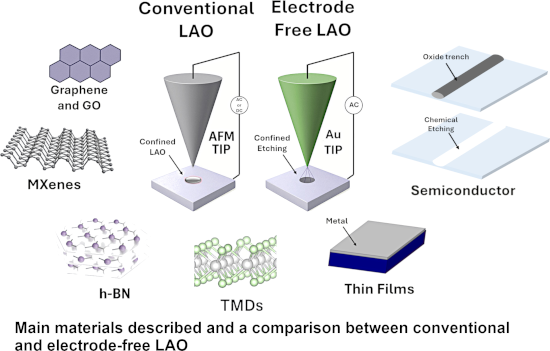
- authors agree with an oxidation kinetic consistent with the Cabrera–Mott model [44][45]. As an electrochemical process, LAO is inherently current-dependent. Early studies showed that oxide growth evolves from an initial electronic tunneling regime to ionic transport as the film develops [46]. Dagata and
- tip, ultrathin oxide barriers can be written locally on superconducting films such as Nb [29][118], TiN [119], or Al, transforming selected regions into insulating junctions that act as weak links for Cooper pair tunneling. This technique allows for the precise creation of Josephson junctions or SQUID


Terahertz-range on-chip local oscillator based on Josephson junction arrays for superconducting quantum-limited receivers
Beilstein J. Nanotechnol. 2025, 16, 2296–2305, doi:10.3762/bjnano.16.158
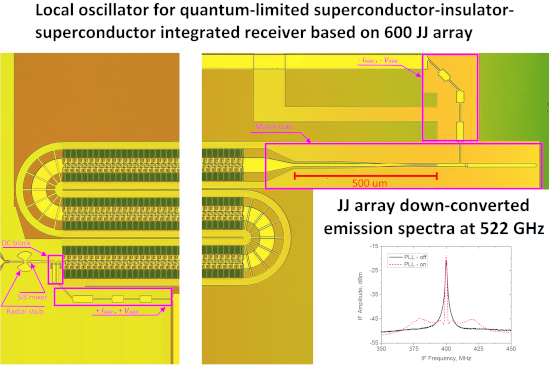
- influence of array geometry, the presence of a matched load at the nonradiating edge, and the magnitude of the tunneling current density of Josephson junctions on such oscillator characteristics as radiation power, linewidth, and operating range are discussed. Various options are suggested for further
- tunneling through the tunnel barrier increases. This leads to a rise in current at voltages below the gap and the emergence of the so-called quasiparticle steps. This process is known as photon-assisted tunneling. The magnitude of the current on a quasiparticle step within the investigated range is linearly
- of the SIS mixer during DC measurements. Ipump is the current through the mixer that arises from photon assisted tunneling and serves for the incoming power estimate. The power level is about 0.18 μW at 300 GHz and 0.07 μW at 515 GHz. Ig is the current at the gap voltage Vg. IVC of the 600 JJ array


Geometry-controlled engineering of the low-temperature proximity effect in normal metal–superconductor junctions
Beilstein J. Nanotechnol. 2025, 16, 2265–2273, doi:10.3762/bjnano.16.155
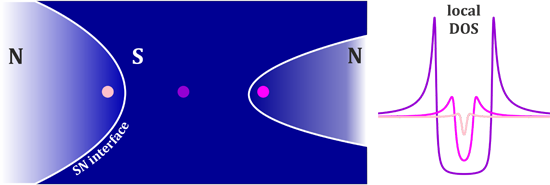
- following lattice Hamiltonian [44]: with where () represent electron creation (annihilation) operators for spin σ at site i on the lattice. The tunneling amplitude tij is non-zero only between nearest neighbors (tij = −t), g > 0 is the superconducting pairing constant on the superconducting side of the
- experiments, where the DOS remains nonzero at low energies. This broadening arises from inelastic scattering, interface imperfections, and finite quasiparticle lifetimes [46][53][57]. Experimentally, the proximity gap can be probed by tunneling spectroscopy by measuring the differential conductance dI/dV on


Electron transport through nanoscale multilayer graphene and hexagonal boron nitride junctions
Beilstein J. Nanotechnol. 2025, 16, 2132–2143, doi:10.3762/bjnano.16.147
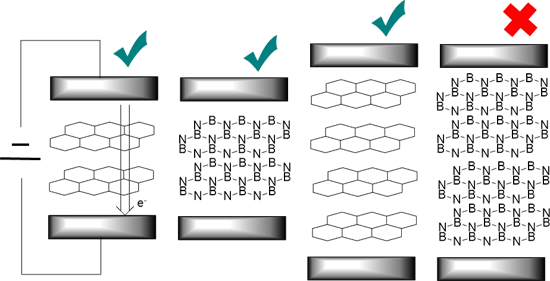
- [22]. The electron tunneling through ultrathin h-BN crystalline barriers was investigated recently with experimental techniques showing exponential decay of the current with the number of layers [23]. Accurate density functional theory (DFT) calculations demonstrated the bandgap change in one to eight
- layers of h-BN with convergence at four layers to the bulk values [24]. Electron transport through two layers of graphene and h-BN was investigated with the non-equilibrium Green’s function (NEGF) method combined with DFT [25]. The results show similar tunneling currents for graphene and h-BN. This work
- linear combination of atomic orbitals (LCAO) DFT. The study aims to provide practical insights into the minimal thickness of h-BN at which the tunneling currents diminish and the material could be used as an electron blocking layer in energy-related devices. The fundamental aspect of the study is to


Quantum circuits with SINIS structures
Beilstein J. Nanotechnol. 2025, 16, 1931–1941, doi:10.3762/bjnano.16.134
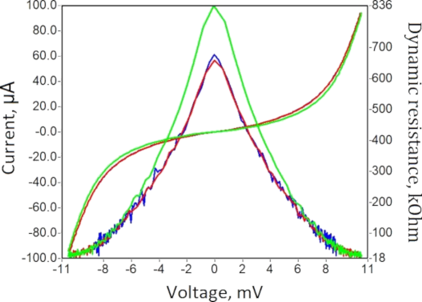
- contact. When tunneling from a normal metal into a superconductor, due to the presence of an energy gap (Δ), only electrons whose energy exceeds Δ can tunnel into the superconductor. Without applying an external voltage or in the case when eV < Δ (T = 0), tunneling does not occur. Accordingly, a tunnel
- external noise and increase the signal-to-noise ratio, the NIS junctions are connected in series arrays (Figure 3). The temperature dependency of the resistance ratio for aluminum SIN junctions is shown in Figure 4. Electron coolers The tunneling current, when biased near the energy gap, carries hot
- created. The process of electron energy relaxation continues until their characteristic times reach the tunneling time determined by the parameters of the SIN transition, that is, the transparency of the barrier, the thickness of the normal metal film, and the diffusion rate of electrons in it. For


Ambient pressure XPS at MAX IV
Beilstein J. Nanotechnol. 2025, 16, 1677–1694, doi:10.3762/bjnano.16.118
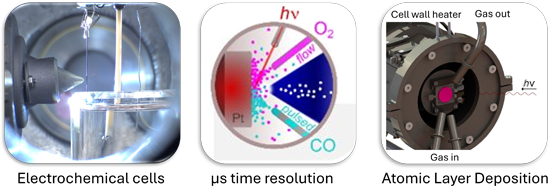
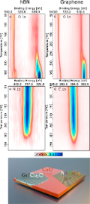
- is largely derived from ex situ surface analysis using XPS and scanning tunneling microscopy. However, the findings of UHV-XPS do not accurately represent the genuine passive film/electrolyte interface. APXPS is essential to observe the onset and progression of corrosion and to gain a fundamental





Few-photon microwave fields for superconducting transmon-based qudit control
Beilstein J. Nanotechnol. 2025, 16, 1580–1591, doi:10.3762/bjnano.16.112
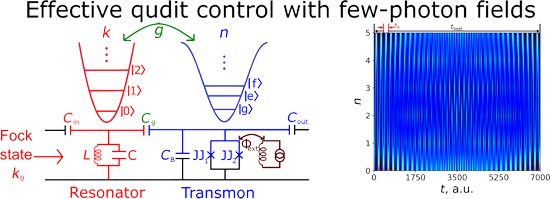
- interaction strength of the resonator mode with the Josephson subsystem is taken as , where is the dipole moment of the transmon, is the vacuum electric field in the resonator that affects the transmon, and l is the distance that the Cooper pair travels when tunneling through JJ [43]. The conditions for the


Nanostructured materials characterized by scanning photoelectron spectromicroscopy
Beilstein J. Nanotechnol. 2025, 16, 700–710, doi:10.3762/bjnano.16.54
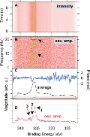
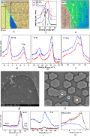
- expensive III–V materials to the active device area. The flexible geometry of nanowires standing upright on their growth substrate directly leads to gate-all-around metal-oxide-semiconductor stacks [23][24], and advanced electronic device designs such as nanowire tunneling field-effect transistors [24] or


Nanoscale capacitance spectroscopy based on multifrequency electrostatic force microscopy
Beilstein J. Nanotechnol. 2025, 16, 637–651, doi:10.3762/bjnano.16.49

- features. Scanning probe techniques have revolutionized nanoscale material characterization. Since the invention of scanning tunneling microscopy (STM) [16] and atomic force microscopy (AFM) [17], various electric force-based methods, called electrostatic force microscopy (EFM) methods, have emerged to




Functionalized gold nanoflowers on carbon screen-printed electrodes: an electrochemical platform for biosensing hemagglutinin protein of influenza A H1N1 virus
Beilstein J. Nanotechnol. 2025, 16, 540–550, doi:10.3762/bjnano.16.42
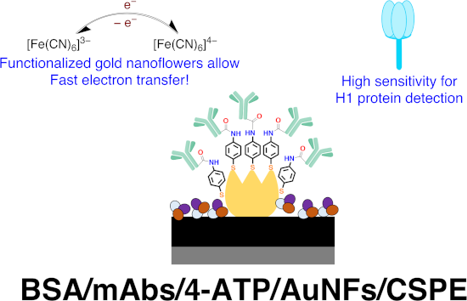
- was amplified by functionalization of the gold nanoflowers with 4-aminothiophenol, which resulted in a 100-fold decrease of the charge transfer resistance due to a tunneling effect. Subsequently, monoclonal antibodies against H1 were immobilized on the surface via covalent amide bond formation
- increased. This effect is known as tunneling charge transfer enhancement and significantly improved the sensitivity of the biosensor. It can be attributed to electron transfer through bonds due to the small length (0.59 nm) and the delocalized π-electron system of the 4-ATP linker molecule. Interestingly
- the concentration range from 10 to 10 000 pg/mL. The experimental EIS data suggest that the electron transfer on the electrode was enhanced by a factor of 100 due to the increase in surface area and to a tunneling charge transfer effect. This improvement is attributed to the synergistic effect of the


ReactorAFM/STM – dynamic reactions on surfaces at elevated temperature and atmospheric pressure
Beilstein J. Nanotechnol. 2025, 16, 397–406, doi:10.3762/bjnano.16.30
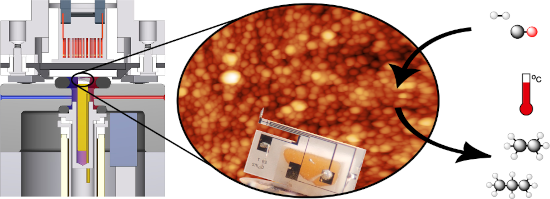
- , capable of studying materials under industrially relevant conditions. Here we show current developments of the ReactorAFM/STM, implementing a qPlus sensor to add the ability of combining atomic force microscopy (AFM) and scanning tunneling microscopy (STM) techniques to study the geometric and electronic
- , a high-pressure ReactorSTM has been developed [10][11]. The pressures in the scanning tunneling microscopy (STM) reactor are orders of magnitude above UHV (up to several bar), rendering gas–catalyst interactions very significant and leading to differences in reaction mechanisms [12][13][14][15
- the electric tunneling effect, AFM probes the forces of the tip–sample interaction. This makes AFM independent of surface conductivity and therefore a powerful tool to bridge the materials gap. The drawback of this high-pressure AFM setup is that it could not be combined with STM. While STM provides


Bolometric IR photoresponse based on a 3D micro-nano integrated CNT architecture
Beilstein J. Nanotechnol. 2024, 15, 1030–1040, doi:10.3762/bjnano.15.84
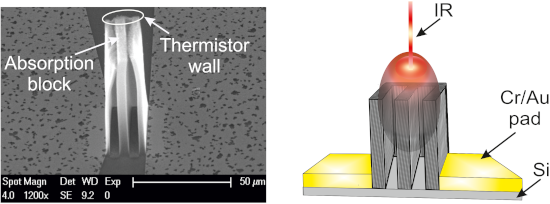
- material. The electrical conductivity of a vertically aligned CNT structure is defined by the intrinsic conductivity along the CNTs and the tunneling at the CNT junctions. The vertical electrical conduction is based on long conduction paths along the CNTs and few junction contacts, while the lateral


Recent progress on field-effect transistor-based biosensors: device perspective
Beilstein J. Nanotechnol. 2024, 15, 977–994, doi:10.3762/bjnano.15.80
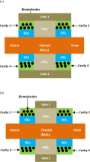
- -band tunneling of carriers. Additionally, an extended gate architecture was incorporated to attain good stability of the biomolecules at the nanocavity, significantly improving on-current sensitivity (7.96 × 10⁹) compared to available FET-based biosensors and existing tunnel FET-biosensor structures
- change in the N+-pocket region, from the perspective of biomolecule detection, is reported. It has been demonstrated that SiGe source TFET has a significant advantage over N+-pocket TFET biosensors in terms of subthreshold current and sensitivity. 2.2.20 Schottky tunneling source impact-ionization-based
- biosensors. Singh et al. [123] reported a concept of a nanogap-embedded Schottky tunneling source impact-ionization (ST SII) FET-based biosensor with highly sensitive detection of different neutral and charged biomolecules. Figure 20 shows the architecture of ST SII FET-based biosensors. In this structure




Reduced subthreshold swing in a vertical tunnel FET using a low-work-function live metal strip and a low-k material at the drain
Beilstein J. Nanotechnol. 2024, 15, 713–718, doi:10.3762/bjnano.15.59
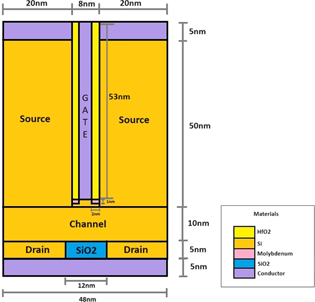
- is greater. Thermionic emission affects the off-to-on transition. A small subthreshold swing is needed to turn the device to an off-state sharply, once Vgs drops below the threshold voltage (VT). Tunnel field-effect transistors (TFETs) work based on band-to-band tunneling and not on conventional
- thermionic emission as the carrier injection mechanism [3]. Band-to-band tunneling enables TFETs to have SS < 60 mV/dec [4][5][6][7]. The gate-to-drain capacitance (Cgd) effect (Miller capacitance effect) has an impact on TFET performance. Unwanted effects such as overshoot/undershoot in the inverter
- previously published model, the proposed design uses a low-k material in the drain region to reduce Cgd. A metal strip with low work function placed at the source–channel interface causes an abrupt change in electron concentration, increasing the tunneling rate [14][15][16][17][18]. Molybdenum, used here as


Stiffness calibration of qPlus sensors at low temperature through thermal noise measurements
Beilstein J. Nanotechnol. 2024, 15, 580–602, doi:10.3762/bjnano.15.50
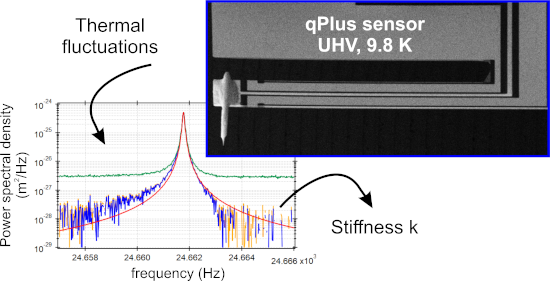
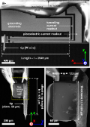
- , which forms the tip. The tip is electrically connected to an electrode that collects the tunneling current if scanning tunneling experiments are to be performed along with nc-AFM experiments. The qPlus sensors feature a resonance frequency of f1 ≃ 25 kHz and a most commonly reported stiffness of 1800 N
- electrode is for grounding. The two thinner ones, running along the free prong, are for the piezoelectric current and tunneling current readouts. The free prong is l = (2045 ± 100) μm long. The tip, indicated at the end of the free prong, consists of a W wire that is 50 μm in diameter, better visible in
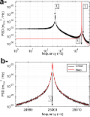
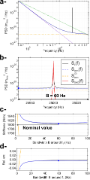
- , coarse motor, and bias). The tunneling current readout is also grounded. It is also made sure that no parasitic external noise source (mechanical or electrical) adds to the measurement. The measurement noise PSD ((f)) is recorded under similar conditions, except that the input of the charge amplifier is

Directed growth of quinacridone chains on the vicinal Ag(35 1 1) surface
Beilstein J. Nanotechnol. 2024, 15, 556–568, doi:10.3762/bjnano.15.48
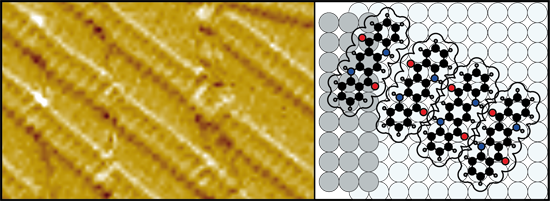
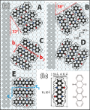
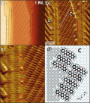
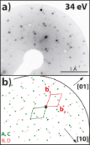
- the vicinal Ag(35 1 1) surface was investigated by scanning tunneling microscopy and low-energy electron diffraction. The focus was on the influence of the steps on the QA structures and their preferential azimuthal orientations with the aim of achieving a selective orientation. After deposition at a
- with a base pressure of 2 × 10⁻¹⁰ mbar equipped with a beetle-type scanning tunneling microscope (STM, type UHV 300) from RHK Technology, a microchannel plate low-energy diffraction (MCP-LEED) instrument from OCI Vacuum Microenginneering Inc., and a quadrupole mass spectrometer (QMS) of the type PRISMA
- . The bias voltage (UBias) refers to the sample, and the tunneling current (I) was at a constant value in the range of 10–50 pA. We usually adjusted the scanning plane parallel to the (35 1 1) plane of our sample in order to optimize the contrast of the images. The images were processed with the program


Superconducting spin valve effect in Co/Pb/Co heterostructures with insulating interlayers
Beilstein J. Nanotechnol. 2024, 15, 457–464, doi:10.3762/bjnano.15.41
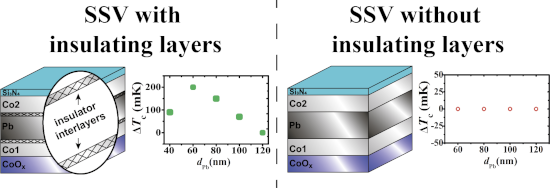
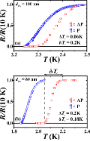
- to plot the theoretical curve for (dPb). The value of γ is consistent with the values of ξS and ξF. What is unexpected in the above fitting parameters is a rather small value of the interface resistance parameter, γb = 0.48. In the tunneling limit, one can estimate in terms of the effective
- suppressed). The obtained small value of γb points at small thicknesses of the tunneling barriers in our junctions. Note that this correlates with observations by Deutscher and Meunier [40], who concluded that according to the resistance measurements, the barriers in their experiment were “much thinner than
- in a conventional tunneling junction”. While the theory [50] assumes a symmetric F1/S/F2 structure, our samples may actually be asymmetric from the point of view of the interface transparencies. The oxidation times of the two interfaces were different in our samples, and our fabrication procedure was



![[Graphic 6]](/bjnano/content/inline/2190-4286-15-41-i6.svg?max-width=637&scale=1.18182)
Unveiling the nature of atomic defects in graphene on a metal surface
Beilstein J. Nanotechnol. 2024, 15, 416–425, doi:10.3762/bjnano.15.37
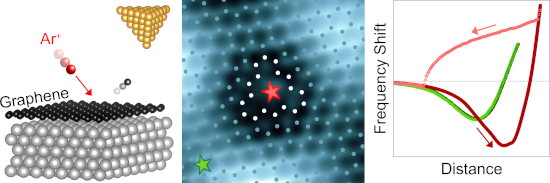
- Karl Rothe Nicolas Neel Jorg Kroger Institut für Physik, Technische Universität Ilmenau, D-98693 Ilmenau, Germany 10.3762/bjnano.15.37 Abstract Low-energy argon ion bombardment of graphene on Ir(111) induces atomic-scale defects at the surface. Using a scanning tunneling microscope, the two
- ; scanning tunneling microscopy and spectroscopy; Introduction Defects in lattices of two-dimensional (2D) materials are considered as promising building blocks for tailoring electronic and phononic band structures, magnetic texture, photon emission, and charge carrier concentration [1]. In addition
- by noble-gas ion irradiation [6][13][14][17][19][21][24], represents an opportunity for systematic defect studies. The work presented here was stimulated by the lack of experimental data on the actual geometry of atomic-scale defects in graphene. So far, scanning tunneling microscope (STM


On the mechanism of piezoresistance in nanocrystalline graphite
Beilstein J. Nanotechnol. 2024, 15, 376–384, doi:10.3762/bjnano.15.34
- values. For larger strains, mechanisms such as grain rotation and the formation of nanocracks might contribute to the piezoresistive behavior in nanocrystalline graphene. Keywords: grain boundary; nanocrystalline graphene; strain sensor; Raman; tunneling and destruction; Introduction Flexible strain
- graphene, it is still unclear which factors influence this property. A theoretical work by Kumar et al. suggested that grain boundaries can affect piezoresistance in graphene [9]. This result seemed unexpected since Dirac particles should undergo Klein tunneling at barriers without adding up to the total
- strain within the grains remains constant even though the externally applied strain increased to ca. 0.4%. In an attempt to model piezoresistance in NCG, we have used the tunneling + destruction model for composite materials [24]: The model with five free parameters was fitted to the data as shown in


Ultrasensitive and ultrastretchable metal crack strain sensor based on helical polydimethylsiloxane
Beilstein J. Nanotechnol. 2024, 15, 270–278, doi:10.3762/bjnano.15.25
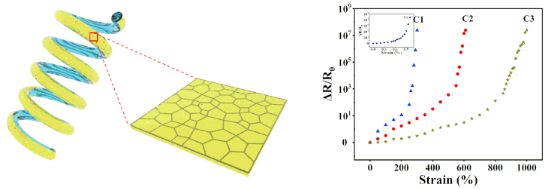
- formation under stretching. The sensors with helix indices C1, C2, and C3 exhibited distinct turning points at 250%, 550%, and 850% strain, respectively. The dominance of strain in the sensing mechanism can be attributed to the tunneling effect [37]. As the Au film is stretched, it gradually separates
- , resulting in an increased distance between adjacent cracks. During this stage, the resistance is primarily influenced by the coupling of tunneling resistance with the physical distance between channel cracks. Therefore, the change in resistance, corresponding to the average width of the cracks and the
- strain, can be described by the following formula: When the strain ε is small, we can formulate: where X is the tunneling barrier height-dependent function. Figure 2b shows the good linearity between measured resistance and strain; the curves fit quite well to the analytical solution. When the helical





