Search results
Search for 抖音 AI文案帮写 功能入口 2026年1月 最新位置 in Full Text gives 2681 result(s) in Beilstein Journal of Nanotechnology. Showing first 200.
Influence of surface characteristics on the in vitro stability and cell uptake of nanoliposomes for brain delivery
Beilstein J. Nanotechnol. 2026, 17, 139–158, doi:10.3762/bjnano.17.9
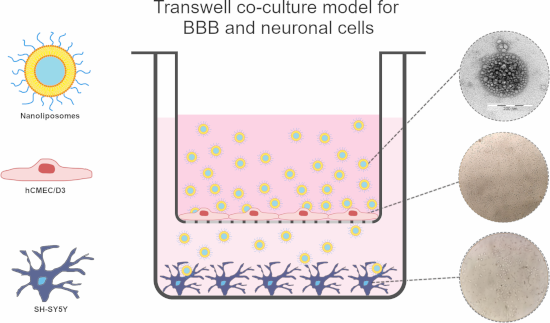
- University of Graz, Institute of Pharmaceutical Sciences, Department of Pharmaceutical Technology and Biopharmacy, Universitatplatz 1/EG, A-8010, Graz, Austria European Commission, Joint Research Centre (JRC), Ispra, Italy 10.3762/bjnano.17.9 Abstract In contemporary research, there is a clear emphasis on
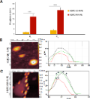
- /D3) and neuroblastoma cells (SH-SY5Y) under different conditions. The results obtained from comparative in vitro cell uptake studies on both cell culture lines after treatment with three different concentrations of fluorescently labelled NLs (5, 10, and 100 μg/mL) over a period of 1, 2, and 4 h
- characteristics; Introduction Advancements in nanotechnology and the use of nanoliposomes (NLs) as carriers for targeted delivery and controlled release of active components (AC) show promise in addressing multiple pathologies associated with neurodegenerative diseases like Alzheimer's disease (AD) [1]. It is




Capabilities of the 3D-MLSI software tool in superconducting neuron design
Beilstein J. Nanotechnol. 2026, 17, 122–138, doi:10.3762/bjnano.17.8

- Physics and Technology, 9 Institutskiy per., Dolgoprudny, Moscow Region, 141701, Russia Russian Quantum Center, 30 Bolshoy Boulevard, bld. 1, Moscow, 121205, Russia HSE University, 20 Myasnitskaya str., Moscow, 101000, Russia Faculty of Computational Mathematics and Cybernetics, Moscow State University, 1
- neurons, in particular, of sigma and Gauss neuron types [1]. They are, in fact, a single-junction and a two-junction interferometer, respectively, shunted by an additional inductance, which is also used to generate the output signal. The designation of such a neuron originates from the type of transfer
- , namely, sigma and Gauss neurons [1][26][27], are studied in experiment and simulation. Good agreement between measured and extracted values of inductances followed by the TF analysis confirms the high potential of the 3D-MLSI software package for the design of SCE devices. Results C-shaped SQUIDs For in



Development and in vitro evaluation of liposomes and immunoliposomes containing 5-fluorouracil and R-phycoerythrin as a potential phototheranostic system for colorectal cancer
Beilstein J. Nanotechnol. 2026, 17, 97–121, doi:10.3762/bjnano.17.7
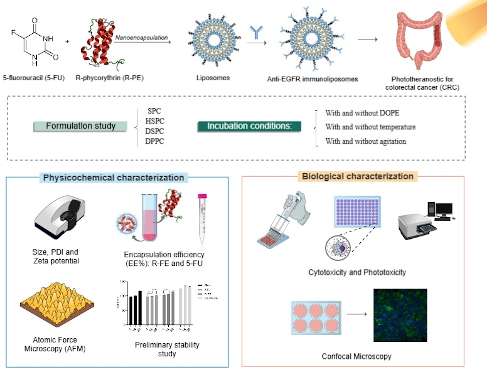
- ; 1 Introduction Colorectal cancer (CRC) consists in malignant neoplasms related to several histologic types along the colon and rectum. In 2020, worldwide, colorectal cancer is the 3rd most prevalent type of cancer, corresponding to around 10% of the total cases of this disease. Regarding mortality
- numbers, this kind of cancer reaches the 2nd position, having approximately 900,000 deaths per year [1]. A diversity of factors may contribute, to a greater or lesser extent, to CRC incidence such as genetic mutations and lifestyle. The prognosis, in general, depends on the disease stage and gene affected
- 7.4 containing 5-FU and/or R -PE, respectively, at final concentrations of 260 μg/mL and 1 mg/mL. Subsequently, the formulations were subjected to an ultrasonic bath for 15 min. To reduce the size of the vesicles, the sonication method with a probe ultrasound was applied (Qsonica Sonicator – Model



Functional surface engineering for cultural heritage protection: the role of superhydrophobic and superoleophobic coatings – a comprehensive review
Beilstein J. Nanotechnol. 2026, 17, 63–96, doi:10.3762/bjnano.17.6
- Giuseppe Cesare Lama Marino Lavorgna Letizia Verdolotti Federica Recupido Giovanna Giuliana Buonocore Bharat Bhushan Institute for Polymers, Composite and Biomaterials, National Council of Research (IPCB-CNR), P.le E. Fermi 1, 80055 Portici, Italy Dept of Mechanical and Aerospace Engineering, The
- protective materials; nanocomposite; substrate vulnerability; superhydrophobic coatings; sustainability; Introduction The conservation of cultural heritage is not only an endeavor to preserve the physical integrity of artifacts but also to maintain the cultural identity of societies [1]. With the growing
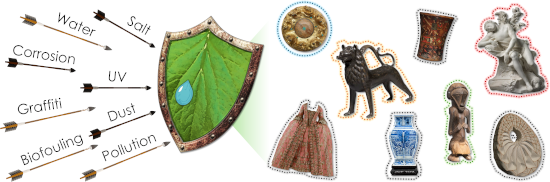
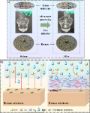
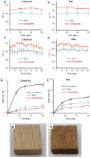
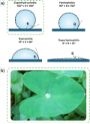
- threats posed by environmental factors [2][3] and by human-induced damages, such as mishandling [4] or acts of vandalism [5] (Figure 1), the need for advanced protective coatings has never been more pressing. In Figure 2, the number of publications related to both the cultural heritage preservation




Microscopic study of the intermediate mixed state in intertype superconductors
Beilstein J. Nanotechnol. 2026, 17, 57–62, doi:10.3762/bjnano.17.5
- quantized vortices forming a mixed state [1][2][3]. Within the Ginzburg–Landau (GL) framework, the boundary between these regimes is determined by the GL parameter κ = λL/ξGL, where λL is the magnetic London penetration depth and ξGL is Ginsburg–Landau coherence length, with the critical value separating
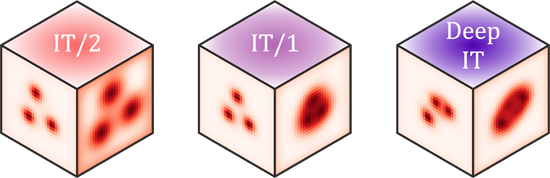
- . Initially referred to as type II/1 superconductivity [14], this regime has since been understood as a manifestation of a more general intertype (IT) superconductivity [17][18][19][20], which fundamentally extends the conventional classification. The physics of IT superconductivity is closely related to the
- calculations within the Bogoliubov–de Gennes (BdG) framework [1] have demonstrated IT behavior by studying few-vortex configurations, revealing the coexistence of repulsion and attraction that leads to vortex clustering [28]. In this work, we extend these microscopic BdG calculations to the entire temperature


Subdigital integumentary microstructure in Cyrtodactylus (Squamata: Gekkota): do those lineages with incipiently expressed toepads exclusively exhibit adhesive setae?
Beilstein J. Nanotechnol. 2026, 17, 38–56, doi:10.3762/bjnano.17.4
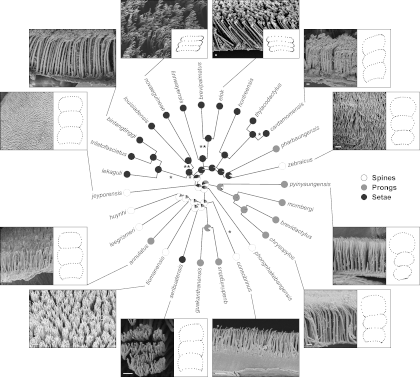
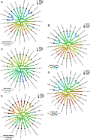
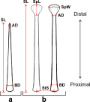
- types. We hypothesized that (1) species showing incipient toepad development will possess setae, while those lacking obvious macrostructural modifications should exhibit only spines, prongs, or spinules. Additionally, we hypothesized that either (2) the presence of setae is associated with arboreal
- hypothesis. Most transitions to incipient toepads occurred within this clade, consistent with hypothesis 1, and we reveal that the evolution of setae likely preceded that of broadened scales. Although microstructure types did not significantly correlate with ecotype, specific morphometric traits varied
- surfaces, either by employing dry adhesion via microstructures, or wet adhesion, which is additionally supported by secretions [1][2][3][4][5]. In lizards, subdigital adhesive microstructures facilitating dry adhesion evolved independently in anoles, some skinks, and multiple times in geckos [3][6][7][8



Reduced graphene oxide paper electrode for lithium-ion cells – towards optimized thermal reduction
Beilstein J. Nanotechnol. 2026, 17, 24–37, doi:10.3762/bjnano.17.3
- , Poland AGH University of Krakow, al. Adama Mickiewicza 30, 30-059, Krakow, Poland Warsaw University of Technology, Faculty of Chemical and Process Engineering, ul. Waryńskiego 1, 00-645, Warsaw, Poland Warsaw University of Technology, Faculty of Chemistry, ul. Noakowskiego 3, 00-664, Warsaw, Poland SiC
- between 2020 and 2024 in the ScienceDirect database only [1]. Market forecasts predict the growth of the overall rGO market at a compound annual growth rate of 36.5% between 2024 and 2031 [2]. This material owes its popularity in particular to such properties as sufficient electrical conductivity and
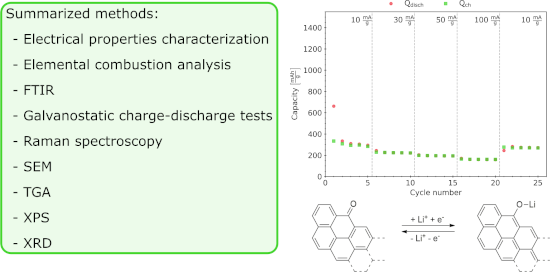
- samples per material, that is, M300, T400, T600, and T800. Raman spectroscopy The structural properties of the rGO paper sheets were studied with Raman spectroscopy (InVia Renishaw spectrometer). The spectra were collected with three accumulations, a 10 s exposure time, and 1% laser power (laser



Competitive helical bands and highly efficient diode effect in F/S/TI/S/F hybrid structures
Beilstein J. Nanotechnol. 2026, 17, 15–23, doi:10.3762/bjnano.17.2
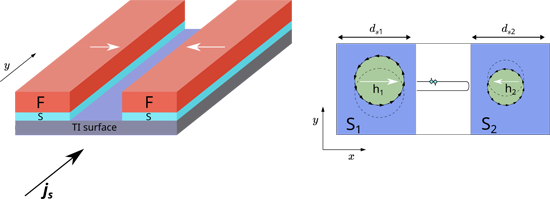
- insulators; Introduction Superconducting nonreciprocal phenomena have been attracting a lot of attention over the last several years [1]. Particularly, the diode effect in superconducting systems has been widely discussed due to its interesting underlying physics and potential application in nondissipative
- [1]. However, it should be emphasized that the lack of inversion symmetry is the implication of the gyrotropy in the structure of the material that supports nonreciprocal transport [39]. On the microscopic level, the lack of inversion symmetry is expressed by the SOC term. In this regard, systems
- (F denotes ferromagnetic layer) hybrid structure depicted in Figure 1. We argue that such a hybrid structure can behave as a system with two helical bands as, for example, noncentrosymmetric superconductors [26][74]. However, the two helical bands in the structure under consideration are coupled not


![[Graphic 16]](/bjnano/content/inline/2190-4286-17-2-i31.svg?max-width=637&scale=1.18182)
![[Graphic 17]](/bjnano/content/inline/2190-4286-17-2-i32.svg?max-width=637&scale=1.18182)


Quantitative estimation of nanoparticle/substrate adhesion by atomic force microscopy
Beilstein J. Nanotechnol. 2026, 17, 1–14, doi:10.3762/bjnano.17.1

- various fields such as energy storage [1], electronics [2], and catalysis [3]. These tiny particles, with sizes typically ranging from 1 to 100 nm, have fundamentally different properties compared to their bulk counterparts because of their large surface-to-volume ratio [4], as well as unique electronic
- applied in contact mode, with nominal force constants of 0.08–0.15 N·m−1 and tip curvature radii smaller than 10 nm. AFM topography images and lateral force data of the samples were processed using the open source software Gwyddion (version 2.63) [30]. For statistical analysis of the measured data
- , several independent areas were measured on each sample, ranging from 1 × 1 µm2 to 10 × 10 µm2. To obtain high-quality images, the scan speed was set to 750 nm·s−1 with 512 lines per frame, typically taking 30–35 min for a 10 × 10 µm2 image. The wedge method measurements were conducted at 60% relative



Internal 3D temperature mapping in biological systems using ratiometric light-sheet imaging and lipid-coated upconversion nanothermometers
Beilstein J. Nanotechnol. 2025, 16, 2306–2316, doi:10.3762/bjnano.16.159
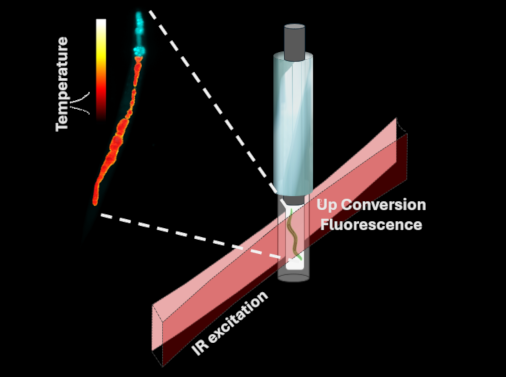
- biocompatibility, low cytotoxicity, and stable optical and chemical properties. Additionally, given the conditions commonly presented in biological samples, these materials should also remain unaffected by changes in pH, concentration, ionic strength, and viscosity [1]. Traditional thermometers are macroscopic
- materials have been developed, including nanodiamonds [32], quantum dots [17][28], nanodots [11][13][33], fluorescent-based molecular systems [1][8][34], and lanthanide (Ln3+)-doped materials [10][35][36][37]. Among all these alternatives, lanthanide-doped materials offer a distinct advantage: upconversion
- phototoxicity [38]. The ladder-like energy level structure of Ln3+ ions enable efficient photon UC of near-infrared (NIR) light, even with moderate excitation intensities (1–103 W·cm−2) attainable with gas-based lamps or continuous wave lasers [39]. Temperature measurements using Ln3+-doped nanomaterials have


Terahertz-range on-chip local oscillator based on Josephson junction arrays for superconducting quantum-limited receivers
Beilstein J. Nanotechnol. 2025, 16, 2296–2305, doi:10.3762/bjnano.16.158
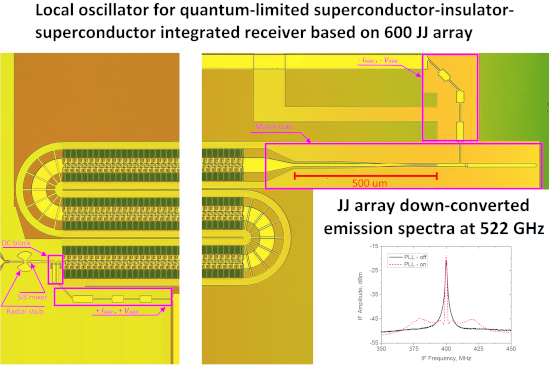
- junctions have ultimate characteristics unreachable to devices based on other principles [1][2][3]. The unique nonlinearity of the current–voltage characteristic (IVC) near the gap voltage of the junction enables the gain of the intermediate frequency (IF) signal after mixing with the radiation from the
- about 1 min, and it is done after each thermal cycling [13]. Also, the ratio of the radiated power to the consumed DC power is slightly higher than 5%. Some of the aforementioned problems can be solved by the use of Josephson junction arrays as LO for the SIR. The junctions can be fabricated by the use
- The block diagram of the SIR is shown in Figure 1. The incoming RF signal is fed into the antenna and then goes into the mixer, where it is mixed with the signal from the LO. Due to the extreme nonlinearity of the SIS mixer, the signal is down-converted to the IF with moderate loss [43]. In order to


Improving magnetic properties of Mn- and Zn-doped core–shell iron oxide nanoparticles by tuning their size
Beilstein J. Nanotechnol. 2025, 16, 2285–2295, doi:10.3762/bjnano.16.157
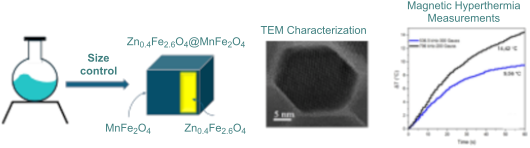
- unique magnetic properties, small size, and biocompatibility, which enable them to be used in a wide range of biomedical applications. These applications include magnetic resonance imaging, magnetic separation, targeted drug delivery, and hyperthermia [1][2]. Magnetic hyperthermia has been extensively
- NPs (see Table 1) and 52.61 mL of benzyl ether (276.77 mol) [14][15]. The mixture was heated under an argon atmosphere (flow rate of ≈100 mL·min−1) at a rate of 5 °C·min−1 to 290 °C and maintained at this temperature for 30 min. After cooling to room temperature under ambient conditions, ethanol (100
- with an MnFe2O4 shell, targeted to be 5 nm in thickness, by mixing iron(III) acetylacetonate (0.18 mmol) and manganese(II) acetylacetonate (0.33 mmol) in the presence of oleic acid (see Table 1) and benzyl ether (52.5 mmol). After adding the Zn0.4Fe2.6O4 nanoparticles suspended in hexane, the mixture



Visualizing nanostructures in supramolecular hydrogels: a correlative study using confocal and cryogenic scanning electron microscopy
Beilstein J. Nanotechnol. 2025, 16, 2274–2284, doi:10.3762/bjnano.16.156
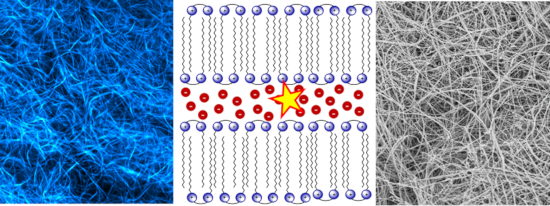
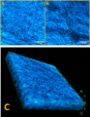
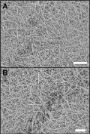
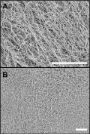
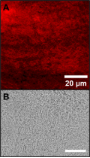
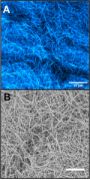
- ; microscopies; nanostructure; supramolecular hydrogel; Introduction Hydrogels, whether based on self-assembling molecules or cross-linked polymers, are useful in fields ranging from tissue engineering to drug delivery and biosensing [1][2][3][4][5]. Their high water content and soft, porous structure make them
- diketopyrrolopyrrole bis(carboxylic acid) (DPP-BC) (Figure 1), are probed using confocal fluorescence microscopy and cryo-SEM. ZnPc is a water-soluble fluorophore with a conjugated and mainly flat macrocyclic structure, characterized by strong absorption in the red region of the visible spectrum, and has been
- . The comparison is important because it could reveal an effect of the probe on the morphology of the network of fibres. The gel network itself is formed by the self-assembly of 1,3-bis[(3-octadecyl-1-imidazolium)methyl]benzene dibromide (1·2Br) in a 1:1 water–ethanol solvent system [20][21] and is made



Geometry-controlled engineering of the low-temperature proximity effect in normal metal–superconductor junctions
Beilstein J. Nanotechnol. 2025, 16, 2265–2273, doi:10.3762/bjnano.16.155
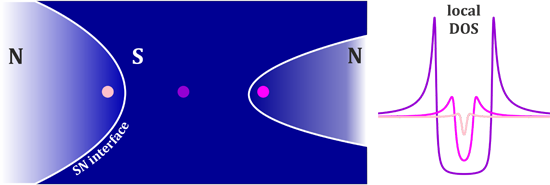
- to it. This phenomenon, known as the proximity effect, enables normal material to support supercurrents and to exhibit a reduced density of states near the Fermi level, where a gap opens in the single-particle spectrum as electrons form into Cooper pairs [1][2][3][4]. At the same time, unpaired
- Tc, in the ballistic regime, the pair amplitude decays exponentially in a NM according to the expression where the characteristic decay length is given by in clean metals and K−1 = ξn in dirty metals. Here, vn is the Fermi velocity in the NM, and z is the distance from the NS interface [2][7][26][27
- spatial dimensionality of the system [33], taking values of α = 1 in 3D [7][29][32], α = 1/2 in 2D [34][35], and α = 0 in 1D [36]. This behavior holds for distances z smaller than both the thermal decay length and the mean free path l = vnτ, where τ is the impurity scattering time [32]. Beyond these


Chiral plasmonic nanostructures fabricated with circularly polarized light
Beilstein J. Nanotechnol. 2025, 16, 2245–2264, doi:10.3762/bjnano.16.154
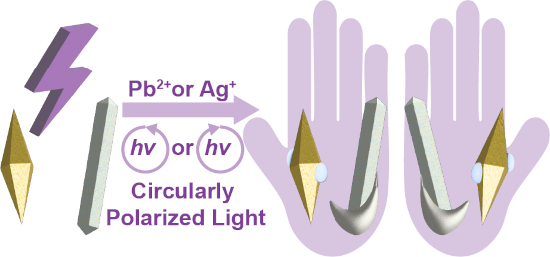
- organisms are almost exclusively left-handed, while sugars are predominantly right-handed [1][2]. This creates a chiral environment in the human body, where chiral drug molecules can exhibit enantioselective chemical and pharmacological behavior [3]. One example is the drug thalidomide, which was prescribed
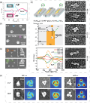
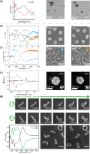
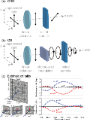
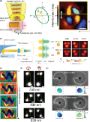
- the advances in the fabrication of cPNSs using CPL. Section 1 will present a brief background that summarizes representative fabrication technologies for cPNSs, which employ various strategies. Section 2 will explore the mechanisms by which CPL leads to the formation of cPNSs and summarize the
- different cPNSs synthesized using this method. Section 3 will discuss universal metrics to characterize cPNSs. Furthermore, Section 4 will examine the roles of cPNSs in various applications. Finally, we will share insights into future directions for cPNSs fabricated using CPL. Review 1 Evolution of chiral





Optical bio/chemical sensors for vitamin B12 analysis in food and pharmaceuticals: state of the art, challenges, and future outlooks
Beilstein J. Nanotechnol. 2025, 16, 2207–2244, doi:10.3762/bjnano.16.153
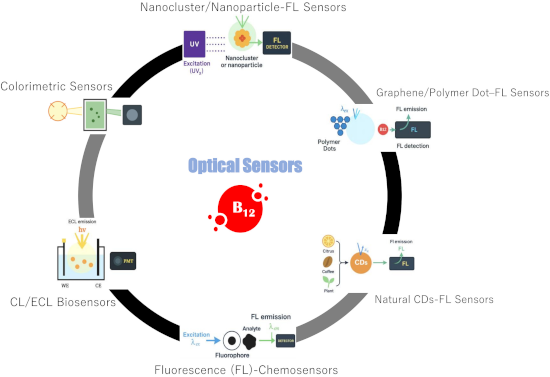
- ; molecularly imprinted polymers (MIPs); nanobiosensor; Introduction Micronutrients including vitamins and minerals play key roles in modulating body growth, preventing a wide range of diseases and disorders, and maintaining general health and wellness [1][2]. Apart from vitamin D, which the body can
- levels of VB12 in foods and pharmaceuticals is crucial for health management and disease prevention. VB12 is also known as cobalamin due to the presence of a central cobalt ion (Co2+) within the structure of its modified tetrapyrrole ring (Figure 1). A unique feature of the tetrapyrrole-derived ring in
- ligand, which can vary among different biochemical forms (–R, Figure 1), including hydroxy (OH–, OHCbl), cyanide (CN–, CNCbl), methyl (CH3–, MeCbl), and adenosyl (AdoCbl) [2]. Nonetheless, CNCbl is the main form of this vitamin, as cyanide is commonly used to extract and purify the vitamin during the


Electromagnetic study of a split-ring resonator metamaterial with cold-electron bolometers
Beilstein J. Nanotechnol. 2025, 16, 2199–2206, doi:10.3762/bjnano.16.152
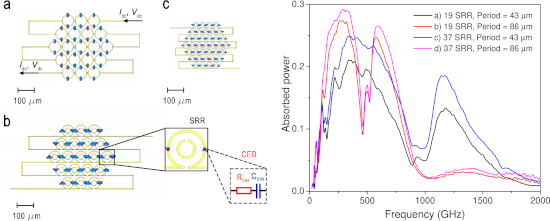
- ; metamaterial; split-ring resonator; Introduction Highly sensitive receivers with broadband antennas are of significant interest for advanced spectroscopic applications and various radioastronomy tasks [1][2][3][4][5]. In particular, broadband receiving systems are required for use with a Fourier-transform
- CEBs are embedded into the outer ring of each SRR element. In the simulations, each CEB is modeled as an RC circuit (see inset in Figure 1), where Rabs = 75 Ω represents the resistance of the CEB’s normal-metal absorber, and CSIN = 20 fF is the capacitance of the two SIN junctions of the CEB connected
- of dext = 80 μm and an inner ring diameter of dint = 70 μm. The lattice constant (period) of the metamaterial array is P = 86 μm. The total size of the structure is 424 μm. A large-scale SRR has an outer ring with an external diameter of dext,1 = 80 μm and an internal diameter of dint,1 = 70 μm. The


Ultrathin water layers on mannosylated gold nanoparticles
Beilstein J. Nanotechnol. 2025, 16, 2183–2198, doi:10.3762/bjnano.16.151
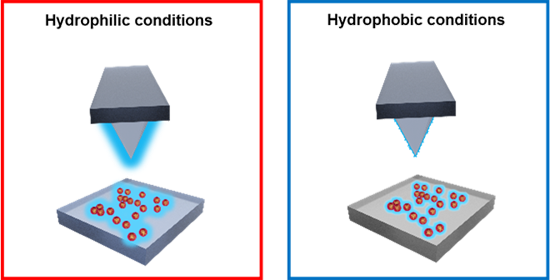
- transmission of airborne viruses, such as influenza. Keywords: AFM; humidity; hydrophilicity; hydrophobicity; nanoparticles; sum frequency generation spectroscopy; viruses; water; wetting; Introduction Gold nanoparticles (AuNPs) have been a staple in biomedical and biophysical research [1][2] for almost a
- properties on particle size and shape has been demonstrated for particle sizes in the 1–100 nm range and on biological interfaces [7]. Limited biocompatibility and high tendency to aggregate in solution inspired new mechanisms of particle biofunctionalization with proteins, lipids, or carbohydrates. Coupling
- thiourea PEG thiol chain; the particles also feature COOH-terminated PEG chains (Figure 1). We used a typical standard PEG coating on AuNPs, again with COOH termini (PEG AuNPs) for comparison. Here, and in the following, we use the established term “polyethylene glycol” (PEG) to designate our relatively



Hartree–Fock interaction in superconducting condensate fractals
Beilstein J. Nanotechnol. 2025, 16, 2177–2182, doi:10.3762/bjnano.16.150
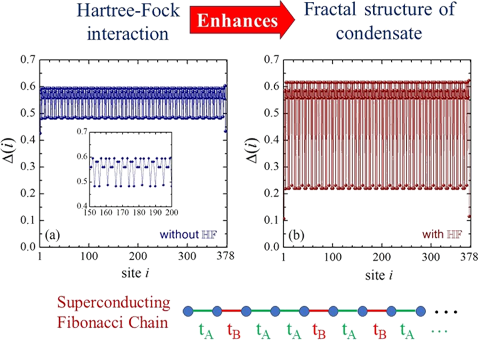
- : Fibonacci chain; fractal superconductivity; Hartree–Fock interaction; quasicrystal; Introduction It is well known, dating back to the classical book by de Gennes [1], that, in conventional superconducting materials, the Hartree–Fock (HF) interaction merely reduces to a shift of the chemical potential, as
- below a critical temperature of Tc ∼ 0.05 K [12]. More recently, in 2024 and 2025, much higher critical temperatures of Tc ∼ 1 K and Tc ∼ 5.47 K were reported in van der Waals-layered dodecagonal quasicrystals Ta1.6Te [13] and in a monoclinic approximant to the decagonal quasicrystal Al13Os4[14
- creation operators of an electron with the spin projection σ = (↑,↓) at sites i = 1,…,N, t⟨ij⟩ is the hopping amplitude between the nearest neighboring sites, , and g > 0 is the on-site attractive electron–electron interaction. Within the mean-field approximation, the Hamiltonian in Equation 1 is reduced


Missing links in nanomaterials research impacting productivity and perceptions
Beilstein J. Nanotechnol. 2025, 16, 2168–2176, doi:10.3762/bjnano.16.149
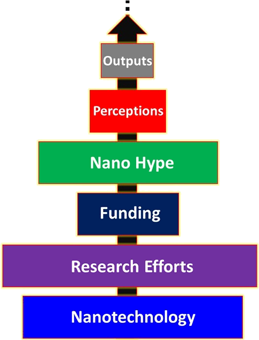
- productive technologies like generative AI, machine learning, and related progress, nanotechnology has not achieved autonomous societal integration. The author argues that without a unified, transparent, and science-driven global regulatory framework, the transformative potential of nanotechnology will
- utilized only within the last century. In fact, several remarkable works and historical examples are well documented and discussed in the literature [1][2][3]. But the true turning point for nanoscience came in 1959, when physicist Richard Feynman delivered his seminal lecture, “There’s Plenty of Room at
- as generative AI, machine learning, and related progress. The latter areas are inherently multidisciplinary, encompassing multiple research domains, with nanotechnology often representing only a component. Nevertheless, from a user‑oriented perspective, generative AI, machine learning, and Internet
Microplastic pollution in Himalayan lakes: assessment, risks, and sustainable remediation strategies
Beilstein J. Nanotechnol. 2025, 16, 2144–2167, doi:10.3762/bjnano.16.148
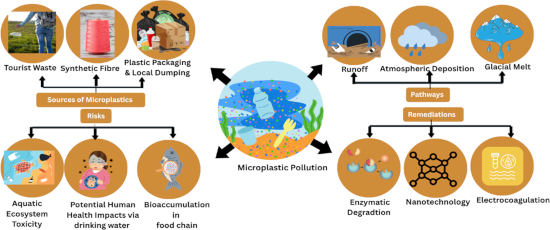
- pollution; nanotechnology; remediation; Review 1 Introduction The Himalayan lakes, often known as the “Water Towers of Asia,” serve an important role in biodiversity conservation, downstream hydraulic management, and supplying freshwater supplies to millions of people. Sau et al. explain that Pangong
- , Tsomoriri, and Tsokar are typical instances of untouched alpine lakes that support indigenous species and lifestyles [1]. The Nainital lakes, including Naini Lake and Bhimtal Lake, are crucial to the region’s environment and tourism. The unique ecosystem of the lakes and rising anthropogenic pressures have
- transparency, a “Preferred Reporting Items for Systematic Reviews and Meta-Analyses” (PRISMA) flow diagram (Figure 1) is provided to describe the article selection process. 3 Vulnerability of Himalayan lake ecosystems to microplastic pollution This section presents the environmental setting and vulnerability


Electron transport through nanoscale multilayer graphene and hexagonal boron nitride junctions
Beilstein J. Nanotechnol. 2025, 16, 2132–2143, doi:10.3762/bjnano.16.147
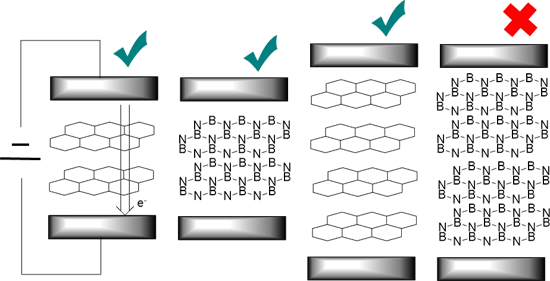
- enabled us to extrapolate trends for electron transport in thicker multilayer carbon and h-BN materials. Keywords: NEGF; DFT; nano-junction; Introduction Multilayer graphene nanomaterials exhibit interesting electronic properties and find application in battery electrode materials [1], electrocatalysis
- -plane and the inter-plane electron transport in nanoscale graphene are strongly related to the overlap integral between the 2pz atomic orbitals (AOs) at adjacent carbon sites given in Equation 1. The overlap integral is a function of the distance and angle between the two 2pz AOs. In-plane overlap has π
- for the Pt atoms and a double-zeta polarized basis set was used for all other atoms. Geometry optimization was performed with the LBFGS algorithm until all forces are converged below 0.05 eV·Å−1. The k-point density was selected to be four k-points per angstrom. In case of NEGF, the k-point density in


Quality by design optimization of microemulsions for topical delivery of Passiflora setacea seed oil
Beilstein J. Nanotechnol. 2025, 16, 2116–2131, doi:10.3762/bjnano.16.146
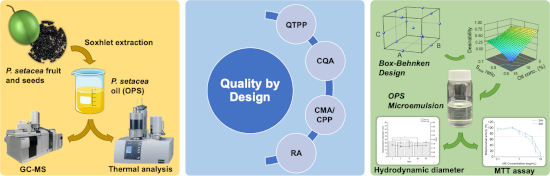
- of fixed oils and bioactive compounds, including flavonoids and alkaloids, which exhibit significant therapeutic potential [1]. While Passiflora edulis, P. alata, and P. incarnata have been extensively studied in phytopharmaceutical research, recent investigations have turned attention toward
- ), followed by gas chromatography coupled with mass spectroscopy (GC–MS) analysis. The relative composition of fatty acids is presented in Table 1, and the corresponding chromatogram is provided in Figure S1 (Supporting Information File 1). The major constituents identified in OPS were linoleic acid (64.69
- healing [17][18][19]. In addition to its chemical characterization, the thermal stability in inert atmosphere (N2) of OPS was assessed. Thermogravimetric analysis (TGA) revealed an initial mass loss of less than 1% (Tonset = 60 °C), likely associated with the evaporation of residual solvent entrapped in


Rapid synthesis of highly monodisperse AgSbS2 nanocrystals: unveiling multifaceted activities in cancer therapy, antibacterial strategies, and antioxidant defense
Beilstein J. Nanotechnol. 2025, 16, 2105–2115, doi:10.3762/bjnano.16.145
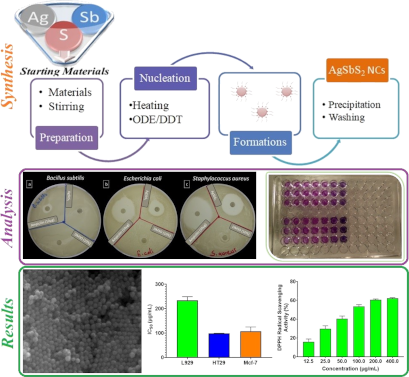
- years, the integration of science and technology has been well orchestrated to address challenges in medicine and health sciences and to evaluate therapeutic aspects [1]. This integration has contributed to the development of a more efficient healthcare system, innovative nanomedical tools and advanced
- dimensions in the nanoscale range of approximately 1–100 nm; it has been considered important for the study of biological issues, and techniques and methods suitable for this approach have been developed and are still being developed by researchers [3][4]. Nanoparticles possessing distinctive physical
- ) chloride (SbCl3, ≥99.95%), 1-octadecene (ODE, 90%), and ethanol were obtained from Sigma-Aldrich. Toluene was obtained from VWR. 1-Dodecanethiol (1-DDT, C12H26S) was purchased from Alfa Aesar. Rapid synthesis of AgSbS2 NCs Cubic-phase silver antimony sulfide NCs (AgSbS2 NCs) were synthesized by hot


Toward clinical translation of carbon nanomaterials in anticancer drug delivery: the need for standardisation
Beilstein J. Nanotechnol. 2025, 16, 2092–2104, doi:10.3762/bjnano.16.144

- energy sectors (Figure 1). NMs have seen use as antimicrobial agents [1], catalysts [2], bioimaging agents [3][4][5][6], magnetic particle imaging agents [7], nanofluids [8], antiviral agents [9], photothermal convertors [10], and in environmental remediation [11]. Topically, the biomedical applications
- adverse side effects, while also losing efficacy as cancer cells develop resistance. Within chemotherapy, various drug delivery methods exist, each with its advantages and limitations (refer to Supporting Information File 1, Table S1). The choice depends on the patients’ needs and the type of cancer
- standardisation, and interdisciplinary collaboration. An overview of key production challenges is provided in Table 1. The lack of standardised methods for the synthesis and characterisation of CNMs is a major challenge in the field of nanotechnology. CNMs, such as carbon nanotubes and graphene, have unique