Search results
Search for 中国兵书集成 第42册 pdf in Full Text gives 1460 result(s) in Beilstein Journal of Nanotechnology. Showing first 200.
Exploring the potential of polymers: advancements in oral nanocarrier technology
Beilstein J. Nanotechnol. 2025, 16, 1751–1793, doi:10.3762/bjnano.16.122
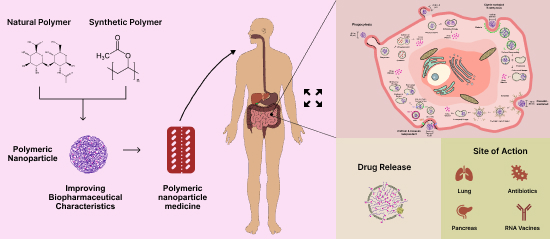
- ][42]. These strategies involve dissolving or dispersing pre-existing polymers in appropriate solvents, followed by NP formation through approaches such as nanoprecipitation, solvent diffusion-emulsification, solvent evaporation, ionic gelation, and dialysis. Each technique is intrinsically linked to


Advances of aptamers in esophageal cancer diagnosis, treatment and drug delivery
Beilstein J. Nanotechnol. 2025, 16, 1734–1750, doi:10.3762/bjnano.16.121
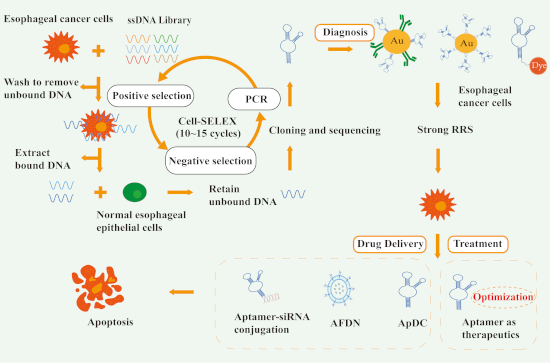
- biomarkers through this dual action [42][43] provides a powerful tool for early diagnosis of EC. Aptamers have brought novel contributions and developments in diagnosis, treatment, and drug delivery of EC in recent years. The aim of this paper is to elucidate the role of aptamers as biosensors, targeted
- peptide aptamer p42, which can inhibit the proliferation, migration, and invasion of ESCC tissues. It was confirmed that synthetic peptide 42 similarly inhibits SOX2 in vitro and in vivo, which may overcome drug resistance to some extent. Proteomic analysis revealed significant changes in the levels of


Multifunctional anionic nanoemulsion with linseed oil and lecithin: a preliminary approach for dry eye disease
Beilstein J. Nanotechnol. 2025, 16, 1711–1733, doi:10.3762/bjnano.16.120
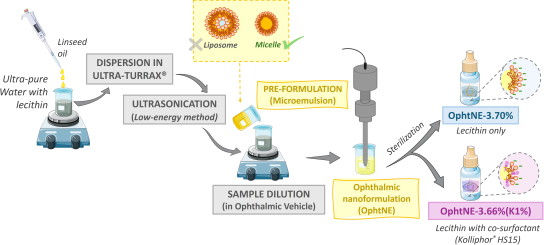
- , homogeneity, and stability in colloidal systems are influenced by component proportions (surfactant, oil, and co-surfactant), emulsification methods (low-energy or high-energy techniques) [40][41][42], and intrinsic properties like linseed oil viscosity and lecithin’s molecular structure [43]. These last



Beyond the bilayer: multilayered hygroscopic actuation in pine cone scales
Beilstein J. Nanotechnol. 2025, 16, 1695–1710, doi:10.3762/bjnano.16.119
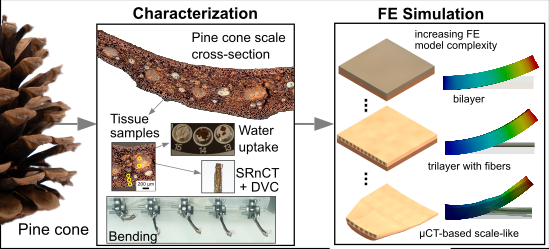
- analyses, and visualization were done with Python (ver. 3.12.8) using the packages pandas (ver. 2.2.3) [42], scipy (ver. 1.14.1) [43] and seaborn (ver. 0.13.2) [44]. The threshold of statistical significance was set at p < 0.05. Results Gravimetric water uptake The gravimetric water uptake measurements


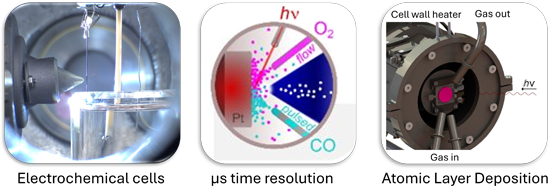
Ambient pressure XPS at MAX IV
Beilstein J. Nanotechnol. 2025, 16, 1677–1694, doi:10.3762/bjnano.16.118
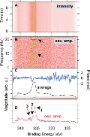
- elsewhere [42][43] revealed an oscillatory response as highlighted by the black arrows in (Figure 8B) at the driving frequency of the gas pulses and higher harmonics. If the magnitude and phase of the Fourier transform at the fundamental frequency (i.e., 10 Hz) are extracted and plotted (Figure 8C), a clear





Prospects of nanotechnology and natural products for cancer and immunotherapy
Beilstein J. Nanotechnol. 2025, 16, 1644–1667, doi:10.3762/bjnano.16.116
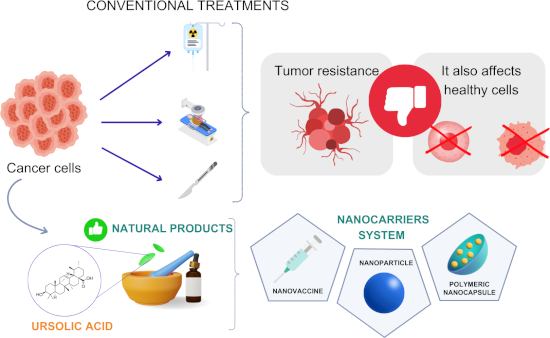
- used as therapeutic agents to treat diseases and maintain health and wellness [42]. In recent years, treatments involving natural products have seen significant growth in academia. Historically, natural products have made up 23.5% of approved medicines over the past 40 years. However, current


Venom-loaded cationic-functionalized poly(lactic acid) nanoparticles for serum production against Tityus serrulatus scorpion
Beilstein J. Nanotechnol. 2025, 16, 1633–1643, doi:10.3762/bjnano.16.115
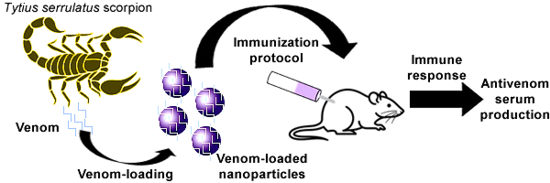
- as the mean diameters of nanoparticles (Figure 2). Physical stability assay Distinct NPs with venom-loaded formulations were analyzed for particle size and PDI (Figure 3). The tracking was accomplished for 42 days (six weeks) and the formulations do not show significant differences in particle size
- parabolic diffusion model. This mathematical model suggests that the release mechanism of venom-loaded PLA nanoparticles was controlled by diffusion dependent on the protein-loading level [18]. These results corroborate with previous studies that used nanoparticles for venom protein delivery [42][43


Bioinspired polypropylene-based functionally graded materials and metamaterials modeling the mistletoe–host interface
Beilstein J. Nanotechnol. 2025, 16, 1592–1606, doi:10.3762/bjnano.16.113
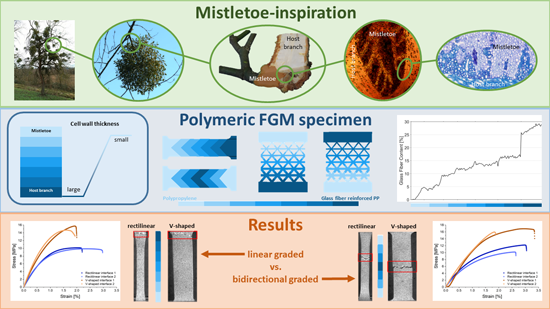
- and the glass fibers [42][43]. All scans reveal the random orientation of the glass fibers in the PP matrix, with small areas of identical orientation being explained by the fiber alignment in the raw pellets (Figure 4C). Some distinct bright areas are visible at the edges of the specimen (Figure 4B


Few-photon microwave fields for superconducting transmon-based qudit control
Beilstein J. Nanotechnol. 2025, 16, 1580–1591, doi:10.3762/bjnano.16.112
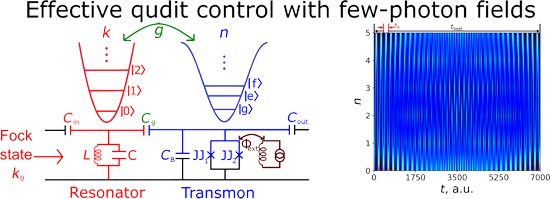
- photons, k0) enters the resonator [37][38][39][40][41][42] with variable frequency detuning Δω between the resonator and the artificial atom. The time evolution of the quantum state of the transmon qudit, the populations of its eigenstates, and the number n of excitations induced in the superconducting


Transient electronics for sustainability: Emerging technologies and future directions
Beilstein J. Nanotechnol. 2025, 16, 1545–1556, doi:10.3762/bjnano.16.109

- environmental cues [37][40][41]. Perspective Expanding the material palette for biodegradable electronics The elucidation and experimental validation of the biodegradation mechanism of single-crystalline silicon [14][42][43][44] marked a significant turning point in the development of bioresorbable electronics
- , offering the potential to replace conventional high-performance silicon-based devices with transient alternatives. In aqueous environments, silicon undergoes degradation via well-defined mechanisms with the rate of dissolution being highly sensitive to external conditions [42][44]. Elevated temperatures
- silicon, while amorphous silicon exhibits the highest degradation rate among them [45]. Interestingly, doping can lead to a retardation of degradation [42], resembling the etch-stop phenomenon in the potassium hydroxide process. This newfound understanding of biodegradability of electronic-grade silicon


Influence of laser beam profile on morphology and optical properties of silicon nanoparticles formed by laser ablation in liquid
Beilstein J. Nanotechnol. 2025, 16, 1533–1544, doi:10.3762/bjnano.16.108
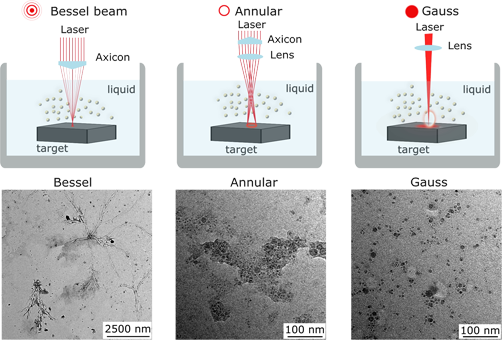
- bandgap characteristics are typical; therefore, the value of n was chosen as 2. Note that silicon is known to have different crystal structures, whose optical properties may vary. Furthermore, size effects are also influencing the optical properties of the resulting NPs [42]. As shown in [42], the bandgap


Dendrimer-modified carbon nanotubes for the removal and recovery of heavy metal ions from water
Beilstein J. Nanotechnol. 2025, 16, 1522–1532, doi:10.3762/bjnano.16.107

- reagents or solvent systems [39][40]. DESs are formed through hydrogen bonding between two solid components resulting in eutectic liquids having a melting point lower than those of the individual components [41][42]. They offer advantages such as simple synthesis, low cost, and broad applications in


Cross-reactivities in conjugation reactions involving iron oxide nanoparticles
Beilstein J. Nanotechnol. 2025, 16, 1504–1521, doi:10.3762/bjnano.16.106
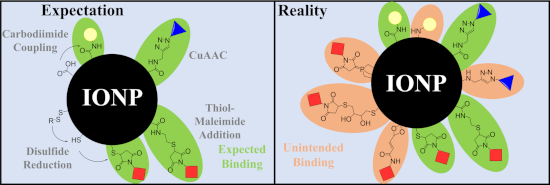
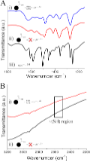
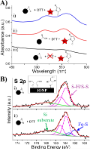
- is also assumed that the multifunctional ligands used for the stabilization of the IONPs themselves bind with a single binding mode, which may be an incorrect assumption that can impact downstream functionalization [42]. For the purposes of multifunctional IONPs, which can possess complex, modular
- derivative, which bears a carboxylic acid group, capable of ionizing in solution (pKa = 4.46) [49]. The normal binding mode of 3,4-DHBA to the IONP surface is through its catechol group [42], which has an exceptionally high affinity for Fe3+ [48], leaving its carboxylic acid group solution-exposed. We take
- tend to react faster and form more stable products than amines [58]. The extent to which 3,4-DHBA ligands are oxidized to quinones (or semiquinones) on the IONP surface is not known, and FTIR analysis provides ambiguous evidence of their presence [42]; however, we must keep these possible reaction







Nanomaterials for biomedical applications
Beilstein J. Nanotechnol. 2025, 16, 1499–1503, doi:10.3762/bjnano.16.105
- medicine. They not only enhance what we already have, but also help to develop new types of treatments and diagnostics with more effectiveness. Ongoing research, responsive development, and collaboration might enable nanotechnology to transform modern healthcare on an unprecedented scale [42]. Iqra Zainab
Laser processing in liquids: insights into nanocolloid generation and thin film integration for energy, photonic, and sensing applications
Beilstein J. Nanotechnol. 2025, 16, 1428–1498, doi:10.3762/bjnano.16.104
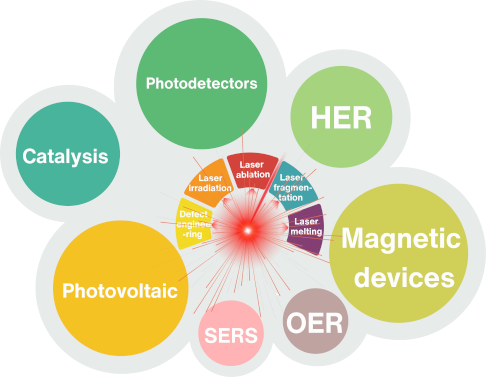
- exposing colloidal NPs dispersed in a liquid medium to pulsed laser irradiation. This technique is known as pulsed laser melting in liquids (PLML) [6][41][42]. PLML involves heating and melting of raw NPs with unfocused laser pulses, leading to their aggregation and the formation of submicrometer spherical
- model, which was experimentally validated. In 2010, as research on pulsed laser irradiation progressed, Koshizaki’s group explored the potential of non-focused laser beams with moderate fluence, lower than the ablation threshold, to irradiate colloidal NPs [42][48][49][64][65][66][67]. Their findings
- through the interaction of the electromagnetic waves with the electrons of the NPs, causing collective motion in metallic particles or perturbations in the electronic orbitals of non-metallic NPs [42][43]. In the case of non-metals, nanosecond laser pulses transfer energy from electrons to phonons






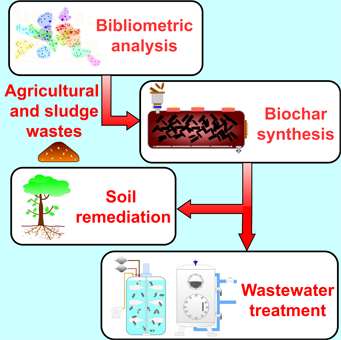
The role of biochar in combating microplastic pollution: a bibliometric analysis in environmental contexts
Beilstein J. Nanotechnol. 2025, 16, 1401–1416, doi:10.3762/bjnano.16.102
- , enhanced diffusion, surface adsorption, and cation–π electron interactions were observed at 550 °C in Polygonum amphibium L. biochar. However, pyrolysis temperatures above 550 °C led to reduced stability [42]. Similarly, pyrolysis at 700 °C can increase SSA but may degrade oxygen-containing functional
- Information File 1, covering a range of MPs, including PE, PS, polyamide (PA), and mixtures such as LDPE, polyethylene terephthalate (PET), PA, polycarbonate, PE, PS, and PVC [33][42][66][67]. Among these, PS is frequently utilized as a model MP due to its uniform composition and quantifiability, making it a
- , adhering to second-order reaction kinetics [42]. In another approach, filtration through biochar derived from banana peel achieved a removal efficiency of up to 92.16% for PS particles sized 150–300 µm [67]. An even higher removal efficiency, reaching 99%, was observed in a dual-layer filtration model



Synthesis and antibacterial properties of nanosilver-modified cellulose triacetate membranes for seawater desalination
Beilstein J. Nanotechnol. 2025, 16, 1380–1391, doi:10.3762/bjnano.16.100
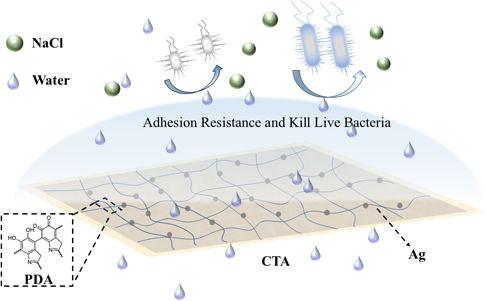
- (NH3)2]+ ions into Ag nanoparticles, which are then immobilized onto CTA membrane (Supporting Information File 1, Figure S1b,c) [40][41][42][43]. This process bypasses the need for conventional environmentally unfriendly oxidation and activation processes, as reported in the literature [44][45][46


Enhancing the therapeutical potential of metalloantibiotics using nano-based delivery systems
Beilstein J. Nanotechnol. 2025, 16, 1350–1366, doi:10.3762/bjnano.16.98
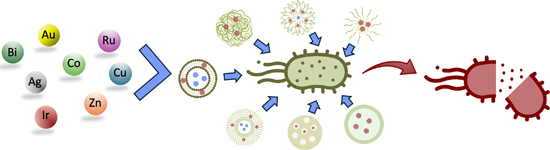
- systems [40][41]. Other bacteria, such as Staphylococcus aureus express alpha-toxin, which perforates the membrane of liposomes and can be utilized to trigger the release of antibiotics from the drug delivery system at the target site [42]. Also, enhanced permeability and retention (EPR) is observed at


Ferroptosis induction by engineered liposomes for enhanced tumor therapy
Beilstein J. Nanotechnol. 2025, 16, 1325–1349, doi:10.3762/bjnano.16.97
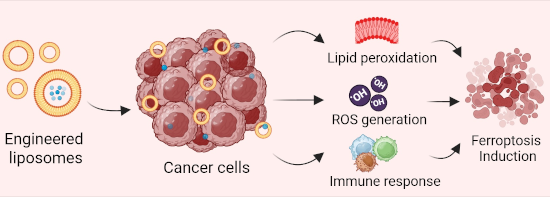
- ) enzymes, which cause direct oxidation of PUFA-containing lipids, ultimately leading to the formation of (15-hydroperoxy)-diacylated polyethylene species with two or three oxygen atoms for the onset of ferroptosis [42]. Due to the role of lipid peroxidation in triggering ferroptosis-induced damage


Deep-learning recognition and tracking of individual nanotubes in low-contrast microscopy videos
Beilstein J. Nanotechnol. 2025, 16, 1316–1324, doi:10.3762/bjnano.16.96
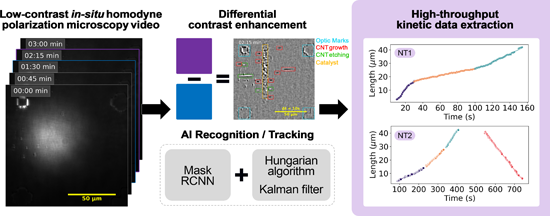
- parameters derived from manual and AI-assisted analyses. Supporting Information Supporting Information includes a PDF file with the expanded description of data processing and ten videos derived from two distinct experimental samples. The videos (Supporting Information Files 2–11) illustrate various stages
- the left side and bounding boxes on the right. Supporting Information File 42: This video shows raw, fixed-frame, and rolling-frame (differentially processed) in situ sequences. Supporting Information File 43: This video shows an uncompressed .tiff image sequence of the raw sequence corresponding to


Wavelength-dependent correlation of LIPSS periodicity and laser penetration depth in stainless steel
Beilstein J. Nanotechnol. 2025, 16, 1302–1315, doi:10.3762/bjnano.16.95
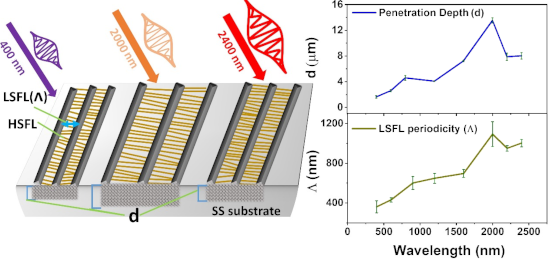
- incident polarization [40][41][42][43][44][45]. A recent review by Jörn Bonse and Stephan Gräf provides a comprehensive classification based on materials and associated theories [46]. Two primary classes of theories – electromagnetic and matter reorganization – have been proposed to explain LIPSS formation




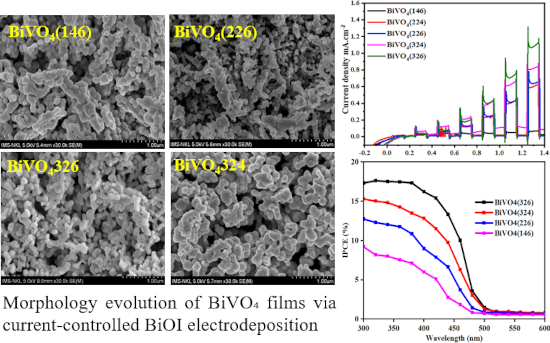
Enhancing the photoelectrochemical performance of BiOI-derived BiVO4 films by controlled-intensity current electrodeposition
Beilstein J. Nanotechnol. 2025, 16, 1289–1301, doi:10.3762/bjnano.16.94
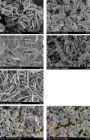
- of monoclinic BiVO4 (JCPDS PDF #14-0688) and fluorine-doped tin oxide (FTO) substrate (JCPDS PDF #46-1088) [21][22][23]. The peaks at approximately 28.9°, 30.6°, 34.6°, and 35.2° were assigned to the (110), (121), (040), (200), and (002) planes of monoclinic BiVO4, respectively. Notably, the (121
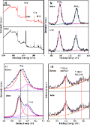
- oxygen vacancies [40][41][42]. Notably, post-PEC testing revealed an increase in the intensity of the oxygen vacancy-related component, suggesting the formation or activation of surface defects during prolonged photoelectrochemical operation. These oxygen vacancies are known to play a crucial role in



Acrocomia aculeata oil-loaded nanoemulsion: development, anti-inflammatory properties, and cytotoxicity evaluation
Beilstein J. Nanotechnol. 2025, 16, 1277–1288, doi:10.3762/bjnano.16.93
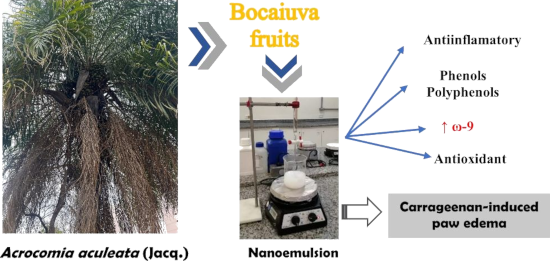
- requires the determination of key formulation parameters, including the required hydrophilic–lipophilic balance (HLBr), droplet size, and polydispersity index (PDI) [42][43][44]. In this study, the Acrocomia aculeata oil nanoemulsion (AANE) exhibited a uniform droplet size distribution and a stable PDI
- stirring (400 rpm). Stirring was maintained for 20 min after adding the total volume of water. Finally, the initial volume of the nanoemulsion (50 mL) was restored with deionized water [42]. Required hydrophilic–lipophilic balance (HLBr) Griffin's method determined the hydrophilic–lipophilic balance (HLBr
- electrophoretic light scattering with a Zetasizer Nano-ZS instrument (Malvern, UK). AANE was diluted with Milli-Q water (1:25, v/v). All measurements were performed in triplicate, and results were presented as the mean ± standard deviation [42]. Shelf stability The selected AANE was transferred to an amber vial


Better together: biomimetic nanomedicines for high performance tumor therapy
Beilstein J. Nanotechnol. 2025, 16, 1246–1276, doi:10.3762/bjnano.16.92
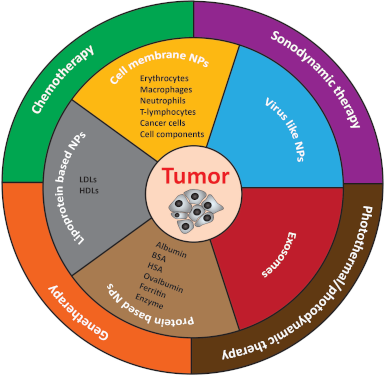
- [41]. Wayteck et al. have prepared liposomes that can hitchhike on cells to the tumor site and get separated to perform their cytotoxic activity [42]. 1.1.5 Cancer cells. Cancer cells establish their own mechanism to escape immune response [43]. They are tightly bound by surface proteins to hinder the






Functional bio-packaging enhanced with nanocellulose from rice straw and cinnamon essential oil Pickering emulsion for fruit preservation
Beilstein J. Nanotechnol. 2025, 16, 1234–1245, doi:10.3762/bjnano.16.91
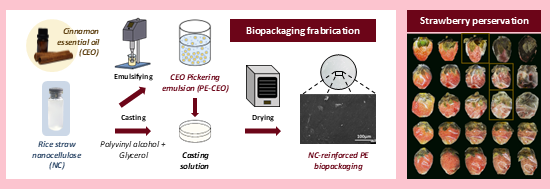
- release [42]. At temperatures above 380 °C, carbonaceous residues decomposed. The addition of NC shifted the degradation onset temperature to a higher range, indicating improved thermal stability. This could be due to the rigid nature of NC particles, which enhance the structural integrity of the
- (cinnamaldehyde and eugenol) [33][52]. The release of CEO from the films was studied over time (Figure 5a). The release pattern had two phases, namely, a fast initial release of 42% within the first 100 min, followed by a slower phase up to 300 min. The fast release happened because some CEO was near the surface
- a bleaching stage were used to extract cellulose from the straw. In the first acid hydrolysis step, the cellulose was treated with 62% H2SO4 solution at a solid-to-liquid ratio of 1:12 (g·mL−1), continuously stirred at a temperature of 40–42 °C for 2 h. The reaction was then quenched by 10-fold