


Search results
Search for 林海雪原第11章概括 in Full Text gives 2634 result(s) in Beilstein Journal of Nanotechnology. Showing first 200.
Modeling magnetic properties of cobalt nanofilms used as a component of spin hybrid superconductor–ferromagnetic structures
Beilstein J. Nanotechnol. 2025, 16, 1557–1566, doi:10.3762/bjnano.16.110
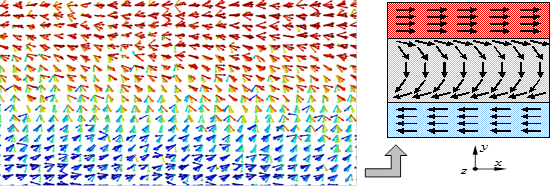
- magnetic heads for recording and reading information, memory cells, and other devices [11] which utilize magnetic properties of materials. Magnetic properties of nanofilms [12][13], in particular cobalt nanofilms, represent an important subject of research in both theoretical and practical fields of


Transient electronics for sustainability: Emerging technologies and future directions
Beilstein J. Nanotechnol. 2025, 16, 1545–1556, doi:10.3762/bjnano.16.109

- rehabilitation [10][11], and orthopedic healing [12], where device functionality is required only for a defined recovery period. In such cases, transient electronic devices offer distinct advantages over conventional implants by providing essential sensing or therapeutic functions during the acute phase and


Influence of laser beam profile on morphology and optical properties of silicon nanoparticles formed by laser ablation in liquid
Beilstein J. Nanotechnol. 2025, 16, 1533–1544, doi:10.3762/bjnano.16.108
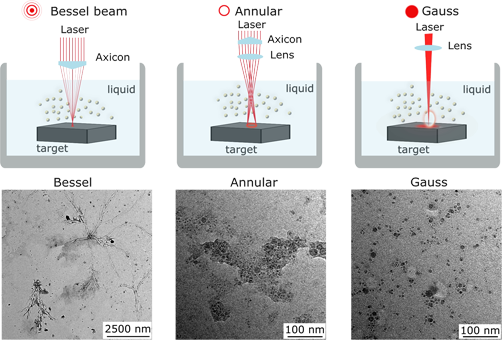
- to alter the properties and morphology of NPs by changing the laser parameters and liquid media [10][11]. The control over the major characteristics of the produced nanomaterials can be achieved by adjustment of several experimental parameters, for example, laser wavelength, fluence, pulse width


Dendrimer-modified carbon nanotubes for the removal and recovery of heavy metal ions from water
Beilstein J. Nanotechnol. 2025, 16, 1522–1532, doi:10.3762/bjnano.16.107

- reverse osmosis [9]. The adsorption process stands out as a promising approach due to its high efficiency, cost-effectiveness, ease of processing, and capability to recover trace metal ions [10][11][12][13]. This process utilizes nanomaterials bearing appropriate functional groups to bind metal ions


Cross-reactivities in conjugation reactions involving iron oxide nanoparticles
Beilstein J. Nanotechnol. 2025, 16, 1504–1521, doi:10.3762/bjnano.16.106
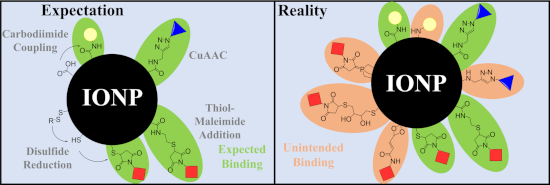
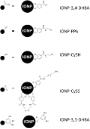
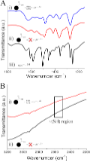
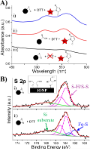
- IONPs, using either amine- or carboxylic acid-functionalized IONPs, especially when biomolecules, such as proteins or peptides, are involved [3][7][8][9][10][11][12][13][14]. Sharpless et al. [6] have generally defined “click chemistry” as chemical processes that are highly selective, have a high







Nanomaterials for biomedical applications
Beilstein J. Nanotechnol. 2025, 16, 1499–1503, doi:10.3762/bjnano.16.105
- their controlled release. They are also being investigated as gene delivery agents since they can transport DNA or RNA, making them a potential candidate for therapies such as gene therapy and RNA-based vaccines [11]. Furthermore, carbon nanotubes have revealed promising results in targeted delivery
Laser processing in liquids: insights into nanocolloid generation and thin film integration for energy, photonic, and sensing applications
Beilstein J. Nanotechnol. 2025, 16, 1428–1498, doi:10.3762/bjnano.16.104
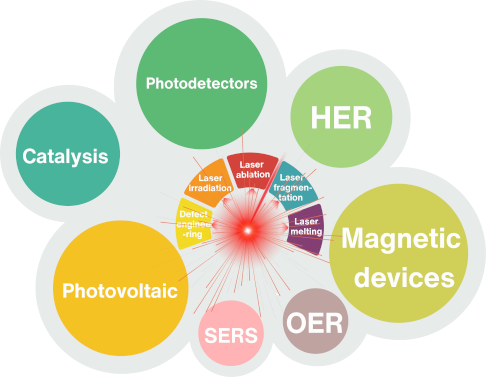
- detailed discussion of their resulting applications is also available [11]. One of the earlier review articles (published in the year 2012) on laser ablation/irradiation explains how to attain nanostructures with various compositions (e.g., metals, alloys, oxides, carbides, and hydroxides) and morphologies
- exploration of the nanoparticle formation mechanism. These advanced analytical methods offer higher temporal and spatial resolutions compared to conventional techniques [22][23][24][25]. A recent review by Byram et al. [11] highlights the significant advancements made in PLAL over the past decade using laser






Photochemical synthesis of silver nanoprisms via green LED irradiation and evaluation of SERS activity
Beilstein J. Nanotechnol. 2025, 16, 1417–1427, doi:10.3762/bjnano.16.103
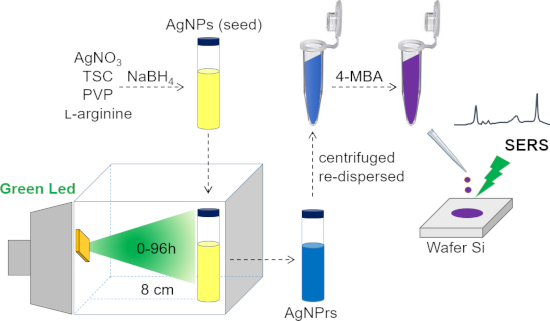
- various solid supports such as glass [11], quartz, silicon, or aluminum foil [12]. A recent trend in the development of practical SERS substrates emphasizes flexibility and portability for field-deployable Raman detection. Accordingly, several groups have developed paper-based [13] or cotton-based [14


The role of biochar in combating microplastic pollution: a bibliometric analysis in environmental contexts
Beilstein J. Nanotechnol. 2025, 16, 1401–1416, doi:10.3762/bjnano.16.102
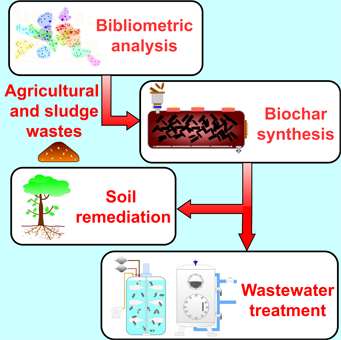
- MPs, underscoring the role of treatment facilities as pathways for MP release into aquatic environments [11]. The ecological and human health risks associated with MPs necessitate urgent mitigation strategies. In Yan’an, China, MP pollution loading indices ranged from 1.00 to 2.48, indicating light
- biochar with a surface area of 368.3 m2·g−1 for sawdust [32]. Post-synthesis modification: Pre-synthesized biochar is immersed in ferric and ferrous solutions at pH 10–11 for 24 h, resulting in Fe3O4 deposition on the biochar surface [45]. The incorporation of functional groups significantly enhances the
- that for nylon, particularly in pore volumes ranging from 1 to 11, due to differences in charge and surface interactions. Conventional MP treatment models using BC include batch tanks and filter columns, as presented in Table S3, Supporting Information File 1. Based on statistical results depicted in



Parylene-coated platinum nanowire electrodes for biomolecular sensing applications
Beilstein J. Nanotechnol. 2025, 16, 1392–1400, doi:10.3762/bjnano.16.101
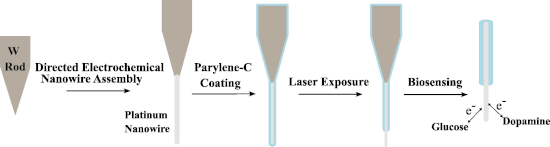
- -volume ratio, enhancing sensitivity and functionalization capabilities. Baetsen-Young et al. used dextrin-capped gold nanoparticles (12 nm) with ssDNA to detect the presence of Pseudoperonospora cubensis DNA, where the results show the ability to detect 18 spores/µL crude extractions [11]. However, the
- voltages were 11 MHz and 9.5 V (−4.75 V to +4.75 V), respectively, for single nanowire growth. During the growth process, the electrode separation was adjusted. Initially, the separation was reduced to a few micrometers to initiate nanowire growth. As the platinum nanowire started growing, the separation


Synthesis and antibacterial properties of nanosilver-modified cellulose triacetate membranes for seawater desalination
Beilstein J. Nanotechnol. 2025, 16, 1380–1391, doi:10.3762/bjnano.16.100
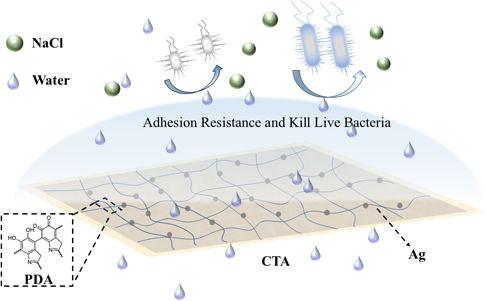
- these, membrane-based desalination stands out due to its numerous advantages, such as low energy consumption, compact footprint, and ease of operation [11][12]. Over the past decade, there has been a substantial increase in research publications related to membrane desalination, with the number reaching


Automated collection and categorisation of STM images and STS spectra with and without machine learning
Beilstein J. Nanotechnol. 2025, 16, 1367–1379, doi:10.3762/bjnano.16.99
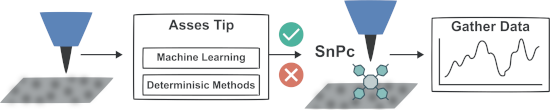
- “flat” DOS, which is typically achieved by using a purely metallic tip. However, most tips do not demonstrate a perfectly flat local density of states (LDOS) as they have a complex electronic structure governed by the geometry of the metallic cluster at the tip apex [8][9][10][11][12]. Non-metallic
- was operated using an RC5 Nanonis controller, with all experiments carried out in UHV (base pressure ≤5 × 10⁻¹¹ mbar) cooled to 5 K. Gold and silver crystals (spl.eu) were prepared via repeated sputter–anneal cycles, sputtering under an argon pressure of ≈5 × 10⁻⁵ mbar, with a beam energy of 1.5 kV




Enhancing the therapeutical potential of metalloantibiotics using nano-based delivery systems
Beilstein J. Nanotechnol. 2025, 16, 1350–1366, doi:10.3762/bjnano.16.98
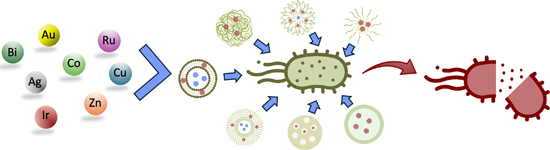
- development are derivatives of already existing ones, which makes them susceptible to existing resistance mechanisms [10]. In 2024, the World Health Organization (WHO) identified only 32 antibiotics under development to address the priority pathogens [11], of which only twelve fulfil all criteria to be
- zebrafish embryo model, showing improved survival rates against pneumococcal infections on treatment with auranofin-loaded NPs compared to free auranofin. In another example, the gold(III) bisdithiolate complex 11 (Figure 4) was encapsulated in block copolymer micelles (BCMs) to improve solubility


Ferroptosis induction by engineered liposomes for enhanced tumor therapy
Beilstein J. Nanotechnol. 2025, 16, 1325–1349, doi:10.3762/bjnano.16.97
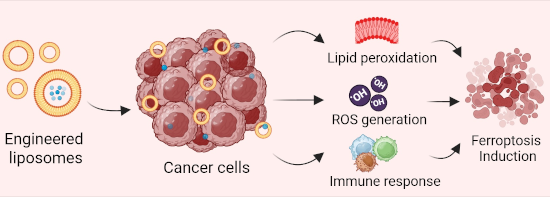
- diseases such as non-alcoholic fatty liver disease, cardiovascular diseases like atherosclerosis, neurological disorders, and chronic wound healing [11][12][13]. Ferroptosis is a unique approach for the simultaneous treatment of cancer cells with chemotherapy, radiotherapy, and immunotherapy to increase
- and aspartate, while in glial cells xag− system can also transport cysteine [71][72]. The xc− system is a transmembrane transport protein with a high affinity for cysteine, composed of Solute Carrier Family 7 Member 11 (SLC7A11) and Solute Carrier Family 3 Member 2 (SLC3A2) as a heterodimer and plays


Deep-learning recognition and tracking of individual nanotubes in low-contrast microscopy videos
Beilstein J. Nanotechnol. 2025, 16, 1316–1324, doi:10.3762/bjnano.16.96
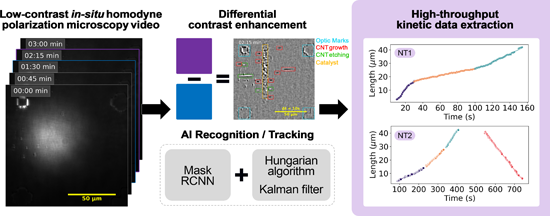
- was implemented using the PyTorch library [11]. For recognizing nanotubes in videos, we employed the Mask-RCNN architecture [12] with the ResNet-FPN neural network combination as a backbone [13][14], pre-trained on the Microsoft COCO-2017 dataset [15][16]. Training was conducted on graphics processing
- steps: (1) object recognition, (2) tracking of recognized objects, (3) verification of tracking, and (4) kinetic curve extraction and analysis. The initial stage of the process utilizes the Mask-RCNN neural network implemented in PyTorch Python library [11]. This architecture integrates several neural
- parameters derived from manual and AI-assisted analyses. Supporting Information Supporting Information includes a PDF file with the expanded description of data processing and ten videos derived from two distinct experimental samples. The videos (Supporting Information Files 2–11) illustrate various stages


Wavelength-dependent correlation of LIPSS periodicity and laser penetration depth in stainless steel
Beilstein J. Nanotechnol. 2025, 16, 1302–1315, doi:10.3762/bjnano.16.95
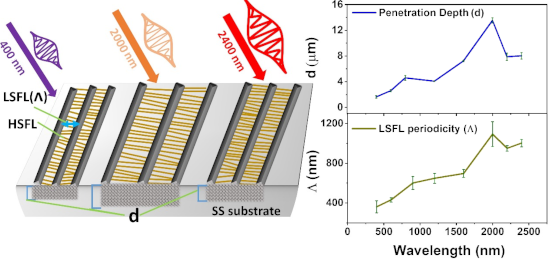
- structuring offers a straightforward means to manipulate the functional and surface characteristics of substrates [10][11][12][13]. The applications span a broad spectrum, encompassing colorization control, self-cleaning surfaces, regulation of cell and bacterial films, antireflective surfaces, surface
- -organization [33] to second harmonic generation [11] and cavitation instability [23][50][51]. Despite numerous studies, the formation mechanism of HSFL and the reason for their shorter periodicity compared to the laser wavelength remain elusive. Our previous work addressed this gap by patterning a single line




Enhancing the photoelectrochemical performance of BiOI-derived BiVO4 films by controlled-intensity current electrodeposition
Beilstein J. Nanotechnol. 2025, 16, 1289–1301, doi:10.3762/bjnano.16.94
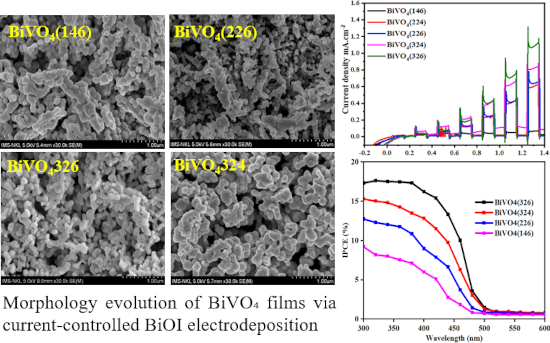
- charge carriers, which severely restrict its PEC performance [10][11][12]. Various strategies have been explored to overcome these challenges and optimize the structural, electronic, and surface properties of BiVO4 [13][14]. Hydrothermal synthesis has been used to produce highly crystalline BiVO4 films



Acrocomia aculeata oil-loaded nanoemulsion: development, anti-inflammatory properties, and cytotoxicity evaluation
Beilstein J. Nanotechnol. 2025, 16, 1277–1288, doi:10.3762/bjnano.16.93
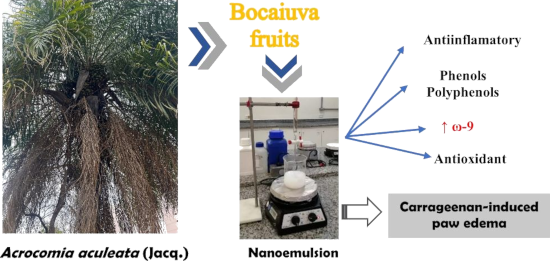
- predominantly [9]. These compounds have the potential to enhance immune response, reduce the risk of degenerative diseases, and contribute to anti-inflammatory activity [10][11], reducing the indiscriminate use of non-steroidal anti-inflammatory drugs (NSAIDs) and corticosteroids in the population [12][13
- hypoglycemic [28], cholesterol-lowering, anti-inflammatory, and antioxidant effects [11][22][23][24][25][26][27][28][29][30]. Bocaiúva oil is widely used to treat cardiovascular, inflammatory, and renal diseases [31][32]. In addition, one of the main characteristics of this oil is its orange color due to the
- acids are higher than those found in extra virgin olive, soybean, corn, sunflower, and flaxseed oils [37][38]. The bocaiúva oil utilized in this study demonstrated excellent quality, as assessed by established parameters for evaluating vegetable oils reported in the literature [11][39]. The results are


Better together: biomimetic nanomedicines for high performance tumor therapy
Beilstein J. Nanotechnol. 2025, 16, 1246–1276, doi:10.3762/bjnano.16.92
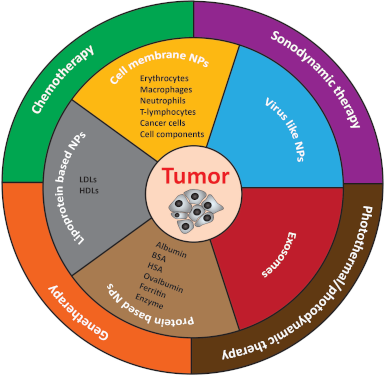
- physicochemical and biological properties, and incredible potential of being therapeutic agent carriers for biomedical applications [10][11]. They are capable to deliver a range of therapeutics including genes, vaccines, biological macromolecules, hydrophobic/hydrophilic drugs, and proteins to certain organs such
- cycle. Thus, the ICD effect promoted maturation of DCs and increased the infiltration of cytotoxic T lymphocytes at the tumor site, thus, reversing the immunosuppressive TME. Notably, mEHGZ in combination with anti-PD-L1 antibody dramatically reduced tumor growth and lung metastasis [139] (Figure 11






Functional bio-packaging enhanced with nanocellulose from rice straw and cinnamon essential oil Pickering emulsion for fruit preservation
Beilstein J. Nanotechnol. 2025, 16, 1234–1245, doi:10.3762/bjnano.16.91
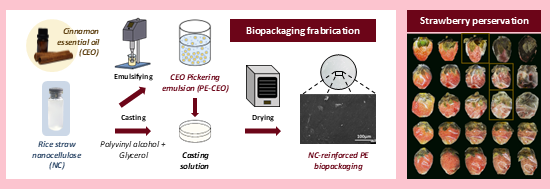
- radical scavenging) were observed. These bioactive properties and the inherent moisture barrier property of the packaging material are utilized for strawberry preservation with a significant preservation time of 21 days compared to control samples that start to grow a white fungus on day 11. This
- degradation byproducts [8][9]. One problem is that the hydrophilic structure of PVA gives it a high water-solubility, water uptake, and worse mechanical properties [10][11]. Different filler and nanomaterials including silica [12][13][14], graphene [15][16], and metals [17][18] have been added to PVA to
- develop composite materials with superior properties. Compared to other inorganic nanomaterials, nanocellulose (NC) has been noted to be a highly potential sustainable and bio-based filler that can be obtained from otherwise wasted agricultural byproducts like rice straw [11][19]. NC can enhance polymer



Hydrogels and nanogels: effectiveness in dermal applications
Beilstein J. Nanotechnol. 2025, 16, 1216–1233, doi:10.3762/bjnano.16.90
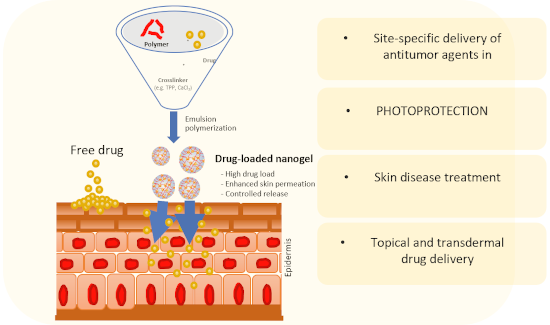
- embedded in hydrophilic solvents, usually water, which can carry active materials and biomolecules [11][12][13]. After hydration in an aqueous environment, the hydrogel structure is created by hydrophilic groups or regions arranged in a polymeric network [14]. Hydrogels present interesting properties
- regenerative tissue engineering [11][12][13][15]. Macroscopic hydrogel networks can be decoupled into microscale particles of any shape, called microgels. When gelatinous particles are configured in the submicrometric range, for example, with diameters in the order of nanometers, they are known as nanogels [16


Investigation of the solubility of protoporphyrin IX in aqueous and hydroalcoholic solvent systems
Beilstein J. Nanotechnol. 2025, 16, 1209–1215, doi:10.3762/bjnano.16.89
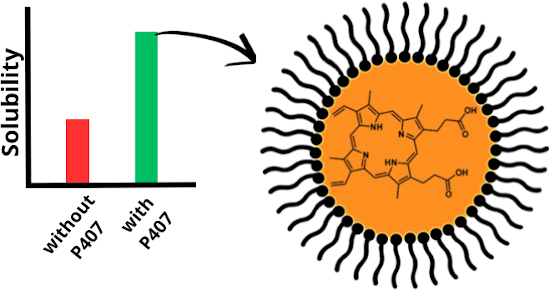
- properties, capable of forming micelles that encapsulate PpIX, increasing its solubility and facilitating its administration [7][11][12]. In this context, poloxamer 407 (P407) is notable for its biocompatibility and ability to form stable nanometric micelles [8][13][14]. Its amphiphilic nature allows for the
- approximately 4 h for EtOH50 and EtOH77, whereas for water and EtOHabs, the equilibrium was established within 30 min, followed by degradation or aggregation. These results support the observations made by Tima and collaborators [11], who found that ethanol–water mixtures offer an improved balance between


Chitosan nanocomposite containing rotenoids: an alternative bioinsecticidal approach for the management of Aedes aegypti
Beilstein J. Nanotechnol. 2025, 16, 1197–1208, doi:10.3762/bjnano.16.88
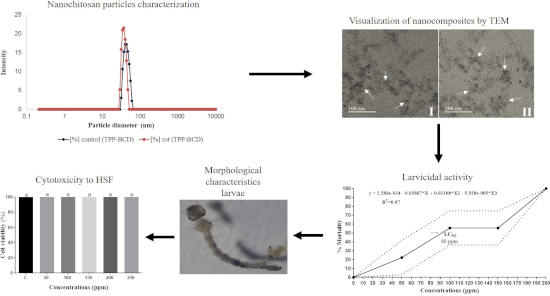
- , Italy, France, and Spain. Recent studies indicate that the risk of dengue transmission has increased by 11% in the past decade due to the climate crisis [1]. From even more recent data from Brazil for the year 2024, dengue cases increased by 297%, and chikungunya cases by 65% compared to the same period
- [11][12]. Furthermore, a chitosan nanocomposite with fungal metabolites has been reported as a promising alternative for managing insect pests of economic importance without affecting non-target organisms [13]. In previous research by our group, two rotenoids were identified and characterized from



Electronic and optical properties of chloropicrin adsorbed ZnS nanotubes: first principle analysis
Beilstein J. Nanotechnol. 2025, 16, 1184–1196, doi:10.3762/bjnano.16.87
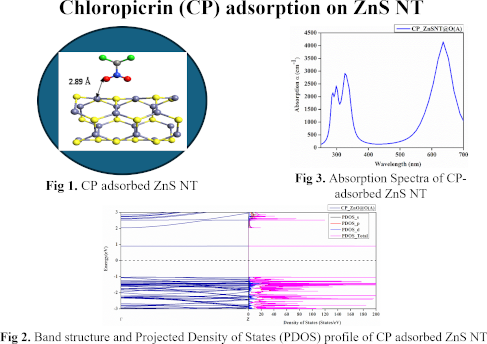
- their bulk counterparts [9][10][11][12][13][14]. Zinc sulfide (ZnS) attracts considerable attention among various nanomaterials due to its unique properties. Nanostructured ZnS with different morphologies, including nanotubes, nanowires, nanoparticles, and nanosheets has been extensively investigated


Mechanical stability of individual bacterial cells under different osmotic pressure conditions: a nanoindentation study of Pseudomonas aeruginosa
Beilstein J. Nanotechnol. 2025, 16, 1171–1183, doi:10.3762/bjnano.16.86
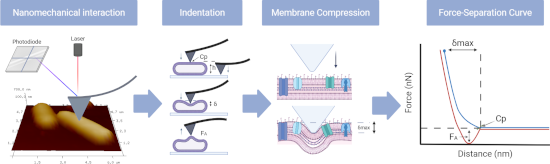
- patients [6][7][8]. As a Gram-negative bacterium, PA is characterized by a distinctive cell wall structure constituted by a thin peptidoglycan layer enclosed by an outer membrane which contains lipopolysaccharides (LPS) [9][10][11]. The outer membrane also contains numerous proteins, lipoproteins, and
- investigated sample [11][43][44]. The force–volume (FV) mode allows for mapping surface physical parameters of the analyzed sample via controlled nanoindentations on a pre-programmed grid on the sample surface [44][45][46][47]. In conventional scanning modes (e.g., contact and tapping) the changes in





