


Search results
Search for 日本10公里记录 in Full Text gives 2649 result(s) in Beilstein Journal of Nanotechnology. Showing first 200.
Ar+ implantation-induced tailoring of RF-sputtered ZnO films: structural, morphological, and optical properties
Beilstein J. Nanotechnol. 2025, 16, 872–886, doi:10.3762/bjnano.16.66
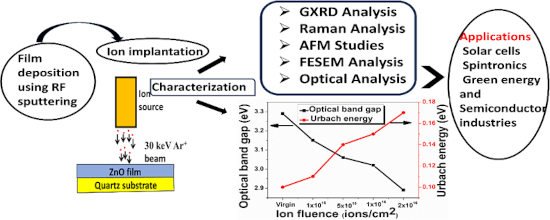
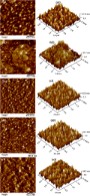
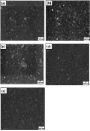
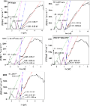
- , defects, and interstitials are induced through the interaction between energetic ions and the host material, resulting in structural modification and thus alteration in lattice dynamics of the host material [10]. The implantation-induced disorder can be qualitatively examined using Raman spectroscopy
- 23 keV co-implanted (H+ and N+ ions) ZnO films. But in these two above-quoted reports nitrogen ions were used for implantation. Nitrogen ions act as n-type doping and can alter the stoichiometry of ZnO films, which is not desirable in certain optoelectronic devices [10][11]. Hence, we have used Ar
- cleaned using acetone and, finally, isopropyl alcohol before the experiment. The sputtering chamber is pumped to a base pressure of 1.2 × 10⁻⁶ Torr; then a mixture of nitrogen and argon gas is introduced into the sputtering chamber with flows of 1.8 and 10.0 sccm, respectively. When the pressure inside






Insights into the electronic and atomic structures of cerium oxide-based ultrathin films and nanostructures using high-brilliance light sources
Beilstein J. Nanotechnol. 2025, 16, 860–871, doi:10.3762/bjnano.16.65

- field of environmental remediation [9]. The related ability of the material to easily store and release oxygen also plays a key role in energy conversion technologies, including fuel cells and batteries [10][11]. Gas sensing applications of ceria-based materials are based on the modifications of the
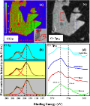
- 3a shows a sequence of μ-XPS valence band spectra acquired using a photon at the Ce3+-related Ce 4d→Ce 4f1 resonance (hν = 120.8 eV) on a Ce0.4Zr0.6O2−x film upon removal and reintroduction of oxygen (PO2 = 1 × 10⁻⁷ mbar) in the experimental chamber. When oxygen is removed (red spectrum in Figure 3b
- in hard X-ray photoelectron spectroscopy (HAXPES) and photoelectrons with kinetic energies of a few kiloelectronvolts are probed, the depth sensitivity can be extended to the topmost 5–10 nm of the sample. The possibility to select a much higher photon energy than at typical laboratory sources has


Synchrotron X-ray photoelectron spectroscopy study of sodium adsorption on vertically arranged MoS2 layers coated with pyrolytic carbon
Beilstein J. Nanotechnol. 2025, 16, 847–859, doi:10.3762/bjnano.16.64
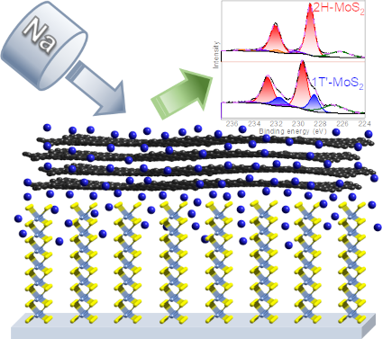
- reversible specific capacity [7][8][9][10][11][12][13][14][15][16]. Moreover, it has been reported that the electrochemical reaction of MoS2 with sodium ions could be reversible in the presence of graphitic components [17]. Wang et al. showed that in an anode material in which graphitic layers were
- decomposition residues. Results and Discussion Figure 1a shows the schematic diagram of the synthesis route of a hybrid film consisting of MoS2 coated with PyC. A molybdenum layer is deposited on a SiO2/Si substrate by magnetron sputtering for a short time of 10 s. This layer interacts with sulfur vapor at a
- different sizes formed during CVD synthesis (Figure 1b). The thickness of the MoS2 film estimated from the cross-sectional SEM image is about 33 nm (Figure 1d). Therefore, it can be estimated that the MoS2 film obtained using a molybdenum layer sputtered for 10 s has a thickness of no more than 4 nm. The


Facile one-step radio frequency magnetron sputtering of Ni/NiO on stainless steel for an efficient electrode for hydrogen evolution reaction
Beilstein J. Nanotechnol. 2025, 16, 837–846, doi:10.3762/bjnano.16.63
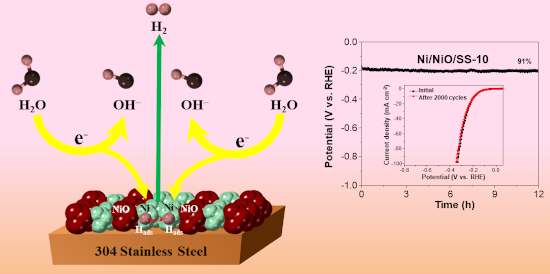
- efficiency. The evaluation of catalytic activities revealed that the optimal sample of Ni/NiO/SS-10 displayed a higher HER performance than bare SS. To produce H2 at a current density of 10 mA·cm−2, this electrode required a low overpotential of 184 mV and demonstrated remarkable durability over 12 h of
- efficiency compared to gasoline, coal, and natural gas. Currently, hydrogen produced by water electrolysis is well accepted as an ecologically clean, sustainable method compared to other techniques, such as coal gasification and steam methane reforming [5][6][7][8][9][10]. According to reported works, Pt
- route with various O2 flow rates, including 5, 10, 15, and 20 sccm. The electrode showed a higher HER efficacy than SS and Ni/SS, indicating the crucial role of NiO in water splitting. Moreover, the optimal sample Ni/NiO/SS-10 exhibited remarkable durability after 12 h of operation, suggesting great


Synthesis and magnetic transitions of rare-earth-free Fe–Mn–Ni–Si-based compositionally complex alloys at bulk and nanoscale
Beilstein J. Nanotechnol. 2025, 16, 823–836, doi:10.3762/bjnano.16.62
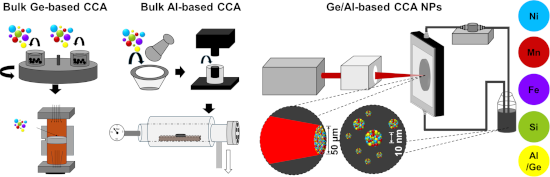
- modification, doping strategies, and material synthesis have been shown to effectively tune the phase transition characteristics, such as the temperature, coercivity (Hc), magnetization, and Curie or Néel temperatures [7][8][9]. For instance Zhou et al. [10] reported that adjusting the composition of NiMnGa to
- process. Initially, elemental Mn (99.2%, 3 µm), Fe (99.96%, 10–20 µm), Ni (99.5%, 45–60 µm), Si (99.999%, 45–60 µm), and Ge (99.99%, <250 µm) powders were mixed in the desired stoichiometric proportions and underwent HEBM in a planetary ball mill for 90 min under argon atmosphere and a ball-to-powder
- diameter = 10 mm and uniaxially compressed at 50 MPa. SPS was carried out at 1073 K with a dwelling time of 10 min and a heating rate of 100 K·min−1. The temperature was measured by a K-type thermocouple placed in a radial hole inside the die. The SPS-processed disks had a thickness of d = 3–4 mm and a


Supramolecular hydration structure of graphene-based hydrogels: density functional theory, green chemistry and interface application
Beilstein J. Nanotechnol. 2025, 16, 806–822, doi:10.3762/bjnano.16.61
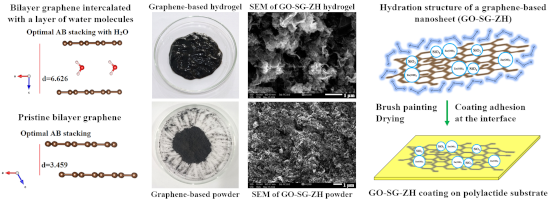
- reduced graphene oxide (RGO), causes the drawbacks of small effective surface area and low dispersibility in media [10]. Several approaches have been reported to prevent the irreversible stacking of graphene-based nanosheets, including electrostatic repulsion, nanoparticle intercalation, three-dimensional
- assembly, and surface hydration [10][11][12]. In our previous works, a number of graphene-based hydrogels (RGO-SnO2, RGO-ZnO, and RGO) were synthesized to evidence the reversible self-assembly of graphene-based nanosheets thanks to water intercalation in the hydrated ensembles [13][14][15][16][17
- natural graphite (Shanghai Zhanyun Chemical) was soaked and agitated in 50 mL of 98% sulfuric acid. The solution of Mn(VII) compound was prepared by dissolving 10 g of potassium permanganate in 100 mL of 98% sulfuric acid. The graphite/H2SO4 suspension was slowly poured into the Mn(VII) solution. A


Morphology and properties of pyrite nanoparticles obtained by pulsed laser ablation in liquid and thin films for photodetection
Beilstein J. Nanotechnol. 2025, 16, 785–805, doi:10.3762/bjnano.16.60
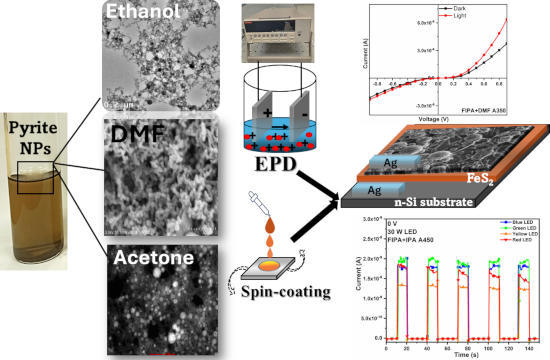
- nanocolloids. The structural, morphological and electrical characterizations of the films are also presented. By sulfurization of the films, phase-pure pyrite thin films are obtained. The photodetection range was up to 785 nm photocurrent in the order of 10−6 to 10−4 A for different annealing conditions and a
- films. The conventional methods reported for the synthesis of pyrite NPs include chemical methods using stabilizing agents [4], high-energy mechanical ball milling [6][7], colloidal pyrite by wet solution/phased chemical approaches [8][9], and hot injection [10][11]. In this study, PLAL was employed to
- impurities on the target surface. The second harmonic output wavelength (532 nm) was employed to irradiate the FeS2 target positioned in the beaker in a vertical configuration of the experiment. For the ablation, a pulsed Nd:YAG laser (Model LQ 629, Solar Laser System) with pulse width of 10 ns, pulse






Changes of structural, magnetic and spectroscopic properties of microencapsulated iron sucrose nanoparticles in saline
Beilstein J. Nanotechnol. 2025, 16, 762–784, doi:10.3762/bjnano.16.59
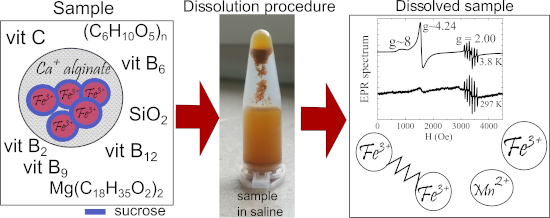
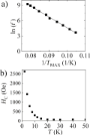
- AC) performed on the undissolved sample revealed the presence of a low temperature blocking process (
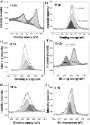
≈ 10 K), and confirmed its superparamagnetic state between 70– 250 K. X-ray photoelectron spectroscopy and Raman studies showed a varied composition of the undissolved sample in which organic
- relaxation processes observed for ferric carboxymaltose are also reported [9]. Conversely, ferrous gluconate, according to [10], exhibit paramagnetic behavior, and the possibility of a short-range magnetic order at low temperatures is only suggested, which means that the iron ions are sufficiently well
- nm, cores, while the thickness of the shell seems constant ≈10 nm. The sucrose shell is homogenous; thus the individual cores appear to be well separated from each other. In Figure 3c, the high-resolution transmission electron microscopy (HRTEM) image presents a single crystalline nanoparticle. The





Thickness dependent oxidation in CrCl3: a scanning X-ray photoemission and Kelvin probe microscopies study
Beilstein J. Nanotechnol. 2025, 16, 749–761, doi:10.3762/bjnano.16.58
- Elettra-Sincrotrone Trieste, Strada Statale 14, AREA Science Park, 34149 Trieste, Italy Dipartimento di Scienze Fisiche e Chimiche (DSFC) Università degli Studi dell’Aquila, Via Vetoio 10 67100 L’Aquila, Italy CNR-SPIN UoS L’Aquila. Via Vetoio 10 67100 L’Aquila, Italy Gdansk University of Technology
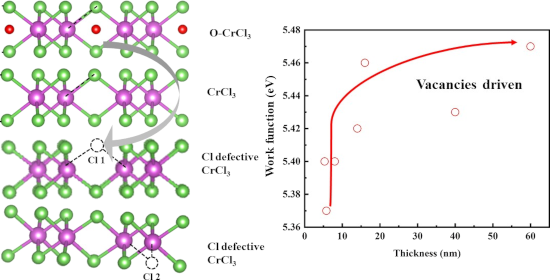
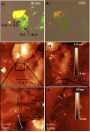
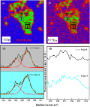
- ][9][10], we have found the formation of a stable and partially ordered Cr–O–Cl surface on vacuum- or air-cleaved CrCl3 samples. Building upon these findings, we now extend our chemical and structural investigations using electronically and optically characterized, mechanically cleaved CrCl3 samples
- [2][11][8][10], focusing on thin layered flakes and the role of the layer thicknesses obtained by spectro- and scanning microscopy with a lateral resolution of a few tens of nanometers. The interaction with the supporting substrate is a crucial factor [3][12] regarding the properties of the flakes





Serum heat inactivation diminishes ApoE-mediated uptake of D-Lin-MC3-DMA lipid nanoparticles
Beilstein J. Nanotechnol. 2025, 16, 740–748, doi:10.3762/bjnano.16.57
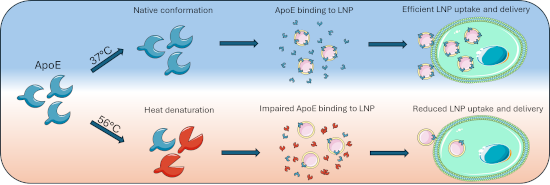
- nanoparticle, reviewed by [6][7][8], as well as the protein source of the corona [9][10][11]. Ultimately, the protein corona can change the uptake [12][13][14], biodistribution [15][16][17][18], immunological responses [19][20] and toxicity [6][21][22] of nanoparticles and its characterization should thus play
- MDA-MB-231 (ATCC) were cultured in DMEM medium with 10% FCS (Gibco) and 1% penicillin-streptomycin (PS) (Fisher Scientific). The human dermal microvascular endothelial cell line HMEC-1 (ATCC) was cultured in MCDB-131 medium supplemented with 10% FCS (Gibco), 2 mM l-glutamine (Gibco), 10 ng/mL rhEGF
- , cholesterol, DSPC and DMG-PEG(2000) were dissolved in ethanol at a molar ratio of 50:38.5:10:1.5 and a final lipid concentration of 10 mM. For biotinylated LNPs, 1 M DSPC was substituted with 1 M DSPE-PEG(2000)-biotin. For C12 LNPs, C12-200, cholesterol, DOPC and DMG-PEG(2000) were dissolved in ethanol at a


Synthesis of a multicomponent cellulose-based adsorbent for tetracycline removal from aquaculture water
Beilstein J. Nanotechnol. 2025, 16, 728–739, doi:10.3762/bjnano.16.56
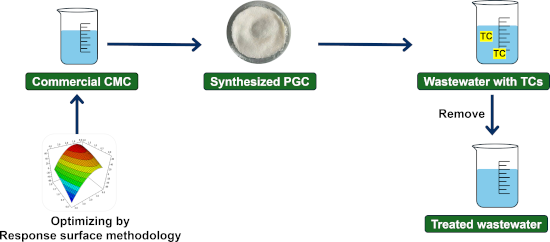
- studies indicate that oxytetracycline (OTC), a TC derivative, is the predominant antibiotic used in Vietnam’s white leg shrimp farming industry, particularly during the 10–30 day and 30–45 day rearing periods [5]. The extensive use of OTC is primarily attributed to its broad-spectrum activity, rendering
- spectrum, the sample matrix, and the radiation intensity. Activated carbon is a conventional approach [10][11], however, a major drawback of activated carbon is its incomplete recovery after adsorption. Because adsorption primarily relies on physical interactions such as hydrogen bonding interactions
- rapidly, with the sharpest decline observed between pH 10 and 11. This occurs because, as pH increases, particularly around pH 6.8, keto-enol groups serve as preferential sites for chelate formation between TC and Ca2+ in a 1:3 ratio of Ca2+ to TC [26]. In this pH range, reduced competition between H


Efficiency of single-pulse laser fragmentation of organic nutraceutical dispersions in a circular jet flow-through reactor
Beilstein J. Nanotechnol. 2025, 16, 711–727, doi:10.3762/bjnano.16.55
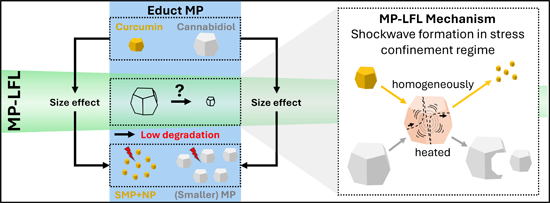
- extraction methods, exemplified by extraction from coffee powders [10] and alkaloid drug extraction from ground root powder [11]. Initially, LSPC research focused on inorganic materials such as metals [12][13], semiconductors [1], and oxides [14][15], where the particle formation mechanisms are well
- understood. In the last two decades, the transfer of these laser-based processes to organic substances has been reported with a particular focus on particle size reduction by LFL [10][16][17]. One motivation behind the size reduction of organic particles like drugs or near-infrared absorbing dyes, which
- as some significantly larger particles (>10 µm), which cannot be quantified in the analytical centrifuge (which is why we additionally analyzed CBD using SEM images, Figure S6, Supporting Information File 1). Modal values for all concentrations and substances are listed in Tables S3 and S4


Nanostructured materials characterized by scanning photoelectron spectromicroscopy
Beilstein J. Nanotechnol. 2025, 16, 700–710, doi:10.3762/bjnano.16.54
- four decades, several important upgrades have spread the original ability of XPS of chemical analysis to include, for instance, band mapping through angle resolved measurements (ARPES), spin detection, and imaging or spectromicroscopy at a nanoscale spatial resolution [9][10]. It is worth noting that
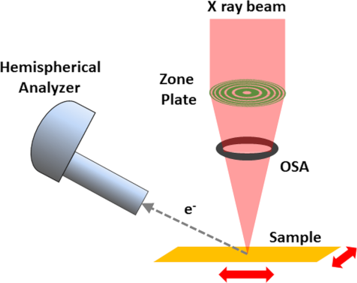
- article, the focal distance was ≈10 mm. The narrow X-ray spot normally impinges the sample surface generating a cloud of photoelectrons, part of which are collected by a hemispherical electron analyzer pointing at the sample at a 30° take off angle. The choice of such angle is strongly constrained by the
- probing depth typically stays in the range of 3–10 monolayers. It is straightforward to understand that such feature may uniquely enhance the results of some characterization parameters, but may represent a limit for others. As shown in Figure 4, the SPEM at Elettra uses a fixed incoming focused X-ray


High-temperature epitaxial growth of tantalum nitride thin films on MgO: structural evolution and potential for SQUID applications
Beilstein J. Nanotechnol. 2025, 16, 690–699, doi:10.3762/bjnano.16.53
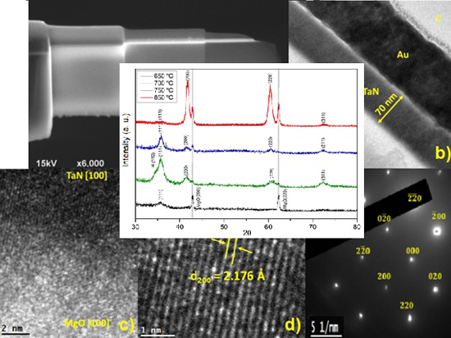
- diffusion barrier with potential application for microelectronics were fabricated [10][11]. In contrast, the stoichiometric mononitride TaN phase with face-centered cubic (FCC) structure exhibits superconductivity with a Tc of 8.15 K [12]; when the thin films were grown epitaxially on an FCC substrate, Tc
- nitrogen pressure between 10 and 90 mTorr. The experiment was performed in a laser ablation system “RIBER LDM 32”. It consists of three stainless steel ultrahigh-vacuum (UHV) chambers for sample introduction, PLD deposition, and X-ray photoelectron spectroscopy (XPS) analysis, isolated by UHV gate valves
- and independently pumped by ion and Ti sublimation pumps. Every chamber has a base pressure of about 10−9 Torr. A Nd:YAG laser with a fourth-harmonic generator (266 nm), was focused onto a 99.999% Ta target (purchased from Kurt J. Lesker Company) with 4 ns and hv = 1.5 eV. The laser was operated at a


The impact of tris(pentafluorophenyl)borane hole transport layer doping on interfacial charge extraction and recombination
Beilstein J. Nanotechnol. 2025, 16, 678–689, doi:10.3762/bjnano.16.52
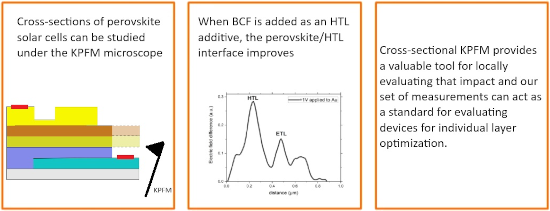
- Konstantinos Bidinakis Stefan A. L. Weber Max Planck Institute for Polymer Research, Ackermannweg 10, 55128 Mainz, Germany Institute for Photovoltaics, University of Stuttgart, Pfaffenwaldring 47, 70569 Stuttgart, Germany 10.3762/bjnano.16.52 Abstract Selective charge transport layers have a
- about charge generation and transport within the absorber material, as well as charge extraction to the relevant interfaces [9][10][11][12]. The details of interfacial electronic carrier extraction at the junctions of the perovskite with the electron and hole transport layers (ETL, HTL) define the
- independent from effects coupled to the built-in field, as well as from the aforementioned contributions of the relative work functions of the materials and possible surface defect states created from cleaving (See Supporting Information File 1, Sections 8 and 10). This time, the voltage is generated within


Colloidal few layered graphene–tannic acid preserves the biocompatibility of periodontal ligament cells
Beilstein J. Nanotechnol. 2025, 16, 664–677, doi:10.3762/bjnano.16.51
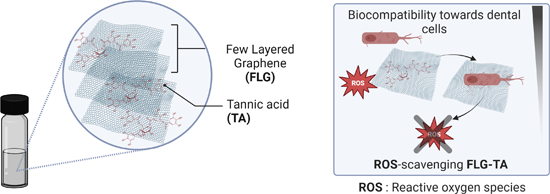
- determined by the presence of impurities in the graphene structure [9]. Among other GBMs, few-layer graphene (FLG), synthesized through liquid-phase exfoliation (LPE), has emerged as a particularly advantageous option [10][11]. LPE is highly regarded for its simplicity, scalability, and effectiveness in
- yielding high-quality graphene [10][11]. The ability to produce large quantities of FLG with minimal structural defects makes this method particularly well-suited for industrial applications, including those in the dental field [4][12]. A key aspect of LPE is the use of surfactants to prevent the
- and environmental impact, limiting their practical use [10][11][14]. This has sparked growing interest in more sustainable and biocompatible alternatives. Tannic acid (TA), a naturally derived polyphenolic compound, has shown promise as a bio-derived surfactant for graphene exfoliation [14][15




Aprepitant-loaded solid lipid nanoparticles: a novel approach to enhance oral bioavailability
Beilstein J. Nanotechnol. 2025, 16, 652–663, doi:10.3762/bjnano.16.50
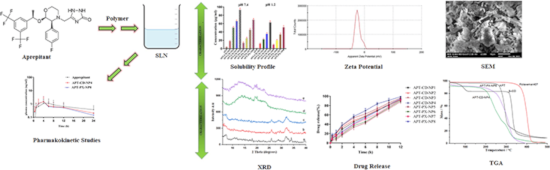
- chemotherapy are nausea and vomiting (chemotherapy-induced nausea and vomiting, CINV), which occurs in 60–80% of cancer patients with negative impacts on the quality of life and patients’ treatment outcomes [3]. About 79% of patients face postoperative nausea and vomiting (PONV), with 10–40% anticipatory
- blood–brain barrier [8]. Its mean volume of distribution is approximately 70 L. In the range of pH 2–10, APT has very low solubility (0.37 µg/mL) [9]. Because of the low water-solubility, the low permeability, and the rate-limiting step of poor gastrointestinal absorption, APT is categorized as a BCS
- class-IV drug [10]. Low solubility and poor dissolution of BCS class-IV drugs can be improved by using techniques such as incorporating the drug or prodrug into lipid or polymeric formulations, using solid lipid nanoparticles (SLNs), applying surfactants, adjusting the pH value, reducing particle size



Nanoscale capacitance spectroscopy based on multifrequency electrostatic force microscopy
Beilstein J. Nanotechnol. 2025, 16, 637–651, doi:10.3762/bjnano.16.49

- Pascal N. Rohrbeck Lukas D. Cavar Franjo Weber Peter G. Reichel Mara Niebling Stefan A. L. Weber Max Planck Institute for Polymer Research, Ackermannweg 10, 55128 Mainz, Germany Department of Chemistry, University of Mainz, Duesbergweg 10-14, 55128 Mainz, Germany Department of Physics, University
- reliability of capacitors [10]. Similarly, in next-generation photovoltaic devices, the dielectric properties of absorber layers, such as lead-halide perovskites, affect carrier recombination and electric field distribution, thereby influencing power conversion efficiency [11]. At the nanoscale, the
- identical to Equation 3, Equation 10 contains a term proportional to C′ at frequency 2ωmod = Δωe. This force has been used for AM-based dielectric spectroscopy [63][69][74][84][85][86][87][88]. The second term, Equation 11, contains a force component at the mechanical drive frequency ωm and at a sideband




A formulation containing Cymbopogon flexuosus essential oil: improvement of biochemical parameters and oxidative stress in diabetic rats
Beilstein J. Nanotechnol. 2025, 16, 617–636, doi:10.3762/bjnano.16.48
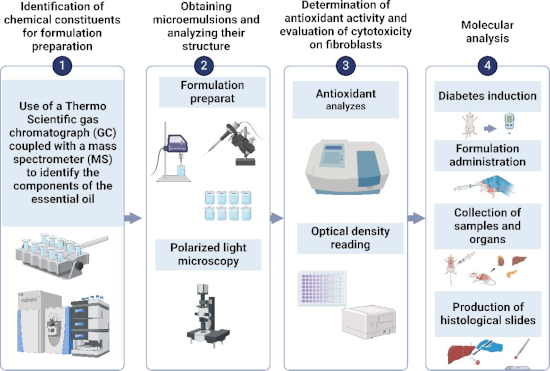
- stabilized by surfactants, with a very small droplet size (<100 nm), which facilitates their permeation through membranes [9]. In addition, MEs showed increased anti-inflammatory activity, reduced irritation, and improved the stability of EOs in previous studies [10][11]. Thus, from an innovative perspective
- systems obtained in the PTPD above, the dilution line containing 10% EOCF was selected, and the spots were prepared individually and monitored for five days (see below Table 1 and Figure 1). After this time, five formulations were classified as TLS suggesting that MEs were obtained. In addition, two SVT
- radius of 15.24 ± 1.27 nm, which is in line with the definition of MEs, having a hydrodynamic radius between 10 and 100 nm [18]. Furthermore, it was observed that the M7-EOCF formulation had a polydispersity index (PDI) of 0.334 ± 0.054, indicating homogeneity (PDI < 0.5) in the droplet size distribution




Focused ion and electron beams for synthesis and characterization of nanomaterials
Beilstein J. Nanotechnol. 2025, 16, 613–616, doi:10.3762/bjnano.16.47

- the substrate. Metallic structures can be fabricated directly or through post-purification methods, such as water-assisted treatment, which has been effective for Au and Pt deposits [10]. Interestingly, morphological changes in the underlying SiO2 layer were observed during the process, resembling

Polyurethane/silk fibroin-based electrospun membranes for wound healing and skin substitute applications
Beilstein J. Nanotechnol. 2025, 16, 591–612, doi:10.3762/bjnano.16.46
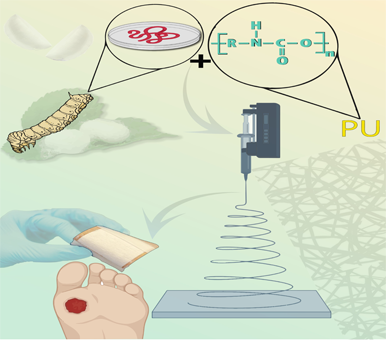
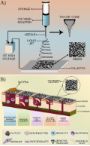
- versatile and provides the best control over fiber morphology and structure [10]. Electrospinning is a straightforward and adaptable technique that can be used to directly spin polymeric solutions into nanofibers that are at least 100 times thinner than fibers created using more conventional techniques [11



Feasibility analysis of carbon nanofiber synthesis and morphology control using a LPG premixed flame
Beilstein J. Nanotechnol. 2025, 16, 581–590, doi:10.3762/bjnano.16.45
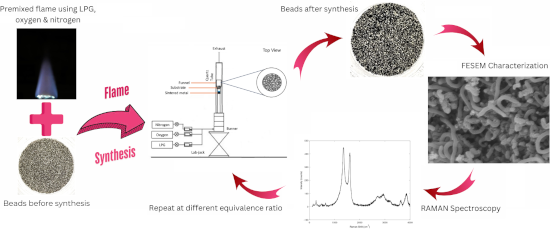
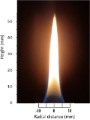
- . An optimum height above burner of 10 mm at which the temperature is around 650 °C was used in the synthesis process. Zirconia beads impregnated with nickel nitrate catalyst have been employed. Dense CNF growth with an average diameter of 77.9 nm was observed at an equivalence ratio of 1.8; as the
- that flame synthesis can be faster and yield higher throughput compared to some recent works. The CNT/CNF growth rates decrease with increasing height above the burner because of lower temperatures and reduced CO concentrations [10]. A custom-made chamber device for flame fragments deposition with
- at 1607 cm−1 and a few broad peaks, indicating less graphitization [14]. In another work, a high-density inductively coupled plasma chemical vapor deposition method yielded vertically aligned CNFs using acetylene and hydrogen on a p-type Si wafer with a 10 nm Ni catalyst layer at 20 mTorr and 550 °C



Nanomaterials in targeting amyloid-β oligomers: current advances and future directions for Alzheimer's disease diagnosis and therapy
Beilstein J. Nanotechnol. 2025, 16, 561–580, doi:10.3762/bjnano.16.44
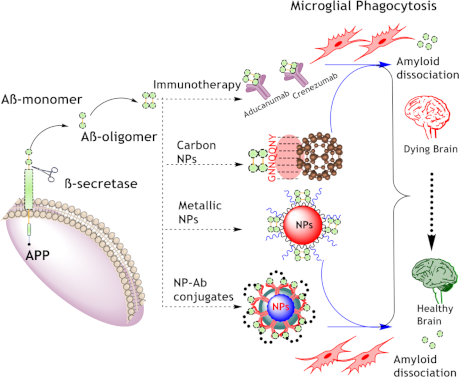
- progression of AD [10]. Numerous studies have indicated a strong association between neuronal dysfunction and the presence of oligomeric species. Researchers are increasingly coming to a consensus that the neurotoxicity observed in neurodegenerative diseases (NDs) is not attributable to a single, isolated
- , with a detection range spanning from 10−9 to 103 nM [77]. An electrochemical, label-free aptassay developed by Gallo-Orive et al. incorporates graphene oxide–gold nanoparticles/nickel/platinum nanoparticles for the rapid and accurate detection of AβOs in complex clinical samples, such as brain tissue


Retrieval of B1 phase from high-pressure B2 phase for CdO nanoparticles by electronic excitations in CdxZn1−xO composite thin films
Beilstein J. Nanotechnol. 2025, 16, 551–560, doi:10.3762/bjnano.16.43

- described through two primary models: the Coulomb explosion model, which relies on electrostatic repulsive forces [10][11], and the thermal spike model, where energy is transferred to lattice atoms, resulting in melting and subsequent quenching to form tracks [12][13]. The latter model has been more widely


Functionalized gold nanoflowers on carbon screen-printed electrodes: an electrochemical platform for biosensing hemagglutinin protein of influenza A H1N1 virus
Beilstein J. Nanotechnol. 2025, 16, 540–550, doi:10.3762/bjnano.16.42
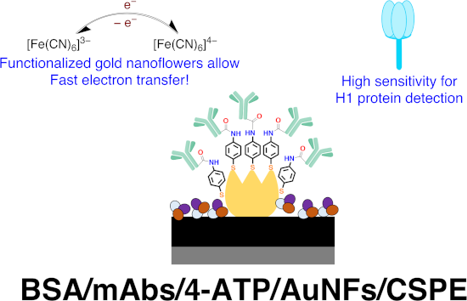
- , and sensitivity [8]. In the last few years, various biosensors for the detection of influenza A H1N1 virus have been developed. Detection of influenza A H1N1 virus can be achieved by targeting one or more relevant biomolecules of the virus. The majority of studies have targeted H1 protein [9][10][11
- dispersed in artificial saliva. Clinically relevant concentrations from 10 to 10,000 pg/mL were measured in a differential pulse voltammetry (DPV) experiment. Artificial saliva was used as a negative control to validate detection accuracy. The DPV technique was used for detection and quantification of
- antigen load because a good signal-to-noise ratio response was observed, making this detection a rapid and accurate process. Under the optimal parameters (pulse amplitude = 86 mV, potential increment = 4 mV, and scan rate = 100 mV/s), the negative control and four different concentrations (10, 100, 1,000





