


Search results
Search for 黄岩区46部已电子化家谱名录 in Full Text gives 1182 result(s) in Beilstein Journal of Nanotechnology. Showing first 200.
Polymer lipid hybrid nanoparticles for phytochemical delivery: challenges, progress, and future prospects
Beilstein J. Nanotechnol. 2024, 15, 1473–1497, doi:10.3762/bjnano.15.118
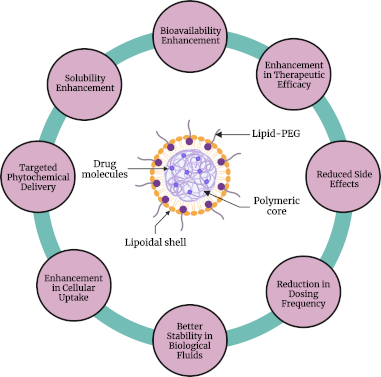
- within the hybrid system. During the development of LPHNPs, different physicochemical characteristics such as size, loading capacity, charge, solubility, release, and colloidal stability can be modulated by modification in the polymer/lipid ratio [45][46][47]. Monolithic PLHNPs Monolithic PLHNPs are the


Effect of radiation-induced vacancy saturation on the first-order phase transformation in nanoparticles: insights from a model
Beilstein J. Nanotechnol. 2024, 15, 1453–1472, doi:10.3762/bjnano.15.117

- Aram Shirinyan Yuriy Bilogorodskyy “Laboratory of composite materials for nuclear-hydrogen energy”, Department of nuclear-physical research, Institute of Applied Physics of National Academy of Sciences of Ukraine (Sumy), room 606, building 3, Nauki avenue, 46, 03028, Kyiv - 28, Ukraine 10.3762
- occur, the nucleation energy barrier must be surpassed. Referring to classic textbooks [46], one can formulate the nucleation energy criterion for phase formation as follows: If the value of ΔG* is very high (greater than approximately 50kBT), then the phase transition is suppressed. Therefore, it is


Strain-induced bandgap engineering in 2D ψ-graphene materials: a first-principles study
Beilstein J. Nanotechnol. 2024, 15, 1440–1452, doi:10.3762/bjnano.15.116
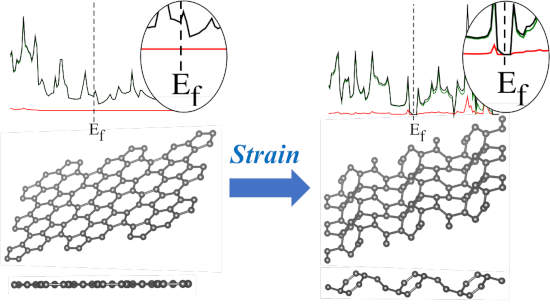
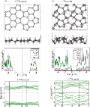
- calculations are based on the density functional theory (DFT) as implemented in Quantum Espresso [46]. Our computations employed the generalized gradient approximation (GGA) and Perdew–Burke–Ernzerhof exchange–correlation functionals [47]. The crystal structure of pristine and hydrogenated ψ-graphene has the


Ion-induced surface reactions and deposition from Pt(CO)2Cl2 and Pt(CO)2Br2
Beilstein J. Nanotechnol. 2024, 15, 1427–1439, doi:10.3762/bjnano.15.115

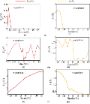
- ), dissociative ionization (DI), neutral dissociation (ND), and dipolar dissociation (DD) [44][45][46][47][48][49][50][51][52]. One of the most important factors that govern deposit purity is the identity of ligands present in the precursor. The coordination sphere of ligands is addressed by precursor design [5



Lithium niobate on insulator: an emerging nanophotonic crystal for optimized light control
Beilstein J. Nanotechnol. 2024, 15, 1415–1426, doi:10.3762/bjnano.15.114
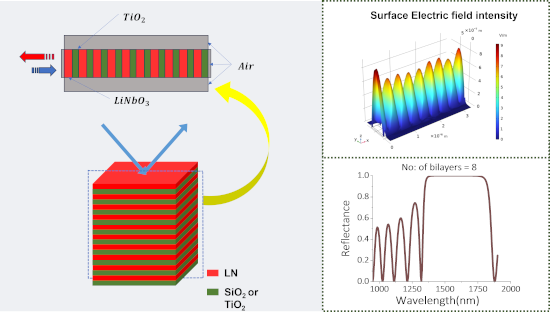
- layer to absorb four times more near-infrared light [43]. Flip-chip micro light-emitting diodes (micro-LEDs) are a revolutionary technology with the potential to create next-generation HDR displays due to their tiny size, exceptional brightness, wide color gamut, and energy efficiency [44][45][46
- and efficiency of the device [44]. Chen et al. explored a novel DBR design, the wide reflected angle DBR (WRA-DBR), specifically aimed at overcoming the limitations of conventional double-stack DBRs used in flip-chip micro-LEDs and further enhancing the light extraction capabilities [46] . The
- % for light incident at a normal angle within the 400 to 700 nm wavelength range [46]. Shaaban et al. focus on the theoretical investigation of green light (at a wavelength of 550 nm) emission of microcavity inorganic/organic light-emitting devices based on Zn (Te, Se) [47]. Incorporating DBR as a


Nanotechnological approaches for efficient N2B delivery: from small-molecule drugs to biopharmaceuticals
Beilstein J. Nanotechnol. 2024, 15, 1400–1414, doi:10.3762/bjnano.15.113
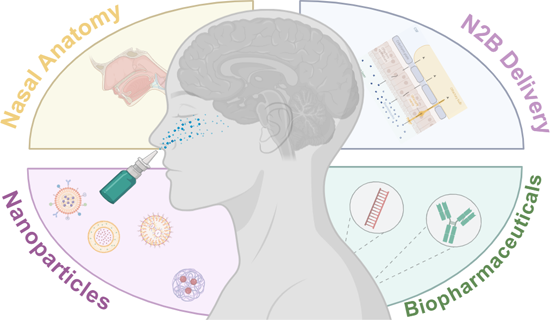
- ) [45][46]. Anatomy of the nasal cavity: a brief introduction The nose has a complex anatomical structure and is responsible for the olfactory and respiratory actions of the human body. The nasal cavity comprises the vestibule, as well as olfactory and respiratory regions [47]. The nasal vestibule is


Various CVD-grown ZnO nanostructures for nanodevices and interdisciplinary applications
Beilstein J. Nanotechnol. 2024, 15, 1390–1399, doi:10.3762/bjnano.15.112
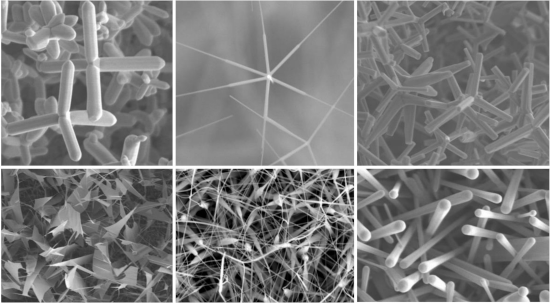
- , respectively. Meanwhile, their thickness is less than 50 nm. Apart from these sheets, we have also collected images of sheets glued with long nanorods that grew along the sheet width, named S2 in Figure 5c. Such two-dimensional structures of ZnO are different from those prepared by hydrothermal process [46
- ], radio-frequency magnetron sputtering [47], pulsed laser ablation [48], and electrodeposition methods [49]. They have many application potentials in dye-sensitized solar cells [46], self-powered energy-harvesting devices [47], photocatalysts [48], and turbid lenses [50]. It has been suggested that the
- combs, there is also a sword-like nanocrystal, see Figure 6c. It is the comb ribbon formed before the teeth are constituted and developed. Combs reported by research groups have various morphologies and sizes, remarkably depending on fabrication conditions [46][52][53][54][55][56][57]. They are highly



A biomimetic approach towards a universal slippery liquid infused surface coating
Beilstein J. Nanotechnol. 2024, 15, 1376–1389, doi:10.3762/bjnano.15.111
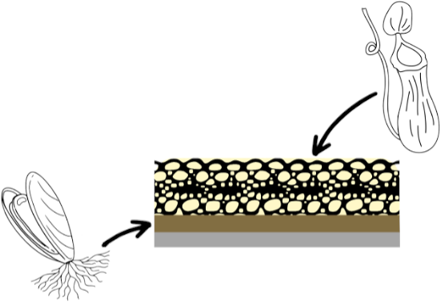
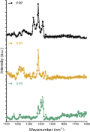
- in the bulk. A final mode was assigned to the CF3 asymmetric stretching at 1370 cm−1 [46]. Observed changes across the SFG spectra collected with different polarization combinations provide information about the orientation of molecular bonds at the interface [26][27]. Here, by collecting SFG spectra




Hymenoptera and biomimetic surfaces: insights and innovations
Beilstein J. Nanotechnol. 2024, 15, 1333–1352, doi:10.3762/bjnano.15.107
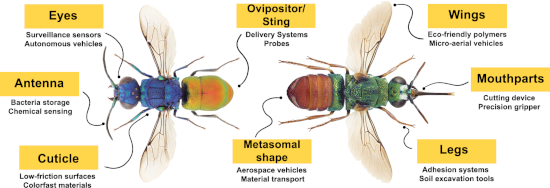
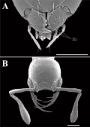
- example, through trichoid sensilla on the compound eyes of honeybees [45], which are important to maintain and coordinate flight. In general, the head capsule of Hymenoptera is densely covered with hairs and may be a ground-plan feature of Hymenoptera and a potential autapomorphy [46]. While the reason




Nanoarchitectonics with cetrimonium bromide on metal nanoparticles for linker-free detection of toxic metal ions and catalytic degradation of 4-nitrophenol
Beilstein J. Nanotechnol. 2024, 15, 1312–1332, doi:10.3762/bjnano.15.106
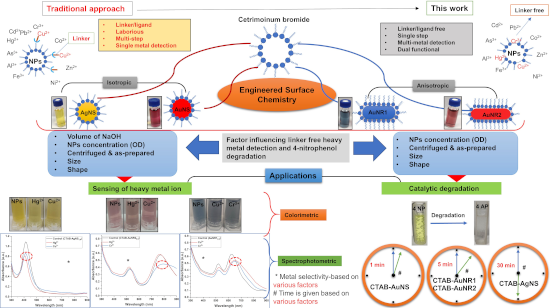
- oxidation [46]. Interestingly, the centrifuged/as-prepared CTAB-AuNS0.5 (set 3) and AuNS1.0 (set 4) showed no plasmonic change upon the addition of different volumes of NaOH (Figure 4a,b). Also, no significant difference in the color of AuNS was observed (Figure 4a,b). This might be because the amount of




Interaction of graphene oxide with tannic acid: computational modeling and toxicity mitigation in C. elegans
Beilstein J. Nanotechnol. 2024, 15, 1297–1311, doi:10.3762/bjnano.15.105
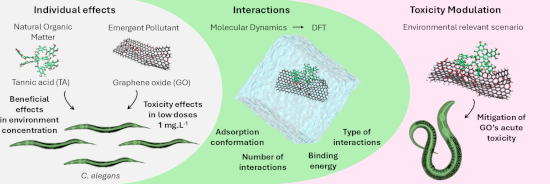
- [45][46]. In the absence of TA, the modulation of the C=0 stretching vibration intensity may indicate coordination of the divalent metal ions Ca2+ and Mg2+ present in EPA medium [47]. The intensity ratio between ID and IG bands in Raman spectroscopy analysis ranges from 0.94 ± 0.01, for the GO sample


Mn-doped ZnO nanopowders prepared by sol–gel and microwave-assisted sol–gel methods and their photocatalytic properties
Beilstein J. Nanotechnol. 2024, 15, 1283–1296, doi:10.3762/bjnano.15.104
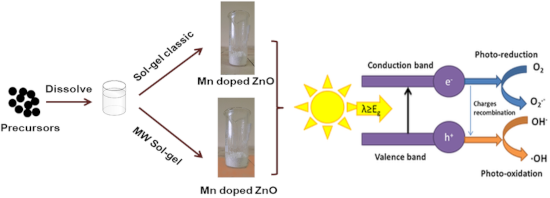
- bond in COO– groups is present at 1045 cm−1 [42]. The small bands at 897 and 810 cm−1 are assigned to the stretching of C–C bonds and that at 509 cm−1 to the rocking of C–C bonds. The bands below 677 cm−1 are related to Zn–O vibrations [43][44][45][46]. The small bands at 408 and 421 cm−1 are
- characteristic of Mn–O bond vibrations [44]. Based on the FTIR spectra, we can assume that during the gelation process a zinc-based gel with a structure similar to the one reported by Moezzi [46] was obtained. The primary distinction between the samples prepared by the two methods discussed in this article (SG


New design of operational MEMS bridges for measurements of properties of FEBID-based nanostructures
Beilstein J. Nanotechnol. 2024, 15, 1273–1282, doi:10.3762/bjnano.15.103
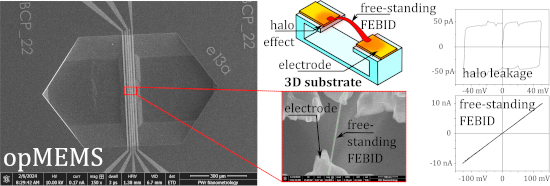
- Photonics, Łukasiewicz Research Network, Lotników 32/46, 02-668, Warsaw, Poland 10.3762/bjnano.15.103 Abstract Focused electron beam-induced deposition (FEBID) is a novel technique for the development of multimaterial nanostructures. More importantly, it is applicable to the fabrication of free-standing
- device, as has been shown in the case of FIB origami [46]. More recently, Masteghin et al. have shown how strain engineering and eigenstrain modification can influence single-material MEMS devices [47]. The exact mechanism depends on the ion and substrate materials, but surface amorphisation or material


Functional morphology of cleaning devices in the damselfly Ischnura elegans (Odonata, Coenagrionidae)
Beilstein J. Nanotechnol. 2024, 15, 1260–1272, doi:10.3762/bjnano.15.102

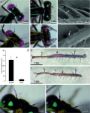
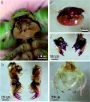
- mouthparts and ingestion of debris is the most likely strategy, but the behavior involving antennal cleaning with mouthparts cannot be performed owing to the short antennae. Odonata antennae in adults are reduced in size, but they possess different kind of sensilla, such as chemoreceptors [44][45][46][47
- ] and thermo-hygroreceptors [44][45][46][47][48], which need frequent cleaning. Furthermore, the need to keep a clean eye surface to guarantee the functioning of the most advanced visual systems among insects ([35], review in [49]) requires the involvement of scraping forelegs with specialized cleaning


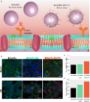
Dual-functionalized architecture enables stable and tumor cell-specific SiO2NPs in complex biological fluids
Beilstein J. Nanotechnol. 2024, 15, 1238–1252, doi:10.3762/bjnano.15.100
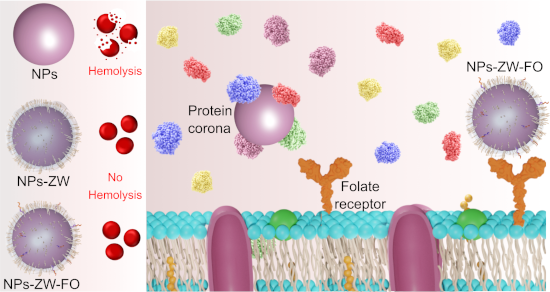
- containing ZW, a longer blood circulation time for these particles is expected, favoring hemolytic activity (Figure 3a) [46]. Therefore, hemolysis assay is essential to determine the safe use of SiO2NPs in vivo. Experiments were conducted using SiO2NPs diluted in PBS and incubated with packed red blood cells


Realizing active targeting in cancer nanomedicine with ultrasmall nanoparticles
Beilstein J. Nanotechnol. 2024, 15, 1208–1226, doi:10.3762/bjnano.15.98
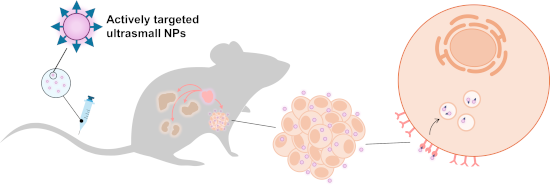
- imaging [20][40], and positron emission tomography [45][46]. In therapeutic applications, usNPs have been used for drug delivery as well as served as phototherapeutic agents and radiosensitizers [47][48][49][50][51]. A distinguishing feature of usNPs is their transient, short-lived interactions with


AI-assisted models to predict chemotherapy drugs modified with C60 fullerene derivatives
Beilstein J. Nanotechnol. 2024, 15, 1170–1188, doi:10.3762/bjnano.15.95
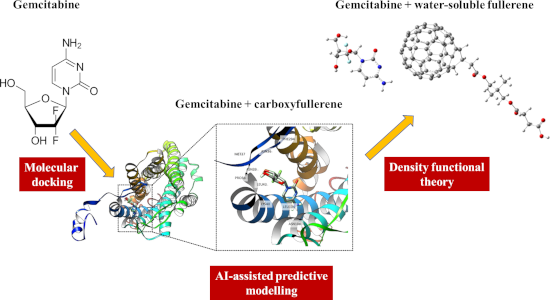
- structure, as in the study of Muthiah and coworkers [45], was validated using PROCHECK [46] to check the quality of the protein structure. The PDB produced with the previous step was subsequently optimized by an energy minimization through Amber force fields using the USCF Chimera 1.14 toolkit [47]. The


Quantum-to-classical modeling of monolayer Ge2Se2 and its application in photovoltaic devices
Beilstein J. Nanotechnol. 2024, 15, 1153–1169, doi:10.3762/bjnano.15.94
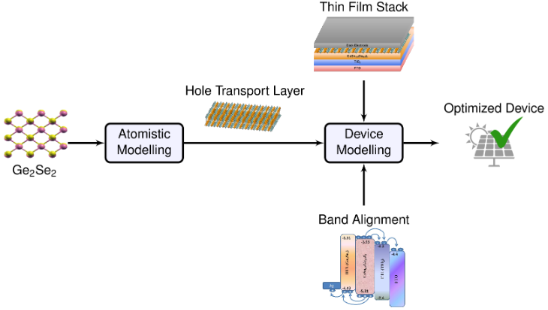
- [41][42][46][47]. The optimum bandgap value and its CBM/VBM positions make it suitable for photovoltaic applications and provide a guideline for selecting the absorber layers in the solar cells. Notably, multivalley and flat bands are present in the energy band structure. The formation of multiple
- , and = 0.17328me) reported in the literature [46][47]. With that, we estimated the effective DOS values in the CB and the VB to be 0.1732 × 10¹⁹ /cm3 and 0.1887 × 10¹⁹ /cm3, respectively. The electron and hole thermal velocities for monolayer Ge2Se2 were estimated as 9.43 × 10⁵ m/s and 2.668 × 10⁵ m/s
- 3.873 eV, respectively, which are comparable with previously reported values of 3.39 eV and 3.9 eV [46][47]. A high degree of agreement for all estimated electronic parameters with earlier reported values validates the accuracy of our computation. Optical properties As discussed in the previous section




Photocatalytic methane oxidation over a TiO2/SiNWs p–n junction catalyst at room temperature
Beilstein J. Nanotechnol. 2024, 15, 1132–1141, doi:10.3762/bjnano.15.92
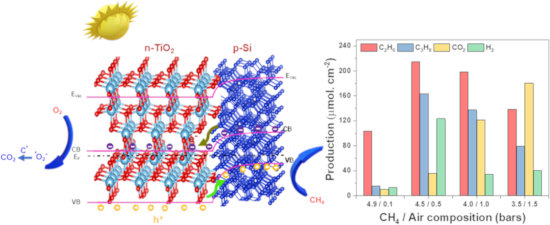
- photocatalysts. As depicted in Figure 4a, the Raman spectrum of Si exhibits a single peak located at 519 cm−1, corresponding to the first-order transverse optical (TO) mode of Si [46]. For the TiO2/Si photocatalyst, two distinct peaks were observed, namely, (i) the characteristic Eg vibration of TiO2, located at


Local work function on graphene nanoribbons
Beilstein J. Nanotechnol. 2024, 15, 1125–1131, doi:10.3762/bjnano.15.91
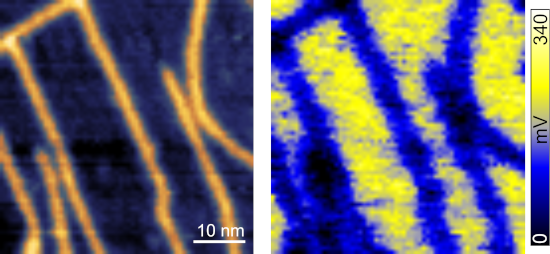
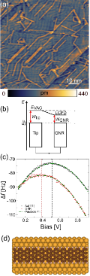
- number of Fourier components. Previously, it has been shown that a line charge is a good approximation for electrostatic forces above graphene nanoribbons [41]. For a cylindrical charge with radius R, we expect an electrostatic potential that varies as where ρ is the charge per unit length [46]. We have

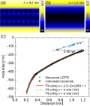
![[Graphic 1]](/bjnano/content/inline/2190-4286-15-91-i4.svg?max-width=637&scale=1.18182)
Recent updates in applications of nanomedicine for the treatment of hepatic fibrosis
Beilstein J. Nanotechnol. 2024, 15, 1105–1116, doi:10.3762/bjnano.15.89
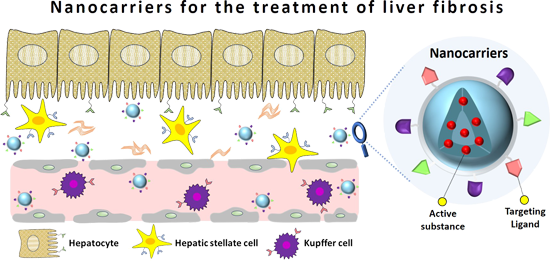
- the FDA up to 2019 [46]. They consist of PLGA microparticles, solid implants, and in situ gels; none of them is a PLGA NP formulation. This fact indicates that there are some challenges, including poor drug entrapment efficiency and drug release kinetics from PLGA nanoformulations [47]. Regarding


Unveiling the potential of alginate-based nanomaterials in sensing technology and smart delivery applications
Beilstein J. Nanotechnol. 2024, 15, 1077–1104, doi:10.3762/bjnano.15.88
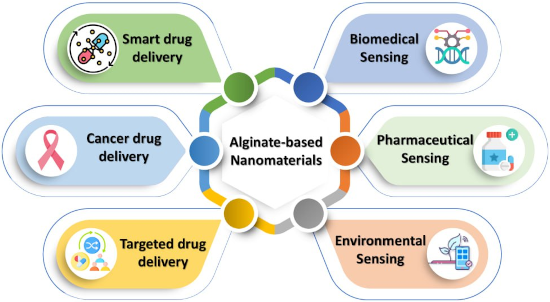
- organs [46]. Another drawback is that current drug delivery technologies yield only limited bioavailability and change drug levels in plasma, making them incapable of long-term release. Without proper dispensing techniques, the entire treatment process may fail. In addition, the drug must be delivered at
- . These functional groups can include ligands or antibodies that specifically bind to the target cells or tissues [51]. Stimuli-responsive nanoparticles help reduce toxicity and control drug biodistribution [46]. Alginate-based nanoparticles The preparation methods of alginate-based nanoparticles The


Effect of wavelength and liquid on formation of Ag, Au, Ag/Au nanoparticles via picosecond laser ablation and SERS-based detection of DMMP
Beilstein J. Nanotechnol. 2024, 15, 1054–1069, doi:10.3762/bjnano.15.86

- ], pesticides on vegetables, dals [42], fruit surfaces [43], and explosives on rough surfaces [44][45]. In the last few years, our group has been continuously working on developing a flexible SERS substrate for the detection of various types of hazardous molecules: aggregated Ag and Au NPs on filter paper [46
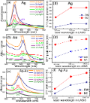
- (i) the plasmonic performance of Ag, (ii) a large number of NPs loaded onto the filter paper (resulting in a high yield of NPs at 1064 nm), (iii) the presence of ions from NaCl which can lead to ion-enhanced SERS effects [37][46][61]. The investigations further focused on assessing the stability of a


Interface properties of nanostructured carbon-coated biological implants: an overview
Beilstein J. Nanotechnol. 2024, 15, 1041–1053, doi:10.3762/bjnano.15.85
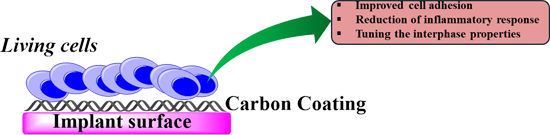
- oxygen functionalities (hydroxy, epoxy, carbonyl, and carboxylic groups) arranged according to the Lerf–Klinowski model [45]. GO is generally produced through chemical oxidation and exfoliation of graphite flakes with different protocols to tune the oxygen content [46][47]. The defective structure of GO



Entry of nanoparticles into cells and tissues: status and challenges
Beilstein J. Nanotechnol. 2024, 15, 1017–1029, doi:10.3762/bjnano.15.83
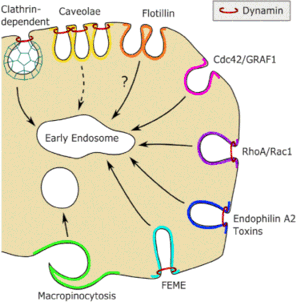
- as a control to see that the treatment reduces the uptake of this ligand. Chlorpromazine has been reported to lead to relocalization of clathrin and the adaptor AP2 from the plasma membrane and to endosomes [46]. Notably, this is associated with an inhibition of the recycling of receptors for α2
- -macroglobulin, EGF, and transferrin, and a concomitant depletion of these receptors at the plasma membrane [46]. One might expect that other receptors that normally recycle after uptake from clathrin-coated pits are also affected in a similar manner, and that NPs targeting such receptors might have a reduced





