Search results
Search for 抖音 AI文案帮写 功能入口 2026年1月 最新位置 in Full Text gives 2681 result(s) in Beilstein Journal of Nanotechnology. Showing first 200.
Synthesis and the impact of hydroxyapatite nanoparticles on the viability and activity of rhizobacteria
Beilstein J. Nanotechnol. 2025, 16, 216–228, doi:10.3762/bjnano.16.17
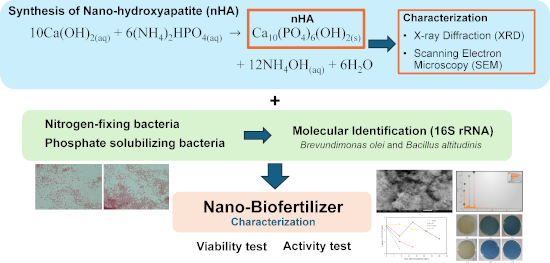
- of both soil and water, and disruption of the natural ecosystem balance [1]. To tackle these pressing environmental challenges, a promising solution lies in adopting biofertilizers in agriculture, which involve harnessing microorganisms like plant growth promoting rhizobacteria. These microorganisms
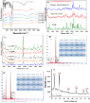
- gradually through a solvothermal reaction, driven by the chemical transformation represented by the following equation: Nanohydroxyapatite characterization The structural analysis of nHA was performed using X-ray diffraction (XRD). The diffraction pattern of nHA standard is given in Figure 1, while that of
- the synthesized nHA is given in Figure 2. Figure 2 shows that the XRD pattern of nHA aligns with the ICSD #157481 standard (Figure 1) and the P63/m space group. This alignment confirms the successful synthesis of hydroxyapatite. Notably, the image highlights the characteristic (211) peak of HA at 2θ


Recent advances in photothermal nanomaterials for ophthalmic applications
Beilstein J. Nanotechnol. 2025, 16, 195–215, doi:10.3762/bjnano.16.16
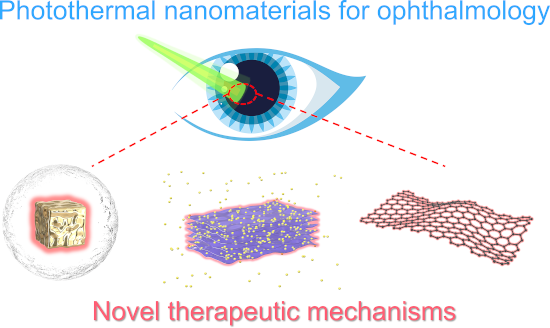
- enhancing global visual health. Keywords: multifunctional composite; ophthalmology; photothermal nanomaterial; thermal field distribution; vapor nanobubble; Review 1 Introduction The human eye, serving as a primary organ for information acquisition, is vulnerable to various diseases over a lifetime [1
- (Figure 1). In addition, the application progress of photothermal nanomaterials in promoting retinal drug delivery and enhancing photoacoustic imaging was also discussed. Finally, we address the current challenges and prospects in ophthalmic treatment technologies based on photothermal nanomaterials, with
- conditions of the ICG NPs. Among them, only ICG liposomes synthesized using lipids can induce the production of VNBs. The ICG concentration in PLGA ICG NPs is below 15 μg·mL−1, which is not sufficient to rapidly increase the temperature to produce VNBs. Evaluation of the VNB effect in bovine retinal explants


Probing the potential of rare earth elements in the development of new anticancer drugs: single molecule studies
Beilstein J. Nanotechnol. 2025, 16, 187–194, doi:10.3762/bjnano.16.15

- , typically binding with very high equilibrium association constants (106 to 107 M−1) at the DNA grooves. Furthermore, neodymium and erbium can also induce a very strong compaction/condensation of the double helix at high concentrations, promoting DNA collapse at the single molecule level in a similar way to
- interdisciplinary research to find, produce, and test drug candidates until they can reach the market [1][2]. Cancer chemotherapy, for instance, is a type of treatment that deserves improvements not only in the efficacy of the drugs employed to kill tumor cells, but also in reducing the occurrence of the well-known
- purification. Concentrate rare earth stock solutions (≈1 mM) were prepared by dissolving each oxide in deionized water, slowly adding a small quantity of HCl since these oxides are insoluble in water. From these stocks, less concentrated solutions were prepared at various rare earth concentrations by diluting


A review of metal-organic frameworks and polymers in mixed matrix membranes for CO2 capture
Beilstein J. Nanotechnol. 2025, 16, 155–186, doi:10.3762/bjnano.16.14
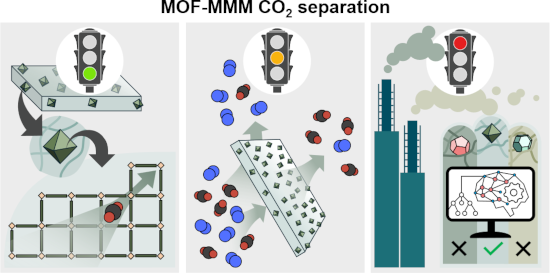
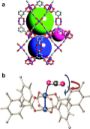
- the gas separation potential of MOF-based MMMs in CO2 capture applications are highlighted. Keywords: CO2 capture; gas separation; inorganic filler; metal-organic framework (MOF); mixed matrix membrane (MMM); Review 1 Introduction The continuous rise in global CO2 emissions has unfolded an era of
- unprecedented climate change with profound ecological and environmental consequences [1]. Therefore, the urgency of mitigating the environmental impact of elevated CO2 levels raises a strong motivation to achieve large-scale reduction of CO2 emissions [2]. In this context, CO2 capture processes have received
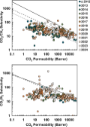
- operation [5]. However, a significant drawback of membrane separation is the inherent trade-off between permeability (pressure-normalized flux) and selectivity (αA/B) for gases A and B, as described by the relationship in Equation 1 [5][12][13][14]. where PA is the steady-state permeability of the more




Clays enhanced with niobium: potential in wastewater treatment and reuse as pigment with antibacterial activity
Beilstein J. Nanotechnol. 2025, 16, 141–154, doi:10.3762/bjnano.16.13
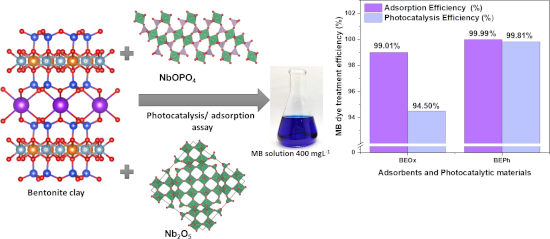
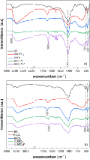
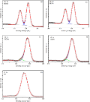
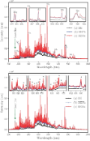
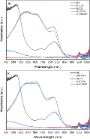
- photocatalysts for treating solutions containing the MB dye (400 mg·L−1) at 25 °C. The results showed adsorption and photocatalysis efficiency above 94% for both samples. The blue-colored BEOx and BEPh samples were then applied as a hybrid pigment. The power pigment and its dispersion in colorless paint were
- ; Introduction The most found dye pollutants in wastewater on a global scale originate from textile, plastic, paper, food, cosmetics, mineral, and pharmaceutical industries, among others, resulting in significant environmental impacts [1]. Dyes, as chemical compounds that impart color to different materials
- Parana State, Brazil, was purchased from a local supplier. Niobium phosphate (NbOPO4) and niobium pentoxide (Nb2O5) were provided as donations by Companhia Brasileira de Metalurgia e Mineração (CBMM). Methylene blue, with molecular mass of 319.8513 g·mol−1, was obtained from Nuclear (Brazil). Clay



TiO2 immobilized on 2D mordenite: effect of hydrolysis conditions on structural, textural, and optical characteristics of the nanocomposites
Beilstein J. Nanotechnol. 2025, 16, 128–140, doi:10.3762/bjnano.16.12
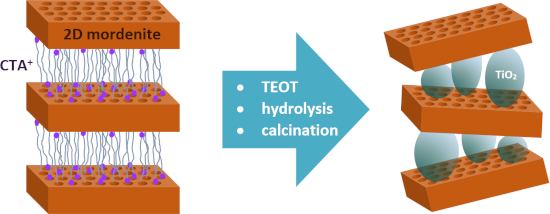
- hierarchical micro- and mesoporosity [1][2][3][4][5][6]. Zeolites with hierarchical porous structures can be synthesized using different strategies [4], for example, aggregation of nanocrystals, use of templates, and creation of mesoporosity by forming pillars between 2D lamellae of zeolites separated by
- cetyltrimethylammonium bromide (CTAB) layers. The latter method involves the synthesis of layered 2D zeolites in the presence of CTAB and organic structure directing agents (OSDAs), followed by calcination to remove them from the resulting products [1]. The choice of the OSDA determines not only the interlamellar
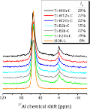
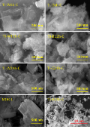
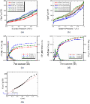
- solution (Table 1). In addition, it should be noted that calcination, independent of the medium of TEOT hydrolysis, leads to the complete disappearance of the long-range ordering of the zeolite lamellae (no peak at 2θ < 5°; the SAXS patterns are not shown here). This is an important difference between TEOS



Comparison of organic and inorganic hole transport layers in double perovskite material-based solar cell
Beilstein J. Nanotechnol. 2025, 16, 119–127, doi:10.3762/bjnano.16.11
- , as well as geothermal, tidal, and solar energy. Renewable energy sources are unlimited and can be constantly replenished. In the coming years, renewable energy sources will contribute to decarbonizing energy systems. Solar energy safeguards both human health and a healthy environment [1]. Akmam and
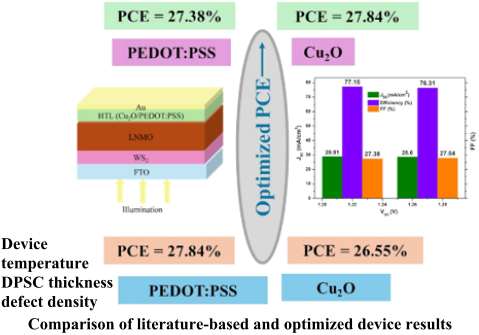
- the device performance. SCAPS-1D uses some basic steps to obtain the device’s output characteristics. The SCAPS-1D program steps and the device structure are shown in Figure 1. The device behavior can be studied and solved using SACPS-1D by solving 1D Poisson and continuity equations. The Poisson
- are given in Table 1. Experimental Verification In 2024, a lead-free DPSC was both designed and fabricated. The included LNMO material was synthesized using the sol–gel method. The experimental and simulated J–V curves showed PCEs of 4.5 % and 10%, respectively. For the simulation, TiO2 was used as


Nanocarriers and macrophage interaction: from a potential hurdle to an alternative therapeutic strategy
Beilstein J. Nanotechnol. 2025, 16, 97–118, doi:10.3762/bjnano.16.10
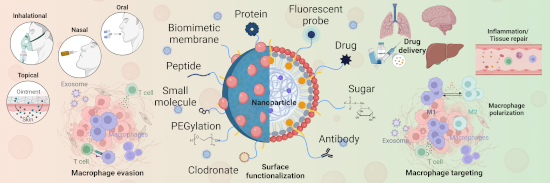
- delve into the intriguing potential of nanomedicine in neurology and traumatology, associated with macrophage interaction, and the exciting possibilities it holds for the future. Keywords: drug delivery; macrophages; nanomedicine; polarization; RNA-based therapies; Review 1 Introduction In the vast
- nanomedicine landscape, the design and development of nanocarriers (NCs) for precise drug delivery are a pivotal innovation. NCs address significant pharmacological challenges, such as enhancing drug solubility, ensuring specific distribution, and facilitating the crossing of biological barriers [1]. Tailoring
- toll-like receptor 4 (TLR4) [19]. This interaction leads to the expression and release of type-1 interferons (IFN-α and IFN-β), which further amplify the immune response through the Janus kinase/signal transducers and activator of transcription (JAK/STAT) signaling cascade [18][19]. M2 macrophages


Modeling and simulation of carbon-nanocomposite-based gas sensors
Beilstein J. Nanotechnol. 2025, 16, 90–96, doi:10.3762/bjnano.16.9
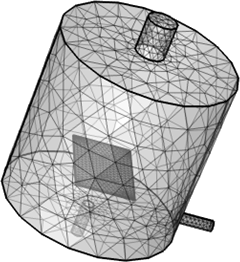
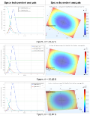
- sensor using COMSOL Multiphysics whose active sensing material used is a carbon nanocomposite (i.e., 0.1 wt % of single-walled carbon nanotubes along with PEDOT:PSS (poly(3,4-ethylenedioxythiophene):poly(styrenesulfonate)) in an equal volume ratio of 1:1. Given the high cost associated with the
- concentrations ranging from 1 to 7 ppm. The surface coverage over the range of 14% to 32.94% for the given range of concentrations is achieved giving the information of the amount of gas molecules adsorbed onto the surface of the sensing material at a given time. The surface coverage of the sensor is enhanced by
- nanomaterials, such as carbon nanotubes (CNTs), graphene, and carbon black, embedded within a polymer matrix [1]. The distinctive properties of carbon nanocomposites have positioned them as promising candidates for various applications, particularly in the development of advanced sensors. The small amounts of



Characterization of ZnO nanoparticles synthesized using probiotic Lactiplantibacillus plantarum GP258
Beilstein J. Nanotechnol. 2025, 16, 78–89, doi:10.3762/bjnano.16.8
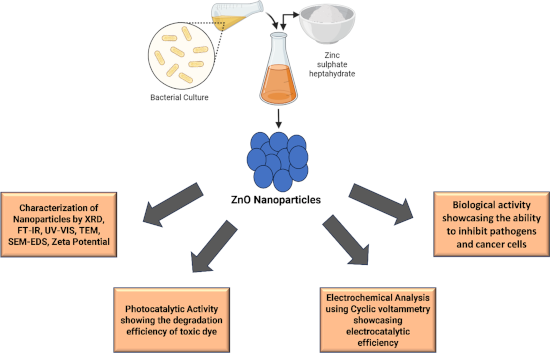
- typhi (3 ± 1 mm). MTT assay revealed the promising antiproliferative potential of ZnO NPs, with an average IC50 value of 98.53 µg/mL. Additionally, the NPs were photocatalytically and electrochemically analyzed, indicating their potential use in cancer research as well as in coating and drug delivery
- -to-volume ratio, and magnetic, electrical, optical, antimicrobial and hardness properties give NPs distinct mechanical, thermal, and catalytic properties. As a result, nanotechnology has widespread applications across diverse domains and opened up new possibilities for innovation [1][2]. Particles
- sourced from the GenBank database. The software utilized for this purpose was MEGA X. Notably, the constructed phylogenetic tree showcased a remarkable 100% affinity with the Lactiplantibacillus plantarum phylogenetic tree is presented in Figure 1. Synthesis of ZnO from GP258 GP 258 was employed in the



Instance maps as an organising concept for complex experimental workflows as demonstrated for (nano)material safety research
Beilstein J. Nanotechnol. 2025, 16, 57–77, doi:10.3762/bjnano.16.7

- properties can be tailored by changing their size, shape, surface chemistry, and functionality, have led to the designation of nanomaterials as a key enabling technology and to their subsequent inclusion in the broader categorisation of advanced materials [1][2]. Applications of nanomaterials derive in many
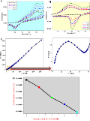
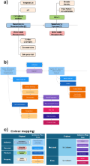
- the experiment and their properties (Figure 1). In its original conception, the chosen categories (also called nodes) and the strict set of rules on how to place and connect the nodes was optimised for the needs of the NIKC data curators, and later for describing the mesocosm experiments of the
- differentiate between different types of properties (see Figure 1 and Figure 2). In the NIKC curation efforts, all data were extracted from scientific publications; thus, there was no obvious separation in the eyes of the curator between data produced specifically within a paper (primary data) or data taken


Advanced atomic force microscopy techniques V
Beilstein J. Nanotechnol. 2025, 16, 54–56, doi:10.3762/bjnano.16.6

- precision of scanning probe microscopy experiments by introducing a software for lateral drift correction [1]. Post-data acquisition drift correction for longer series of consecutively recorded image sets can be cumbersome and extremely time consuming. Here, the authors develop an easy-to-use and robust
Theoretical study of the electronic and optical properties of a composite formed by the zeolite NaA and a magnetite cluster
Beilstein J. Nanotechnol. 2025, 16, 44–53, doi:10.3762/bjnano.16.5
- characteristics of zeolites depend largely on the chemical composition of the framework, specifically the Si/Al ratio [1][2]. These characteristics make zeolites highly appealing for a wide range of applications, including the production of fine chemicals [3][4], gas separation [5][6][7], ion exchange [8][9][10
- magnetic materials. Computational Details In the current study, the dehydrated sodium LTA zeolite, commonly denoted as NaA in the literature, with a ratio of Si/Al = 1 was considered. For this purpose, we adopted the trigonal cell proposed by Antúnez-García et al. [54], for which the lattice parameters are
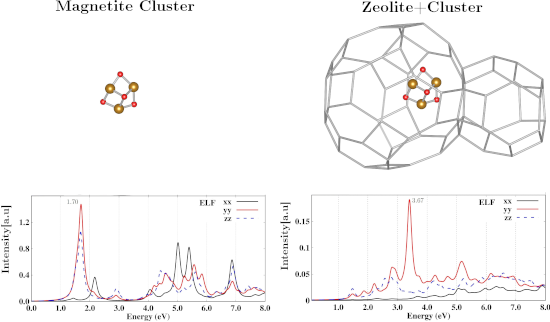
- cluster (see Figure 1), as proposed by Ermakov et al. [56], for the purposes of this study. After separately obtaining the optical and electronic properties of both the NaA zeolite and the cluster, our next step involved locating the position of minimum energy for the cluster within the zeolite framework




Precursor sticking coefficient determination from indented deposits fabricated by electron beam induced deposition
Beilstein J. Nanotechnol. 2025, 16, 35–43, doi:10.3762/bjnano.16.4

- Alexander Kuprava Michael Huth Physics Institute, Goethe University Frankfurt, Max-von-Laue-Str. 1, 60438 Frankfurt am Main, Germany 10.3762/bjnano.16.4 Abstract A fast simulation approach for focused electron beam induced deposition (FEBID) numerically solves the diffusion–reaction equation
- ; Introduction Nanoscale fabrication of free-form structures via methods like focused electron or ion beam induced deposition (FEBID/FIBID) requires precise beam control and sufficient knowledge of key properties of the precursor material used [1]. In addition, a reliable prediction of the expected deposit shape
- represents the probability of a volatile precursor molecule to adhere or stick to the surface it impacts. The coefficient takes values from 0 to 1, where at 0 none of the incoming molecules stick to the surface and at unity all of them do. It accounts for events of prompt scattering of impinging molecules on


Bioinspired nanofilament coatings for scale reduction on steel
Beilstein J. Nanotechnol. 2025, 16, 25–34, doi:10.3762/bjnano.16.3

- moisture control and water interaction [1][2]. The structure and chemistry of insect skin are finely tuned to navigate these challenges, showcasing a sophisticated natural adaptation to efficiently repel water [3]. Springtails have mastered this capability using micro- and nanostructured skin surfaces
- maintenance costs. By understanding and replicating the nanostructured [3][7][8][9], liquid-repelling features of Collembola skin, we propose a novel approach to mitigate this issue. Figure 1 displays the cuticle micro- and nanostructure which leads to effective water repellency [5]. It has been shown how the
- agreement with what has been reported before for super-hydrophobic SNF coatings on polymers [18], glass [23], and textiles [16]. Since the water contact is well above 150° and droplets are highly mobile (please see the videos in the Supporting Information File 1–3) – the definition of super-hydrophobicity


A nanocarrier containing carboxylic and histamine groups with dual action: acetylcholine hydrolysis and antidote atropine delivery
Beilstein J. Nanotechnol. 2025, 16, 11–24, doi:10.3762/bjnano.16.2

- Sciences, Arbuzov str. 8, Kazan 420088, Russia Alexander Butlerov Institute of Chemistry, Kazan Federal University, Lobachevsky str. 1/29, Kazan 420008, Russia Kazan National Research Technical University named after A.N. Tupolev - KAI, 10, K. Marx str., Kazan 420111, Russia Kazan National Research
- , vomiting, and other serious issues [1]. ACh overproduction usually results from a malfunction of the cholinesterase enzyme caused by poisoning or medication [2][3]. Drug dosage regulation can greatly lower cholinergic toxicity [4], but the risks associated with poisoning are far higher. Poisons cause
- disintegrates the nanocarrier, leading to the release of Atr (Scheme 1). This paper discusses the synthesis of the Atr nanocarrier, its physicochemical and biological properties, the encapsulation of Atr into the nanocarrier cavity, ACh hydrolysis, nanocarrier degradation, and Atr release under the ACh action


Orientation-dependent photonic bandgaps in gold-dust weevil scales and their titania bioreplicates
Beilstein J. Nanotechnol. 2025, 16, 1–10, doi:10.3762/bjnano.16.1
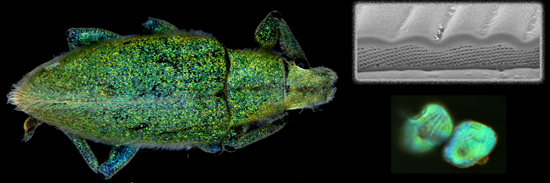
- achieved when light interacts with a material having a periodically changing refractive index. Interference produces structural colors that may be quite saturated and angle-dependent (iridescent). Structurally colored materials feature refractive index variations in one, two, or three dimensions [1][2]. In
- structure of the scales The body and the elytra of the gold-dust weevil Hypomeces squamosus are covered with iridescent scales (Figure 1). The scales on the wings and body appear mostly greenish, while the scales on the legs are more bluish (Figure 1a). The elytral scales are flat, about 70 μm long and
- reference standard, indicating directional reflection. The scales immersed in refractive index oils appeared yellowish because of a presence of a blue-absorbing pigment (Supporting Information File 1, Figure S1). Maximal transmission was achieved with the oil with refractive index 1.56, indicating that the


Mechanistic insights into endosomal escape by sodium oleate-modified liposomes
Beilstein J. Nanotechnol. 2024, 15, 1667–1685, doi:10.3762/bjnano.15.131
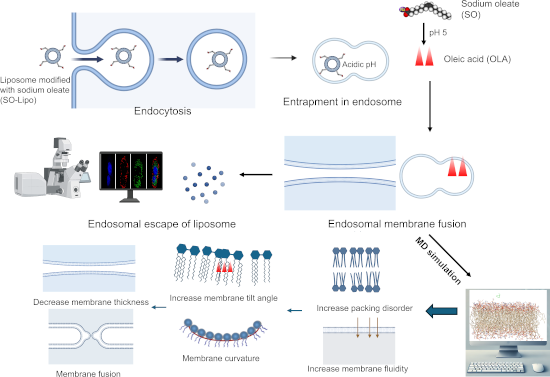
- transforming drug delivery methodologies [1]. Despite their potential, liposomes encounter substantial challenges from the point of administration to achieving therapeutic efficacy. One of the primary obstacles is their propensity for endosomal entrapment. Following internalization via endocytosis, liposomes
- distinct liposomal variants to evaluate key nanocarrier quality attributes, including particle size, polydispersity index (PDI), and zeta potential. These assessments were conducted at both physiological pH (7.4) and acidic pH (5), as summarized in Table 1. At physiological pH (7.4), the unmodified
- nanoformulations. Interestingly, the zeta potential of AUR-Lipo remained virtually unchanged at −2.42 ± 2.41 mV, indicating that the neutral charge of the AUR peptide effectively preserved the nanoparticle’s surface charge. When exposed to pH 5 for 1 h, Unmodified-Lipo maintained its size and charge, demonstrating




Attempts to preserve and visualize protein corona on the surface of biological nanoparticles in blood serum using photomodification
Beilstein J. Nanotechnol. 2024, 15, 1654–1666, doi:10.3762/bjnano.15.130

- efforts of many researchers are aimed at finding approaches and methods for “managing” the composition of the protein corona, which, in particular, can provide the possibility of targeted delivery of drugs [1][2][3]. The protein corona is formed by two layers on any NP, called the hard and soft coronas
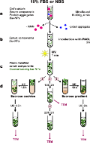
- photomodifier, the choice of which was described in detail and justified earlier. The best option was the photoactivatable cross-linker 4-azido-N-[3-[3-(2,5-dioxopyrrol-1-yl)propanoylamino]propyl]-2-nitrobenzamide (PACL), which was synthesized in the Laboratory of Organic Synthesis (ICBFM SB RAS, Novosibirsk
- , Russia) [23]. PACL (Figure 1) is a molecule carrying two orthogonal reactive groups, namely, (i) a maleimide residue that modifies serum proteins at their thiol groups and (ii) an nitroaryl azide group to form covalent cross-links between proteins and nanoparticles under the influence of UV radiation



Fabrication of hafnium-based nanoparticles and nanostructures using picosecond laser ablation
Beilstein J. Nanotechnol. 2024, 15, 1639–1653, doi:10.3762/bjnano.15.129
- optical properties [1][2][3][4]. Hf and its alloys are used in nuclear reactors because of their large neutron absorption cross sections and high melting points [5]. They are also used in submarines because of their corrosion resistance [6][7]. The high refractoriness of some Hf compounds [2][4] allows
- size and morphology [1]. Recently, interest has risen regarding synthesis and study of Hf-based NPs. Depending on the morphology, chemical composition, and quantum confinement effects, NPs can exhibit novel properties, making them applicable for large-spectrum usage [12][13]. Thus, synthesizing the
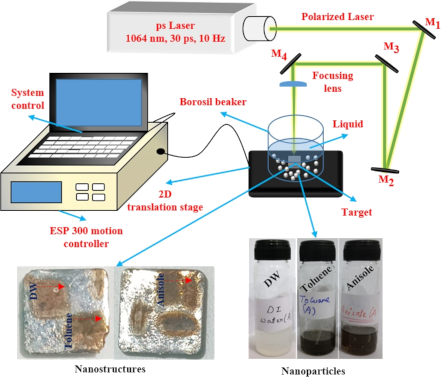
- turned from transparent to turbid white, while toluene and anisole turned from transparent to black (Figure 2). The obtained NPs and NSs were labelled as described in Table 1, according to the liquid in which they were ablated, and subsequently characterised through different methods. Characterization




Heterogeneous reactions in a HFCVD reactor: simulation using a 2D model
Beilstein J. Nanotechnol. 2024, 15, 1627–1638, doi:10.3762/bjnano.15.128
- process and the properties of the films, with the most important parameters being substrate temperature, gas pressure, species concentration, and flow velocity [1]. The structural, optical, and electrical properties of the SiOx, more generally known as silicon-rich oxide (SRO), films are determined by the
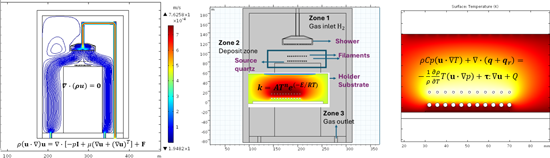
- atmospheric pressure. Table 1 summarizes the values of the parameters and dimensions complementary to the experimental conditions in the reactor for the deposition of SRO films previously described and depicted below in Figure 2 [24], as well as the corresponding boundary conditions. Theoretical and Numerical
- models that can explain the different phenomena involved. In this section, the mathematical models and the different pieces of software used in this study will be described. Figure 1 shows a flowchart that describes the modeling and simulation process. The different mathematical models used, and their


Biomimetic nanocarriers: integrating natural functions for advanced therapeutic applications
Beilstein J. Nanotechnol. 2024, 15, 1619–1626, doi:10.3762/bjnano.15.127

- strategy for personalized medicine. Keywords: cancer; drug delivery; human health; mimetics; nanotechnology; Introduction Human exposure to nanoparticles has naturally occurred for millennia, with a notable intensification following the industrial revolution [1]. The foundational concept of modern
- nanotechnology, introduced by Richard Feynman in 1959 during an American Physical Society meeting [1][2], involves the manipulation of matter at the atomic level. The term "nanometer" was initially proposed by Richard Zsigmondy in the context of measuring gold colloids. Nanotechnology is generally defined as the
- manipulation of matter on a nanoscale, typically ranging from 1 to 100 nm [2]. At this scale, nanoparticles can effectively interact with DNA and protein molecules [3][4]. Matter can exhibit distinct physical, chemical, and biological properties at the nanoscale compared to the macroscale, with significant


Natural nanofibers embedded in the seed mucilage envelope: composite hydrogels with specific adhesive and frictional properties
Beilstein J. Nanotechnol. 2024, 15, 1603–1618, doi:10.3762/bjnano.15.126
- hydrophilic, three-dimensional (3D), polymeric networks able to absorb huge amounts of water [1][2][3]. This term refers perfectly to the mucilage envelope produced by many fruits and seeds (diaspores) of diverse plant taxa [4][5][6][7][8][9]. Mucilage is considered as a natural hydrogel and shares specific
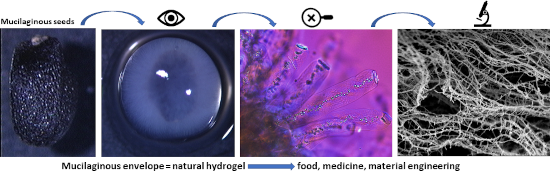
- . Macroscopically observable mucilage is often a transparent, gel-like capsule formed around the diaspore after hydration with water (Figure 1). At the microscale mucilage exhibits, before hydration, successive layers formed by adcrustation in the mucilaginous cells of the seed/fruit coat (the outermost covering of
- observation of the mucilage envelope is easily possible at the macroscale with the naked eye. The hydration of the seed causes the formation of a transparent gel-like envelope surrounding the diaspore [7][73][74] (Figure 1), which is easily observable. Air-drying of hydrated mucilage causes water evaporation


Liver-targeting iron oxide nanoparticles and their complexes with plant extracts for biocompatibility
Beilstein J. Nanotechnol. 2024, 15, 1593–1602, doi:10.3762/bjnano.15.125
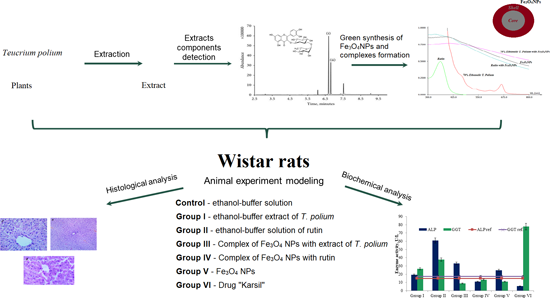
- , biochemistry, biophysics, and other disciplines within biology and medicine [1][2][3][4][5]. The development of nanotechnology has provided resources for various applications in the medical field, leading to significant advances in diagnosis, biological detection, therapy, and drug delivery [6][7][8][9]. An
- particles have been identified as 80–90% in the liver, 5–8% in the spleen, and 1–2% in the bone marrow [30]. One of the major organs where nanoparticles are likely to accumulate, depending on the route of administration, is the liver [31][32][33], where Kupffer cells can quickly uptake large nanoparticles
- , respectively (Figure 1). Also, increases in aspartate transaminase (AST) activity relative to control values (5.3 ± 0.3 U/L) were observed in groups I (8.01 times), III (7.34 times), V (2.00 times), and even in group VI (14.01 times), with values of 42.4 ± 0.3 U/L, 38.9 ± 0.3 U/L, 10.61 ± 0.3 U/L, and 74.26


Facile synthesis of size-tunable L-carnosine-capped silver nanoparticles and their role in metal ion sensing and catalytic degradation of p-nitrophenol
Beilstein J. Nanotechnol. 2024, 15, 1576–1592, doi:10.3762/bjnano.15.124
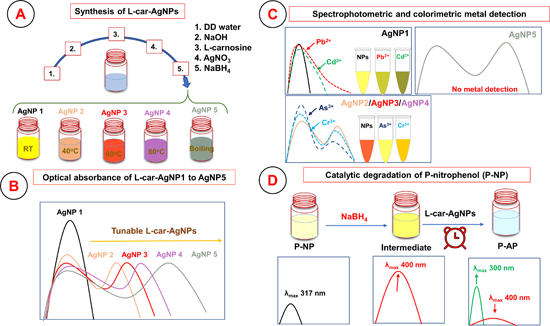
- (2.8 μM) for As3+, and 245.49 ppb (4.7 μM) for Cr3+. Additionally, these nanoparticles demonstrated catalytic activity regarding the degradation of p-nitrophenol (P-NP), achieving complete degradation of 0.25 and 1 mM solutions within 5 and 10 min, respectively. This study reveals the potential of ʟ
- biomagnification [1]. Similarly, organic pollutants such as p-nitrophenol (P-NP), from agricultural and industrial processes, are of significant concern because of their toxicity and resistance to degradation [2]. Consequently, detection and removal of these contaminants have become crucial for environmental
- -car-AgNP1 was synthesized at room temperature (RT = 25 °C), with the addition of 1 mL ʟ-carnosine (0.01 M) to 5 mL DD water followed by sequential additions of 100 μL NaOH (1 M), 1 mL AgNO3 (0.01 M), and 1 mL NaBH4 (0.001 M). The other samples, ʟ-car-AgNP2, ʟ-car-AgNP3, ʟ-car-AgNP4, and ʟ-car-AgNP5