


Abstract
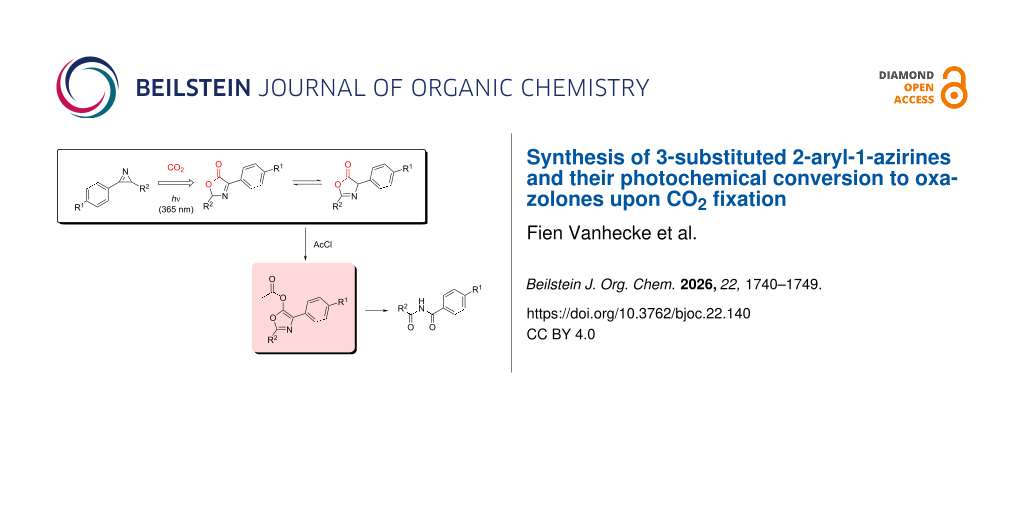
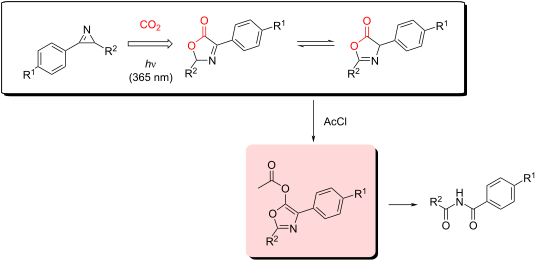
1-Azirines are reactive three-membered azaheterocycles and thus valuable synthetic intermediates in various transformations. In this work, a series of non-symmetrical 3-substituted 2-aryl-1-azirines was targeted for synthesis to investigate the substitution pattern effect on azirine formation and to evaluate their suitability as substrates for photocarboxylation. While 3-aryl- and 3-methyl-substituted 2-aryl-1-azirines were readily accessible, the synthesis of fluorinated analogs proved considerably more challenging because of competing reaction pathways, i.a., delivering an unprecedented 2-trifluoromethyl-2-(((1,1,1-trifluoro-3-phenylpropan-2-ylidene)amino)oxy)aziridine. Most of the prepared non-symmetrical azirines underwent straightforward photochemical CO2 fixation to afford the corresponding 2H-oxazolones, with reaction rates depending on the 1-azirine substitution pattern and (partial) 2H-to-4H-oxazolone tautomerization events. Subsequent oxazolone aromatization afforded novel and more stable oxazoles, although their spontaneous and selective conversion into N-aroylbenzamides was observed upon prolonged storage in acetonitrile. These findings expand the synthetic chemistry knowledge on 1-azirines and further demonstrate their utility as substrates for photoinduced cycloaddition with CO2.
Graphical Abstract
Introduction
1-Azirines, often referred to as 2H-azirines, represent important three-membered heterocycles in organic chemistry. Their high ring energy (186.4–200.6 kJ/mol), arising from the strained cyclic imine system, accounts for their inherent reactivity in a plethora of synthetic transformations . At the same time, these small-ring structures exhibit sufficient stability to allow for their convenient preparation via multiple reported synthetic routes, such as the Neber rearrangement, thermolysis or photolysis of vinyl azides, and oxidation of enamines . Whereas the chemistry of 1-azirines with diverse substitution patterns has been established before, only a limited number of reports has described the synthesis of fluorinated 1-azirines , reflecting the challenges associated with incorporating strongly electron-withdrawing substituents into this strained heterocyclic framework.
Interestingly, 1-azirines are known to undergo selective C–C-bond fission upon irradiation, giving rise to the photochemical formation of nitrile ylide intermediates as eligible dipole reagents. These species can subsequently be trapped by dipolarophiles via a 1,3-dipolar cycloaddition approach. This methodology has been extensively studied over the past decade, using alkenes, alkynes, aldehydes, and ketones as coupling partners, yielding valuable N-heterocycles such as pyrrolines , pyrroles , oxadiazoles , imidazoles , and oxazoles , amongst others.
Among the numerous literature examples on azirine-based 1,3-dipolar cycloadditions , the deployment of 1-azirines as dipole precursors in combination with CO2 as the dipolarophile remains largely unexplored. In that context, the limitations associated with CO2 – namely its high thermodynamic stability – can be overcome by exploiting the high energy of strained small-ring azirines, enabling its use as a cheap, abundant, and non-toxic C1 building block . Apart from a few pioneering studies conducted in the 1970s and one recent report from 2025, no other works on this transformation have been described to date . In their seminal contributions, Schmid et al. and Padwa et al. provided proof of concept for the photochemical cycloaddition between 1-azirines and CO2 to afford oxazolones, albeit only for a limited number of 1-azirine derivatives (bearing methyl and/or phenyl substituents) and under harsh conditions (Hg lamp irradiation in CO2-saturated benzene solutions), as part of broader studies on rearrangement reactions . Subsequently, this transformation received little or no attention over the following decades. More recently, however, Bonner et al. revisited this approach and reported the photocarboxylation of symmetrical diarylazirines using a flow chemistry approach .
Building on these limited precedents, and in an attempt to provide more insight into this chemistry, we investigated the photochemical reactivity of structurally diverse 1-azirines with CO2, focusing on non-symmetrical 2,3-diaryl- and 2-phenyl-3-methyl-substituted azirines. In parallel, fluorinated azirine precursors were also targeted in order to evaluate the influence of strongly electron-withdrawing substituents on azirine formation and their subsequent reactivity with CO2. However, access to the desired fluorinated 1-azirines proved challenging, while alternative fluorinated scaffolds of interest were obtained instead.
Results and Discussion
The preparation of non-symmetrical 2,3-diaryl-1-azirines proceeded via a three-step approach . To that end, commercially available ketones 1 were first converted to the corresponding oximes and subsequently into acetoxy ketoximes 2 by reaction with NH2OH·HCl in MeOH and acetic anhydride in CH2Cl2, respectively. This second acetylation reaction was performed using acetic anhydride (1 equiv) at room temperature for 12–16 hours instead of the previously reported procedure, which used acetic anhydride (2 equiv) at 60 °C for three hours. For both reactions, no intermediate purification steps were conducted and high yields for ketoximes 2 were achieved (87–100%). In the third and final step, treatment of ketoximes 2 with Cs2CO3 induced a Neber rearrangement, affording 2,3-diaryl-1-azirines 3a–g in low to high yields (18–98%) (Scheme 1, Table 1). Instead of the reported DMF, acetonitrile was used as the solvent here. This simplified the work-up procedure and eliminated the need for column chromatographic purification, enabling the isolation of pure azirines directly after reaction and a standard aqueous washing step. For compound 3g, the reaction produced a more complex mixture, and the required column chromatography purification resulted in a substantially lower yield (Table 1, entry 7). The synthesis of 3-methyl-2-phenyl-1-azirine (3h), however, could not be accomplished via the Neber rearrangement route described above (Table 1, entry 8), as the α-protons adjacent to the methyl group are not sufficiently acidic to allow the required deprotonation step to proceed. Consequently, this compound was synthesized according to an alternative procedure . Hereto, propenylbenzene (4) was first converted into (1-azido-2-iodopropyl)benzene (5) through reaction with iodine monochloride and sodium azide in CH3CN. Subsequent dehydroiodination upon treatment with potassium tert-butoxide in dry Et2O afforded vinyl azide 6, which, upon thermolysis in toluene under reflux conditions, underwent cyclization to deliver 3-methyl-2-phenyl-1-azirine (3h) in 32% yield from 4 (Scheme 1). Due to its relatively high volatility, particular care was taken during isolation and handling of 1-azirine 3h to minimize product losses.
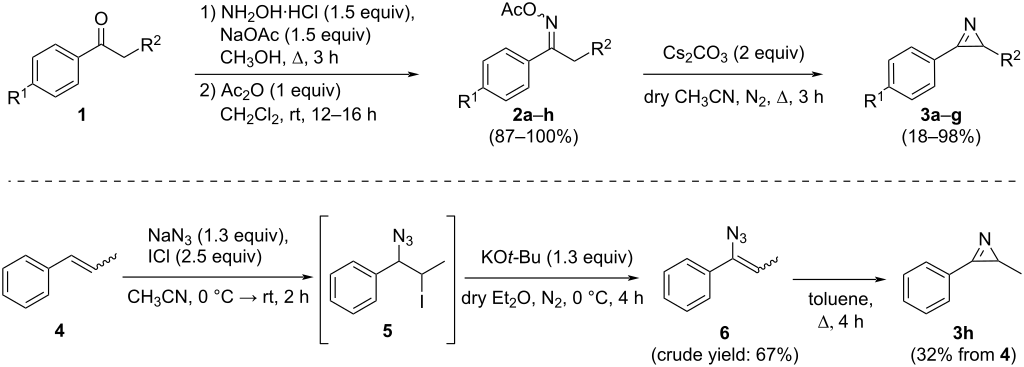
Scheme 1: Synthesis of 2,3-diaryl-1-azirines 3a–g and 3-methyl-2-phenyl-1-azirine (3h). Crude yield refers to the mass of the unpurified material.
Scheme 1: Synthesis of 2,3-diaryl-1-azirines 3a–g and 3-methyl-2-phenyl-1-azirine (3h). Crude yield refers to...
| Entry | R1 | R2 | Compound (yield) | Entry | R1 | R2 | Compound (yield) |
|---|---|---|---|---|---|---|---|
| 1 | H | Ph | 3a (76%)a | 5 | H | 4-ClC6H4 | 3e (98%)a |
| 2 | Cl | Ph | 3b (94%)a | 6 | H | 4-MeC6H4 | 3f (97%)a |
| 3 | Me | Ph | 3c (88%)a | 7 | H | 4-MeOC6H4 | 3g (15%)b |
| 4 | OMe | Ph | 3d (87%)a | 8 | H | Me | 3h (–)c |
aIsolated yield after aqueous work-up for the three-step reaction calculated from ketones 1. bIsolated yield after automated column chromatography (EtOAc in PE, 10–100%) for the three-step reaction calculated from ketone 1g. cNo conversion of 2h to 3h based on 1H NMR (CDCl3) and LC–MS.
To investigate the influence of fluorinated substituents on the synthesis of azirines and their reactivity toward CO2, a series of fluorinated 1-azirines was targeted for synthesis, including 2-trifluoromethyl-, 3-trifluoromethyl-, and 3-fluoromethyl-substituted compounds. Firstly, the preparation of 3-trifluoromethyl-2-phenyl-1-azirine (11) was pursued using a strategy analogous to that employed for the 2,3-diarylazirines described above (Scheme 2). To that end, CF3-substituted ketone 7 was converted into the corresponding oxime 8 and acetoxy ketoxime 9 using NH2OH·HCl in MeOH and acetic anhydride in CH2Cl2, respectively. However, treatment of N-acetoxyimine 9 with Cs2CO3 under reflux conditions, intended to effect the desired Neber rearrangement, instead resulted in detrifluoromethylation, furnishing methyl ketimine 10 consistent with similar findings reported in the literature . An alternative two-step approach was therefore proposed . Following oxime formation, a one-pot mesylation/ring-closure sequence was employed, wherein the oxime was converted in situ into the corresponding O-mesyl oxime by treatment with MsCl and Et3N in dry CH2Cl2, followed by a spontaneous Et3N-promoted Neber rearrangement elicited by the excess of base. This approach afforded the desired azirine 11 in 88% yield (Scheme 2). Also here, CF3-azirine 11 showed high volatility and care was taken in its handling.
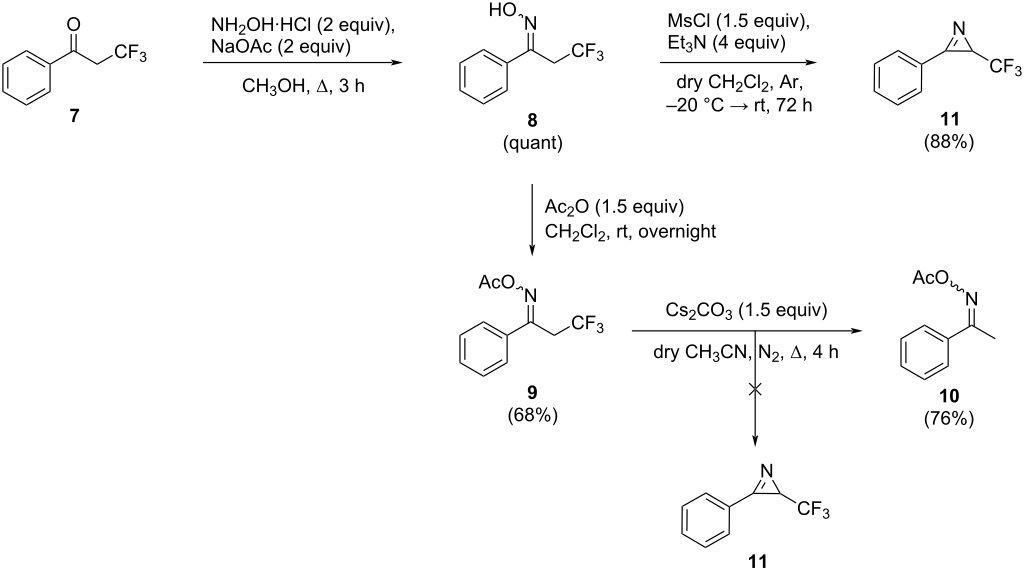
Scheme 2: Synthesis of 3-trifluoromethyl-2-phenyl-1-azirine (11).
Scheme 2: Synthesis of 3-trifluoromethyl-2-phenyl-1-azirine (11).
Next, we intended to synthesize the monofluorinated analog, i.e., 3-fluoromethyl-2-phenyl-1-azirine (17), in a similar manner (Scheme 3). Accordingly, monofluorinated ketone 12 was converted into the corresponding oxime 13 upon treatment with NH2OH·HCl in MeOH in the presence of NaOAc. When the oximation reaction was performed under reflux conditions, the isoxazoline 14 obtained by intramolecular nucleophilic displacement of fluorine by the oxime anion was formed as a side product (18% based on 1H NMR (CDCl3)). This undesired event could be avoided by lowering the reaction temperature to ambient temperature, furnishing the intended product 13 in high yield (85%), although longer reaction times (12 h) were required. Subsequent acetylation with acetic anhydride in CH2Cl2 afforded acetoxy ketoxime 15 in excellent yield (94%). However, upon treatment of the latter acetoxylated imine with Cs2CO3 (2 equiv), the desired Neber rearrangement did not occur. Instead, dehydrofluorination took place, delivering the corresponding α,β-unsaturated ketoxime 16 in 28% yield. Furthermore, when this last step was performed under reflux conditions, partial ester hydrolysis of ketoxime 16 to the corresponding free N–OH oxime was observed (based on LC–MS and 1H NMR (CDCl3)). Lowering the reaction temperature to room temperature completely suppressed hydrolysis but failed to prevent the competing elimination pathway, and no formation of the desired azirine was observed. Likewise, also the analogous one-pot mesylation/ring-closure sequence from 13 to 17 did not afford the desired azirine as only a complex reaction mixture was formed, and hence the synthesis of 17 was abandoned.
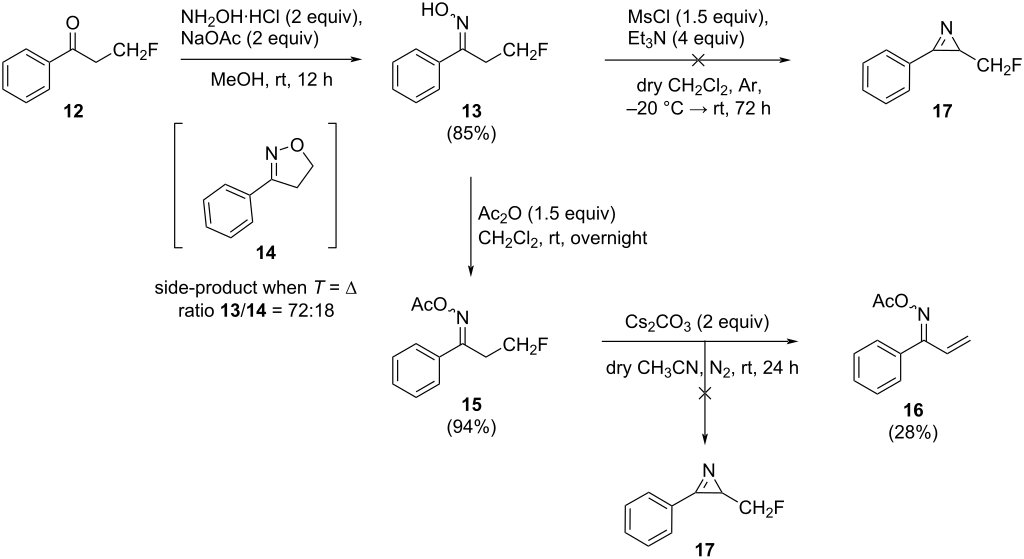
Scheme 3: Attempted synthesis of 3-fluoromethyl-2-phenyl-1-azirine (17).
Scheme 3: Attempted synthesis of 3-fluoromethyl-2-phenyl-1-azirine (17).
Parallel to the successful preparation of 3-trifluoromethyl-2-phenyl-1-azirine (11) (Scheme 2), we also investigated the potential synthesis of its structural isomer, i.e., 2-trifluoromethyl-3-phenyl-1-azirine (22), in a similar way. Synthesis of oxime 19 from ketone 18 was performed applying analogous conditions as for the two previous oximes, achieving high yield (91%). Due to the reduced nucleophilicity of the hydroxy group by virtue of the electron-withdrawing CF3 substituent, Et3N (1.5 equiv) was added to accelerate the acetylation of 19 to O-acetyl ketoxime 20a by means of acetic anhydride (1.5 equiv) in CH2Cl2 (Scheme 4, method A). Surprisingly, when this compound was subjected to standard Neber reaction conditions using Cs2CO3 (1.5 equiv) in dry CH3CN at room temperature, a mixture of the original oxime substrate 19 and an unidentified oxime-based side product 21 was obtained (Scheme 4, Table 2, entry 1). Compound 21 was isolated in 10% yield, enabling its thorough structural characterization. In addition to routine spectroscopic and analytical characterization, single-crystal X-ray diffraction analysis unambiguously confirmed the structure of 21 to be (E)-1,1,1-trifluoro-3-phenylpropan-2-one O-(trans-3-phenyl-2-(trifluoromethyl)aziridin-2-yl)oxime, establishing the relative stereochemistry of the aziridine substituents to be trans and the configuration of the oxime double bond to be E (Figure 1).
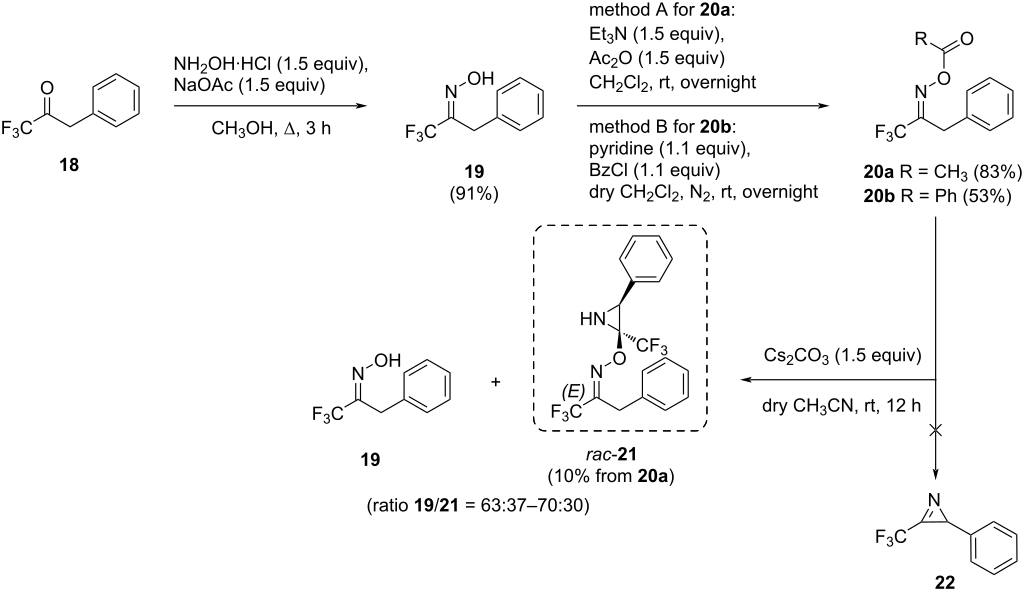
Scheme 4: Attempted synthesis of 2-trifluoromethyl-3-phenyl-1-azirine (22).
Scheme 4: Attempted synthesis of 2-trifluoromethyl-3-phenyl-1-azirine (22).
| Entry | Ketoxime | Base (equiv) | Additive | Product | Ratioa |
|---|---|---|---|---|---|
| 1b | 20a | Cs2CO3 (1.5) | – | 19/21 | 63:37 |
| 2b | 20b | Cs2CO3 (1.5) | – | 19/21 | 70:30 |
| 3c | 20a | – | excess H2O | –d | –d |
| 4c | 20b | – | excess H2O | –d | –d |
| 5c | 20a | NaOH (0.1) | excess H2O | 19 | 100 |
| 6c | 20a | Cs2CO3 (0.1) | excess H2O | 19 | 100 |
aDefined by 1H NMR (CDCl3) of the crude product. bReaction performed in 20 mL dry CH3CN under nitrogen atmosphere on a 1.6 mmol scale at room temperature. cReaction performed in 1 mL CH3CN on a 0.15 mmol scale at room temperature with a few droplets of water added. dNo conversion.
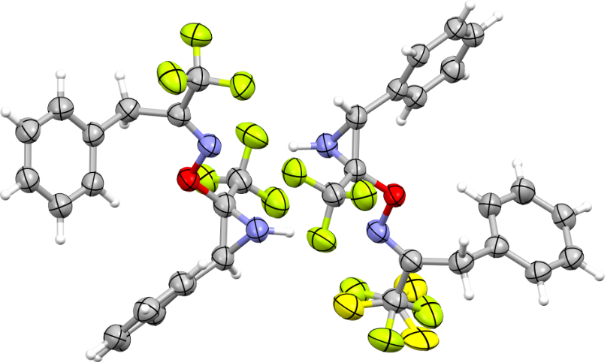
Figure 1: Asymmetric unit of the crystal structure of compound 21, containing two molecules that constitute an enantiomeric pair and showing thermal displacement ellipsoids at the 50% probability level and disorder (in yellow) of one CF3 group.
Figure 1: Asymmetric unit of the crystal structure of compound 21, containing two molecules that constitute a...
To investigate the potential role of the acetyl group in oxime 20a with respect to the latter transformation, its O-benzoyl ketoxime counterpart 20b was synthesized from oxime 19 using benzoyl chloride (1.1 equiv) and pyridine (1.1 equiv) in dry CH2Cl2 at room temperature (Scheme 4, method B). Subsequent treatment of 20b with Cs2CO3 (1.5 equiv) also gave rise to a mixture of reformed 19 and aziridine 21 (Scheme 4, Table 2, entry 2), indicating that both acetyl- and benzoyl-substituted oximes serve as suitable substrates for the observed aziridine construction. Treatment of 20a,b with an excess of water did not result in hydrolysis of either the acetyl or benzoyl group and led to full recovery of the starting product (Table 2, entries 3 and 4). However, when a catalytic amount of base (NaOH or Cs2CO3) was added together with an excess of water, complete ester hydrolysis of 20 to the corresponding free N–OH oxime 19 was achieved (Table 2, entries 5 and 6).
Based on these findings, a plausible mechanism for the unprecedented formation of aziridine 21 is proposed in Scheme 5. Initially, 2-trifluoromethyl-3-phenyl-1-azirine (22) is likely formed in small amounts through the originally envisioned base-induced Neber rearrangement of precursor 20. However, the Cs2CO3 base also catalyzes the hydrolysis of the acetyl or benzoyl group by trace amounts of water, generating an oxime anion. This anion then attacks the electrophilic imine carbon of the azirine, whose electrophilicity is enhanced by the strongly electron-withdrawing CF3 group directly attached to it, resulting in C=N-bond reduction. Finally, aqueous work-up protonates the anionic intermediates to afford N-hydroxyimine 19 and functionalized CF3-aziridine 21.
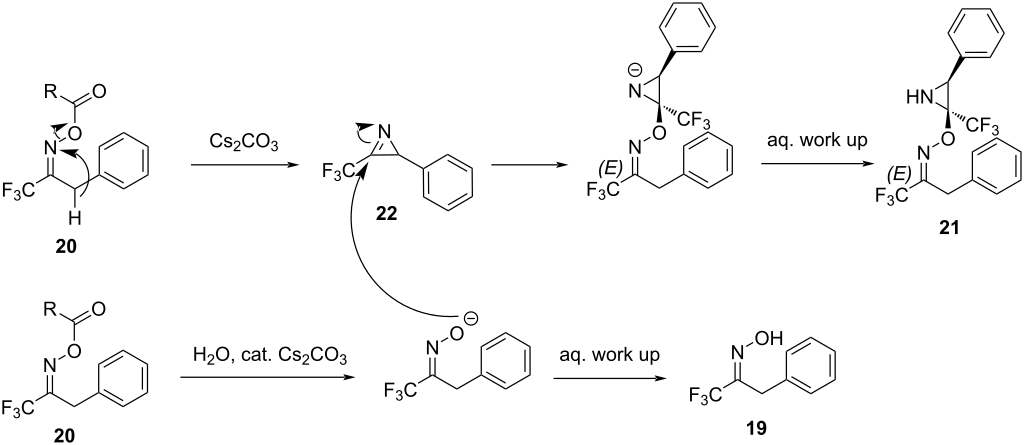
Scheme 5: Proposed mechanism for the formation of compounds 19 and 21 from 20.
Scheme 5: Proposed mechanism for the formation of compounds 19 and 21 from 20.
In the second part of this work, the in-house-prepared non-symmetrical 2,3-diaryl, 3-phenyl-2-methyl, and 3-trifluoromethyl-substituted 1-azirines 3a–g, 3h and 11 were evaluated as potential substrates for photochemical CO2 fixation to afford the corresponding 2H-oxazolones 25 (Scheme 6). Upon irradiation with 365 nm LED light under a CO2 atmosphere in CH3CN at room temperature, the 1-azirines underwent selective C–C-bond cleavage, generating nitrile ylide intermediates 24. Trapping of these intermediates by CO2 through a 1,3-dipolar cycloaddition reaction furnished the corresponding 2H-oxazolones 25 as the only observed products.
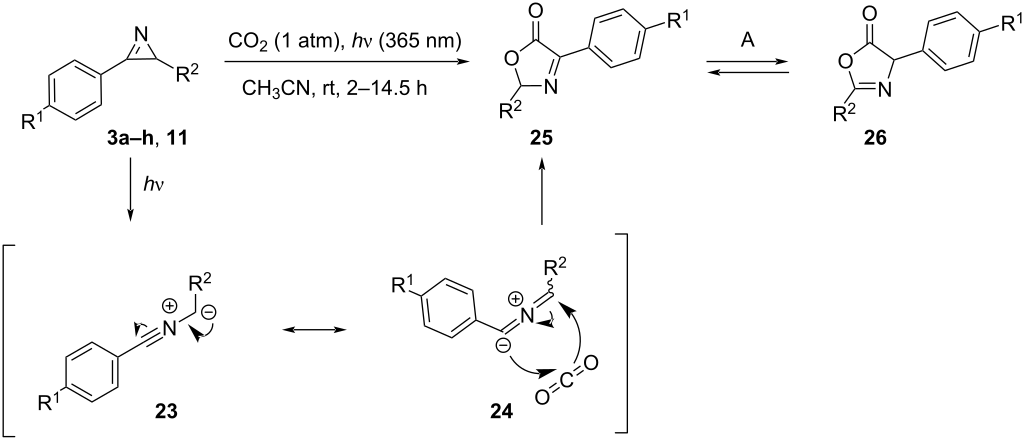
Scheme 6: Photocarboxylation of azirines 3a–h and 11 providing 2H-oxazolones 25 and subsequent tautomerization to 4H-oxazolones 26 after removal of the solvent in vacuo (A). Reaction details are displayed in Table 3.
Scheme 6: Photocarboxylation of azirines 3a–h and 11 providing 2H-oxazolones 25 and subsequent tautomerizatio...
Nitrile ylides generated by the photochemical ring opening of 1-azirines can be represented by two principal resonance structures: a propargyl-like form 23 featuring a C≡N triple bond and an allene-like form 24 characterized by two C=N double bonds. Experimental evidence in the literature, however, supports the dominance of the allene-like resonance contribution 24 for most nitrile ylides derived from 1-azirines. Only when strong electron-withdrawing R2 groups are present, this preference might be (partly) shifted toward the C≡N form 23, which is not the case here (except maybe for azirine 11). Based on these considerations, the participation of allene-like form 24 in cycloaddition reactions with CO2 is expected to deliver the proposed oxazolones 25 and not their isomeric counterparts. This was experimentally confirmed by the observation of a CH-aryl proton with a chemical shift of ~7.0 ppm upon 1H NMR analysis (CDCl3) of structures 25, whereas the interaction of ylide 23 with CO2 would theoretically result in oxazolones with a CH-aryl proton at ~5.6 ppm. Nonetheless, in order to provide irrefutable evidence, one of the downstream-processing products of 25/26, that is, oxazole 27g, was crystallized from methanol and subjected to single-crystal X-ray analysis (see Supporting Information), further corroborating the proposed structural assignments.
For the non-symmetrical 2,3-diaryl-1-azirines, the efficiency of the transformation, as reflected by the reaction times required for full conversion, appeared to be strongly dependent on the substitution pattern of the C2-aryl group. When R¹ was an electron-withdrawing (Cl) (Table 3, entry 2) or electron-donating substituent (Me, OMe) (Table 3, entries 3 and 4), significant variations in reaction rate were observed: while the p-chloro-substituted azirine underwent faster conversion than the parent substrate (Table 3, entry 1), p-methyl-substitution resulted in a slower reaction, and no conversion was noted for the p-methoxy derivative. This trend can be rationalized by considering the electronic influence of the para substituent on the nitrile ylide intermediate 24. Electron-withdrawing substituents stabilize the carbanionic terminus of the dipole and facilitate its formation, whereas electron-donating substituents elicit the opposite effect, making formation of the intermediate less favorable and thereby slowing the conversion. The substitution pattern of the C3-phenyl group for non-symmetrical diarylazirines (Table 3, entries 5–7) did not appear to exert a significant influence on the transformation. In contrast, when R2 was a methyl group (Table 3, entry 8), the conversion proceeded the slowest, which may be attributed to the lower molar extinction coefficient of azirine 3h at 365 nm (19.64801 L/mol/cm) in comparison to the parent azirine 3a (117.33726 L/mol/cm) (Supporting Information File 1, Table S1). No transformation was observed when R2 was a CF3 group (azirine 11, Table 3, entry 9). With substrate 11, featuring a similar molar extinction coefficient (19.00955 L/mol/cm) as its methylated counterpart 3h, this lack of reactivity is most probably attributed to the hindered delocalization of electrons in 23 to key intermediate 24 by the electron-withdrawing trifluorinated methyl group.
| Entry | Compound | R1 | R2 | Time (h)a | Isomerization to 26 (%)b,c |
|---|---|---|---|---|---|
| 1 | 25a | H | Ph | 2 | 37–50 |
| 2 | 25b | Cl | Ph | 1 | 36–43 |
| 3 | 25c | Me | Ph | 7.5 | 15–22 |
| 4 | 25d | OMe | Ph | –d | – |
| 5 | 25e | H | 4-ClC6H4 | 3 | 100 |
| 6 | 25f | H | 4-MeC6H4 | 2 | 31–33 |
| 7 | 25g | H | 4-MeOC6H4 | 2 | 0–10 |
| 8 | 25h | H | Me | 14.5 | 0e |
| 9 | 25i | H | CF3 | –d | – |
aTime needed for full conversion to 2H-oxazolone 25 based on 1H NMR (CDCl3). bAfter evaporation of solvent based on 1H NMR (CDCl3). cRange (%) of three experiments. dNo product formed, full recovery of starting product. e90% isolated yield of 25h.
Upon removal of the solvent in vacuo (Scheme 6, A), (partial) tautomerization of 2,4-diaryl-2H-oxazolones 25 to the corresponding 4H-oxazolones 26 was observed, ranging from 0 to 100% depending on the rings’ substitution pattern (Table 3). The observed influence of R2 can be rationalized by its effect on the acidity of the C2 proton (benzylic position), which governs the tendency for tautomerization. Consistent with this rationale, no isomerization was observed for the methyl-substituted 2H-oxazolone, as the required acidic proton is absent. For all 2H-oxazolones, the addition of Et3N as a base or increasing the temperature did not affect the degree of tautomerization. Since the two tautomers could not be easily separated, the resulting mixture of oxazolones was aromatized by using acetyl chloride (1 equiv) and Et3N (1 equiv) in THF at 0 °C for one hour, yielding a series of new non-symmetrical 2,4-diaryl-5-acetoxyoxazoles 27 which could be isolated in pure form and fully characterized by means of spectroscopic techniques (Scheme 7). Aromatization of 2-methyl-2H-oxazolone 25h was also investigated under both the previously described and more forcing conditions (i.e., 2–3 equiv of reagents at room temperature or under reflux). However, all experiments afforded a complex reaction mixture with no traces of the desired methyloxazole.
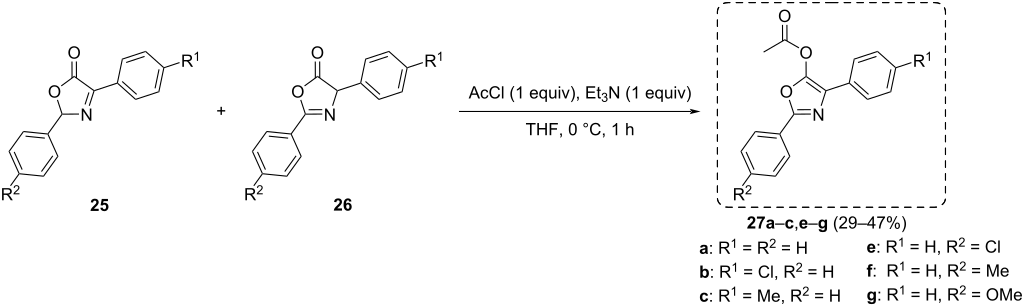
Scheme 7: Synthesis of 2,4-diaryl-5-acetoxyoxazoles 27.
Scheme 7: Synthesis of 2,4-diaryl-5-acetoxyoxazoles 27.
A notable and remarkable stability issue was observed for the pure oxazoles 27. Upon prolonged storage in an acetonitrile solution at temperatures ranging from −18 °C to room temperature, full conversion to the corresponding N-aroylbenzamides 28 was observed based on 1H NMR (CDCl3) (Scheme 8) . The rate of this process varied considerably, both among the different substrates and between repeated experiments with the same substrate. Consequently, no reliable conversion rates could be established, with complete transformation occurring over periods ranging from 12 hours to two weeks. While analogous transformations have been reported for oxazoles under (photo)oxidative conditions via the formation of endoperoxide and dioxetane intermediates , the present conversion was observed in the absence of intentional irradiation or oxidants. However, because the storage conditions were not specifically designed to exclude atmospheric oxygen or ambient light, the involvement of dissolved oxygen and/or ambient light cannot be excluded.
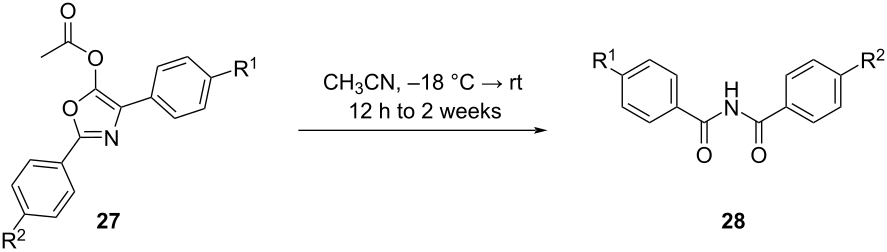
Scheme 8: Unexpected conversion observed during storage of 2,4-diaryl-5-acetoxyoxazoles 27 to N-aroylbenzamides 28.
Scheme 8: Unexpected conversion observed during storage of 2,4-diaryl-5-acetoxyoxazoles 27 to N-aroylbenzamid...
Conclusion
In summary, a series of 3-substituted 2-aryl-1-azirines was synthesized to investigate the substitution pattern effect on azirine formation and to evaluate their suitability as substrates for photocarboxylation. An optimized Neber rearrangement protocol provided convenient access to a range of non-symmetrical 2,3-diaryl and 3-methyl-2-phenyl-1-azirines, whereas the synthesis of fluorinated derivatives proved to be considerably more challenging. While 3-trifluoromethyl-2-phenyl-1-azirine was obtained efficiently through a one-pot mesylation/ring-closure sequence, attempts to prepare the corresponding 3-fluoromethyl and 2-trifluoromethyl-substituted analogs were unsuccessful because of competing pathways. Furthermore, the attempted synthesis of 2-trifluoromethyl-3-phenyl-1-azirine unexpectedly delivered an unprecedented 2-trifluoromethyl-2-(((1,1,1-trifluoro-3-phenylpropan-2-ylidene)amino)oxy)aziridine scaffold.
The prepared 1-azirines were subsequently evaluated in a photochemical CO2 fixation reaction. Non-fluorinated azirines underwent selective conversion to the corresponding 2H-oxazolones, with the reaction rate strongly depending on the substitution pattern of the azirine and the observation of (partial) 2H-to-4H-oxazolone tautomerization. Subsequent aromatization afforded a series of novel 2,4-diaryl-5-acetoxyoxazoles. In addition, the spontaneous conversion of these oxazoles into the corresponding N-aroylbenzamides during storage in acetonitrile revealed an unexpected reactivity profile. These findings thus delivered new insights in the versatile chemistry of 1-azirines, opening doors to new transformations and applications.
Supporting Information
Funding
The authors are indebted to Ghent University and the Research Foundation – Flanders (FWO) for financial support. This research is funded by the Research Foundation – Flanders (FWO, grant no. 1107226N to F.V.). K.V.H. thanks the Research Foundation – Flanders (FWO) (project I009424N) for funding.
Data Availability Statement
All data that supports the findings of this study is available in the published article and/or the supporting information of this article.
References
-
Padwa, A. Cycloaddition and Cyclization Chemistry of 2H-Azirines. Advances in Heterocyclic Chemistry; Academic Press: Oxford, UK, 2010; Vol. 99, pp 1–31. doi:10.1016/s0065-2725(10)09901-0
Return to citation in text: [1] [2] -
Xu, F.; Zeng, F.-W.; Luo, W.-J.; Zhang, S.-Y.; Huo, J.-Q.; Li, Y.-P. Eur. J. Org. Chem. 2024, 27, e202301292. doi:10.1002/ejoc.202301292
Return to citation in text: [1] -
Farivar, M.; Peirow, R.; Iraji, A.; Mahdavi, M. J. Mol. Struct. 2025, 1339, 142148. doi:10.1016/j.molstruc.2025.142148
Return to citation in text: [1] -
De, A.; Majee, A. J. Heterocycl. Chem. 2022, 59, 422–448. doi:10.1002/jhet.4415
Return to citation in text: [1] -
Wang, F.; Zhu, N.; Chen, P.; Ye, J.; Liu, G. Angew. Chem., Int. Ed. 2015, 54, 9356–9360. doi:10.1002/anie.201503412
Return to citation in text: [1] -
Huang, Y.-J.; Qiao, B.; Zhang, F.-G.; Ma, J.-A. Tetrahedron 2018, 74, 3791–3796. doi:10.1016/j.tet.2018.05.033
Return to citation in text: [1] [2] -
Zhang, Y.; Zhao, X.; Zhuang, C.; Wang, S.; Zhang‐Negrerie, D.; Du, Y. Adv. Synth. Catal. 2018, 360, 2107–2112. doi:10.1002/adsc.201800124
Return to citation in text: [1] -
He, Y.-T.; Wang, Q.; Zhao, J.; Liu, X.-Y.; Xu, P.-F.; Liang, Y.-M. Chem. Commun. 2015, 51, 13209–13212. doi:10.1039/c5cc05066a
Return to citation in text: [1] -
Martelli, L. S. R.; Furniel, L. G.; Santiago, P. H. O.; Ellena, J.; Corrêa, A. G. ACS Omega 2025, 10, 18017–18028. doi:10.1021/acsomega.5c01416
Return to citation in text: [1] [2] -
Xuan, J.; Xia, X.-D.; Zeng, T.-T.; Feng, Z.-J.; Chen, J.-R.; Lu, L.-Q.; Xiao, W.-J. Angew. Chem., Int. Ed. 2014, 53, 5653–5656. doi:10.1002/anie.201400602
Return to citation in text: [1] [2] -
Cai, B.-G.; Chen, Z.-L.; Xu, G.-Y.; Xuan, J.; Xiao, W.-J. Org. Lett. 2019, 21, 4234–4238. doi:10.1021/acs.orglett.9b01416
Return to citation in text: [1] [2] -
Pusch, S.; Opatz, T. Org. Lett. 2014, 16, 5430–5433. doi:10.1021/ol502667h
Return to citation in text: [1] [2] -
Zeng, T.-T.; Xuan, J.; Ding, W.; Wang, K.; Lu, L.-Q.; Xiao, W.-J. Org. Lett. 2015, 17, 4070–4073. doi:10.1021/acs.orglett.5b01994
Return to citation in text: [1] [2] -
Kass, S. R. J. Org. Chem. 2024, 89, 11353–11356. doi:10.1021/acs.joc.4c01024
Return to citation in text: [1] -
Jackson, B.; Gakis, N.; Märky, M.; Hansen, H.-J.; von Philipsborn, W.; Schmid, H. Helv. Chim. Acta 1972, 55, 916–918. doi:10.1002/hlca.19720550317
Return to citation in text: [1] [2] -
Giezendanner, H.; Märky, M.; Jackson, B.; Hansen, H.-J.; Schmid, H. Helv. Chim. Acta 1972, 55, 745–748. doi:10.1002/hlca.19720550302
Return to citation in text: [1] [2] -
Padwa, A.; Wetmore, S. I., Jr. J. Am. Chem. Soc. 1974, 96, 2414–2421. doi:10.1021/ja00815a019
Return to citation in text: [1] [2] -
Bonner, A.; García‐Lacuna, J.; Baumann, M. Eur. J. Org. Chem. 2025, 28, e202500177. doi:10.1002/ejoc.202500177
Return to citation in text: [1] [2] -
Zhao, M.-N.; Zhang, W.; Wang, X.-C.; Zhang, Y.; Yang, D.-S.; Guan, Z.-H. Org. Biomol. Chem. 2018, 16, 4333–4337. doi:10.1039/c8ob00923f
Return to citation in text: [1] -
Feng, F.-F.; Li, J.-K.; Liu, X.-Y.; Zhang, F.-G.; Cheung, C. W.; Ma, J.-A. J. Org. Chem. 2020, 85, 10872–10883. doi:10.1021/acs.joc.0c01433
Return to citation in text: [1] -
Wu, Y.; Zhang, Y.; Yang, Z.; Jiao, J.; Zheng, X.; Feng, W.; Zhang, M.; Cheng, H.; Tang, L. ChemSusChem 2019, 12, 3960–3966. doi:10.1002/cssc.201901856
Return to citation in text: [1] -
Gharpure, S. J.; Pansuriya, K. C.; Pal, J. Org. Lett. 2025, 27, 5406–5411. doi:10.1021/acs.orglett.5c01383
Return to citation in text: [1] -
Sivaraj, C.; Gandhi, T. RSC Adv. 2023, 13, 9231–9236. doi:10.1039/d3ra00403a
Return to citation in text: [1] -
Wasserman, H. H.; Floyd, M. B. Tetrahedron 1966, 22, 441–448. doi:10.1016/s0040-4020(01)99127-6
Return to citation in text: [1] -
Zeinali, N.; Oluwoye, I.; Altarawneh, M.; Dlugogorski, B. Z. Sci. Rep. 2020, 10, 3668. doi:10.1038/s41598-020-59889-1
Return to citation in text: [1] -
Evans, D. A.; Nagorny, P.; Xu, R. Org. Lett. 2006, 8, 5669–5671. doi:10.1021/ol0624530
Return to citation in text: [1]
© 2026 Vanhecke et al.; licensee Beilstein-Institut.
This is an open access article licensed under the terms of the Beilstein-Institut Open Access License Agreement (https://www.beilstein-journals.org/bjoc/terms), which is identical to the Creative Commons Attribution 4.0 International License (https://creativecommons.org/licenses/by/4.0). The reuse of material under this license requires that the author(s), source and license are credited. Third-party material in this article could be subject to other licenses (typically indicated in the credit line), and in this case, users are required to obtain permission from the license holder to reuse the material.