


Abstract
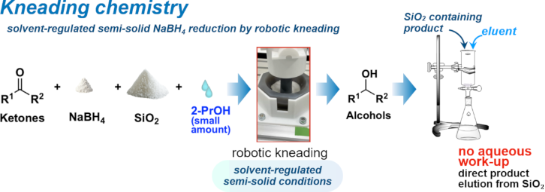
Physical-AI robotic systems are being developed as platforms for autonomous organic synthesis. However, solvent handling remains a practical challenge in robotic operations, as the use of organic solvents imposes requirements on equipment materials, fluid delivery, and product recovery. Here, we introduce kneading chemistry, a semi-solid reaction method with controlled solvent content designed for robotic organic synthesis. We investigated the reduction of ketones with NaBH4 under semi-solid conditions using a robotic kneading system equipped with force monitoring and programmable motion control. The amounts of solvent and silica gel were adjusted according to the substrate. Silica gel serves as both a reaction medium and a reservoir for protic solvents, helping maintain the semi-solid reaction environment during kneading. A structurally diverse range of ketones was reduced in moderate to good yields with reduced solvent use. Products were recovered directly from the silica gel reaction mixture by elution, without conventional aqueous work-up.
Graphical Abstract
Introduction
Recent advances in data-driven molecular design make it possible to propose numerous candidate molecular structures . Testing these proposals through synthesis and experimental evaluation is necessary to drive the research cycle. This creates a need for efficient organic synthesis systems. Various laboratory automation platforms have therefore been developed to increase experimental throughput and reproducibility, such as Chemputer , ChemSpeed , automated flow synthesis systems based on ASKCOS , and others . Integration of artificial intelligence with robotic experimentation is leading to physical-AI robotic systems for autonomous molecular research . Organic synthesis, however, involves diverse experimental procedures that must frequently be adapted to the properties of individual substrates, reagents, intermediates, and products. Reaction methodologies for autonomous organic synthesis must therefore be compatible with robotic operation. At the same time, reducing solvent consumption and waste generation is an important consideration in the development of organic synthesis methodologies. Reaction methods that minimize solvent use are therefore attractive not only from an environmental perspective but also as approaches to simplifying reaction operations in robotic synthesis.
Among reaction methodologies that minimize solvent use, mechanochemistry has attracted considerable attention as an alternative to conventional solution-phase synthesis . Ball milling, the most extensively investigated mechanochemical technique, has demonstrated that externally applied mechanical force can promote a broad range of organic transformations . Many ball-milling reactions can proceed under solvent-free or solvent-minimized conditions . Such approaches may offer advantages for robotic synthesis by reducing solvent handling. In ball-milling reactions, however, product recovery from sealed milling vessels may require additional solvent-assisted work-up. Product recovery and subsequent handling are important considerations in robotic synthesis because they form part of the overall automated process. This led us to consider whether a semi-solid reaction environment could be combined with direct robotic manipulation, allowing reaction and product handling to be performed without relying on large volumes of solvent.
Kneading offers a simple means of continuously mixing semi-solid reaction mixtures through shear and compression . Although kneading has long been used as a practical laboratory operation, its use as a reaction methodology has been limited, in part because manual manipulation is difficult to standardize and semi-solid reaction states are difficult to control reproducibly. Our previously developed force-controlled robotic mechanochemical system, equipped with programmable motion control and force monitoring , provides a means of performing such operations reproducibly and systematically examining semi-solid reaction conditions. In semi-solid reaction mixtures, small amounts of solvent can significantly affect conversion. Previous mechanochemical studies have shown that changes in liquid content can markedly affect reaction efficiency . In the NaBH₄ reduction examined here, a protic solvent may also facilitate protonation of boron alkoxide intermediates. Thus, the amount of solvent is not simply a matter of solvent minimization but also a means of controlling the conditions under which the reaction proceeds. We refer to this semi-solid reaction strategy as kneading chemistry.
Herein, we demonstrate kneading chemistry through the NaBH4-mediated reduction of ketones using a robotic kneading system. Silica gel is employed as a solid medium in combination with controlled amounts of protic solvent to provide semi-solid conditions suitable for robotic kneading. The silica gel also facilitates product recovery by direct elution without conventional aqueous work-up. This study explores robotic kneading as an approach to solvent-regulated semi-solid organic synthesis and its potential application to physical-AI robotic systems.
Results
Design of a solvent-regulated semi-solid reaction environment
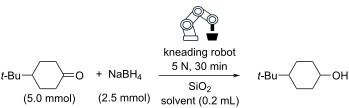
We began our investigation of Kneading Chemistry with the NaBH4-mediated reduction of ketones using our previously developed force-controlled robotic mechanochemical synthesis system . Silica gel was selected as a solid medium for constructing a semi-solid reaction environment for robotic kneading. Notably, the use of wet silica gel to promote the NaBH₄ reduction of carbonyl compounds under solvent-free conditions has previously been reported . We therefore examined the effects of silica loading and protic solvent on the NaBH4 reduction of 4-tert-butylcyclohexanone under robotic kneading conditions (Table 1, see also a movie as Supporting Information File 1). As summarized in Table 1, silica loading strongly affected the reaction. In the absence of silica gel, the desired alcohol was obtained in only 28% isolated yield despite the presence of 2-propanol. Higher silica loadings gave the desired alcohol in 88–94% isolated yield. In contrast, only trace conversion was observed in the absence of added solvent, indicating that a small amount of protic solvent was required for efficient reduction. These results show that both silica gel and a protic solvent are important for the NaBH4 reduction under kneading conditions. The lower product yields observed at reduced silica loadings may reflect less efficient hydrolysis of boron alkoxide intermediates, although the precise role of silica gel remains to be clarified.
|
||||
| Entry | SiO₂ (g) | Solvent | yieldb (%) | cis/trans |
|---|---|---|---|---|
| 1 | 5 | no solvent | 6 | 15:85 |
| 2 | 5 | 2-propanol | 88 | 8:92 |
| 3 | 2 | 2-propanol | 94 | 7:93 |
| 4 | 1 | 2-propanol | 49 | 8:92 |
| 5 | 0 | 2-propanol | 28 | 11:89 |
| 6 | 2 | t-BuOH | 66 | 6:94 |
| 7 | 2 | 1-propanol | 48 | 11:89 |
a4-tert-Butylcyclohexanone (5.0 mmol), NaBH₄ (2.5 mmol), 2-PrOH (0.20 mL). bIsolated yield.
Substrate-dependent selection of semi-solid reaction conditions
For the substrate scope, three reaction conditions with different amounts of 2-PrOH and silica gel were used. Method A employed 0.2 mL of 2-PrOH and 2.0 g of silica gel under solvent-minimized semi-solid conditions. Method B employed 1.0 mL of 2-PrOH and 0.5 g of silica gel, giving a slurry-like mixture. The effects of liquid loading on mixing and reaction efficiency in mechanochemical reactions have been reported previously . For comparison, ball milling was also performed under method C using 1.0 mL of 2-PrOH and 0.1 g of silica gel.
As shown in Scheme 1, the effective kneading conditions varied with the substrate. Aryl alkyl ketones, including electron-deficient derivatives, were generally reduced efficiently under the solvent-minimized conditions of method A. Several other substrates gave higher yields under the more highly solvated condition of method B. For example, the yield of 2j increased from 33% with method A to 80% with method B, while that of 2h increased from 35% with method A to 78% with method B. Ball milling (method C) was effective for several substrates, with yields comparable to those obtained by kneading in some cases. Overall, these results show that a single kneading condition is not optimal for all ketones and that the solvent and silica loadings need to be adjusted according to the substrate.
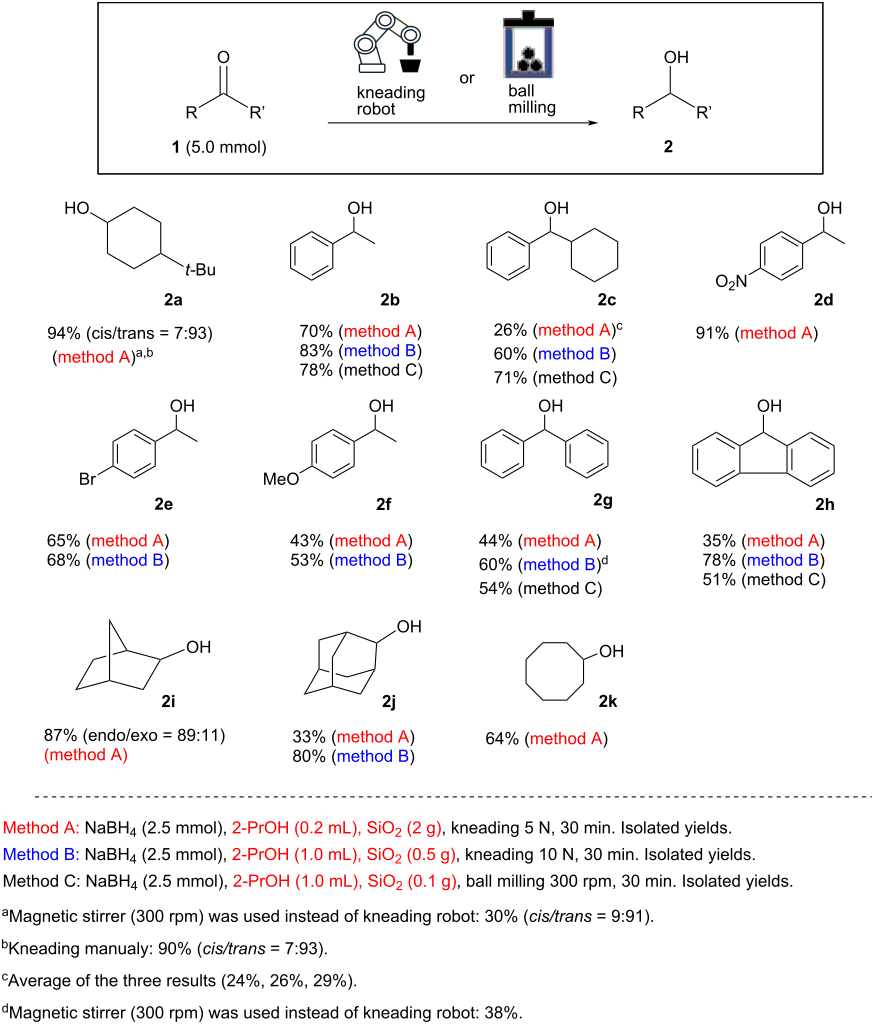
Scheme 1: Substrate scope of NaBH₄-mediated reduction under kneading and ball milling conditions.
Scheme 1: Substrate scope of NaBH₄-mediated reduction under kneading and ball milling conditions.
To further evaluate the reproducibility and practical applicability of robotic kneading, additional experiments were conducted. Three independent reductions of cyclohexyl phenyl ketone (1c) under method A conditions afforded 2c in 24%, 26%, and 29% isolated yields (average: 26%). In the reduction of 4-tert-butylcyclohexanone (1a), conventional magnetic stirring under method A conditions gave 2a in 30% yield, whereas manual kneading afforded 2a under method A conditions in 90% yield, comparable to the 94% obtained by robotic kneading. Similarly, magnetic stirring in the reduction of benzophenone (1g) under method B conditions gave 2g in 38% yield, compared with 60% by robotic kneading. Furthermore, the robotic reduction of 1a was performed on a 20 mmol scale under modified method A conditions, affording 2a in 86% isolated yield.
Stereoselectivity under solvent-minimized kneading conditions
The reductions of benzoin (1l) and 2-methylcyclohexanone (1m) were compared under methods A–C (Scheme 2). For benzoin (1l), the yield varied markedly with the reaction conditions, from 10% under method A to 75% under method B and 99% under ball-milling conditions (method C). In contrast, the diastereomeric ratio remained essentially unchanged (98:2–99:1). The high diastereoselectivity of NaBH₄ reduction of benzoin (1l) has previously been rationalized in terms of substrate conformation and hydrogen-bond-directed hydride approach . A similar tendency was observed for 2-methylcyclohexanone (1m). The yields ranged from 73 to 82% under the different conditions, whereas the trans/cis ratio remained nearly constant (65:35–67:33). This selectivity is consistent with that previously reported for NaBH4 reduction of 2-methylcyclohexanone (1m) . Notably, despite the greatly reduced amount of solvent used under the kneading conditions, the diastereoselectivities were similar to those reported for conventional NaBH4 reductions in solution. Thus, the use of solvent-minimized semi-solid conditions affected the reaction efficiency but did not substantially alter the stereochemical outcome of these reductions.
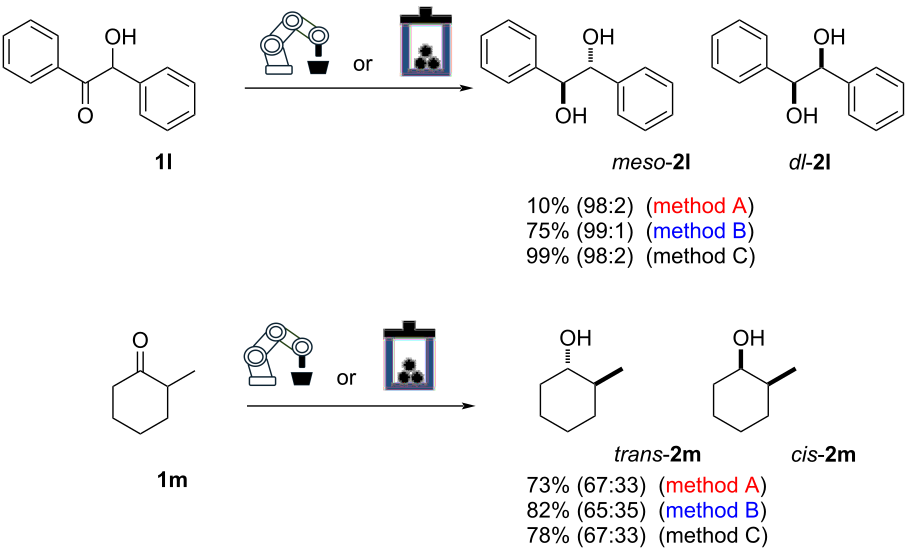
Scheme 2: Influence of semi-solid reaction conditions on the reduction of benzoin (1l) and 2-methylcyclohexanone (1m).
Scheme 2: Influence of semi-solid reaction conditions on the reduction of benzoin (1l) and 2-methylcyclohexan...
Discussion
Kneading chemistry provides a means of carrying out organic reactions under solvent-minimized semi-solid conditions. In the NaBH₄ reduction examined here, both the amount of 2-PrOH and the silica loading affected reaction efficiency, and the effective conditions varied with the substrate. Method A, using a small amount of 2-PrOH and a higher silica loading, was effective for many ketones, whereas some substrates gave higher yields under the more highly solvated conditions of method B. These results demonstrate that the semi-solid reaction environment can be adjusted according to the substrate without relying on conventional solution-phase conditions.
The stereochemical results provide an additional feature of these reactions. Although the yield of benzoin reduction varied markedly among methods A–C, its diastereoselectivity remained essentially unchanged. Similarly, the trans/cis ratio obtained from 2-methylcyclohexanone showed little dependence on the reaction conditions. Despite the greatly reduced amount of solvent used in the kneading experiments, these stereochemical preferences were similar to those reported for conventional NaBH4 reductions in solution. These results suggest that changes in the semi-solid reaction conditions can affect reaction efficiency without substantially altering stereochemical preference.
Ball milling also gave effective reduction for several substrates, with yields comparable to those obtained by kneading in some cases. This comparison suggests that the principal feature of robotic kneading is not the reaction itself, but the manner in which the semi-solid reaction mixture is handled. The force-controlled robotic system enables continuous mixing through controlled mechanical motion, while the use of silica gel allows the products to be recovered directly by elution without conventional aqueous work-up. These features integrate reaction and product recovery within a simple robotic operation.
These features are relevant to robotic organic synthesis, where reducing solvent handling and simplifying product recovery can reduce the operational requirements of the experimental platform. Kneading chemistry therefore provides a practical approach to solvent-minimized organic synthesis that can be implemented using programmable robotic operation.
Conclusion
We have introduced kneading chemistry as an approach to solvent-minimized organic synthesis using robotic kneading and demonstrated its application to the NaBH4-mediated reduction of structurally diverse ketones. The reactions were performed under semi-solid conditions using silica gel and controlled amounts of 2-PrOH. The amounts of 2-PrOH and silica gel could be adjusted according to the substrate, affording a range of ketones in moderate to good yields. Changes in the semi-solid reaction conditions affected reaction efficiency without substantially altering the stereochemical preferences observed for the substrates examined. Products could also be recovered directly from the silica gel by elution without conventional aqueous work-up.
These results show that robotic kneading provides a means of performing organic reactions under solvent-minimized semi-solid conditions while allowing the reaction environment to be adjusted through solvent and silica loading. Although demonstrated here for NaBH4 reduction, kneading chemistry offers an approach to the development of semi-solid reaction methods compatible with robotic organic synthesis.
Experimental
Robot kneading system
The robotic kneading experiments were performed with the system shown in Figure 1, which is derived from the force-controlled robotic powder-grinding platform reported by Nakajima et al. . In that platform, reproducible mechanical input is achieved by controlling the contact between a pestle held by a robot arm and a mortar. The same basic operating principle was adopted here for the kneading of semi-solid reaction mixtures, with the hardware and software modifications described below.
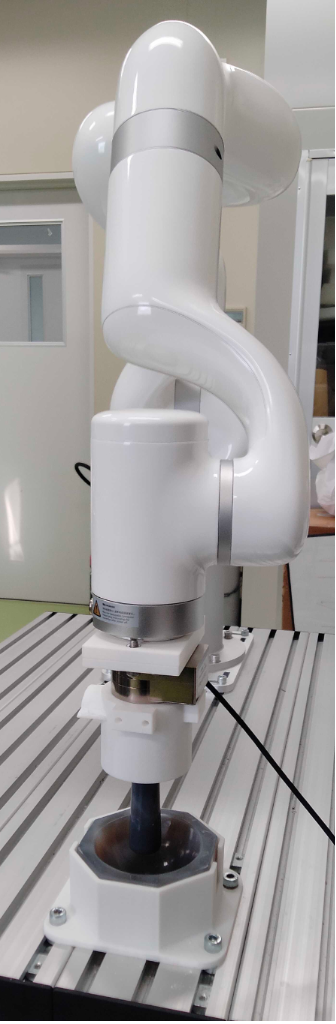
Figure 1: Overview of the automated kneading robot system.
Figure 1: Overview of the automated kneading robot system.
Hardware and force setting
A six-axis collaborative robot arm (UF850, UFactory) was used: A commercial deep-type agate mortar and pestle (AS ONE, 80 mm inner diameter, 32 mm depth) were rigidly mounted, together with the arm, on an aluminum frame.
A six-axis force/torque sensor (PFS055YA251U6, Leptrino) was installed between the tool flange and the pestle holder so that the force applied to the pestle could be measured directly at the end effector. The rated capacities of this sensor are ±250 N for Fx, Fy and Fz, and ±6.0 N m for Mx, My and Mz, with a resolution of ±1/2000 of the rated capacity (approximately 0.13 N for Fz). The sensor was connected to the control PC through a USB serial interface (460800 bps, no parity, 8 data bits). The sensor was operated in continuous transmission mode, and the force and torque values were acquired and recorded at 1200 Hz. Before each measurement, the sensor output was zeroed with the pestle held out of contact to remove the offsets arising from the weight of the tool and from its mounting.
The vertical load during kneading was applied by precise position control of the pestle by the robot arm. Prior to the experiments, the pestle tip was brought into contact with the inner surface of the mortar and its vertical position was varied stepwise while Fz was measured with the force sensor, giving the relationship between the vertical position of the pestle and the resulting vertical load. The pestle position corresponding to the target load was determined from this relationship and was held constant during kneading. The target vertical load was defined as the value at the start of kneading and was set to 5 N for method A and to 10 N for method B.
Software
Robot control was implemented based on the open-source package powder_grinding (https://github.com/quantumbeam/powder_grinding) released with the above report. As this package was originally written for Universal Robots manipulators, it was modified for the UF850 as follows: the robot driver and MoveIt configuration were replaced by those for the UF850, the URDF of the end effector was extended to include the Leptrino force/torque sensor and the pestle holder, and a node publishing the Leptrino measurements as ROS wrench messages was added. For the force/torque sensor, an existing BSD-licensed ROS driver was modified for use in the present system. The modified version is publicly available on GitHub . The control software was run under ROS Noetic in a Docker container on Ubuntu 22.04 (host PC: Intel Core i7-6567U, 16 GB memory). Containerization was adopted so that the ROS Noetic environment could be reproduced independently of the host distribution and identical settings could be deployed for every experiment.
Motion
Kneading was performed with a circular motion of 16 mm diameter, matching the size of the pestle tip, and the depth of the trajectory was defined based on an ellipsoidal model of the inner surface of the mortar. The target end-effector poses were converted into joint trajectories using TrackIK and executed by a joint trajectory controller in ROS. The kneading speed was set by the joint velocity between waypoints and corresponded to one revolution of the circular motion per second, that is, 60 rpm. Each experiment was continued for 30 min under these conditions.
Reduction procedure
Method A: A ketone (5.0 mmol) and 2 g of silica gel 60 (spherical, particle size 100–210 μm, Kanto Chemical Co. INC) were mixed in a mortar for 30 s. 2-Propanol (0.2 mL) was added, and the mixture was mixed for an additional 30 s. Sodium borohydride (2.5 mmol, 95 mg, purchased from TCI) was then added, and the resulting mixture was kneaded for 30 min using the robotic system with an initial vertical load of approximately 5 N. The resulting silica gel mixture was transferred to a glass column and eluted with ethyl acetate (30 mL). The eluate was concentrated in vacuo, and the product was purified by flash column chromatography using a YAMAZEN AKROS Smart Flash AI-580S system with hexane and ethyl acetate as eluents.
Method B: A ketone (5.0 mmol), 0.5 g of silica gel 60 (spherical, particle size 100–210 μm, Kanto Chemical Co. INC), and sodium borohydride (2.5 mmol, 95 mg, purchased from TCI) were placed in a mortar. 2-Propanol (1.0 mL) was added, and the resulting mixture was kneaded for 30 min using the robotic system with an initial vertical load of approximately 10 N. Additional silica gel 60 (2.0 g) was then added, and kneading was continued for 1 min. The resulting silica gel mixture was transferred to a glass column and eluted with ethyl acetate (30 mL). The eluate was concentrated in vacuo, and the product was purified by flash column chromatography using a YAMAZEN AKROS Smart Flash AI-580S system with hexane and ethyl acetate as eluents.
Method C (ball milling): A ketone (5.0 mmol) 0.1 g of silica gel 60 (spherical, particle size 100–210 μm, Kanto Chemical Co. INC), sodium borohydride (2.5 mmol, 95 mg, purchased from TCI), and 2-propanol (1.0 mL) were placed in a 12 mL stainless-steel milling vessel containing three stainless-steel balls. The sealed vessel was subjected to ball milling for 30 min at 300 rpm using a planetary ball mill (FRITSCH P-7 classic line). The reaction mixture was then treated with aqueous HCl (1 M, 20 mL) and extracted with ethyl acetate (60 mL). The organic layer was separated, washed with brine (20 mL), dried over Na2SO4, and concentrated in vacuo. The product was purified by flash column chromatography using a YAMAZEN AKROS Smart Flash AI-580S system with hexane and ethyl acetate as eluents.
Reproducibility: To evaluate the reproducibility of the robotic kneading procedure, three independent reductions of cyclohexyl phenyl ketone (1c) were performed under method A conditions, affording the corresponding alcohol 2c in 24%, 26%, and 29% isolated yields (average: 26%).
Control experiments: For comparison with robotic kneading, the reductions of 1a and 1g were carried out using conventional magnetic stirring at 300 rpm for 30 min under conditions otherwise corresponding to methods A and B, respectively. The reduction of 1a afforded 2a in 30% yield (cis/trans = 9:91), while the reduction of 1g afforded 2g in 38% yield. Manual kneading of 1a was also performed under conditions corresponding to method A, using a mortar and pestle for 30 min. The product 2a was obtained in 90% yield (cis/trans = 7:93).
Furthermore, the reduction of 1a was successfully performed on a 20 mmol scale under modified method A conditions, affording 2a in 86% isolated yield.
Modified method A for large scale reduction of 1a: 3.08 g of 4-tert-butylcyclohexanone (20.0 mmol) and 5 g of silica gel 60 (spherical, particle size 100–210 μm, Kanto Chemical Co. INC) were mixed in a mortar for 1.0 min. 2-Propanol (0.8 mL) was added, and the mixture was mixed for an additional 1.0 min. Sodium borohydride (10 mmol, 380 mg, purchased from TCI) was then added, and the resulting mixture was kneaded for 30 min using the robotic system with an initial vertical load of approximately 5 N. Caution: The reaction was exothermic. The resulting silica gel mixture was transferred to a glass column and eluted with ethyl acetate (60 mL). The eluate was concentrated in vacuo, and the product was purified by flash column chromatography using a YAMAZEN AKROS Smart Flash AI-580S system with hexane and ethyl acetate as eluents. The product 2a was isolated in 86% yield (2.68 g, cis/trans = 8:92).
Characterization data
4-(tert-Butyl)cyclohexan-1-ol (2a) (method A)
Isolated as a white solid as a mixture of cis and trans isomers (7:93, 0.72 g, 94% yield). 1H NMR (CDCl3, 400 MHz) δ 4.07–4.11 (cis, m, 0.07H), 3.41–3.58 (trans, m, 0.937H), 1.90–2.10 (m, 2H), 1.50–1.85 (m, 4H), 1.10–1.40 (m, 2H), 0.90–1.10 (m, 2H), 0.82 (s, 9H) ppm; 13C NMR (CDCl3, 100 MHz) δ 71.2 (trans), 60.5 (cis), 47.2, 36.1, 32.4, 27.7, 25.7 ppm; HREIMS m/z: [M − H]+ calcd for C10H19O, 155.1435; found, 155.1433; IR (film): 3253.9, 2941.4, 2360.9, 1467.8, 1448.5, 1052 cm−1; CAS 98-52-2 .
1-Phenyl-1-ethanol (2b) (method A)
Isolated as a colorless oil (0.42 g, 70% yield). 1H NMR (CDCl3, 400 MHz) δ 7.20–7.40 (m, 5H), 4.77 (q, J = 7.5 Hz, 1H), 2.75 (bs, 1H), 1.40 (d, J = 7.5 Hz, 3H) ppm; 13C NMR (CDCl3, 100 MHz) δ145.7, 128.2, 127.1, 125.5, 69.9, 24.9 ppm; IR (film): 3360, 2920, 1460, 700 cm−1; CAS 98-85-1 .
Cyclohexyl(phenyl)methanol (2c) (method B)
Isolated as a white solid (0.58 g, 60% yield). 1H NMR (CDCl3, 400 MHz) δ 7.20–7.40 (m, 5H), 4.35 (d, J = 4.4 Hz, 1H), 1.82 (d, J = 7.6 Hz, 1H), 1.5–2.0 (m, 5H), 1.36 (d, J = 12 Hz, 1H), 0.8–1.4 (m, 5H) ppm; 13C NMR (CDCl3, 100 MHz) δ 143.7, 128.3, 127.5, 126.7, 79.5, 45.0, 29.4, 28.9, 26.5, 26.2, 26.1 ppm; HREIMS m/z: [M]+ calcd for C13H18O, 190.1357; found, 190.1355; IR (film): 3370, 2920, 1460, 700 cm−1; CAS 945-49-3 .
1-(4-Nitrophenyl)ethan-1-ol (2d) (method A)
Isolated as a colorless oil (0.76 g, 91% yield). 1H NMR (CDCl3, 400 MHz) δ 8.20 (d, J = 10.0 Hz, 2H), 7.54 (d, J = 10 Hz, 2H), 5.01 (q, J = 8.0 Hz, 1H), 1.93 (bs, 1H), 1.51 (d, J = 8.0 Hz, 3H) ppm; 13C NMR (CDCl3, 100 MHz) δ 153.1, 147.3, 126.2, 123.9, 69.6, 25.6 ppm; HRESIMS m/z: [M + H]+ calcd for C8H10NO3, 168.0660; found, 168.0654; IR (film): 3380, 2976, 1605, 1516, 1350, 854 cm−1; CAS 6531-13-1 .
1-(4-Bromophenyl)ethan-1-ol (2e) (method A)
Isolated as a white solid (0.66 g, 65% yield). 1H NMR (CDCl3, 400 MHz) δ 7.46 (d, J = 5.5 Hz, 2H), 7.25 (d, J = 5.5 Hz, 2H), 4.88 (q, J = 6.0 Hz, 1H), 1.65 (bs, 1H), 1.48 (d, J = 6.0 Hz, 3H) ppm; 13C NMR (CDCl3, 100 MHz) δ 144.7, 131.5, 127.1, 121.1, 69.7, 25.2 ppm; IR (film): 3380, 2976, 1605, 1516, cm−1; CAS 5391-88-8 .
1-(4-Methoxyphenyl)ethane-1-ol (2f) (method B)
Isolated as a colorless oil (0.40 g, 53% yield). 1H NMR (CDCl3, 400 MHz) δ 7.27 (d, J = 6.0 Hz, 2H), 6.85 (d, J = 6.0 Hz, 2H), 4.85–4.90 (m, 1H), 3.78 (s, 3H), 2.01–2.30 (m, 1H), 1.40–1.50 (m, 3H) ppm; 13C NMR (CDCl3, 100 MHz) δ 159.0, 138.1, 126.8, 113.9, 70.0, 55.3, 25.1 ppm; HREIMS m/z: [M]+ calcd for C9H12O2, 152.0837; found, 152.0834; IR (film): 3380, 2970, 2380, 1610, 1510, 1033, 829 cm−1; CAS 3319-15-1 .
Diphenylmethanol (2g) (method B)
Isolated as a white solid (0.56 g, 60% yield). 1H NMR (CDCl3, 400 MHz) δ 7.15–7.55 (m, 10H), 5.83 (d, J = 1.2 Hz, 1H), 2.89 (d, J = 1.2 Hz, 1H) ppm; 13C NMR (CDCl3, 100 MHz) 143.8, 128.6, 127.7, 126.6, 76.3 ppm; HREIMS m/z: [M]+ calcd for C13H12O, 184.0888; found, 184.0884; IR (film): 3280, 3026, 2360, 1492, 1446, 1016, 699 cm−1; CAS 91-01-0 .
9H-Fluoren-9-ol (2h) (method B)
Isolated as a pale yellow solid (0.70 g, 78% yield). 1H NMR (CDCl3, 400 MHz) δ 7.55–7.70 (m, 4H), 7.25–7.41 (m, 4H), 5.56 (d, J = 10 Hz, 1H), 1.90 (d, J = 10 Hz, 1H) ppm; 13C NMR (CDCl3, 100 MHz) δ 145.7, 140.1, 129.2, 127.9, 125.2, 120.1. 75.3 ppm; HREIMS m/z: [M − H]+ calcd for C13H9O, 181.0653; found, 181.0651; IR (film): 3200, 2440, 1210, 720 cm−1; CAS 1689-64-0 .
Bicyclo[2.2.1]heptan-2-ol (2i) (method A)
Isolated as a white solid (0.48 g, 87% yield). 1H NMR (CDCl3, 400 MHz) δ 4.10–4.20 (m, 0.9H, endo), 3.70–3.80 (m, 0.1H, exo), 2.10–2.30 (m, 2H), 0.90–2.0 (m, 8H), 0.70–0.90 (m, 1H) ppm; 13C NMR (CDCl3, 100 MHz) for endo δ 73.1, 42.6, 39.6, 37.7, 37.2, 29.9, 20.0; for exo δ 75.0, 44.3, 42.4, 35.5, 34.5, 28.2, 24.5 ppm; HREIMS m/z: [M]+ calcd for C7H12O, 112.0888; found, 112.0888; IR (film): 3400, 2920, 1452, 1034, 731 cm−1; CAS 1632-68-4 .
Adamantan-2-ol (2j) (method B)
Isolated as a white solid (0.62 g, 80% yield). 1H NMR (CDCl3, 400 MHz) δ 3.85 (bs, 1H), 2.05 (d, J = 12.8 Hz, 2H), 1.40–1.90 (m, 11H), 1.51 (d, J = 12.8 Hz, 2H) ppm; 13C NMR (CDCl3, 100 MHz) δ 74.7, 37.7, 36.6, 34.6, 31.1, 27.6, 27.1 ppm; HREIMS m/z: [M]+ calcd for C10H16O, 152.1201; found, 152.1198; IR (film): 3200, 2900, 1724, 1056, 1022 cm−1; CAS 700-57-2 .
Cyclooctanol (2k) (method A)
Isolated as a colorless oil (0.40 g, 64% yield). 1H NMR (CDCl3, 400 MHz) δ 3.77–3.85 (m, 1H), 1.20–1.90 (m, 15H) ppm; 13C NMR (CDCl3, 100 MHz) δ 72.3, 34.8, 27.5, 27.2, 25.3, 25.1, 22.7 ppm; HREIMS m/z: [M]+ calcd for C8H16O, 128.1201; found, 128.1198; IR (film): 3350, 2360, 1446, 1053, 906 cm−1; CAS 696-71-9 .
1,2-Diphenylethane-1,2-diol (2l) (method B)
Isolated as a white solid (0.80 g, 75% yield, meso/dl = 99:1). 1H NMR (CDCl3, 400 MHz) δ 7.05–7.4 (m, 10H), 4.83 (meso, s, 1.98 H), 4.71 (dl, d, 0.02H), 1.58 (bs 2H) ppm; 13C NMR (CDCl3, 100 MHz) δ 139.8, 128,3, 128,2, 127.1, 78.1 ppm; HRESIMS m/z: [M]+ calcd for C14H14O2Na, 237.0891; found, 237.0887; IR (film): 3350, 2920, 1471, 1053, 906 cm−1; CAS 579-43-1 .
2-Methylcyclohexanol (2m) (method B)
Isolated as a colorless oil (0.46 g, 82% yield, trans/cis = 65:35). 1H NMR (CDCl3, 400 MHz) δ 3.77-3.85 (cis, m, 0.35H), 3.10 (trans, dq, J = 4.0, 7.0 Hz, 0.65H), 1.10–2.00 (m, 10H), 0.98 (trans, d, J = 6.4 Hz, 1.95H), 0.91 (cis, d, J = 6.4 Hz, 1.05H) ppm; 13C NMR (CDCl3, 100 MHz) δ 76.0 (trans), 71.2 (cis), 40.3 (trans), 35.9 (cis), 35.6 (trans), 33.7 (trans), 32.6 (cis), 28.8 (cis), 25.8 (trans), 25.3 (trans), 24.6 (cis), 20.7 (cis), 18.6 (trans), 17.0 (cis) ppm; HREIMS m/z: [M]+ calcd for C7H14O, 114.1044; found, 114.1044; IR (film): 3350, 2360, 1446, 1053, 906 cm−1; CAS 696-71-9 .
Supporting Information
Acknowledgement
ChatGPT (OpenAI) was used for English language editing during the preparation of this manuscript.
Funding
The authors (SM and HT) are grateful for financial support from the Japan Society for the Promotion of Science (JSPS), KAKENHI (23H02605, 21H05233), and Japan Science and Technology Agency (JST) (JPM-JMS522362).
The authors (YN, YN, and KO) are grateful for financial support from the JST-Mirai Program (Grant Number JPMJMI21G2), the MEXT Program: Data Creation and Utilization-Type Material Research and Development Project (Digital Transformation Initiative Center for Magnetic Materials) Grant Number JPMXP1122715503. and the JST Moonshot R&D Program (Grant Number JPMJMS2236).
Data Availability Statement
All data that supports the findings of this study is available in the published article and/or the supporting information of this article.
References
-
Gómez-Bombarelli, R.; Wei, J. N.; Duvenaud, D.; Hernández-Lobato, J. M.; Sánchez-Lengeling, B.; Sheberla, D.; Aguilera-Iparraguirre, J.; Hirzel, T. D.; Adams, R. P.; Aspuru-Guzik, A. ACS Cent. Sci. 2018, 4, 268–276. doi:10.1021/acscentsci.7b00572
Return to citation in text: [1] -
Steiner, S.; Wolf, J.; Glatzel, S.; Andreou, A.; Granda, J. M.; Keenan, G.; Hinkley, T.; Aragon-Camarasa, G.; Kitson, P. J.; Angelone, D.; Cronin, L. Science 2019, 363, eaav2211. doi:10.1126/science.aav2211
Return to citation in text: [1] -
Mehr, S. H. M.; Craven, M.; Leonov, A. I.; Keenan, G.; Cronin, L. Science 2020, 370, 101–108. doi:10.1126/science.abc2986
Return to citation in text: [1] -
Christensen, M.; Adedeji, F.; Grosser, S.; Zawatzky, K.; Ji, Y.; Liu, J.; Jurica, J. A.; Naber, J. R.; Hein, J. E. React. Chem. Eng. 2019, 4, 1555–1558. doi:10.1039/c9re00086k
Return to citation in text: [1] -
Coley, C. W.; Thomas, D. A., III; Lummiss, J. A. M.; Jaworski, J. N.; Breen, C. P.; Schultz, V.; Hart, T.; Fishman, J. S.; Rogers, L.; Gao, H.; Hicklin, R. W.; Plehiers, P. P.; Byington, J.; Piotti, J. S.; Green, W. H.; Hart, A. J.; Jamison, T. F.; Jensen, K. F. Science 2019, 365, eaax1566. doi:10.1126/science.aax1566
Return to citation in text: [1] -
Li, J.; Ballmer, S. G.; Gillis, E. P.; Fujii, S.; Schmidt, M. J.; Palazzolo, A. M. E.; Lehmann, J. W.; Morehouse, G. F.; Burke, M. D. Science 2015, 347, 1221–1226. doi:10.1126/science.aaa5414
Return to citation in text: [1] -
Tom, G.; Schmid, S. P.; Baird, S. G.; Cao, Y.; Darvish, K.; Hao, H.; Lo, S.; Pablo-García, S.; Rajaonson, E. M.; Skreta, M.; Yoshikawa, N.; Corapi, S.; Akkoc, G. D.; Strieth-Kalthoff, F.; Seifrid, M.; Aspuru-Guzik, A. Chem. Rev. 2024, 124, 9633–9732. doi:10.1021/acs.chemrev.4c00055
Return to citation in text: [1] -
Friščić, T.; Mottillo, C.; Titi, H. M. Angew. Chem., Int. Ed. 2020, 59, 1018–1029. doi:10.1002/anie.201906755
Return to citation in text: [1] [2] [3] -
Kubota, K.; Seo, T.; Koide, K.; Hasegawa, Y.; Ito, H. Nat. Commun. 2019, 10, 111. doi:10.1038/s41467-018-08017-9
Return to citation in text: [1] -
Kubota, K.; Pang, Y.; Miura, A.; Ito, H. Science 2019, 366, 1500–1504. doi:10.1126/science.aay8224
Return to citation in text: [1] -
Seo, T.; Toyoshima, N.; Kubota, K.; Ito, H. J. Am. Chem. Soc. 2021, 143, 6165–6175. doi:10.1021/jacs.1c00906
Return to citation in text: [1] -
Friščić, T.; Childs, S. L.; Rizvi, S. A. A.; Jones, W. CrystEngComm 2009, 11, 418–426. doi:10.1039/b815174a
Return to citation in text: [1] -
Friščić, T.; Fábián, L. CrystEngComm 2009, 11, 743–745. doi:10.1039/b822934c
Return to citation in text: [1] -
Ying, P.; Yu, J.; Su, W. Adv. Synth. Catal. 2021, 363, 1246–1271. doi:10.1002/adsc.202001245
Return to citation in text: [1] -
Crawford, D. E.; Miskimmin, C. K. G.; Albadarin, A. B.; Walker, G.; James, S. L. Green Chem. 2017, 19, 1507–1518. doi:10.1039/c6gc03413f
Return to citation in text: [1] -
Nakajima, Y.; Kawasaki, K.; Takeichi, Y.; Hamaya, M.; Ushiku, Y.; Ono, K. Digital Discovery 2024, 3, 2130–2136. doi:10.1039/d4dd00189c
Return to citation in text: [1] [2] [3] -
Tumanov, I. A.; Michalchuk, A. A. L.; Politov, A. A.; Boldyreva, E. V.; Boldyrev, V. V. CrystEngComm 2017, 19, 2830–2835. doi:10.1039/c7ce00517b
Return to citation in text: [1] -
Zeynizadeh, B.; Behyar, T. J. Braz. Chem. Soc. 2005, 16, 1200–1209. doi:10.1590/s0103-50532005000700018
Return to citation in text: [1] -
Wohlgemuth, M.; Schmidt, S.; Mayer, M.; Pickhardt, W.; Grätz, S.; Borchardt, L. Chem. – Eur. J. 2023, 29, e202301714. doi:10.1002/chem.202301714
Return to citation in text: [1] -
Pickhardt, W.; Siegfried, E.; Fabig, S.; Rappen, M. F.; Etter, M.; Wohlgemuth, M.; Grätz, S.; Borchardt, L. Angew. Chem., Int. Ed. 2023, 62, e202301490. doi:10.1002/anie.202301490
Return to citation in text: [1] -
Gonnet, L.; Borchers, T. H.; Lennox, C. B.; Vainauskas, J.; Teoh, Y.; Titi, H. M.; Barrett, C. J.; Koenig, S. G.; Nagapudi, K.; Friščić, T. Faraday Discuss. 2023, 241, 128–149. doi:10.1039/d2fd00131d
Return to citation in text: [1] -
Ball, D. B. J. Chem. Educ. 2006, 83, 101–105. doi:10.1021/ed083p101
Return to citation in text: [1] -
Chaudhuri, H.; Dash, S.; Sarkar, A. RSC Adv. 2016, 6, 99444–99454. doi:10.1039/c6ra21480k
Return to citation in text: [1] -
Coleman, D.; Șucan, I. A.; Chitta, S.; Correll, N. J. Software Eng. Rob. 2014, 5, 3–16.
Return to citation in text: [1] -
hiveground-ros-package. leptrino_force_torque; GitHub repository. https://github.com/hiveground-ros-package/leptrino_force_torque.
Return to citation in text: [1] -
Nakajima, Y. leptrino_force_torque; GitHub repository. https://github.com/YusakuNakajima/leptrino_force_torque.
Return to citation in text: [1] -
Quigley, M.; Conley, K.; Gerkey, B.; Faust, J.; Foote, T.; Leibs, J.; Wheeler, R.; Ng, A. Y. ROS: an Open-Source Robot Operating System; ICRA Workshop on Open Source Software; 2009.
Return to citation in text: [1] -
Matsubara, H.; Maegawa, T.; Kita, Y.; Yokoji, T.; Nomoto, A. Org. Biomol. Chem. 2014, 12, 5442–5447. doi:10.1039/c4ob00783b
Return to citation in text: [1] -
Query, I. P.; Squier, P. A.; Larson, E. M.; Isley, N. A.; Clark, T. B. J. Org. Chem. 2011, 76, 6452–6456. doi:10.1021/jo201142g
Return to citation in text: [1] -
Kuriyama, M.; Shimazawa, R.; Enomoto, T.; Shirai, R. J. Org. Chem. 2008, 73, 6939–6942. doi:10.1021/jo801352h
Return to citation in text: [1] -
Chen, S.; Yan, D.; Xue, M.; Hong, Y.; Yao, Y.; Shen, Q. Org. Lett. 2017, 19, 3382–3385. doi:10.1021/acs.orglett.7b01335
Return to citation in text: [1] -
Song, H.-T.; Ding, W.; Zhou, Q.-Q.; Liu, J.; Lu, L.-Q.; Xiao, W.-J. J. Org. Chem. 2016, 81, 7250–7255. doi:10.1021/acs.joc.6b01360
Return to citation in text: [1] -
Kwong, F. Y.; Yang, Q.; Mak, T. C. W.; Chan, A. S. C.; Chan, K. S. J. Org. Chem. 2002, 67, 2769–2777. doi:10.1021/jo0159542
Return to citation in text: [1] -
Zhang, B.; Zhu, S.-F.; Zhou, Q.-L. Tetrahedron 2013, 69, 2033–2037. doi:10.1016/j.tet.2012.12.046
Return to citation in text: [1] [2] -
Abraham, R. J.; Barlow, A. P.; Rowan, A. E. Magn. Reson. Chem. 1989, 27, 1074–1084. doi:10.1002/mrc.1260271111
Return to citation in text: [1] -
Landaeta, V. R.; Rosa, A. D. S.-L.; Rodríguez-Lugo, R. E. Inorg. Chim. Acta 2018, 470, 303–311. doi:10.1016/j.ica.2017.08.014
Return to citation in text: [1] -
Kaithal, A.; Chatterjee, B.; Gunanathan, C. Org. Lett. 2015, 17, 4790–4793. doi:10.1021/acs.orglett.5b02352
Return to citation in text: [1] -
Jones, K. M.; Tomkinson, N. C. O. J. Org. Chem. 2012, 77, 921–928. doi:10.1021/jo202084w
Return to citation in text: [1] -
Kennedy, N.; Cohen, T. J. Org. Chem. 2015, 80, 8134–8141. doi:10.1021/acs.joc.5b01232
Return to citation in text: [1]
© 2026 Nishihori et al.; licensee Beilstein-Institut.
This is an open access article licensed under the terms of the Beilstein-Institut Open Access License Agreement (https://www.beilstein-journals.org/bjoc/terms), which is identical to the Creative Commons Attribution 4.0 International License (https://creativecommons.org/licenses/by/4.0). The reuse of material under this license requires that the author(s), source and license are credited. Third-party material in this article could be subject to other licenses (typically indicated in the credit line), and in this case, users are required to obtain permission from the license holder to reuse the material.