Search results
Search for "Suzuki" in Full Text gives 375 result(s) in Beilstein Journal of Organic Chemistry. Showing first 200.
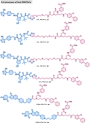
Construction of CF2 moieties in FDA-approved drugs (2016–2025): industrial routes, mechanisms, and scale-up considerations
Beilstein J. Org. Chem. 2026, 22, 1122–1150, doi:10.3762/bjoc.22.91
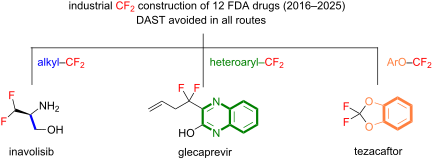
- hydrogenation and HF elimination with sodium hydroxide, affording the aryl–CF2 intermediate 96 in 97% yield over three steps. However, when three strategies – a Heck reaction, Sonogashira-type reaction, and Suzuki reaction – were subsequently explored for macrocyclization, the allylic difluoride moiety in






Palladium-catalyzed benzocyclization reactions of quinoline-2-carboxamides via sequential C–H/N–H functionalization
Beilstein J. Org. Chem. 2026, 22, 905–914, doi:10.3762/bjoc.22.71
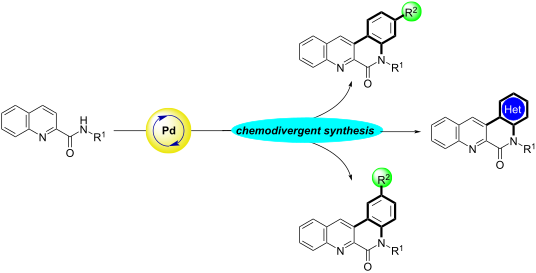
- carbon–heteroatom bonds. The classical coupling reactions, such as Kumada–Tamao–Corriu coupling [11][12][13], Sonogashira coupling [14][15], Negishi coupling [16][17], Migita–Kosugi–Stille coupling [18][19][20], Suzuki–Miyaura coupling [21][22], and Hiyama coupling [23][24] involve carbon–halogen and




Cascade transformation of 2-(diazoacetyl)-2H-azirines to 2-aroyl-3-hydroxy-1H-pyrroles via condensation with aromatic aldehydes
Beilstein J. Org. Chem. 2026, 22, 897–904, doi:10.3762/bjoc.22.70
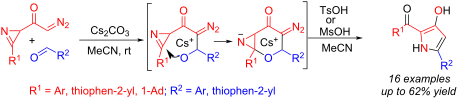
- (Scheme 6). However, attempts to cyclize them using the benzoyl group to form 4H-furo[3,2-b]pyrrole derivatives were unsuccessful. Triflate 7a is obtained from pyrrole 5a by treatment with Tf2O in 85% yield, but it proved inert in the Suzuki reaction with 4-chlorophenylboronic acid and 2-(4,4,5,5


Synthetic study of vic-bromination of diarylacetylenes, easy purification and separation
Beilstein J. Org. Chem. 2026, 22, 795–802, doi:10.3762/bjoc.22.61
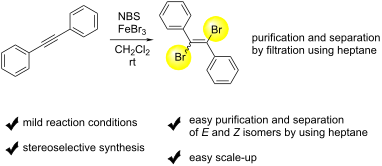
- Akane Togo Hiyono Suzuki Yuto Akai Makoto Matsumoto Yoshinori Suzuma Hidehiko Kodama Kouichi Matsumoto Department of Chemistry, School of Science and Engineering, Kindai University, 3-4-1 Kowakae, Higashi-osaka, Osaka 577-8502, Japan Nippon Pharmaceutical Chemicals Co., Ltd., 2-8-18 Chodo, Higashi



Design, synthesis, and biological evaluation of FXR/ASK1 dual-target modulators
Beilstein J. Org. Chem. 2026, 22, 771–781, doi:10.3762/bjoc.22.59
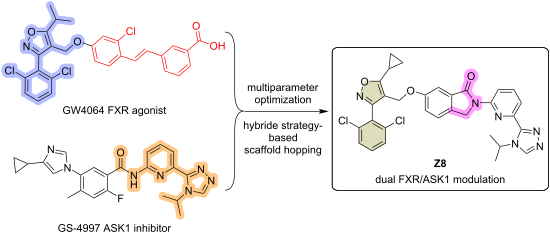
- LiOH or lithium aluminum hydride to obtain compounds Z4–7. The synthesis of compounds Z8–15 followed a similar preparation procedure as for Z1–7. The synthesis of target compounds Z16–29 is illustrated in Scheme 7. Intermediates 8 and 10 were synthesized by the Suzuki cross-coupling reaction using


Towards the targeted protein degradation of CK2: design and synthesis of CAM4066-based PROTACs
Beilstein J. Org. Chem. 2026, 22, 611–619, doi:10.3762/bjoc.22.47
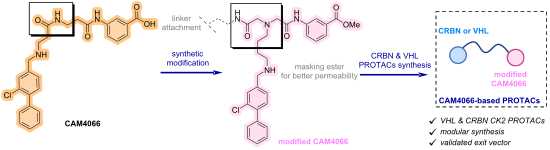
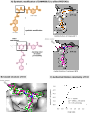
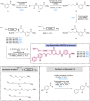
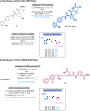
- corresponding triflate using triflic anhydride, followed by Suzuki–Miyaura cross-coupling with phenylboronic acid to give 16 in 59% yield (Scheme 1). Boc removal from intermediates 11–14 enabled attachment of the αD binder aldehyde 16 via reductive amination. Interestingly, NaBH(OAc)3 had performed well in the

Get a better glimpse on sequential photoreactions of trisnorbornadienes with 19F NMR spectroscopy
Beilstein J. Org. Chem. 2026, 22, 527–534, doi:10.3762/bjoc.22.38
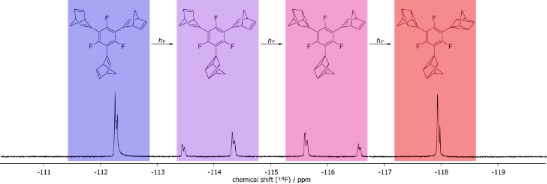
- storage. The target compound was readily synthesized by a Suzuki–Miyaura coupling reaction and examined with respect to the key properties for MOST applications. Upon direct or photosensitized irradiation, the trisnorbornadiene was transformed stepwise and almost quantitatively into the corresponding
- trisnorbornadiene 1f was synthesized in 36% yield through a Suzuki–Miyaura coupling reaction of tribromotrifluorobenzene 3 with the 2-borononorbornadiene 1e (Scheme 2) [43]. The product 1f was identified and fully characterized by NMR spectroscopy (1H, 13C, 19F, COSY, HSQC, HMBC), mass spectrometry, melting point
- comparison of the synthesis and photophysical properties of the fluoro-substituted norbornadiene 1f with the ones of the parent compound 1b revealed that the yield of the Suzuki–Miyaura coupling reaction is significantly lower for the former [22], presumably because of the steric hindrance induced by the


Recent advances in the stereoselective synthesis of distal biaxially chiral molecules
Beilstein J. Org. Chem. 2026, 22, 461–479, doi:10.3762/bjoc.22.34
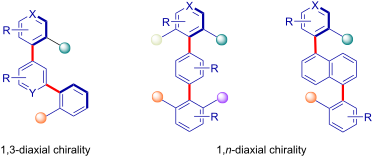
- -dibromonaphthalenes (45). Notably, the reaction achieved the synthesis of ternaphthalenes with excellent optical purity exceeding 95% ee. In 2014, Tang and co-workers pioneered the first asymmetric synthesis of functionalized chiral biaryl natural products with high enantioselectivity via Suzuki–Miyaura coupling
- catalyst control, ultimately forming a helix and another stereogenic axis. In 2019, Shi and co-workers developed a Suzuki–Miyaura cross-coupling reaction catalyzed by a chiral NHC–Pd complex proceeding with high enantioselectivity (Scheme 16) [55]. This reaction can be used to synthesize different kinds of
- prospects in the field of chiral organic material design. In 2025, Hong and co-workers successfully predicted a series of novel Sadphos (sulfinamide phosphine) ligands and accomplished the first enantioselective Ni-catalyzed Suzuki–Miyaura cross-coupling reaction (Scheme 24) [63]. Their work validated the


Electrosynthetic access to unsymmetrical oxaza[8]helicenes with high chiral stability and strong circularly polarized luminescence (CPL)
Beilstein J. Org. Chem. 2026, 22, 372–382, doi:10.3762/bjoc.22.25
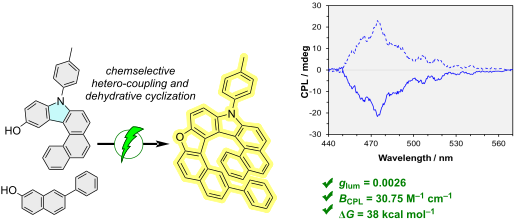
- Tin Zar Aye Rubal Sharma Muthu Karuppasamy Daiya Suzuki Haruka Nakajima Yoshitane Imai Mitsuhiro Arisawa Mohamed S. H. Salem Shinobu Takizawa SANKEN, The University of Osaka, 8-1 Mihogaoka, Ibaraki-shi, Osaka 567-0047, Japan Graduate School of Pharmaceutical Sciences, The University of Osaka, 1-6




Configuration–packing synergy enabling integrated crystalline-state RTP and amorphous-state TADF
Beilstein J. Org. Chem. 2026, 22, 224–236, doi:10.3762/bjoc.22.16
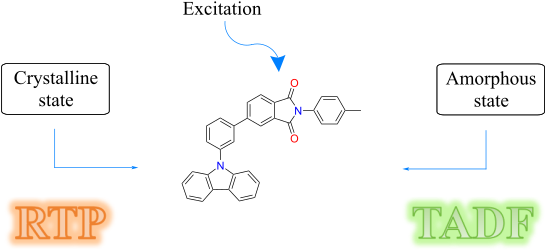
- EL spectra were measured under ambient conditions. Synthesis The synthetic route to 1 is shown in Scheme 1 and comprises imide formation followed by a Suzuki–Miyaura cross coupling. Synthesis of 5-bromo-2-(p-tolyl)isoindoline-1,3-dione (PI-Br, 4) In the first step, 2 (2.00 g, 8.81 mmol) was carefully
- no moisture or oxygen interfered with the reaction. Following this, 3-(9H-carbazol-9-yl)phenylboronic acid (5, 1.09 g, 3.80 mmol) was added to the flask. The mixture was stirred for 5 minutes to allow proper mixing. To facilitate the Suzuki coupling reaction, an aqueous solution of potassium
- , b) relationship between external quantum efficiency and brightness and c) current density–voltage–luminance characteristics of the OLED device based on 1 measured under ambient conditions. Synthetic pathway to 1 via imide formation and Suzuki–Miyaura cross-coupling. Energy-level parameters


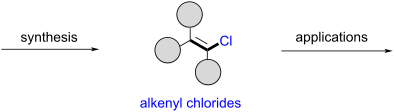
Synthesis and applications of alkenyl chlorides (vinyl chlorides): a review
Beilstein J. Org. Chem. 2026, 22, 1–63, doi:10.3762/bjoc.22.1
- arylboronic esters (Scheme 52) [181]. They discovered that a rhodium/1,4-bis(diphenylphosphino)butane (DPPB) complex, in combination with a large excess of 1,2-trans-dichloroethene, facilitated monoselective cross-coupling reactions. In 1987, Minato, Suzuki, and Tamao reported the first monoselective coupling























Total synthesis of asperdinones B, C, D, E and terezine D
Beilstein J. Org. Chem. 2025, 21, 2730–2738, doi:10.3762/bjoc.21.210
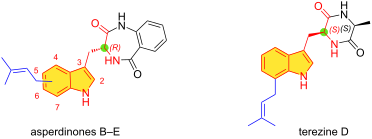
- amorphous powder. Viswanathan [25] and Chen [28] reported a C-2 prenylation of tryptophan methyl ester mediated by acid salts and Lewis acids, respectively. A prenylation at C-4 in bis-N-Boc-tryptophan methyl ester has been achieved by Chein utilizing optimized Suzuki coupling conditions [29]. Results and
- methods to prenyl- and allylindoles as starting points toward the synthesis of asperdinones B, C, D, and E (1–4) as well as to terezine D (6). To access 4-prenylindole, we adopted a Pd-catalyzed Suzuki coupling of 3,3-dimethyl-1-butene-3-pinacol boronate with bromoindoles [52]. Unfortunately, despite the


Recent advances in total synthesis of illisimonin A
Beilstein J. Org. Chem. 2025, 21, 2571–2583, doi:10.3762/bjoc.21.199
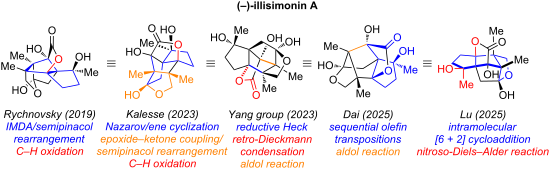
- Suzuki and co-workers in 2021 [44]. Their work proposed that this core structure could be generated from a highly oxidized allo-cedrane moiety through a tandem retro-Claisen/aldol reaction. Beginning with compound 100, a 6-step sequence afforded ortho-quinone 101 (Scheme 10). Heating 101 promoted an


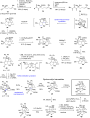


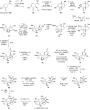


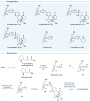
Comparative analysis of complanadine A total syntheses
Beilstein J. Org. Chem. 2025, 21, 2334–2344, doi:10.3762/bjoc.21.178
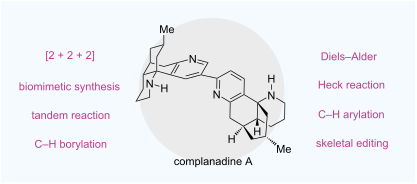
- reaction to rapidly establish the tetracyclic skeleton of complanadine A and an iridium-catalyzed site-selective pyridine C–H borylation followed by a Suzuki–Miyaura cross coupling to forge the C2–C3’ linkage. Their synthesis achieves a high degree of synergy between classic transformations and modern
- lycodine 34 underwent Ir-catalyzed C3–H borylation mainly guided by steric factors to provide boronic ester 35 in 75% yield. With the boronic ester handle at the C3 position, the subsequent Suzuki–Miyaura cross coupling between 35 and 33 occurred smoothly to deliver pseudo-dimer 36, which upon acidic
- -oxidation at one of the two benzylic positions, they started with benzylic oxidation of 34 using SeO2 to provide 37, which was further oxidized to pyridine N-oxide 38. Treatment of 38 with POCl3 in DMF delivered 2-chloropyridine 39 for the subsequent Suzuki–Miyaura cross coupling with 35 to form the C2–C3



Insoluble methylene-bridged glycoluril dimers as sequestrants for dyes
Beilstein J. Org. Chem. 2025, 21, 2302–2314, doi:10.3762/bjoc.21.176
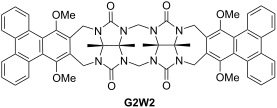
- -surfaces and which are activated for electrophilic aromatic substitution reactions. For the synthesis of W1, we initially prepared tetramethoxybiphenyl 1 (Scheme 1) according to the literature procedure involving the Suzuki coupling between 3,4-dimethoxybromobenzene and 3,4-dimethoxyphenylboronic acid [44



Research towards selective inhibition of the CLK3 kinase
Beilstein J. Org. Chem. 2025, 21, 2250–2259, doi:10.3762/bjoc.21.172
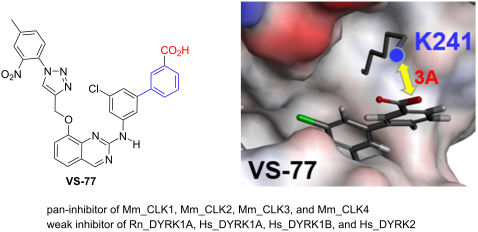
- -bromo-5-chloroaniline (2b). Next, we prepared the final targets by Suzuki-type reactions using the aromatic bromides 7. As indicated before, the acid function designed to interact with the lysine 241 has been introduced both in para and meta positions of the aromatic linker. Further we have prepared two
- series of molecules: the ones without chlorine in meta position on this group (series a) and the others which kept this chlorine, like in DB18 (series b). These syntheses are reported in Scheme 2. A Suzuki-type Pd-catalyzed coupling of 7a with 4-(methoxycarbonyl)phenylboronic acid dimethyl ester (8) gave


The application of desymmetric enantioselective reduction of cyclic 1,3-dicarbonyl compounds in the total synthesis of terpenoid and alkaloid natural products
Beilstein J. Org. Chem. 2025, 21, 2085–2102, doi:10.3762/bjoc.21.164
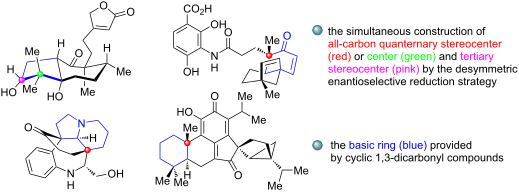
- and transformations of 43 produced hydroxyketone 44. Due to the steric hindrance of this substrate, the subsequent Suzuki cross coupling reaction with 3-boronophenol proceeded in low yield. To address this issue, Han′s group employed a novel palladacycle catalyst 45, previously developed by their
- -catalyzed Suzuki cross-coupling reaction of sterically hindered substrates developed by Han [35][36][37], the coupled product 57 was obtained in a satisfactory yield (72%) from 55 and pinacol boronate 56, along with trace amounts of the double bond migrated side product 58 (57:58 = ca. 15:1). Demethylation
- hydroxyketone 104 in excellent diastereoselectivity and enantioselectivity [9][11]. Ozonolysis of the double bond in 104 followed by Purdie methylation with Ag2O/MeI, base-mediated vinyl triflation, and Pd-catalyzed Suzuki–Miyaura cross coupling with pinacol boronate 105 delivered diene 106. Next, The Et2AlCl







Measuring the stereogenic remoteness in non-central chirality: a stereocontrol connectivity index for asymmetric reactions
Beilstein J. Org. Chem. 2025, 21, 1995–2006, doi:10.3762/bjoc.21.155
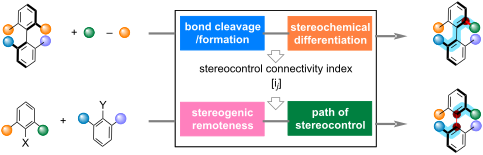
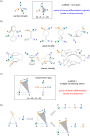
- –B [14] (Scheme 3E) bonds. In the case of an asymmetric cross-coupling reaction (Scheme 3C) [10], both sets of the substituents on individual aryl groups are considered because neither is involved in the bond formation/cleavage. Accordingly, the catalyst-controlled atroposelective Suzuki–Miyaura





Aryl iodane-induced cascade arylation–1,2-silyl shift–heterocyclization of propargylsilanes under copper catalysis
Beilstein J. Org. Chem. 2025, 21, 1984–1994, doi:10.3762/bjoc.21.154
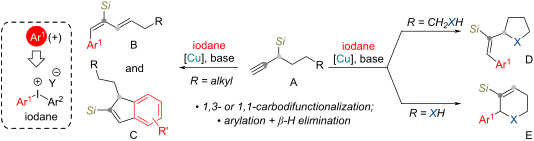
- propargylsilane 7d halogenation–cyclization cascade and Suzuki–Miyaura cross-coupling in the second step [22]. Thus, we have developed a faster and palladium-free route towards tetrahydrofurans 8. The latter can still be modified further through silicon–halide exchange followed by cross-coupling chemistry as


Enantioselective desymmetrization strategy of prochiral 1,3-diols in natural product synthesis
Beilstein J. Org. Chem. 2025, 21, 1932–1963, doi:10.3762/bjoc.21.151
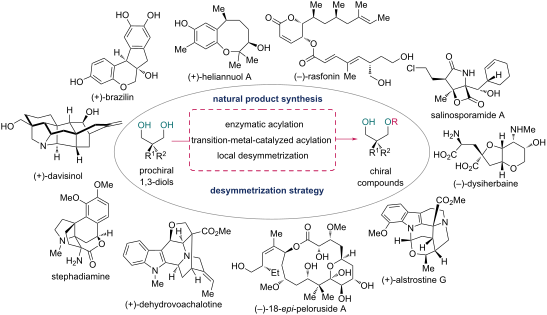
- with 99% ee. The TBS protection was crucial to prevent the potential racemization by intramolecular transesterification. Ester 79 was then prepared from 78 in eight steps. To complete the dimerization, fragments 80 and 81 were independently prepared from 79. An intermolecular Suzuki–Miyaura coupling










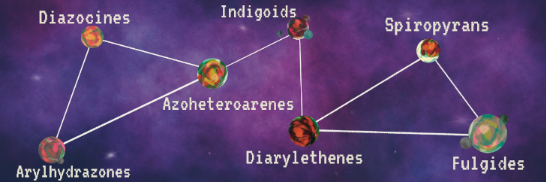
Photoswitches beyond azobenzene: a beginner’s guide
Beilstein J. Org. Chem. 2025, 21, 1808–1853, doi:10.3762/bjoc.21.143




3,3'-Linked BINOL macrocycles: optimized synthesis of crown ethers featuring one or two BINOL units
Beilstein J. Org. Chem. 2025, 21, 1719–1729, doi:10.3762/bjoc.21.134
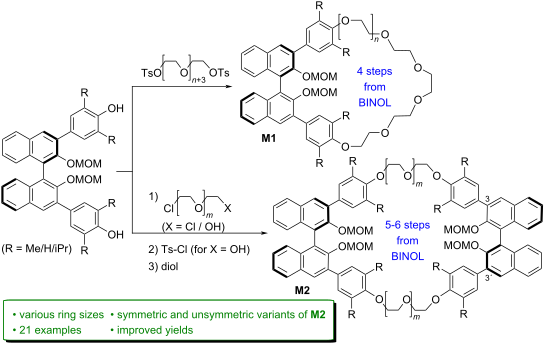
- ]. For the synthesis of macrocycles M2 with two BINOL units, we relied on the monoiodide 12, which was first reacted in a two-fold Suzuki coupling to install the first linker, followed by silyl deprotection and introduction of the second linker via nucleophilic substitution [51]. Both procedures require
- synthetic approaches (see Figure 1e) toward BINOL macrocycles had successfully used either Williamson-type reactions or Suzuki couplings for the synthesis of intermediates. Thus, we chose to compare the use of two-fold Suzuki coupling or two-fold Williamson reaction for the synthesis of macrocycles M1. For
- the approach via Suzuki coupling, we employed the previously reported BINOL-diiodide 1 [52], which was reacted with bisboronic acids (see Figure 3a). Here we chose bisboronic esters 75/6/7/8 which feature dimethylphenyl groups that are linked via penta/hexa/hepta/octaethylene glycol chains (throughout


Synthesis of an aza[5]helicene-incorporated macrocyclic heteroarene via oxidation of an o-phenylene-pyrrole-thiophene icosamer
Beilstein J. Org. Chem. 2025, 21, 1561–1567, doi:10.3762/bjoc.21.119
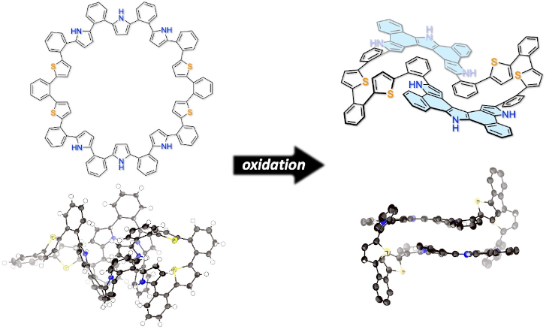
- hybrid decamer 3 in a previous report [26], via a Suzuki–Miyaura cross-coupling reaction between dibromo precursor 1 and borylated precursor 2 (Scheme 1). The resulting mixture was successfully separated by column chromatography on silica using CH2Cl2/n-hexane as an eluent to give icosamer 4 in 6% yield
- common organic solvents. Conclusion A novel o-phenylene-pyrrole-thiophene hybrid macrocycle (icosamer 4) was synthesized via Suzuki–Miyaura cross-coupling and isolated in 6% yield. Oxidation of 4 with PIFA produced a partially fused aza[5]helicene-containing macrocycle 5 in 58% yield, which was also


Oxetanes: formation, reactivity and total syntheses of natural products
Beilstein J. Org. Chem. 2025, 21, 1324–1373, doi:10.3762/bjoc.21.101
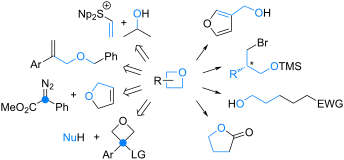
- , Howell et al. recently disclosed a general method for the synthesis of 2-halomethylideneoxetanes through halogenation of 2-methylideneoxetanes using N-halosuccinimides, and illustrated their synthetic utility by Suzuki–Miyaura, Sonogashira and Buchwald–Hartwig coupling reactions [53]. In addition to Cu
- high yields. Further transformations were also investigated such as a Suzuki coupling (at the aryl group) or oxidation to sulphoxides and sulphones, demonstrating the versatility of these products. In addition, their medicinally relevant physicochemical properties such as lipophilicity, clearance and
- Suzuki coupling to tether the oxetane with the nucleophile, and gave moderate to high yields (Scheme 48b). The last one employed an Ullman or Buchwald–Hartwig coupling and provided access to various benzomorpholines 203 with good functional group tolerance (Scheme 48c). In 2020, Sun et al. reported a








Recent advances and future challenges in the bottom-up synthesis of azulene-embedded nanographenes
Beilstein J. Org. Chem. 2025, 21, 1272–1305, doi:10.3762/bjoc.21.99
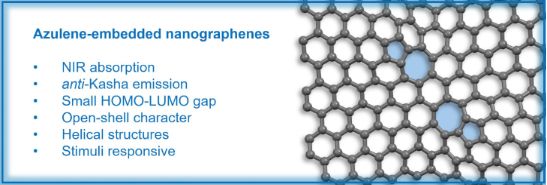
- cross-coupling reactions, such as the Suzuki sp2–sp2 coupling or Sonogashira sp2–sp coupling. These reactions enable the modular construction of complex precursors, which can then be transformed into azulene-embedded PAHs in the final step. Two main synthetic strategies are commonly employed: 1) The
- exceptionally high yield (97%). A Suzuki cross-coupling reaction between 47 and 45 gave compound 48 which was subjected to a final Scholl oxidation using DDQ. The target compound 49, containing two azulene subunits, was obtained in a relatively low yield (16%). Analysis of NICS values for 49 revealed similar
- can also serve as valuable synthetic tools for constructing azulene subunits in the final step. For example, Ma and co-workers reported a modular synthetic strategy for the synthesis of diverse azulene-embedded PAHs via a tandem Suzuki coupling and base-promoted Knoevenagel-type condensation