


Search results
Search for "macrocyclic" in Full Text gives 285 result(s) in Beilstein Journal of Organic Chemistry. Showing first 200.
Novel macrocycles: from synthesis to supramolecular function
Beilstein J. Org. Chem. 2026, 22, 982–985, doi:10.3762/bjoc.22.76
- ], resorcinarenes [7], and cucurbiturils [8] emerged as some of the most extensively investigated classes of macrocyclic hosts. Their widespread popularity was driven by their straightforward functionalization and unique structural properties. In contrast to first-generation receptors, such as crown ethers [2
- units connected through methylene bridges, pillararenes are generally regarded as representatives of a third generation of macrocyclic hosts. Unlike the cone-shaped architecture typically adopted by calix[4]arenes, pillararenes display a rigid pillar-like geometry with a preorganized cavity. Their
- to tune binding properties, guest inclusion kinetics, and physical behavior. As a result, modern macrocyclic host–guest systems now operate at the interface of materials science and chemical biology. Given the rapid development of this research area, we organized this thematic issue entitled “Novel
Synthesis of depressin, cryptomeridiol and 4-epi-cryptomeridiol enabled by a terpenoid chiral pool-producing platform
Beilstein J. Org. Chem. 2026, 22, 683–690, doi:10.3762/bjoc.22.53
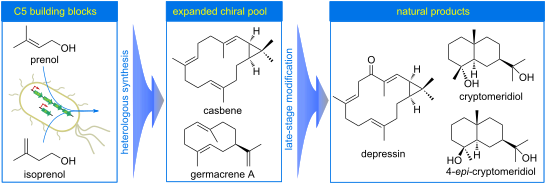
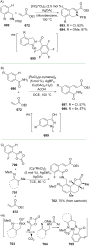
- compounds 1, 2, and 3 is depicted in Scheme 1 [40][41][42]. We envisioned that by selective oxidation at C5, compound 1 could be directly obtained from casbene (4). The macrocyclic casbane-type skeleton could be produced by an engineered heterologous host harboring both casbene synthase (CS) and an


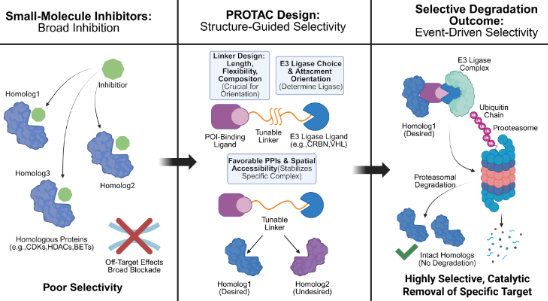
Advantages of PROTACs in achieving selective degradation of homologous protein families
Beilstein J. Org. Chem. 2026, 22, 628–661, doi:10.3762/bjoc.22.49
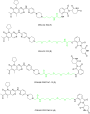
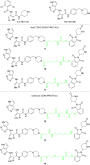
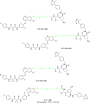
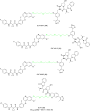
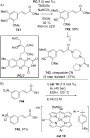
- VHL ligand are connected via a conformation-restricting macrocyclic linker. Although this seems to be a minor change, the comparison of these two studies reveals that compound 36 is able to cooperatively form ternary complexes with the BD2 domains of BRD4, BRD2, and BRD3. The cooperativity factor α, a
- et al. reported the "head-to-tail" macrocyclic PROTAC, SHD913 (37) [110]. Based on the crystal structure of the BRD4BD2:MZ1:VHL ternary complex, the authors designed two short-chain linkers for macrocyclization, targeting two critical distances (4.6 Å and 7.1 Å) between the warhead molecule 34 and
- nanomolar range, the DC50 values for BRD2/3 were both well above 100 nM. Due to the conformational constraint imposed by the macrocyclic linker, compound 37 did not exhibit a "hook effect" even at concentrations as high as 60 μM, whereas the linear control molecule 35 showed a decline in activity at 30 μM









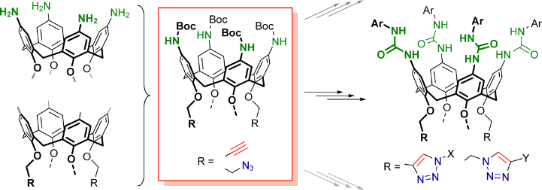
Cone p-aminocalix[4]arenes enriched with ‘clickable’ alkyne or azide functionalities
Beilstein J. Org. Chem. 2026, 22, 399–415, doi:10.3762/bjoc.22.28
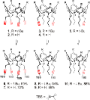
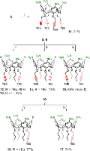
- macrocyclic core through simple acylation of p-aminocalix[4]arenes with the respective phosphorous-containing activated esters. Such grafting of well-known receptor units onto a common platform has led to substantial amplification of the efficiency of lanthanide and actinide extraction from acidic media by
- . Conclusion We have expanded the functionalization capabilities of cone calix[4]arenes by combining orthogonally transformable functional groups of two types within a single macrocyclic core. Both wide and narrow rims of the calixarene macrocycles were used to introduce four amino groups along with propargyl






Ring contraction and ring expansion reactions in terpenoid biosynthesis and their application to total synthesis
Beilstein J. Org. Chem. 2026, 22, 289–343, doi:10.3762/bjoc.22.21
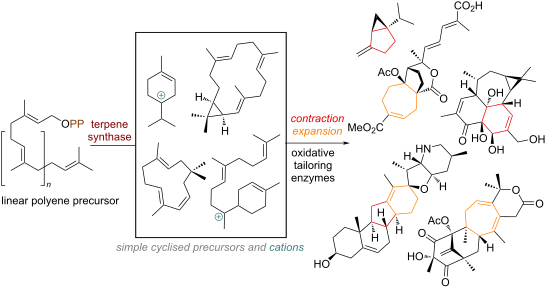
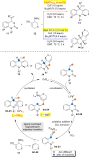
- 4→5 ring expansion which is depicted in Scheme 9 [77]. Intermediate 27 is obtained like shown before (see above, Scheme 4 and Scheme 6), through the enzyme cattleyene synthase (CyS). Next, a concerted ring expansion/ring contraction and additional 2,10-cyclisation delivers the macrocyclic cation 27a
- Moving on from these carefully characterised biosynthetic transformations, where often single steps were carried out with specific enzymes or isotope-labelled substrates to prove origin, we now move to the much larger body of speculative biosynthetic relationships. From macrocyclic lathyrane frameworks


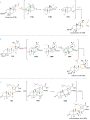


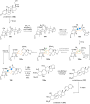


Total synthesis of natural products based on hydrogenation of aromatic rings
Beilstein J. Org. Chem. 2026, 22, 88–122, doi:10.3762/bjoc.22.4
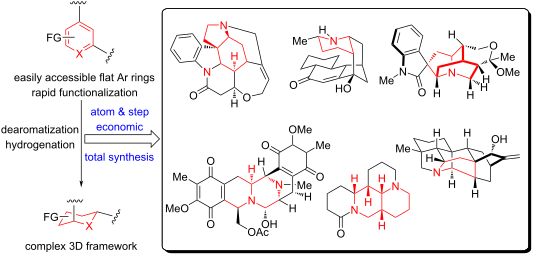
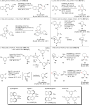
- to obtain saturated aliphatic or heterocyclic rings and their subsequent application in the total synthesis of natural products has a long history. A brilliant early work is Baldwin's total synthesis of the macrocyclic diamine natural product (±)-keramaphidin B in the year of 1996 (Scheme 9) [71][72











Silica gel with covalently attached bambusuril macrocycle for dicyanoaurate sorption from water
Beilstein J. Org. Chem. 2025, 21, 2604–2611, doi:10.3762/bjoc.21.201
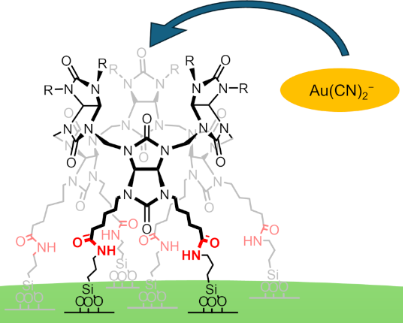
- ]. In the field of anion extraction, there is growing interest in solid-phase substrates functionalized with synthetic macrocyclic receptors. These materials employ a supramolecular approach based on specific host–guest interactions between the immobilized macrocycle and the guest in solution, often
- [10]. Although synthetic anion receptors have attracted increasing attention in the field of supramolecular chemistry, there are still relatively few reports of materials that employ macrocyclic receptors to recognize and selectively bind anionic species specifically in aqueous environments. For
- -sized” molecular box has been used to extract various anions from water [12]. Another family of macrocyclic compounds suitable for anion recognition and binding are bambusurils (BUs). BUs act as very potent anion receptors in both organic solvents and water. Furthermore, their portals can be variously


Synthesis and characterization of a isothiouronium-calix[4]arene derivative: self-assembly and anticancer activity
Beilstein J. Org. Chem. 2025, 21, 2535–2541, doi:10.3762/bjoc.21.195
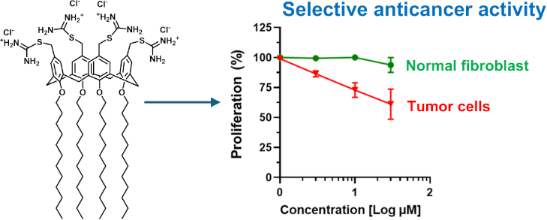
- and precise than current treatments. Numerous multivalent constructs have been reported in literature, both as compounds with intrinsic anticancer activity [4] and nanocarriers for anticancer drug delivery [5][6]. In the development of multivalent compounds, macrocyclic scaffolds such as cyclodextrins
- [7], cyclic peptides [8], cucurbiturils [9], resorcinarenes [10], pillarenes [11], prismarenes [12], and calix[n]arenes have proven to be particularly valuable. Calix[n]arenes, a family of polyphenolic macrocyclic oligomers, are widely utilized in applications ranging from materials science to life


Conformational effects on iodide binding: a comparative study of flexible and rigid carbazole macrocyclic analogs
Beilstein J. Org. Chem. 2025, 21, 2369–2375, doi:10.3762/bjoc.21.181
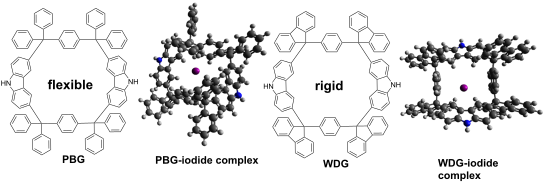
- fluorescence quenching efficiency upon iodide binding compared to the rigid WDG (KPBG/KWDG = 22.78), demonstrating its potential as a highly sensitive optical probe and offering a novel strategy for engineering dynamic supramolecular receptors. Two carbazole-based macrocyclic probes, PBG (flexible benzene ring
- ; carbazole macrocycles; conformational selection; induced-fit; supramolecular chemistry; Introduction Macrocyclic compounds have garnered significant attention in supramolecular chemistry and anion recognition owing to their tunable cavity geometries and binding capabilities [1][2][3][4][5][6][7][8
- towards downfield, with a displacement of 0.6015 ppm to 8.5940 ppm. This phenomenon may be due to the formation of noncovalent bonds between the iodine ions encapsulated inside the macrocyclic and the hydrogen atoms on the macrocyclic framework, which reduces the density of the electron cloud of aromatic



Insoluble methylene-bridged glycoluril dimers as sequestrants for dyes
Beilstein J. Org. Chem. 2025, 21, 2302–2314, doi:10.3762/bjoc.21.176
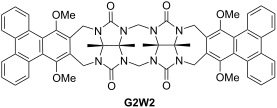
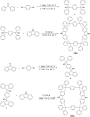
- , graphene functionalized with β-cyclodextrins [18], a starch-based β-cyclodextrin polymer [19], and pillar[5]arene-based crosslinked polymers have also been investigated as sequestrants for dyes [20]. The Isaacs group has a longstanding interest in the synthesis and mechanism of formation of macrocyclic
- cucurbit[n]uril (CB[n]) molecular containers [21][22]. Macrocyclic CB[n] display ultratight binding toward hydrophobic cations in water which renders them an attractive new class of sequestrants [23][24][25][26]. For example, Buschmann and Jekel demonstrated the use of CB[6] (Figure 1) for the removal of
- reactive dyes from textile wastewater streams [27][28][29]. More recently, our group has synthesized water-soluble acyclic cucurbit[n]urils (e.g., M1, Figure 1) and demonstrated that they retain the essential molecular recognition properties of macrocyclic CB[n] [30]. Acyclic CB[n] are more easily



Pathway economy in cyclization of 1,n-enynes
Beilstein J. Org. Chem. 2025, 21, 2260–2282, doi:10.3762/bjoc.21.173
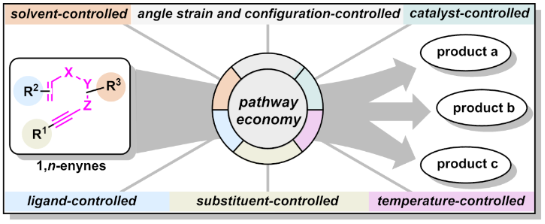
- , whereas internal alkynes favored the 8-endo-dig pathway due to steric constraints and carbocation stability. This strategy facilitated efficient and selective synthesis of macrocyclic amines, with precise ring size control via substituent modulation. In 2021, Liu group reported a BiCl3-mediated


Solar thermal fuels: azobenzene as a cyclic photon–heat transduction platform
Beilstein J. Org. Chem. 2025, 21, 2036–2047, doi:10.3762/bjoc.21.159
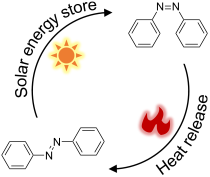
- Azobenzene small-molecule derivatives can be systematically categorized based on molecular structure into monoazobenzene derivatives [61][62][63][64][65][66][67][68][69], multiazobenzene derivatives [70][71][72][73], heteroaromatic azobenzene derivatives [74][75][76][77][78][79][80][81], and macrocyclic
- transition behavior, achieving high gravimetric energy densities (300–400 J/g) with long-term storage stability (Figure 6d). Grossman and Durgun proposed methods for incorporating azobenzenes into macrocyclic structures [82]. Their computational models indicated that the molecular rings connecting the




Synthesis of N-doped chiral macrocycles by regioselective palladium-catalyzed arylation
Beilstein J. Org. Chem. 2025, 21, 1917–1923, doi:10.3762/bjoc.21.149
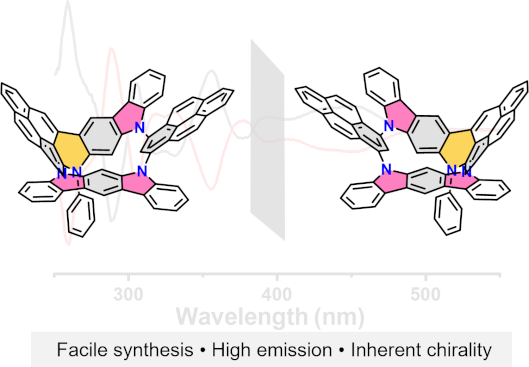
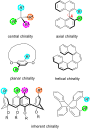
- that inherently lacks symmetry [8][9]. One of the most typical representatives are calix[4]arenes (Figure 1a), first reported by Böhmer in 1994 [10], where asymmetric substitutions on the macrocyclic rim induce inherent chirality. Subsequent advancements have identified other inherent chiral systems
- design novel macrocyclic frameworks with intrinsic asymmetry. Nitrogen (N)-doped macrocycles are of peculiar interest due to their unique optical, electronic and magnetic properties [16][17][18][19]. Among them, aza[1n]metacyclophanes, in which m-phenylene units are linked via N atoms, serves as N
- introduced. In contrast, when bulky 3,5-bis(trifluoromethyl)phenyl groups were introduced, only inherent chiral macrocyclic products (MC3) were obtained in high yield. Their molecular structures are unambiguously characterized by NMR, mass spectra and X-ray crystallographic characterization. In addition




Chiral phosphoric acid-catalyzed asymmetric synthesis of helically chiral, planarly chiral and inherently chiral molecules
Beilstein J. Org. Chem. 2025, 21, 1864–1889, doi:10.3762/bjoc.21.145
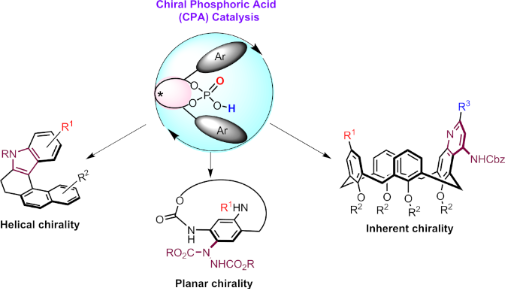
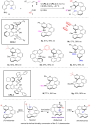
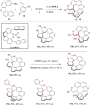
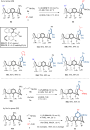
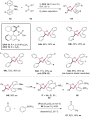
- potential applications in catalytic asymmetric reactions have also been showcased. Planar chirality Planarly chiral cyclophanes, a unique class of macrocyclic compounds featuring planar chirality, can be found in various natural products and are widely utilized in asymmetric catalysis, host–guest chemistry
- and materials science [32]. These macrocycles typically consist of a substituted aromatic ring and a macrocyclic side chain (ansa chain), with the planar chirality arising from the restricted flipping of the substituted aromatic ring caused by steric constraints imposed by the ansa chain. Recent
- enantioselective synthesis of planarly chiral macrocycles through a dynamic kinetic resolution approach [15]. Despite bearing an amino group on the phenyl ring, the configuration of the macrocyclic paracyclophane 32 was found to be unstable at room temperature. Consequently, by employing a CPA-catalyzed asymmetric










Research progress on calixarene/pillararene-based controlled drug release systems
Beilstein J. Org. Chem. 2025, 21, 1757–1785, doi:10.3762/bjoc.21.139
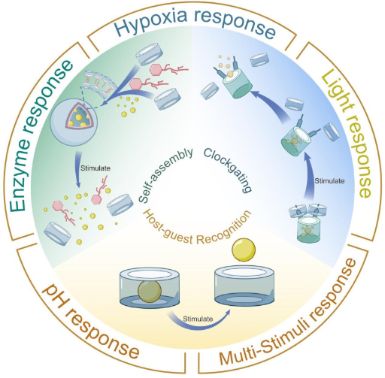
- processes. For example, supramolecular self-assembly technology enhances the targeting of chemotherapeutic drugs to tumor tissues, reducing systemic adverse reactions. (3) Macrocyclic aromatic supramolecular nano-valves have a pseudo-rotaxane structure with host–guest coordination and the kinetic properties
- technology in the field of hydrophilic functional biomolecules, and is expected to be applied to stimulus-responsive controlled drug transport across membranes in the future. Currently, various artificially synthesized macrocyclic hosts have found extensive applications in drug-controlled release systems
- characteristics, CAs hold potential for applications in drug delivery systems. 1.2 PAs: structure and properties Since Ogoshi et al. first introduced pillar[n]arenes in 2008, these macrocycles have become essential to the synthetic macrocyclic receptor field [74]. Research on PAs and their derivatives has become






3,3'-Linked BINOL macrocycles: optimized synthesis of crown ethers featuring one or two BINOL units
Beilstein J. Org. Chem. 2025, 21, 1719–1729, doi:10.3762/bjoc.21.134
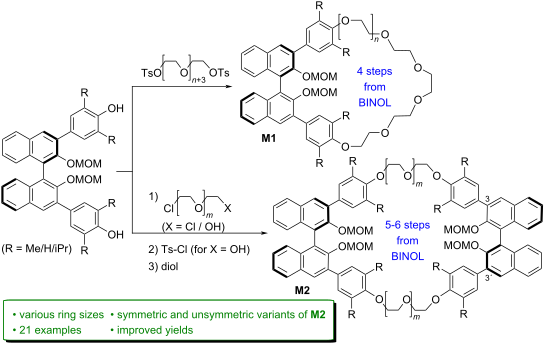
- highly efficient catalysts, chemosensors, and functional materials. We have recently made strides in developing macrocyclic organocatalysts; however, their synthesis remains challenging. In this work, we aimed to discover a straightforward method for producing a diverse range of chiral macrocycles
- , thereby enabling further exploration in the field of interlocked and macrocyclic organocatalysts. We successfully established optimized synthetic routes for the synthesis of chiral macrocycles containing one or two stereogenic units, featuring varying ring sizes and substituents (21 examples in total
- macrocyclic crown ethers that are attached at the 3,3'-positions via additional phenylene spacers (see Figure 1e) [35][44][45]. Macrocycles M1b with a single BINOL unit were generated from the corresponding diol 2 by attachment of allylated linkers, followed by ring-closing metathesis [46][47][48][49][50


On the aromaticity and photophysics of 1-arylbenzo[a]imidazo[5,1,2-cd]indolizines as bicolor fluorescent molecules for barium tagging in the study of double-beta decay of 136Xe
Beilstein J. Org. Chem. 2025, 21, 1627–1638, doi:10.3762/bjoc.21.126
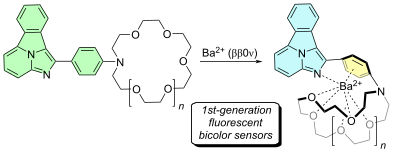
- further coordination thus giving rise to a relatively strong π–cation interaction with the phenyl group. In the case of complex 17c (n = 3) stemming from 18-crown-6, the barium cation remains within the average molecular plane determined by the macrocyclic moiety. The larger ΔGiso value for 15c results in


Synthesis of an aza[5]helicene-incorporated macrocyclic heteroarene via oxidation of an o-phenylene-pyrrole-thiophene icosamer
Beilstein J. Org. Chem. 2025, 21, 1561–1567, doi:10.3762/bjoc.21.119
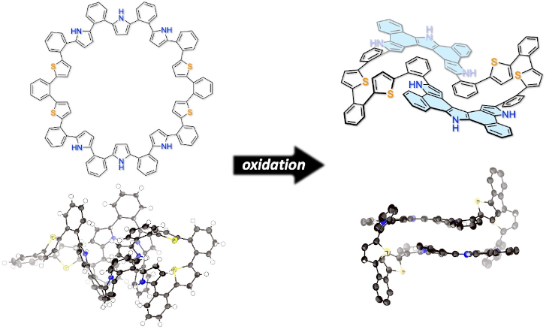
- , Japan 10.3762/bjoc.21.119 Abstract The intramolecular oxidative fusion reaction of macrocyclic heteroaromatic arrays has provided strained polycyclic heteroaromatic macrocycles as promising functional molecules. In this study, we prepared an ortho-phenylene-pyrrole-thiophene hybrid icosamer, as the
- in detail. Keywords: cyclophane; fluorescence; heterohelicene; intramolecular oxidative coupling; Introduction Conjugated macrocyclic polyarenes have attracted significant attention due to their stimuli-responsive optoelectronic properties, dynamic structural changes, and host–guest interactions [1
- 1) [6][7][8][9][10][11][12]. Nevertheless, partially fused macrocyclic intermediates are also important as they exhibit structural strain associated with both the polycyclic segments and the inherent strain stemming from the macrocyclic structure. For instance, cyclic chrysenylenes [13][14][15][16


Wittig reaction of cyclobisbiphenylenecarbonyl
Beilstein J. Org. Chem. 2025, 21, 1454–1461, doi:10.3762/bjoc.21.107
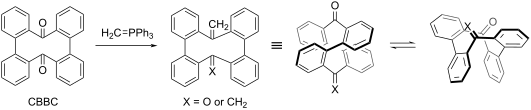
- ruled out. The structures of compounds 3, 4, and 5 were determined by X-ray diffraction analysis (Figure 2). Mono-olefin 3 and bis-olefin 5 adopt a bathtub-like chiral macrocyclic structure rather than figure-eight conformation. Both compounds crystallize as a racemic pair of enantiomers with P21/c and



Selective monoformylation of naphthalene-fused propellanes for methylene-alternating copolymers
Beilstein J. Org. Chem. 2025, 21, 1183–1191, doi:10.3762/bjoc.21.95
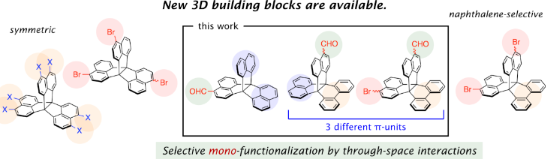
- widely adopted to improve the solubility and modulate the molecular assemblies [4][5][6][7][8][9]. By contrast, the presence of sp3-hybridized atoms in core π-skeletons can lead to three-dimensional (3D) structures with appropriate rigidity, thereby giving macrocyclic arenes [10][11], molecule-based
- interactions between the naphthalene units. The monoformyl products are reduced to corresponding alcohols, which are then reacted under Friedel–Crafts conditions. Amorphous methylene-alternating copolymers are obtained without particular macrocyclic oligomers. Due to the 3D components, the linear copolymers
- . Despite the stereocontrolled substrate, the resonances in the 1H NMR spectrum of the product remained broad. Therefore, we concluded that these systems were difficult to give specific macrocyclic oligomers but instead provided linear polymers composed of fully π-fused propellanes. After the reactions


Synthetic approach to borrelidin fragments: focus on key intermediates
Beilstein J. Org. Chem. 2025, 21, 1135–1160, doi:10.3762/bjoc.21.91
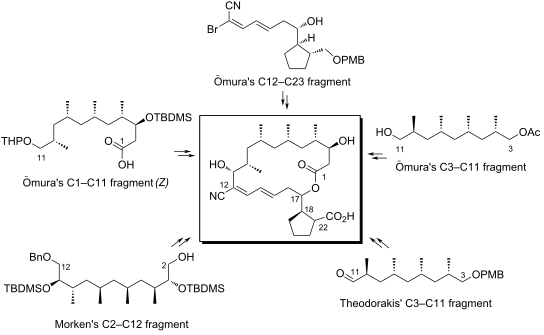
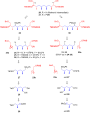
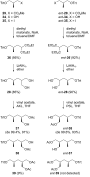
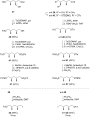
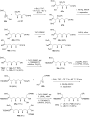
- results were obtained when compound 155b was used. Addition of 5 mol % catalyst produced the expected macrocyclic product and dimer 157 in yields of 24 and 22%, respectively, while a significant amount of unreacted 155b (26%) remained under these conditions. Conclusion In summary, this review has examined








Supramolecular assembly of hypervalent iodine macrocycles and alkali metals
Beilstein J. Org. Chem. 2025, 21, 1095–1103, doi:10.3762/bjoc.21.87
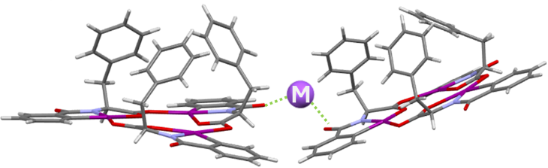
- hypervalent iodine-based macrocyclic complex. Furthermore, we have experimentally and computationally compared the association constants of lithium tetrakis(pentafluorophenyl)borate ethyl etherate LiBArF20 and sodium tetrakis[3,5-bis(trifluoromethyl)phenyl]borate NaBArF24 in the phenylalanine HIM system
- projecting outward denoted by an asterisk. Furthermore, the resulting crystal structure reveals that 1 is also a distorted planar macrocyclic system consisting of the amino acids carbonyl oxygens facing inside the ring. All three benzyl groups are located above a single plane (more figures are provided in
- cavity is highlighted by blue color in the chemical structure of phenylalanine HIM as shown in Figure 3 (left) (more figures are provided in Supporting Information File 1). Despite the core's composition of six electron-rich oxygen atoms, we hypothesized that the bowl-like macrocyclic cavity is electron


Recent advances in synthetic approaches for bioactive cinnamic acid derivatives
Beilstein J. Org. Chem. 2025, 21, 1031–1086, doi:10.3762/bjoc.21.85



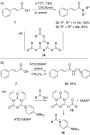


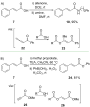


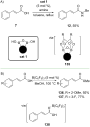


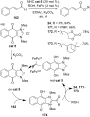


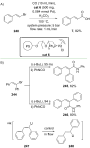


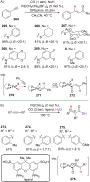


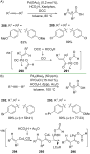


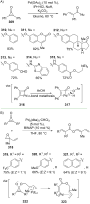
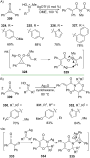


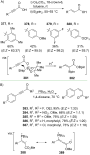


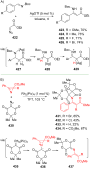


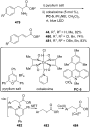


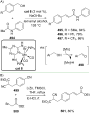
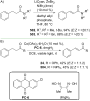


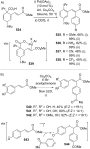


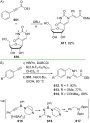











Recent advances in controllable/divergent synthesis
Beilstein J. Org. Chem. 2025, 21, 890–914, doi:10.3762/bjoc.21.73

- alkyldiamines proceeded with solvent-independent regioselectivity, exclusively furnished [2 + 2] macrocyclic adducts. Strikingly, when 37 was combined with 2,2’-oxybis(ethylamine) (38), the reaction pathway exhibited pronounced solvent dependency. Reactions in methanol, ethanol, or chloroform selectively




Dicarboxylate recognition based on ultracycle hosts through cooperative hydrogen bonding and anion–π interactions
Beilstein J. Org. Chem. 2025, 21, 884–889, doi:10.3762/bjoc.21.72
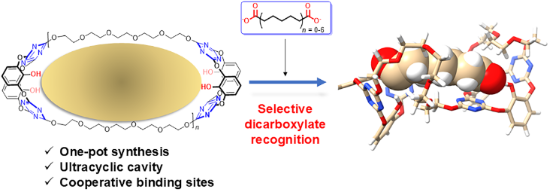
- were synthesized via a one-pot strategy starting from macrocyclic precursors. Host–dicarboxylate binding was investigated using 1H NMR titrations, revealing that B4aH exhibits strong binding affinities toward a series of dicarboxylates, with association constants reaching up to 6896 M−1. The
- than 50 atoms in the macrocyclic skeleton are denoted as ultracycles [1]. These very large macrocycles are prevalent in nature and exhibit unique functions. For instance, the archaeal lipid GDGT-0 enables archaea to thrive in extreme environments [2]; cycloamyloses enhance the stability of drug
- , synthetic ultracycles remain relatively unexplored due to the significant synthetic challenges [9][10][11][12][13][14][15][16][17][18][19]. Among these, very large macrocycles constructed from smaller macrocyclic building units are particularly underexplored. Such macrocycle-containing ultracycles are





