


Search results
Search for "substitution" in Full Text gives 1510 result(s) in Beilstein Journal of Organic Chemistry. Showing first 200.
The surprising reaction of (chloro- and methanesulfonyloxy)(phenyl)methylphosphonates and –(phenyl)methylphosphine oxides with potassium diphenylphosphide followed by oxidation
Beilstein J. Org. Chem. 2026, 22, 1160–1167, doi:10.3762/bjoc.22.93
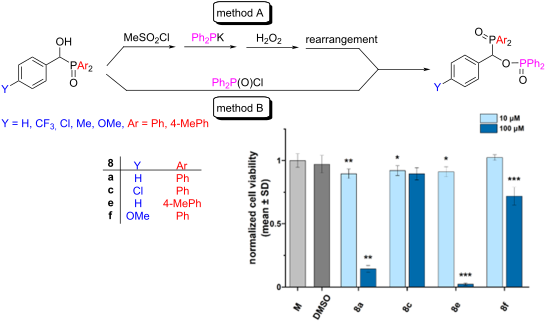
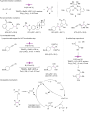
- ). The unexpected outcome of the reaction may be explained as follows. In the first step, the desired substitution may take place, that is followed by the blocking of the trivalent phosphorus atom to pentavalent-tetracoordinated 3. Then, diethyl ((diphenylphosphinyl)(phenyl)methyl)phosphonate (3
- series of compound family 8, the P-diphenyl derivative 8a and the bis(4-methylphenyl)-substituted 8e were the most potent. These results indicate that the strong activity does not require substitution at the aryl ring attached to the central carbon, since neither the electron-withdrawing chloro
- followed by oxidation. Unexpected outcome of the reaction of (sulfonyloxy)(phenyl)methylphosphonate 5 with PDPP followed by oxidation. Putative explanation for the formation of compounds 6–8 shown in Scheme 2. Result of the attempted chloro-substitution of hydroxy(phenyl)methylphosphine oxide 14a. Two


A cascade synthesis of 2-aminothiochromones from 2-fluorophenyl ketone and thiocarbonyldiimidazole
Beilstein J. Org. Chem. 2026, 22, 1151–1159, doi:10.3762/bjoc.22.92
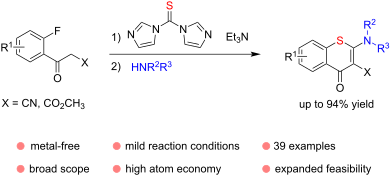
- , followed by amine introduction via nucleophilic aromatic substitution of the thioether in 2-position (Scheme 1c). We subsequently developed a more efficient protocol to access 2-aminothiochromones via a sulfoxide intermediate [28]. Then, we established a novel strategy for constructing 2-arylthiochromones
- substitution pattern. Results and Discussion Initially, we selected 3-(2-fluorophenyl)-3-oxopropanenitrile (1a), morpholine (2a), and TCDI as model substrates to explore the feasibility of our hypothesis, since fluorine is the preferred leaving group in nucleophilic aromatic substitution (SNAr) reactions
- substantially lower yields (5k–o, 27–59%). This trend is consistent with an intramolecular nucleophilic aromatic substitution process favored by electron-withdrawing substituents. This limitation, however, could be addressed by exploiting the cyanide group presented in series 3 compounds for further



Construction of CF2 moieties in FDA-approved drugs (2016–2025): industrial routes, mechanisms, and scale-up considerations
Beilstein J. Org. Chem. 2026, 22, 1122–1150, doi:10.3762/bjoc.22.91
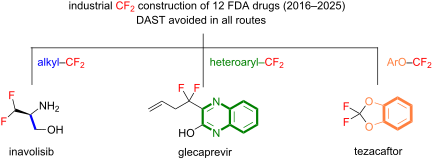
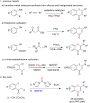
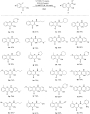
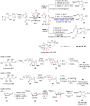
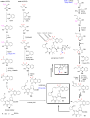
- therapy. The introduction of fluorine-containing groups such as CF2 into drug molecules can significantly alter their properties, including metabolic stability, lipophilicity, conformation, and hydrogen-bonding capacity [1]. For example, fluorine substitution on sugar moieties can modify nucleoside






Rhodopyran, a carboxylated hexahydrocyclopenta[b]pyran from Rhodococcus
Beilstein J. Org. Chem. 2026, 22, 1107–1113, doi:10.3762/bjoc.22.89
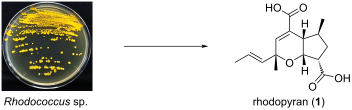
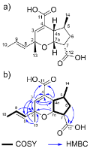
- substitution pattern. These differences suggest that the diospentenols should be regarded as structural comparators rather than biosynthetic analogues of 1. Moreover, the few reported examples differ substantially from compound 1 in that they are more highly oxidized (e.g., ketone-containing derivatives) and


Controlled supramolecular assemblies of luminescent tridentate cyclometalated alkynylgold(III) amphiphiles in aqueous media
Beilstein J. Org. Chem. 2026, 22, 1097–1106, doi:10.3762/bjoc.22.88
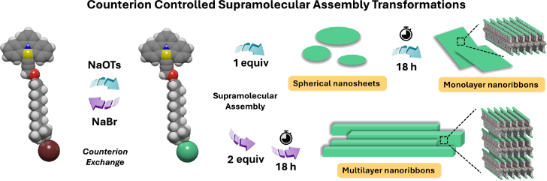
- group was connected by a nonyl-linker with a quaternary ammonium ion as the charged end group (Scheme 1). The synthetic route of GA is shown in Scheme 2. Compound 1 was obtained by the substitution of propargyl bromide with 9-bromo-1-nonanol. Based on the previously reported procedure, the
- cyclometalated gold(III) complex 2 was synthesized and further reacted with compound 1 in the presence of triethylamine and a catalytic amount of copper iodide to afford the amphiphile precursor 3. The nucleophilic substitution of compound 3 with trimethylamine enabled to afford GA. The chemical structures of


Amino acid-based surfactants: sustainable synthesis and antimicrobial mechanisms
Beilstein J. Org. Chem. 2026, 22, 1067–1085, doi:10.3762/bjoc.22.85
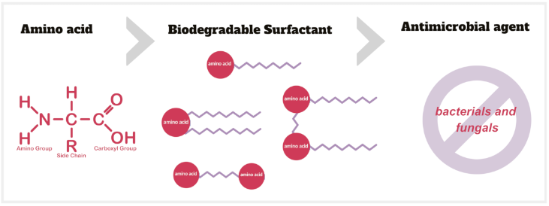
- reactions. N-Alkylation is mainly achieved either by reductive amination with long-chain aldehydes followed by chemical reduction, or by direct nucleophilic substitution using activated alkyl halides or sulfonates [6][10][13]. Reductive amination generally affords improved control over mono-N-alkylation and
- diacyl-glycerol-arginine (1414R,1212: arginine-based surfactants bearing two C14 and two C12 alkyl chains, respectively), where the substitution of the Nα-amine for a Nα-acetylamide group, drastically changed its antimicrobial activity against Acinetobacter baumannii, S. aureus, Bacillus cereus and


Synthesis of functionalized, 13-alkyl-substituted coralyne derivatives and investigation of their interactions with duplex and abasic site-containing DNA
Beilstein J. Org. Chem. 2026, 22, 1057–1066, doi:10.3762/bjoc.22.84
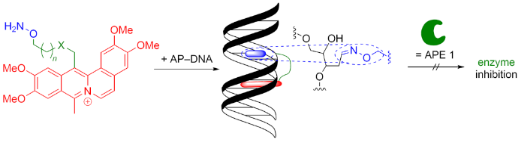
- ). Subsequent nucleophilic substitution of 3b with KCN furnished the nitrile-functionalized papaverine 3d in 56% yield. However, attempts to hydrolyze the nitrile 3d to the corresponding carboxylic acid failed both under mild and harsh alkaline conditions as well as under acidic conditions, as TLC and 1H NMR


Semisynthesis, characterisation, and antibacterial evaluation of a novel lecanoric acid-derived amide library
Beilstein J. Org. Chem. 2026, 22, 1023–1032, doi:10.3762/bjoc.22.81
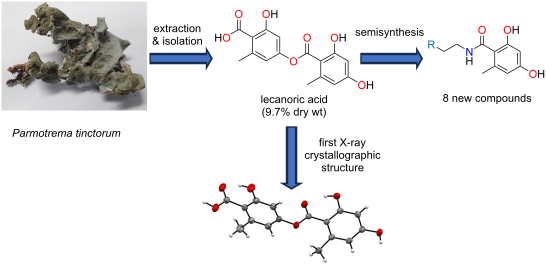
- isopentyl chain. The exchangeable proton δH 7.79 (1H, t, J = 5.6 Hz) indicated the existence of an amide moiety in 6, which showed strong COSY correlations to one of the methylenes [δH 3.17 (2H, dt, J = 5.6, 6.6 Hz)] of the isopentyl chain. Furthermore, the substitution position of the isopentyl chain to


Synthesis and optical resolution of 4,5-diaminohomoadamantane: a promising scaffold for chiral ligands and bioactive compounds
Beilstein J. Org. Chem. 2026, 22, 1013–1022, doi:10.3762/bjoc.22.80
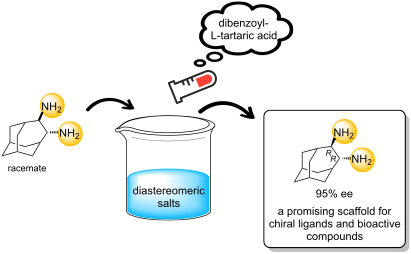
- for the synthesis of compound 2 from alcohol 1 using phosphoric acid, affording the target compound in high yield and purity. In the next step, chloronitrosation of alkene 2 led to α-chloroxime 3 in moderate yield. Substitution of chlorine in 3 with azido and benzylamino groups was then carried out to


Rh(III)-catalyzed chelation-assisted C–H activation/annulation of 2-arylimidazolines with cyclic diazo-1,3-dicarbonyl compounds: a novel approach to tetracyclic annulated derivatives of 2,3-dihydroimidazo[2,1-a]isoquinoline
Beilstein J. Org. Chem. 2026, 22, 997–1003, doi:10.3762/bjoc.22.78
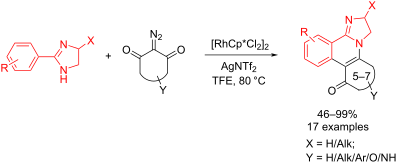
- , as we were unable to find any published successful examples of Rh(III)-catalyzed chelation-assisted C–H activation/annulation with diazo compounds when such heterocyclic substrates were used as CH-components. Substitution at position 4 of the imidazoline ring with a methyl group resulted in the


Novel macrocycles: from synthesis to supramolecular function
Beilstein J. Org. Chem. 2026, 22, 982–985, doi:10.3762/bjoc.22.76

- . The observed regioselectivity originates from through-space electronic communication between the naphthalene units, which suppresses multiple substitution pathways across the remaining framework. Owing to their defined three-dimensional shape and moderate conformational flexibility, the resulting
Electrochemical reduction of unsaturated carbon–carbon bonds via 3d transition-metal catalysis
Beilstein J. Org. Chem. 2026, 22, 955–981, doi:10.3762/bjoc.22.75
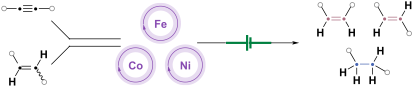
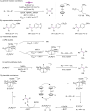
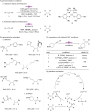
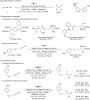
- strategy enables the trans-selective semireduction of unactivated internal alkynes, addressing a limitation in previous methods that typically rely on electronically biased substrates. Moreover, simple substitution of the proton source with HFIP-d1 or iPrOD-d1 enabled efficient trans-selective deuteration








Recent advances in copper-catalyzed direct hydroamination of alkenes with (hetero)aromatic amines
Beilstein J. Org. Chem. 2026, 22, 925–947, doi:10.3762/bjoc.22.73
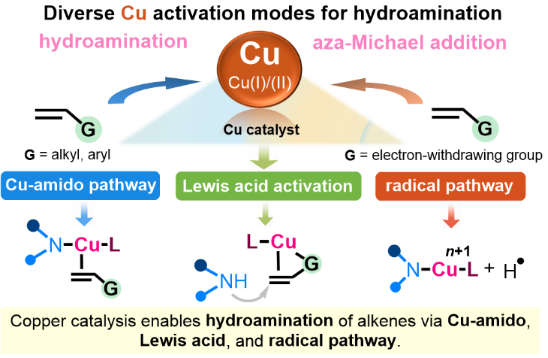
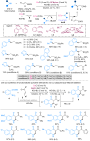
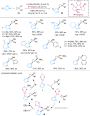
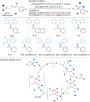
- ester substituents. Notably, the reaction outcome was highly dependent on the reaction conditions. Although mild conditions favored C–N bond formation, high temperatures promoted alternative pathways, such as aromatic substitution, indicating that the C–N bond formation was reversible under Lewis acidic







Palladium-catalyzed benzocyclization reactions of quinoline-2-carboxamides via sequential C–H/N–H functionalization
Beilstein J. Org. Chem. 2026, 22, 905–914, doi:10.3762/bjoc.22.71
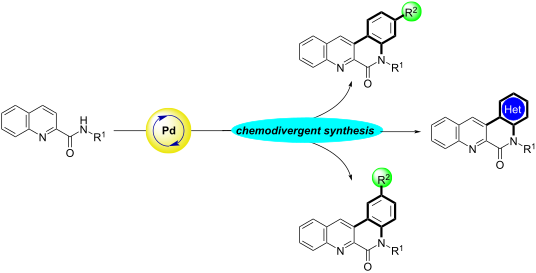
- group in the C5 position, a similar substitution pattern was detected as for compound 3ad derived from 1-bromo-2-iodo-5-methylbenzene (2b). Additionally, during the coupling reaction carried out with 5-tert-butyl-1-bromo-2-iodobenzene, Int-1ad species was detected as a reaction intermediate, as




Diastereodivergent electrophilic trapping of α-boryl lithium derivatives
Beilstein J. Org. Chem. 2026, 22, 882–887, doi:10.3762/bjoc.22.68
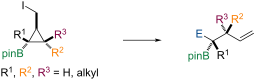
- engaging in diverse bond-forming processes, including C–C, C–O and C–N bond formations [3][4][5][6][7][8][9][10][11][12][13][14][15][16][17][18][19][20][21][22][23][24]. Despite their growing utility, controlling the stereoselectivity in substitution reactions of α-boryl carbanions remains a formidable
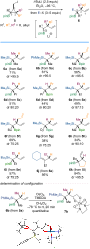
- effects suggests that the adjacent stereocenter at C2 might play a key role in the conformational stability and the stereochemical outcome. We therefore set out to extend the scope of the transformation by probing how substitution at the C2 position of precursor 2 affects the diastereoselectivity of the
- confirmed due to the inability to obtain suitable crystals for X-ray analysis. In addition to the nucleophilic substitution of the boryl lithium species with R3SiCl, a small range of alternative electrophiles was examined (Scheme 3). Incorporation of a tin-based electrophile furnished stannane 6i in




Site-specific labelling of native peptides and proteins: chemical and enzymatic strategies
Beilstein J. Org. Chem. 2026, 22, 857–881, doi:10.3762/bjoc.22.67
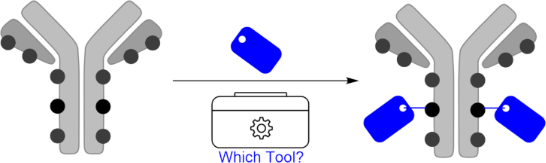
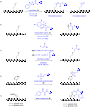
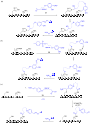
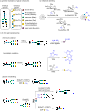
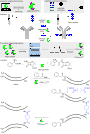
- substitution → hydrolysis; Scheme 8) [79], laying the groundwork for ligase development [80][81]. Lysine residues are abundant and typically solvent-exposed [82], hyper-reactive variants have been reported, and have led to the development of tools such as “K-lock” [83][84][85]. Unfortunately, the reactivity









The trans-influence in gold chemistry from a catalytic perspective
Beilstein J. Org. Chem. 2026, 22, 838–856, doi:10.3762/bjoc.22.66
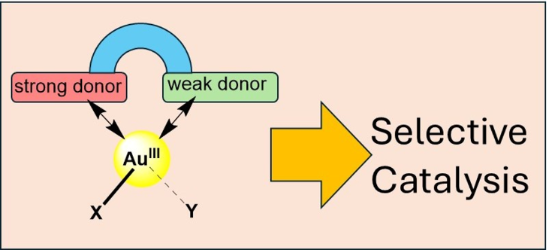
- the “trans-effect”, which describes the effect of a ligand L on the rate of substitution of another ligand in trans position, most prominently found in square-planar d8-complexes, notably those of platinum(II) [21]. This is a kinetic parameter and therefore combines ground-state energetics with the


Unsymmetrical sulfoxides with sterically hindered catechol fragment: synthesis, structure, electrochemical properties, and antiradical activity
Beilstein J. Org. Chem. 2026, 22, 828–837, doi:10.3762/bjoc.22.65
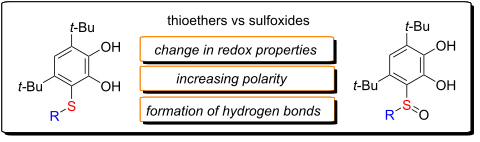
- thiol [22][23][24][25], through nucleophilic aromatic substitution on the catechol ring [26][27], or under electrochemical conditions [28][29][30][31][32]. A number of methods exist for the conversion of sulfides into sulfoxides, proceeding via either oxidative or non-oxidative pathways. The controlled


Synthesis and structural elucidation of a novel bis-spirooxindole from isatin and ethylenediamine
Beilstein J. Org. Chem. 2026, 22, 813–820, doi:10.3762/bjoc.22.63
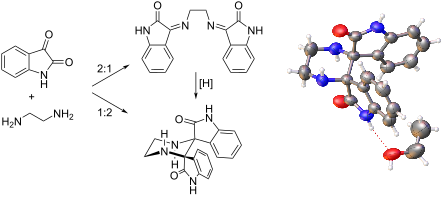
- ], reactions involving N-methylated ethylenediamines like 12 or 13 lead to spirocyclic products (14 and 15) [19]. These outcomes were rationalized through the involvement of imine and dipolarophilic intermediates (16 and 17), highlighting the sensitivity of the system to substitution at nitrogen. Furthermore


Halogenated azobenzene acrylates: from efficient solution photoswitching to stable solid-state photochromic materials
Beilstein J. Org. Chem. 2026, 22, 782–794, doi:10.3762/bjoc.22.60
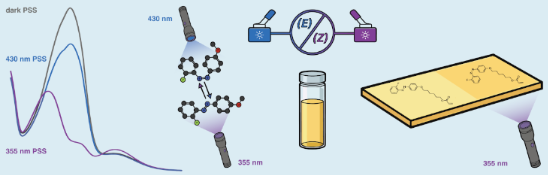
- halogenated azobenzene acrylate monomers bearing fluorine, chlorine or bromine substituents is reported. The monomers were prepared via a facile three-step synthetic route involving azo-coupling, O-alkylation and O-acylation. Apart from the steady electrochemical properties, halogen substitution proved to be
- diverse properties of various solid azobenzene polymeric systems. As an extension of these studies, we report herein a series of six novel azobenzene acrylate monomers 1a–f (Figure 1) structurally differing in the attached halogen atoms (F, Cl, and Br) at the positions 2 and 6. The described substitution
- Information File 1 for a complete list of analogous figures for all target azobenzenes 1a–f (Figures S24–35, S39–50, and S89–94). The DFT-calculated E/Z isomerization energies (ΔGE/Z) as a dependence of the substitution (Table S1 and Figure S52, Supporting Information File 1) indicates that ΔGE decreases when


Preparation of 3-(alkylamino)imidazo[1,2-a]pyridine-2-carbaldehydes via Kornblum oxidation and unexpected ring-opening reactions of the corresponding alcohols under oxidative conditions
Beilstein J. Org. Chem. 2026, 22, 763–770, doi:10.3762/bjoc.22.58
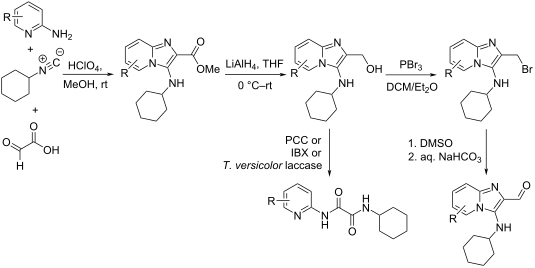
- –99% using LiAlH4 reduction (Scheme 3). Unexpectedly, reduction of 13d and 13f led to the same compound, the dehalogenated derivative 17d in 96% and 51% yield, respectively, presumably through nucleophilic aromatic substitution [29]. Oxidation of alcohols 17a–d using pyridinium chlorochromate (PCC


Synthesis and biological evaluation of new brassinosteroid analogs with C-22 benzoate function
Beilstein J. Org. Chem. 2026, 22, 753–762, doi:10.3762/bjoc.22.57
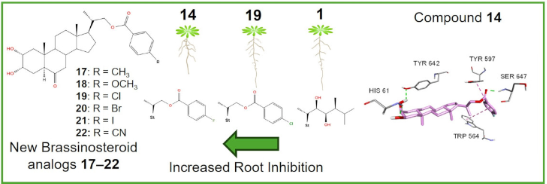
- inhibition of root growth of Arabidopsis thaliana. The RLIT data is compared with those previously reported for two series of compounds having the same substitution pattern at C-22 but different structure in ring A. This comparison revealed that a 2α,3α-dihydroxy configuration is more active than a 3


Rongalite addition to dienones: diastereoselectivity in cyclic sulfone synthesis; stereochemical rationalization and prospects as a general conjugate nucleophile
Beilstein J. Org. Chem. 2026, 22, 742–752, doi:10.3762/bjoc.22.56

- therefore more likely that steric effects in the transition state for the putative cyclization to give 8 are prohibitive. Indeed, we were unable to locate a transition state for this process computationally. In order to test the limits of the reaction with related substitution patterns in this process, we
- shift by a remarkable 1.0 ppm. Similarly, in the 13C NMR spectrum, the ortho-disubsituted ring produces 6 aromatic and 2 aliphatic signals, rather than the 4 aromatic and 1 aliphatic signals that would be expected given the symmetrical aromatic substitution pattern. These data indicate that the ortho


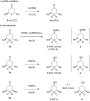


Synthesis of heterocycles based on azomethine ylides from α-amino acids (or amines) and carbonyl compounds
Beilstein J. Org. Chem. 2026, 22, 705–741, doi:10.3762/bjoc.22.55
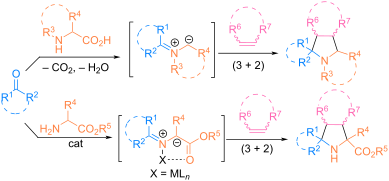
- of a product exhibiting reversed polarity (20). Conversely, when no α-aryl substitution is present, increased electron density remains at the C2 position, favoring the typical (3 + 2) cycloaddition pathway leading to product 19. In [48], the authors studied the reason for the complete change in


Harnessing light energy with molecules
Beilstein J. Org. Chem. 2026, 22, 680–682, doi:10.3762/bjoc.22.52
- . Systematic tuning of photochromic properties is the focus of several articles in this thematic issue. Kitagawa, Kobatake, and co-workers [15] studied the effect of the substitution position of aryl groups on the thermal back-reaction of azadiarylethene photoswitches. Simeth and co-workers [16] present a



