


Search results
Search for "synthetic utility" in Full Text gives 155 result(s) in Beilstein Journal of Organic Chemistry.
One-pot four-component sequential synthesis of S-alkyl dithiocarbamates using lipase as a biocatalyst
- Mansour Shahedi,
- Pargol Tahmasebi pour and
- Zohreh Habibi
Beilstein J. Org. Chem. 2026, 22, 1048–1056, doi:10.3762/bjoc.22.83
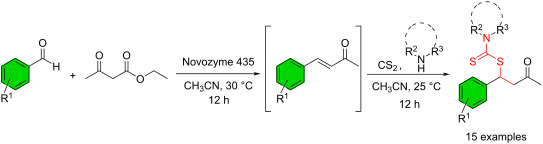
- multicomponent transformations. The operational simplicity, mild conditions, and efficient access to structurally diverse S-alkyl dithiocarbamates demonstrate the synthetic utility of this approach. Considering the well-documented biological relevance of dithiocarbamate scaffolds, the synthesized compounds may

Graphical Abstract

Figure 1: Biologically active S-alkyl dithiocarbamates.

Scheme 1: Previous works and this work for the sequential one-pot four-component synthesis of S-alkyl dithioc...

Scheme 2: Formation of the thiourea by-product.

Scheme 3: Scope of reaction with aldehydes and cyclic amines. Reaction conditions: 1a–f (0.1 mmol), 2 (0.15 m...

Scheme 4: Scope of the reaction with aldehydes and acyclic amines. Reaction conditions: 1a–c,e–g (0.1 mmol), 2...

Scheme 5: Control reactions.

Scheme 6: Proposed mechanism.
Electrochemical reduction of unsaturated carbon–carbon bonds via 3d transition-metal catalysis
- Geon Kang,
- Minki Jeon,
- Pooja Kumari Jat,
- Cheoljae Kim and
- Isaac Choi
Beilstein J. Org. Chem. 2026, 22, 955–981, doi:10.3762/bjoc.22.75
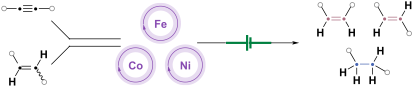
- remain unexplored [118][135][136]. Furthermore, extending these electrochemical platforms beyond hydrogenation toward more diverse reductive chemical transformations will significantly broaden their synthetic utility, enabling access to a wider range of bond constructions under mild and sustainable

Graphical Abstract

Figure 1: A design for electroorganic synthesis.

Figure 2: Modes of transition-metal-catalyzed electrochemical reduction of unsaturated C–C bonds.
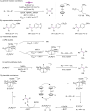
Scheme 1: Electroreductive iron catalysis for alkyne semihydrogenation enabled by a cobaltocene redox mediato...

Scheme 2: Electrochemical reduction of unactivated alkenes via iron catalysis.
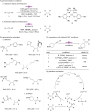
Scheme 3: Cobalt-catalyzed e-HAT for the reduction of alkynes.

Scheme 4: Dual cobalt catalyses for Z-selective semihydrogenation of alkynes.
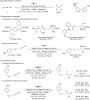
Scheme 5: Electrochemical cobalt-catalyzed semideuteration of alkynes.
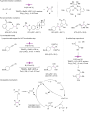
Scheme 6: Electrochemical cobalt catalysis for E-selective semihydrogenation of alkynes.

Scheme 7: Concerted proton–electron transfer-driven electrocatalytic reduction of alkenes.

Scheme 8: Electrochemical deuteration of alkenes via HAT using Co–H.

Scheme 9: Electrocatalytic reduction of alkynes by hydride transfer via PCET.

Scheme 10: Ni–H-free electrocatalytic semihydrogenation of alkynes by nickel catalysis.
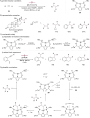
Scheme 11: Ligand-based proton and electron transfer enabling electrocatalytic semihydrogenation of alkynes.

Scheme 12: Proton-modulated electrochemical Ni–H formation for the hydrogenation of alkynes.

Scheme 13: Nickel-catalyzed electrochemical semireduction of terminal alkynes.

Scheme 14: Full hydrogenation of alkynes via nickel hydride electrocatalysis.

Scheme 15: Ni–H-mediated electrochemical reduction of alkynes to alkanes.

Scheme 16: Electrochemical nickel-catalyzed hydrogenation of alkenes.
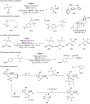
Scheme 17: Electrochemical Ni–H formation and hydrogenation of alkenes using a bifunctional ligand.
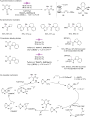
Scheme 18: Nickel hydride electrocatalysis for the hydrogenation of alkenes.
Recent advances in copper-catalyzed direct hydroamination of alkenes with (hetero)aromatic amines
- Hyejeong Lee and
- Yunmi Lee
Beilstein J. Org. Chem. 2026, 22, 925–947, doi:10.3762/bjoc.22.73
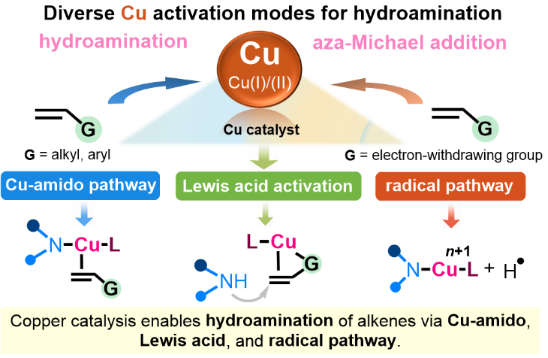
- active copper–amido species directly in situ from CuCl, the ligand, and KOt-Bu. Consequently, the reaction can be performed under simple benchtop conditions without requiring glovebox techniques, providing a more operationally convenient and practical method. Furthermore, the synthetic utility of this
- higher levels of stereocontrol, remains challenging. Continued catalyst development and mechanistic insight will further advance the synthetic utility of copper-catalyzed direct hydroamination reactions. Mechanistic pathways in copper-catalyzed hydroamination. Synthesis of copper–amido complexes. Cu

Graphical Abstract

Scheme 1: Mechanistic pathways in copper-catalyzed hydroamination.

Scheme 2: Synthesis of copper–amido complexes.

Scheme 3: Cu–amido catalysts studied for the aza-Michael addition of aniline to electron-deficient olefins.
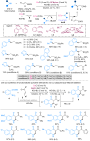
Scheme 4: Copper-catalyzed aza-Michael addition of (hetero)aromatic amines to α,β-unsaturated alkenes.

Scheme 5: Copper-catalyzed 1,6-conjugate addition of aza-heterocycles to sulfonyl dienes.

Scheme 6: Cu-catalyzed aza-Michael addition of arylamines to allylic sulfones.

Scheme 7: Cyclic(alkyl)(amino)carbene-copper-catalyzed aza-Michael addition.

Scheme 8: Aza-Michael addition enabled by Lewis acidic copper catalyst. a20 mol % bpy, 50 mol % Na2CO3.

Scheme 9: One-pot cyclization via aza-Michael addition enabled by Lewis acidic copper catalyst.

Scheme 10: Lewis acidic Cu-catalyzed tandem reaction via aza-Michael addition.

Scheme 11: Copper nanomaterials-catalyzed aza-Michael addition via Lewis acid activation and radical pathways.

Scheme 12: Copper–amido-mediated hydroamination of aniline with vinylarenes.

Scheme 13: Copper-catalyzed anti-Markovnikov hydroamination of (hetero)aromatic N–H with vinylarenes.

Scheme 14: Hydroamination of oxa- and azabenzonorbornadienes with pyrazoles.
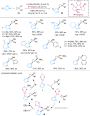
Scheme 15: Copper-catalyzed enantioselective hydroamination of cyclopropenes with pyrazoles.

Scheme 16: Copper/Brønsted acid system for hydroamination of strained alkenes.

Scheme 17: Hydroamination of allenes enabled by Lewis acidic copper catalyst.

Scheme 18: Enantioselective intramolecular hydroamination through aminocupration followed by radical processes....
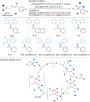
Scheme 19: Visible-light-induced copper-catalyzed hydroamination of styrenes.

Scheme 20: Lewis acid-catalyzed radical hydroamination of styrenes with isatins.
Diastereodivergent electrophilic trapping of α-boryl lithium derivatives
- Tereza Pavlíčková,
- Noam Orbach and
- Ilan Marek
Beilstein J. Org. Chem. 2026, 22, 882–887, doi:10.3762/bjoc.22.68
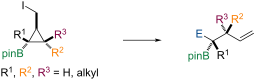
- facial selectivity during electrophilic trapping. These findings expand the synthetic utility of α-boryl lithium intermediates and provide insight into the origins of their diastereoselectivity. Keywords: α-boryl lithium; diastereoselectivity; (iodomethyl)cyclopropylboronic esters; ring-opening

Graphical Abstract

Scheme 1: Synthesis and reactivity of α-boryl lithium species.

Scheme 2: Diastereodivergent electrophilic trapping of α-boryl lithium derivatives.

Figure 1: Cyclopropylmethyl iodide starting materials.
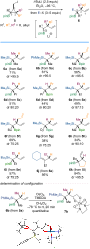
Scheme 3: Reactivity of α-boryl lithium intermediates 5 possessing alkyl substituents at the allylic position....

Scheme 4: Effect of the nature of the substituent R3 on the diastereoselectivity.

Scheme 5: Mechanistic hypothesis to rationalize the diastereoselectivity.
Arene activation via π-bond localization: concepts and opportunities
- Paul Meiners,
- Julian J. Melder and
- Tobias Morack
Beilstein J. Org. Chem. 2026, 22, 257–273, doi:10.3762/bjoc.22.19
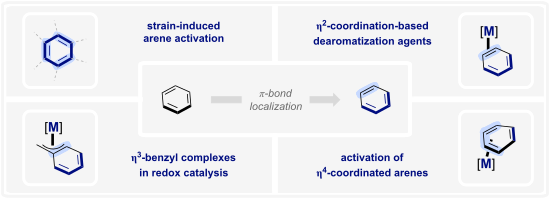
- highlighted. Collectively, these concepts create a roadmap for the development of new strategies that harness π-bond localization to expand the synthetic utility of aromatic compounds. Keywords: arene activation; arene functionalization; dearomatization; metal–arene π-complexes; strained molecules
- of the archetypal pentaammineosmium(II) system prior to discussing synthetic utility (Figure 6). The five ammine ligands, strong σ-donors with negligible π-interaction, combined with the d6 configuration render the Os(II) center highly electron-rich and an exceptional π-base [43]. This electronic
- (chloromethyl)naphthalene derivatives (Scheme 7A), thereby expanding the synthetic utility of the overarching platform [87]. This transformation furnished either ortho- or para-substituted carbocycles, depending on the substitution pattern of the malonate. Crucially, selective arene functionalization over

Graphical Abstract

Figure 1: Aromatic molecules as the foundation of modern molecular chemistry.

Figure 2: Arenes as springboards to three-dimensional chemical space and strategies toward arene activation v...

Figure 3: Structure and synthetic utilization of strained arenes; NICS: nucleus independent chemical shifts [26-28].

Figure 4: Bonding and reactivity of η2-coordinated aromatic systems [44,46].

Figure 5: Illustrative selection of η2-coordinating dearomatization agents; MeIm: N-methylimidazole, NHE: nor...

Figure 6: Preparation, lability and most stable linkage isomers of pentaammineosmium(II) complexes.

Scheme 1: Heteroatom-directed reactions of η2-arene complexes [45,50].

Figure 7: Latent functionality through transient metal binding.
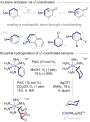
Figure 8: Selective hydrogenation of η2-coordinated benzene to cyclohexene under ambient conditions [53,54].

Scheme 2: Synthesis and utilization of enantioenrichted Mo(η2-arene) complexes in enantioselective synthesis [55]....

Scheme 3: Synthesis of trisubstituted cyclohexenes from phenyl sulfones enabled by tungsten-mediated dearomat...

Scheme 4: Diels–Alder reactions of η2-arene complexes with alkenes and alkynes; NMM: N-methylmaleimide [64,65].

Scheme 5: Binding characteristics and pioneering examples of isolable η3-benzyl complexes.

Figure 9: Divergent functionalization of benzyl electrophiles leveraging η3-benzyl complexes toward benzylic ...

Scheme 6: p-Selective allylation of benzyl chlorides with allylstannanes and subsequent synthetic expansion o...

Figure 10: Strategies for para- and ortho-selective arene functionalization/dearomatization via η3-benzyl comp...

Scheme 7: Substrate-dependent ortho- and para-selective dearomatization of naphthyl chlorides and leveraging ...

Figure 11: η4-Arene coordination as an underexplored but promising pathway for arene activation [96,98-100].
Base-promoted deacylation of 2-acetyl-2,5-dihydrothiophenes and their oxygen-mediated hydroxylation
- Vladimir G. Ilkin,
- Margarita Likhacheva,
- Igor V. Trushkov,
- Tetyana V. Beryozkina,
- Vera S. Berseneva,
- Vladimir T. Abaev,
- Wim Dehaen and
- Vasiliy A. Bakulev
Beilstein J. Org. Chem. 2026, 22, 192–204, doi:10.3762/bjoc.22.13
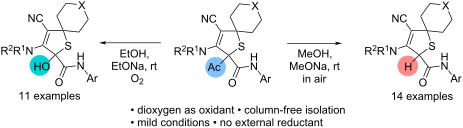
- available reagents is an important task. Recently, we have developed a copper(I)/rhodium(II)-catalyzed method toward two types of regioisomeric 2,5-dihydrothiophenes 1 and 4, containing an acetyl group [50]. In this work, to evaluate the synthetic utility of these compounds (the scope is presented at page

Graphical Abstract

Scheme 1: Previous reports (A‒C) and our work (D, E).
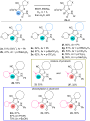
Scheme 2: Oxidation of 2-acetyldihydrothiophenes 1. Conditions: dihydrothiophenes 1 (0.12–0.21 mmol, 1.0 equi...

Scheme 3: Deacylation of 2-acetyldihydrothiophenes 1. Conditions: dihydrothiophenes 1 (0.11–0.18 mmol, 1.0 eq...

Scheme 4: Synthesis of dihydrothiophenes 5. Conditions: dihydrothiophenes 4 (0.13–0.22 mmol, 1.0 equiv), sodi...

Scheme 5: Control experiments.

Figure 1: HRMS analysis of the crude product.

Figure 2: UV–vis spectra of the crude mixture (5.6 mg of the crude mixture was dissolved in 15 mL of methanol...
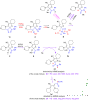
Scheme 6: Proposed mechanism.
Circumventing Mukaiyama oxidation: selective S–O bond formation via sulfenamide–alcohol coupling
- Guoling Huang,
- Huarui Zhu,
- Shuting Zhou,
- Wanlin Zheng,
- Fangpeng Liang,
- Zhibo Zhao,
- Yifei Chen and
- Xunbo Lu
Beilstein J. Org. Chem. 2026, 22, 158–166, doi:10.3762/bjoc.22.9
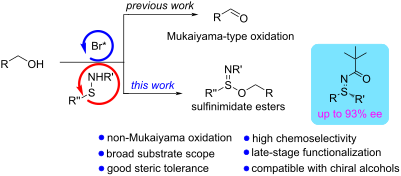
- with improved chemoselectivity toward monosubstitution and the yield of product 3x’ increased to 64%. Notably, although ester 3x’ contains two hydroxy groups, no bis-substituted product could be detected under either set of conditions. To demonstrate the practicality and synthetic utility of this

Graphical Abstract

Figure 1: Representative molecules containing a sulfilimine moiety.

Scheme 1: PIDA-mediated approach versus the present NBS-mediated approach to sulfinimidate esters.

Scheme 2: Substrate scope of sulfenamides derived from various thiophenols and thiols. Reaction conditions: s...

Scheme 3: Substrate scope of sulfenamides derived from various amides. Reaction conditions: sulfenamide 1 (0....

Scheme 4: Substrate scope of reactions between sulfenamides 1a and various alcohols. Reaction conditions: asu...
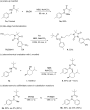
Scheme 5: Scale-up synthesis, late-stage derivatization, and substitution of diastereomeric sulfinimidate est...
Synthesis and applications of alkenyl chlorides (vinyl chlorides): a review
- Daniel S. Müller
Beilstein J. Org. Chem. 2026, 22, 1–63, doi:10.3762/bjoc.22.1
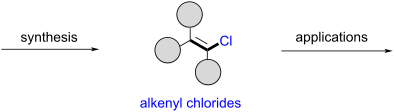
- selection of miscellaneous transformations illustrating the broader synthetic utility of this class of compounds. This review aims to provide a comprehensive overview of synthetic approaches to alkenyl chlorides and applications thereof. However, as the literature proved vast and ever-expanding, some
- precursor 372. More recently, the same group extended this methodology to the use of acetylene as a highly useful C2-building block, further broadening the synthetic utility of this approach (Scheme 65C) [205]. It is worth noting that allylic substitution of allylic gem-dichlorides has recently been

Graphical Abstract
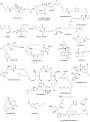
Figure 1: Representative alkenyl chloride motifs in natural products. References: Pinnaic acid [8], haterumalide ...

Figure 2: Representative alkenyl chloride motifs in pharmaceuticals and pesticides. References: clomifene [25], e...
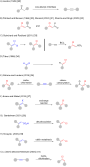
Figure 3: Graphical overview of previously published reviews addressing the synthesis of alkenyl chlorides.

Figure 4: Classification of synthetic approaches to alkenyl chlorides.

Scheme 1: Early works by Friedel, Henry, and Favorsky.

Scheme 2: Product distribution obtained by H NMR integration of crude compound as observed by Kagan and co-wo...

Scheme 3: Side reactions observed for the reaction of 14 with PCl5.

Scheme 4: Only compounds 15 and 18 were observed in the presence of Hünig’s base.

Scheme 5: Efficient synthesis of dichloride 15 at low temperatures.
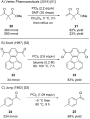
Scheme 6: Various syntheses of alkenyl chlorides on larger scale.

Scheme 7: Scope of the reaction of ketones with PCl5 in boiling cyclohexane.

Scheme 8: Side reactions occur when using excess amounts of PCl5.

Scheme 9: Formation of versatile β-chlorovinyl ketones.

Scheme 10: Mixture of PCl5 and PCl3 used for the synthesis of 49.

Scheme 11: Catechol–PCl3 reagents for the synthesis of alkenyl chlorides.

Scheme 12: (PhO)3P–halogen-based reagents for the synthesis of alkenyl halides.

Scheme 13: Preparation of alkenyl chlorides from alkenyl phosphates.

Scheme 14: Preparation of alkenyl chlorides by treatment of ketones with the Vilsmeier reagent.

Scheme 15: Preparation of electron-rich alkenyl chlorides by treatment of ketones with the Vilsmeier reagent.

Scheme 16: Cu-promoted synthesis of alkenyl chlorides from ketones and POCl3.

Figure 5: GC yield of 9 depending on time and reaction temperature.

Figure 6: Broken reaction flask after attempts to clean the polymerized residue.

Figure 7: GC yield of 9 depending on the amount of CuCl and time.

Scheme 17: Treatment of 4-chromanones with PCl3.

Scheme 18: Synthesis of alkenyl chlorides from the reaction of ketones with acyl chlorides.

Scheme 19: ZnCl2-promoted alkenyl chloride synthesis.
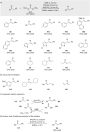
Scheme 20: Regeneration of acid chlorides by triphosgene.

Scheme 21: Alkenyl chlorides from ketones and triphosgene.
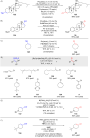
Scheme 22: Various substitution reactions.

Scheme 23: Vinylic Finkelstein reactions reported by Evano and co-workers.

Scheme 24: Challenge of selective monohydrochlorination of alkynes.

Scheme 25: Sterically encumbered internal alkynes furnish the hydrochlorination products in high yield.

Scheme 26: Recent work by Kropp with HCl absorbed on alumina.

Scheme 27: High selectivities for monhydrochlorination with nitromethane/acetic acid as solvent.

Figure 8: Functionalized alkynes which typically afford the monhydrochlorinated products.
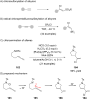
Scheme 28: Related chorosulfonylation and chloroamination reactions.
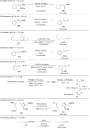
Scheme 29: Reaction of organometallic reagents with chlorine electrophiles.

Scheme 30: Elimination reactions of dichlorides to furnish alkenyl chlorides.

Scheme 31: Elimination reactions of allyl chloride 182 to furnish alkenyl chloride 183.

Scheme 32: Detailed studies by Schlosser on the elimination of dichloro compounds.

Scheme 33: Stereoselective variation caused by change of solvent.

Scheme 34: Elimination of gem-dichloride 189 to afford alkene 190.

Scheme 35: Oxidation of enones to dichlorides and in situ elimination thereof.

Scheme 36: Oxidation of allylic alcohols to dichlorides and in situ elimination thereof.

Scheme 37: Chlorination of styrenes with SOCl2 and elimination thereof.

Scheme 38: Chlorination of styrenes with SOCl2 and elimination thereof.

Scheme 39: Fluorine–chlorine exchange followed by elimination.

Scheme 40: Intercepting cations with alkynes and trapping of the alkenyl cation intermediate with chloride.

Scheme 41: Investigations by Mayr and co-workers.

Scheme 42: In situ activation of benzyl alcohol 230 with BCl3.

Scheme 43: In situ activation of benzylic alcohols with TiCl4.
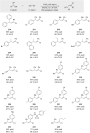
Scheme 44: In situ activation of benzylic alcohols with FeCl3.

Scheme 45: In situ activation of benzylic alcohols with FeCl3.

Scheme 46: In situ activation of aliphatic chlorides and alcohols with ZnCl2, InCl3, and FeCl3.

Scheme 47: In situ generation of benzylic cations and trapping thereof with alkynes.
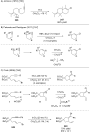
Scheme 48: Intramolecular trapping reactions affording alkenyl halides.

Scheme 49: Intramolecular trapping reactions affording alkenyl chlorides.

Scheme 50: Intramolecular trapping reactions of oxonium and iminium ions affording alkenyl chlorides.
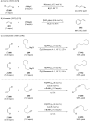
Scheme 51: Palladium and nickel-catalyzed coupling reactions to afford alkenyl chlorides.

Scheme 52: Rhodium-catalyzed couplings of 1,2-trans-dichloroethene with arylboronic esters.

Scheme 53: First report on monoselective coupling reactions for 1,1-dichloroalkenes.

Scheme 54: Negishi’s and Barluenga’s contributions.

Scheme 55: First mechanistic investigation by Johnson and co-workers.

Scheme 56: First successful cross-metathesis with choroalkene 260.

Scheme 57: Subsequent studies by Johnson.
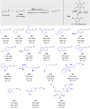
Scheme 58: Hoveyda and Schrock’s work on stereoretentive cross-metathesis with molybdenum-based catalysts.
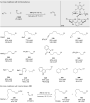
Scheme 59: Related work with (Z)-dichloroethene.
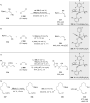
Scheme 60: Further ligand refinement and traceless protection of functional groups with HBpin.

Scheme 61: Alkenyl chloride synthesis by Wittig reaction.

Scheme 62: Alkenyl chloride synthesis by Julia olefination.

Scheme 63: Alkenyl chloride synthesis by reaction of ketones with Mg/TiCl4 mixture.

Scheme 64: Frequently used allylic substitution reactions which lead to alkenyl chlorides.
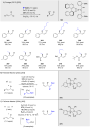
Scheme 65: Enantioselective allylic substitutions.

Scheme 66: Synthesis of alkenyl chlorides bearing an electron-withdrawing group.

Scheme 67: Synthesis of α-nitroalkenyl chlorides from aldehydes.

Scheme 68: Synthesis of alkenyl chlorides via elimination of an in situ generated geminal dihalide.

Scheme 69: Carbenoid approach reported by Pace.

Scheme 70: Carbenoid approach reported by Pace.

Scheme 71: Ring opening of cyclopropenes in the presence of MgCl2.

Scheme 72: Electrophilic chlorination of alkenyl MIDA boronates to Z- or E-alkenyl chlorides.

Scheme 73: Hydroalumination and hydroboration of alkynyl chlorides.

Scheme 74: Carbolithiation of chloroalkynes.

Scheme 75: Chlorination of enamine 420.

Scheme 76: Alkyne synthesis by elimination of alkenyl chlorides.

Scheme 77: Reductive lithiation of akenyl chlorides.

Scheme 78: Reactions of alkenyl chlorides with organolithium reagents.

Scheme 79: Reactions of alkenyl chlorides with organolithium reagents.

Scheme 80: Addition–elimination reaction of alkenyl chloride 9 with organolithium reagents.

Scheme 81: C–H insertions of lithiumcarbenoids.
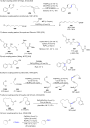
Scheme 82: Pd-catalyzed coupling reactions with alkenyl chlorides as coupling partner.

Scheme 83: Ni-catalyzed coupling of alkenylcopper reagent with alkenyl chloride 183.

Scheme 84: Ni-catalyzed coupling of heterocycle 472 with alkenyl chloride 473.

Scheme 85: Synthesis of α-chloroketones by oxidation of alkenyl chlorides.

Scheme 86: Tetrahalogenoferrate(III)-promoted oxidation of alkenyl chlorides.

Scheme 87: Chlorine–deuterium exchange promoted by a palladium catalyst.

Scheme 88: Reaction of alkenyl chlorides with thiols in the presence of AIBN (azobisisobutyronitrile).

Scheme 89: Chloroalkene annulation.
Sustainable electrochemical synthesis of aliphatic nitro-NNO-azoxy compounds employing ammonium dinitramide and their in vitro evaluation as potential nitric oxide donors and fungicides
- Alexander S. Budnikov,
- Nikita E. Leonov,
- Michael S. Klenov,
- Andrey A. Kulikov,
- Igor B. Krylov,
- Timofey A. Kudryashev,
- Aleksandr M. Churakov,
- Alexander O. Terent’ev and
- Vladimir A. Tartakovsky
Beilstein J. Org. Chem. 2025, 21, 2739–2754, doi:10.3762/bjoc.21.211
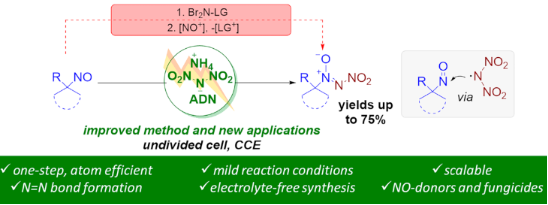
- -azoxylation of nitrosoalkanes containing electron-withdrawing groups. Synthetic utility and derivatization of synthesized coupling product 2f. Control experiments. Proposed mechanism for electrochemical nitro-NNO-azoxylation of 1-nitro-1-nitroso compounds 1. Free energies ΔG and activation free energies ΔG

Graphical Abstract
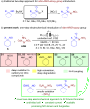
Scheme 1: Current synthetic approaches to aliphatic nitro-NNO-azoxy compounds and the summary of the present ...

Scheme 2: Scope of the discovered electrochemical nitro-NNO-azoxylation of nitrosoalkanes containing electron...

Scheme 3: Synthetic utility and derivatization of synthesized coupling product 2f.

Figure 1: CV-curves of 0.01 M solutions of a) 1a (blue), b) 1f (azure), c) 1c (pink), d) 1i (yellow), e) S4 (...

Figure 2: CV-curves of 0.01 M solutions of a) 1a (blue), b) ADN (red), c) the mixture of 1a and ADN (green), ...

Scheme 4: Control experiments.
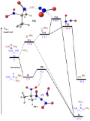
Figure 3: Free energy diagram of possible interaction pathways between 1a and dinitramide-derived radical A a...

Scheme 5: Proposed mechanism for electrochemical nitro-NNO-azoxylation of 1-nitro-1-nitroso compounds 1. Free...

Figure 4: Assessment of the NO release from compounds 2a–i, 3f, and 4f.
Palladium-catalyzed regioselective C1-selective nitration of carbazoles
- Vikash Kumar,
- Jyothis Dharaniyedath,
- Aiswarya T P,
- Sk Ariyan,
- Chitrothu Venkatesh and
- Parthasarathy Gandeepan
Beilstein J. Org. Chem. 2025, 21, 2479–2488, doi:10.3762/bjoc.21.190
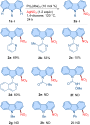
- 2s (36%) and 2s' (15%). It is worth noting that under the standard reaction conditions, indole substrates 1t and 1u failed to afford the desired products 2t and 2u. Encouraged by these results, and to further demonstrate the synthetic utility of the established reaction protocol, we carried out a
- carbazoles. Scope of the method. Reaction conditions: 1 (0.2 mmol, 1.0 equiv), Pd2(dba)3 (0.02 mmol, 10 mol %), AgNO3 (0.24 mmol, 1.2 equiv), and 1,4-dioxane (2.0 mL) at 120 °C for 24 h. a10 mol % of Pd(OAc)2 was used instead of Pd2(dba)3. Gram-scale synthesis, directing group removal, and synthetic utility

Graphical Abstract
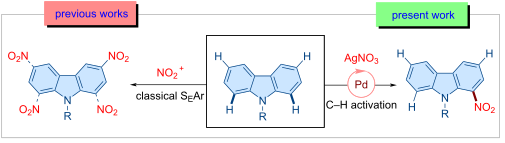
Scheme 1: (a) Representative examples of bioactive nitrocarbazoles. (b) Traditional electrophilic aromatic su...

Figure 1: ORTEP diagram of compound 2a (CCDC 2478298).
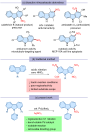
Scheme 2: Effect of directing groups on the nitration of the carbazoles.
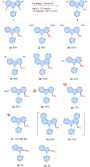
Scheme 3: Scope of the method. Reaction conditions: 1 (0.2 mmol, 1.0 equiv), Pd2(dba)3 (0.02 mmol, 10 mol %),...
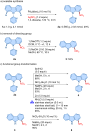
Scheme 4: Gram-scale synthesis, directing group removal, and synthetic utility of our method.
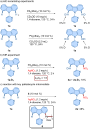
Scheme 5: Key mechanistic studies.
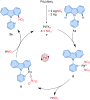
Figure 2: Plausible catalytic cycle.
Pathway economy in cyclization of 1,n-enynes
- Hezhen Han,
- Wenjie Mao,
- Bin Lin,
- Maosheng Cheng,
- Lu Yang and
- Yongxiang Liu
Beilstein J. Org. Chem. 2025, 21, 2260–2282, doi:10.3762/bjoc.21.173
- synthetic intermediates, and used to successfully modify diverse bioactive scaffolds via late-stage functionalization, collectively demonstrating the method’s synthetic utility. In 2025, the Das group developed a palladium-catalyzed cycloisomerization of 2-alkynylbenzoate-cyclohexadienone that enables

Graphical Abstract

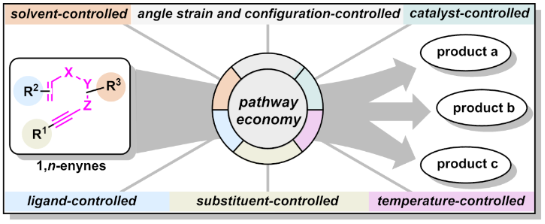
Scheme 1: Economical synthesis and pathway economy.

Scheme 2: Au(I)-catalyzed cascade cyclization paths of 1,5-enynes.

Scheme 3: Au(I)-catalyzed cyclization paths of 1,7-enynes.

Scheme 4: I2/TBHP-mediated radical cycloisomerization paths of 1,n-enyne.

Scheme 5: Au(I)-catalyzed cycloisomerization paths of 3-allyloxy-1,6-diynes.

Scheme 6: Pd(II)-catalyzed cycloisomerization paths of 2-alkynylbenzoate-cyclohexadienone.

Scheme 7: Stereoselective cyclization of 1,5-enynes.

Scheme 8: Substituent-controlled cycloisomerization of propargyl vinyl ethers.

Scheme 9: Au(I)-catalyzed pathway-controlled domino cyclization of 1,2-diphenylethynes.

Scheme 10: Au(I)-catalyzed tandem cyclo-isomerization of tryptamine-N-ethynylpropiolamide.

Scheme 11: Au(I)-catalyzed tunable cyclization of 1,6-cyclohexenylalkyne.

Scheme 12: Substituent-controlled 7-exo- and 8-endo-dig-selective cyclization of 2-propargylaminobiphenyl deri...

Scheme 13: BiCl3-catalyzed cycloisomerization of tryptamine-ynamide derivatives.

Scheme 14: Au(I)-mediated substituent-controlled cycloisomerization of 1,6-enynes.

Scheme 15: Ligand-controlled regioselective cyclization of 1,6-enynes.

Scheme 16: Ligand-dependent cycloisomerization of 1,7-enyne esters.

Scheme 17: Ligand-controlled cycloisomerization of 1,5-enynes.

Scheme 18: Ligand-controlled cyclization strategy of alkynylamide tethered alkylidenecyclopropanes.

Scheme 19: Ag(I)-mediated pathway-controlled cycloisomerization of tryptamine-ynamides.

Scheme 20: Gold-catalyzed cycloisomerization of indoles with alkynes.

Scheme 21: Catalyst-dependent cycloisomerization of dienol silyl ethers.

Scheme 22: Cycloisomerization of aromatic enynes governed by catalyst.

Scheme 23: Catalyst-dependent 1,2-migration in cyclization of 1-(indol-2-yl)-3-alkyn-1-ols.

Scheme 24: Gold-catalyzed cycloisomerization of N-propargyl-N-vinyl sulfonamides.

Scheme 25: Gold(I)-mediated enantioselective cycloisomerizations of ortho-(alkynyl)styrenes.

Scheme 26: Catalyst-controlled intramolecular cyclization of 1,7-enynes.

Scheme 27: Brønsted acid-catalyzed cycloisomerizations of tryptamine ynamides.

Scheme 28: Catalyst-controlled cyclization of indolyl homopropargyl amides.

Scheme 29: Angle strain-dominated 6-endo-trig cyclization of propargyl vinyl ethers.

Scheme 30: Angle strain-controlled cycloisomerization of alkyn-tethered indoles.

Scheme 31: Geometrical isomeration-dependent cycloisomerization of 1,3-dien-5-ynes.

Scheme 32: Temperature-controlled cyclization of 1,7-enynes.

Scheme 33: Cycloisomerizations of n-(o-ethynylaryl)acrylamides through temperature modulation.

Scheme 34: Temperature-controlled boracyclization of biphenyl-embedded 1,3,5-trien-7-ynes.
3-Aryl-2H-azirines as annulation reagents in the Ni(II)-catalyzed synthesis of 1H-benzo[4,5]thieno[3,2-b]pyrroles
- Julia I. Pavlenko,
- Pavel A. Sakharov,
- Anastasiya V. Agafonova,
- Derenik A. Isadzhanyan,
- Alexander F. Khlebnikov and
- Mikhail S. Novikov
Beilstein J. Org. Chem. 2025, 21, 1595–1602, doi:10.3762/bjoc.21.123
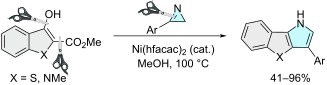
- methanol. The driving force of this process is the formation of an aromatic thiophene system. To demonstrate the practicability and synthetic utility of this method for the synthesis of benzo[4,5]thieno[3,2-b]pyrrole derivatives, several transformations of compound 3b were carried out (Scheme 4

Graphical Abstract
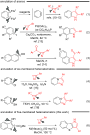
Scheme 1: Synthesis of fused pyrroles and azoles by [3 + 2] annulation reactions of azirines.

Scheme 2: Synthesis of benzo[4,5]thieno[3,2-b]pyrroles 3.

Scheme 3: Plausible mechanism for the formation of compounds 3.

Scheme 4: Post-modifications of 1H-benzo[4,5]thieno[3,2-b]pyrrole (3b).

Scheme 5: Synthesis of pyrrolo[3,2-b]indole 10.

Scheme 6: IPrCuCl-catalyzed reactions of indoles 9b,c with azirine 2a.

Scheme 7: Ni(II)- and Cu(I)-catalyzed reactions of indole 15 with azirine 2a.
Oxetanes: formation, reactivity and total syntheses of natural products
- Peter Gabko,
- Martin Kalník and
- Maroš Bella
Beilstein J. Org. Chem. 2025, 21, 1324–1373, doi:10.3762/bjoc.21.101
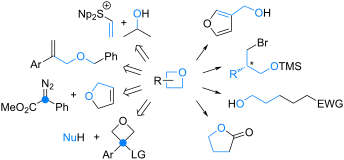
- is to provide a comprehensive review of oxetanes in terms of their preparation and synthetic utility. Because multiple reviews of similar formats covering literature up to late 2015 have already been published [12][32][33][34], we will discuss primarily the most recent advancements since the year
- , Howell et al. recently disclosed a general method for the synthesis of 2-halomethylideneoxetanes through halogenation of 2-methylideneoxetanes using N-halosuccinimides, and illustrated their synthetic utility by Suzuki–Miyaura, Sonogashira and Buchwald–Hartwig coupling reactions [53]. In addition to Cu

Graphical Abstract

Figure 1: Bond lengths and bond angles in oxetane at 140 K [2].

Figure 2: Analogy of 3-substituted oxetanes to carbonyl and gem-dimethyl groups [12].

Figure 3: Use of oxetanes in drug design – selected examples.

Figure 4: Examples of oxetane-containing natural products.

Scheme 1: Synthetic strategies towards construction of the oxetane ring.

Scheme 2: Overview of intramolecular Williamson etherification and competing Grob fragmentation.

Scheme 3: Synthesis of spiro-oxetanes via 1,4-C–H insertion and Williamson etherification.

Scheme 4: Use of phenyl vinyl selenone in the synthesis of spirooxindole oxetanes.

Scheme 5: Synthesis of bicyclic 3,5-anhydrofuranoses via double epoxide opening/etherification.

Scheme 6: Preparation of spirooxetanes by cycloisomerisation via MHAT/RPC.

Scheme 7: Oxetane synthesis via alcohol C–H functionalisation.

Scheme 8: Access to oxetanes 38 from α-acetyloxy iodides.

Scheme 9: The kilogram-scale synthesis of oxetane intermediate 41.

Scheme 10: Overview of the intramolecular opening of 3-membered rings.

Scheme 11: Synthesis of 4,7-dioxatricyclo[3.2.1.03,6]octane skeletons.

Scheme 12: Silicon-directed electrophilic cyclisation of homoallylic alcohols.

Scheme 13: Hydrosilylation–iodocyclisation of homopropargylic alcohols.

Scheme 14: Cu-catalysed intramolecular O-vinylation of γ-bromohomoallylic alcohols.

Scheme 15: Cu-catalysed intramolecular cross-coupling of hydroxyvinylstannanes.

Scheme 16: Isomerisation of oxiranyl ethers containing weakly carbanion-stabilising groups.

Scheme 17: Cyclisation of diethyl haloalkoxymalonates.

Scheme 18: Synthesis of oxetanes through a 1,5-HAT/radical recombination sequence.

Scheme 19: General approach to oxetanes via [2 + 2] cycloadditions.

Scheme 20: Synthesis of tricyclic 4:4:4 oxetanes through a photochemical triple cascade reaction.

Scheme 21: Iridium-catalysed Paternò–Büchi reaction between α-ketoesters and simple alkenes.

Scheme 22: Three-step synthesis of spirocyclic oxetanes 83 via Paternò–Büchi reaction, nucleophilic ring openi...

Scheme 23: Enantioselective Paternò–Büchi reaction catalysed by a chiral iridium photocatalyst.

Scheme 24: Synthesis of polysubstituted oxetanes 92 via Cu(II)-mediated formal [2 + 2] cycloadditions.

Scheme 25: Synthesis of alkylideneoxetanes via NHC- and DBU-mediated formal [2 + 2] cycloadditions.

Scheme 26: Use of sulphur-stabilised carbanions in ring expansions.

Scheme 27: Synthesis of α,α-difluoro(arylthio)methyl oxetanes.

Scheme 28: Ring expansion in an industrial synthesis of PF-06878031.

Scheme 29: Ring contraction of triflated 2-hydroxy-γ-lactones.

Scheme 30: Ring contraction in an industrial synthesis of PF-06878031.

Scheme 31: Photochemical ring contraction of 2,5-dihydrofurans by aryldiazoacetic acid esters.

Scheme 32: Synthesis of 3-oxetanones via O-H insertion of carbenes.

Scheme 33: Synthesis of phosphonate oxetanones via gold-mediated alkyne oxidation/O–H insertion.

Scheme 34: Syntheses and common derivatisations of 3-oxetanone.

Scheme 35: SN1 substitution of 3-aryloxetan-3-ols by thiols and alcohols.

Scheme 36: Fe–Ni dual-catalytic olefin hydroarylation towards 3-alkyl-3-(hetero)aryloxetanes.

Scheme 37: Synthesis of 3-aryloxetan-3-carboxylic acids.

Scheme 38: Decarboxylative alkylation of 3-aryloxetan-3-carboxylic acids.

Scheme 39: Synthesis of 3-amino-3-aryloxetanes via photoredox/nickel cross-coupling catalysis.
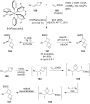
Scheme 40: Intermolecular cross-selective [2 + 2] photocycloaddition towards spirooxetanes.

Scheme 41: Synthesis of 3-aryl-3-aminooxetanes via defluorosulphonylative coupling.

Scheme 42: Two-step synthesis of amide bioisosteres via benzotriazolyl Mannich adducts 170.

Scheme 43: Functionalisation of oxetanyl trichloroacetimidates 172.

Scheme 44: Synthesis of oxetane-amino esters 176.

Scheme 45: Tandem Friedel–Crafts alkylation/intramolecular ring opening of 3-aryloxetan-3-ols.

Scheme 46: Synthesis of polysubstituted furans and pyrroles.

Scheme 47: Synthesis of oxazolines and bisoxazolines.

Scheme 48: Tandem, one-pot syntheses of various polycyclic heterocycles.

Scheme 49: Synthesis of 1,2-dihydroquinolines via skeletal reorganisation of oxetanes.

Scheme 50: Synthesis of benzoindolines and 2,3-dihydrobenzofurans and their derivatisations.

Scheme 51: Synthesis of polysubstituted 1,4-dioxanes.

Scheme 52: Preparation of various lactones via ring opening of oxetane-carboxylic acids 219.

Scheme 53: Tsuji-Trost allylation/ring opening of 3-aminooxetanes.

Scheme 54: Arylative skeletal rearrangement of 3-vinyloxetan-3-ols to 2,5-dihydrofurans.

Scheme 55: Reductive opening of oxetanes using catalytic Mg–H species.

Scheme 56: Opening of oxetanes by silyl ketene acetals.

Scheme 57: Rhodium-catalysed hydroacylation of oxetanes.

Scheme 58: Generation of radicals from oxetanes mediated by a vitamin B12-derived cobalt catalyst.

Scheme 59: Reductive opening of oxetanes by B–Si frustrated Lewis pairs.
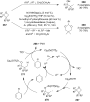
Scheme 60: Zirconocene-mediated reductive opening of oxetanes.

Scheme 61: Enantioselective syntheses of small and medium-size rings using chiral phosphoric acids.

Scheme 62: Asymmetric synthesis of 2,3-dihydrobenzo[b]oxepines catalysed by a chiral scandium complex.

Scheme 63: Enantioselective synthesis of 1,3-bromohydrins under a chiral squaramide catalysis.

Scheme 64: Enantioselective opening of 2-aryl-2-ethynyloxetanes by anilines.

Scheme 65: Ru-catalysed insertion of diazocarbonyls into oxetanes.

Scheme 66: Ring expansion of oxetanes by stabilised carbenes generated under blue light irradiation.

Scheme 67: Expansion of oxetanes via nickel-catalysed insertion of alkynyltrifluoroborates.

Scheme 68: Nickel-catalysed expansion of oxetanes into ε-caprolactones.

Scheme 69: Expansion of oxetanes via cobalt-catalysed carbonyl insertion.

Scheme 70: Gold-catalysed intramolecular 1,1-carboalkoxylation of oxetane-ynamides.

Scheme 71: Expansion of oxetanes by stabilised sulphoxonium ylides.

Scheme 72: Cu-catalysed ring expansion of 2-vinyloxetanes by diazoesters.

Scheme 73: Total synthesis of (+)-oxetin.

Scheme 74: Total synthesis of racemic oxetanocin A.

Scheme 75: Total synthesis of (−)-merrilactone A.
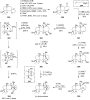
Scheme 76: Total synthesis of (+)-dictyoxetane.

Scheme 77: Total synthesis of ent-dichrocephone B.

Scheme 78: Total synthesis of (−)-mitrephorone A.
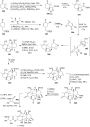
Scheme 79: Total synthesis of (−)-taxol.
Recent advances in amidyl radical-mediated photocatalytic direct intermolecular hydrogen atom transfer
- Hao-Sen Wang,
- Lin Li,
- Xin Chen,
- Jian-Li Wu,
- Kai Sun,
- Xiao-Lan Chen,
- Ling-Bo Qu and
- Bing Yu
Beilstein J. Org. Chem. 2025, 21, 1306–1323, doi:10.3762/bjoc.21.100
- concurrent generation of byproduct 46. Subsequent trapping of radical 4 by HRP-9 leads to the generation of product 69. This methodology demonstrates a broad substrate scope and exhibits significant synthetic utility, particularly for the generation of products 70, 71, and 72 with yields ranging from 54% to

Graphical Abstract

Figure 1: (a) BDE of C–H. (b) Direct functionalization of C–H catalyzed by transition-metal. (c) Direct funct...
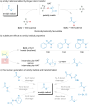
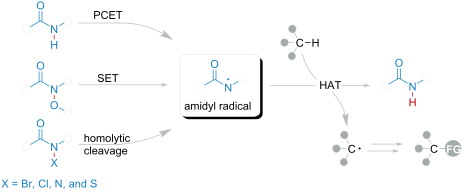
Figure 2: (a) Amidyl radical-enabled hydrogen atom transfer. (b) Substituent effects to amidyl radical proper...

Figure 3: Representative photocatalysts discussed in this review.

Scheme 1: Alkylation of C(sp3)–H catalyzed by amidyl radical under visible light.

Scheme 2: Direct heteroarylation of C(sp3)–H catalyzed by amidyl radical under visible light.

Scheme 3: Alkylation of C(sp3)–H catalyzed by amidyl radical and metal-free photocatalyst under visible light....

Scheme 4: Alkylation of C(sp3)–H, Si–H, and Ge–H catalyzed by amidyl radical under visible light.

Scheme 5: Direct heteroarylation of C(sp3)–H catalyzed by synergistic promotion of amidyl radical and photoca...

Scheme 6: Direct B–H functionalization of icosahedral carboranes catalyzed by amidyl radical under visible li...

Scheme 7: Nucleophilic amination of C(sp3)–H enabled by amidyl radical under visible light.
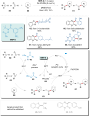
Scheme 8: Direct heteroarylation of C(sp3)–H and C(sp3)–H without the presence of strong bases, acids, or oxi...

Scheme 9: Xanthylation of C(sp3)–H addressed by amidyl radical under visible light.

Scheme 10: Xanthylation of C(sp3)–H in polyolefins addressed by amidyl radical under visible light.

Scheme 11: Site-selective C(sp3)–H bromination implemented by amidyl radical under visible light.

Scheme 12: Site-selective chlorination of C(sp3)–H in natural products implemented by amidyl radical under vis...

Scheme 13: Alkylation of C(sp3)–H catalyzed by amidyl radical photocatalyst under visible light.
Recent advances in oxidative radical difunctionalization of N-arylacrylamides enabled by carbon radical reagents
- Jiangfei Chen,
- Yi-Lin Qu,
- Ming Yuan,
- Xiang-Mei Wu,
- Heng-Pei Jiang,
- Ying Fu and
- Shengrong Guo
Beilstein J. Org. Chem. 2025, 21, 1207–1271, doi:10.3762/bjoc.21.98
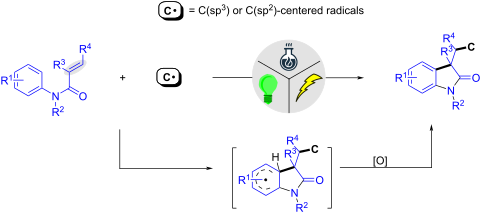

Graphical Abstract

Scheme 1: DTBP-mediated oxidative alkylarylation of activated alkenes.

Scheme 2: Iron-catalyzed oxidative 1,2-alkylarylation.

Scheme 3: Possible mechanism for the iron-catalyzed oxidative 1,2-alkylation of activated alkenes.

Scheme 4: A metal-free strategy for synthesizing 3,3-disubstituted oxindoles.

Scheme 5: Iminoxyl radical-promoted cascade oxyalkylation/alkylarylation of alkenes.

Scheme 6: Proposed mechanism for the iminoxyl radical-promoted cascade oxyalkylation/alkylarylation of alkene...

Scheme 7: Bicyclization of 1,n-enynes with alkyl nitriles.

Scheme 8: Possible reaction mechanism for the bicyclization of 1,n-enynes with alkyl nitriles.

Scheme 9: Radical cyclization of N-arylacrylamides with isocyanides.

Scheme 10: Plausible mechanism for the radical cyclization of N-arylacrylamides with isocyanides.

Scheme 11: Electrochemical dehydrogenative cyclization of 1,3-dicarbonyl compounds.

Scheme 12: Plausible mechanism for the dehydrogenative cyclization of 1,3-dicarbonyl compounds.

Scheme 13: Photocatalyzed cyclization of N-arylacrylamide and N,N-dimethylaniline.

Scheme 14: Proposed mechanism for the photocatalyzed cyclization of N-arylacrylamides and N,N-dimethylanilines....

Scheme 15: Electrochemical monofluoroalkylation cyclization of N-arylacrylamides with dimethyl 2-fluoromalonat...
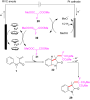
Scheme 16: Proposed mechanism for the electrochemical radical cyclization of N-arylacrylamides with dimethyl 2...

Scheme 17: Photoelectrocatalytic carbocyclization of unactivated alkenes using simple malonates.

Scheme 18: Plausible mechanism for the photoelectrocatalytic carbocyclization of unactivated alkenes with simp...

Scheme 19: Bromide-catalyzed electrochemical trifluoromethylation/cyclization of N-arylacrylamides.

Scheme 20: Proposed mechanism for the electrochemical trifluoromethylation/cyclization of N-arylacrylamides.

Scheme 21: Visible light-mediated trifluoromethylarylation of N-arylacrylamides.

Scheme 22: Plausible reaction mechanism for the visible light-mediated trifluoromethylarylation of N-arylacryl...

Scheme 23: Electrochemical difluoroethylation cyclization of N-arylacrylamides with sodium difluoroethylsulfin...

Scheme 24: Electrochemical difluoroethylation cyclization of N-methyacryloyl-N-alkylbenzamides with sodium dif...

Scheme 25: Photoredox-catalyzed radical aryldifluoromethylation of N-arylacrylamides with S-(difluoromethyl)su...

Scheme 26: Proposed mechanism for the photoredox-catalyzed radical aryldifluoromethylation of N-arylacrylamide...

Scheme 27: Visible-light-induced domino difluoroalkylation/cyclization of N-cyanamide alkenes.

Scheme 28: Proposed mechanism of photoredox-catalyzed radical domino difluoroalkylation/cyclization of N-cyana...

Scheme 29: Palladium-catalyzed oxidative difunctionalization of alkenes.

Scheme 30: Two possible mechanisms of palladium-catalyzed oxidative difunctionalization.

Scheme 31: Silver-catalyzed oxidative 1,2-alkyletherification of unactivated alkenes with α-bromoalkylcarbonyl...

Scheme 32: Photochemical radical cascade cyclization of dienes.

Scheme 33: Proposed mechanism for the photochemical radical cascade 6-endo cyclization of dienes with α-carbon...

Scheme 34: Photocatalyzed radical coupling/cyclization of N-arylacrylamides and.

Scheme 35: Photocatalyzed radical-type couplings/cyclization of N-arylacrylamides with sulfoxonium ylides.

Scheme 36: Possible mechanism of visible-light-induced radical-type couplings/cyclization of N-arylacrylamides...
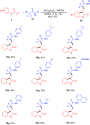
Scheme 37: Visible-light-promoted difluoroalkylated oxindoles systhesis via EDA complexes.

Scheme 38: Possible mechanism for the visible-light-promoted radical cyclization of N-arylacrylamides with bro...

Scheme 39: A dicumyl peroxide-initiated radical cascade reaction of N-arylacrylamide with DCM.

Scheme 40: Possible mechanism of radical cyclization of N-arylacrylamides with DCM.

Scheme 41: An AIBN-mediated radical cascade reaction of N-arylacrylamides with perfluoroalkyl iodides.

Scheme 42: Possible mechanism for the reaction with perfluoroalkyl iodides.

Scheme 43: Photoinduced palladium-catalyzed radical annulation of N-arylacrylamides with alkyl halides.

Scheme 44: Radical alkylation/cyclization of N-Alkyl-N-methacryloylbenzamides with alkyl halides.

Scheme 45: Possible mechanism for the alkylation/cyclization with unactivated alkyl chlorides.
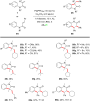
Scheme 46: Visible-light-driven palladium-catalyzed radical cascade cyclization of N-arylacrylamides with unac...

Scheme 47: NHC-catalyzed radical cascade cyclization of N-arylacrylamides with alkyl bromides.

Scheme 48: Possible mechanism of NHC-catalyzed radical cascade cyclization.

Scheme 49: Electrochemically mediated radical cyclization reaction of N-arylacrylamides with freon-type methan...

Scheme 50: Proposed mechanistic pathway of electrochemically induced radical cyclization reaction.

Scheme 51: Redox-neutral photoinduced radical cascade cylization of N-arylacrylamides with unactivated alkyl c...
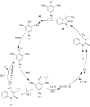
Scheme 52: Proposed mechanistic hypothesis of redox-neutral radical cascade cyclization.

Scheme 53: Thiol-mediated photochemical radical cascade cylization of N-arylacrylamides with aryl halides.

Scheme 54: Proposed possible mechanism of thiol-mediated photochemical radical cascade cyclization.

Scheme 55: Visible-light-induced radical cascade bromocyclization of N-arylacrylamides with NBS.

Scheme 56: Possible mechanism of visible-light-induced radical cascade cyclization.

Scheme 57: Decarboxylation/radical C–H functionalization by visible-light photoredox catalysis.

Scheme 58: Plausible mechanism of visible-light photoredox-catalyzed radical cascade cyclization.

Scheme 59: Visible-light-promoted tandem radical cyclization of N-arylacrylamides with N-(acyloxy)phthalimides....

Scheme 60: Plausible mechanism for the tandem radical cyclization reaction.

Scheme 61: Visible-light-induced aerobic radical cascade alkylation/cyclization of N-arylacrylamides with alde...

Scheme 62: Plausible mechanism for the aerobic radical alkylarylation of electron-deficient amides.

Scheme 63: Oxidative decarbonylative [3 + 2]/[5 + 2] annulation of N-arylacrylamide with vinyl acids.

Scheme 64: Plausible mechanism for the decarboxylative (3 + 2)/(5 + 2) annulation between N-arylacrylamides an...

Scheme 65: Rhenium-catalyzed alkylarylation of alkenes with PhI(O2CR)2.

Scheme 66: Plausible mechanism for the rhenium-catalyzed decarboxylative annulation of N-arylacrylamides with ...

Scheme 67: Visible-light-induced one-pot tandem reaction of N-arylacrylamides.

Scheme 68: Plausible mechanism for the visible-light-initiated tandem synthesis of difluoromethylated oxindole...

Scheme 69: Copper-catalyzed redox-neutral cyanoalkylarylation of activated alkenes with cyclobutanone oxime es...

Scheme 70: Plausible mechanism for the copper-catalyzed cyanoalkylarylation of activated alkenes.

Scheme 71: Photoinduced alkyl/aryl radical cascade for the synthesis of quaternary CF3-attached oxindoles.

Scheme 72: Plausible photoinduced electron-transfer (PET) mechanism.

Scheme 73: Photoinduced cerium-mediated decarboxylative alkylation cascade cyclization.

Scheme 74: Plausible reaction mechanism for the decarboxylative radical-cascade alkylation/cyclization.

Scheme 75: Metal-free oxidative tandem coupling of activated alkenes.

Scheme 76: Control experiments and possible mechanism for 1,2-carbonylarylation of alkenes with carbonyl C(sp2...

Scheme 77: Silver-catalyzed acyl-arylation of activated alkenes with α-oxocarboxylic acids.

Scheme 78: Proposed mechanism for the decarboxylative acylarylation of acrylamides.

Scheme 79: Visible-light-mediated tandem acylarylation of olefines with carboxylic acids.

Scheme 80: Proposed mechanism for the radical cascade cyclization with acyl radical via visible-light photored...

Scheme 81: Erythrosine B-catalyzed visible-light photoredox arylation-cyclization of N-arylacrylamides with ar...

Scheme 82: Electrochemical cobalt-catalyzed radical cyclization of N-arylacrylamides with arylhydrazines or po...

Scheme 83: Proposed mechanism of radical cascade cyclization via electrochemical cobalt catalysis.

Scheme 84: Copper-catalyzed oxidative tandem carbamoylation/cyclization of N-arylacrylamides with hydrazinecar...

Scheme 85: Proposed reaction mechanism for the radical cascade cyclization by copper catalysis.

Scheme 86: Visible-light-driven radical cascade cyclization reaction of N-arylacrylamides with α-keto acids.

Scheme 87: Proposed mechanism of visible-light-driven cascade cyclization reaction.

Scheme 88: Peroxide-induced radical carbonylation of N-(2-methylallyl)benzamides with methyl formate.

Scheme 89: Proposed cyclization mechanism of peroxide-induced radical carbonylation with N-(2-methylallyl)benz...

Scheme 90: Persulfate promoted carbamoylation of N-arylacrylamides and N-arylcinnamamides.

Scheme 91: Proposed mechanism for the persulfate promoted radical cascade cyclization reaction of N-arylacryla...
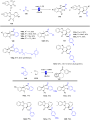
Scheme 92: Photocatalyzed carboacylation with N-arylpropiolamides/N-alkyl acrylamides.

Scheme 93: Plausible mechanism for the photoinduced carboacylation of N-arylpropiolamides/N-alkyl acrylamides.

Scheme 94: Electrochemical Fe-catalyzed radical cyclization with N-arylacrylamides.

Scheme 95: Plausible mechanism for the electrochemical Fe-catalysed radical cyclization of N-phenylacrylamide.

Scheme 96: Substrate scope of the selective functionalization of various α-ketoalkylsilyl peroxides with metha...

Scheme 97: Proposed reaction mechanism for the Fe-catalyzed reaction of alkylsilyl peroxides with methacrylami...

Scheme 98: EDA-complex mediated C(sp2)–C(sp3) cross-coupling of TTs and N-methyl-N-phenylmethacrylamides.

Scheme 99: Proposed mechanism for the synthesis of oxindoles via EDA complex.
Synthesis of β-ketophosphonates through aerobic copper(II)-mediated phosphorylation of enol acetates
- Alexander S. Budnikov,
- Igor B. Krylov,
- Fedor K. Monin,
- Valentina M. Merkulova,
- Alexey I. Ilovaisky,
- Liu Yan,
- Bing Yu and
- Alexander O. Terent’ev
Beilstein J. Org. Chem. 2025, 21, 1192–1200, doi:10.3762/bjoc.21.96
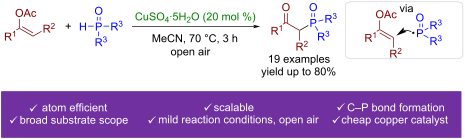
- oxide gave the corresponding product 3s in 58% yield, although earlier 3s wasn’t observed in an analogous reaction when Mn(acac)3 was used as an oxidant [71]. The synthetic utility of the developed protocol was demonstrated by performing the model reaction on a 6 mmol scale (Scheme 3), product 3a was

Graphical Abstract

Scheme 1: Recent approaches for the synthesis of β-ketophosphonates by the oxyphosphorylation of unsaturated ...

Scheme 2: The scope of the discovered copper(II)-mediated phosphorylation of enol acetates.

Scheme 3: Gram-scale synthesis of 3a.

Scheme 4: Control experiments.

Scheme 5: Proposed mechanism for copper(II) mediated phosphorylation of enol acetates.
Light-enabled intramolecular [2 + 2] cycloaddition via photoactivation of simple alkenylboronic esters
- Lewis McGhie,
- Hannah M. Kortman,
- Jenna Rumpf,
- Peter H. Seeberger and
- John J. Molloy
Beilstein J. Org. Chem. 2025, 21, 854–863, doi:10.3762/bjoc.21.69
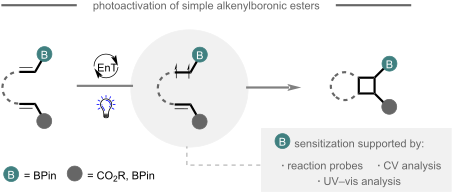
- , bottom). Despite the additional substituent, the reaction was tolerated, albeit with decreased diastereoselectivity in comparison to previous alkenylboronic ester examples 4b–d. To demonstrate the synthetic utility of the generated small 3D fragments and complement existing [2 + 2] strategies via direct
- be derivatized to demonstrate the synthetic utility of the process. Although reactivity is currently limited to intramolecular quenching, it is envisaged the developed insights will serve as a blueprint for future endeavors to achieve sensitization using high energy photocatalysts, especially when

Graphical Abstract
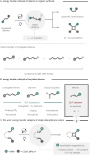
Figure 1: A) Energy transfer catalysis of alkenes in organic synthesis. B) Energy transfer catalysis of conju...
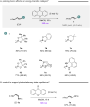
Figure 2: Probing boron effects on reactivity (A) and confirming the generation of a photostationary state eq...

Figure 3: Probing EnT catalysis enabled [2 + 2] cycloaddition of simple alkenylboronic esters.
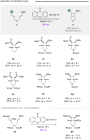
Scheme 1: Establishing the substrate scope. Conditions: 3 (1 equiv), xanthone (20 mol %), MeCN (0.03 M), unde...

Scheme 2: A) Product derivatization and B) transition-metal EnT catalysis. Reaction conditions A): 4d (1 equi...
Regioselective formal hydrocyanation of allenes: synthesis of β,γ-unsaturated nitriles with α-all-carbon quaternary centers
- Seeun Lim,
- Teresa Kim and
- Yunmi Lee
Beilstein J. Org. Chem. 2025, 21, 800–806, doi:10.3762/bjoc.21.63
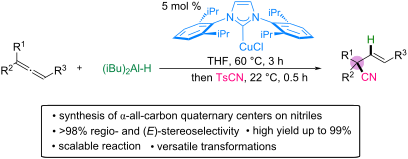
- its synthetic utility and potential applicability in complex molecule synthesis. Results and Discussion We began by optimizing the hydrocyanation of allene 1a using DIBAL-H as the hydride source and p-toluenesulfonyl cyanide as the cyanating reagent (Scheme 2). Under previously established conditions

Graphical Abstract

Scheme 1: Synthesis of acyclic nitrile-substituted quaternary carbon centers from allenes.

Scheme 2: Hydrocyanation of allene 1a with tosyl cyanide.
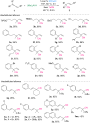
Scheme 3: Hydrocyanation with various di- or trisubstituted allenes. Reaction conditions: allene 1 (0.3 mmol)...

Scheme 4: Hydrocyanation with various monosubstituted allenes. Reaction conditions: allene 4 (0.3 mmol), (iBu)...

Scheme 5: Gram scale reaction.

Scheme 6: Synthetic applications.

Scheme 7: Proposed mechanism.
Recent advances in allylation of chiral secondary alkylcopper species
- Minjae Kim,
- Gwanggyun Kim,
- Doyoon Kim,
- Jun Hee Lee and
- Seung Hwan Cho
Beilstein J. Org. Chem. 2025, 21, 639–658, doi:10.3762/bjoc.21.51
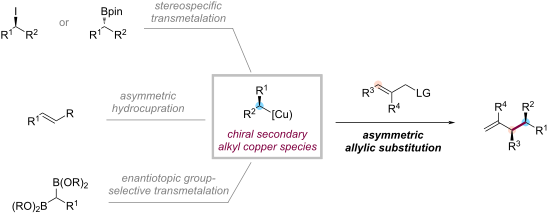
- advancement requires establishing catalytic systems that effectively utilize chiral secondary organocopper species, making the understanding of their nature and behavior crucial for expanding the synthetic utility of this transformation. The purpose of this review is to present recent procedures for
- reactions with various chiral cycloallylic phosphates 17, which consistently yielded the corresponding SN2' products 18 with high stereoselectivity. The synthetic utility and broad applicability of this methodology was prominently demonstrated through the total synthesis of biologically important natural
- construct non-benzylic and non-allylic CF3-substituted C(sp3) stereogenic centers. The synthetic utility of this allylation process was demonstrated through the facile functionalization of the allylic moiety in the enantioenriched product 41, providing access to optically active CF3-containing compounds

Graphical Abstract

Scheme 1: Representative transition-metal catalysis for allylic substitution.

Scheme 2: Formation of stereogenic centers in copper-catalyzed allylic alkylation reactions.

Scheme 3: Copper-mediated, stereospecific SN2-selective allylic substitution through retentive transmetalatio...

Scheme 4: ZnCl2-promoted stereospecific SN2' allylic substitution of secondary alkylcopper species via sequen...

Scheme 5: Temperature and time-dependent configurational stability of chiral secondary organocopper species.

Scheme 6: DFT analysis of B–C bond lengths in various boronate complexes and correlation with reactivity.

Scheme 7: Copper-catalyzed stereospecific allylic alkylation of secondary alkylboronic esters via tert-butyll...

Scheme 8: Copper-catalyzed stereospecific allylic alkylation of chiral tertiary alkylboronic esters via adama...

Scheme 9: DFT-calculated energy surface for boron-to-copper transmetalation of either the tert-butyl group or...

Scheme 10: CuH-catalyzed enantioselective allylic substitution and postulated catalytic cycle.

Scheme 11: CuH-catalyzed enantioselective allylic substitution of vinylarenes.

Scheme 12: CuH-catalyzed stereoselective allylic substitution of vinylboronic esters.

Scheme 13: (a) Generation of chiral copper species via enantioselective CuH addition to vinylBpin. (b) Regardi...

Scheme 14: CuH-catalyzed enantioselective allylic substitution of 1‐trifluoromethylalkenes with 18-crown-6.

Scheme 15: CuH-catalyzed enantioselective allylic substitution of terminal alkynes.

Scheme 16: Copper-catalyzed enantiotopic-group-selective allylic substitution of 1,1-diborylalkanes.
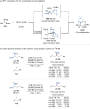
Scheme 17: (a) Computational and (b) experimental studies to elucidate the mechanistic details of the enantiot...

Scheme 18: Copper-catalyzed regio-, diastereo- and enantioselective allylic substitution of 1,1-diborylalkanes....

Scheme 19: (a) Experimental and (b) computational studies to understand the stereoselectivities in oxidative a...
Recent advances in organocatalytic atroposelective reactions
- Henrich Szabados and
- Radovan Šebesta
Beilstein J. Org. Chem. 2025, 21, 55–121, doi:10.3762/bjoc.21.6
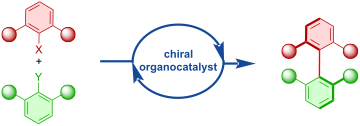
- (Scheme 61) [91]. After testing a considerable number of substrates, the authors achieved excellent yields and enantioselectivities. The synthetic utility of this approach stems from being able to skip additional reaction steps and thus omit reagents used in those steps, leading to increased efficiency

Graphical Abstract

Scheme 1: Formation of axially chiral styrenes 3 via iminium activation.

Scheme 2: Synthesis of axially chiral 2-arylquinolines 6.

Scheme 3: Atroposelective intramolecular (4 + 2) annulation leading to aryl-substituted indolines.

Scheme 4: Atroposelective formation of biaryl via twofold aldol condensation.

Scheme 5: Strategy towards diastereodivergent formation of axially chiral oligonaphthylenes.

Scheme 6: Atroposelective formation of chiral biaryls based on a Michael/Henry domino reaction.

Scheme 7: Organocatalytic Michael/aldol cascade followed by oxidative aromatization.

Scheme 8: Atroposelective formation of C(sp2)–C(sp3) axially chiral compounds.

Scheme 9: NHC-catalyzed synthesis of axially chiral styrenes 26.

Scheme 10: NHC-catalyzed synthesis of biaxial chiral pyranones.

Scheme 11: Formation of bridged biaryls with eight-membered lactones.

Scheme 12: The NHC-catalyzed (3 + 2) annulation of urazoles 37 and ynals 36.

Scheme 13: NHC-catalyzed synthesis of axially chiral 4‑aryl α‑carbolines 41.

Scheme 14: NHC-catalyzed construction of N–N-axially chiral pyrroles and indoles.

Scheme 15: NHC-catalyzed oxidative Michael–aldol cascade.

Scheme 16: NHC-catalyzed (4 + 2) annulation for the synthesis of benzothiophene-fused biaryls.
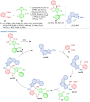
Scheme 17: NHC-catalyzed desymmetrization of N-aryl maleimides.

Scheme 18: NHC-catalyzed deracemization of biaryl hydroxy aldehydes 55a–k into axially chiral benzonitriles 56a...

Scheme 19: NHC-catalyzed desymmetrization of 2-aryloxyisophthalaldehydes.

Scheme 20: NHC-catalyzed DKR of 2-arylbenzaldehydes 62.

Scheme 21: Atroposelective biaryl amination.

Scheme 22: CPA-catalyzed atroposelective amination of 2-anilinonaphthalenes.

Scheme 23: Atroposelective DKR of naphthylindoles.

Scheme 24: CPA-catalyzed kinetic resolution of binaphthylamines.

Scheme 25: Atroposelective amination of aromatic amines with diazodicarboxylates.

Scheme 26: Atroposelective Friedländer heteroannulation.

Scheme 27: CPA-catalyzed formation of axially chiral 4-arylquinolines.

Scheme 28: CPA-catalyzed Friedländer reaction of arylketones with cyclohexanones.

Scheme 29: CPA-catalyzed atroposelective Povarov reaction.

Scheme 30: Atroposelective CPA-catalyzed Povarov reaction.

Scheme 31: Paal–Knorr formation of axially chiral N-pyrrolylindoles and N-pyrrolylpyrroles.

Scheme 32: Atroposelective Paal–Knorr reaction leading to N-pyrrolylpyrroles.

Scheme 33: Atroposelective Pictet–Spengler reaction of N-arylindoles with aldehydes.

Scheme 34: Atroposelective Pictet–Spengler reaction leading to tetrahydroisoquinolin-8-ylanilines.

Scheme 35: Atroposelective formation of arylindoles.

Scheme 36: CPA-catalyzed arylation of naphthoquinones with indolizines.

Scheme 37: Atroposelective reaction of o-naphthoquinones.

Scheme 38: CPA-catalyzed formation of axially chiral arylquinones.

Scheme 39: CPA-catalyzed axially chiral N-arylquinones.

Scheme 40: Atroposelective additions of bisindoles to isatin-based 3-indolylmethanols.

Scheme 41: CPA-catalyzed synthesis of axially chiral arylindolylindolinones.

Scheme 42: CPA-catalyzed reaction between bisindoles and ninhydrin-derived 3-indoylmethanols.

Scheme 43: Atroposelective reaction of bisindoles and isatin-derived imines.

Scheme 44: CPA-catalyzed formation of axially chiral bisindoles.

Scheme 45: Atroposelective reaction of 2-naphthols with alkynylhydroxyisoindolinones.

Scheme 46: CPA-catalyzed reaction of indolylnaphthols with propargylic alcohols.

Scheme 47: Atroposelective formation of indolylpyrroloindoles.

Scheme 48: Atroposelective reaction of indolylnaphthalenes with alkynylnaphthols.

Scheme 49: CPA-catalyzed addition of naphthols to alkynyl-2-naphthols and 2-naphthylamines.

Scheme 50: CPA-catalyzed formation of axially chiral aryl-alkene-indoles.

Scheme 51: CPA-catalyzed formation of axially chiral styrenes.

Scheme 52: Atroposelective formation of alkenylindoles.

Scheme 53: Atroposelective formation of axially chiral arylquinolines.

Scheme 54: Atroposelective (3 + 2) cycloaddition of alkynylindoles with azonaphthalenes.

Scheme 55: CPA-catalyzed formation of axially chiral 3-(1H-benzo[d]imidazol-2-yl)quinolines.

Scheme 56: Atroposelective cyclization of 3-(arylethynyl)-1H-indoles.

Scheme 57: Atroposelective three-component heteroannulation.

Scheme 58: CPA-catalyzed formation of arylbenzimidazols.

Scheme 59: CPA-catalyzed reaction of N-naphthylglycine esters with nitrosobenzenes.

Scheme 60: CPA-catalyzed formation of axially chiral N-arylbenzimidazoles.

Scheme 61: CPA-catalyzed formation of axially chiral arylbenzoindoles.

Scheme 62: CPA-catalyzed formation of pyrrolylnaphthalenes.

Scheme 63: CPA-catalyzed addition of naphthols and indoles to nitronaphthalenes.

Scheme 64: Atroposelective reaction of heterobiaryl aldehydes and aminobenzamides.

Scheme 65: Atroposelective cyclization forming N-arylquinolones.

Scheme 66: Atroposelective formation of 9H-carbazol-9-ylnaphthalenes and 1H-indol-1-ylnaphthalene.

Scheme 67: CPA-catalyzed formation of pyrazolylnaphthalenes.

Scheme 68: Atroposelective addition of diazodicarboxamides to azaborinephenols.

Scheme 69: Catalytic formation of axially chiral arylpyrroles.

Scheme 70: Atroposelective coupling of 1-azonaphthalenes with 2-naphthols.

Scheme 71: CPA-catalyzed formation of axially chiral oxindole-based styrenes.

Scheme 72: Atroposelective electrophilic bromination of aminonaphthoquinones.

Scheme 73: Atroposelective bromination of dienes.

Scheme 74: CPA-catalyzed formation of axially chiral 5-arylpyrimidines.

Scheme 75: Atroposelective hydrolysis of biaryloxazepines.

Scheme 76: Atroposelective opening of dinaphthosiloles.

Scheme 77: Atroposelective reduction of naphthylenals.

Scheme 78: Atroposelective allylic substitution with 2-naphthols.

Scheme 79: Atroposelective allylic alkylation with phosphinamides.

Scheme 80: Atroposelective allylic substitution with aminopyrroles.

Scheme 81: Atroposelective allylic substitution with aromatic sulfinamides.

Scheme 82: Atroposelective sulfonylation of naphthylynones.

Scheme 83: Squaramide-catalyzed reaction of alkynyl-2-naphthols with 5H-oxazolones.

Scheme 84: Formation of axially chiral styrenes via sulfonylative opening of cyclopropanols.

Scheme 85: Atroposelective organo-photocatalyzed sulfonylation of alkynyl-2-naphthols.

Scheme 86: Thiourea-catalyzed atroposelective cyclization of alkynylnaphthols.

Scheme 87: Squaramide-catalyzed formation of axially chiral naphthylisothiazoles.

Scheme 88: Atroposelective iodo-cyclization catalyzed by squaramide C69.

Scheme 89: Squaramide-catalyzed formation of axially chiral oligoarenes.

Scheme 90: Atroposelective ring-opening of cyclic N-sulfonylamides.

Scheme 91: Thiourea-catalyzed kinetic resolution of naphthylpyrroles.

Scheme 92: Atroposelective ring-opening of arylindole lactams.

Scheme 93: Atroposelective reaction of 1-naphthyl-2-tetralones and diarylphosphine oxides.

Scheme 94: Atroposelective reaction of iminoquinones with indoles.

Scheme 95: Kinetic resolution of binaphthylalcohols.

Scheme 96: DKR of hydroxynaphthylamides.

Scheme 97: Atroposelective N-alkylation with phase-transfer catalyst C75.

Scheme 98: Atroposelective allylic substitution via kinetic resolution of biarylsulfonamides.

Scheme 99: Atroposelective bromo-functionalization of alkynylarenes.
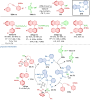
Scheme 100: Sulfenylation-induced atroposelective cyclization.

Scheme 101: Atroposelective O-sulfonylation of isochromenone-indoles.

Scheme 102: NHC-catalyzed atroposelective N-acylation of anilines.

Scheme 103: Peptide-catalyzed atroposelective ring-opening of lactones.

Scheme 104: Peptide-catalyzed coupling of 2-naphthols with quinones.

Scheme 105: Atroposelective nucleophilic aromatic substitution of fluoroarenes.
Non-covalent organocatalyzed enantioselective cyclization reactions of α,β-unsaturated imines
- Sergio Torres-Oya and
- Mercedes Zurro
Beilstein J. Org. Chem. 2024, 20, 3221–3255, doi:10.3762/bjoc.20.268
- evaluate the synthetic utility of this methodology, derivative 39e was reduced using BF3·OEt2 and Et3SiH leading to 41 in a good yield and moderate diastereoselectivity (Scheme 14). In 2017, Li’s group developed a chiral (DHQ)2PHAL-catalyzed [2 + 4] annulation reaction of cyclic 1-azadiene 14 with γ-nitro

Graphical Abstract

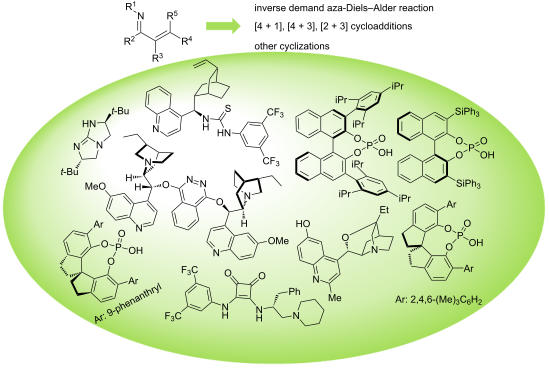
Figure 1: Reactivity of α,β-unsaturated imines and variety of structures.

Figure 2: The hetero-Diels–Alder and inverse electron demand hetero-Diels–Alder reactions.

Figure 3: Different strategies to promote the activation of dienes and dienophiles in IEDADA reactions.

Figure 4: Examples of non-covalent interactions in organocatalysis.

Scheme 1: Enantioselective bifunctional thiourea-catalyzed inverse electron demand Diels–Alder reaction of N-...

Scheme 2: Cinchona-derived thiourea-catalyzed stereoselective (3 + 2) reaction of α,β-unsaturated imines and ...

Scheme 3: Cinchona-derived thiourea-catalyzed stereoselective (3 + 2)/(4 + 2) cascade reaction of α,β-unsatur...
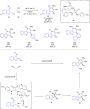
Scheme 4: Enantioselective bifunctional squaramide-catalyzed formal [4 + 2] cycloaddition of malononitrile wi...
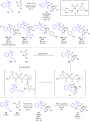
Scheme 5: Bifunctional squaramide-catalyzed IEDADA reaction of saccharin-derived 1-azadienes and azlactones.

Scheme 6: Chiral guanidine-catalyzed enantioselective (4+1) cyclization of benzofuran-derived azadienes with ...
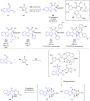
Scheme 7: Bifunctional squaramide-catalyzed [4 + 2] cyclization of benzofuran-derived azadienes and azlactone...
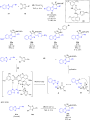
Scheme 8: Chiral bifunctional squaramide-catalyzed domino Mannich/formal [4 + 2] cyclization of 2-benzothiazo...
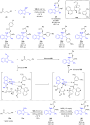
Scheme 9: Chiral bifunctional thiourea-catalyzed formal IEDADA reaction of β,γ-unsaturated ketones and benzof...

Scheme 10: Dihydroquinine-derived squaramide-catalyzed (3 + 2) cycloaddition reaction of isocyanoacetates and ...

Scheme 11: Enantioselective squaramide-catalyzed asymmetric IEDADA reaction of benzofuran-derived azadienes an...

Scheme 12: Scale up and derivatizations of benzofuran-fused 2-piperidinol derivatives.

Scheme 13: Dihydroquinine-derived squaramide-catalyzed Mannich-type reaction of isocyanoacetates with N-(2-ben...

Figure 5: Structure of a cinchona alkaloid and (DHQD)2PHAL.

Scheme 14: Enantioselective modified cinchona alkaloid-catalyzed [4 + 2] annulation of γ-butenolides and sacch...

Scheme 15: Chiral tertiary amine-catalyzed [2 + 4] annulation of cyclic 1-azadiene with γ-nitro ketones.

Scheme 16: Inverse electron demand aza-Diels–Alder reaction (IEDADA) of 1-azadienes with enecarbamates catalyz...

Scheme 17: Phosphoric acid-catalyzed enantioselective [4 + 2] cycloaddition of benzothiazolimines and enecarba...

Scheme 18: Phosphoric acid-catalyzed enantioselective inverse electron demand aza-Diels–Alder reaction of in s...

Scheme 19: Proposed reaction mechanism for the phosphoric acid-catalyzed enantioselective inverse electron dem...

Scheme 20: Enantioselective dearomatization of indoles by a (3 + 2) cyclization with azoalkenes catalyzed by a...

Scheme 21: Synthetic applicability of the pyrroloindoline derivatives.

Scheme 22: Chiral phosphoric acid-catalyzed (2 + 3) dearomative cycloaddition of 3-alkyl-2-vinylindoles with a...
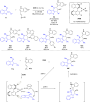
Scheme 23: Chiral phosphoric acid-catalyzed asymmetric [4 + 2] cycloaddition of aurone-derived 1-azadienes and...

Scheme 24: Phosphoric acid-catalyzed enantioselective formal [4 + 2] cycloaddition of dienecarbamates and 2-be...

Scheme 25: Chiral phosphoric acid-catalyzed asymmetric inverse electron demand aza-Diels–Alder reaction of 1,3...

Scheme 26: Chiral phosphoric acid-catalyzed asymmetric Attanasi reaction between 1,3-dicarbonyl compounds and ...

Scheme 27: Synthetic applicability of the NPNOL derivatives.
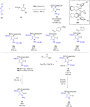
Scheme 28: Chiral phosphoric acid-catalyzed asymmetric intermolecular formal (3 + 2) cycloaddition of azoalken...

Scheme 29: Enantioselective [4 + 2] cyclization of α,β-unsaturated imines and azlactones.

Scheme 30: Catalytic cycle for the chiral phosphoric acid-catalyzed enantioselective [4 + 2] cyclization of α,...
C–H Trifluoromethylthiolation of aldehyde hydrazones
- Victor Levet,
- Balu Ramesh,
- Congyang Wang and
- Tatiana Besset
Beilstein J. Org. Chem. 2024, 20, 2883–2890, doi:10.3762/bjoc.20.242
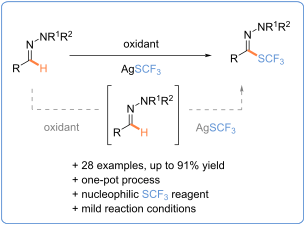
- , alkenes) and halogens allowing an array of post-functionalization reactions. Finally, the trifluoromethylthiolation of molecules derived from compounds of interest was achieved to illustrate the synthetic utility of the method. Hence, the desired products 2v–x were efficiently isolated. To get more
- AgSCF3. Finally, to further illustrate the synthetic utility of the trifluoromethylthiolated hydrazones, product 2g was further functionalized. In the presence of 4-methylboronic acid, the arylation of 2g occurred and the expected product was isolated in 72% yield with the SCF3-hydrazone motif remaining

Graphical Abstract

Scheme 1: State of the art and this work.

Scheme 2: Reaction conditions: hydrazone (0.3 mmol, 1.0 equiv), NBS (0.33 mmol, 1.1 equiv), in CH3CN (0.4 M),...

Scheme 3: Scope of the reaction. Reaction conditions: 1 (0.3 mmol, 1.0 equiv), NBS (0.33 mmol, 1.1 equiv) in ...

Scheme 4: Mechanistic investigations and post-functionalization reactions. a19F NMR yields using α,α,α-triflu...
Synthesis of spiroindolenines through a one-pot multistep process mediated by visible light
- Francesco Gambuti,
- Jacopo Pizzorno,
- Chiara Lambruschini,
- Renata Riva and
- Lisa Moni
Beilstein J. Org. Chem. 2024, 20, 2722–2731, doi:10.3762/bjoc.20.230
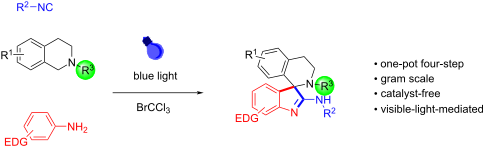
- simultaneous insertion of an isocyanide into the N–H bond. This evidence shows that 5 was able to be oxidized but the iminium ion formed was not stable enough to take part in the subsequent reaction, preferring to hydrolytically open. In order to test the synthetic utility of this procedure we also carried out

Graphical Abstract

Figure 1: Selected natural products containing spiro-indolenines.
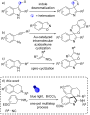
Scheme 1: Synthesis of spiro[indole-heterocycles].

Scheme 2: Synthetic strategy for the new synthesis of 2,3-diaminoindolenines [21] and spiro[indole-isoquinolines]....
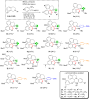
Scheme 3: Scope of the synthesis of spiro[indole-THIQs]. aα-aminoamidine 2b has been isolated (54%) too; bα-a...

Scheme 4: Two-step synthesis using p-methylaniline.

Scheme 5: Investigation of the one-pot four-step synthetic protocol employing N-Ph-benzoxazepine 5.

Figure 2: Time profile of the reaction of N-Ph-THIQ, 3,5-dimethoxyaniline and t-BuNC conducted under optimize...

Scheme 6: Proposed mechanism.
Transition-metal-free decarbonylation–oxidation of 3-arylbenzofuran-2(3H)-ones: access to 2-hydroxybenzophenones
- Bhaskar B. Dhotare,
- Seema V. Kanojia,
- Chahna K. Sakhiya,
- Amey Wadawale and
- Dibakar Goswami
Beilstein J. Org. Chem. 2024, 20, 2655–2667, doi:10.3762/bjoc.20.223
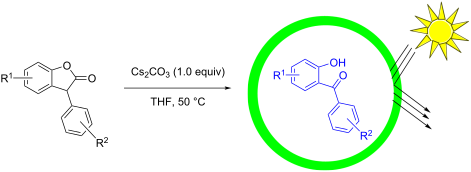
- NMR spectrum was consistent with the generation of tetrahydrofuran-2-hydroperoxide in THF, and was similar to the NMR reported earlier [25]. Further, the reaction of 3ba was scaled up to demonstrate the synthetic utility of our protocol. The reactions involving hydroperoxides are known to be difficult

Graphical Abstract

Figure 1: Some 2-hydroxybenzophenone derivatives with varied activities.

Figure 2: Decarbonylation–oxidation of lactones.
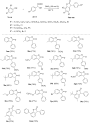
Scheme 1: Synthesis of 3-arylbenzofuran-2(3H)-ones.
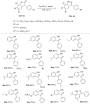
Scheme 2: Synthesis of 2-hydroxybenzophenones.

Figure 3: The ORTEP view of the compounds 4ja, 4fb, and 4ma.

Scheme 3: Gram-scale experiment.

Scheme 4: Control experiments.

Figure 4: Partial 1H NMR spectra of the aliquots (taken at different time intervals) from the reaction mixtur...

Figure 5: Plausible mechanism for the transition-metal-free decarbonylation–oxidation.

Figure 6: UV–vis absorption spectra of selected synthesized compounds 4aa, 4cb, 4eb, and 4fb from 225–500 nm.
Base-promoted cascade recyclization of allomaltol derivatives containing an amide fragment into substituted 3-(1-hydroxyethylidene)tetronic acids
- Andrey N. Komogortsev,
- Constantine V. Milyutin and
- Boris V. Lichitsky
Beilstein J. Org. Chem. 2024, 20, 2585–2591, doi:10.3762/bjoc.20.217
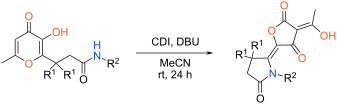
- purification. The synthetic utility of the prepared tetronic acids was demonstrated by further transformations at the hydroxyethylidene fragment. The structures of one obtained tetronic acid and one product of derivatization were confirmed by X-ray analysis. Keywords: allomaltol; base-promoted recyclization
- purification procedure are the advantages of the considered method. The synthetic utility of obtained tetronic acids was demonstrated by preparation of enamine and enehydrazine derivatives. The structures of one target tetronic acid and synthesized enehydrazine were established by X-ray analysis. Experimental

Graphical Abstract

Scheme 1: Synthesis of tetronic acid derivatives.

Scheme 2: Synthesis of amide derivatives 3.

Scheme 3: Synthesis of target tetronic acids 4a. aReaction conditions: 3a (1 mmol), CDI (0.49 g, 3 mmol), DBU...

Figure 1: The X-ray crystal structure of compound 4a (CCDC 2352876).

Scheme 4: Proposed reaction mechanism for the formation of products 4.

Scheme 5: Synthesis of derivatization products 7 and 9.

Figure 2: The X-ray crystal structure of compound 7 (CCDC 2352878).



