


Search results
Search for "Cu(I) catalyst" in Full Text gives 35 result(s) in Beilstein Journal of Organic Chemistry.
Hypervalent organoiodine compounds: from reagents to valuable building blocks in synthesis
- Gwendal Grelier,
- Benjamin Darses and
- Philippe Dauban
Beilstein J. Org. Chem. 2018, 14, 1508–1528, doi:10.3762/bjoc.14.128
- cyanotrifluoromethylation reaction. The mechanistic study of the oxy-trifluoromethylation of phenylacetylene has then led to demonstrate that the reaction is accelerated in the presence of additives such as B2pin2 [35]. A mechanism involving an initial step of transmetallation of B2pin2 with the Cu(I) catalyst was proposed

Graphical Abstract

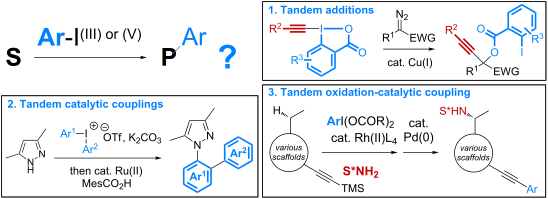
Scheme 1: Strategies to address the issue of sustainability with polyvalent organoiodine reagents.
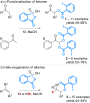
Scheme 2: Functionalization of ketones and alkenes with IBX.

Scheme 3: Functionalization of pyrroles with DMP.

Scheme 4: Catalytic benzoyloxy-trifluoromethylation reported by Szabó.

Scheme 5: Catalytic benzoyloxy-trifluoromethylation reported by Mideoka.

Scheme 6: Catalytic 1,4-benzoyloxy-trifluoromethylation of dienes.

Scheme 7: Catalytic benzoyloxy-trifluoromethylation of allylamines.

Scheme 8: Catalytic benzoyloxy-trifluoromethylation of enynes.

Scheme 9: Catalytic benzoyloxy-trifluoromethylation of allenes.

Scheme 10: Alkynylation of N-(aryl)imines with EBX for the formation of furans.

Scheme 11: Catalytic benzoyloxy-alkynylation of diazo compounds.

Scheme 12: Catalytic asymmetric benzoyloxy-alkynylation of diazo compounds.

Scheme 13: Catalytic 1,2-benzoyloxy-azidation of alkenes.

Scheme 14: Catalytic 1,2-benzoyloxy-azidation of enamides.

Scheme 15: Catalytic 1,2-benzoyloxy-iodination of alkenes.

Scheme 16: Seminal study with cyclic diaryl-λ3-iodane.

Scheme 17: Synthesis of alkylidenefluorenes from cyclic diaryl-λ3-iodanes.

Scheme 18: Synthesis of alkyne-substituted alkylidenefluorenes.

Scheme 19: Synthesis of phenanthrenes from cyclic diaryl-λ3-iodanes.

Scheme 20: Synthesis of dibenzocarbazoles from cyclic diaryl-λ3-iodanes.

Scheme 21: Synthesis of triazolophenantridines from cyclic diaryl-λ3-iodanes.

Scheme 22: Synthesis of functionalized benzoxazoles from cyclic diaryl-λ3-iodanes.

Scheme 23: Sequential difunctionalization of cyclic diaryl-λ3-iodanes.

Scheme 24: Double Suzuki–Miyaura coupling reaction of cyclic diaryl-λ3-iodanes.

Scheme 25: Synthesis of a δ-carboline from cyclic diaryl-λ3-iodane.

Scheme 26: Synthesis of N-(aryl)carbazoles from cyclic diaryl-λ3-iodanes.

Scheme 27: Synthesis of carbazoles from cyclic diaryl-λ3-iodanes.

Scheme 28: Synthesis of carbazoles and acridines from cyclic diaryl-λ3-iodanes.

Scheme 29: Synthesis of dibenzothiophenes from cyclic diaryl-λ3-iodanes.

Scheme 30: Synthesis of various sulfur heterocycles from cyclic diaryl-λ3-iodanes.

Scheme 31: Synthesis of dibenzothioheterocycles from cyclic diaryl-λ3-iodanes.

Scheme 32: Synthesis of dibenzosulfides and dibenzoselenides from cyclic diaryl-λ3-iodanes.

Scheme 33: Synthesis of dibenzosulfones from cyclic diaryl-λ3-iodanes.

Scheme 34: Seminal study with linear diaryl-λ3-iodanes.

Scheme 35: N-Arylation of benzotriazole with symmetrical diaryl-λ3-iodanes.

Scheme 36: Tandem catalytic C–H/N–H arylation of indoles with diaryl-λ3-iodanes.

Scheme 37: Tandem N-arylation/C(sp2)–H arylation with diaryl-λ3-iodanes.

Scheme 38: Catalytic intermolecular diarylation of anilines with diaryl-λ3-iodanes.

Scheme 39: Catalytic synthesis of diarylsulfides with diaryl-λ3-iodanes.

Scheme 40: α-Arylation of enolates using [bis(trifluoroacetoxy)iodo]arenes.

Scheme 41: Mechanism of the α-arylation using [bis(trifluoroacetoxy)iodo]arene.

Scheme 42: Catalytic nitrene additions mediated by [bis(acyloxy)iodo]arenes.

Scheme 43: Tandem of C(sp3)–H amination/sila-Sonogashira–Hagihara coupling.

Scheme 44: Tandem reaction using a λ3-iodane as an oxidant, a substrate and a coupling partner.

Scheme 45: Synthesis of 1,2-diarylated acrylamidines with ArI(OAc)2.
Progress in copper-catalyzed trifluoromethylation
- Guan-bao Li,
- Chao Zhang,
- Chun Song and
- Yu-dao Ma
Beilstein J. Org. Chem. 2018, 14, 155–181, doi:10.3762/bjoc.14.11
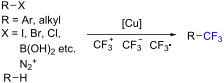
- . Finally, reductive elimination of the intermediate D would afford the desired product and regenerate Cu(I) catalyst to restart the catalytic cycle. Direct trifluoromethylation of C(sp2)–H with a radical trifluoromethylation reagent (CF3SO2Na): The radical trifluoromethylation via direct C(sp2)–H

Graphical Abstract

Figure 1: Selected examples of pharmaceutical and agrochemical compounds containing the trifluoromethyl group....

Scheme 1: Introduction of a diamine into copper-catalyzed trifluoromethylation of aryl iodides.
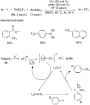
Scheme 2: Addition of a Lewis acid into copper-catalyzed trifluoromethylation of aryl iodides and the propose...

Scheme 3: Trifluoromethylation of heteroaromatic compounds using S-(trifluoromethyl)diphenylsulfonium salts a...

Scheme 4: The preparation of a new trifluoromethylation reagent and its application in trifluoromethylation o...

Scheme 5: Trifluoromethylation of aryl iodides using CF3CO2Na as a trifluoromethyl source.

Scheme 6: Trifluoromethylation of aryl iodides using MTFA as a trifluoromethyl source.

Scheme 7: Trifluoromethylation of aryl iodides using CF3CO2K as a trifluoromethyl source.
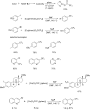
Scheme 8: Trifluoromethylation of aryl iodides and heteroaryl bromides using [Cu(phen)(O2CCF3)] as a trifluor...

Scheme 9: Trifluoromethylation of aryl iodides with DFPB and the proposed mechanism.

Scheme 10: Trifluoromethylation of aryl iodides using TCDA as a trifluoromethyl source. Reaction conditions: [...

Scheme 11: The mechanism of trifluoromethylation using Cu(II)(O2CCF2SO2F)2 as a trifluoromethyl source.

Scheme 12: Trifluoromethylation of benzyl bromide reported by Shibata’s group.

Scheme 13: Trifluoromethylation of allylic halides and propargylic halides reported by the group of Nishibayas...

Scheme 14: Trifluoromethylation of propargylic halides reported by the group of Nishibayashi.

Scheme 15: Trifluoromethylation of alkyl halides reported by Nishibayashi’s group.

Scheme 16: Trifluoromethylation of pinacol esters reported by the group of Gooßen.

Scheme 17: Trifluoromethylation of primary and secondary alkylboronic acids reported by the group of Fu.

Scheme 18: Trifluoromethylation of boronic acid derivatives reported by the group of Liu.

Scheme 19: Trifluoromethylation of organotrifluoroborates reported by the group of Huang.

Scheme 20: Trifluoromethylation of aryl- and vinylboronic acids reported by the group of Shibata.

Scheme 21: Trifluoromethylation of arylboronic acids via the merger of photoredox and Cu catalysis.

Scheme 22: Trifluoromethylation of arylboronic acids reported by Sanford’s group. Isolated yield. aYields dete...

Scheme 23: Trifluoromethylation of arylboronic acids and vinylboronic acids reported by the group of Beller. Y...

Scheme 24: Copper-mediated Sandmeyer type trifluoromethylation using Umemoto’s reagent as a trifluoromethylati...

Scheme 25: Copper-mediated Sandmeyer type trifluoromethylation using TMSCF3 as a trifluoromethylation reagent ...

Scheme 26: One-pot Sandmeyer trifluoromethylation reported by the group of Gooßen.

Scheme 27: Copper-catalyzed trifluoromethylation of arenediazonium salts in aqueous media.

Scheme 28: Copper-mediated Sandmeyer trifluoromethylation using Langlois’ reagent as a trifluoromethyl source ...

Scheme 29: Trifluoromethylation of terminal alkenes reported by the group of Liu.

Scheme 30: Trifluoromethylation of terminal alkenes reported by the group of Wang.

Scheme 31: Trifluoromethylation of tetrahydroisoquinoline derivatives reported by Li and the proposed mechanis...
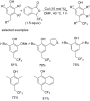
Scheme 32: Trifluoromethylation of phenol derivatives reported by the group of Hamashima.
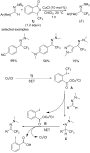
Scheme 33: Trifluoromethylation of hydrazones reported by the group of Baudoin and the proposed mechanism.

Scheme 34: Trifluoromethylation of benzamides reported by the group of Tan.

Scheme 35: Trifluoromethylation of heteroarenes and electron-deficient arenes reported by the group of Qing an...

Scheme 36: Trifluoromethylation of N-aryl acrylamides using CF3SO2Na as a trifluoromethyl source.

Scheme 37: Trifluoromethylation of aryl(heteroaryl)enol acetates using CF3SO2Na as the source of CF3 and the p...

Scheme 38: Trifluoromethylation of imidazoheterocycles using CF3SO2Na as a trifluoromethyl source and the prop...

Scheme 39: Copper-mediated trifluoromethylation of terminal alkynes using TMSCF3 as a trifluoromethyl source a...

Scheme 40: Improved copper-mediated trifluoromethylation of terminal alkynes reported by the group of Qing.

Scheme 41: Copper-catalyzed trifluoromethylation of terminal alkynes reported by the group of Qing.
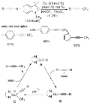
Scheme 42: Copper-catalyzed trifluoromethylation of terminal alkynes using Togni’s reagent and the proposed me...

Scheme 43: Copper-catalyzed trifluoromethylation of terminal alkynes using Umemoto’s reagent reported by the g...

Scheme 44: Copper-catalyzed trifluoromethylation of 3-arylprop-1-ynes reported by Xiao and Lin and the propose...
Oxidative dehydrogenation of C–C and C–N bonds: A convenient approach to access diverse (dihydro)heteroaromatic compounds
- Santanu Hati,
- Ulrike Holzgrabe and
- Subhabrata Sen
Beilstein J. Org. Chem. 2017, 13, 1670–1692, doi:10.3762/bjoc.13.162
- mechanism of this transformation involved a single electron transfer reaction of the Cu(I) catalyst with TBPC to afford a tert-butoxy radical, which then reacts with 85 by abstracting a hydrogen atom to afford carbon radical species R. Cu(II)-mediated Kochi-type radical oxidation of R generated the iminium

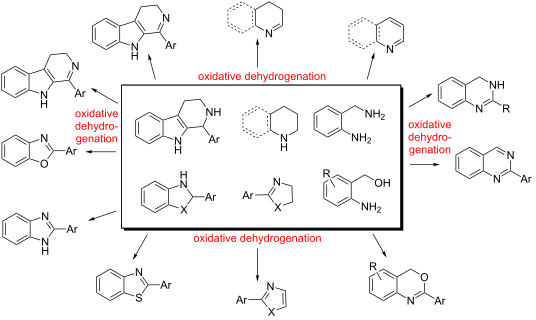
Graphical Abstract

Figure 1: Representative bioactive heterocycles.

Scheme 1: The concept of oxidative dehydrogenation.
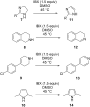
Scheme 2: IBX-mediated oxidative dehydrogenation of various heterocycles [31-34].

Scheme 3: Potential mechanism of IBX-mediated oxidative dehydrogenation of N-heterocycles [31-34].

Scheme 4: IBX-mediated room temperature one-pot condensation–oxidative dehydrogenation of o-aminobenzylamines....

Scheme 5: Anhydrous cerium chloride-catalyzed, IBX-mediated oxidative dehydrogenation of various heterocycles...

Scheme 6: Oxidative dehydrogenation of quinazolinones with I2 and DDQ [37-40].

Scheme 7: DDQ-mediated oxidative dehydrogenation of thiazolidines and oxazolidines.

Scheme 8: Oxone-mediated oxidative dehydrogenation of intermediates from o-phenylenediamine and o-aminobenzyl...

Scheme 9: Transition metal-free oxidative cross-dehydrogenative coupling.

Scheme 10: NaOCl-mediated oxidative dehydrogenation.

Scheme 11: NBS-mediated oxidative dehydrogenation of tetrahydro-β-carbolines.

Scheme 12: One-pot synthesis of various methyl(hetero)arenes from o-aminobenzamide in presence of di-tert-buty...

Scheme 13: Oxidative dehydrogenation of 1, 4-DHPs.

Scheme 14: Synthesis of quinazolines in the presence of MnO2.

Scheme 15: Selenium dioxide and potassium dichromate-mediated oxidative dehydrogenation of tetrahydro-β-carbol...

Scheme 16: Synthesis of substituted benzazoles in the presence of barium permanganate.
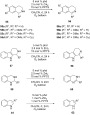
Scheme 17: Oxidative dehydrogenation with phenanthroline-based catalysts. PPTS = pyridinium p-toluenesulfonic ...

Scheme 18: Oxidative dehydrogenation with Flavin mimics.

Scheme 19: o-Quinone based bioinspired catalysts for the synthesis of dihydroisoquinolines.

Scheme 20: Cobalt-catalyzed aerobic dehydrogenation of Hantzch 1,4-DHPs and pyrazolines.

Scheme 21: Mechanism of cobalt-catalyzed aerobic dehydrogenation of Hantzch 1,4-DHPs.

Scheme 22: DABCO and TEMPO-catalyzed aerobic oxidative dehydrogenation of quinazolines and 4H-3,1-benzoxazines....

Scheme 23: Putative mechanism for Cu(I)–DABCO–TEMPO catalyzed aerobic oxidative dehydrogenation of tetrahydroq...

Scheme 24: Potassium triphosphate modified Pd/C catalysts for the oxidative dehydrogenation of tetrahydroisoqu...

Scheme 25: Ruthenium-catalyzed polycyclic heteroarenes.

Scheme 26: Plausible mechanism of the ruthenium-catalyzed dehydrogenation.

Scheme 27: Bi-metallic platinum/iridium alloyed nanoclusters and 5,5’,6,6’-tetrahydroxy-3,3,3’,3’-tetramethyl-...

Scheme 28: Magnesium iodide-catalyzed synthesis of quinazolines.

Scheme 29: Ferrous chloride-catalyzed aerobic dehydrogenation of 1,2,3,4-tetrahydroquinolines.

Scheme 30: Cu(I)-catalyzed oxidative aromatization of indoles.

Scheme 31: Putative mechanism of the transformation.

Scheme 32: Oxidative dehydrogenation of pyrimidinones and pyrimidines.
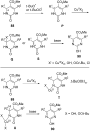
Scheme 33: Putative mechanisms (radical and metal-catalyzed) of the transformation.

Scheme 34: Ferric chloride-catalyzed, TBHP-oxidized synthesis of substituted quinazolinones and arylquinazolin...

Scheme 35: Iridium-catalyzed oxidative dehydrogenation of quinolines.

Scheme 36: Microwave-assisted synthesis of β-carboline with a catalytic amount of Pd/C in lithium carbonate at...

Scheme 37: 4-Methoxy-TEMPO-catalyzed aerobic oxidative synthesis of 2-substituted benzazoles.

Scheme 38: Plausible mechanism of the 4-methoxy-TEMPO-catalyzed transformation.

Scheme 39: One-pot synthesis of 2-arylquinazolines, catalyzed by 4-hydroxy-TEMPO.

Scheme 40: Oxidative dehydrogenation – a key step in the synthesis of AZD8926.

Scheme 41: Catalytic oxidative dehydrogenation of tetrahydroquinolines to afford bioactive molecules.

Scheme 42: Iodobenzene diacetate-mediated synthesis of β-carboline natural products.
Effect of the ortho-hydroxy group of salicylaldehyde in the A3 coupling reaction: A metal-catalyst-free synthesis of propargylamine
- Sujit Ghosh,
- Kinkar Biswas,
- Suchandra Bhattacharya,
- Pranab Ghosh and
- Basudeb Basu
Beilstein J. Org. Chem. 2017, 13, 552–557, doi:10.3762/bjoc.13.53
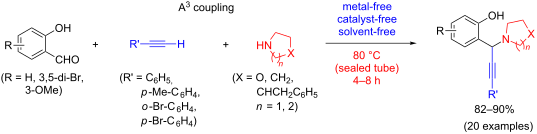
- %, Table 1, entry 1). To check the role of our Cu(I) catalyst, we performed the same reaction under similar conditions in the absence of the copper catalyst (Table 1, entry 2). To our surprise, the same product spot was noticed on TLC plate and further work-up and purification afforded the product in

Graphical Abstract

Scheme 1: Representative examples of bioactive compounds bearing a propargylamine moiety and synthesis of var...

Scheme 2: Various metal-catalyzed methods for the synthesis of propargylamine.

Figure 1: Synthesis of various propargylamines from various salicylaldehydes under metal-catalyst-free condit...

Scheme 3: Plausible mechanism for the metal-free A3 coupling from salicylaldehyde.
Copper-catalyzed [3 + 2] cycloaddition of (phenylethynyl)di-p-tolylstibane with organic azides
- Mizuki Yamada,
- Mio Matsumura,
- Yuki Uchida,
- Masatoshi Kawahata,
- Yuki Murata,
- Naoki Kakusawa,
- Kentaro Yamaguchi and
- Shuji Yasuike
Beilstein J. Org. Chem. 2016, 12, 1309–1313, doi:10.3762/bjoc.12.123

- the reaction of the Cu(I) catalyst and ethynylstibane 1. Complex A coordinates with an organic azide to give complex B. Cyclization proceeds via a vinylidene-like transition state C to give 5-stibanotriazole 3. To test the reactivity of 5-stibanotriazole 3a was treated with hydrochloric acid, halogens

Graphical Abstract

Scheme 1: Copper-catalyzed [3 + 2] cycloaddition of 1 with organic azides 2. Reaction conditions: 1 (0.5 mmol...

Figure 1: Ortep drawing of 3a with 50% probability. All hydrogen atoms are omitted for clarity. Two independe...

Scheme 2: Possible mechanism.

Scheme 3: Reaction of 3a with HCl, I2 and NOBF4.
Tuning of tetrathiafulvalene properties: versatile synthesis of N-arylated monopyrrolotetrathiafulvalenes via Ullmann-type coupling reactions
- Vladimir A. Azov,
- Diana Janott,
- Dirk Schlüter and
- Matthias Zeller
Beilstein J. Org. Chem. 2015, 11, 860–868, doi:10.3762/bjoc.11.96
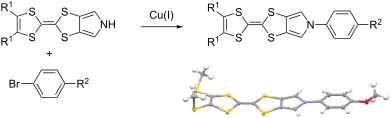
- excess cannot be considered a disadvantage of the method. Additionally, use of the inexpensive Cu(I) catalyst allows to avoid Buchwald–Hartwig amination [24][25], which employs more expensive Pd-based catalysts for a similar type of C–N coupling reactions. In a typical procedure, 1 equiv of MPTTF 7a, 7b

Graphical Abstract
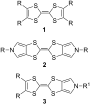
Figure 1: Molecular structures of tetrathiafulvalenes 1, bis-pyrrolotetrathiafulvalenes 2 and monopyrrolotetr...

Scheme 1: The two synthetic approaches used for the preparation of arylated monopyrrolotetrathiafulvalenes 1.

Scheme 2: Synthesis of arylated monopyrrolotetrathiafulvalenes 4a–f.

Figure 2: Copper(I) ligands 9a and 9b.

Figure 3: UV–vis spectra of compounds 4a,c–f (CH2Cl2, c = 4 × 10⁻⁵ M).

Figure 4: Cyclic voltammograms of compounds 4a,c [22] and 4d–f (plotted vs SCE; CH2Cl2/0.1 M Bu4NClO4).

Figure 5: Crystal packing of 4a viewed along the a axis and showing one layer of molecules. Short S···S conta...

Figure 6: Crystal packing of 4b showing a group of four molecules interconnected by multiple weak hydrogen bo...

Figure 7: Crystal packing of 4d viewed along the b axis. Molecules of 4d form layers parallel to the (001) pl...

Figure 8: Crystal packing of 4e showing a group of four molecules interconnected by multiple weak hydrogen bo...
Isocyanide-based multicomponent reactions towards cyclic constrained peptidomimetics
- Gijs Koopmanschap,
- Eelco Ruijter and
- Romano V.A. Orru
Beilstein J. Org. Chem. 2014, 10, 544–598, doi:10.3762/bjoc.10.50

- azides (Scheme 25) [85]. Advantages of this reaction are the kinetic stability of both functional groups under a range of different conditions. Also, the triazole products can be formed in both organic and aqueous solvents and by using the Cu(I)-catalyst which induces regioselective formation of the 1,4

Graphical Abstract

Scheme 1: The proposed mechanism of the Passerini reaction.

Scheme 2: The PADAM-strategy to α-hydroxy-β-amino amide derivatives 7. An additional oxidation provides α-ket...

Scheme 3: The general accepted Ugi-mechanism.

Scheme 4: Three commonly applied Ugi/cyclization approaches. a) UDC-process, b) UAC-sequence, c) UDAC-combina...

Scheme 5: Ugi reaction that involves the condensation of Armstrong’s convertible isocyanide.

Scheme 6: Mechanism of the U-4C-3CR towards bicyclic β-lactams.

Scheme 7: The Ugi 4C-3CR towards oxabicyclo β-lactams.

Scheme 8: Ugi MCR between an enantiopure monoterpene based β-amino acid, aldehyde and isocyanide resulting in...

Scheme 9: General MCR for β-lactams in water.

Scheme 10: a) Ugi reaction for β-lactam-linked peptidomimetics. b) Varying the β-amino acid resulted in β-lact...

Scheme 11: Ugi-4CR followed by a Pd-catalyzed Sn2 cyclization.

Scheme 12: Ugi-3CR of dipeptide mimics from 2-substituted pyrrolines.

Scheme 13: Joullié–Ugi reaction towards 2,5-disubstituted pyrrolidines.

Scheme 14: Further elaboration of the Ugi-scaffold towards bicyclic systems.

Scheme 15: Dihydroxyproline derivatives from an Ugi reaction.

Scheme 16: Diastereoselective Ugi reaction described by Banfi and co-workers.

Scheme 17: Similar Ugi reaction as in Scheme 16 but with different acids and two chiral isocyanides.

Scheme 18: Highly diastereoselective synthesis of pyrrolidine-dipeptoids via a MAO-N/MCR-procedure.

Scheme 19: MAO-N/MCR-approach towards the hepatitis C drug telaprevir.

Scheme 20: Enantioselective MAO-U-3CR procedure starting from chiral pyrroline 64.

Scheme 21: Synthesis of γ-lactams via an UDC-sequence.

Scheme 22: Utilizing bifunctional groups to provide bicyclic γ-lactam-ketopiperazines.

Scheme 23: The Ugi reaction provided both γ- as δ-lactams depending on which inputs were used.

Scheme 24: The sequential Ugi/RCM with olefinic substrates provided bicyclic lactams.

Scheme 25: a) The structural and dipole similarities of the triazole unit with the amide bond. b) The copper-c...

Scheme 26: The Ugi/Click sequence provided triazole based peptidomimetics.

Scheme 27: The Ugi/Click reaction as described by Nanajdenko.

Scheme 28: The Ugi/Click-approach by Pramitha and Bahulayan.

Scheme 29: The Ugi/Click-combination by Niu et al.

Scheme 30: Triazole linked peptidomimetics obtained from two separate MCRs and a sequential Click reaction.

Scheme 31: Copper-free synthesis of triazoles via two MCRs in one-pot.

Scheme 32: The sequential Ugi/Paal–Knorr reaction to afford pyrazoles.

Scheme 33: An intramolecular Paal–Knorr condensation provided under basic conditions pyrazolones.

Scheme 34: Similar cyclization performed under acidic conditions provided pyrazolones without the trifluoroace...

Scheme 35: The Ugi-4CR towards 2,4-disubstituted thiazoles.

Scheme 36: Solid phase approach towards thiazoles.

Scheme 37: Reaction mechanism of formation of thiazole peptidomimetics containing an additional β-lactam moiet...

Scheme 38: The synthesis of the trisubstituted thiazoles could be either performed via an Ugi reaction with pr...

Scheme 39: Performing the Ugi reaction with DMB-protected isocyanide gave access to either oxazoles or thiazol...

Scheme 40: Ugi/cyclization-approach towards 2,5-disubstituted thiazoles. The Ugi reaction was performed with d...

Scheme 41: Further derivatization of the thiazole scaffold.

Scheme 42: Three-step procedure towards the natural product bacillamide C.

Scheme 43: Ugi-4CR to oxazoles reported by Zhu and co-workers.

Scheme 44: Ugi-based synthesis of oxazole-containing peptidomimetics.

Scheme 45: TMNS3 based Ugi reaction for peptidomimics containing a tetrazole.

Scheme 46: Catalytic cycle of the enantioselective Passerini reaction towards tetrazole-based peptidomimetics.

Scheme 47: Tetrazole-based peptidomimetics via an Ugi reaction and a subsequent sigmatropic rearrangement.

Scheme 48: Resin-bound Ugi-approach towards tetrazole-based peptidomimetics.

Scheme 49: Ugi/cyclization approach towards γ/δ/ε-lactam tetrazoles.

Scheme 50: Ugi-3CR to pipecolic acid-based peptidomimetics.

Scheme 51: Staudinger–Aza-Wittig/Ugi-approach towards pipecolic acid peptidomimetics.

Figure 1: The three structural isomers of diketopiperazines. The 2,5-DKP isomer is most common.

Scheme 52: UDC-approach to obtain 2,5-DKPs, either using Armstrong’s isocyanide or via ethylglyoxalate.

Scheme 53: a) Ugi reaction in water gave either 2,5-DKP structures or spiro compounds. b) The Ugi reaction in ...

Scheme 54: Solid-phase approach towards diketopiperazines.

Scheme 55: UDAC-approach towards DKPs.

Scheme 56: The intermediate amide is activated as leaving group by acid and microwave assisted organic synthes...

Scheme 57: UDC-procedure towards active oxytocin inhibitors.

Scheme 58: An improved stereoselective MCR-approach towards the oxytocin inhibitor.

Scheme 59: The less common Ugi reaction towards DKPs, involving a Sn2-substitution.

Figure 2: Spatial similarities between a natural β-turn conformation and a DKP based β-turn mimetic [158].

Scheme 60: Ugi-based syntheses of bicyclic DKPs. The amine component is derived from a coupling between (R)-N-...

Scheme 61: Ugi-based synthesis of β-turn and γ-turn mimetics.

Figure 3: Isocyanide substituted 3,4-dihydropyridin-2-ones, dihydropyridines and the Freidinger lactams. Bio-...

Scheme 62: The mechanism of the 4-CR towards 3,4-dihydropyridine-2-ones 212.

Scheme 63: a) Multiple MCR-approach to provide DHP-peptidomimetic in two-steps. b) A one-pot 6-CR providing th...

Scheme 64: The MCR–alkylation–MCR procedure to obtain either tetrapeptoids or depsipeptides.

Scheme 65: U-3CR/cyclization employing semicarbazone as imine component gave triazine based peptidomimetics.

Scheme 66: 4CR towards triazinane-diones.

Scheme 67: The MCR–alkylation–IMCR-sequence described by our group towards triazinane dione-based peptidomimet...

Scheme 68: Ugi-4CR approaches followed by a cyclization to thiomorpholin-ones (a) and pyrrolidines (b).

Scheme 69: UDC-approach for benzodiazepinones.

Scheme 70: Ugi/Mitsunobu sequence to BDPs.

Scheme 71: A UDAC-approach to BDPs with convertible isocyanides. The corresponding amide is cleaved by microwa...

Scheme 72: microwave assisted post condensation Ugi reaction.

Scheme 73: Benzodiazepinones synthesized via the post-condensation Ugi/ Staudinger–Aza-Wittig cyclization.

Scheme 74: Two Ugi/cyclization approaches utilizing chiral carboxylic acids. Reaction (a) provided the product...

Scheme 75: The mechanism of the Gewald-3CR includes three base-catalysed steps involving first a Knoevnagel–Co...

Scheme 76: Two structural 1,4-thienodiazepine-2,5-dione isomers by U-4CR/cyclization.

Scheme 77: Tetrazole-based diazepinones by UDC-procedure.

Scheme 78: Tetrazole-based BDPs via a sequential Ugi/hydrolysis/coupling.

Scheme 79: MCR synthesis of three different tricyclic BPDs.

Scheme 80: Two similar approaches both involving an Ugi reaction and a Mitsunobu cyclization.

Scheme 81: Mitsunobu–Ugi-approach towards dihydro-1,4-benzoxazepines.

Scheme 82: Ugi reaction towards hetero-aryl fused 5-oxo-1,4-oxazepines.

Scheme 83: a) Ugi/RCM-approach towards nine-membered peptidomimetics b) Sequential peptide-coupling, deprotect...

Scheme 84: Ugi-based synthesis towards cyclic RGD-pentapeptides.

Scheme 85: Ugi/MCR-approach towards 12–15 membered macrocycles.

Scheme 86: Stereoselective Ugi/RCM approach towards 16-membered macrocycles.

Scheme 87: Passerini/RCM-sequence to 22-membered macrocycles.

Scheme 88: UDAC-approach towards 12–18-membered depsipeptides.

Figure 4: Enopeptin A with its more active derivative ADEP-4.

Scheme 89: a) The Joullié–Ugi-approach towards ADEP-4 derivatives b) Ugi-approach for the α,α-dimethylated der...

Scheme 90: Ugi–Click-strategy for 15-membered macrocyclic glyco-peptidomimetics.

Scheme 91: Ugi/Click combinations provided macrocycles containing both a triazole and an oxazole moiety.

Scheme 92: a) A solution-phase procedure towards macrocycles. b) Alternative solid-phase synthesis as was repo...

Scheme 93: Ugi/cyclization towards cyclophane based macrocycles.

Scheme 94: PADAM-strategy towards eurystatin A.

Scheme 95: PADAM-approach for cyclotheanamide.

Scheme 96: A triple MCR-approach affording RGD-pentapeptoids.

Scheme 97: Ugi-MiBs-approach towards peptoid macrocycles.

Scheme 98: Passerini-based MiB approaches towards macrocycles 345 and 346.

Scheme 99: Macrocyclic peptide formation by the use of amphoteric aziridine-based aldehydes.
Synthesis of multivalent host and guest molecules for the construction of multithreaded diamide pseudorotaxanes
- Nora L. Löw,
- Egor V. Dzyuba,
- Boris Brusilowskij,
- Lena Kaufmann,
- Elisa Franzmann,
- Wolfgang Maison,
- Emily Brandt,
- Daniel Aicher,
- Arno Wiehe and
- Christoph A. Schalley
Beilstein J. Org. Chem. 2012, 8, 234–245, doi:10.3762/bjoc.8.24
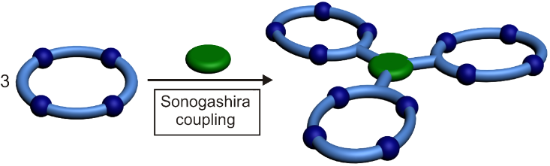
- attempts to use the same conditions for the fourfold coupling of 1 to 15 to synthesize tetravalent wheel 16 were unsuccessful, and we finally used another procedure for the cross-coupling reaction [107]. Because the Cu(I) catalyst may interfere with the Zn core of porphyrin 15 or lead to Glaser coupled

Graphical Abstract

Figure 1: Hunter/Vögtle-type tetralactam macrocycle 1 bearing an iodo substituent at one of the isophthaloyl ...

Scheme 1: Synthesis of the monovalent diamide axle 2, which was used for Sonogashira coupling to the appropri...

Scheme 2: Synthesis of divalent wheels from TLM 1: (a), (b) (Ph3P)2PdCl2, CuI, PPh3, NEt3, DMF, 25 °C, 24 h, ...
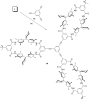
Scheme 3: Synthesis of trivalent wheel 14 from TLM 1: (a) (Ph3P)2PdCl2, CuI, PPh3, NEt3, DMF, 25 °C, 24 h, 40...
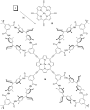
Scheme 4: (a) Pd2(dba)3, AsPh3, NEt3, DMF, 120 °C, 12 h, 7% (16).
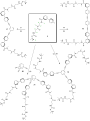
Scheme 5: Synthesis of a series of multivalent guests starting from the axle 2. (a), (b), (c), (d): Pd2(dba)3...
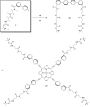
Scheme 6: Synthesis of the tetravalent axle 23 and its divalent side product: (a) Pd2(dba)3, AsPh3, NEt3, DMF...
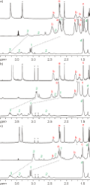
Figure 2: Aliphatic regions of the 1H NMR spectra (CD2Cl2, 500 MHz, 298 K, 2.3 mM) of (a) 10 (top), 17@10 (ce...
Advances in synthetic approach to and antifungal activity of triazoles
- Kumari Shalini,
- Nitin Kumar,
- Sushma Drabu and
- Pramod Kumar Sharma
Beilstein J. Org. Chem. 2011, 7, 668–677, doi:10.3762/bjoc.7.79
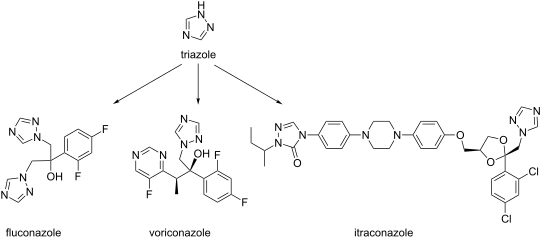
- -lactams and terminal alkynes of bile acids in the presence of a Cu(I) catalyst (click chemistry) by Vatmurge et al. The synthesized compounds were evaluated for their antifungal activity against different fungal strains such as Candida albicans, Cryptococcus neoformans, Benjaminiella poitrasii, Yarrowia

Graphical Abstract

Figure 1: Isomeric forms of triazole.

Scheme 1: Copper catalyzed azide–alkyne cycloaddition.

Scheme 2: Ruthenium catalyzed azide–alkyne cycloaddition.

Scheme 3: Copper-sulfate catalyzed azide–alkyne cycloaddition.

Scheme 4: Azide–dimethylbut-2-yne-dioate cycloaddition.

Figure 2: Triazole compound 3 with most potent antifugal activity against various strains [20].

Figure 3: Triazole compounds 4 and 5 showing antifungal activity against Candida albicans [31].

Figure 4: Triazole compound 6 with the highest activity against Aspergillus flavus, Aspergillus versicolor, A...

Figure 5: Triazole compound 7 exhibiting an MIC of 25 µg/mL against Aspergillus niger [33].
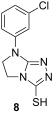
Figure 6: Triazole compound 8 showing the most significant activity against Aspergillus niger and Fusarium ox...
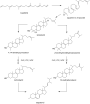
Figure 7: Ergosterol biosynthesis inhibitor pathway.

Figure 8: Fluconazole (9).

Figure 9: Itraconazole (10).

Figure 10: Voriconazole (11).

Figure 11: Posaconazole (12).

Figure 12: Ravuconazole (13).
CuCl-catalyzed aerobic oxidation of 2,3-allenols to 1,2-allenic ketones with 1:1 combination of phenanthroline and bipyridine as ligands
- Shuxu Gao,
- Yu Liu and
- Shengming Ma
Beilstein J. Org. Chem. 2011, 7, 396–403, doi:10.3762/bjoc.7.51
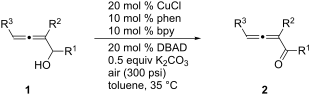
- by Markó et al., the yields are relatively lower. Keywords: allenic ketone; allenol; Cu(I) catalyst; oxidation; Introduction The oxidation of alcohols is one of many fundamental reactions in organic synthesis [1][2]. Usually, stoichiometric oxidants such as MnO2 [3], PCC [4], PDC [4], etc. were

Graphical Abstract

Scheme 1: 1 gram scale reaction of allenol 1k.

Scheme 2: The oxidation of 1l and 1m under 1 atm of oxygen.



