Search results
Search for "LED" in Full Text gives 2073 result(s) in Beilstein Journal of Organic Chemistry. Showing first 200.
Continuous-flow carbonyl hydrogenation under subatmospheric to atmospheric hydrogen pressure enabled by robust heterogeneous Pt–Fe catalysts
Beilstein J. Org. Chem. 2026, 22, 575–582, doi:10.3762/bjoc.22.43
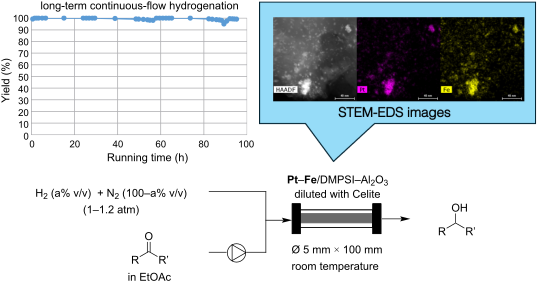
- . Finally, the catalytic activity was revived again, and quantitative conversion was observed over 90 h of total running. Water as contaminant in EtOAc or organic compounds strongly adsorbed on the catalyst’s surface may have led to its deactivation; however, they could be removed by simple heating. We


Kinetic resolution of racemic planar-chiral vinylcymantrenes by molybdenum-catalyzed asymmetric metathesis dimerization
Beilstein J. Org. Chem. 2026, 22, 568–574, doi:10.3762/bjoc.22.42
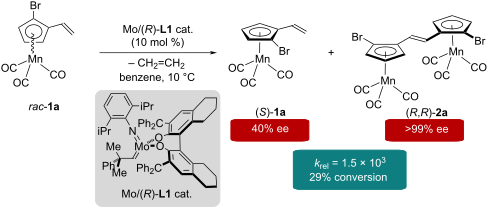
- of rac-1a giving (R,R)-2a of 99% ee and (S)-1a of 45% ee with 37% conversion (krel = 754; Table 1, entry 4). The lower catalyst loading (5 mol %) led to an unsatisfactory conversion (18%) probably due to the decomposition of the molybdenum catalyst prior to the completion of the reaction (Table 1


Molecular tweezer–peptide conjugates disrupt the protein–protein interaction between survivin and histone H3 essential in mitosis
Beilstein J. Org. Chem. 2026, 22, 557–567, doi:10.3762/bjoc.22.41
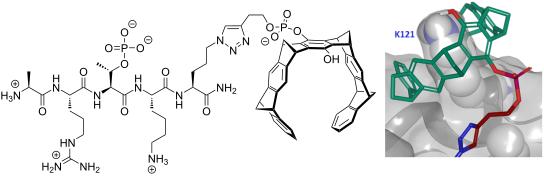
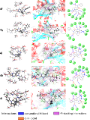
- (vide infra). Again, molecular docking of peptide and tweezer moiety 2a on survivin led to stable arrangements on survivin, suggesting simultaneous occupation of the H3 binding site and potential complexation at Lys-121 (Figures S10 and S11 in Supporting Information File 1). The triazole linker may act




Melifoliox B, a novel phloroglucin derivative isolated from Melicope barbigera (Rutaceae) and synthesis of new oxidation products from melifoliones A and B
Beilstein J. Org. Chem. 2026, 22, 535–546, doi:10.3762/bjoc.22.39
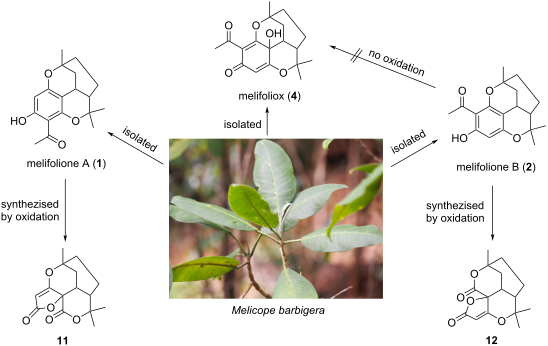
- -position in regard to the OH-group at C-10b (Table 2). Synthesis of melifoliones Melifolione A (1) was prepared according to the method of Wang and Lee [5] by heating phloroacetophenone and citral with ethylene-diammonium diacetate (EDDA) in DMF. However, reaction of the educts in pyridine at 60 °C led to
- dichromate in acidic solution or with potassium permanganate in acidic or alkaline solution led to complete decomposition of the melifoliones. A solution of the melifoliones in methanol with addition of methylene blue decomposed completely into undefined products within 24 hours when exposed to sunlight and
- atmospheric oxygen. Oxidation with potassium peroxodisulfate (Oxone®) according to a method by Carreño et al. [7] led to a complex mixture of compounds in which the quinols 3 and 4 could be excluded. While oxidation with alkaline hypochlorite solution gave a mixture of not identified chlorinated products



Get a better glimpse on sequential photoreactions of trisnorbornadienes with 19F NMR spectroscopy
Beilstein J. Org. Chem. 2026, 22, 527–534, doi:10.3762/bjoc.22.38
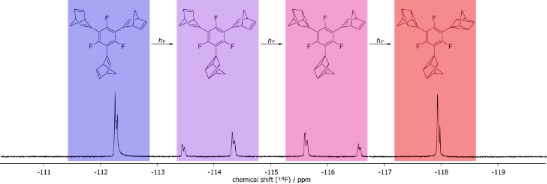
- (see Supporting Information File 1, Figure S10). The photosensitized reaction in the presence of Ir(ppy)3 or 1-butyl-7,8-dimethoxy-3-methylalloxazin (4) as an alternative catalyst [44][45] with λex = 405 nm (LED) was investigated by in situ 1H NMR spectroscopy. In both cases, the photoreaction was


Modern synthetic pathways towards eribulin and its subunits
Beilstein J. Org. Chem. 2026, 22, 495–526, doi:10.3762/bjoc.22.37
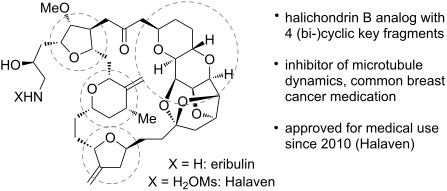
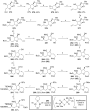
- within their isolation study on halichondrin B, in 1986, Hirata and Uemura showed its promising activity against murine cancer cells [6], which led to a great interest in the pharmaceutical society [7][8][9][10][11][12][13][14][15][16][17][18][19][20]. Only 6 years later, Kishi and co-workers first
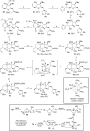
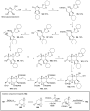
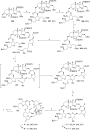
- the secondary alcohol unit of 71 was changed via oxidation and stereospecific reduction, then 1,4-reduction of the enone and treatment with camphorsulfonic acid led to fully cyclized intermediate 72 as a single isomer. During this process the acetate groups were cleaved off and had to be reinstalled
- using acetic anhydride. Oxidative cleavage of olefin 73, followed by treatment with ʟ-proline led to an intermediate β-aldehyde with inverted stereochemistry at the β-C (4:1 dr). Subsequent reduction with NaBH4 yielded alcohol 74. Piv-protection of the primary alcohol, reductive deprotection of the Bn








Synthesis of a HDAC inhibitor–nanogold probe for cryo-EM visualization in class I HDAC co-repressor complexes
Beilstein J. Org. Chem. 2026, 22, 480–485, doi:10.3762/bjoc.22.35
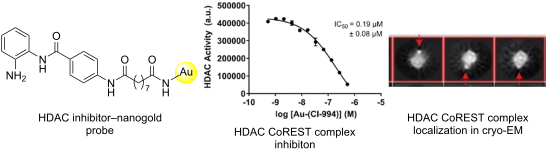
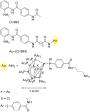
- ]. Based on the Beer–Lambert law, the concentration was calculated to be 2.69 μM. Attempts at further concentration led to precipitation, indicating limited solubility at higher concentrations. The HDAC inhibitor–nanogold probe inhibits HDAC enzymatic activity in the CoREST complex We first wanted to



Cone p-aminocalix[4]arenes enriched with ‘clickable’ alkyne or azide functionalities
Beilstein J. Org. Chem. 2026, 22, 399–415, doi:10.3762/bjoc.22.28
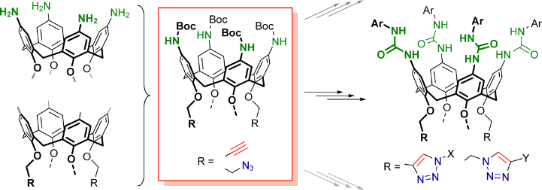
- macrocyclic core through simple acylation of p-aminocalix[4]arenes with the respective phosphorous-containing activated esters. Such grafting of well-known receptor units onto a common platform has led to substantial amplification of the efficiency of lanthanide and actinide extraction from acidic media by




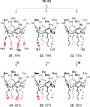


Dialkylaminoalkylation of β-ketosulfones via ring-opening of 3-sulfonylpyrrolidines
Beilstein J. Org. Chem. 2026, 22, 383–389, doi:10.3762/bjoc.22.26
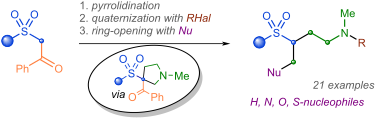
- decided to increase the reaction temperature. Thus, refluxing the reagents in the PhMe/MTBE mixture (v/v 17/3, approximately 100 °C) for 4 h led to complete conversion of the ketosulfone and formation of 3-phenylsulfonyl-3-benzoyl-N-methylpyrrolidine (2a) in almost quantitative yield. Despite that [3 + 2
- excess of azomethine ylide precursors (2.5:2.5 equiv sarcosine/CH2O) led to 87% yield. The obtained pyrrolidines represent a class of labile compounds with a strained C2–C3 bond. The presence of the benzoyl and sulfonyl groups able to eliminate [5][42] and generate an anion at the 3rd position should
- -1-amines 4c–e,h were isolated in 40–69% yields (Scheme 2). Introduction of the m-nitro substituent led to partial resinification during the ring-cleavage step and significant decrease in the reaction outcome (products 4f,g). We have demonstrated that ethyl bromide, benzyl chloride, allyl bromide


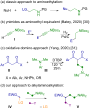


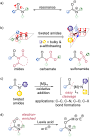
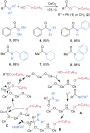
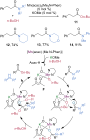
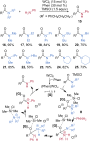
Recent advances in the cleavage of non-activated amides
Beilstein J. Org. Chem. 2026, 22, 352–369, doi:10.3762/bjoc.22.23
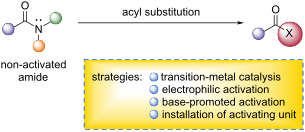
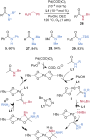
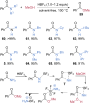
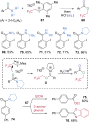
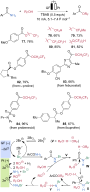
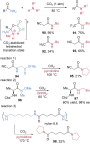
- transformation of the target amide in the presence of more reactive functional groups (Scheme 24b). Using 9-mesityl-3,6-di-tert-butyl-10-phenylacridinium tetrafluoroborate (Mes-Acr-Ph+BF4−) as the photoredox catalyst under 450 nm LED irradiation, the PMB anilide unit was chemoselectively activated and cleaved in





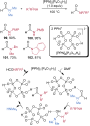


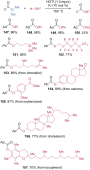

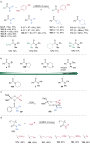


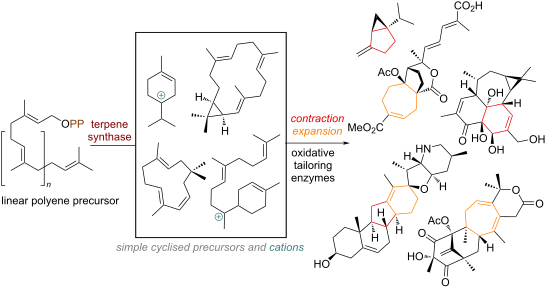
Ring contraction and ring expansion reactions in terpenoid biosynthesis and their application to total synthesis
Beilstein J. Org. Chem. 2026, 22, 289–343, doi:10.3762/bjoc.22.21






Spirobarbiturates with a pyrrolizidine moiety: synthesis, structure and biological evaluation
Beilstein J. Org. Chem. 2026, 22, 274–288, doi:10.3762/bjoc.22.20
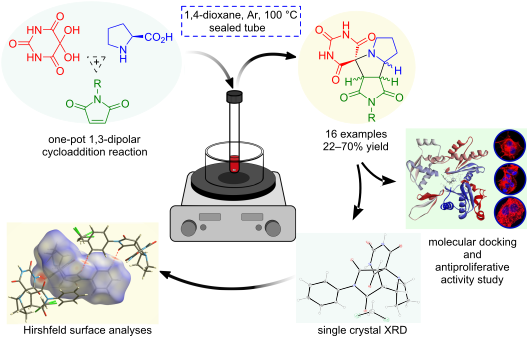
- -proline), tetracyanoethylene, chalcone, and dimethyl acetylenedicarboxylate all failed to produce the target spiro adducts – chalcone and dimethyl acetylenedicarboxylate showed no reactivity, while tetracyanoethylene led to complete resinification. The structure of the products, including the
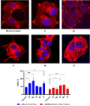
- -fused adducts 4f, 4g, 4i, 4k, and 4l. Confocal microscopy showed that co-incubation of Sk-mel-2 cells with adducts 4f, 4g, 4i, 4k, and 4l led to significant changes in the structure of their actin cytoskeleton resulting in stress fibers disappearance (granular actin was found in the cytoplasm of up to
- , 4k and 4l was equal to 25, 19, 31, 21, 23, and 19% for the tested compounds and control sample, respectively. As can be seen from the obtained data the wound healing ability are consistent with the cytoskeleton data. Compounds 4g and 4l, which led to less stress fibers (87 ± 22%, 71 ± 16% vs 46 ± 7




A mild and atom-efficient four-component cascade strategy for the construction of biologically relevant 4-hydroxyquinolin-2(1H)-one derivatives
Beilstein J. Org. Chem. 2026, 22, 244–256, doi:10.3762/bjoc.22.18
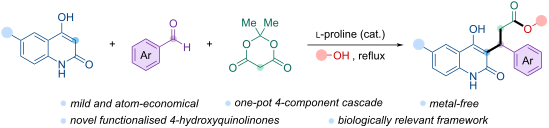
- the desired products. Employing in situ acyl chloride formation from acids 11a–c in the presence of a slight excess of cyclohexanol led to pyranoquinoline 14 formation instead of the open-chain ester. The same cyclic product 14 was obtained via Fischer–Speier esterification with a small excess of


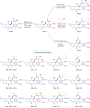
Synthesis of diaryl phosphates using phytic acid as a phosphorus source
Beilstein J. Org. Chem. 2026, 22, 213–223, doi:10.3762/bjoc.22.15
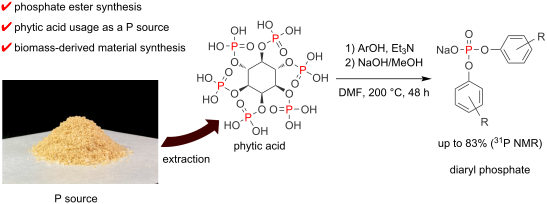
- the corresponding free acids or sodium salts [15][46][47][48]. According to Figure 3, each diaryl phosphate was isolated with a yield of approximately 60%, except for some derivatives. It was presumed that 2-hydroxy-m-xylol (1c) having methyl groups at the ortho-positions, led to a diminished yield of




Screwing the helical chirality through terminal peri-functionalization
Beilstein J. Org. Chem. 2026, 22, 205–212, doi:10.3762/bjoc.22.14
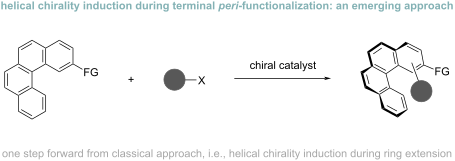
- , biosensors and other forms of the materials sciences continuing its relevance to cutting edge research [1][2]. However, precise control and manipulation of helical chirality in synthetic systems remain technically challenging. This complexity may have led to underestimation of its potential, as research


Base-promoted deacylation of 2-acetyl-2,5-dihydrothiophenes and their oxygen-mediated hydroxylation
Beilstein J. Org. Chem. 2026, 22, 192–204, doi:10.3762/bjoc.22.13
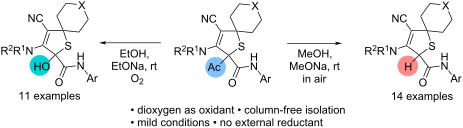
- led to the intermediate A. Elimination of ethyl/methyl acetate from intermediate A afforded anion B. The latter reacted in ethanolic solution with molecular oxygen [52] with the formation of peroxide anion C. The protonation of anion C with proton sources (residual water or/and solvent or 3a can serve




A new synthesis of Tyrian purple (6,6’-dibromoindigo) and its corresponding sulfonate salts
Beilstein J. Org. Chem. 2026, 22, 167–174, doi:10.3762/bjoc.22.10
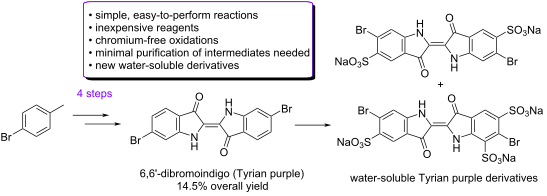
- reaction step of this strategy was done with commercially available 3. As shown in Scheme 4A, reaction of 3 with N-bromosuccinimide (NBS) and azobisisobutyronitrile (AIBN) in acetonitrile, as previously described, led to benzylic bromination, but in inconsistent yields [20][21]. Use of 1,3-dibromo-5,5
- -dimethylhydantoin (DBDMH) as an alternative bromine source led to more consistent yields (57%) of the desired benzyl bromide (Scheme 4B). Systematic variation of the stoichiometric amount of DBDMH indicated that the yield of 4-bromo-2-nitrobenzylbromide (6) was optimized using 0.6 equiv or 1.2 equiv of available


Circumventing Mukaiyama oxidation: selective S–O bond formation via sulfenamide–alcohol coupling
Beilstein J. Org. Chem. 2026, 22, 158–166, doi:10.3762/bjoc.22.9
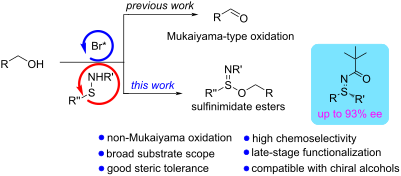
- , we selected the reaction between model sulfenamide 1a and methanol (2a) as the benchmark system (Table 1). Initial attempts in the absence of base led to only trace product formation (Table 1, entry 1), highlighting the essential role of a base in facilitating the transformation. Among several bases
- , decreasing the loading of NaHCO3 to 1.2 equiv resulted in a noticeably lower yield of 3a (83%, Table 1, entry 8), underscoring the importance of using a sufficient amount of base. We next examined the effect of different oxidants. While NBS was optimal, yielding 3a in 99%, the use of NCS or TCCA led to
- employed in an attempt to access the bis-substituted product. However, these more forcing conditions led to complex mixtures and only modest isolated yield of the monosubstituted product. In contrast, when the equivalents of the alcohol, NBS, and NaHCO3 were reduced (conditions e), the reaction proceeded


Asymmetric Mannich reaction of aromatic imines with malonates in the presence of multifunctional catalysts
Beilstein J. Org. Chem. 2026, 22, 151–157, doi:10.3762/bjoc.22.8
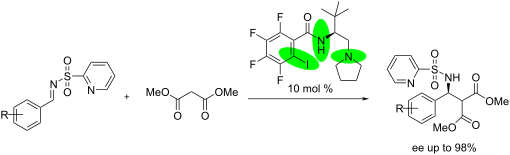
- led to the use of multifunctional catalysts of “homocooperativity,” where multiple units of the same catalyst perform different but complementary roles [17]. These catalysts employing noncovalent interactions via hydrogen bonds and also possess Lewis basic and π–π-interaction sites have been highly
- (Table 2, entry 2). Substituting a sterically demanding iodine atom in the phenyl ring with the methyl group (catalyst K-Me) increased the stereoselectivity (Table 2, entry 3, 56% ee). However, the N-methylated catalyst led to a diminished reaction rate and exhibited complete loss of selectivity


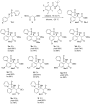
Design and synthesis of an axially chiral platinum(II) complex and its CPL properties in PMMA matrix
Beilstein J. Org. Chem. 2026, 22, 143–150, doi:10.3762/bjoc.22.7
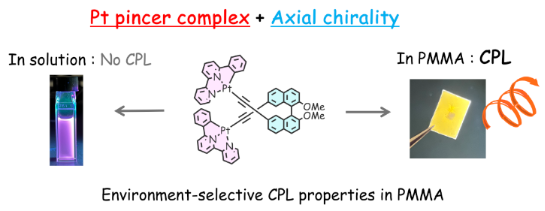
- of 300 nm. Fluorescence lifetimes were measured for solutions and powder samples with a HORIBA DeltaFlex spectrometer with a 370 nm LED light source for excitation. For the lifetime measurements of solution, a conventional 1 cm quartz cell was used. Optical rotation values were measured with a JASCO


Total synthesis of natural products based on hydrogenation of aromatic rings
Beilstein J. Org. Chem. 2026, 22, 88–122, doi:10.3762/bjoc.22.4
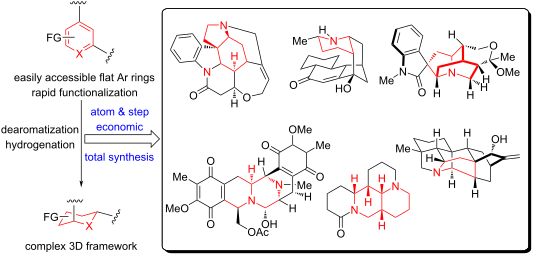
- , including hydroxylation of aryl halide, partial lactam reduction with cyanide trapping, and oxidation of the phenol, enabled the total synthesis of jorunnamycin A in 15 steps. The acetylation of the hydroxy group in jorunnamycin A followed by cyano hydrolysis led to the total synthesis of another natural
- functional group manipulations, including a pivotal intramolecular SN2 cyclization, ultimately completing the total synthesis of (−)-senepodine F. Notably, this work also led to the structural revision of the originally assigned natural product, as reported in earlier isolation studies. Hydrogenation


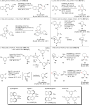








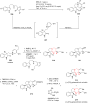

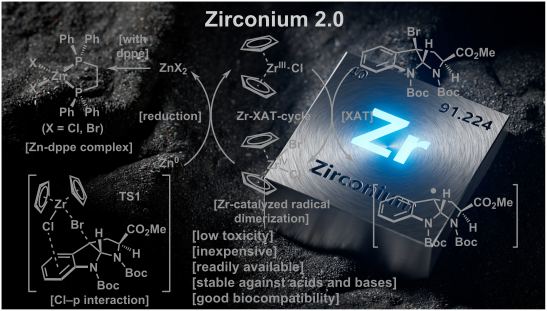
Advances in Zr-mediated radical transformations and applications to total synthesis
Beilstein J. Org. Chem. 2026, 22, 71–87, doi:10.3762/bjoc.22.3
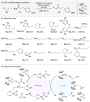
- regioselectivity. In a related study, Ota and Yamaguchi et al. reported the regioselective ring-opening of oxetanes using zirconocene catalysis (Scheme 6) [21]. Treatment of oxetane 27 with zirconocene in the presence of an Ir-photoredox catalyst led to ring opening via the less substituted radical intermediate
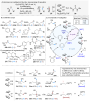
- . Heating these precursors under flash vacuum pyrolysis conditions at 230 °C led to the removal of the Boc group and intramolecular dehydration–condensation, thereby constructing the diketopiperazine core and enabling the total syntheses of ditryptophenaline (70), dibrevianamide F (71), and tetratryptomycin








Reactivity umpolung of the cycloheptatriene core in hexa(methoxycarbonyl)cycloheptatriene
Beilstein J. Org. Chem. 2026, 22, 64–70, doi:10.3762/bjoc.22.2
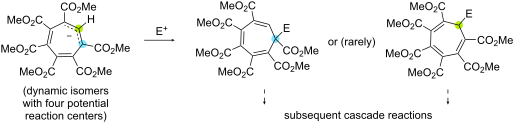
- dynamic equilibrium or total rearrangement of 5 into 6 upon formation. Thus, halogenation of hexa(methoxycarbonyl)cycloheptatrienyl anion 2 formed from 3 led to different outcomes with chlorine, bromine and iodine (Scheme 1). Chlorination gave exclusively i-substituted symmetric cycloheptatriene 4a in an


Synthesis and applications of alkenyl chlorides (vinyl chlorides): a review
Beilstein J. Org. Chem. 2026, 22, 1–63, doi:10.3762/bjoc.22.1
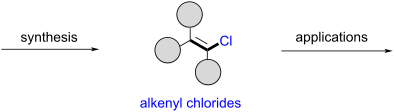
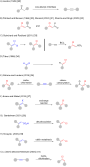
- to alkenyl chlorides with phosphorous pentachloride (PCl5): Friedel first reported the reaction of PCl5 with acetophenone (1) in 1868 (Scheme 1A) [45]. Treatment of the resulting intermediate 2 – then presumed to be a gem-dichloride – with aqueous KOH led to the formation of phenylacetylene (3). In
- , aligned with the axis of the vacant orbital. In the case depicted in Scheme 40B, the face syn to the hydrogen is significantly more accessible than the face syn to the bulky tert-butyl group, accounting for the high E-selectivity observed. In contrast, alkyl groups with reduced steric demand led to
- of the reaction in which TiCl4 was employed in place of BCl3 (Scheme 43) [147]. Interestingly, this modification led to an improved E/Z ratio compared to the values reported by Melloni (compare selectivity for compound 219 in Scheme 38 and Scheme 41). The enhanced selectivity is likely attributable























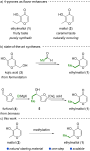
One-pot synthesis of ethylmaltol from maltol
Beilstein J. Org. Chem. 2025, 21, 2755–2760, doi:10.3762/bjoc.21.212

- between dianionic species led to the formation of, in part, inseparable overalkylation products. Second, excess of base was required for complete conversion of maltol (2), which in turn promoted further overalkylation. These challenges, combined with the need for sub-zero temperatures, prompted us to
- to ethylmaltol (1) combined with the rather harsh deprotection conditions, led us to investigate other masking groups. Next, we turned towards silyl protecting groups as they offered (a) facile tuning of stability and (b) the opportunity for acid-mediated deprotection during aqueous work-up