


Search results
Search for "building block" in Full Text gives 414 result(s) in Beilstein Journal of Organic Chemistry. Showing first 200.
Cryptophycin unit B analogues
Beilstein J. Org. Chem. 2025, 21, 526–532, doi:10.3762/bjoc.21.40
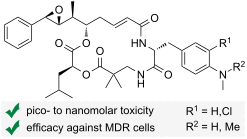
- crystallised in the monoclinic space group P21 with R1 = 0.0285 clearly showing the expected (R)-configuration with a Flack parameter of −0.07(6). Starting from monomethylaniline derivative 7, the synthesis of the final building block was finalised by chlorination [20], Alloc protection and saponification [21
- ] to obtain free acid 11. Exchange of the Boc protecting group of dimethylaniline 8 to an acryloyl substituent and subsequent saponification furnished dimethylamine building block 13. For the macrocycle assembly, especially the ring closure, we decided on two different routes. While the cryptophycin



Synthesis of the aggregation pheromone of Tribolium castaneum
Beilstein J. Org. Chem. 2025, 21, 510–514, doi:10.3762/bjoc.21.38
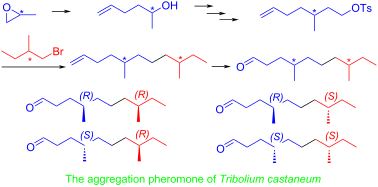
- olefine (5R,9R)-12, which could be obtained through Li2CuCl4-catalyzed coupling of chiral tosylate (S)-10 with a Grignard reagent derived from (R)-1-bromo-2-methylbutane ((R)-11). The key chiral building block (S)-10 was envisaged to be prepared through a sequence of hydrolyzation, decarboxylation, borane


Synthesis of N-acetyl diazocine derivatives via cross-coupling reaction
Beilstein J. Org. Chem. 2025, 21, 490–499, doi:10.3762/bjoc.21.36
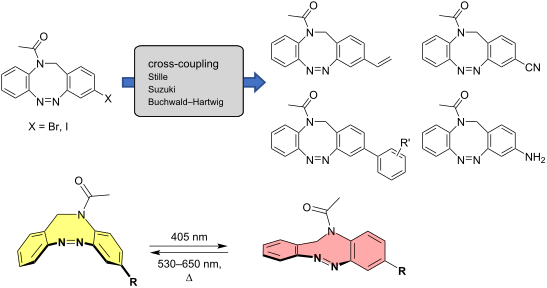
- except the preparation of the aminoaniline building block tert-butyl (2-amino-5-bromophenyl)carbamate (5), which was prepared by Boc-protection of the 5-bromo-2-nitroaniline (6) and subsequent reduction of the nitro group (see Supporting Information File 1, section II.1). Cross-coupling reactions Stille


Beyond symmetric self-assembly and effective molarity: unlocking functional enzyme mimics with robust organic cages
Beilstein J. Org. Chem. 2025, 21, 421–443, doi:10.3762/bjoc.21.30
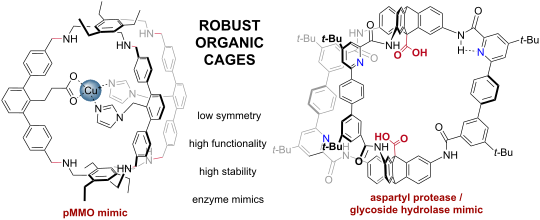
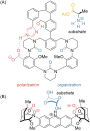
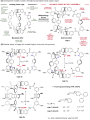
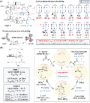
- ) Self-assembling capsules can perform hydrophobic catalysis [116][117]. (B) Resorcin[4]arene building block. (C) Hexameric resorcin[4]arene-based capsules [122] include structural water. The cavity can stabilize cations (substrates or transition states) and perform catalysis using dual activation of a




The effect of neighbouring group participation and possible long range remote group participation in O-glycosylation
Beilstein J. Org. Chem. 2025, 21, 369–406, doi:10.3762/bjoc.21.27
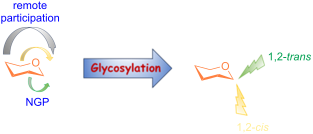
- glycoside 8 (Scheme 1). Glycosylation is considered as the most crucial step in any oligosaccharide synthesis, although it may be argued that, building block preparations or final deprotection steps remain equally demanding. The main challenge of glycosylation lies in the structural complexity of the
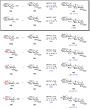
- will do injustice to all the numerous other works with acetyl groups. An ester group similar to the acetyl building block, i.e., the benzoyl group, has also been extensively used for the same purpose. Although the use of a benzoyl group in comparison to the acetyl group deviates from the principle of




Synthesis and characterizations of highly luminescent 5-isopropoxybenzo[rst]pentaphene
Beilstein J. Org. Chem. 2025, 21, 270–276, doi:10.3762/bjoc.21.19
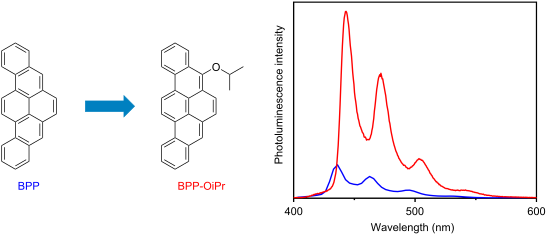
- of zigzag and armchair edges, which may serve as a key building block for obtaining multifunctional organic materials [7]. Since the initial synthesis of BPP by Scholl and Neumann [8], simplified synthetic methods for BPP have been reported over the past decades [9][10][11][12][13][14]. Recently, a




Three-component reactions of conjugated dienes, CH acids and formaldehyde under diffusion mixing conditions
Beilstein J. Org. Chem. 2025, 21, 262–269, doi:10.3762/bjoc.21.18
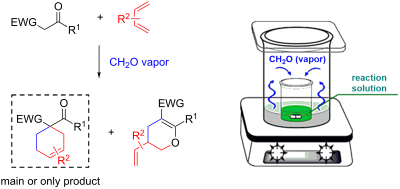
- main reaction products. Keywords: aldol condensation; [4 + 2]-cycloaddition; diffusion mixing; formaldehyde; Knoevenagel condensation; three-component reactions; Introduction Formaldehyde is a reactive electrophilic reagent widely used as a C1 building block in multicomponent reactions [1][2][3]. Its


Heteroannulations of cyanoacetamide-based MCR scaffolds utilizing formamide
Beilstein J. Org. Chem. 2025, 21, 217–225, doi:10.3762/bjoc.21.13
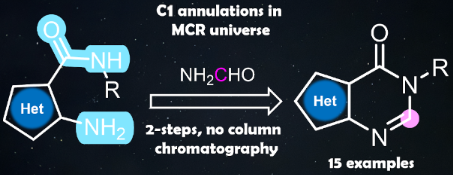
- ]. In addition, carbonyldiimidazole-based heteroannulations via MCRs have been reported, giving access to drug like scaffolds [21][22][23][24]. However, their employment in C1 chemistry should and could be advanced. Herein, we point out formamide as an alternative relevant building block for C1
- be established as a C1 feedstock. [25]. Its high polarity and dielectric constant (it is miscible with water) [26], with the ability to solubilize a wide range of reagents, from salts to polymers, proteins and saccharides, renders formamide an excellent C1 building block [25][27]. Thus, our target


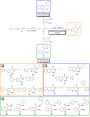


Cu(OTf)2-catalyzed multicomponent reactions
Beilstein J. Org. Chem. 2025, 21, 122–145, doi:10.3762/bjoc.21.7

- additive. Some control experiments support a mechanism whose key intermediates are the formation of the iminium ion XIX, originated from aniline with formaldehyde which serves as the C1 building block, and the generation of the cyclic α,β-unsaturated ethers XX by Cu(OTf)2-catalyzed dehydrogenation of the


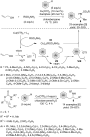




Multicomponent reactions driving the discovery and optimization of agents targeting central nervous system pathologies
Beilstein J. Org. Chem. 2024, 20, 3151–3173, doi:10.3762/bjoc.20.261

- carboxylic building block. The obtained molecules were evaluated for their ability to inhibit β-amyloid aggregation by the interaction with two β‐amyloid peptides, Aβ1‐42 and AβpE3‐42. The aggregation inhibition experiment, which measures the decrease of fluorescence, was carried out with the thioflavin T


Synthesis of the 1,5-disubstituted tetrazole-methanesulfonylindole hybrid system via high-order multicomponent reaction
Beilstein J. Org. Chem. 2024, 20, 3077–3084, doi:10.3762/bjoc.20.256
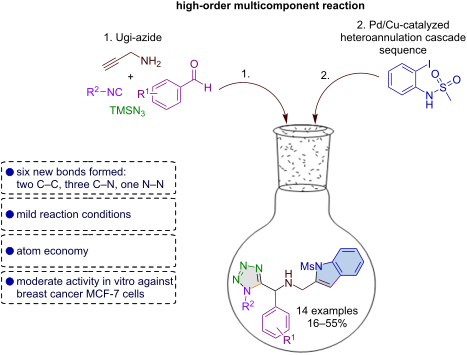
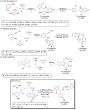
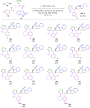
- the application of this reagent as a central building block in the synthesis of hybrid systems via Ugi-azide reactions, including structures based on triazoles-tetrazoles [24][26][27], benzofuran-tetrazoles [23] and indolizines-tetrazoles [25], all of which have significant relevance in medicinal



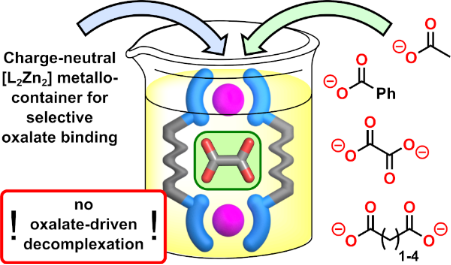
Tailored charge-neutral self-assembled L2Zn2 container for taming oxalate
Beilstein J. Org. Chem. 2024, 20, 3007–3015, doi:10.3762/bjoc.20.250
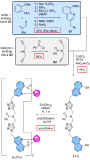
- preparation and host assembly. The synthesis adheres to a two-synthon approach which relies on the connection of two building blocks through a CuAAC click reaction (Scheme 1). Building block S1, the azide, is not modified in this work and the preparation is achieved with an overall yield of 43% via the
- previously reported methods. Building block S2, based on dipropargylamine, is synthesized via a Schotten–Baumann reaction with benzoyl chloride, resulting in the flexible dialkyne backbone with a yield of 95%. The functionalization was envisioned to enhance the solubility of the ligand as we usually have




4,6-Diaryl-5,5-difluoro-1,3-dioxanes as chiral dopants for liquid crystal compositions
Beilstein J. Org. Chem. 2024, 20, 2940–2945, doi:10.3762/bjoc.20.246
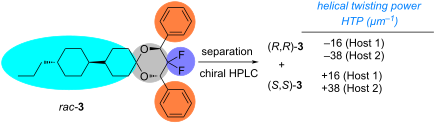
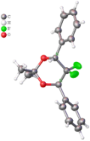
- nematic host mixtures Host 1 and Host 2. The extension of the chiral substructure (4 →3) by the liquid crystal building block 1 into a more rod-like shape is further boosting the HTP by roughly a factor of 2. Moreover, the HTP of both compounds 3 and 4 depends strongly on the LC host mixture: for the more


C–H Trifluoromethylthiolation of aldehyde hydrazones
Beilstein J. Org. Chem. 2024, 20, 2883–2890, doi:10.3762/bjoc.20.242
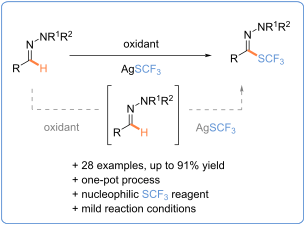
- trifluoromethylthiolated molecules, which could be used as synthetic handles for synthesizing more complex molecules, is still appealing. In this context, we turned our attention to the trifluoromethylthiolated hydrazones, an interesting building block. Indeed, aldehyde hydrazones have been well studied and used in


Synthesis of fluoroalkenes and fluoroenynes via cross-coupling reactions using novel multihalogenated vinyl ethers
Beilstein J. Org. Chem. 2024, 20, 2691–2703, doi:10.3762/bjoc.20.226

- chlorine atoms as reported by Hosoya and Niwa et al. In this study, we investigated the synthesis of fluoroalkenes 2 or fluoroenynes 3 by Suzuki–Miyaura or Sonogashira cross-couplings with a key building block 1 (Scheme 1D). Results and Discussion Optimization of the conditions of cross-coupling reactions


Computational design for enantioselective CO2 capture: asymmetric frustrated Lewis pairs in epoxide transformations
Beilstein J. Org. Chem. 2024, 20, 2668–2681, doi:10.3762/bjoc.20.224
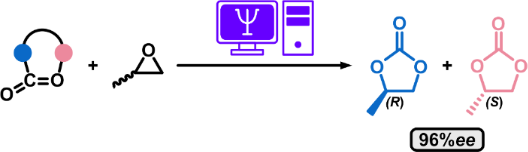
- oxygen atoms [6][7]. Carbon capture and utilisation (CCU) technologies involve the extraction of CO2 from the atmosphere of the Earth to generate value-added chemicals, which can serve as platform chemicals in other chemical processes [20][21]. This is achieved by inserting CO2 as a C1 building block


Facile preparation of fluorine-containing 2,3-epoxypropanoates and their epoxy ring-opening reactions with various nucleophiles
Beilstein J. Org. Chem. 2024, 20, 2421–2433, doi:10.3762/bjoc.20.206
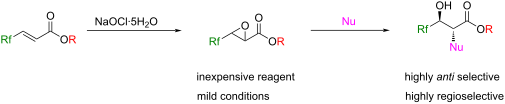
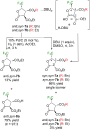
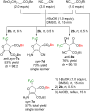
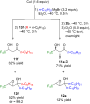
- intramolecular interaction between fluorine and metals would also facilitate the smooth progress of these reactions. Such high potential of 1a allowed us to apply it to nucleophilic epoxidation because the resultant epoxyester 2a is recognized as an intriguing building block (Scheme 1). Another expectation to 2a





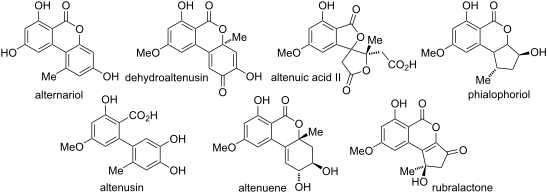
Natural resorcylic lactones derived from alternariol
Beilstein J. Org. Chem. 2024, 20, 2171–2207, doi:10.3762/bjoc.20.187
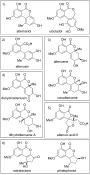
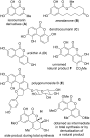
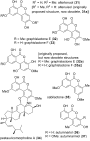
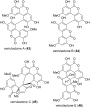
- ]. Verrulactones A–C and E (43–46) are dimeric structures, where verrulactones A and B can be considered as altertenuol (31) dimers, verrulactone C consists of an altertenuol and an alternaone A (123, vide infra) moiety, and verrulactone E contains an altertenuol and a dehydroaltenusin (74, vide infra) building
- block (Figure 12). The verrulactones were isolated from Penicillium verruculosum [187][193][221] and verrulactone A and B were further isolated from Alternaria alternata [159][160]. Constitution and relative configuration of these compounds was determined by NMR-spectroscopic methods, where the






Novel truxene-based dipyrromethanes (DPMs): synthesis, spectroscopic characterization and photophysical properties
Beilstein J. Org. Chem. 2024, 20, 2163–2170, doi:10.3762/bjoc.20.186
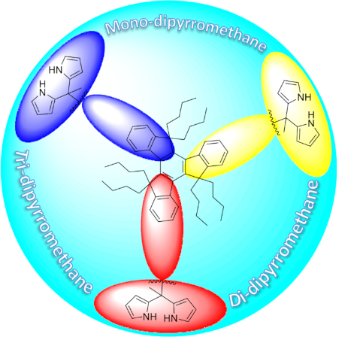
- -planar having π‐conjugation [2][3][4]. Remarkably, these unique characteristics of the truxene scaffold, results in strong π–π stacking ability in addition to the strong electron‐donating capability – hinting for the truxene’s capability as a worthy building block in the advancement of cutting-edge
- the importance of DPMs in mind due to their utmost significance as a building block in the construction of porphyrinogens, related polypyrrolic macrocycles, and pigments [39][40][41]. As shown in Figure 1, these DPMs and many more have fruitfully been used by several research groups in sensing/binding


Computational toolbox for the analysis of protein–glycan interactions
Beilstein J. Org. Chem. 2024, 20, 2084–2107, doi:10.3762/bjoc.20.180
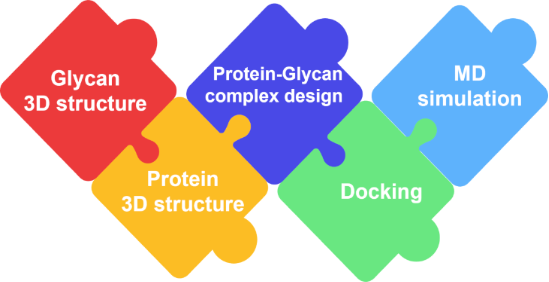
- bacterial sugars, the parametrisation of each building block is needed and requires the use of ab initio methodologies, including several steps of charges and electron density calculations, optimization and minimization, making the computational study of bacterial glycans difficult and time-consuming. 2


Multicomponent syntheses of pyrazoles via (3 + 2)-cyclocondensation and (3 + 2)-cycloaddition key steps
Beilstein J. Org. Chem. 2024, 20, 2024–2077, doi:10.3762/bjoc.20.178

- organic synthesis. For instance, hydrazinecarbothioamide (40) can be used to synthesize bisheterocycles. Mohamed et al. were able to combine Hantzsch thiazole and Knorr pyrazole synthesis with this building block. Thiazolyl-pyrazolyl-chromenes 43 were synthesized in good yields from substituted 3


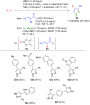


Harnessing the versatility of hydrazones through electrosynthetic oxidative transformations
Beilstein J. Org. Chem. 2024, 20, 1988–2004, doi:10.3762/bjoc.20.175
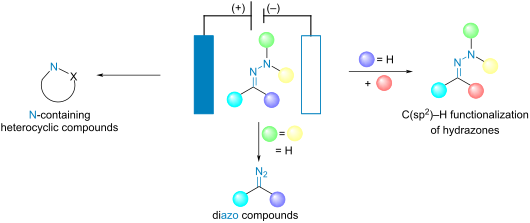
- the critical role of in situ-generated molecular iodine (Scheme 8) [44]. Formal cycloaddition Hydrazones constitute a versatile building block for the construction of azacycles through formal cycloaddition reactions. Under oxidative electrochemical conditions, either the oxidation of the hydrazone or
- reactivity profile of hydrazones, the electrooxidative transformations of such a molecular building block provides a fascinating route to valuable compounds under mild and safe reaction conditions. Alone, the electrooxidation of NH-aryl, -tosyl, and -acylhydrazones triggered the cyclization of a radical


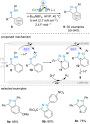
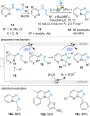

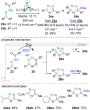
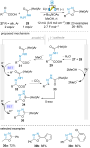
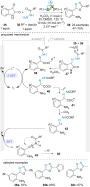
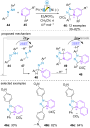
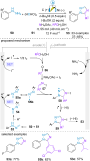
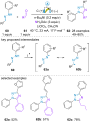


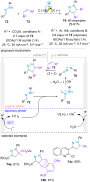
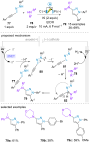

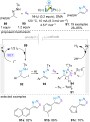
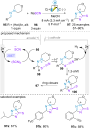
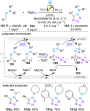



The Groebke–Blackburn–Bienaymé reaction in its maturity: innovation and improvements since its 21st birthday (2019–2023)
Beilstein J. Org. Chem. 2024, 20, 1839–1879, doi:10.3762/bjoc.20.162
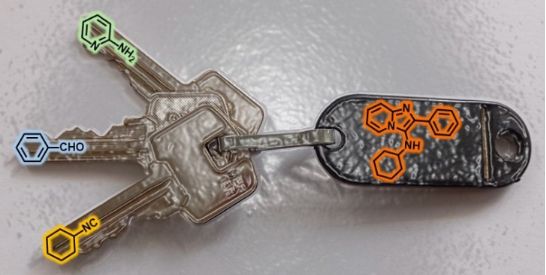


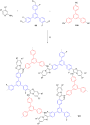
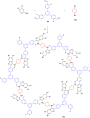


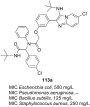


Hetero-polycyclic aromatic systems: A data-driven investigation of structure–property relationships
Beilstein J. Org. Chem. 2024, 20, 1817–1830, doi:10.3762/bjoc.20.160
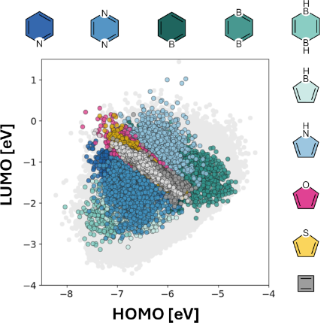
- distribution of the COMPAS-1 molecules (light blue) is contained within the distribution of the COMPAS-2 molecules (purple). In other words, the expansion of the building block library widens the property distributions towards both higher and lower energies, providing access to functional molecules with
- of building block affects the properties, and whether these effects are due solely to the presence of the heteroatoms or to the aromatic nature of heterocycles are among the questions we aim to answer in the subsequent sections. Influence of global structural features In this section, we investigate
- antiaromatic building blocks are boron-containing rings (borole, 1,4-dihydro-1,4-diborinine). Thus, it is not clear whether these trends are due to the identity of the heteroatom or to the nature of the ring. To answer this question, we investigated the influence of each individual building block. Figure 9A


Synthesis and characterization of 1,2,3,4-naphthalene and anthracene diimides
Beilstein J. Org. Chem. 2024, 20, 1767–1772, doi:10.3762/bjoc.20.155
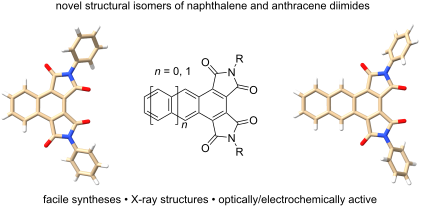
- periphery of the aromatic core to yield different structural isomers is effective for producing interesting new materials. Ourselves and others have investigated 1,2,3,4-benzene diimide, also known as mellophanic diimide [1], as a building block for heteroacenes [2][3][4][5] and polyimides [6][7][8]. The





