


Search results
Search for "esters" in Full Text gives 936 result(s) in Beilstein Journal of Organic Chemistry. Showing first 200.
Synthesis and applications of alkenyl chlorides (vinyl chlorides): a review
Beilstein J. Org. Chem. 2026, 22, 1–63, doi:10.3762/bjoc.22.1
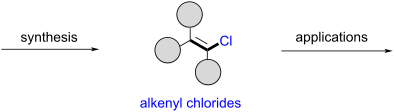
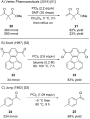
- alkenyl chlorides isolated in purities below 85% (not shown) [59]. Transformations of enols to alkenyl chlorides with phosphorous pentachloride (PCl5): β-Chlorovinyl ketones and esters represent highly versatile intermediates, as the chloride moiety is readily displaced by a wide range of nucleophiles
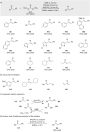
- reported the use of (PhO)3P–halogen-based reagents for the synthesis of alkenyl halides (Scheme 12) [64]. A variety of alkenyl chlorides was obtained in good yields, with functional groups such as esters and boronates well tolerated. When camphor was treated with (PhO)3P·Cl2 (TPPCl2), the two
- arylboronic esters (Scheme 52) [181]. They discovered that a rhodium/1,4-bis(diphenylphosphino)butane (DPPB) complex, in combination with a large excess of 1,2-trans-dichloroethene, facilitated monoselective cross-coupling reactions. In 1987, Minato, Suzuki, and Tamao reported the first monoselective coupling























One-pot synthesis of ethylmaltol from maltol
Beilstein J. Org. Chem. 2025, 21, 2755–2760, doi:10.3762/bjoc.21.212

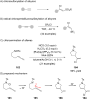
- esters [25], we initially envisioned the formation of dianion I from maltol (2), which should undergo selective C-methylation with methyl iodide to furnish ethylmaltol (1) (Table 1). Typical deprotonation conditions employed for β-keto esters, i.e., sequential treatment of maltol (2) with equimolar
- ) from its naturally occurring congener maltol (2). Initial efforts focused on the methylation of a dianionic intermediate, reminiscent of γ-alkylation of β-keto esters. Although this successfully provided ethylmaltol (1), the presence of inseparable impurities and the need for industrially unattractive

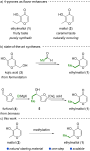

Competitive cyclization of ethyl trifluoroacetoacetate and methyl ketones with 1,3-diamino-2-propanol into hydrogenated oxazolo- and pyrimido-condensed pyridones
Beilstein J. Org. Chem. 2025, 21, 2716–2729, doi:10.3762/bjoc.21.209
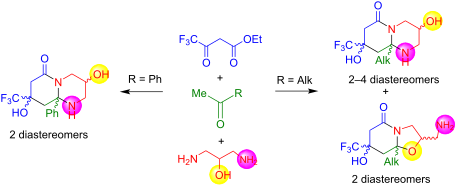
- to be obtained in one stage using commercially available reagents [1][2][3]. Their ambident properties make 3-oxo esters convenient reagents for the use in multicomponent syntheses, with the Hantzsch [4][5] and Biginelli [6][7][8] reactions being the best known. In the transformations, 3-oxo esters
- starting substrates in multicomponent syntheses [17][18][19]; at the same time, they often show extraordinary reactivity. For example, the introduction of polyfluoroalkyl-3-oxo esters into the aforementioned Hantzsch and Biginelli reactions leads to the hydrated heterocycles, which can provide insight into
- the mechanistic aspects of these transformations. Our team has discovered a new multicomponent synthesis that is based on autocatalyzed reactions of ethyl trifluoroacetoacetate and other polyfluoroalkyl-3-oxo esters with α-methylenecarbonyl compounds and amines [9]. This approach is appropriate only


Recent advancements in the synthesis of Veratrum alkaloids
Beilstein J. Org. Chem. 2025, 21, 2657–2693, doi:10.3762/bjoc.21.206
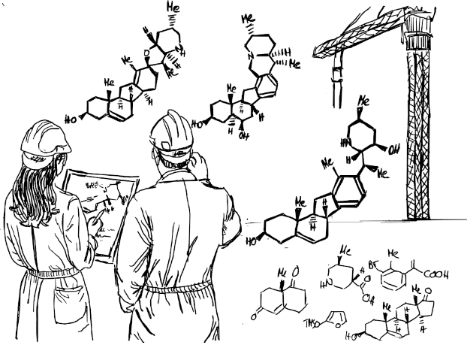
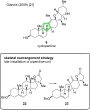
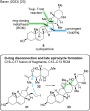
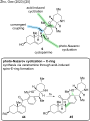
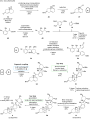
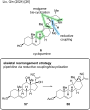
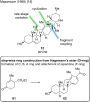
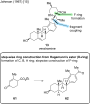
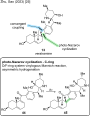
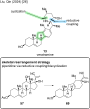
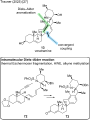
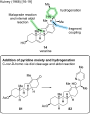
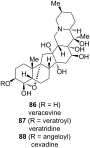
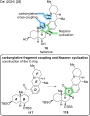
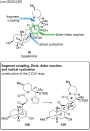
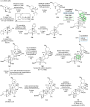
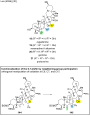
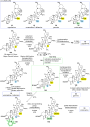
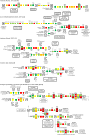
- cevanine-type alkaloids has been reported [13][38][39][40][41][42]. The common hexacyclic framework is often highly oxidized and the hydroxy groups are further functionalized as esters of various carboxylic acids. Apart from the hydroxylation pattern, structural diversity is also imparted through a cis- or
















Synthesis of new tetra- and pentacyclic, methylenedioxy- and ethylenedioxy-substituted derivatives of the dibenzo[c,f][1,2]thiazepine ring system
Beilstein J. Org. Chem. 2025, 21, 2645–2656, doi:10.3762/bjoc.21.205
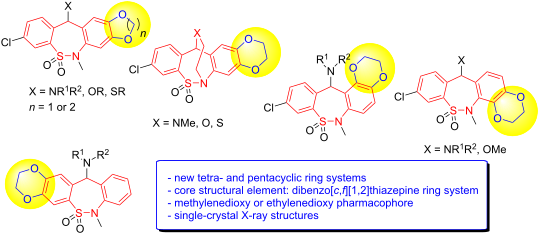
- (22), an atypical antidepressant drug on the market [21][22][23][24][25], by hydrolysis of esters 20a and 21a (Scheme 3). Treatment of chloro derivative 19 with various alcohols afforded ethers 23, while its reaction with 2-(morpholin-4-yl)ethanethiol resulted in thioether 24 (Scheme 4). The structure


Visible-light-driven NHC and organophotoredox dual catalysis for the synthesis of carbonyl compounds
Beilstein J. Org. Chem. 2025, 21, 2584–2603, doi:10.3762/bjoc.21.200
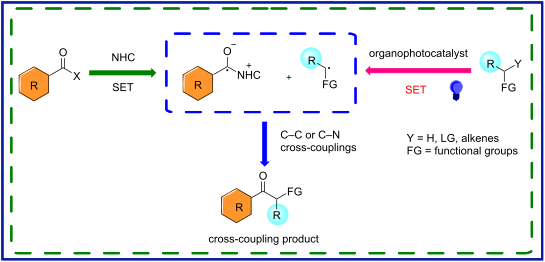
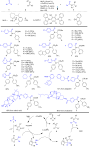
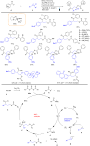
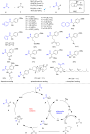
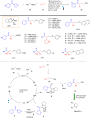
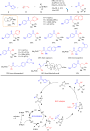
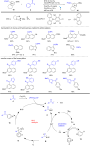
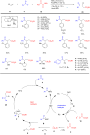
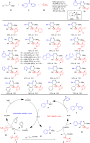
- carbenes (NHCs) with photocatalysts. The review encompasses transition-metal-based photocatalytic reactions for C–C and C–HA cross-coupling reactions involving various acyl fluorides, amides, aldehydes, carboxylic acids, and esters, highlighting their broad applications in organic synthesis and medicinal
- -photocatalyst, leading to various β-aryl keto ester derivatives 20 in good to excellent yields. The key steps of the reactions undergo radical–radical cross-coupling with the alkyl ester radical E and benzyl radical B to afford the desired keto-esters 20 in up to 88% yield. This catalytic process displayed good
- V vs SCE in CH3CN). The resulting oxidized Rh6G•+, with a ground-state oxidation potential of Eox = +1.23 V vs SCE in CH3CN. This catalysis enables an efficient and straightforward photocatalytic preparation of functionalized aryl esters 25 through a radical pathway (Scheme 10) [60]. The NHC



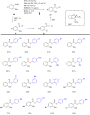

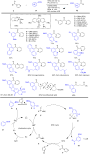

Assembly strategy for thieno[3,2-b]thiophenes via a disulfide intermediate derived from 3-nitrothiophene-2,5-dicarboxylate
Beilstein J. Org. Chem. 2025, 21, 2489–2497, doi:10.3762/bjoc.21.191
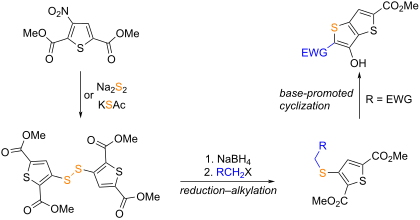
- , but it was obtained as a mixture of ester forms, namely dimethyl and diethyl esters in ethanol, and dimethyl and diisopropyl esters in isopropanol. These results indicate that the reaction with alcohol solvents resulted in partial transesterification of the methoxycarbonyl groups, while reductive


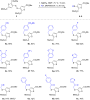

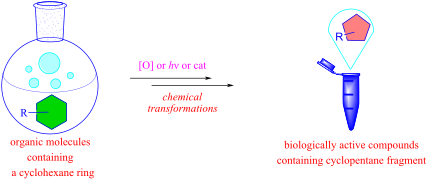
Transformation of the cyclohexane ring to the cyclopentane fragment of biologically active compounds
Beilstein J. Org. Chem. 2025, 21, 2416–2446, doi:10.3762/bjoc.21.185
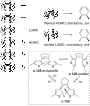
- 6,5,6-abeoabietane scaffold and impressive antitumor activity. α-Diazoketone 124 was synthesized from commercially available 1,2,4-trimethoxybenzene (123) [64] by a series of synthetic transformations, and converted by Wolff rearrangement to esters 125 and 126 with a trans-fused 6,5,6-ring system
- product of cyclohexane ring opening (Scheme 26). A decrease in the methanol content of the mixture to 0.5% was accompanied by a slowdown in the process and the appearance of keto enol 149 in solution. Replacing methanol with isopropanol under these conditions resulted in the formation of isopropyl esters
- Dotson et al. [84] for cis/trans salts 159 (Scheme 30). The authors noted that photochemical experiments carried out in benzene solutions with benzylic esters cis-159 or trans-159 gave complex product mixtures. To achieve higher conversion, a photochemical reaction was carried out in the crystalline


The high potential of methyl laurate as a recyclable competitor to conventional toxic solvents in [3 + 2] cycloaddition reactions
Beilstein J. Org. Chem. 2025, 21, 2389–2415, doi:10.3762/bjoc.21.184
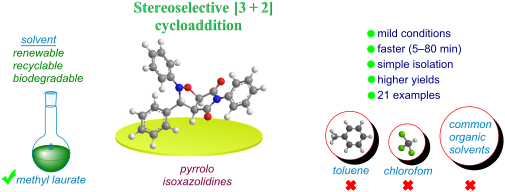
- skin of human subjects were detected. However, evidence of ocular irritation at very low levels was obtained. Furthermore, it has been determined that 100–69% of methyl laurate is readily biodegraded aerobically following a 30-day period. The utilization of certain fatty acid methyl esters, including
- characteristics, arising from the ester group and the non-polar hydrocarbon chain, respectively. The nitrone contains a polar functional group (N–O) and two aromatic rings, which serve to generate both polar and dispersion forces. Consequently, these findings indicate that fatty acid methyl esters may possess
- considerable promise as environmentally friendly solvents for cycloaddition reactions. Moreover, as pointed out by Gil et al., the δP and δH values for methyl esters of saturated fatty acids decrease with increasing chain length [100]. Consequently, the capacity of methyl laurate molecules to direct electric







Synthetic study toward vibralactone
Beilstein J. Org. Chem. 2025, 21, 2376–2382, doi:10.3762/bjoc.21.182

- cyclopentene ring containing an all-carbon quaternary center [14], and inhibits pancreatic lipase with an IC50 of 0.4 µg/mL. Several congeners with varying oxidation state, as well as related β-hydroxy acids or esters have also been isolated from the culture broth of the basidiomycete [15][16][17][18][19][20
- ][21]. Additionally, a series of vibralactone homodimers and oxime esters 10–12 were reported by the groups of Liu and Zhang, respectively [22][23]. Through modification of the primary hydroxy group, a structure-based optimization of vibralactone (6) was carried out by Liu and co-workers and yielded


Recent advances in Norrish–Yang cyclization and dicarbonyl photoredox reactions for natural product synthesis
Beilstein J. Org. Chem. 2025, 21, 2315–2333, doi:10.3762/bjoc.21.177
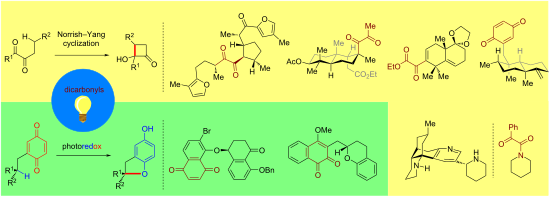
- intermediate is also capable of cyclization through radical coupling to form cyclobutanol D, a process systematically expanded upon by Yang's group at the University of Chicago [4], which later became known as the Norrish–Yang cyclization. In recent years, dicarbonyls, specifically 1,2-diketones, α-keto esters
- -diketones, α-keto esters, α-keto amides, 1,4-quinones, and 1,2-quinones, emphasizing their unique roles in constructing diverse substructures. However, the reaction faces challenges in terms of regioselectivity and stereoselectivity, which are mainly attributed to the influence of substrate structure




Halogenated butyrolactones from the biomass-derived synthon levoglucosenone
Beilstein J. Org. Chem. 2025, 21, 2297–2301, doi:10.3762/bjoc.21.175
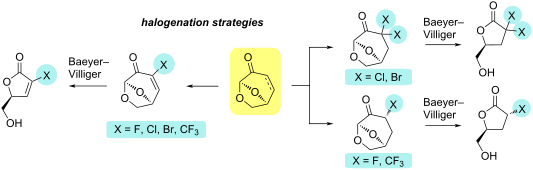
- been reported in a 12-step procedure starting with glucose in an overall yield of 2% [24]. Enol esters [25], enolates [26], enamines [27][28], and silyl enol ethers [29], some of which can be derived from LGO, have been used in electrophilic fluorination and trifluoromethylation strategies. It was



Enantioselective radical chemistry: a bright future ahead
Beilstein J. Org. Chem. 2025, 21, 2283–2296, doi:10.3762/bjoc.21.174
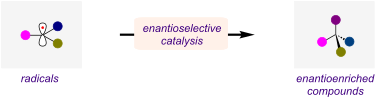
- enantioselectivity. New catalytic methods have been developed by merging photoenzymatic catalysis with small-molecule photoredox catalysis. Enantioselective radical acylation reactions of N-hydroxyphthalimide esters and aldehydes, yielding α-substituted ketones, were catalyzed by a radical acyl transferase (an
- was the use of ferrocene as a redox mediator, which played an important role in preventing substrate decomposition under the electrochemical conditions. An electrochemical method enabled regio- and enantioselective radical reactions of silyl polyenolates with racemic α-branched esters, yielding


Pathway economy in cyclization of 1,n-enynes
Beilstein J. Org. Chem. 2025, 21, 2260–2282, doi:10.3762/bjoc.21.173
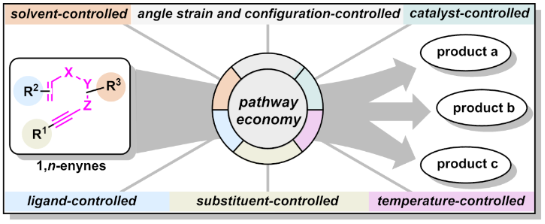
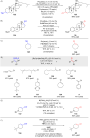
- products and pharmaceutical agents. In 2013, Chan and co-workers reported a ligand-controlled cycloisomerization of 1,7-enyne esters affording the selective synthesis of cis-tetrahydropyridinones and δ-diketones (Scheme 16) [24]. When NHC-ligated gold catalysts were employed, a cascade sequence comprising
- intermediate 76 to drive hydrolysis. This methodology tolerates structurally diverse 1,7-enyne esters and generates defined cis-1,2,3,6-tetrahydropyridine scaffolds, which serve as synthetic intermediates for complex natural products and pharmacologically relevant heterocyclic frameworks. In 2016, Jiang group
- derivatives. BiCl3-catalyzed cycloisomerization of tryptamine-ynamide derivatives. Au(I)-mediated substituent-controlled cycloisomerization of 1,6-enynes. Ligand-controlled regioselective cyclization of 1,6-enynes. Ligand-dependent cycloisomerization of 1,7-enyne esters. Ligand-controlled cycloisomerization


Research towards selective inhibition of the CLK3 kinase
Beilstein J. Org. Chem. 2025, 21, 2250–2259, doi:10.3762/bjoc.21.172
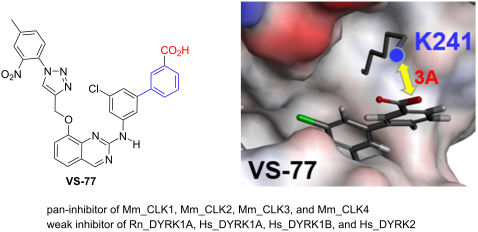
- reported in Figure 4. The four acids 10a, 10b, 13a, and 13b demonstrated a significant activity against CLK1 with very low to no action on the other selected kinases. On the other hand, the corresponding esters 9 and 12 were found to be not significantly active against the tested kinases. Indeed, we failed
- addition of the terminal acid significantly reinforces the interaction of our new molecules with CLK3, probably through a salt bridge with lysine 241. Logically, the corresponding esters are found to be inactive. Finally, in order to complete our profiling of VS-77, we then measured its activity against


A chiral LC–MS strategy for stereochemical assignment of natural products sharing a 3-methylpent-4-en-2-ol moiety in their terminal structures
Beilstein J. Org. Chem. 2025, 21, 2243–2249, doi:10.3762/bjoc.21.171
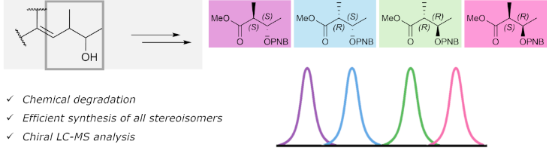
- . (a) Synthetic (2S,3S)-8, (2S,3R)-9, (2R,3R)-10, and (2R,3S)-11 and (b) C9–C12 fragment 7 derived from 1. (A) General strategy for the preparation of the fragment from an MPO-containing natural product. (B) Synthesis of esters 4–6, each as a mixture of four stereoisomers. Preparation of the C9–C12


A m-quaterphenyl probe for absolute configurational assignments of primary and secondary amines
Beilstein J. Org. Chem. 2025, 21, 2211–2219, doi:10.3762/bjoc.21.168
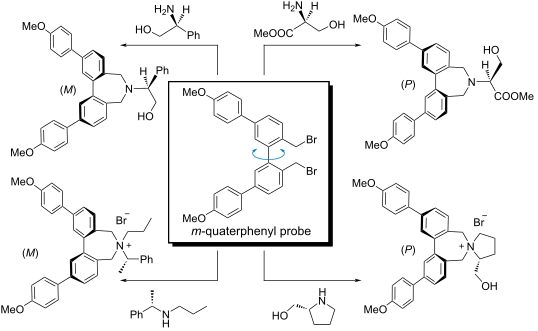
- Shibazono, Narashino, Chiba 275-0023, Japan Research Center for Materials with Integrated Properties, Toho University, 2-2-1 Miyama, Funabashi, Chiba 274-8510, Japan 10.3762/bjoc.21.168 Abstract We report a method for determining the absolute configurations of chiral amino alcohols, amino acid esters, and
- amines. In this work, we report that the method was applied to chiral amino alcohols and amino acid esters. We also applied the method to chiral secondary amines, for which it is generally difficult to determine the absolute configuration due to the conformational complexity of their derivatives [33]. By
- esters in the presence of K2CO3 in CH3CN (Scheme 1). The quaternary ammonium salt conjugates 2f–h were also prepared by reacting 1 with chiral secondary amines under similar conditions. It is reported that the central biphenyl moiety of amines and ammonium salts with seven-membered rings freely rotates


C2 to C6 biobased carbonyl platforms for fine chemistry
Beilstein J. Org. Chem. 2025, 21, 2103–2172, doi:10.3762/bjoc.21.165
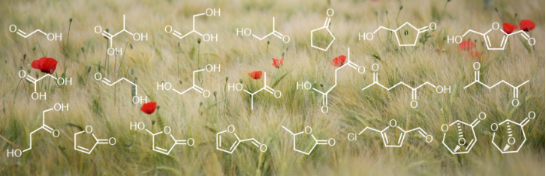
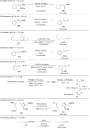
- isomerization and hydrogenation (Scheme 70, route b2). The accepted mechanism of the rehydration of HMF under acidic conditions leading to the formation of levulinic acid and formic acid proposed by Horvat [224] is depicted in Scheme 71. Levulinic acid can be converted into various derivatives, such as esters
- , amides, lactones, acrylic acid, etc. (Scheme 72) and is therefore a key intermediate in the synthesis of pharmaceuticals, agrochemicals, and other specialty chemicals. Levulinate esters, used as a solvent or as biofuels, are obtained by esterification under acid catalysis, e.g., with a sulfuric acid
- -modified ultra-stable Zeolite Y (SY) [225] or PdNPs-TiO2/Al2O3/SiO2 [226]. Conversion to other carboxylic acids: Valeric acid (VA) and valerate esters (VEs), also named pentanoic acid or esters, are targeted as fuel additives and value-added chemicals. They are obtained by hydrogenation of levulinic acid


Switchable pathways of multicomponent heterocyclizations of 5-amino-1,2,4-triazoles with salicylaldehydes and pyruvic acid
Beilstein J. Org. Chem. 2025, 21, 2030–2035, doi:10.3762/bjoc.21.158
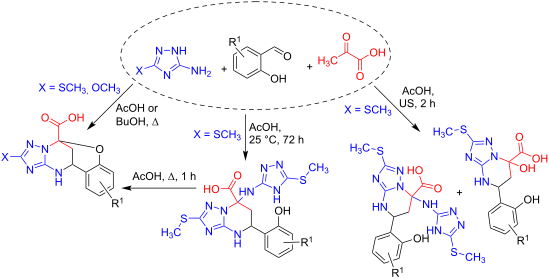
- also was described in several other publications [13][14][15]. On the other hand, three-component reactions of aminoazoles, salicylaldehyde, and esters (or amides) of acetoacetic acid with isolation of other types of heterocylic compounds were described in some papers [16][17]. Our early works were


Aryl iodane-induced cascade arylation–1,2-silyl shift–heterocyclization of propargylsilanes under copper catalysis
Beilstein J. Org. Chem. 2025, 21, 1984–1994, doi:10.3762/bjoc.21.154
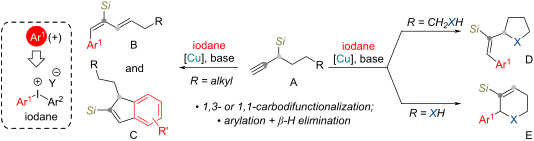
- an internal nucleophile (O-, N-) and reductive elimination affords the arylated product 8 and regenerates the Cu(I) catalyst. The added base (B:) traps the H+, generated in this catalytic cycle. In the case of tert-butyl esters (7: R = COOt-Bu) an equivalent of isobutylene gas is released as a side


Photochemical reduction of acylimidazolium salts
Beilstein J. Org. Chem. 2025, 21, 1973–1983, doi:10.3762/bjoc.21.153
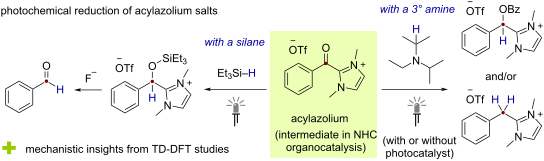
- manifold with carboxylic acid derivatives, numerous coupling processes affording ketone products have been developed. Since the initial report from Scheidt and co-workers using 4-alkyl-substituted Hantzsch esters as coupling partners [31][32][33][34][35][36], several alkyl radical sources have been


Rhodium-catalysed connective synthesis of diverse reactive probes bearing S(VI) electrophilic warheads
Beilstein J. Org. Chem. 2025, 21, 1924–1931, doi:10.3762/bjoc.21.150
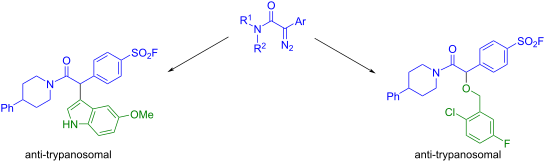
- -diazoamides 1. Finally, Pd-catalysed cross-coupling with warhead-substituted phenyl iodides gave, in low to moderate yield, the required α-diazoamide substrates 2 (referred to individually as D1–5 below). Whilst the Pd-catalysed arylation of α-diazoamides and esters is known [15][16][17][18][19], its


Synthesis, biological and electrochemical evaluation of glycidyl esters of phosphorus acids as potential anticancer drugs
Beilstein J. Org. Chem. 2025, 21, 1909–1916, doi:10.3762/bjoc.21.148
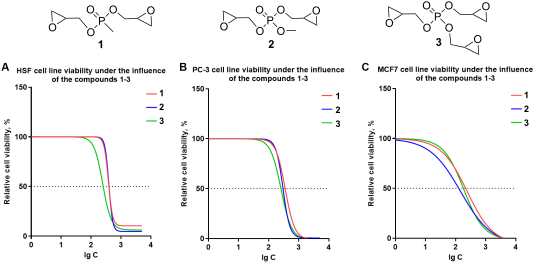
- synthetic organic chemistry and pharmaceutical applications due to their diverse biological activities. In this study, we synthesized three novel glycidyl esters of phosphorus acids 1–3 via the condensation of chlorophosphine oxides or phosphorus oxychloride with glycidol in the presence of a base
- . These findings provide important insights into the synthesis, cytotoxic activity, and biochemical reactivity of glycidyl esters of phosphorus acids, underscoring their potential as lead structures for further development in anticancer drug discovery and pharmaceutical research. Keywords: alkylating
- chemical literature regarding the biological activity (including anticancer properties) of phosphoric esters, reports on biological studies of systems based on the P=O fragment and oxirane skeletons are less common. Nevertheless, systems containing both of the mentioned structural motifs are rarely


Photoswitches beyond azobenzene: a beginner’s guide
Beilstein J. Org. Chem. 2025, 21, 1808–1853, doi:10.3762/bjoc.21.143
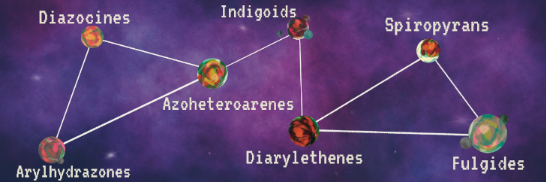
- reductive cross-coupling of benzyl halides when substituents prone to reduction (CN, esters) are present (Scheme 12C). The Ullman–Goldberg coupling of 41b with Boc-hydrazine followed by deprotection and oxidation then affords 35 [55]. Asymmetric diazocines can be synthesised by Sonogashira cross-coupling




Preparation of a furfural-derived enantioenriched vinyloxazoline building block and exploring its reactivity
Beilstein J. Org. Chem. 2025, 21, 1737–1741, doi:10.3762/bjoc.21.136

- amino alcohols derived from furfural and ʟ- or ᴅ-valinol were subjected to Torii-type ester electrosynthesis to obtain the corresponding unsaturated esters. These served as key intermediates to prepare (S)- and (R)-enantioenriched unsaturated amides by N-Alloc deprotection which induced concomitant
- applications to functional materials, pharmaceutically relevant compounds, and agrochemicals [8][9][10][11][12][13][14][15][16][17]. In our recent work, we have developed a Torii-type electrosynthesis of unsaturated esters 3a–c starting from furfural (1) and amino alcohol conjugates 2a–c [18]. The process
- oxidation in methanol in batch electrolysis conditions, providing unsaturated esters S-3d and R-3d, respectively (Scheme 2). The previously used one-reactor two-step conditions were found to be productive for the electrosynthesis of S-3d, requiring the addition of acetic acid for the intermediate spiroketal





