Search results
Search for "photophysical" in Full Text gives 270 result(s) in Beilstein Journal of Organic Chemistry. Showing first 200.
Deep-blue emitting 9,10-bis(perfluorobenzyl)anthracene
Beilstein J. Org. Chem. 2025, 21, 515–525, doi:10.3762/bjoc.21.39
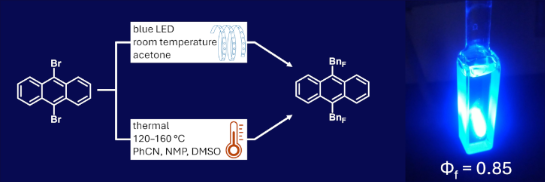
- have promising applications in optoelectronics. For example, investigation of the photophysical and electronic properties of ANTH began in the 1960s [1][2][3], and since then many new ANTH derivatives have been synthesized and explored for their use as fluorescent probes, organic semiconductors, and
- , respectively. In this work, we explored the effects of the bulky and electron-withdrawing substituent perfluorobenzyl (BnF) on the photophysical properties and on the air- and photostability of ANTH for the first time. We hypothesized that the steric bulk of BnF and the flexibility of the –CF2– moiety between
- increasing n [22]. In this work, we report the first synthesis of ANTH(BnF)n derivatives (n = 1, 2), molecular and solid-state structures, and their photophysical properties. Results and Discussion Synthesis Perfluoroalkylation of anthracene has been previously achieved by bottom-up syntheses [23], three





Unprecedented visible light-initiated topochemical [2 + 2] cycloaddition in a functionalized bimane dye
Beilstein J. Org. Chem. 2025, 21, 500–509, doi:10.3762/bjoc.21.37
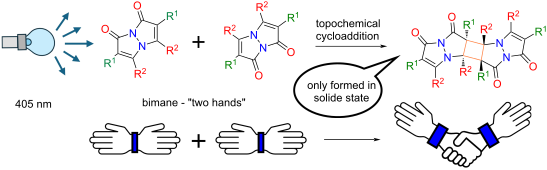
- light irradiation, undergoing rearrangement and photodegradation, so there may be a risk of degradation if irradiation using UV light is tried. Alternatively, the lack of a [2 + 2] cycloaddition of Me2B, may be due to its photophysical properties not allowing for a reaction to occur, rather than the
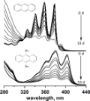
- its photophysical properties. While a pure sample of the dimer has not yet been isolated, a UV–vis spectrum of Cl2B after 1.75 hours of irradiation in DCM was recorded. The peak corresponding to the remaining monomer was observed, along with a new peak blueshifted by 47 nm compared to the parent
- 1:1 (v/v) solution which was left to evaporate at room temperature over the course of a few days. Photophysical properties Fluorescence spectra were measured on a Horiba FluoroMax Plus spectrofluorimeter. UV–vis spectra were measured on a Shimadzu UV-1900i UV–vis spectrophotometer. Absorption and


Synthesis of N-acetyl diazocine derivatives via cross-coupling reaction
Beilstein J. Org. Chem. 2025, 21, 490–499, doi:10.3762/bjoc.21.36
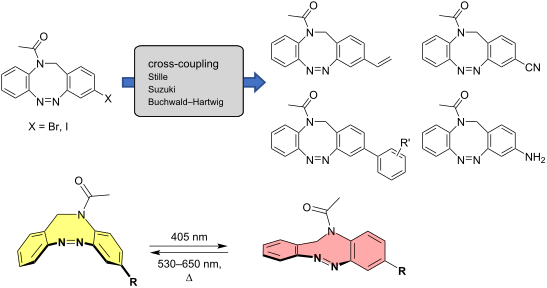
- Abstract Diazocines are photoswitches derived from azobenzenes by bridging the two phenyl rings in ortho position with a CH2CH2 group forming an eight membered (diazocine) ring. Diazocine is superior to most azobenzenes in almost all photophysical properties (switching efficiency, quantum yield
- photoswitches with superior photophysical properties. The parent ethylene-bridged diazocine shows excellent switching photoconversion between the Z and the E configurations (Γ(Z → E)385nm = 92% and Γ(E → Z)520nm > 99% in n-hexane) due to well-separated n–π*-transitions in the visible part of the electromagnetic
- ). The reverse effect was observed with amino-substituted 21. The photophysical properties of photoswitchable drugs in photopharmacology are usually determined in organic solvents. Their natural environment, however, is the aqueous phase. There is a risk of overestimating the performance of photochromic


Photomechanochemistry: harnessing mechanical forces to enhance photochemical reactions
Beilstein J. Org. Chem. 2025, 21, 458–472, doi:10.3762/bjoc.21.33

- mechanochemistry holds potential for unique opportunities for substrate activation while adopting an environmentally benign emerging technology (Figure 2, top). For example, it is well known that molecules in the solid state (or in very high concentration) often exhibit photophysical behaviors distinct from those
- light and promote mass transfer. As understanding of the methodology advances, the development of more complex synthetic strategies, including C–H, C–C, and C–heteroatom-bond formation, is expected [79]. Moreover, we anticipate that the difference in photophysical properties between organic molecules in




Unraveling aromaticity: the dual worlds of pyrazole, pyrazoline, and 3D carborane
Beilstein J. Org. Chem. 2025, 21, 412–420, doi:10.3762/bjoc.21.29
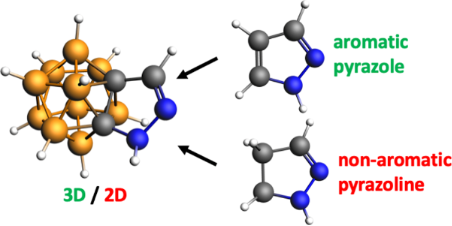
- photoinduced electron transfer [8][9]. Thanks to their notable photophysical properties, pyrazoles are applied in OLED technology [10]. Noticeably, in its ground state, pyrazole (C3H4N2) is an aromatic molecule that follows Hückel's rule, with two formal double bonds and a lone pair on one nitrogen generating


Red light excitation: illuminating photocatalysis in a new spectrum
Beilstein J. Org. Chem. 2025, 21, 296–326, doi:10.3762/bjoc.21.22

- advantageous for large-scale applications, offering enhanced safety and operational simplicity. Traditionally, research in this field has focused on metal-based photocatalysts, particularly those based on transition metals like ruthenium and osmium due to their intrinsic photophysical properties. However, with
- 4d) [30]. In a continuation of this trend, a recent study by O. S. Wenger et al. further expands the frontiers of red-light photoredox catalysis with first-row transition metals by introducing Cr(0) luminophores that exhibit photophysical properties competitive with Ru(II) and Os(II) complexes [31
- reported an upconversion efficiency of 1.8% and have demonstrated its utility in initiating blue light-dependent polymerization reactions under red-light conditions [32]. Beyond the position of transition metals in the periodic table, ligand design plays a crucial role in determining the photophysical




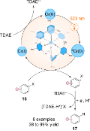

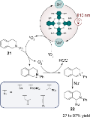
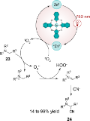

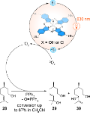










Synthesis and characterizations of highly luminescent 5-isopropoxybenzo[rst]pentaphene
Beilstein J. Org. Chem. 2025, 21, 270–276, doi:10.3762/bjoc.21.19
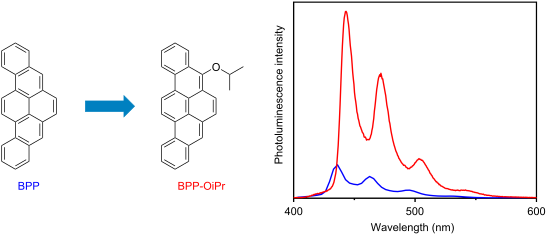
- -0495, Japan X-ray diffraction facility, Department of Chemistry, 100 E. 24th Street, The University of Texas at Austin, Austin, TX 78712, USA 10.3762/bjoc.21.19 Abstract A benzo[rst]pentaphene (BPP) substituted by an isopropoxy group (BPP-OiPr) was synthesized in a facile manner. Its photophysical
- reaction conditions to selectively obtain BPP-OiPr 3 in 55% yield from dialdehyde 1. Additionally, oxidation of BPP-OiPr 3 provided BPP-dione 4 in 70% yield. The photophysical properties of BPP-OiPr 3 and BPP-dione 4 were carefully studied, examining the solvent-polarity dependence of their optical spectra
- allow more radiative transitions. On the other hand, a broad and featureless PL spectrum with the maximum at 538 nm was observed for BPP-dione 4 in toluene with a high PLQY of 0.62, which is again significantly enhanced from that of BPP 2. To gain further insight into the photophysical properties of BPP




Effect of substitution position of aryl groups on the thermal back reactivity of aza-diarylethene photoswitches and prediction by density functional theory
Beilstein J. Org. Chem. 2025, 21, 242–252, doi:10.3762/bjoc.21.16
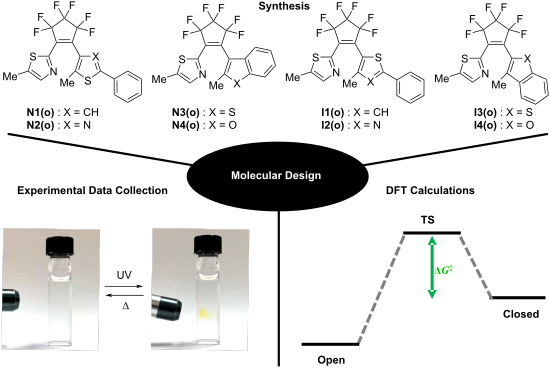
- reactivity, closely matching the experimental data. These findings offer valuable insights for the design of advanced photochromic materials with tailored thermal and photophysical characteristics. Keywords: aza-diarylethene; DFT calculation; photochromism; prediction; thermal back reactivity; Introduction
- confirmed that the colorless solution of N4(o) turned yellow upon irradiation with UV light and returned to the initial color upon removal of the irradiation. The photophysical properties of N3, N4, and I1–I4 are summarized in Table 1 together with the data of N1 and N2. Thermal back reactivity in n-hexane
- experimental values. These results contribute to the design of advanced photochromic materials with tailored thermal and photophysical properties. Experimental General Commercially available reagents were used as received for the syntheses. Solvents used for spectroscopy were of spectroscopic grade or purified


Synthesis, characterization, and photophysical properties of novel 9‑phenyl-9-phosphafluorene oxide derivatives
Beilstein J. Org. Chem. 2024, 20, 3299–3305, doi:10.3762/bjoc.20.274
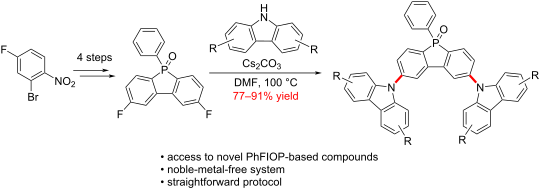
- HRMS spectrometry were in full agreement with the expected structures, and single-crystal X-ray diffraction analysis was conducted to confirm the structure of compound 7-H. Moreover, the photophysical properties of these PhFlOP derivatives were determined by UV–vis absorption and photoluminescence
- studies, revealing that their photophysical behavior can be affected by the different substituents in the donor carbazole group. Keywords: carbazole; D−A−D type; noble-metal-free system; 9‑phenyl-9-phosphafluorene oxide; photophysical properties; Introduction π-Conjugated molecular materials containing
- electrochemical studies, showing that the photophysical properties of PhFlOP depend on the nature of the electron-donating groups [31]. Later, Wu and co-workers introduced various electron donors to the PhFlOP unit to form new TADF emitters with high electroluminescence efficiency [32][33]. Despite this progress




Synthesis of acenaphthylene-fused heteroarenes and polyoxygenated benzo[j]fluoranthenes via a Pd-catalyzed Suzuki–Miyaura/C–H arylation cascade
Beilstein J. Org. Chem. 2024, 20, 3290–3298, doi:10.3762/bjoc.20.273
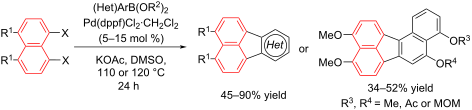
- focus of extensive research within the past two decades due to their interesting structural features, attractive photophysical properties, and diverse applications [2]. Indeed, fluoranthenes are particularly useful in supramolecular chemistry, organic electronics, and materials science [3] as


Efficient synthesis of fluorinated triphenylenes with enhanced arene–perfluoroarene interactions in columnar mesophases
Beilstein J. Org. Chem. 2024, 20, 3263–3273, doi:10.3762/bjoc.20.270
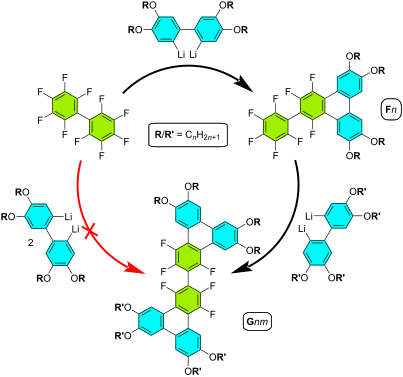
- compounds, Gnm, exhibit a rectangular columnar phase (Colrec) also over large temperature ranges from ambient up to 183 and 164 °C, respectively. The unsymmetrically alkoxy-substituted derivative, G48, also displays a Colrec over a similar temperature range. The compounds’ photophysical properties have also
- . Photophysical properties: UV–vis absorption and photoluminescence UV–vis absorption and fluorescence spectra of the synthesized fluorine polycyclic aromatic hydrocarbons Fn and Gnm were measured in solution (in various solvents) and thin film and the results are summarized in Figure 6 and Table S7 in Supporting




Advances in the use of metal-free tetrapyrrolic macrocycles as catalysts
Beilstein J. Org. Chem. 2024, 20, 3085–3112, doi:10.3762/bjoc.20.257
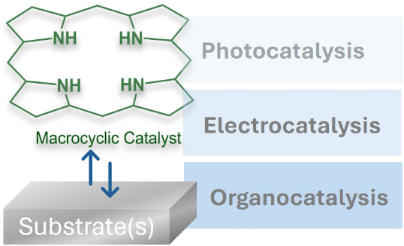
- and separation technology [3][4][5][6][7][8]. Conversely, porphyrins are connected via methine (=CH-) bridges, resulting in an 18 π-electron macrocyclic system affording macrocyclic planarity as well as unique photophysical and electrochemical properties (Figure 1b). While corroles share similarities


Tunable full-color dual-state (solution and solid) emission of push–pull molecules containing the 1-pyrindane moiety
Beilstein J. Org. Chem. 2024, 20, 3016–3025, doi:10.3762/bjoc.20.251

- 1i and 1iH+ in acidic solution. Solvatochromic properties of compound 1i. Photophysical properties of stilbazoles 1 in toluene. Photophysical properties of stilbazoles 1 in DMSO. Solid-state photoluminescence of stilbazoles 1. Supporting Information Supporting Information File 2: Synthetic procedure


Synthesis of pyrrole-fused dibenzoxazepine/dibenzothiazepine/triazolobenzodiazepine derivatives via isocyanide-based multicomponent reactions
Beilstein J. Org. Chem. 2024, 20, 2870–2882, doi:10.3762/bjoc.20.241
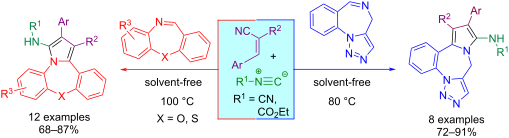
- numerous reports, quantum yield is one of the most important photophysical parameters for describing luminescent molecules and materials since high quantum efficiency is important for a wide range of applications, including displays, lasers, bio-imaging, solar cells, and accurate measurement of the quantum








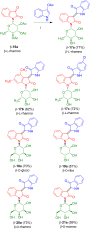
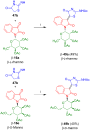
N-Glycosides of indigo, indirubin, and isoindigo: blue, red, and yellow sugars and their cancerostatic activity
Beilstein J. Org. Chem. 2024, 20, 2840–2869, doi:10.3762/bjoc.20.240
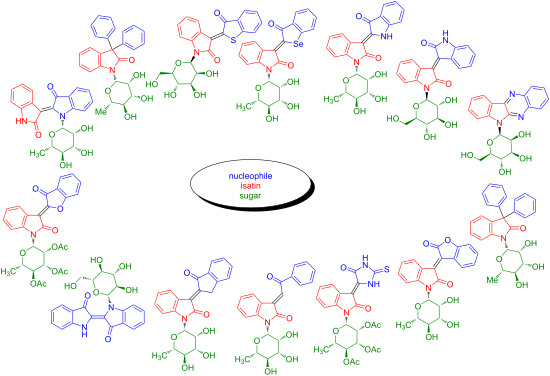
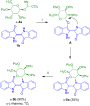
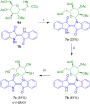
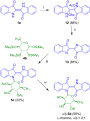
- photophysical materials. While unsubstituted (parent) indigo (1a) is not a natural product, Tyrian purple (also known as Shellfish purple) is present in nature and represents, besides indigo, an important indigo derivative used as a dye for thousands of years [4]. Several types of cancers, Alzheimer's disease










Synthesis of benzo[f]quinazoline-1,3(2H,4H)-diones
Beilstein J. Org. Chem. 2024, 20, 2708–2719, doi:10.3762/bjoc.20.228
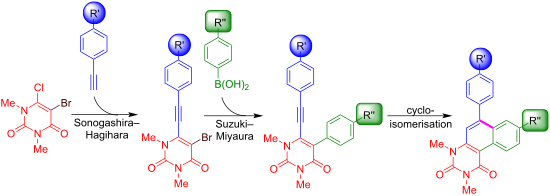
- other compounds with medicinal or photophysical properties [52][53][54][55]. Compounds A are related to the class of natural products known as coumestans, while B resembles flavins. While the medical potential of coumestans is still the subject of current research, interesting photocatalytic properties
- properties All synthesized compounds exhibit photoluminescence by excitation with UV light. Hence, we studied the photophysical properties of all obtained derivatives 5 by steady-state absorption and fluorescence spectroscopy. The influence of the substitution pattern on the photophysical properties is
- displayed in Figure 3. The corresponding photophysical data and quantum yields are described in Table 2. The analysis of the absorption spectra revealed well-resolved bands for derivatives 5a, 5d, 5f, 5g, and 5i for short wavelengths (250–300 nm). At higher wavelength (300–450 nm) broad absorption bands




Photoluminescence color-tuning with polymer-dispersed fluorescent films containing two fluorinated diphenylacetylene-type fluorophores
Beilstein J. Org. Chem. 2024, 20, 2682–2690, doi:10.3762/bjoc.20.225
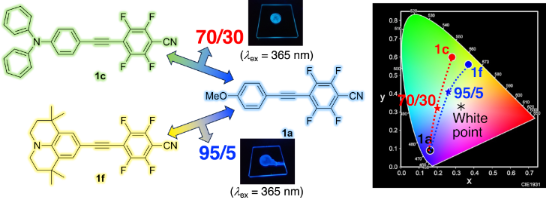
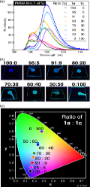
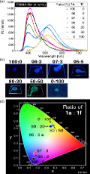
- fluorophore 1a and green–yellow fluorophore 1c PMMA dispersion films containing 1 wt % of blue fluorophore 1a and green–yellow fluorophore 1c in various weight ratios were prepared. Their PL spectra and photophysical data are depicted in Figure 4 and Table 2 summarizes the collected photophysical data. As
- photophysical data are summarized in Table 3. Unlike the PMMA film containing green–yellow fluorophore 1c, the 1 wt % PMMA film containing 1f with a tetramethyljulolidine backbone exhibited yellow PL with a λPL at approximately 534 nm and chromaticity coordinates of (0.37, 0.56). When blue fluorophore 1a and
- 10 s. For photophysical measurements, thin and smooth films were prepared by spin-coating followed by solvent evaporation. Photophysical properties The PL spectra and quantum yields were measured using a Quantaurus-QY C11347-01 absolute PL quantum yield spectrometer (Hamamatsu Photonics, Japan). The


Novel truxene-based dipyrromethanes (DPMs): synthesis, spectroscopic characterization and photophysical properties
Beilstein J. Org. Chem. 2024, 20, 2163–2170, doi:10.3762/bjoc.20.186
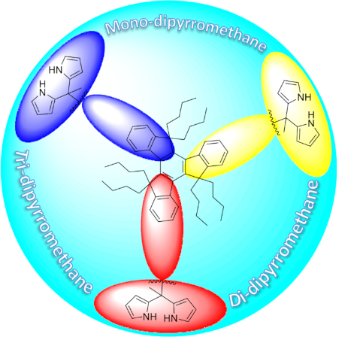
- –80%) along with their preliminary photophysical (absorption, emission and time resolved fluorescence lifetime) properties. The condensation reaction for assembling the required DPMs were catalyzed with trifluoroacetic acid (TFA) at 0 °C to room temperature (rt), and the stable dipyrromethanes were
- in addition to the stimulating photophysical properties and distinct architectures emerging from the self-assembly processes [42]. Noticeably, most extensively used DPMs belong to the 4,4-difluoro-4-bora-3a,4a-diaza-s-indacene (BODIPY), owing to their high propensity toward chemical manipulations and


Multicomponent syntheses of pyrazoles via (3 + 2)-cyclocondensation and (3 + 2)-cycloaddition key steps
Beilstein J. Org. Chem. 2024, 20, 2024–2077, doi:10.3762/bjoc.20.178

- agrochemical uses of pyrazoles [13] include insecticides [14], herbicides [15], and fungicides [16]. Furthermore, they are widely applied for the assembly of supramolecular ensembles [17] and molecular systems capable of photoinduced electron transfer [18]. Due to their pertinent photophysical properties [19




Radical reactivity of antiaromatic Ni(II) norcorroles with azo radical initiators
Beilstein J. Org. Chem. 2024, 20, 1967–1972, doi:10.3762/bjoc.20.172
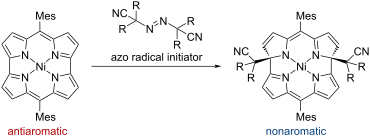
- radicals derived from azo radical initiators. The radical selectively attacked the distal α-position relative to the meso-position to construct a nonaromatic bowl-shaped structure. The photophysical and electrochemical properties of the obtained radical adducts were compared to those of the parent Ni(II
- species has remained unexplored. Here, we disclose the radical functionalization of Ni(II) norcorroles with simple and frequently used azo radical initiators to furnish nonconjugated macrocycles with bowl-shaped structures [27]. The photophysical and electronic properties of the obtained products are also
- exhibited markedly different photophysical and electrochemical properties with norcorrole 1. The intrinsic reactivities of Ni(II) norcorroles with neutral radical species were revealed by DFT calculations, where populations of the HOMO of the norcorrole unit and the spin density of the radical intermediate


A new platform for the synthesis of diketopyrrolopyrrole derivatives via nucleophilic aromatic substitution reactions
Beilstein J. Org. Chem. 2024, 20, 1933–1939, doi:10.3762/bjoc.20.169
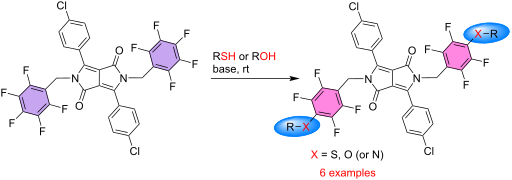
- region [3][4]. In turn, N-substituted DPP derivatives are soluble in common organic solvents, exhibit large molar extinction coefficients, Stokes shifts in the range of 10–70 nm and high fluorescence quantum yields [5][6][7]. Due to their outstanding photophysical properties, DPP-based dyes have been
- consistently displayed the protonated molecular ion [M + H]+ as the base peak. The UV–vis and fluorescence spectra of DPP derivatives 3a–f, 4a, 4d and 4f in DMF are presented in Figure 1, and their photophysical properties are summarized in Table 1. These compounds are highly fluorescent, and their UV–vis


The Groebke–Blackburn–Bienaymé reaction in its maturity: innovation and improvements since its 21st birthday (2019–2023)
Beilstein J. Org. Chem. 2024, 20, 1839–1879, doi:10.3762/bjoc.20.162
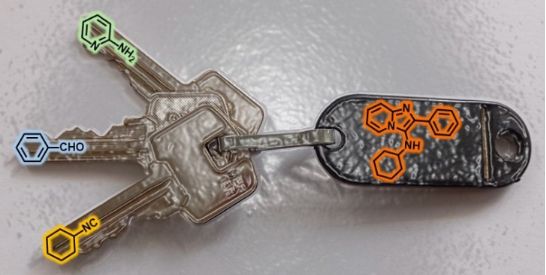
- on biological activities or photophysical properties (i.e., fluorescence) of GBB adducts. Another advantage is that, by replacing the amidine component (classically 2-aminopyridines) with other heterocycles, different scaffolds are obtained, and this is extremely efficient in diversity-oriented
- generation of new scaffolds by coupling the GBB reaction with other transformations; d) the study of the biological and pharmacological properties of these fused heterocycles; e) the study of the photophysical properties of the GBB adducts. At the end of this overview, conclusions will be drawn about the






A facile three-component route to powerful 5-aryldeazaalloxazine photocatalysts
Beilstein J. Org. Chem. 2024, 20, 1831–1838, doi:10.3762/bjoc.20.161
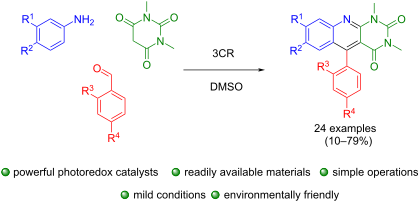
- artificial systems. Additionally, 5-deazaflavins have emerged as prospective antitumor agents [9][10]. Surprisingly, among the broad family of flavin derivatives, 5-deazaalloxazines have received less attention regarding their photophysical properties, despite their close similarity to the above-mentioned 5
- of photocatalysts by tuning their redox and photophysical properties. Thus, we successfully developed a one-pot, three-component synthetic method with those substituents in 5-aryldeazaflavins 1 on the deazaisoalloxazine core or on the phenyl ring by condensation of N-substituted anilines, aromatic
- methyl substituents were chosen to enhance the photophysical properties and photostability of the desired photocatalysts. It should be noted that our method encountered limitations when applying strongly deactivated anilines substituted with CF3 or acetyl groups, with no formation of 5




Photoswitchable glycoligands targeting Pseudomonas aeruginosa LecA
Beilstein J. Org. Chem. 2024, 20, 1486–1496, doi:10.3762/bjoc.20.132
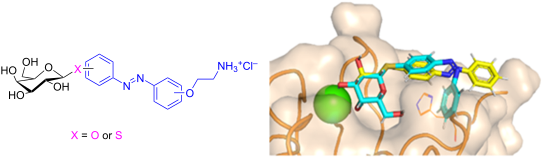
- possess excellent photophysical properties and strong affinity for targeted LecA with Kd values in the micromolar range. Analysis of the thermodynamic contribution indicates that the Z-azobenzene isomers have a systematically stronger favorable enthalpy contribution than the corresponding E-isomers, but
- respectively 71%, 41%, and 37% total yields (Scheme 1). Photophysical characterization The photoswitching properties of galactosyl azobenzenes 1–5 were realized in water or in Tris buffer containing 5 to 10% DMSO, in accordance with the biophysical evaluation conditions by using ITC. All these compounds
- 1). All the photophysical properties of compounds 1–5 are summarized in Table 1 (spectra are shown in Figure S1–S24 in Supporting Information File 1). Concerning the meta-substituted azobenzene 2, a 30 nm blue shift is observed for the π→π* transition (λmax = 321 nm) as well as a lower absorption


Synthesis and optical properties of bis- and tris-alkynyl-2-trifluoromethylquinolines
Beilstein J. Org. Chem. 2024, 20, 1246–1255, doi:10.3762/bjoc.20.107
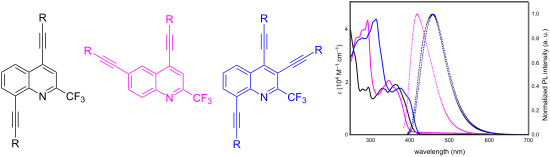
- and applied to palladium-catalysed Sonogashira reactions. Optimised reaction conditions allow the synthesis of various bis- or tris-alkynylated products in one step. Products were generally obtained in high yields and intensive fluorescence. The photophysical properties of selected compounds were