Search results
Search for "reactions" in Full Text gives 3232 result(s) in Beilstein Journal of Organic Chemistry. Showing first 200.
Preparation of 3-(alkylamino)imidazo[1,2-a]pyridine-2-carbaldehydes via Kornblum oxidation and unexpected ring-opening reactions of the corresponding alcohols under oxidative conditions
Beilstein J. Org. Chem. 2026, 22, 763–770, doi:10.3762/bjoc.22.58
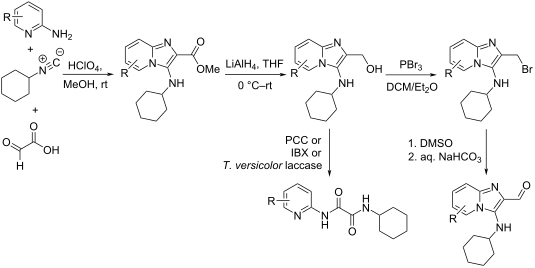
- oxidation conditions, reaction in the presence of DMSO and NaHCO3 under conventional or microwave heating to ≈100 °C, were applied to the bromides derived from these alcohols by treatment with PBr3, resulting in the desired aldehydes which successfully underwent reductive amination reactions with 2
- derivatives have been found to be of interest in the development of organic materials with interesting properties [11][12]. The importance of imidazo[1,2-a]pyridines is evidenced by the plethora of recent review articles covering methods for their preparation [13][14][15][16] and functionalisation reactions
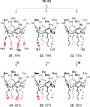
- similar reactions on alcohols 17b–d led to the corresponding ring-opened products 18b–d (Scheme 4). The ring-opened products were isolated in yields of 26–36%, with loss of one carbon atom occurring (-CH2OH). To test whether C-2 decarboxylation could have immediately preceded ring-opening, decarboxylated


Rongalite addition to dienones: diastereoselectivity in cyclic sulfone synthesis; stereochemical rationalization and prospects as a general conjugate nucleophile
Beilstein J. Org. Chem. 2026, 22, 742–752, doi:10.3762/bjoc.22.56

- over the last two decades [5][6]. Modified reagents in which the Rongalite hydroxy group has been protected have allowed for consecutive and different reactions at sulfur, giving access to a range of unsymmetrical sulfones [18][19]. Although sulfur nucleophiles often participate in conjugate additions
- (indicated). There is nothing to suggest from the calculations that an inherent reactivity problem prevents the initial addition of Rongalite to the enone, especially given that the singly electrophilic 2,6-dimethylbenzalacetone is known to participate in reactions with conjugate nucleophiles [25]. It is
- work, by which we were able to locate transition states for reactions to give trans-12a and the unobserved cis-12b (Figure 4). The activation energy difference to reach TS-12a, leading to 12a and TS-12b, leading to 12b was found to be a significant 4.7 kcal/mol in favor of TS-12a (see Supporting


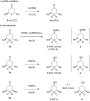


Synthesis of heterocycles based on azomethine ylides from α-amino acids (or amines) and carbonyl compounds
Beilstein J. Org. Chem. 2026, 22, 705–741, doi:10.3762/bjoc.22.55
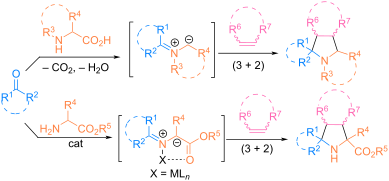
- derivatives with multiple chiral centers under high regio- and stereocontrol. Currently, strategies using azomethine ylides based on imino esters or α-amino acids with a variety of cyclic and acyclic carbonyl compounds dominate. Enantioselective (3 + 2) cycloaddition reactions of azomethine ylides obtained
- from imino esters, catalyzed by chiral Cu(I,II) and Ag(I) complexes, are widely used. Reactions using α-amino acids proceed, in most cases, without the use of catalysts, with high yields and high stereoselectivity. Electrophilic alkenes of various structures, (hetero)aromatic olefins and benzofulvenes
- compounds; catalysis; (3 + 2) cycloaddition; decarboxylation; dipolarophiles; iminoesters; polycyclic compounds; spirocyclic compounds; stereoselectivity; Introduction The 1,3-dipolar cycloaddition is one of the most popular pericyclic reactions in organic synthesis, in which a dipole molecule interacts


Anti-invasive and cytotoxic evaluation of a (+)-pinoresinol-based semisynthetic library against glioblastoma
Beilstein J. Org. Chem. 2026, 22, 691–704, doi:10.3762/bjoc.22.54
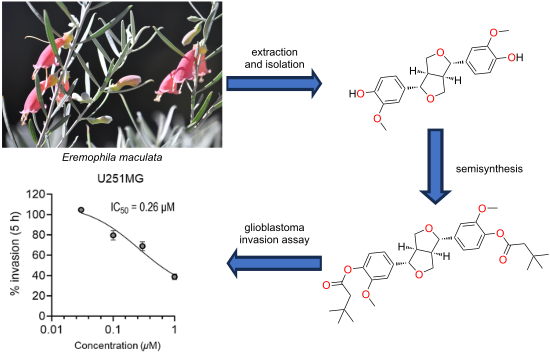
- vitro cytotoxicity and anti-invasive properties using two glioblastoma cancer cell lines [23][24]. During our semisynthetic studies, several reactions including methylations, halogenations, and acylations were performed, leading to the generation of five analogues in varying yield (10−81%) and high



Harnessing light energy with molecules
Beilstein J. Org. Chem. 2026, 22, 680–682, doi:10.3762/bjoc.22.52
- singlet-state photoredox catalyst in the sulfonylation/arylation of styrenes and as a triplet sensitizer in energy transfer catalysis. In addition to the photoredox contribution mentioned above, this thematic issue contains two publications on photochemical reactions beyond photoisomerizations. In the
- article by Wahl and co-workers [21], ring-opening of photogenerated azetidinols was used as a strategy for the convenient synthesis of aminodioxolanes. Photochemical denitrogenation reactions of bicyclic azoalkanes present a way to prepare strained bicyclic compounds. Further, Gomes and Lopez [22] report
Photoorganocatalytic trifluoromethylation of (het)arenes in green conditions
Beilstein J. Org. Chem. 2026, 22, 662–671, doi:10.3762/bjoc.22.50
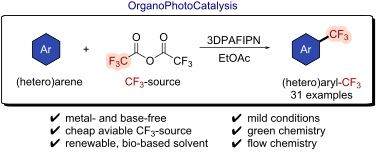
- -catalyzed [8], organic photocatalyst-mediated, or electrochemical transformations [9], and also include continuous-flow processes [6][10][11][12][13]. Given that photocatalytic reactions align with the principles of green chemistry, particularly energy efficiency and the use of catalytic pathways, such
- solvent. Results and Discussion To identify reaction conditions consistent with the principles of green chemistry, we carried out an optimization study using different organic photocatalysts and solvents. The reactions were performed under an argon atmosphere in anhydrous solvents, employing 1,3,5
- trifluoromethylated product was high (74% for 13), whereas the para-substituted analogue provided only 18% yield (14). To further investigate the influence of substituent position on substrate reactivity, reactions with dialkylanisoles were examined. For meta-methylanisoles bearing an additional methyl group at the




Hydrogen production from formic acid catalyzed by NHC–Cu complexes
Beilstein J. Org. Chem. 2026, 22, 620–627, doi:10.3762/bjoc.22.48
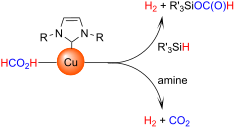
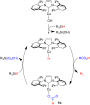
- ]. Finally, a Cu(I)–formato complex able to promote FA dehydrogenation in the absence of any additive was very recently reported by Berthet, Cantat and co-workers [48]. During the past decades, NHC–Cu complexes have shown to be efficient catalysts in a plethora of reactions. Indeed, they guarantee better
- ), almost 2 equivalents of gas were produced from 1 equivalent of formic acid within 3 hours. It has to be noted that, since all reactions were conducted in solution, all copper complexes must be considered as monomeric. In fact, dimeric Cu–H and Cu–formato are generally observed only in the solid state [53
- silicon compounds was observed in all reactions (see Supporting Information File 1, Figure S3). Noteworthy, by replacing formic acid with acetic acid only 1 equivalent of hydrogen was released. The different reactivity towards the dehydrogenative coupling of the silyl carboxylate species can be due to



Computational prediction of C–H hydricities and their use in predicting the regioselectivity of electron-rich C–H functionalisation reactions
Beilstein J. Org. Chem. 2026, 22, 603–610, doi:10.3762/bjoc.22.46
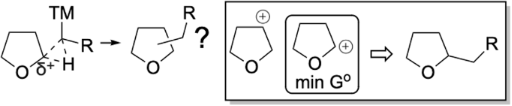
- regioselectivity of electron-rich C–H functionalisation reactions. The workflow was benchmarked against 35 experimentally determined C–H hydricities in DMSO, yielding a mean absolute error (MAE) of 4.43 kcal/mol and a root mean squared error (RMSE) of 5.45 kcal/mol. Leveraging this approach, we generated a dataset
- of 3278 C–H sites across 740 molecules to train a machine learning (ML) model based on CM5 atomic charge descriptors, achieving an MAE of 2.30 kcal/mol and an RMSE of 3.74 kcal/mol relative to QM-computed hydricities. The method was further applied to 250 hydride transfer-like reactions, including C
- ten representative reactions, surpassing BDEs in most cases. These findings highlight hydricity as a complementary and, in some cases, superior descriptor for guiding regioselectivity predictions in electron-rich C–H functionalisation. The model is made available at regioselect.org, together with a


![[Graphic 6]](/bjoc/content/inline/1860-5397-22-46-i8.svg?max-width=637&scale=1.18182)


Regioselective approach to 5-arylsulfonylisoxazoles and their antimicrobial activity
Beilstein J. Org. Chem. 2026, 22, 592–602, doi:10.3762/bjoc.22.45
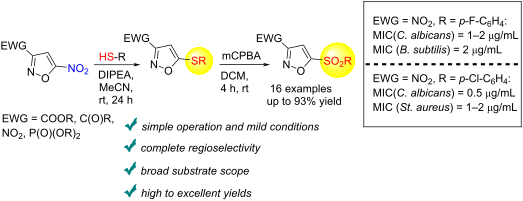
- nucleophilic aromatic substitution with thiophenols followed by oxidation with m-chloroperbenzoic acid (mCPBA). The scope of the reactions was explored, demonstrating high yields across a variety of functional groups and substituents. Optimized conditions enabled selective oxidation of thioaryl groups to
- nitrile oxides in cycloaddition reactions, complete control of regioselectivity without metal catalysis is not always achievable. Another problem with this method is the tendency of nitrile oxides to form dimers (furoxanes), which entails a decrease in the yield of isoxazoles. Due to dimerization, nitrile
- the SNAr reactions with 3-nitro- and 3-methoxycarbonyl-substituted 5-nitroisoxazoles 1a and 1g. The obtained results revealed that the nature of the substituents in the isoxazole cycle as well as in the aromatic ring of thiophenols does not have a noticeable influence on the reaction yields. The SNAr


Design and synthesis of an erdafitinib-based selective FGFR2 degrader
Beilstein J. Org. Chem. 2026, 22, 583–591, doi:10.3762/bjoc.22.44
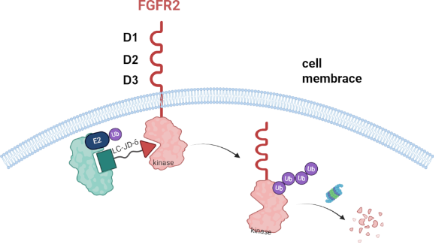
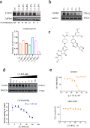
- growth factor receptor 2 (FGFR2) to overcome the issues of drug resistance and adverse reactions associated with traditional inhibitors in the treatment of FGFR2-driven tumors. Erdafitinib was employed as the targeting ligand, and its aliphatic amine site was conjugated with a CRBN E3 ligase ligand to



Continuous-flow carbonyl hydrogenation under subatmospheric to atmospheric hydrogen pressure enabled by robust heterogeneous Pt–Fe catalysts
Beilstein J. Org. Chem. 2026, 22, 575–582, doi:10.3762/bjoc.22.43
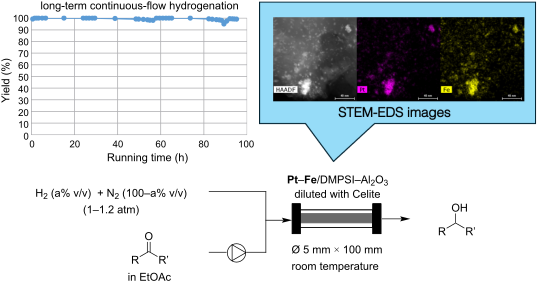
- enhanced catalytic performance could be achieved in case of continuous-flow hydrogenation reactions using a gas–liquid–solid catalyst-packed column reactor, in which both a liquid substrate and hydrogen gas can directly interact with the catalytically active sites of the heterogeneous catalyst at an


Kinetic resolution of racemic planar-chiral vinylcymantrenes by molybdenum-catalyzed asymmetric metathesis dimerization
Beilstein J. Org. Chem. 2026, 22, 568–574, doi:10.3762/bjoc.22.42
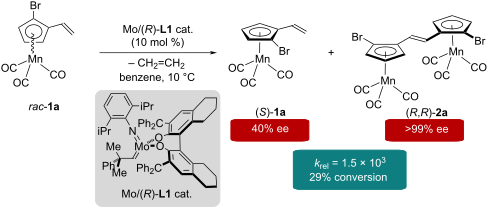
- or Mo/(R)-L3 discriminate the two enantiomers in rac-1 efficiently to provide a mixture of the corresponding AMD product (S,S)-2 and unreacted antipodal substrate (R)-1 with the krel values of up to 1.5 × 10³. The AMD/KR reactions of rac-1 were highly diastereoselective: under the optimized
- examined in the AMD/KR studies, and the results are summarized in Table 1. At the outset, the optimization of the reaction conditions, including a proper choice of chiral molybdenum-alkylidene precatalysts, was examined using rac-1a as a prototypical substrate. The AMD/KR reactions were conducted in
- , entry 5). On the other hand, the effects of lowering the temperature were minimal in the reactions using Mo/(R)-L3 (Table 1, entries 6 and 7). The optimized conditions as in entries 4 and 6 were applied to the AMD/KR reactions of rac-1b and 1c as well. The AMD/KR of rac-1b using Mo/(R)-L1 proceeded with


Experimental and DFT studies on the regioselective methanolysis of 5-azido-9-oxabicyclo[6.1.0]nonan-4-yl 4-nitrobenzoate isomers
Beilstein J. Org. Chem. 2026, 22, 547–556, doi:10.3762/bjoc.22.40
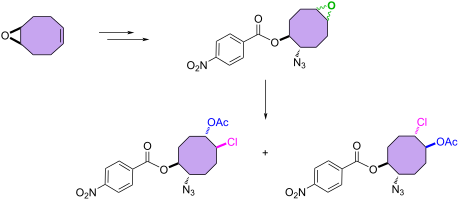
- ][13][14][15][16][17][18][19]. The ring-opening reactions of bicyclic epoxides are of significant importance and scientific interest due to their high ring strain, their strategic role in the construction of complex molecular architectures, and their utility in the synthesis of natural products


Get a better glimpse on sequential photoreactions of trisnorbornadienes with 19F NMR spectroscopy
Beilstein J. Org. Chem. 2026, 22, 527–534, doi:10.3762/bjoc.22.38
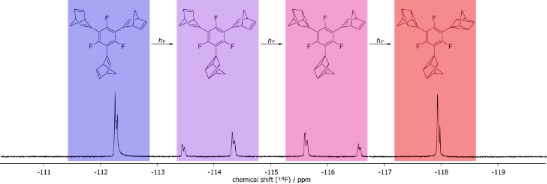
- controlled by light [1][2][3][4]. To add to that, the photochromic reaction allows to convert the energy of the applied light into chemical energy, which can thus be stored and eventually released on demand as heat in the back reaction. Therefore, photochromic reactions constitute the centerpiece of the
- bis- and trisnorbornadienes are promising lead structures for further development of more efficient MOST materials, a detailed investigation of the photochemical reactions is necessary. However, such studies of multichromophore photoreactions are often difficult, because the distinct reaction steps
- . This observation likely indicates the thermally induced retro-Diels–Alder reaction of the initially formed norbornadiene units and presumably subsequent reactions of the primary intermediates under these conditions. This unfavorable property may also be caused by the ortho-fluoro substituents as it was


Modern synthetic pathways towards eribulin and its subunits
Beilstein J. Org. Chem. 2026, 22, 495–526, doi:10.3762/bjoc.22.37
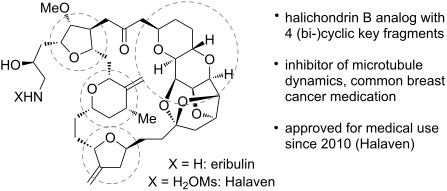
- reactions [76][77] for the assembly of fragment 45 (Scheme 6) [78]. Here, 40 and 42 served as the substrates for the allene-Prins reaction towards 43. Notably, the Bz-derivative of 40, 41, served as a starting point for a corresponding halichondrin B analog. The stereoselective course of this cyclization is
- 116’s double bond and following oxy-Michael reaction to the target compound 117. In total, 117 was obtained in a yield below 1% via the 17-step sequence, mainly due to mediocre yields (partially due to unselective reactions) in steps c→g. In the following year, Krishna and co-workers used an enzymatic
- . Scaling up the Grubbs metathesis of the first route (Scheme 10, step (h) i.) led to an increasement of dimer yield derived from cross metathesis reactions. Therefore, by the replacement with the Rh(I)-catalyzed cyclization performed herein, this drawback is circumvented and the reactions were performed








Recent advances in the stereoselective synthesis of distal biaxially chiral molecules
Beilstein J. Org. Chem. 2026, 22, 461–479, doi:10.3762/bjoc.22.34
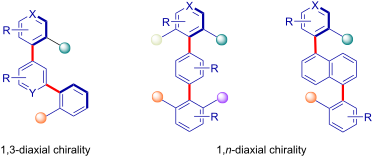
- (Scheme 13) [29]. The reactions were carried out under mild conditions and required only low catalyst loading. The key to achieving high enantioselectivity lies in the stereoselective synthesis of the starting compounds which relies on polar–π interactions between an aryl component containing a highly
- first enantioselective C–H amination of arenes catalyzed by a chiral phosphoric acid. Thus, this nucleophilic aromatic substitution reaction not only enables the synthesis of compounds bearing two chiral N-aryl axes but also provides a viable alternative to metal-catalyzed C–N cross-coupling reactions
- . Soon after, Shibata and co-workers developed a cycloisomerization strategy that generated various axially chiral polycyclic aromatic hydrocarbons (PAHs) 70 through bond-cleavage followed by successive cyclization reactions with excellent yields and enantioselectivity (Scheme 19) [58]. In 2020, Miller


Structural reassignment of compound 968, an allosteric glutaminase inhibitor
Beilstein J. Org. Chem. 2026, 22, 455–460, doi:10.3762/bjoc.22.33
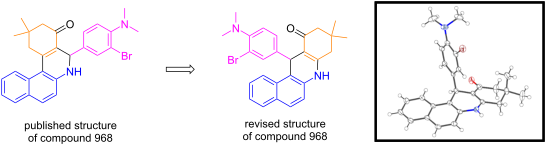
- unrealized. This result places the cyclocondensation reaction that generates compound 968 within a family of three-component reactions of 1,3 dicarbonyl compounds, an aryl aldehyde, and various 1,3 di-nucleophiles (Figure 4). These reactions proceed by an aldol condensation between the dicarbonyl and
- aldehyde, followed by conjugate addition and cyclo-condensation with a 1,3 dinucleophile. Members of this reaction family are variations on the Biginelli and Hantzch reactions, where the dinucleophile is urea and the ammonia adduct of a second equivalent of the dicarbonyl, respectively [31]. A similar
- pipetting up and down and incubated at room temperature for seven minutes. The reactions were quenched by addition of cold 3 M HCl (10 µL). An aliquot (10 µL) of each quenched GAC reaction was added to 190 µL of a glutamate dehydrogenase reaction which consisted of a solution containing Tris-HCl (100 mM, pH


Concept-driven strategies in target-oriented synthesis
Beilstein J. Org. Chem. 2026, 22, 451–454, doi:10.3762/bjoc.22.32

- radical cyclization (prostaglandin D2 metabolite, Jun Huang et al.), reductive cyclization cascade (aglacin B, Jina Xiao, Yu Peng et al.), electrochemical cyclization (review, Bin Li, H. N. C. Wong, Xiao-Shui Peng et al.), photochemical reactions (review, Shao-Min Fu, Bo Liu et al.), carbene insertion


A facile and practical method for the synthesis of trans-(±)-taxifolin and its derivatives via Darzens reaction
Beilstein J. Org. Chem. 2026, 22, 443–450, doi:10.3762/bjoc.22.31
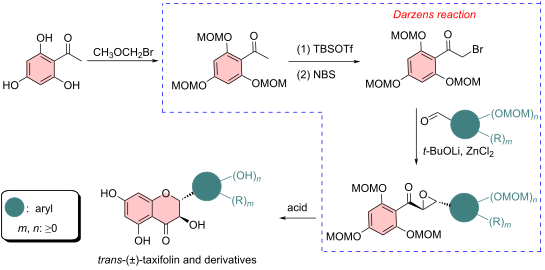
- further confirmed the formation of a single product. To demonstrate the generality of the optimized reaction, compound 2 was reacted with a variety of aromatic aldehydes with different substituents (Scheme 2). The results showed that all reactions were efficient affording the α,β-epoxycarbonyl products


Synthesis and anti-cancer activity of naphthalimide–organylselanyl conjugates
Beilstein J. Org. Chem. 2026, 22, 416–435, doi:10.3762/bjoc.22.29
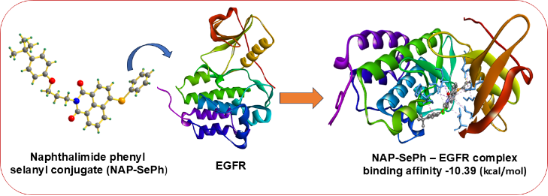
- transformation. The phenyl selenolate is widely used in organoselenium chemistry as a source of selenium due to its high reactivity toward halogenated substrates and excellent chemical stability. The n-octyl selenolate is comparatively less explored but readily undergoes substitution reactions with halogenated




Cone p-aminocalix[4]arenes enriched with ‘clickable’ alkyne or azide functionalities
Beilstein J. Org. Chem. 2026, 22, 399–415, doi:10.3762/bjoc.22.28
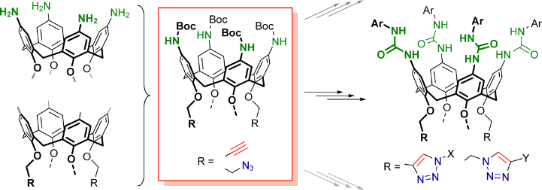
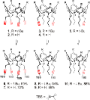
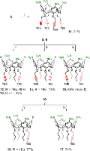
- ]arenes containing four amino groups at the wide rim and one, two or four propargyl or 2-azidoethyl groups at the narrow rim of the macrocycle, which can be used for expanding functionalization of the calixarene core in the well-known amine acylation (or similar reactions) and CuAAC ‘click’ reactions. Two
- excess benzyl azide or phenylacetylene, taken as representatives, under copper(I) catalysis, resulting in the narrow-rim triazolated macrocycles. By removing the Boc protecting groups and involving the free amino groups in reactions with p-tolyl isocyanate, a series of narrow-rim triazolated
- structures of calixarenes and related macrocycles [75][76][77][78]. Many of them relied on the introduction of propargyl or azidoalkyl groups to the phenolic oxygen atoms for synthesizing the CuAAC-ready calixarene cores. Within this area of research, our studies on the CuAAC reactions applied to cone






Design, synthesis and biological evaluation of 2,5-diaryloxazolo[4,5-d]pyrimidin-7-ylamines as selective cytotoxic agents against HeLa cells
Beilstein J. Org. Chem. 2026, 22, 390–398, doi:10.3762/bjoc.22.27
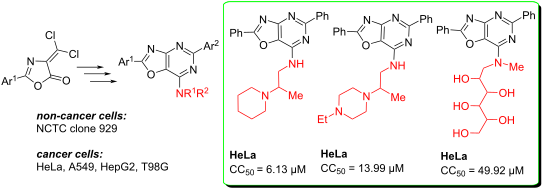
- -glucamine). Compounds II were obtained by the sequence of reactions starting from available 2-aryl-4-dichloromethylene-1,3-oxazol-5(4H)-ones I [18]. Thus, treatment of compounds I with arylamidine hydrochlorides in the presence of triethylamine, followed by heating with pyridine, afforded the
- above analysis, compounds 7 and 9 may prove to be more promising agents for further development as a drug candidate against human cervix adenocarcinoma. Experimental Chemistry All reagents and solvents used in synthetic procedures were purchased from Sigma-Aldrich and used as received. The reactions


Dialkylaminoalkylation of β-ketosulfones via ring-opening of 3-sulfonylpyrrolidines
Beilstein J. Org. Chem. 2026, 22, 383–389, doi:10.3762/bjoc.22.26
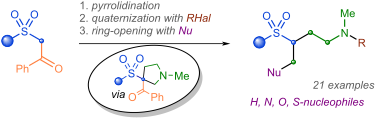
- ][18][19]. Among the various types of aminoalkylations, aminomethylation reactions have been the most extensively studied and applied significantly to aromatic [20] and CH-acidic compounds [21], alkanes [22][23], olefines [24][25] and electron-withdrawing alkenes [26][27]. This rapidly growing research
- 4q–t in 61–87% yields. It should be noted that the leaving 3-benzoyl group formed a methyl benzoate when the reactions were performed in methanol. We also observed the formation of S-butyl benzothioate in the reaction mixture in case of 4q. These by-products were readily removed by an acid-base




Recent advances in the cleavage of non-activated amides
Beilstein J. Org. Chem. 2026, 22, 352–369, doi:10.3762/bjoc.22.23
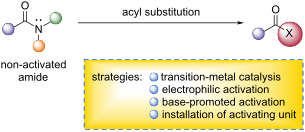
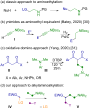
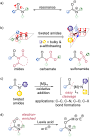
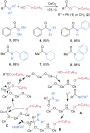
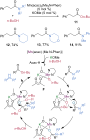
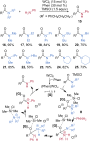
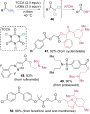
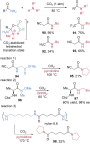
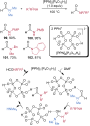
- tungsten, exhibiting a broad substrate scope including hindered amides (Scheme 5) [49]. Using a catalytic amount of WCl6 in combination with 1,10-phenanthroline (Phen), various types of tertiary amides 16–25 were tested for the transamidation with anilines. All reactions furnished the anilide products 15
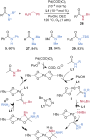
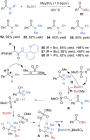
- transition-metal-catalyzed asymmetric C–H activation reactions as a directing group, thus necessitating an efficient method for the cleavage of 8-aminoquinoline-derived amides. The role of Me2SO4 in this transformation was elucidated through DFT calculations. Methylation of the carbonyl oxygen by Me2SO4
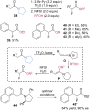
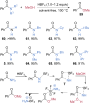
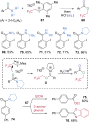
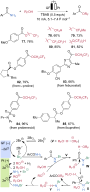
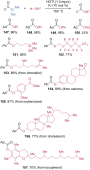
- bioactive compounds underwent smooth esterification with TFE to give the corresponding 2,2,2-trifluoroethyl esters 82–85 in high yields. To elucidate the reaction mechanism, cyclic voltammetry experiments, control reactions, and DFT calculations were conducted. At the anode, bromide ions are oxidized to










Synthesis of tricyclic fused pyrrolidine nitroxides from 2-alkynylpyrrolidine-1-oxyls
Beilstein J. Org. Chem. 2026, 22, 344–351, doi:10.3762/bjoc.22.22

- literature data on reactivity of 5-azidopentyne derivatives in intramolecular Huisgen cycloaddition reactions are contradictory. Some authors successfully obtained 5-azidopentyne derivatives upon nucleophilic substitution at 80 °C in DMF, and additional heating at 170 °C was necessary for cyclization to