


Search results
Search for "terminal" in Full Text gives 1001 result(s) in Beilstein Journal of Organic Chemistry. Showing first 200.
Effect of a photoswitchable rotaxane on membrane permeabilization across lipid compositions
Beilstein J. Org. Chem. 2025, 21, 2498–2512, doi:10.3762/bjoc.21.192
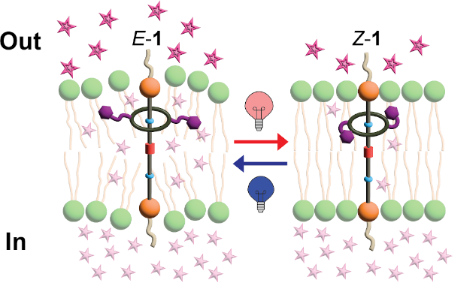
- -methyltriazolium (MTA) group. The amphiphilic spacer carries an ortho-dimethoxybenzene group on each side as stoppers to prevent the macrocycle from slipping off. These stoppers are connected to terminal polyethylene glycol (PEG) chains designed to interact with the membrane–water interface (Figure 1). Effect of




An Fe(II)-catalyzed synthesis of spiro[indoline-3,2'-pyrrolidine] derivatives
Beilstein J. Org. Chem. 2025, 21, 2383–2388, doi:10.3762/bjoc.21.183
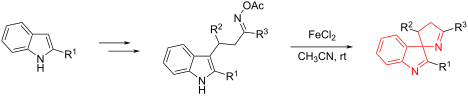
- yield substituted spiropyrrolidines (Scheme 1, path b) [9]. Additionally, an organocatalytic, enantioselective Michael addition/cyclization sequence of 3-aminooxindole Schiff bases with terminal vinyl ketones, catalyzed by a cinchona-derived base, has been reported to afford chiral spiroindolylpyrroles




Rotaxanes with integrated photoswitches: design principles, functional behavior, and emerging applications
Beilstein J. Org. Chem. 2025, 21, 2345–2366, doi:10.3762/bjoc.21.179

- , thereby avoiding the terminal cationic sites [25]. The shuttling is restored by the thermal reaction that regenerates the neutral acridane [24][25][26]. The same group also demonstrated that similar rotaxanes can be incorporated onto gold nanoparticles and retain their photoreactivity and switching
- an acyclic Hamilton-like receptor with terminal anthracene moieties on both ends. Therefore, upon irradiation with light, the anthracene undergoes photodimerization, forming a macrocycle and capturing the axle to afford the [2]rotaxane. Notably, the photoclipping approach is thermally reversible


Comparative analysis of complanadine A total syntheses
Beilstein J. Org. Chem. 2025, 21, 2334–2344, doi:10.3762/bjoc.21.178
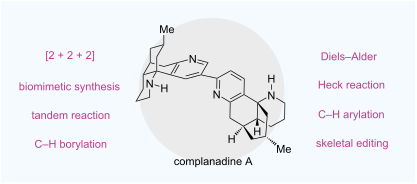
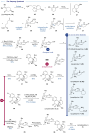
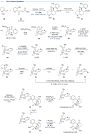
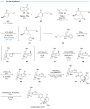
- Scheme 5, the Dai synthesis starts with compound 58 which can be prepared from (+)-pulegone in three steps or via an organocatalyzed tandem sequence in one step. The terminal olefin of 58 was then converted to a primary azide via an anti-Markovnikov hydroazidation reaction with a combination of 59 and
- TMSN3 recently developed by Xu and co-workers [34]. Mukaiyama conjugate addition between 60 and 61 promoted by Tf2NH followed by a one-pot enol ether hydrolysis gave 62 as a mixture of inconsequential stereoisomers. Subsequent oxidative cleavage of the terminal olefin of 62 using ozonolysis followed by



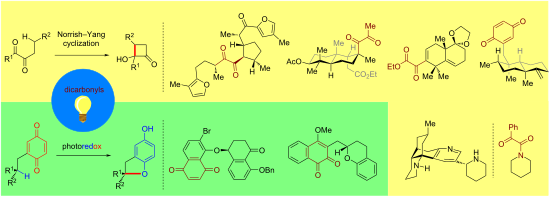
Recent advances in Norrish–Yang cyclization and dicarbonyl photoredox reactions for natural product synthesis
Beilstein J. Org. Chem. 2025, 21, 2315–2333, doi:10.3762/bjoc.21.177
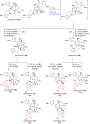
- , followed by diastereoselective α-alkylation, produced 38. A Wittig reaction and subsequent deketalization converted the ketone in 38 to the terminal alkene 39, allowing for subsequent sequential chemoselective hydrogenations: first, hydrogenation of the exo-olefin using Wilkinson’s catalyst proceeded with




Enantioselective radical chemistry: a bright future ahead
Beilstein J. Org. Chem. 2025, 21, 2283–2296, doi:10.3762/bjoc.21.174
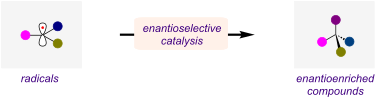
- applied in the development of enantioselective polyene cyclizations, which demonstrated the power of the catalytic strategy. In the presence of a chiral amine catalyst 16 (Scheme 3) and the mild oxidant Cu(OTf)2, polyenes with a terminal aldehyde group underwent intramolecular cyclizations affording
- functionalization of the terminal carbon atom of the silyl polyenolate. In the reaction of silyl tetraenol ether 47, selective reaction at the η position occurred, and the product 48 was obtained in 78% yield and 96% ee. Conclusion This perspective highlights important contributions in the area of enantioselective


Pathway economy in cyclization of 1,n-enynes
Beilstein J. Org. Chem. 2025, 21, 2260–2282, doi:10.3762/bjoc.21.173
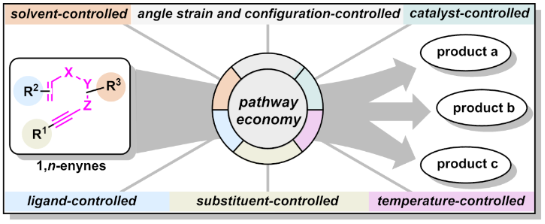
- terminal alkyne proceeded via a gold(I)-catalyzed propargyl-Claisen rearrangement, generating a β-allenic intermediate 35. This intermediate underwent a Markovnikov-type nucleophilic addition followed by a 5-exo-trig cyclization to stereoselectively construct the furo[3,2-b]furan bicyclic framework 36
- al. (Scheme 11) [18]. The pathway selectivity was regulated by modulating substituents on the terminal alkyne. When the alkyne was unsubstituted, the vinylidene intermediate 48 was generated via a 5-exo-dig cyclization, which subsequently underwent protonolysis to yield the bicyclo[3.2.1]oct-2-ene
- 2021, the Shibata group reported a gold-catalyzed ring isomerization strategy to synthesize medium-sized nitrogen heterocycles (Scheme 12) [19]. The seven-membered dibenzo[b,d]azepine and eight-membered dibenzo[b,d]azocine frameworks were successfully obtained through the modulation of alkyne terminal


Research towards selective inhibition of the CLK3 kinase
Beilstein J. Org. Chem. 2025, 21, 2250–2259, doi:10.3762/bjoc.21.172
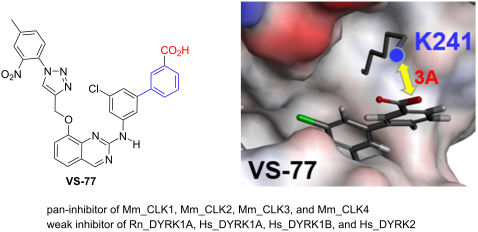
- indicated the important role of one residue located N-terminal to the DFG motif (called DFG-1). In this particular position, CLK3 has a small alanine, while the others have a bulkier valine. This offers a rationale to explain in particular why most, if not all, known inhibitors have lower affinity for CLK3
- amine in terminal position. Based on this, our strategy was to design new inhibitors with introduction, in their terminal part, of an acid group which could perform an extra hydrogen bond or a salt bridge with lysine 241 and therefore could be specific to CLK3. Towards this goal we started from our
- addition of the terminal acid significantly reinforces the interaction of our new molecules with CLK3, probably through a salt bridge with lysine 241. Logically, the corresponding esters are found to be inactive. Finally, in order to complete our profiling of VS-77, we then measured its activity against


A chiral LC–MS strategy for stereochemical assignment of natural products sharing a 3-methylpent-4-en-2-ol moiety in their terminal structures
Beilstein J. Org. Chem. 2025, 21, 2243–2249, doi:10.3762/bjoc.21.171
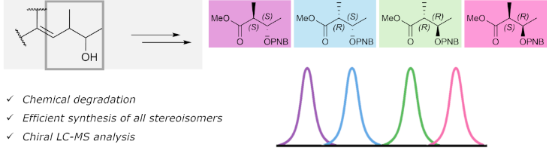
- A terminal 3-methylpent-4-en-2-ol (MPO) moiety is a common structural feature in various polyketide natural products. Stereochemical assignments of this moiety have mainly relied on computational analyses of NMR, ECD, and specific rotation data. However, none of these approaches can be applied to
- all compounds. In this study, we developed a method to determine the absolute configuration of the terminal MPO moiety with high accuracy and sensitivity by a combination of chemical degradation, chemical synthesis, and chiral LC–MS analysis. The applicability of this method was demonstrated through
- terminal position of various polyketide natural products such as a series of azaphilones including chaetomugilins [14], chaetoviridins [14][15], and some other α-pyrone polyketides [16][17][18] (Figure 1). Among the available strategies for elucidating the stereochemistry of MPO, X-ray crystallographic


Pd-catalyzed dehydrogenative arylation of arylhydrazines to access non-symmetric azobenzenes, including tetra-ortho derivatives
Beilstein J. Org. Chem. 2025, 21, 2234–2242, doi:10.3762/bjoc.21.170
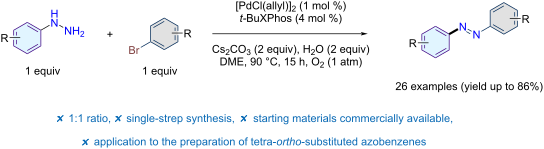
- sterically tuned substrates promotes selective N-arylation at the terminal nitrogen. The protocol tolerates a wide range of functional groups and enables the synthesis of well-decorated azobenzenes, including tetra-ortho-substituted derivatives. Notably, the reaction proceeds under an O2 atmosphere and in
- (OAc)₂/BINAP catalytic system [51], which enabled selective C–N coupling at the terminal nitrogen and suppressed denitrogenative by-products [52][53][54]. Although the general strategy is similar, our method uses the [PdCl(C3H5)]2/t-BuXPhos catalytic system, which provided higher yields and broader
- contrast to classic Buchwald–Hartwig couplings – aryl bromides with substituents at the ortho-position (3a and 3c–g) are more reactive than those with substituents at the para-position (3b and 3h–l). This difference might be explained by steric repulsion, which may favor C–N-bond coupling with the terminal


Electrochemical cyclization of alkynes to construct five-membered nitrogen-heterocyclic rings
Beilstein J. Org. Chem. 2025, 21, 2173–2201, doi:10.3762/bjoc.21.166
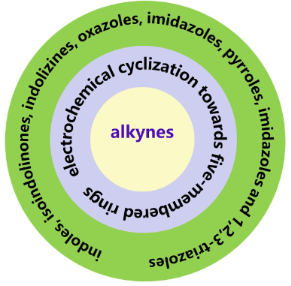
- benzamides with terminal alkynes, 5-exo-dig aza-cyclization of 2-alkynylbenzamides as well as reductive cascade annulation of o-alkynylbenzamides. Pyrroles and imidazoles were formed efficiently via electrochemical annulation of alkynes with enamides and tandem Michael addition/azidation/cyclization of
- annulation of benzamides and terminal alkynes was established for the synthesis of isoindolones by Ackermann in 2019 (Scheme 8) [207]. After screening the reaction carefully, the optimum conditions were presented as following: a mixture of benzamide 22 (0.25 mmol), alkyne 23 (0.50 mmol), NaOPiv (0.25 mmol
- reaction of nitrile, xanthene, terminal alkyne and water to synthesize oxazole was established by Li in 2023 (Scheme 12) [219]. After examining the reaction carefully, the optimized reaction conditions were obtained as follows: a mixture of alkyne 31 (0.3 mmol), xanthene 32 (0.45 mmol), CH3CN (5.0 mL), H2O









C2 to C6 biobased carbonyl platforms for fine chemistry
Beilstein J. Org. Chem. 2025, 21, 2103–2172, doi:10.3762/bjoc.21.165
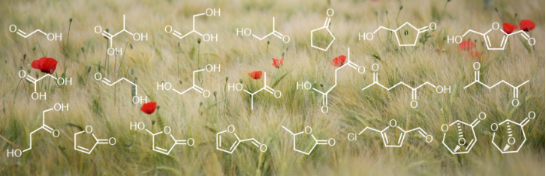
- catalysts including Ni/CeO2-γAl2O3, spinal NiAl2O4 and Ni/La2O3-αAl2O3, at 230 °C and 3.2 MPa. Using a chiral catalyst composed of [RuCl2(benzene)]2 and SunPhos, an effective asymmetric hydrogenation of α-hydroxy ketones was reported, yielding chiral terminal 1,2-diols in up to 99% ee. This Ru-catalyzed
- asymmetric hydrogenation process of α-hydroxy ketones opens up a new pathway for the production of chiral terminal 1,2-diols (Scheme 23) [98]. Kini and Mathews reported the synthesis of novel oxazole derivatives such as 6-(substituted benzylidene)-2-methylthiazolo[2,3-b]oxazol-5(6H)-one by reacting 1


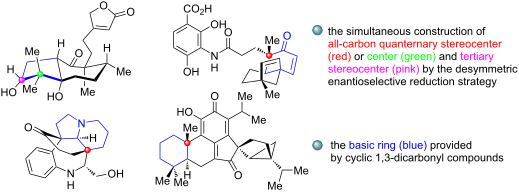
The application of desymmetric enantioselective reduction of cyclic 1,3-dicarbonyl compounds in the total synthesis of terpenoid and alkaloid natural products
Beilstein J. Org. Chem. 2025, 21, 2085–2102, doi:10.3762/bjoc.21.164
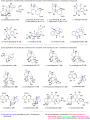
- modification of the terminal double bond afforded ketoaldehyde 31. The 2-bromoallylation [15] of 31 with boronic ester 32 stereoselectively constructed the C3–OH group to give homoallylic alcohol 33. Next, a successive manipulation by removal of TBS group, CSA-catalyzed ketalization, and DMP oxidation of the
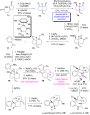
- enantioselective reduction of 1,3-cyclohexanedione derivative 89 as the key transformation [72]. Both (−)-conidiogenones B–F (17–21) and (−)-12β-hydroxyconidiogenone C (22) were synthesized in a divergent manner. Their synthetic route began with the known terminal alkyne cyclohexanedione 89 [73]. As illustrated in
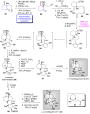
- underwent dehydration with Martin′s sulfurane to afford the known intermediate 115 [83] and terminal alkene 116 (C12–C13 bond-cleaved byproduct). Thus, the formal total synthesis of (−)-platencin (24) was achieved. On the other hand, epoxidation of 113 followed by acid-mediated regioselective ring-opening







Discovery of cytotoxic indolo[1,2-c]quinazoline derivatives through scaffold-based design
Beilstein J. Org. Chem. 2025, 21, 2062–2071, doi:10.3762/bjoc.21.161
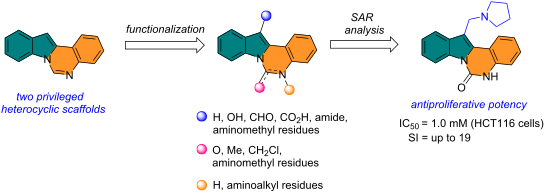
- . Such compounds can intercalate into nucleic acids, primarily through π–π stacking interactions with nitrogenous bases. The introduction of side chains with terminal amino groups enhances binding to oligonucleotides via additional ionic interactions and hydrogen bonds. The indolo[1,2-c]quinazolin-6(5H
- substitution of the terminal chloride in 11 with various cyclic amines, including pyrrolidine, piperidine, and mono-tert-butoxycarbonyl (Boc)-protected piperazine, provided a set of aminoalkyl derivatives 12а–с (Scheme 4). This strategy enables the expansion of structural diversity within this scaffold and
- emergence of antiproliferative activity, which is not strongly affected by the structure of the terminal cyclic amine. Replacement of the substituents from position 12 to position 6 of 6-methylindolo[1,2-c]quinazoline core (compounds 14a–d) leads to increased cytotoxicity compared to the initial structure


Aryl iodane-induced cascade arylation–1,2-silyl shift–heterocyclization of propargylsilanes under copper catalysis
Beilstein J. Org. Chem. 2025, 21, 1984–1994, doi:10.3762/bjoc.21.154
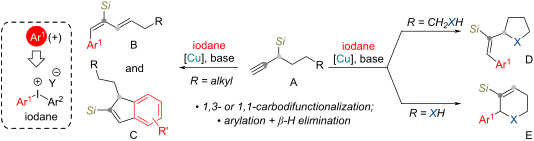
- [14]. Interestingly, this also works for terminal alkynes, which are typically known to undergo direct C(sp)–H arylation instead [15][16]. In the context of 1,2-carbofunctionalization, terminal alkynes are more scarcely studied. Among those few examples is a trifluoromethylative thiocyclization
- reaction [17] and a [4 + 2] annulation reaction between o-carboxylic ester-containing diaryl-λ3-iodanes and some terminal alkynes [18]. Looking to expand the possibilities for terminal alkyne carbofunctionalization, we turned our attention to propargylsilanes, which are prone to undergo cationic
- have been induced by addition of external halogen or selenium electrophiles and Brønsted acids. This encouraged us to develop a methodology involving a copper-catalyzed terminal alkyne arylation of propargylsilanes by diaryl-λ3-iodanes, followed by 1,2-silyl shift and terminated by nucleophile addition


Photochemical reduction of acylimidazolium salts
Beilstein J. Org. Chem. 2025, 21, 1973–1983, doi:10.3762/bjoc.21.153
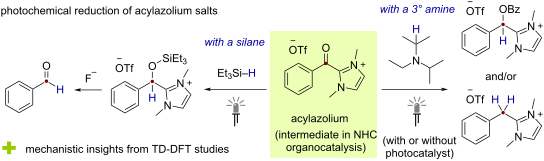
- reactions have been developed. Employing the simple amine, DIPEA, as the terminal reductant, products resulting from overall 2-electron or 4-electron-reduction processes could be obtained using either a photocatalytic approach under blue light irradiation or directly under UV-A light irradiation without an
- Information File 1) allowed for the unambiguous identification of this product as the 2-benzylimidazolium compound 2. The formation of this species results from an overall 4-electron-reduction process, indicating that the photocatalytic system with DIPEA as the terminal reductant is capable of facilitating
- reactions were carried out. As expected, conducting the reaction in the absence of the terminal reductant, DIPEA, led to a complex reaction mixture (Table 1, entry 2), while performing the reaction in the dark resulted only in recovered starting material (Table 1, entry 3). To our surprise, however


Asymmetric total synthesis of tricyclic prostaglandin D2 metabolite methyl ester via oxidative radical cyclization
Beilstein J. Org. Chem. 2025, 21, 1964–1972, doi:10.3762/bjoc.21.152
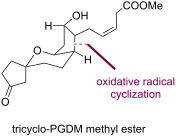
- stereochemistry at C9. Therefore, alcohol 32 was subjected to a one-pot Mitsunobu reaction, hydrolyzation, and spirolactonization to give the corresponding alcohol 26 with inversed configuration at C9. Finally, terminal alkene 26 was transformed by Dai’s Ru-catalyzed Z-selective cross-metathesis with 33 [9][40



Synthesis of N-doped chiral macrocycles by regioselective palladium-catalyzed arylation
Beilstein J. Org. Chem. 2025, 21, 1917–1923, doi:10.3762/bjoc.21.149
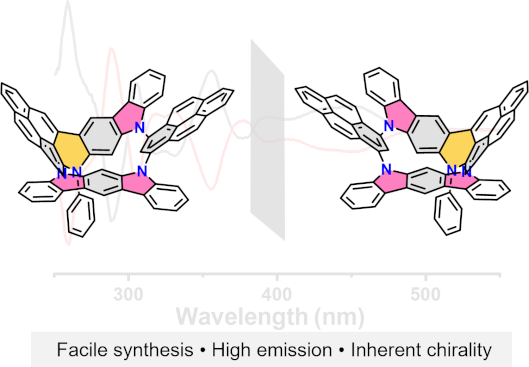
- asymmetric geometry due to the fusion of the pyrene unit (Figure 2c). The two pyrene units are oriented antiparallel, which is distinctive from that observed in 3a and MC2. Notably, the pyrene-fused moiety is highly curved with a bending angle of 85.3° as defined by the angle of the planes of the terminal




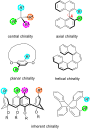
Chiral phosphoric acid-catalyzed asymmetric synthesis of helically chiral, planarly chiral and inherently chiral molecules
Beilstein J. Org. Chem. 2025, 21, 1864–1889, doi:10.3762/bjoc.21.145
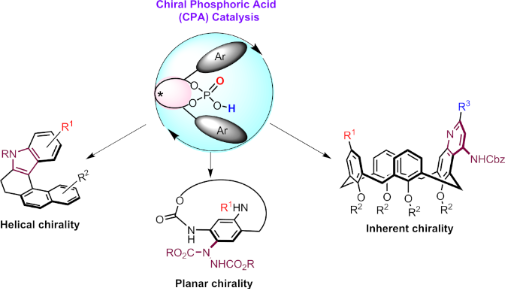
- terminal aromatic rings [17]. Despite lacking asymmetric stereogenic centers, this nonplanar scaffold exhibits intrinsic P/M chirality due to the helical arrangement of the π-extended skeleton. Renowned for their high thermal stability and structural rigidity, chiral helicenes have emerged as prominent
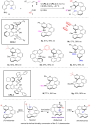
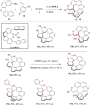
- for interconversion. However, steric repulsion between the C-1 substitutions and the terminal arene moieties in the M-conformational diastereomer resulted in the P-conformational diastereomer being thermodynamically favored. This led to the formation of (P)-helicene products following DDQ-mediated
- aromatization process. Moreover, the terminal ring of the polycyclic phenol substrates was not limited to a pyranoid moiety as helical polycyclic phenols incorporating a furan ring also efficiently yielded both the dearomatized amination product (P,R,R)-28a and the recovered enantioenriched phenolic compound (M









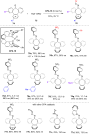
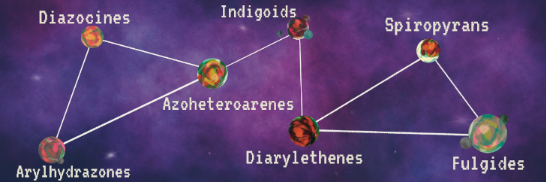
Photoswitches beyond azobenzene: a beginner’s guide
Beilstein J. Org. Chem. 2025, 21, 1808–1853, doi:10.3762/bjoc.21.143


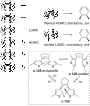


Formal synthesis of a selective estrogen receptor modulator with tetrahydrofluorenone structure using [3 + 2 + 1] cycloaddition of yne-vinylcyclopropanes and CO
Beilstein J. Org. Chem. 2025, 21, 1639–1644, doi:10.3762/bjoc.21.127
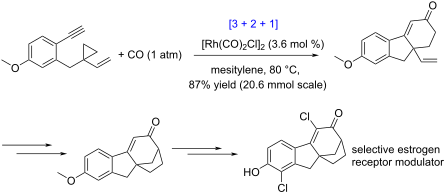
- decided to use the same approach to synthesize VI, but we planned to use a catalytic Heck reaction by using a stronger nucleophile. As can be seen below, stoichiometric Heck reaction for VI failed because the present vinyl group of the [3 + 2 + 1] product does not have a methyl group in the terminal
- through Heck reaction (using Pd catalyst), but disappointingly, all efforts failed to realize this goal. A stoichiometric version of the Heck reaction used by Lei did not work either. Maybe the terminal vinyl group in 9 has a lower reactivity compared to Lei’s substrate (Scheme 3). We then decided to


Transition-state aromaticity and its relationship with reactivity in pericyclic reactions
Beilstein J. Org. Chem. 2025, 21, 1613–1626, doi:10.3762/bjoc.21.125
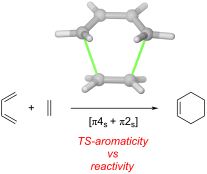
- -plane aromaticity in view of the computed NICS(3, +1) value of −12.0 ppm and diatropic induced ring current (Figure 7a). Interestingly, the analogous reaction involving cis-pent-2-en-4-yn-1-imine, where the terminal CH=CH2 group in the parent system was replaced by an imine CH=NH group, proceeds with a
- the lower barriers computed for the Hopf cyclizations of ene–ene–ynes E=CH–CH=CH–C≡CH where the terminal CH2 group was replaced by a heteroatom (E = NH or O). Figure 8 shows the corresponding ASDs for the parent cyclization (E = CH2) and the analogous process involving the imine system (E = NH). In


Facile synthesis of hydantoin/1,2,4-oxadiazoline spiro-compounds via 1,3-dipolar cycloaddition of nitrile oxides to 5-iminohydantoins
Beilstein J. Org. Chem. 2025, 21, 1552–1560, doi:10.3762/bjoc.21.118

- regioselectivity of the cycloaddition reaction between nitrile oxides and C=N bonds can be rationalized by considering the relative electronegativities of the terminal elements and the distribution of electron density in the frontier orbitals of the reagents [35]. The electrons are preferentially located on the



Azide–alkyne cycloaddition (click) reaction in biomass-derived solvent CyreneTM under one-pot conditions
Beilstein J. Org. Chem. 2025, 21, 1544–1551, doi:10.3762/bjoc.21.117
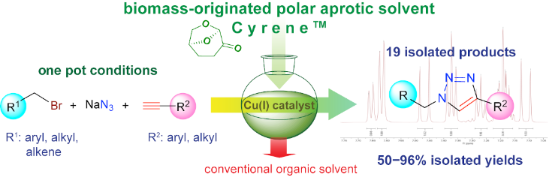
- -triazoles in CyreneTM (Figure 4). It was shown that the protocol resulted in the formation of products 3a and 5b–f with yields of 57–91% depending on the structure of the bromide derivatives. The isolated yields were in the same range as reported by Citarella et al. [39]. The presence of a terminal carbon
- in the formation of 1-allyl-4-substituted-1H-1,2,3-triazoles bearing a terminal C–C double bond moiety. Thus, we attempted to prepare a series of 1-allyl-4-substituted-1H-1,2,3-triazoles (Figure 5, 6a–f) from allyl bromide (4g) and selected acetylenes 2a–f. Similar to the formation of N-substituted-4


Ambident reactivity of enolizable 5-mercapto-1H-tetrazoles in trapping reactions with in situ-generated thiocarbonyl S-methanides derived from sterically crowded cycloaliphatic thioketones
Beilstein J. Org. Chem. 2025, 21, 1508–1519, doi:10.3762/bjoc.21.113
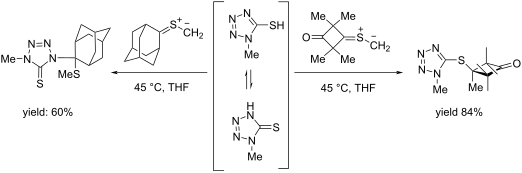
- terminal S‒CH2 position, leading to the formation of the sulfonium cation 11 and the delocalized heterocyclic anion 12 (Scheme 6). In the next step, competitive addition of both intermediate species yields either thioaminals 9 or dithioacetals 10. However, a slow isomerization of the thermodynamically less





