Search results
Search for "blue" in Full Text gives 1005 result(s) in Beilstein Journal of Organic Chemistry. Showing first 200.
Wittig reaction of cyclobisbiphenylenecarbonyl
Beilstein J. Org. Chem. 2025, 21, 1454–1461, doi:10.3762/bjoc.21.107
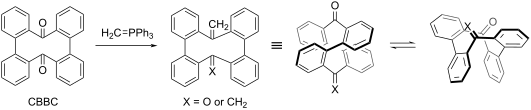
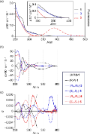
- racemization barrier. Optical and chiroptical properties The UV–vis absorption spectra of CBBC 1, mono-olefin 3, and bis-olefin 5 are shown in Figure 5a. The absorption of 3 tails to 370 nm, which is comparable to the absorption end of CBBC 1. On the other hand, the absorption of bis-olefin 5 is blue-shifted
- , tailing to 325 nm. In the case of CBBC 1, the contribution of n–π* transition due to the carbonyl groups affords weak absorption in the 300–380 nm range [17]. Consequently, the blue-shifted absorption of 5 compared to those of 1 and 3 could result from the loss of carbonyl groups. The relatively large
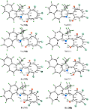
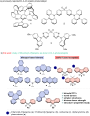
- beneficial for the development of advanced materials. Synthesis and structures of CBBC 1. X-ray crystal structures of (a) 3, (b) 4, and (c) 5 with thermal ellipsoids at 50% probability; all hydrogen atoms are omitted for clarity. VT 1H NMR spectra of 5 in CD2Cl2 at (a) 298 K, (b) 243 K, and (c) 203 K. Blue



Advances in nitrogen-containing helicenes: synthesis, chiroptical properties, and optoelectronic applications
Beilstein J. Org. Chem. 2025, 21, 1422–1453, doi:10.3762/bjoc.21.106
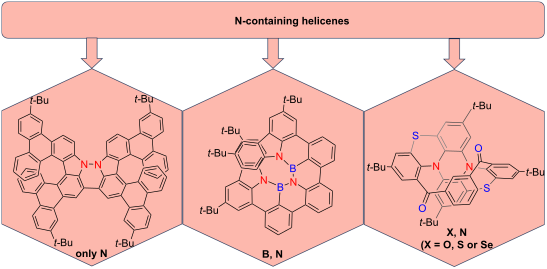
- [33] and Ishigaki’s [34] groups independently reported a class of highly twisted nitrogen-doped heptalene derivatives (e.g., compound 20a), which exhibit consistent absorption at 315 nm and blue fluorescence centered near 450 nm, regardless of the substituents. These compounds display redox and
- (MR-TADF) emitters to date. In 2023, the same group introduced the first deep-blue chiral MR-TADF emitters based on heterohelicene scaffolds 41a–c [56]. These compounds exhibited sharp emissions at 440–444 nm in solution and 445–449 nm in doped films, with emission bandwidths as narrow as 23 nm and
- findings underscore the significant potential of heteroatom-integrated helicene systems as high-efficiency, CPL-active MR-TADF materials for next-generation OLED technologies, particularly in the development of deep-blue emissive devices with high color purity and device efficiency. In 2022, Marder and co

Tautomerism and switching in 7-hydroxy-8-(azophenyl)quinoline and similar compounds
Beilstein J. Org. Chem. 2025, 21, 1404–1421, doi:10.3762/bjoc.21.105
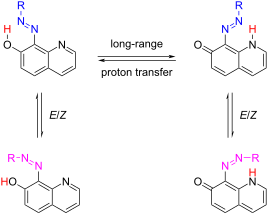
- to 1 leads to a red shift in the absorption spectra of both tautomers. At the same time the long-wavelength maximum of 7K is blue shifted in respect to 7E, which in practical means would lead again to a red shift when switching from the more stable former to latter. Of course, the results in this
- -acceptor sites are given in red and blue, respectively. The axle of intramolecular rotation is given in green. The twisting angles α and β are indicated in magenta. Perspective switching compounds, generated by the computational quantum chemistry calculations. Relative stability (M06-2X/TZVP) and spectral




N-Salicyl-amino acid derivatives with antiparasitic activity from Pseudomonas sp. UIAU-6B
Beilstein J. Org. Chem. 2025, 21, 1388–1396, doi:10.3762/bjoc.21.103
- determined using two-fold serial dilutions of the compound in media, carried out in 96-well plates in quadruplicate. Parasites were counted using a CASY TT Cell Counter. Alamar Blue viability assays were performed, whereby cells were incubated with the compound in serial dilution (specific details for each
- cell line are given below), after which the Alamar Blue cell viability reporter was added and the fluorescence recorded using an FLx 800 plate reader (BioTek) with excitation wavelength 535/540 nm and emission wavelength at 590/610 nm using Gen5 Reader Control 2.0 Software (BioTek). EC50 values were
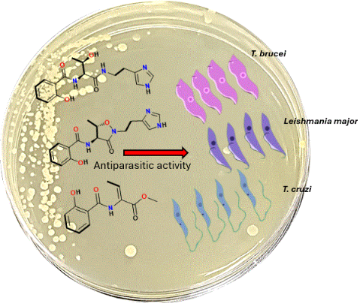
- 20 μL Alamar Blue (0.125 mg/mL resazurin salt in PBS) was added to all wells and incubated for a further 6 hours before fluorescence recording. Structures of the pseudomonins D–G (1–4), pseudomonine (5), pseudomonin B (6) and salicylic acid (7). Key HMBC, 1H-1H COSY and NOE correlations. Extracted


Oxetanes: formation, reactivity and total syntheses of natural products
Beilstein J. Org. Chem. 2025, 21, 1324–1373, doi:10.3762/bjoc.21.101
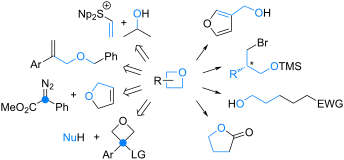
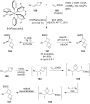
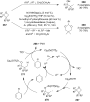
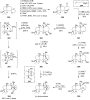
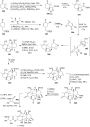
- polysubstituted oxetanes 64 (Scheme 18) [57]. The mechanism is based on a 1,5-HAT/radical recombination sequence where the H-atom transfer is triggered by an S0 → T1 excitation of the starting allyl ether 63 using an iridium photosensitiser and blue light for irradiation. The method employs mild reaction
- , γ-H transfer and Paternò–Büchi reaction. In 2020, two highly similar methodologies based on a visible-light-mediated Paternò–Büchi reaction between simple alkenes 77 and α-ketoesters 78 were reported independently and shortly after one another (Scheme 21) [61][62]. They both use blue light for
- . published a light-induced cross-selective [2 + 2] cycloaddition between 3-(arylmethylidene)oxetanes 159 and electron-deficient alkenes 160 (Scheme 40) [91]. The methodology used a commercially available iridium-based photosensitiser and blue-light irradiation at a slightly elevated temperature. The








Recent advances and future challenges in the bottom-up synthesis of azulene-embedded nanographenes
Beilstein J. Org. Chem. 2025, 21, 1272–1305, doi:10.3762/bjoc.21.99
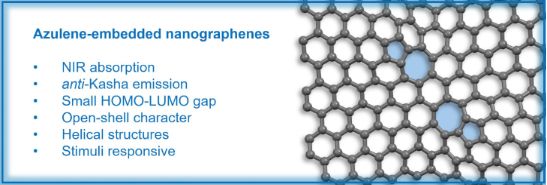
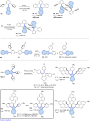
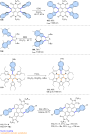
- an aromatic azulene subunit. A similar oxidation can also be carried out under photochemical conditions, as demonstrated by Zhang and co-workers [76]. Precursors 112 and 113 were oxidized using I2 under blue LED irradiation, yielding bisimides 114 and 115 in 31% and 20% yield, respectively. Both PAHs




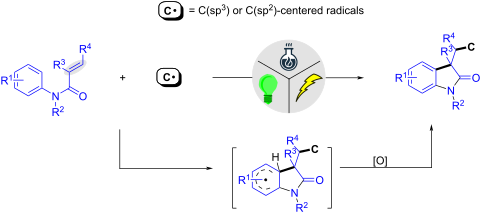
Recent advances in oxidative radical difunctionalization of N-arylacrylamides enabled by carbon radical reagents
Beilstein J. Org. Chem. 2025, 21, 1207–1271, doi:10.3762/bjoc.21.98
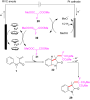
- with α-aminoalkyl radicals generated from tertiary arylamines using photoredox catalysis (Scheme 13) [9]. In this system, Ir[dF(CF3)ppy]2(dtbbpy)PF6 was used as a photosensitizer to trigger the α-C–H activation of N,N-dimethylaniline, generating an alkyl radical under 30 W blue LED (454 nm) irradiation
- -transfer (SET) process occurred efficiently under blue LED irradiation in the presence of Ir[dF(CF3)ppy]2(dtbbpy)PF6 as the photocatalyst. This was followed by deprotonation and radical migration, yielding α-aminoalkyl radical A, which added to the intramolecular C=C bond of N,N-dimethylaniline to produce
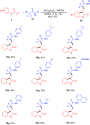
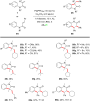
- amount of Bu4NPF6 as the supporting electrolyte in a MeOH/TFE 11:1 (v/v) co-solvent mixture under blue LED irradiation at a constant current of 1.5 mA for 12 hours at room temperature. A wide range of substrates exhibited good functional group tolerance, with 3-homoallylquinazolin-4-ones bearing electron












Selective monoformylation of naphthalene-fused propellanes for methylene-alternating copolymers
Beilstein J. Org. Chem. 2025, 21, 1183–1191, doi:10.3762/bjoc.21.95
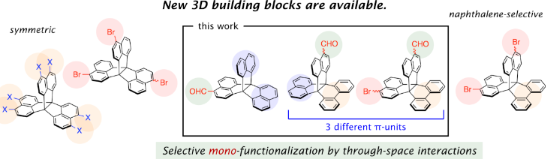
- (open circles) isotherms of [3.3.3]_oligo (dark red), [3.3.3]_linear (red), [3.3.3]_branch (orange), [4.3.3]_oligo (purple), [4.3.3]_linear (blue), and [4.3.3]_branch (green). a) CO2 at 298 K and b) N2 at 77 K. Formylation of naphthalene-fused propellanes. Properties of methylene-alternating


Enhancing chemical synthesis planning: automated quantum mechanics-based regioselectivity prediction for C–H activation with directing groups
Beilstein J. Org. Chem. 2025, 21, 1171–1182, doi:10.3762/bjoc.21.94
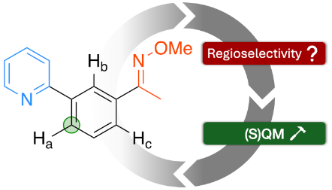
- with the experimentally observed reaction site in green and the predicted reaction site marked by a blue circle. For molecule 1, we can see in the original paper from Yeung et al. [26] that the reaction preceding the C–H activation is an intramolecular cyclization between the C atom marked in green and
- the C atom marked by a blue circle. This reaction was originally not labelled as a cyclization reaction, which is why we did not remove it from the dataset. Nevertheless, upon inspection, our QM workflow correctly predicts the reaction site(s) of the intramolecular cyclization as it predicts one of
- single-point calculations did not result in better agreement with experimental observations. The ten molecules with their experimentally observed main reaction site in green and all predicted reaction sites within a 1 kcal·mol−1 threshold as a blue circle are shown in Figure 11. Using the previously


A multicomponent reaction-initiated synthesis of imidazopyridine-fused isoquinolinones
Beilstein J. Org. Chem. 2025, 21, 1161–1169, doi:10.3762/bjoc.21.92
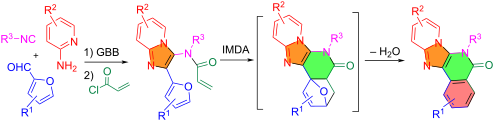
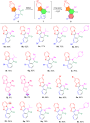
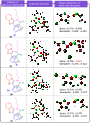
- compounds bearing imidazopyridine (red) and isoquinolinone-kind (blue) rings. Transition state analysis of IMDA reactions for 6a, 6j, 6h and 6r. Relative energy diagram for the synthesis of 8a from 6a. GBB-initiated synthesis of imidazopyridine-fused isoquinolinones. GBB reaction and N-acylation for the




Supramolecular assembly of hypervalent iodine macrocycles and alkali metals
Beilstein J. Org. Chem. 2025, 21, 1095–1103, doi:10.3762/bjoc.21.87
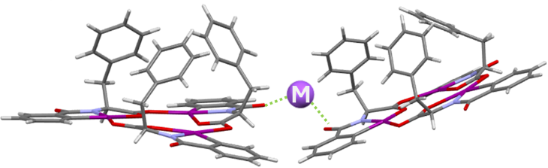
- cavity is highlighted by blue color in the chemical structure of phenylalanine HIM as shown in Figure 3 (left) (more figures are provided in Supporting Information File 1). Despite the core's composition of six electron-rich oxygen atoms, we hypothesized that the bowl-like macrocyclic cavity is electron
- conformation II projected only two vertically. One benzyl ring is pointed outside as highlighted by * (top). Oxygen, nitrogen, and iodine atoms are denoted by red, light blue, and purple color, respectively. A) Chemical structure of HIM 1: Three iodine atoms and three inward projected ester carbonyls
- curcumscribe the small cyclic core represented by blue color. Three carbonyl amides project outward. B) DFT image of 1 displaying the distribution of Mulliken charges on iodine (purple), oxygen (red), and carbon (grey); benzyl groups are ommited for clarity. C) Calculated electrostatic potential map showing


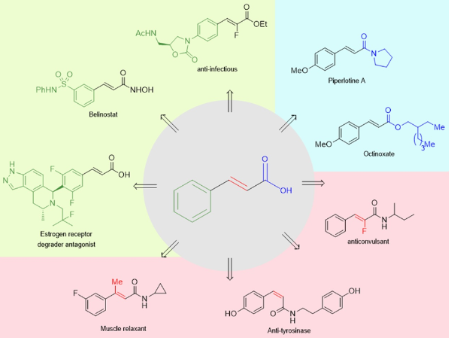
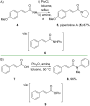
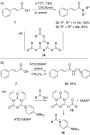
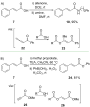
Recent advances in synthetic approaches for bioactive cinnamic acid derivatives
Beilstein J. Org. Chem. 2025, 21, 1031–1086, doi:10.3762/bjoc.21.85







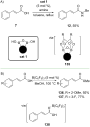


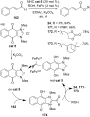


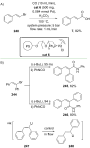


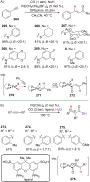


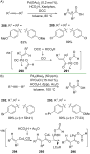


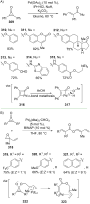
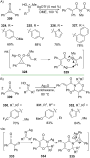


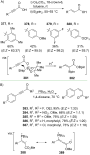


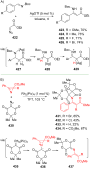


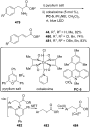


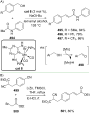
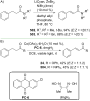


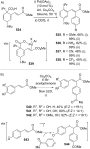


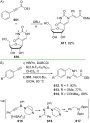


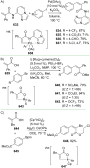
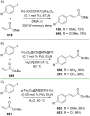

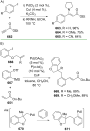


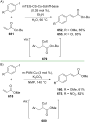


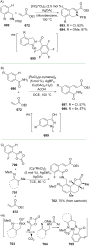


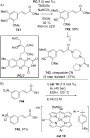


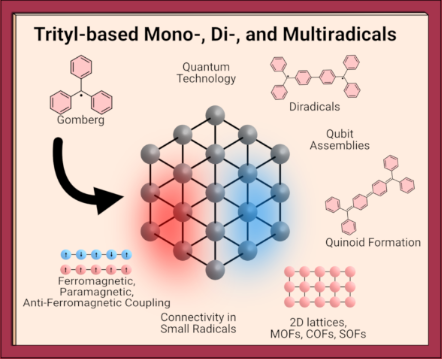
On the photoluminescence in triarylmethyl-centered mono-, di-, and multiradicals
Beilstein J. Org. Chem. 2025, 21, 964–998, doi:10.3762/bjoc.21.80
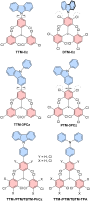
- is synthesized with slightly improved ϕ of 2% and a blue-shifted emission compared to PTM with a maximum photoluminescence wavelength λem = 569 nm (in CCl4) [40][42]. The racemization barrier remains almost identical at 21.1 kcal mol−1. Both PTM and TTM exhibit circularly polarized emission (CPL) for









Study of tribenzo[b,d,f]azepine as donor in D–A photocatalysts
Beilstein J. Org. Chem. 2025, 21, 935–944, doi:10.3762/bjoc.21.76

- 6a, we observed a blue-shifted absorption profile due to the break of the conjugation in sulfur-based acceptors. Compounds 4a and 6a presented a similar absorption profile, while molecule 5a showed a red-shifted spectrum tailing up to the visible region (Figure 2a). The lack of a significant charge
- . Analyzing the diverse absorption profiles, we can observe an increase in the red-shifted behavior related to the donor strength in compounds 5e, 5d, and 5c. In contrast, the azepine-derived compounds are the most blue-shifted (Table 1, entry 5). The same trend is observed in the emission (Figure 2b). The
- Supporting Information File 1, Table S3). As we expected, due to the blue-shifted absorption presented in molecules 4a and 6a, it was impossible to excite them under visible light (400 nm). Gratifyingly, PC 5a delivered product 8 with a promising 63% NMR yield. Next, we compare the photocatalytic behavior of



Dicarboxylate recognition based on ultracycle hosts through cooperative hydrogen bonding and anion–π interactions
Beilstein J. Org. Chem. 2025, 21, 884–889, doi:10.3762/bjoc.21.72
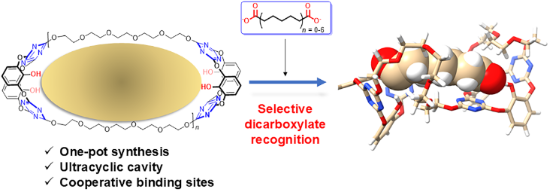
- ) Crystal structure of B4aH (hydrogen atoms are omitted for clarity), and (c) the stacking structure of the crystal of B4aH (the blue dotted lines represent hydrogen bonds). (a) The structures of host and guests, (b) 1H NMR spectra (298 K, 400 MHz, CD3CN) of B4aH upon titration with C62− (c(B4aH) = 1 mM
- ), (c) chemical shift changes of Ha versus titration equivalents c(dicarboxylate)/c(B4aH), and (d) association constants of host and guests. (a–c) DFT-optimized structure of the B4aH-C72− complex. The blue dotted lines represent hydrogen bonds and the black dotted lines represent anion–π interactions


Unraveling cooperative interactions between complexed ions in dual-host strategy for cesium salt separation
Beilstein J. Org. Chem. 2025, 21, 845–853, doi:10.3762/bjoc.21.68

- colors: green or grey = C, white = H, blue = N, red = O, orange = S, and purple = Cs. For the crystal structure, the overall stoichiometry of Cs+, PO43−, 18-crown-6 and anion receptor is 3:1:3:1. Phosphate anion is encapsulated inside the hexaurea cavity and stabilized by 12 × N–H···O hydrogen bonds


Substituent effects in N-acetylated phenylazopyrazole photoswitches
Beilstein J. Org. Chem. 2025, 21, 830–838, doi:10.3762/bjoc.21.66

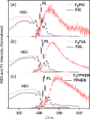
- , such as OH or OMe, they are shifted towards the blue. Especially for NAc-PAPs, we observe a higher spectral separation of the π→π* and the n→π* transitions of the Z isomers compared to NMe-PAPs and NH-PAPs. For instance, the separation for the π→π* transition band and the n→π* is 176 nm for NAc-PAP-CN


Synthesis and photoinduced switching properties of C7-heteroatom containing push–pull norbornadiene derivatives
Beilstein J. Org. Chem. 2025, 21, 807–816, doi:10.3762/bjoc.21.64
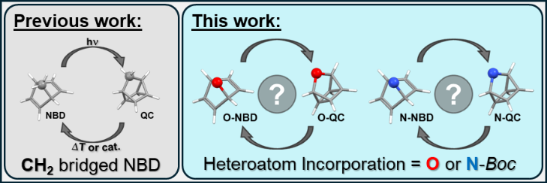
- and the simultaneous increase of the QC´s band at λmax = 301 nm accompanied by the presence of isosbestic points (Figure 3). Extended irradiation times resulted in a decrease in the QC signal, accompanied by a slight blue shift and the emergence of a new absorption band at λmax = 382 nm, suggesting


Orthogonal photoswitching of heterobivalent azobenzene glycoclusters: the effect of glycoligand orientation in bacterial adhesion
Beilstein J. Org. Chem. 2025, 21, 736–748, doi:10.3762/bjoc.21.57
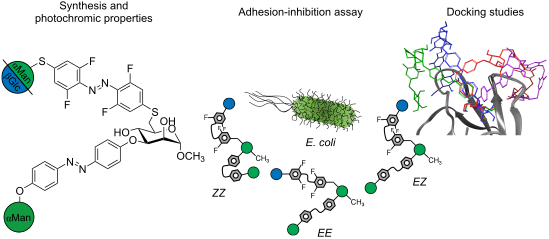
- to the O-azobenzene (AB) photoswitch. (Orthogonal) photoswitching alters the relative spatial orientation of the two sugar units. Glucose (Glc) moieties are colored in blue and mannose (Man) in green according to the symbol nomenclature for carbohydrates (SNFG) [29][30]. A: Wavelength-selective
- ) is depicted as ribbon diagram and the ligands are displayed as stick models (glycoclusters 1 and 2: EE: blue; ZZ: violet; EZ: green; ZE: red). Superposition of the isomers shows the similarity of the binding of the terminal mannoside antenna within the FimH CRD and the different orientations of the


Acyclic cucurbit[n]uril bearing alkyl sulfate ionic groups
Beilstein J. Org. Chem. 2025, 21, 717–726, doi:10.3762/bjoc.21.55
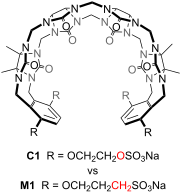
- ), b) a mixture of C1 (0.5 mM) and Me6PXDA (1.0 mM), c) a mixture of C1 (0.5 mM) and Me6PXDA (0.5 mM), and d) C1 (0.5 mM). Cross-eyed stereoview of the C1·Me6CHDA complex in the crystal. Color code: C, gray; H, white; N, blue; O, red; S, yellow. Cross-eyed stereoview of the crystal packing observed in
- the molecular cell of C1·Me6CHDA. H-atoms are omitted for clarity. N···O distances less than 4.40 Å are indicated with dashed lines. Color code: C, gray; N, blue; O, red; S, yellow. a) Representative plot of DP (μcal s−1) versus time from the titration of C1 (0.1 mM) in the ITC cell with a solution of




Photochemically assisted synthesis of phenacenes fluorinated at the terminal benzene rings and their electronic spectra
Beilstein J. Org. Chem. 2025, 21, 670–679, doi:10.3762/bjoc.21.53

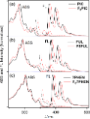
- negative (orange region) in the parent compounds, whereas the phenacene cores turned to be positive (blue) for the F8-phenacenes. Therefore, one can manipulate the polarization of the phenacene cores through the introduction of fluorine atoms without altering the electronic spectral features. The excited
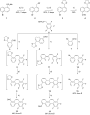
- state. The orange and blue sites, respectively, indicate negative and positive regions (−0.02 ≈ 0.02 hartree). Synthesis of building blocks 10, 13, and 15. Reagents and conditions: a) NaBH4, MeOH, THF, reflux; b) PBr3, reflux; c) N-methylmorpholine-N-oxide, THF, reflux; d) ethylene glycol, p-TsOH





Deep-blue emitting 9,10-bis(perfluorobenzyl)anthracene
Beilstein J. Org. Chem. 2025, 21, 515–525, doi:10.3762/bjoc.21.39
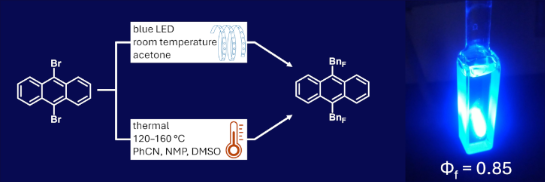
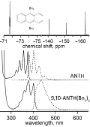
- Abstract A new deep-blue emitting and highly fluorescent anthracene (ANTH) derivative containing perfluorobenzyl (BnF) groups, 9,10-ANTH(BnF)2, was synthesized in a single step reaction of ANTH or ANTH(Br)2 with BnFI, using either a high-temperature Cu-/Na2S2O3-promoted reaction or via a room-temperature
- photostability compared to ANTH and 9,10-ANTH derivatives, and a simple synthetic access makes it an attractive material as a deep-blue OLED emitter and an efficient fluorescent probe. Keywords: anthracene; dibromoanthracene; electron poor polyaromatic systems; fluorescence; perfluoroalkylation
- -purity color and improved stability, has been observed. OLED materials have attracted considerable research because they found commercial uses for flat panel displays and solid-state lighting applications. Currently, the design of efficient and highly stable blue fluorescent emitters remains a challenge





Photomechanochemistry: harnessing mechanical forces to enhance photochemical reactions
Beilstein J. Org. Chem. 2025, 21, 458–472, doi:10.3762/bjoc.21.33
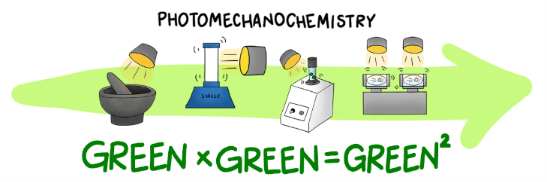
- zinc cations to align 1.1 through the formation of hydrogen-bonded coordination complexes. Thus, when a single crystal of the [Zn(bpe)2(H2O)4](NO3)2·8/3H2O·2/3bpe complex was exposed to UV irradiation (dark blue phosphor lamps, λ = 350 nm) for 25 h, only 46% conversion to 1.2 was observed via 1H NMR
- Na2CO3 was ground in a mortar at room temperature for 3–5 min. Second, the reaction mixture was transferred into a quartz tube, heated to 50 °C (heating mantle) for 18 h, while being irradiated with blue LEDs under air-equilibrated conditions. In these conditions, product 3.3 was isolated in excellent
- : the authors termed this approach “mechanochemically-assisted solid-state photocatalysis” (Scheme 7) [70]. Therein, a custom-built photoreactor was integrated into a standard laboratory ball mill apparatus. This reactor, equipped with blue LEDs, allowed for adjustable light intensity and maintained




Unraveling aromaticity: the dual worlds of pyrazole, pyrazoline, and 3D carborane
Beilstein J. Org. Chem. 2025, 21, 412–420, doi:10.3762/bjoc.21.29
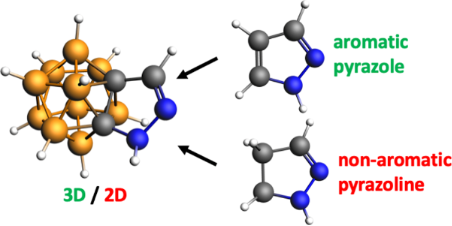
- -electron contributions) for a perpendicular magnetic field over a plane 1 a.u. above the molecular plane of the pyrazole ring of the o-carborane-fused pyrazoles. Red/blue arrows when the component parallel/antiparallel to B is greater than 30% of the vector modulus. Diatropic/paratropic circulations are


Synthesis, structure, ionochromic and cytotoxic properties of new 2-(indolin-2-yl)-1,3-tropolones
Beilstein J. Org. Chem. 2025, 21, 358–368, doi:10.3762/bjoc.21.26
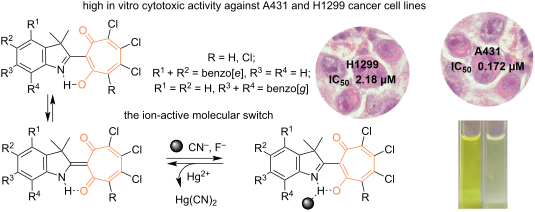
- violet-blue formazan, with absorption maximum in the range of 540–560 nm. The optical density of the solution in this wavelength range is an indirect indicator of the number of live cells in the culture. The cytotoxic activity of the test substance was determined by the decrease in optical density of