Search results
Search for "donor" in Full Text gives 881 result(s) in Beilstein Journal of Organic Chemistry. Showing first 200.
Advances in nitrogen-containing helicenes: synthesis, chiroptical properties, and optoelectronic applications
Beilstein J. Org. Chem. 2025, 21, 1422–1453, doi:10.3762/bjoc.21.106
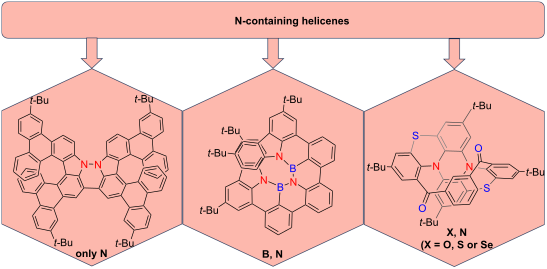
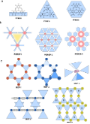
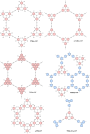
- conjugated systems, enabling the design of donor–acceptor helicenes with tunable photophysical properties. In 2020, Ema and co-workers developed a series of chiral carbazole-based BODIPY analogues 35a–f, derived from helical carbazole-based BF2 dyes [49] (Table 11). These analogues exhibit red-shifted
- -performance chiral optoelectronic materials. In 2023, Zhang’s group introduced a new class of helically chiral double hetero[4]helicenes 74a and 74b exhibiting CP-TADF, constructed on a distinct donor–acceptor core architecture [88] (Table 25). These compounds demonstrate excellent configurational stability

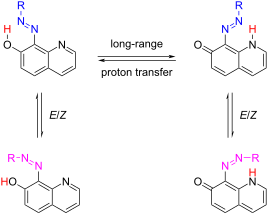
Tautomerism and switching in 7-hydroxy-8-(azophenyl)quinoline and similar compounds
Beilstein J. Org. Chem. 2025, 21, 1404–1421, doi:10.3762/bjoc.21.105
- spectra in toluene and CHCl3 are almost identical, with two intensive bands around 390 nm (assumed to E according to the simulated spectra, Figure S2) and 470 nm (assumed to KE/KK), which is rather surprising bearing in mind that chloroform, as a strong proton-donor solvent, always shifts the tautomeric
- achieved with the used substituents. Most of the substituents destabilize K with exception of the electron donor ones on position 4 and all in position 6. Again, the cyano group on position 5 is acting in the desired direction, but the effect is weak. Considering the fact that some substituents act
- donors in the phenyl ring, while N–NH is a donor, favored by acceptors in Ph [3][7][89]. Following this model, a suitable substitution in the Ph ring of 1 can stabilize or destabilized KE and KK in respect to E and K. This opens an additional channel for fulfilling the requirements for a clean switching




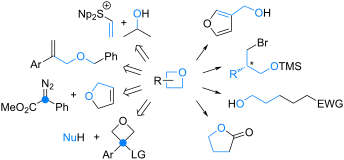
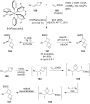
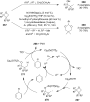
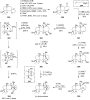
Oxetanes: formation, reactivity and total syntheses of natural products
Beilstein J. Org. Chem. 2025, 21, 1324–1373, doi:10.3762/bjoc.21.101








Recent advances in amidyl radical-mediated photocatalytic direct intermolecular hydrogen atom transfer
Beilstein J. Org. Chem. 2025, 21, 1306–1323, doi:10.3762/bjoc.21.100
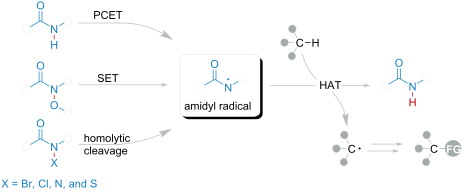
- activation energy modulation during transition state formation. Specifically, donor/acceptor electronic configurations in the substrate could either stabilize or destabilize the transient hybrid state, thereby thermodynamically governing the energy barrier for intermolecular HAT progression. When the partial






Recent advances in oxidative radical difunctionalization of N-arylacrylamides enabled by carbon radical reagents
Beilstein J. Org. Chem. 2025, 21, 1207–1271, doi:10.3762/bjoc.21.98
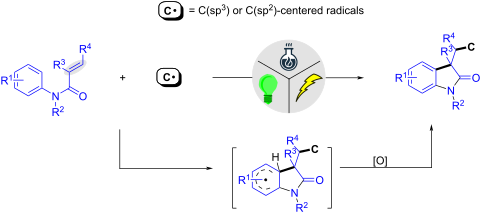
- transformations, (4) electrochemical approaches, and (5) metal-free or electron donor–acceptor (EDA)-driven systems. The substrate scope, limitations, and mechanistic aspects of these radical cascade cyclization strategies are critically examined. Review N-Arylalkenes: alkyl C(sp3)–H radicals Early investigations
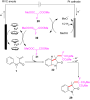
- methods utilizing electron donor–acceptor (EDA) complexes and peroxide initiators have recently gained attention due to their operational simplicity and environmental friendliness. In 2024, Song’s group and co-workers presented a novel metal-free, visible-light-promoted method for synthesizing
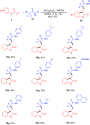
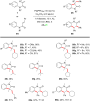
- difluoroamidated oxindoles via electron donor–acceptor (EDA) complexes (Scheme 37) [23]. The method involved the use of N-phenylacrylamides and bromodifluoroacetamides as starting materials, with N,N,N’,N’-tetramethylethylenediamine (TMEDA) acting as the electron donor. The reaction proceeded efficiently under












Optimized synthesis of aroyl-S,N-ketene acetals by omission of solubilizing alcohol cosolvents
Beilstein J. Org. Chem. 2025, 21, 1201–1206, doi:10.3762/bjoc.21.97
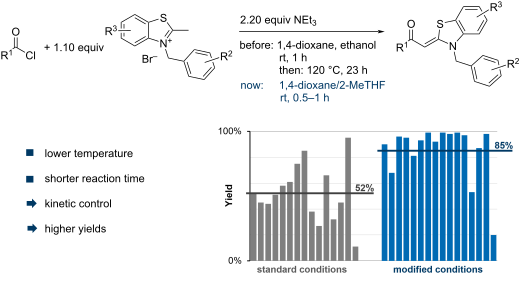
- ; condensation; Einhorn-type acylation; 2-methyl N-benzyl benzothiazolium salts; Introduction Aroyl-S,N-ketene acetals, in particular N-benzyl derivatives 1, are very short donor–acceptor chromophores that have recently found a renaissance due to their peculiar intense solid-state emission and significant turn


Synthesis of β-ketophosphonates through aerobic copper(II)-mediated phosphorylation of enol acetates
Beilstein J. Org. Chem. 2025, 21, 1192–1200, doi:10.3762/bjoc.21.96
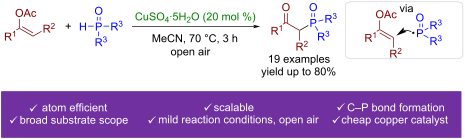
- substitution pattern in the aryl ring does not have a significant effect on the yield of 3 for both acceptor and donor derivatives, which shows the versatility of the developed protocol. However, among halogen-containing derivatives, higher yields were observed for bromine-substituted ones (products 3i and 3l


Supramolecular assembly of hypervalent iodine macrocycles and alkali metals
Beilstein J. Org. Chem. 2025, 21, 1095–1103, doi:10.3762/bjoc.21.87
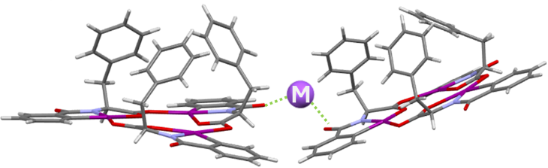
- bonding is characterized as those interactions that involve intermolecular hypervalent connections with lengths shorter than the sum of the van der Waals radii between a heavy p-block element and an electron-pair donor (typically O, N, S, or halogen) [15]. Secondary I···O interactions have been found to


Salen–scandium(III) complex-catalyzed asymmetric (3 + 2) annulation of aziridines and aldehydes
Beilstein J. Org. Chem. 2025, 21, 1087–1094, doi:10.3762/bjoc.21.86
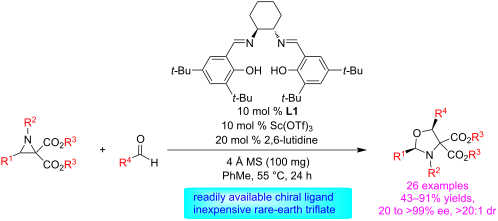
- alcohols and aldehydes [11] and through [2 + 3] cycloaddition of azomethine ylides and carbonyl dipolarophiles [12]. Recently, the [2 + 3] annulation of aldehydes and donor–acceptor dialkyl 2-aryl-1-sulfonylaziridine-2,2-dicarboxylates, which generate azomethine ylides, has been developed for the synthesis



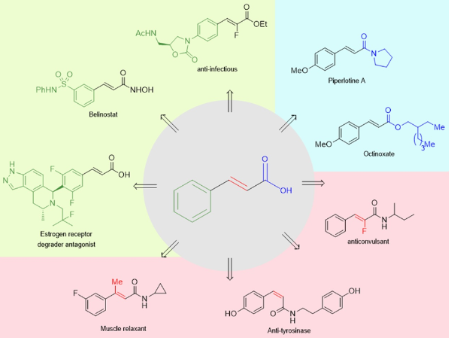
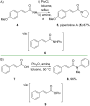
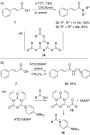
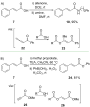
Recent advances in synthetic approaches for bioactive cinnamic acid derivatives
Beilstein J. Org. Chem. 2025, 21, 1031–1086, doi:10.3762/bjoc.21.85







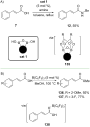


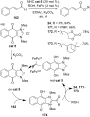


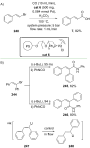


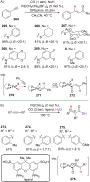








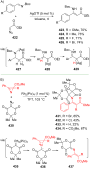


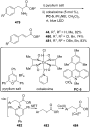


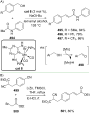
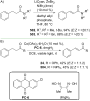


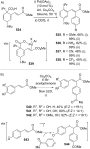


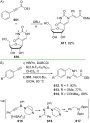


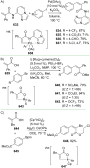
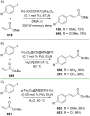

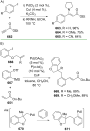


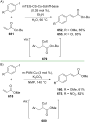


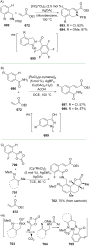


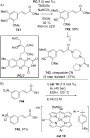


Biobased carbon dots as photoreductants – an investigation by using triarylsulfonium salts
Beilstein J. Org. Chem. 2025, 21, 1024–1030, doi:10.3762/bjoc.21.84
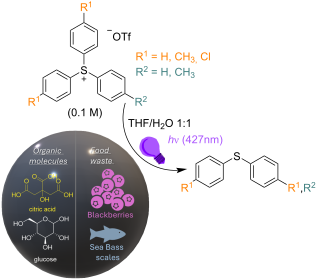
- photooxidant or photoreductant in the presence of a suitable electron donor or acceptor [18], and these properties have been exploited in procedures for the formation of both C–C and C–heteroatom bonds [18][19]. Our research groups recently focused on the application of CDs in light-mediated organic synthesis


Synthesis of pyrrolo[3,2-d]pyrimidine-2,4(3H)-diones by domino C–N coupling/hydroamination reactions
Beilstein J. Org. Chem. 2025, 21, 1010–1017, doi:10.3762/bjoc.21.82
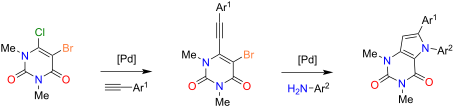
- shift, while the emission band of 4j was slightly red-shifted. The N,N-dimethylaminophenyl-substituted compounds 4k and 4l showed the strongest bathochromic shifts of the emission spectra, which might be due to the occurrence of donor–acceptor interactions between the electron-deficient uracil and the
- amino group. The corresponding fluorescence quantum yields were also strongly affected by the substitution pattern of the pyrrolouracils. Compounds 4k and 4l show very high fluorescence quantum yields of 83% and 71%, respectively, what might be reasoned by the strong donor ability of the NMe2-functional



On the photoluminescence in triarylmethyl-centered mono-, di-, and multiradicals
Beilstein J. Org. Chem. 2025, 21, 964–998, doi:10.3762/bjoc.21.80
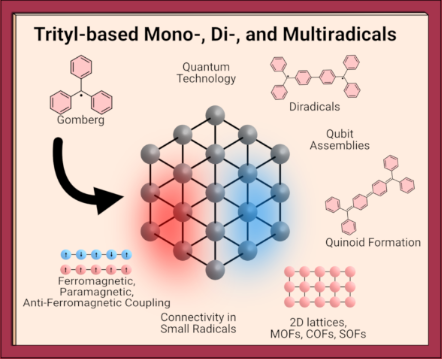
- overcoming scalability challenges in quantum technologies. Despite their potential, achieving high luminescence quantum yields has largely been limited to donor-functionalized monoradicals, and a detailed understanding of the luminescent behavior of open-shell organic molecules remains elusive. This review
- radicals has seen new impetus during the last decade, stimulated by the development of highly efficient electroluminescent devices based on donor-functionalized TTM radicals [7][8][9][10][11][12][13]. Today, new derivatives of donor-functionalized triarylmethyl radicals are being synthesized with enhanced
- ][14]. While first examples of radical emitters in light-emitting diodes (LEDs) only delivered around 12% internal quantum efficiency [7], representing no improvement compared to conventional emitters, optimization of the donor-functionalized TTM radical and of the device geometry quickly allowed


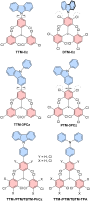

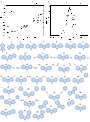


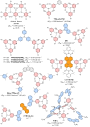


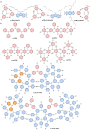


Study of tribenzo[b,d,f]azepine as donor in D–A photocatalysts
Beilstein J. Org. Chem. 2025, 21, 935–944, doi:10.3762/bjoc.21.76

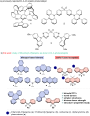
- Katy Medrano-Uribe Jorge Humbrias-Martin Luca Dell'Amico Department of Chemical Sciences, University of Padova, Via Francesco Marzolo 1, 35131, Padova, Italy 10.3762/bjoc.21.76 Abstract Since the discovery of donor–acceptor (D–A) type molecules in the field of materials science, they have found
- demonstrate that these simple D–A structures exhibit promising photocatalytic properties, comparable to those of more complex D–A–D systems. Keywords: donor–acceptor system; photocatalyst design; photoredox catalysis; organic photocatalyst; Introduction In recent years, photocatalysis has emerged as a
- –properties dependence to modulate its optical and photoredox properties [4]. For instance, molecules with donor–acceptor (D–A) structures, classically used as OLED emitters, have gained relevance by finding alternative applications in the field of photocatalysis [5]. In this type of structure, the electron



Silver(I) triflate-catalyzed post-Ugi synthesis of pyrazolodiazepines
Beilstein J. Org. Chem. 2025, 21, 915–925, doi:10.3762/bjoc.21.74
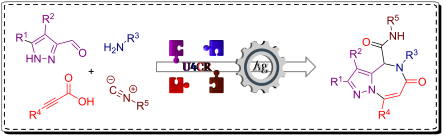
- attention due to their modular hydrogen bond donor/acceptor profile that can be tuned by varying the nitrogen position and the degree of unsaturation as well as by fusion with other rings [3]. Benzodiazepines, which contain a seven-membered diazepine core fused to a benzene ring, are recognized as


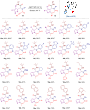


Recent advances in controllable/divergent synthesis
Beilstein J. Org. Chem. 2025, 21, 890–914, doi:10.3762/bjoc.21.73

- species Int-44. This reactive intermediate then engages with a Ti(IV)-enolate complex through radical recombination, ultimately delivering 2-aza-bicyclo[3.1.1]heptene (BCHepe) while regenerating the Ti(III) catalyst to complete the catalytic cycle. (2) Scandium-catalyzed pathway: Activation of the donor


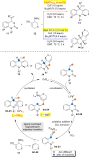


Development and mechanistic studies of calcium–BINOL phosphate-catalyzed hydrocyanation of hydrazones
Beilstein J. Org. Chem. 2025, 21, 755–765, doi:10.3762/bjoc.21.59
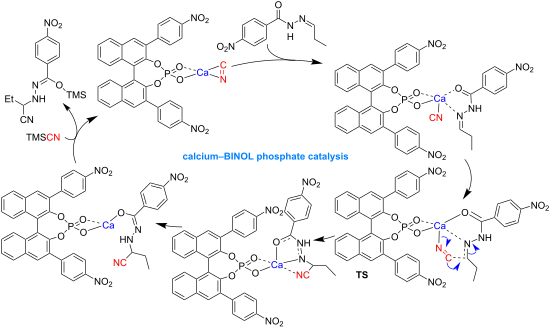
- studies by the groups of Akiyama and Terada in 2004 [14][15], many excellent results have been achieved by applying BINOL-derived phosphoric acids, which can act as proton donor and acceptor [16][17][18][19], possessing both Brønsted acid and Lewis base character [20]. Substantial effort has been invested


Synthesis of HBC fluorophores with an electrophilic handle for covalent attachment to Pepper RNA
Beilstein J. Org. Chem. 2025, 21, 727–735, doi:10.3762/bjoc.21.56
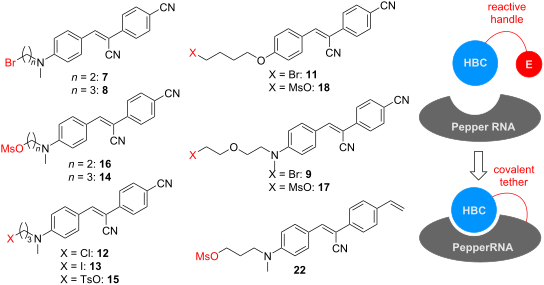
- )cyanophenylacetonitrile, called HBC [7]. This typical push–pull fluorophore uses a dialkylamino group as the electron donor and a cyano group as the electron acceptor, while the connecting conjugating system has been varied to obtain a series of derivatives covering a broad spectral range (Scheme 1) [7][12]. All of these

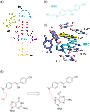


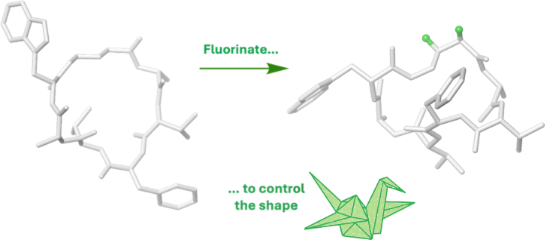
Origami with small molecules: exploiting the C–F bond as a conformational tool
Beilstein J. Org. Chem. 2025, 21, 680–716, doi:10.3762/bjoc.21.54
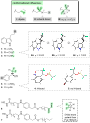
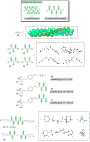
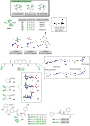
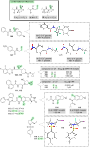
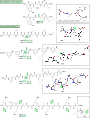
- polar C–F bonds at the end of an alkyl chain, is that the terminal C–H bond also becomes polarised. In the case of the difluoromethyl group, the terminal hydrogen bears a partial positive charge and is able to act as a H-bond donor (II, Figure 2). This can influence the conformation of the molecule if
- there is a H-bond acceptor suitably positioned elsewhere in the molecule (e.g., 4 vs 5, Figure 2) [15][16][17]. The ability of the difluoromethyl group to serve as a H-bond donor has also proven to be useful for optimising drug–target interactions [18][19][20], but since that application does not
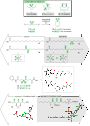
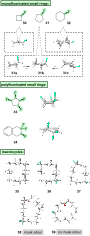
- which has potentially useful chameleonic polarity (and also lipophilic H-bond-donor ability). Progressing to the trifluoromethyl system (45, Figure 6): now there is an even stronger tendency for the fluorinated group to be oriented orthogonal to the aryl plane [80]. This can be explained by two factors








Photochemically assisted synthesis of phenacenes fluorinated at the terminal benzene rings and their electronic spectra
Beilstein J. Org. Chem. 2025, 21, 670–679, doi:10.3762/bjoc.21.53

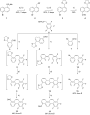
- molecules displayed high hole mobility [20][21][22][23][24][25][26] and imide-fused phenacenes served as n-type organic semiconductors [27]. It was also disclosed that donor–acceptor-type phenacenes provided environment-dependent fluorophores showing solvatochromic fluorescence behavior [28][29]. Because





Photocatalyzed elaboration of antibody-based bioconjugates
Beilstein J. Org. Chem. 2025, 21, 616–629, doi:10.3762/bjoc.21.49
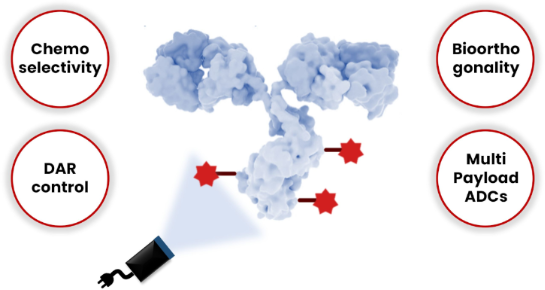
- the light, the lamp wattage, and diverse photocatalysts or mechanisms (e.g., energy transfer, photoredox, or electron-donor/electron-acceptor photoinduced electron transfer) might all be brought to bear on controlling the DAR. In addition to the DAR, homogeneity for conjugation at specific sites using


Study of the interaction of 2H-furo[3,2-b]pyran-2-ones with nitrogen-containing nucleophiles
Beilstein J. Org. Chem. 2025, 21, 556–563, doi:10.3762/bjoc.21.44
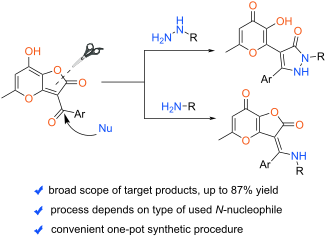
- 4). The suggested method allows one to utilize arylhydrazines both with donor and acceptor substituents in the aromatic ring. Besides that, heterocyclic hydrazines also can be used in the considered transformation. In addition, we have tried to carry out the process under investigation with


Asymmetric synthesis of β-amino cyanoesters with contiguous tetrasubstituted carbon centers by halogen-bonding catalysis with chiral halonium salt
Beilstein J. Org. Chem. 2025, 21, 547–555, doi:10.3762/bjoc.21.43
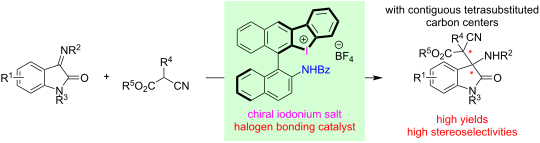
- of its unique interaction in organic synthesis. Chiral halonium salts have been found to have strong halogen-bonding-donor abilities and work as powerful asymmetric catalysts. Recently, we have developed binaphthyl-based chiral halonium salts and applied them in several enantioselective reactions


Deep-blue emitting 9,10-bis(perfluorobenzyl)anthracene
Beilstein J. Org. Chem. 2025, 21, 515–525, doi:10.3762/bjoc.21.39
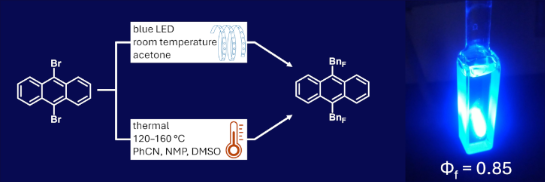
- used to achieve higher yields [27]. Even in the absence of a transition-metal-based photosensitizer, a recent study showed that perfluoroalkylation using perfluoroalkyl iodides (RFI) could be carried out by activation of the RF–I bonds by formation of electron donor–electron acceptor complexes with an


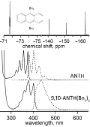

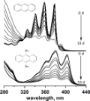


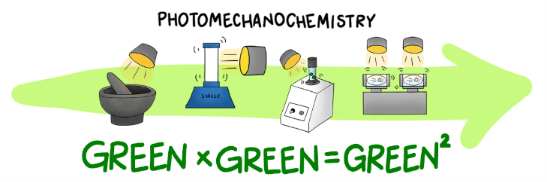
Photomechanochemistry: harnessing mechanical forces to enhance photochemical reactions
Beilstein J. Org. Chem. 2025, 21, 458–472, doi:10.3762/bjoc.21.33
- observed in dilute solutions because of the formation of aggregates perturbing electronic transitions [51][52][53]. Moreover, at high concentrations, the formation of electron donor–acceptor (EDA) complexes [54] or exciplexes is expected to be favored, and the effect of mechanical forces on these is worth