


Search results
Search for "electrostatic interactions" in Full Text gives 120 result(s) in Beilstein Journal of Organic Chemistry.
Adhesion, forces and the stability of interfaces
Beilstein J. Org. Chem. 2019, 15, 106–129, doi:10.3762/bjoc.15.12
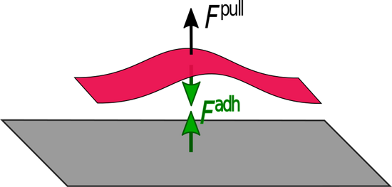
- interactions were nearly exclusively attributed to electrostatic interactions. We discuss the importance of dispersion interactions for the stabilization in systems that are traditionally explained in terms of the “special interactions” mentioned above. System stabilization can be explained by using
- more than a dispersion-dominated WMI. On the other hand, electrostatic interactions are often ignored, unless the interacting molecules have obvious dipolar structures. For example, the fact that there is electrostatic interaction between the quadrupoles of benzene molecules is mostly ignored or not
- quantities, and one cannot infer from tabulated dipole–dipole polarizabilities whether or not the higher short-range interactions are important or not. As for electrostatic interactions, the induction energy at short distances between the multipoles is in error for point-multipoles, but can be corrected when


Synthesis, biophysical properties, and RNase H activity of 6’-difluoro[4.3.0]bicyclo-DNA
Beilstein J. Org. Chem. 2019, 15, 79–88, doi:10.3762/bjoc.15.9
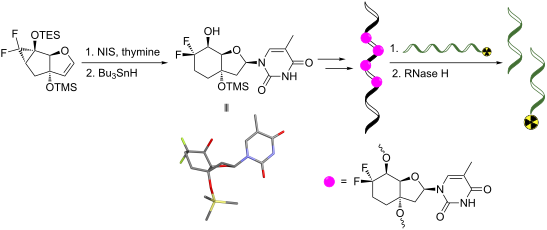
- fluorine atom pointing into the minor groove. Conversely, in the Ara-FHNA, repulsive electrostatic interactions between the fluorine atom and the 4’-oxygen of the 3’-adjected nucleotide resulted in a partial unstacking of the nucleobases and a destabilizing effect upon duplex formation [26]. Also other
- . The reason for the destabilizing nature of the 6’-diF-bc4,3-T versus both complements might be found in repulsive electrostatic interactions between the fluorine atoms and the 5’-oxygen. In the case of multiple insertions it might be possible that these interactions might be reduced or maybe
- destabilization might be accounted to repulsive electrostatic interactions between the equatorial fluorine atom and the 5’-oxygen. CD spectroscopy of the duplexes disclosed that the helical structure of the modified oligonucleotides paired to complementary DNA was still of a B-type, whereas an intermediate A/B


6’-Fluoro[4.3.0]bicyclo nucleic acid: synthesis, biophysical properties and molecular dynamics simulations
Beilstein J. Org. Chem. 2018, 14, 3088–3097, doi:10.3762/bjoc.14.288
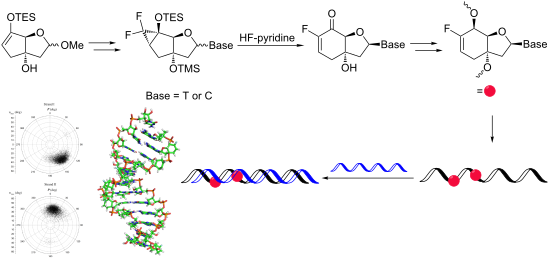
- entropical stabilization of the duplex structure. The cyclohexene ring of the modified unit adopted either a twist-boat or a boat alignment in the fully modified strand of both duplex types. Consequently, the fluorine atom was arranged in a way that the repulsive electrostatic interactions with the C(5
- simulations revealed a very rigid bicyclic sugar system with a diminished conformational adaptability of the cyclohexene unit. Mainly this rigidity in combination with the repulsive electrostatic interactions of the fluorine atom and the C(5’) oxygen seem to be responsible for the duplex destabilization


Pathoblockers or antivirulence drugs as a new option for the treatment of bacterial infections
Beilstein J. Org. Chem. 2018, 14, 2607–2617, doi:10.3762/bjoc.14.239
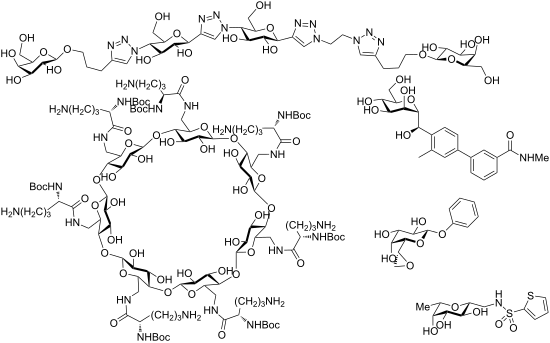
- interact with the tyrosine gate formed by Tyr48 and Tyr137 [15][16], as well as form hydrogen bonds and electrostatic interactions with the Arg98/Glu50 salt bridge of the protein. Taking this coordination geometry into consideration for further ligand optimization, it was found important to focus on the




Synthesis of new p-tert-butylcalix[4]arene-based polyammonium triazolyl amphiphiles and their binding with nucleoside phosphates
Beilstein J. Org. Chem. 2018, 14, 1980–1993, doi:10.3762/bjoc.14.173
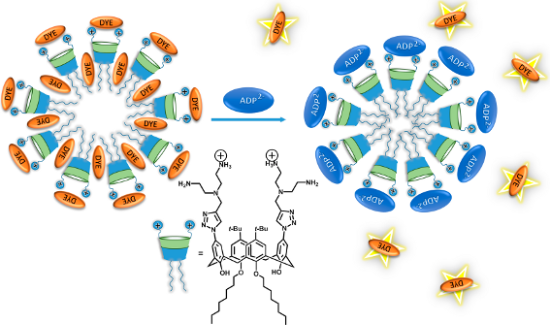
- nucleotides must possess selectivity towards these anions. From this point of view, nucleotide receptors based on polyammonium cations are of great demand because the electrostatic interactions of such polyammonium systems and negatively charged phosphates are strong. Hydrogen bonding [8] and π-stacking
- + represent the dye and calixarene ions, respectively. By increasing the concentration to values above the CAC complexes with 3:2 stoichiometry are observed. This indicates that the interaction of forming aggregates with EY relies on both electrostatic interactions with positively charged headgroups and


Design, synthesis and structure of novel G-2 melamine-based dendrimers incorporating 4-(n-octyloxy)aniline as a peripheral unit
Beilstein J. Org. Chem. 2018, 14, 1704–1722, doi:10.3762/bjoc.14.145
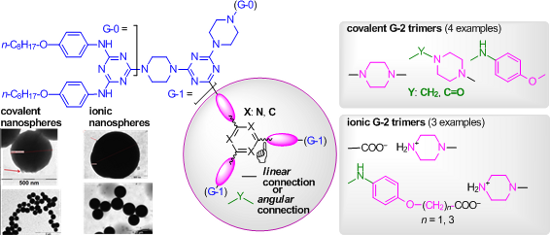
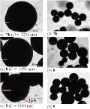
- , due to their electrostatic interactions (attractions vs repulsions) G-2 ionic dendrimers 7b, 8 and 9 (Figure 10) produced the most developed spherical nano-aggregates. The ionic relationships masked those deduced in covalent series, namely the π–π and π–H stacking and angular-propeller connectivity of




Natural and redesigned wasp venom peptides with selective antitumoral activity
Beilstein J. Org. Chem. 2018, 14, 1693–1703, doi:10.3762/bjoc.14.144
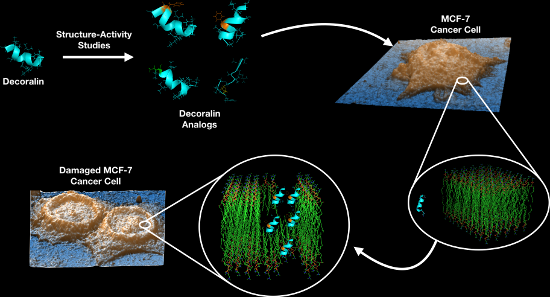
- electrostatic interactions, after which they tend to adopt helical conformations, which causes cell membrane permeabilization or even membrane disruption that may lead to necrosis [33]. These peptides may also be internalized into the cell, leading to the disruption of the mitochondrial membrane and causing


Steric “attraction”: not by dispersion alone
Beilstein J. Org. Chem. 2018, 14, 1482–1490, doi:10.3762/bjoc.14.125
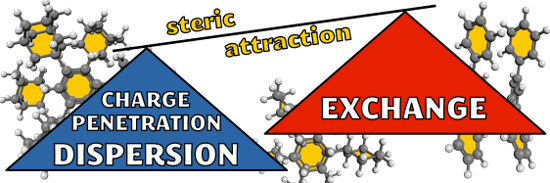
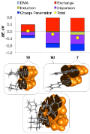
- steric bulk. In the present work, we quantify this contribution for a diverse set of molecular cores, ranging from unsubstituted benzene and cyclohexane to their derivatives carrying tert-butyl, phenyl, cyclohexyl and adamantyl substituents. While the importance of electrostatic interactions in the



Oligonucleotide analogues with cationic backbone linkages
Beilstein J. Org. Chem. 2018, 14, 1293–1308, doi:10.3762/bjoc.14.111
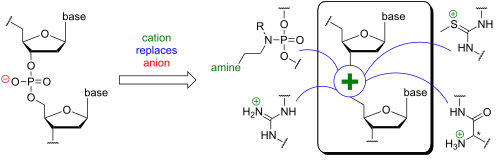
- range and its ability to form both intermolecular electrostatic interactions and hydrogen bonds [50]. Letsinger's aminoalkyl phosphoramidate modification was stereogenic at the phosphorus atom, thus leading to complex mixtures of diastereomeric oligomers (with the exception of the aforementioned related





An overview of recent advances in duplex DNA recognition by small molecules
Beilstein J. Org. Chem. 2018, 14, 1051–1086, doi:10.3762/bjoc.14.93
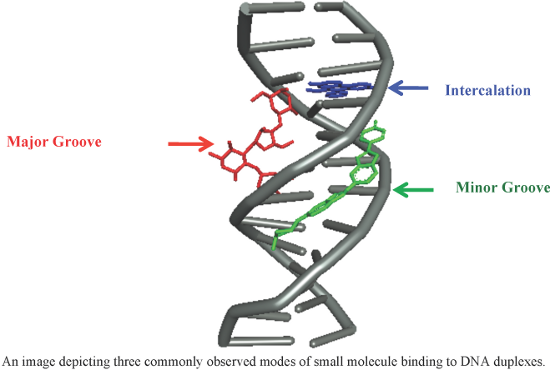
- –indole amide minor groove binders connected through alkyl or ethoxyethyl linkers were developed by Tecilla et al. [111]. The authors confirmed that these conjugates with tach units, either free or Zn(II)-complexed forms, bind strongly to the minor groove through electrostatic interactions with the
- , thereby reducing strength of electrostatic interactions between the ligands with DNA phosphate backbone [120]. Wilson et al. rationally designed benzimidazole derivatives by keeping pre-organized N-methylbenzimidazole (N-MeBI)-thiophene as central fragment (conjugates 55 and 56, Figure 10) in order to




Local energy decomposition analysis of hydrogen-bonded dimers within a domain-based pair natural orbital coupled cluster study
Beilstein J. Org. Chem. 2018, 14, 919–929, doi:10.3762/bjoc.14.79
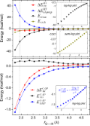
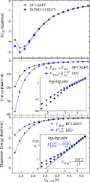
- between the DFT-SAPT and DLPNO-CCSD(T) total interaction energies decreases with increasing intermolecular distance. A comparison of electrostatic interactions estimated by LED and DFT-SAPT is shown in the central panel of Figure 5. At the equilibrium geometry, the sum of Eelstat and (the only provides a
- previous sections, the geometric preparation, weak pairs, and perturbative triples do not contribute significantly to the relative stabilities of the different conformers. In all cases, the largest LED terms are electronic preparation and electrostatic interactions at the HF level. This is not surprising
- , considering the strong dipole moments of water and HF and in light of the fact that the electrostatic interaction is well described at the HF level, as shown in the previous section. Interestingly, Eelstat and ΔEe show similar trends, thus highlighting the importance of classical electrostatic interactions in


An uracil-linked hydroxyflavone probe for the recognition of ATP
Beilstein J. Org. Chem. 2018, 14, 747–755, doi:10.3762/bjoc.14.63
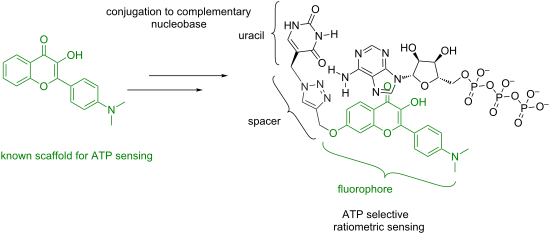
- a uracil nucleobase to the known 4’-dimethylamino-hydroxyflavone fluorophore. Results: The complexation of this scaffold with ATP is already known. The complex is held together by stacking and electrostatic interactions. To achieve multi-point recognition, we designed the uracil-appended version of
- , 4’-dimethylaminohydroxyflavone) was utilized by Pivovarenko and co-workers in ATP sensing in aqueous solution and in mitochondria [34][44]. DMHF was found to form 1:1 and 1:2 complexes with ATP. The two components were held together by π-stacking and by electrostatic interactions of the positively




Fluorogenic PNA probes
Beilstein J. Org. Chem. 2018, 14, 253–281, doi:10.3762/bjoc.14.17
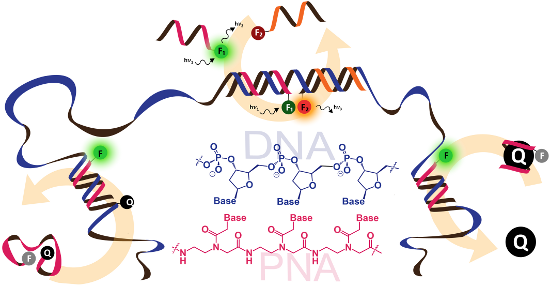
- make a close contact. However, based on their detailed comparative studies between stemless PNA and DNA beacons, the Boston Probes group argued that the quenching was more likely due to hydrophobic and electrostatic interactions between the fluorophore and the quencher. Nevertheless, different




Polarization spectroscopy methods in the determination of interactions of small molecules with nucleic acids – tutorial
Beilstein J. Org. Chem. 2018, 14, 84–105, doi:10.3762/bjoc.14.5
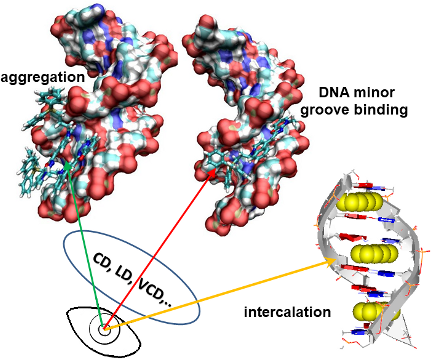
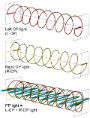
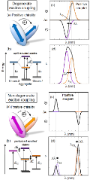
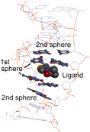
- surface through electrostatic interactions with the phosphate backbone. However, that is plausible only for highly positive-charged ligands (at least four net positive charges present). 3.3.4. Strong ICD (intensity of ICD band similar or stronger than the CD bands of DNA/RNA): Usually of positive sign






Position-dependent impact of hexafluoroleucine and trifluoroisoleucine on protease digestion
Beilstein J. Org. Chem. 2017, 13, 2869–2882, doi:10.3762/bjoc.13.279
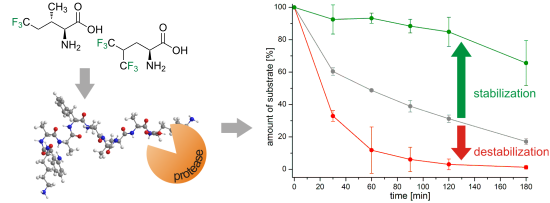
- strong, short C–F bonds and perturb the acidity and basicity of adjacent functional groups. Moreover, these changes may strongly influence hydrogen bonding and electrostatic interactions that are crucial for binding to receptors or, in context of protease stability, enzymes. Thus, when introduced in the


Binding abilities of polyaminocyclodextrins: polarimetric investigations and biological assays
Beilstein J. Org. Chem. 2017, 13, 2751–2763, doi:10.3762/bjoc.13.271
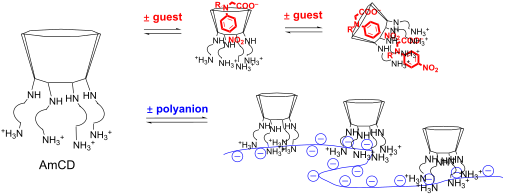
- binding efficiencies towards pDNA can be easily explained considering that, due to its peculiar conformation, the closer disposition of the negatively charged phosphate groups enables an optimization of the electrostatic interactions with the cationic AmCD. It is also reasonable to assume that the



Binding abilities of a chiral calix[4]resorcinarene: a polarimetric investigation on a complex case of study
Beilstein J. Org. Chem. 2017, 13, 2698–2709, doi:10.3762/bjoc.13.268
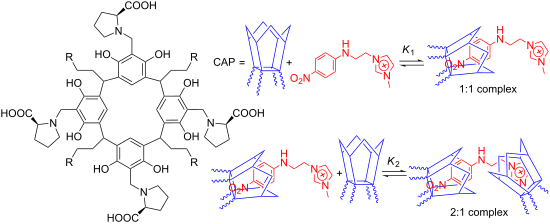
- observed of purely aliphatic cations; ii) non-specific electrostatic interactions, as accounted for by the lack of inclusion of anions. Furthermore, at least in the case of the p-nitroaniline derivatives, the aliphatic moiety of the guest interacts with the prolinylmethyl groups at the host rim, affecting




What contributes to an effective mannose recognition domain?
Beilstein J. Org. Chem. 2017, 13, 2584–2595, doi:10.3762/bjoc.13.255
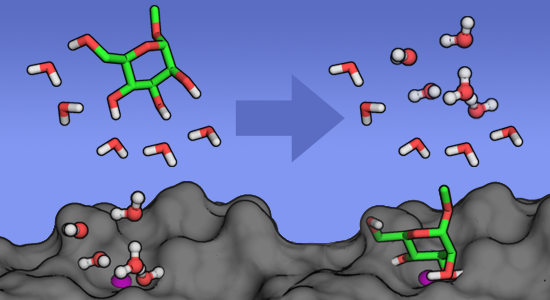
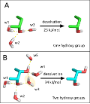
- ). With the entropically driven sLex interaction, surface waters are displaced to the bulk and penalized by a positive enthalpy term resulting from a desolvation penalty that is not compensated by the newly formed electrostatic interactions (Figure 6) [67]. According to Dunitz [68], the entropy that can
- desolvation are often neglected. Because of the large number of hydroxy groups present in carbohydrate ligands, and the polar amino acid side chains of the lectin binding sites, desolvation generates an essential enthalpic penalty which can hardly be compensated for by the newly formed electrostatic
- interactions [60]. Cabani et al. calculated that the desolvation of an isolated hydroxy group causes an enthalpic penalty of ΔH = 35 kJ/mol, which is slightly reduced by a beneficial entropic term of ΔS = 10 kJ/mol due to the release of solvating water molecules into bulk [61]. As a result, the desolvation





p-tert-Butylthiacalix[4]arenes functionalized by N-(4’-nitrophenyl)acetamide and N,N-diethylacetamide fragments: synthesis and binding of anionic guests
Beilstein J. Org. Chem. 2017, 13, 1940–1949, doi:10.3762/bjoc.13.188
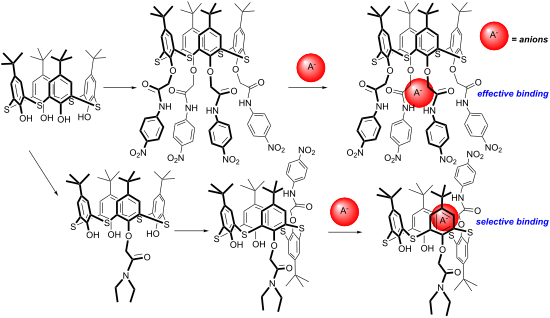
- anions are larger in size than cations and therefore have a smaller charge in relation to their radius. It means that the electrostatic interactions for anions binding are weaker than for cations. Anions have various shape and geometry, and the design of receptors that are complementary to a specific


Conformational impact of structural modifications in 2-fluorocyclohexanone
Beilstein J. Org. Chem. 2017, 13, 1781–1787, doi:10.3762/bjoc.13.172

- and σC–H2ax → π*C=S interactions are more stabilizing than σC–H2ax → π*C=C, but they are also accompanied by strong steric and electrostatic interactions (see the high values for both Lewis and non-Lewis terms when Y = O and S compared to CH2). When the X = S and NHeq groups take place, the equatorial
- < S, since the repulsion with the Feq substituent increases in this order. The hypothesis based on steric and electrostatic interactions is supported by the increase of the axial population from Y = CH2 to S, despite the better electron-acceptor ability of the π*C=S in comparison to π*C=O and π*C=C
- the electronic delocalization energies, as well as the Lewis (steric and electrostatic interactions) and non-Lewis (electron delocalization) contributions through the NOSTAR keyword. Chemical shifts and spin–spin coupling constant calculations were also performed at the ωB97X-D/6-311+g(d,p) level. All


Chemical systems, chemical contiguity and the emergence of life
Beilstein J. Org. Chem. 2017, 13, 1551–1563, doi:10.3762/bjoc.13.155
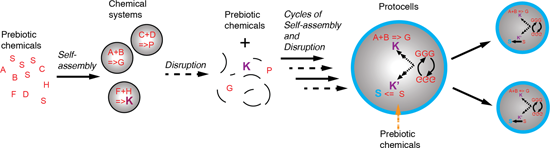
- research groups have demonstrated their abilities to induce formation of evolved protocell systems. For instance, they have been shown to be capable of accumulating small molecules on their charged surfaces (electrostatic interactions) [49] or within pores and brines by thermophoresis and convection


2-Methyl-2,4-pentanediol (MPD) boosts as detergent-substitute the performance of ß-barrel hybrid catalyst for phenylacetylene polymerization
Beilstein J. Org. Chem. 2017, 13, 1498–1506, doi:10.3762/bjoc.13.148
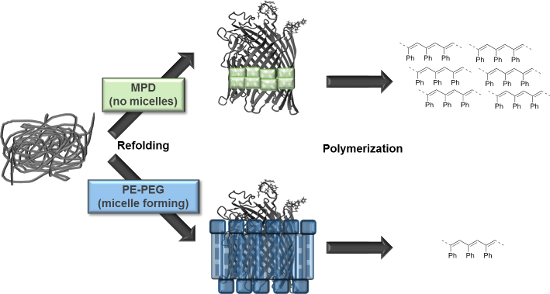
- distributed MPD molecules as cosolvent [52][53][54][55][56]. The MD calculations (75 ns each) were performed using the AMBER99 force field for the protein and GAFF for MPD cosolvent. The electrostatic interactions were calculated using a 8 Å cut-off and Particle Mesh Ewald [57] for long range electrostatics


Towards open-ended evolution in self-replicating molecular systems
Beilstein J. Org. Chem. 2017, 13, 1189–1203, doi:10.3762/bjoc.13.118
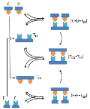
- enhanced by electrostatic interactions between amino acids residing on the c and g positions of the α-helices. Ghadiri et al. showed that such coiled-coil peptides are capable of self-replication [35]. As depicted in Figure 7, helical polypeptides can act as a template for shorter peptide fragments by




Fluorescent carbon dots from mono- and polysaccharides: synthesis, properties and applications
Beilstein J. Org. Chem. 2017, 13, 675–693, doi:10.3762/bjoc.13.67
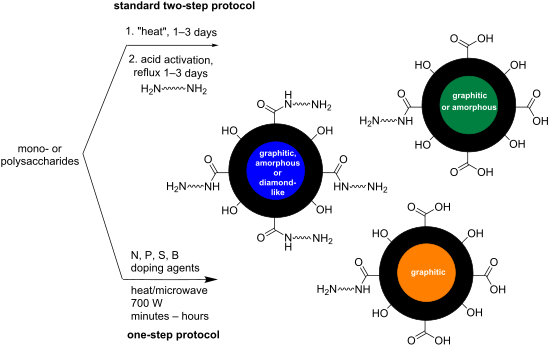
- pHs, further supported the proposed electrostatic interactions between DOX and the CDs. Further studies showed initial efficacy of the DOX–CD adduct as a beneficial drug-delivery system, even in animal models. On the other hand, Zhao et al. described an alternative synthesis for N/P-doped CDs


Spectral and DFT studies of anion bound organic receptors: Time dependent studies and logic gate applications
Beilstein J. Org. Chem. 2017, 13, 222–238, doi:10.3762/bjoc.13.25
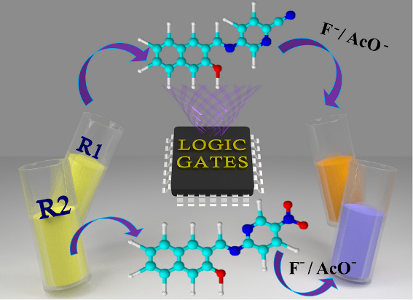
- receptors for anions have been developed based on various modes of interactions such as hydrogen bond and electrostatic interactions which rely on directionality and distance-dependent nature, respectively. Hydrogen bond formation is further tuned by the acidity of protons by virtue of the presence of





