Search results
Search for "emission" in Full Text gives 495 result(s) in Beilstein Journal of Organic Chemistry. Showing first 200.
Synthesis, structure and π-expansion of tris(4,5-dehydro-2,3:6,7-dibenzotropone)
Beilstein J. Org. Chem. 2025, 21, 1–7, doi:10.3762/bjoc.21.1
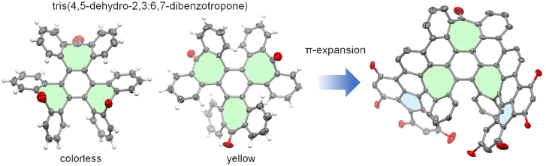
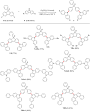
- in 3, which consume the energy of the excited state. Figure 4 shows the UV–vis absorption spectrum of 3 in cyclohexane with the absorption edge at 561 nm and its emission spectrum with a peak at 580 nm. In the test windows of cyclic voltammetry (Supporting Information File 1, Figure S1), 3 exhibits
- clarification). Structure of (M,P,M)-3 in the crystal of 3·CH2Cl2 (carbon and oxygen atoms are shown as grey and red ellipsoid at the level of 50% probability, and hexyl groups and hydrogen atoms are removed for clarity). UV–vis absorption spectrum (black line) and emission spectrum (blue line, excited at 400


Synthesis, characterization, and photophysical properties of novel 9‑phenyl-9-phosphafluorene oxide derivatives
Beilstein J. Org. Chem. 2024, 20, 3299–3305, doi:10.3762/bjoc.20.274
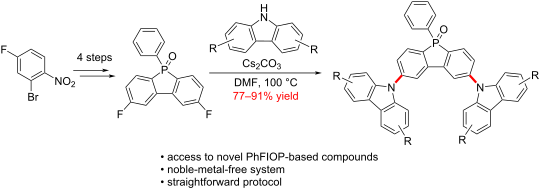
- has insignificant effect on the molecular ground state of 7-H. The PL spectra of the PhFlOP-based compounds 7 in toluene at room temperature are shown in Figure 3, and the λem values are included in Table 2. Different emission wavelengths are observed due to the various substituents present in the
- significantly blueshifted emission maximum at 392 nm, perhaps as a consequence of a more rigid configuration. As for 7-Br, owing to the electron-withdrawing properties of Br, it displays a blueshifted PL maximum at 383 nm. The emission wavelength of 7-Cz-2 has a slight redshift compared to 7-Cz-1, which may be
- induced by the stronger electron-donating feature of the carbazole substituent located on the donor carbazole group. In addition, we tested the emission wavelength of 7-H in different solvents (Figure 3b) and found that the maximum is redshifted gradually with increasing solvent polarity, which indicates




Efficient synthesis of fluorinated triphenylenes with enhanced arene–perfluoroarene interactions in columnar mesophases
Beilstein J. Org. Chem. 2024, 20, 3263–3273, doi:10.3762/bjoc.20.270
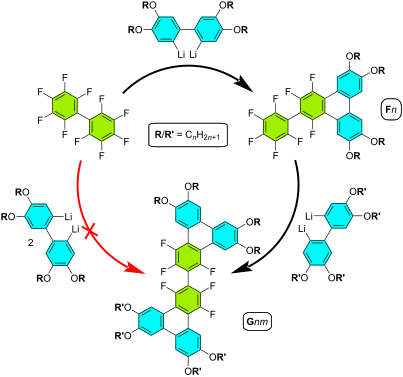
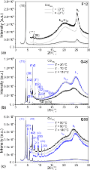
- fluorescence emission spectroscopies reveal green photoluminescence with fluorescence quantum yields of up to 33% for the Fn derivatives. The J-aggregation for the inner fluorine-substituted dimers Gnm is energetically and stereoelectronically more favorable and G66 exhibits thin-film fluorescence with a large
- red-shift of the emission peak. Keywords: arene–perfluoroarene interaction; decafluorobiphenyl; fluorinated triphenylene; fluoroarene nucleophilic substitution; organolithium; Introduction Non-covalent arene–fluoroarene intermolecular interactions [1][2] are drawing increasing attention due to their
- ] in combination with tunable absorption and emission of visible light. Polar nematic phase [23] and chiral columnar phase materials [24] based on polar fluorobenzene rings have also recently emerged as interesting new classes of fluorous materials, revealing their enormous potential in the high-tech




Discovery of ianthelliformisamines D–G from the sponge Suberea ianthelliformis and the total synthesis of ianthelliformisamine D
Beilstein J. Org. Chem. 2024, 20, 3205–3214, doi:10.3762/bjoc.20.266
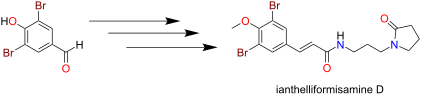
- , emission 590 nm). Chemical structures of ianthelliformisamines A–G (1–7) and aplysterol (8). Key COSY (), HMBC () and ROESY () correlations for ianthelliformisamines D (4) and E (5). Key COSY () and HMBC () correlations for ianthelliformisamines F (6) and G (7). Total synthesis of ianthelliformisamine D (4


![[Graphic 1]](/bjoc/content/inline/1860-5397-20-266-i2.svg?max-width=637&scale=1.18182)
![[Graphic 2]](/bjoc/content/inline/1860-5397-20-266-i3.svg?max-width=637&scale=1.18182)
![[Graphic 3]](/bjoc/content/inline/1860-5397-20-266-i4.svg?max-width=637&scale=1.18182)

![[Graphic 4]](/bjoc/content/inline/1860-5397-20-266-i5.svg?max-width=637&scale=1.18182)
![[Graphic 5]](/bjoc/content/inline/1860-5397-20-266-i6.svg?max-width=637&scale=1.18182)

Cyclodextrin-based rotaxanes for polymer materials: challenge on simultaneous realization of inexpensive production and defined structures
Beilstein J. Org. Chem. 2024, 20, 3026–3049, doi:10.3762/bjoc.20.252
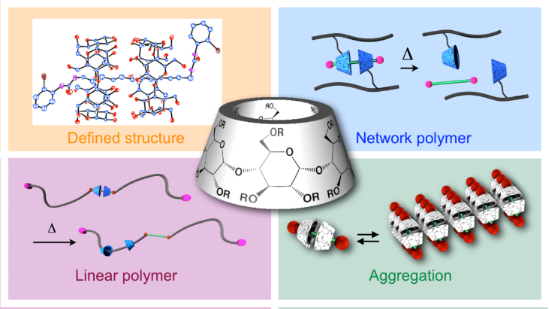
- fluorescence (Figure 15C,D). Namely, the fluorescence of the initial RCP in DMF was observed as a blue emission by the naked eye, while according to the degradation, the dumbbell species spread throughout the solution and the [3]rotaxane structure disappeared, resulting in the light green color fluorescence of






Tunable full-color dual-state (solution and solid) emission of push–pull molecules containing the 1-pyrindane moiety
Beilstein J. Org. Chem. 2024, 20, 3016–3025, doi:10.3762/bjoc.20.251

- pyrindane – (E)-7-arylmethylene-2-chloro-6,7-dihydro-5H-cyclopenta[b]pyridine-3,4-dicarbonitriles – was developed. Tunable full-color emission was achieved for the synthesized push–pull molecules, solely by changing donor groups while keeping both the conjugated system and acceptor part of the molecule
- unchanged. This represents a rare approach for the design of such fluorophores. Arylidene derivatives of pyrindane were found to be efficient fluorescent dyes showing a moderate to high emission quantum yield. The push–pull molecules were also characterized by a dual-state emission (in solution and in the
- solid state). Emission maxima ranged from 469 to 721 nm in solution depending on the solvent and type of donor substituent, and from 493 to 767 nm in the solid state. For the arylidene derivative of pyrindane with a dimethylamino group, it was shown that fluorescence can be changed by the action of an


Recent advances in transition-metal-free arylation reactions involving hypervalent iodine salts
Beilstein J. Org. Chem. 2024, 20, 2891–2920, doi:10.3762/bjoc.20.243

- sulfonylation was confirmed as no product was found when carrying out the reaction in the presence of radical scavengers. Stern–Volmer studies indicated a significant fluorescence emission quenching of methylene blue by DIPEA, suggesting a reductive quenching of methylene blue during the reaction. Experiments




Synthesis of pyrrole-fused dibenzoxazepine/dibenzothiazepine/triazolobenzodiazepine derivatives via isocyanide-based multicomponent reactions
Beilstein J. Org. Chem. 2024, 20, 2870–2882, doi:10.3762/bjoc.20.241
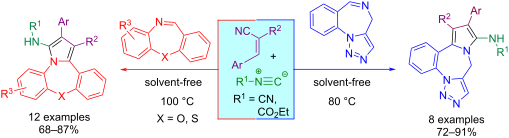
- their suitable fluorophores [49][50][51]. The UV–vis absorption and emission spectra of products 4 and 6 were studied in ethanol at 298 K. The absorption range (λabs) was 400–225 nm, and the emission range (λem) was 560–400 nm. These findings are shown in Figure S3 in Supporting Information File 1. An
- interesting trend for the absorption of the synthesized derivatives 4 and 6 was observed when electron-donating substituents were present in the phenyl ring, which led to an increase in the intensity of the absorption and emission wavelengths (Supporting Information File 1, Figure S3). As is evident in
- yield is therefore important [52][53][54]. Therefore, the quantum yield was determined using the standard of quinine sulfate for all the products (4a–l and 6a–h). Products 4a and 6c, which had the highest intensity of absorption and emission from derivatives of benzoxazepines and triazolobenzodiazepines






Investigation of a bimetallic terbium(III)/copper(II) chemosensor for the detection of aqueous hydrogen sulfide
Beilstein J. Org. Chem. 2024, 20, 2818–2826, doi:10.3762/bjoc.20.237

- fluorescent-based sensors; notable features include large Stokes shifts, extended luminescent lifetimes, and precisely defined emission bands [15]. Typically lasting in the order of milliseconds, their extended luminescent lifetimes enable the implementation of time-gated detection methods, effectively
- exhibited high luminescence (with a quantum yield of 68%) and displayed the characteristic trivalent terbium emission bands with emission peaks at 491 nm, 545 nm, 583 nm, and 621 nm, corresponding to transitions from the 5D4 excited state to the 7F6, 7F5, 7F4, and 7F3 ground states, respectively (Figure 2
- ). Response of Tb.1 with Cu2+ ions The addition of excess Cu2+ ions to Tb.1 was expected to result in complete saturation of emission signals. However, upon the titration of Cu2+ ions to 5 μM Tb.1 (10 mM Tris-HCl buffer containing 5% DMSO, pH 7.4), emission signal saturation was not observed until 5


Interaction of a pyrene derivative with cationic [60]fullerene in phospholipid membranes and its effects on photodynamic actions
Beilstein J. Org. Chem. 2024, 20, 2732–2738, doi:10.3762/bjoc.20.231

- -6000 spectrofluorometer (Shimadzu Corporation, Kyoto, Japan) (excitation at 341 nm, emission at 360–500 nm) to evaluate the interaction between catC60 and PyBA in DMPC membranes. Measurements were also performed after the addition of 10 times the volume of methanol to the liposome samples to liberate


Synthesis of benzo[f]quinazoline-1,3(2H,4H)-diones
Beilstein J. Org. Chem. 2024, 20, 2708–2719, doi:10.3762/bjoc.20.228
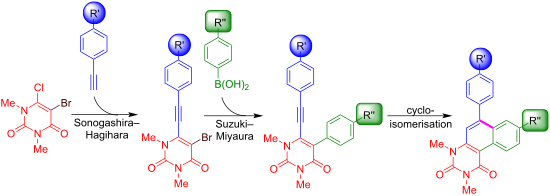
- coefficients and bathochromically shifted absorption bands which might be a result of a certain intramolecular charge transfer between the donating N,N-dimethylamino group and the electron-deficient uracil moiety. Similar effects are observed for the emission spectra. The emission maxima of N,N-dimethylamino
- -group-containing compounds 5d and 5f are bathochromically shifted by ≈80 nm and ≈100 nm, respectively. The other compounds show similar emission maxima at ≈405 nm, hinting to a limited impact of the aryl substituents and their functional groups on the emission properties for these compounds. Moreover
- , bathochromically shifted absorption and emission spectra with elevated extinction coefficients and quantum yields up to 71%. Further studies will be directed to the synthesis to polycyclic, π-conjugated uracil derivatives. Experimental General information Nuclear magnetic resonance spectra (1H/13C/19F NMR) were




Photoluminescence color-tuning with polymer-dispersed fluorescent films containing two fluorinated diphenylacetylene-type fluorophores
Beilstein J. Org. Chem. 2024, 20, 2682–2690, doi:10.3762/bjoc.20.225
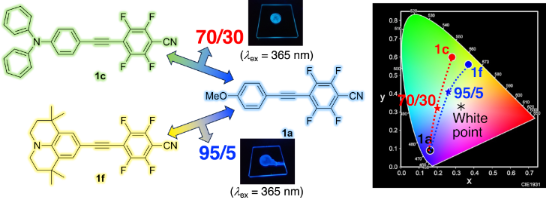
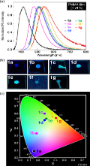
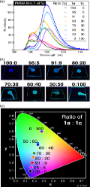
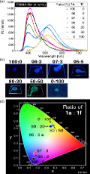
- luminescent materials, particularly after the 2001 discovery of aggregation-induced emission. This study focuses on fluorinated diphenylacetylene-based luminescent molecules, revealing that specific molecular modifications can enhance fluorescence and achieve a wide range of photoluminescence colors. A simple
- if blue and green–yellow or yellow fluorophores are blended in appropriate ratios, a binary blend with color coordinates (0.20, 0.32) can be achieved, which approaches the white point of pure white emission. These findings contribute to the development of effective lighting and display devices as new
- has been severely delayed [4][5][6]. However, since Tang et al. first reported the aggregation-induced emission phenomenon in 2001 [7], the development of solid-state light-emitting materials has accelerated significantly [8][9][10]. Many photoluminescent materials that emit blue, green, and yellow


Applications of microscopy and small angle scattering techniques for the characterisation of supramolecular gels
Beilstein J. Org. Chem. 2024, 20, 2608–2634, doi:10.3762/bjoc.20.220

- systems are indeed representative. CLSM also often has poor resolution due to the use of light used for imaging. Other fluorescent imaging techniques such as super resolution fluorescence microscopy (for example, stimulated emission depletion (STED) microscopy or point accumulation for imaging in
- between the beam and sample result in the emission of secondary scattered electrons, back-scattered electrons and X-rays which can be detected to produce an image. In contrast, TEM can measure the bright-field image, among other modes, by blocking the scattered electrons and detecting only the unscattered


Anion-dependent ion-pairing assemblies of triazatriangulenium cation that interferes with stacking structures
Beilstein J. Org. Chem. 2024, 20, 2567–2576, doi:10.3762/bjoc.20.215
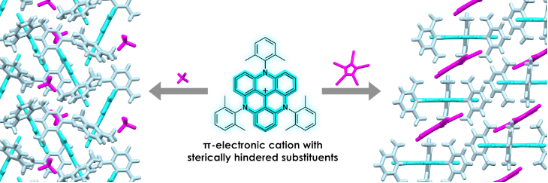
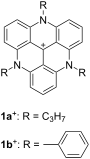
- introduction of N-aryl units during the synthesis is rendered difficult owing to steric hindrances. For example, N-phenyl-substituted TATA+ cation 1b+ (Figure 1) [26] exhibited slightly red-shifted absorption and emission, with a higher quantum efficiency compared to those of N-alkyl-substituted TATA+ cations
- desorption ionization time-of-flight mass spectrometry (MALDI–TOF MS). The synthesized ion pairs showed similar electronic properties in solution state. In CH3CN, 2+-BF4− exhibited UV–vis absorptions at 273, 350, and 524 nm and fluorescence emission at 607 nm upon excitation at 524 nm. The absorption band at



Metal-free double azide addition to strained alkynes of an octadehydrodibenzo[12]annulene derivative with electron-withdrawing substituents
Beilstein J. Org. Chem. 2024, 20, 2234–2241, doi:10.3762/bjoc.20.191
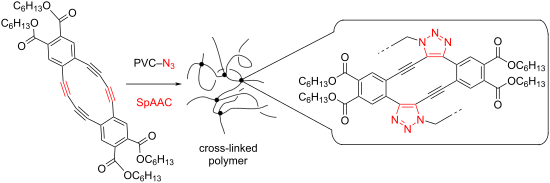
- outer side (in-out-ts), but the thermodynamically stable final product is a regioselective “in-in” adduct, i.e., compound 6a. Optical properties Absorption and emission spectra of 6a were measured in CH2Cl2 (Figure 5). The conjugation is changed and a highly-twisted macrocyle forms by the double azide
- addition. Thus, compound 6a shows an ultraviolet absorption peak at 249 nm (λmax) and no absorption in the visible region was observed. When excited at 249 nm, an emission band at 513 nm (λem) appeared in the spectrum with a fluorescence quantum yield (Φ) of 7.0%. The absorption and fluorescence spectra
- were almost independent of solvents. For example, the λem in CHCl3 and THF was 514 nm (Figure S11 in Supporting Information File 1). The double benzyl azide adduct of DBA-OHex displayed similar absorption and emission spectra with a λmax of 247 nm and λem of 539 nm in CH2Cl2. Since the Stokes shift of




Novel truxene-based dipyrromethanes (DPMs): synthesis, spectroscopic characterization and photophysical properties
Beilstein J. Org. Chem. 2024, 20, 2163–2170, doi:10.3762/bjoc.20.186
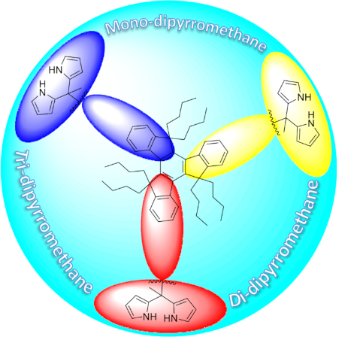
- –80%) along with their preliminary photophysical (absorption, emission and time resolved fluorescence lifetime) properties. The condensation reaction for assembling the required DPMs were catalyzed with trifluoroacetic acid (TFA) at 0 °C to room temperature (rt), and the stable dipyrromethanes were
- derivatives were successfully characterized and their structures were established by means of the 1H and 13C NMR spectroscopy, besides further confirmation by mass spectrometry (see Supporting Information File 1). The UV–vis absorption, emission and time-resolved fluorescence spectra Emission and absorption
- ). Interestingly, even though we observed variations in the absorption spectra for thus prepared truxene-based molecules, but all the truxene derivatives displayed almost similar types of the emission spectra under identical conditions except the variations in the intensities of the bands. The bands observed for


A new platform for the synthesis of diketopyrrolopyrrole derivatives via nucleophilic aromatic substitution reactions
Beilstein J. Org. Chem. 2024, 20, 1933–1939, doi:10.3762/bjoc.20.169
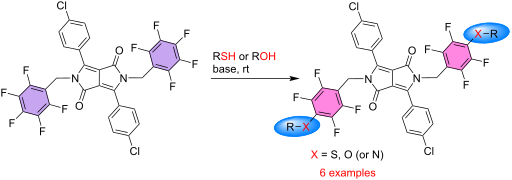
- parts per million (ppm) and the coupling constants (J) in hertz (Hz). UV–vis spectra were recorded on a Shimadzu UV-2501PC spectrophotometer using DMF as the solvent. The emission spectra were recorded with a Jasco FP-8300 spectrofluorometer using DMF as the solvent. Mass spectra were recorded using a
- Micromass Q-TOF-2TM mass spectrometer and CHCl3 as the solvent. The NMR, absorption and emission spectra of the new compounds are shown in Supporting Information File 1. Synthesis 3,6-Bis(4-chlorophenyl)-2,5-bis(pentafluorobenzyl)-2,5-dihydropyrrolo[3,4-c]pyrrole-1,4-dione (2) A suspension of DPP 1 (1 g
- . Synthesis of new diketopyrrolopyrroles via nucleophilic aromatic substitution. Spectroscopic data for the new compounds (between 1 × 10⁻⁶ M and 4 × 10⁻⁵ M in DMF). Supporting Information Supporting Information File 18: 1H NMR, 13C NMR and 19F NMR spectra; MS, UV–vis and emission spectra. Funding Thanks


The Groebke–Blackburn–Bienaymé reaction in its maturity: innovation and improvements since its 21st birthday (2019–2023)
Beilstein J. Org. Chem. 2024, 20, 1839–1879, doi:10.3762/bjoc.20.162
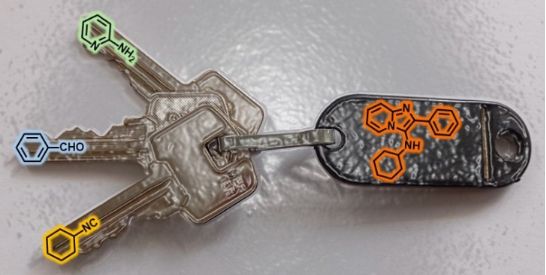


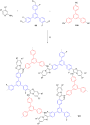
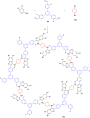


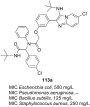


Synthesis and characterization of 1,2,3,4-naphthalene and anthracene diimides
Beilstein J. Org. Chem. 2024, 20, 1767–1772, doi:10.3762/bjoc.20.155
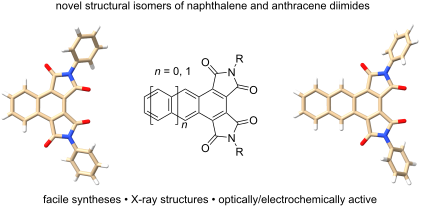
- 8-Ph, with λmax = 489 and 499 nm, respectively. These absorption features are roughly comparable to other naphthalene and anthracene diimides that have been reported in the literature. The emission profiles of all four compounds are shown in Figure 3b. While N,N’-dibutyl-1,4,5,8-naphthalene diimide
- has low fluorescence intensity (Φ = 0.006) [20], 7-Hex emits more efficiently with Φ = 0.41. Interestingly, 7-Ph has nearly no emission intensity, as evidenced by the low signal-to-noise ratio in the data and a near-zero quantum yield when excited at 400 nm. This fluorescence quenching is likely
- related to non-radiative emission that is observed for N-phenyl-substituted imides [21]. It is possible this effect is more significant for 7-Ph than 8-Ph because the naphthalene core is less conformationally locked than the anthracene scaffold. As is expected for aromatic diimides, the title compounds


A fiber-optic spectroscopic setup for isomerization quantum yield determination
Beilstein J. Org. Chem. 2024, 20, 1684–1692, doi:10.3762/bjoc.20.150

- with narrow bandwidths, the emission spectrum can be included in the rate equations. This correction is done by multiplying Equation 5 by the spectral distribution f(λ) of the light source and integrating over all wavelengths [45]: where Setup The UV–vis irradiation experiments were performed using a
- monochromatic light at first [24][49]. We chose the peak of the emission spectrum of the LED as the approximated monochromatic wavelength, since this value can substantially differ from the nominal wavelength of the LED, e.g., the 455 nm LED from ThorLabs has a peak in the emission spectrum at 445 nm. We
- furthermore determined the quantum yields again, taking the emission spectrum of the LED into account. The emission spectra were measured using our spectrometer by connecting the LEDs to the detector (Figure S1 in Supporting Information File 1). The following input parameters were used in both methods: the


Supramolecular assemblies of amphiphilic donor–acceptor Stenhouse adducts as macroscopic soft scaffolds
Beilstein J. Org. Chem. 2024, 20, 1590–1603, doi:10.3762/bjoc.20.142
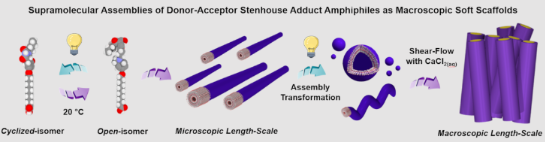
- observed compared to the THF solution (Figure 1a, black line), possibly due to supramolecular assembly in aqueous medium. Because of the broad absorption range of DA11 in aqueous medium, photoisomerization could not be effectively accomplished by a 625 nm LED light source with a narrow emission wavelength
- range, similarly to our previously studies [37]. Thus, a white-light source with a broad emission wavelength range was employed for the photoisomerization of DAn in aqueous medium. Photoisomerization of DA11 was induced by white-light irradiation for 60 min at 20 °C (Figure 2a, orange line), upon which




Benzylic C(sp3)–H fluorination
Beilstein J. Org. Chem. 2024, 20, 1527–1547, doi:10.3762/bjoc.20.137

- from financial and waste perspectives when compared to reagents such as Selectfluor and NFSI [75][76][77]. This type of fluorine source is also preferred for positron emission tomography (PET) imaging with [18F]fluoride [78]. Despite the challenges associated with nucleophilic fluoride, including








Synthesis and optical properties of bis- and tris-alkynyl-2-trifluoromethylquinolines
Beilstein J. Org. Chem. 2024, 20, 1246–1255, doi:10.3762/bjoc.20.107
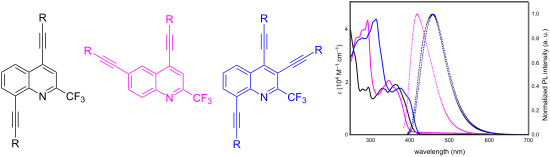
- –10°. Optical properties Steady-state absorption and fluorescence measurements were carried out. Compounds 6a, 9a, and 12a were selected to study the impact of the position of the alkynyl group on the optical properties. Comparison of the absorption and emission features of 12a, 12b and 12c gives
- , respectively. A bathochromic shift is observed from 9a over 6a to 12a in the first absorption maximum with a total of 0.29 eV. This trend can be observed in the emission spectrum as well. All three emission spectra are characterized by a single broad emission peak which is almost identical for 6a and 12a and
- and 12a are almost identical in their emission. The influence of the type of substituent located at the alkyne moieties of 12a, 12c, and 12e was also studied. The intensity increases from 12a to 12e and a bathochromic shift of the absorption maxima can be observed. Interestingly, the emission spectra




Mechanistic investigations of polyaza[7]helicene in photoredox and energy transfer catalysis
Beilstein J. Org. Chem. 2024, 20, 1236–1245, doi:10.3762/bjoc.20.106
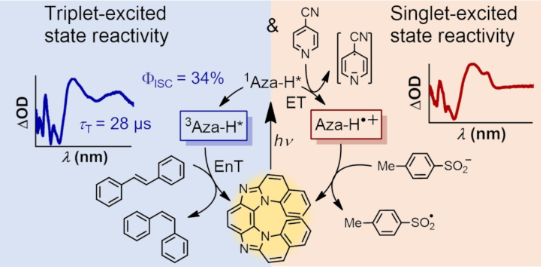
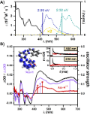
- potentials of Aza-H and the substrates and initial steady-state fluorescence quenching experiments (Scheme 1, left), but detailed mechanistic insights and direct evidence of the transient radical ions could not be obtained yet [45]. Figure 1A illustrates the absorption and emission spectra of Aza-H in MeCN
- radical ions of polyazahelicenes. The moderate fluorescence quantum yield of 48% (in MeCN) [46] implies that a non-emissive triplet-excited state (at room temperature) could also be generated via intersystem crossing, potentially initiating electron transfer reaction sequences. 77 K emission measurements
- were thus carried out and they showed short-lived fluorescence and long-lived emission (phosphorescence) that was assigned to the triplet state of Aza-H with an energy of 2.32 eV (Figure 1A). Quantum mechanical computations of the Aza-H triplet state yielded a triplet energy of 2.17 eV (adiabatic




Kinetically stabilized 1,3-diarylisobenzofurans and the possibility of preparing large, persistent isoacenofurans with unusually small HOMO–LUMO gaps
Beilstein J. Org. Chem. 2024, 20, 1099–1110, doi:10.3762/bjoc.20.97
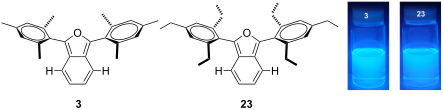
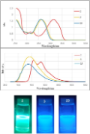
- isobenzofurans 2, 3 and 23 were studied by UV–vis and fluorescence spectroscopies (Figure 5). Compound 2 is devoid of ortho groups on its 1,3-diphenyl substituents and shows the longest wavelengths of absorption (λmax = 415 nm) and emission (emission λmax = 484 nm) in this series, consistent with a more highly
- conjugated π-system in which the 1,3-diphenyl substituents lie flat or nearly flat relative to the isobenzofuran backbone. Likewise, compound 2 is yellow while compounds 3 and 23 are colorless. Compounds 3 and 23 show similar absorption (λmax = 364 and 360 nm for 3 and 23, respectively) and emission (λmax
- solutions of 1,3-diarylisobenzofurans 2, 3 and 23 in CH2Cl2 solvent. The vials of 2, 3 and 23 showing fluorescence emission (bottom) were excited at 365 nm. Calculated HOMO and LUMO orbitals for parent isobenzofuran (1) and 1,3-diarylisobenzofuran derivatives 2, 3, 23, 24 and 25 using a DFT method performed