


Search results
Search for "ethanol" in Full Text gives 781 result(s) in Beilstein Journal of Organic Chemistry. Showing first 200.
Synthesis of pyrrole-fused dibenzoxazepine/dibenzothiazepine/triazolobenzodiazepine derivatives via isocyanide-based multicomponent reactions
Beilstein J. Org. Chem. 2024, 20, 2870–2882, doi:10.3762/bjoc.20.241
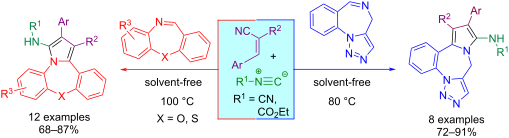
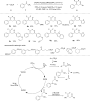
- , and DMF at different temperatures (Table 1, entries 3–9). The result obtained from the study of solvents showed that pyrrole-fused dibenzoxazepine 4a was obtained with a yield of 56% in ethanol as solvent at a temperature of 78 °C (Table 1, entry 4). To achieve a higher yield of product 4a, the
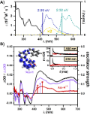
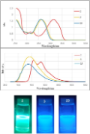
- their suitable fluorophores [49][50][51]. The UV–vis absorption and emission spectra of products 4 and 6 were studied in ethanol at 298 K. The absorption range (λabs) was 400–225 nm, and the emission range (λem) was 560–400 nm. These findings are shown in Figure S3 in Supporting Information File 1. An
- QS (quinine sulfate) (a); emission for 4a, 6c and QS (b); c = 75 ppm in ethanol and T = 298 K. Methods for the construction of pyrrole-fused heterocycles through I-MCR reactions. The model reaction of dibenzoxazepine, gem-diactivated olefin (2-benzylidenemalononitrile), and cyclohexyl isocyanide






Synthesis and antimycotic activity of new derivatives of imidazo[1,2-a]pyrimidines
Beilstein J. Org. Chem. 2024, 20, 2806–2817, doi:10.3762/bjoc.20.236
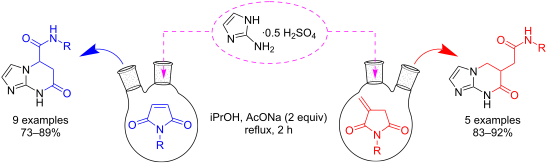
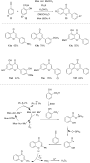
- intramolecular cyclization were observed (Table 1, entries 3 and 4). The best results were obtained when isopropyl alcohol was used, which furnished yields of the final product 4а up to 89% within 1 h (entry 9 in Table 1). In the case of methanol and ethanol, the maximum conversion was also observed during the


Interaction of a pyrene derivative with cationic [60]fullerene in phospholipid membranes and its effects on photodynamic actions
Beilstein J. Org. Chem. 2024, 20, 2732–2738, doi:10.3762/bjoc.20.231

- Plains, NY, USA) was solubilized in ethanol (FUJIFILM Wako Pure Chemical Corporation, Osaka, Japan), and catC60, which was synthesized according to a previous report [20], or C60 (NOF AMERICA Corporation, White Plains, NY, USA) was solubilized in a 1:4 (vol:vol) mixture of DMSO (Nacalai Tesque Inc
- ., Kyoto, Japan) and toluene (FUJIFILM Wako Pure Chemical Corporation, Osaka, Japan). DMPC in ethanol and catC60 or C60 in DMSO/toluene were mixed in molar ratios of 1:0, 1:0.1, 1:1, or 1:10, and the solvent was removed using a rotary evaporator (Rotavapor R-300, BÜCHI Labortechnik AG, Switzerland) at 40


Transition-metal-free decarbonylation–oxidation of 3-arylbenzofuran-2(3H)-ones: access to 2-hydroxybenzophenones
Beilstein J. Org. Chem. 2024, 20, 2655–2667, doi:10.3762/bjoc.20.223
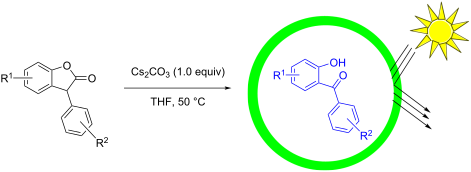
- -absorption studies UV–vis absorbance spectra of the 5-substituted-2-hydroxybenzophenones 4aa–ka were recorded in triplicates at room temperature (298 K) in ethanol at a concentration of 40 µM, in the range of 225–500 nm at 1 nm intervals [11]. The obtained data were corrected using calibration methods with
- ethanol as a blank. The critical wavelength (λc) and UVA/UVB ratio were calculated using Equation 1 and Equation 2, respectively, as shown below. Determination of SPF (sun protection factor) An ethanolic solution of the compounds 4aa–ka was prepared at a concentration of 200 μg/mL. The UV–vis absorption
- spectra of samples were measured in the range of 290 to 450 nm, every 5 nm, using ethanol as a blank [11]. The absorption data were obtained in three replicates at each point, and the SPF value was calculated using Equation 3. Where, CF (correction factor) = 10; EE(λ) is the erythemal effect spectrum; I(λ




Efficient modification of peroxydisulfate oxidation reactions of nitrogen-containing heterocycles 6-methyluracil and pyridine
Beilstein J. Org. Chem. 2024, 20, 2599–2607, doi:10.3762/bjoc.20.219
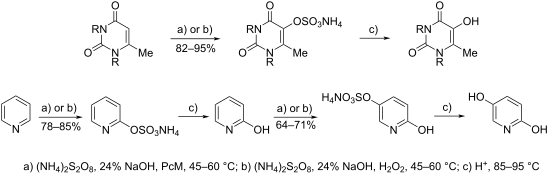
- H2SO4 was added and the reaction mixture was stirred at the same temperature for 1 h and cooled. The precipitated crystals were filtered off, washed with cold distilled water to pH 6–7 (2 × 5 mL), and recrystallized from ethanol. 5-Hydroxy-6-methyluracil (3). Yield 98%. The spectral characteristics are
- at 45 °C for 10 h, cooled to room temperature, evaporated at reduced pressure to 1/3 volume, extracted with ethyl acetate (2 × 20 mL) to remove unreacted pyridine, followd by butanol (3 × 50 mL). The butanol fractions were combined and evaporated to dryness. The residue was washed with hot ethanol
- with ethyl acetate (2 × 20 mL) to remove unreacted pyridine, followed by butanol (3 × 50 mL). The butanol fractions were combined and evaporated to dryness. The residue was washed with hot ethanol, kept for 12 h at 0 °C, the precipitate was decanted, and the filtrate was evaporated to give 9.78 g (85


Synthesis, electrochemical properties, and antioxidant activity of sterically hindered catechols with 1,3,4-oxadiazole, 1,2,4-triazole, thiazole or pyridine fragments
Beilstein J. Org. Chem. 2024, 20, 2378–2391, doi:10.3762/bjoc.20.202
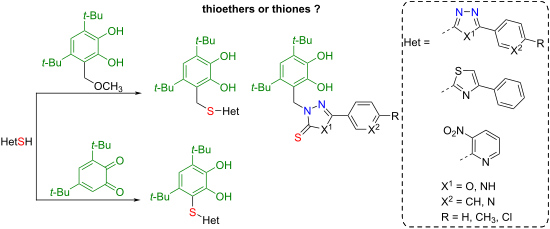
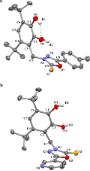
- /prooxidant, and antiradical activity was carried out for the catechols synthesized in this work. Results and Discussion Synthesis The interaction of 3,5-di-tert-butyl-o-benzoquinone with the corresponding thiols in ethanol at room temperature under argon leads to the formation of catechol thioethers 1–3 (69




Improved deconvolution of natural products’ protein targets using diagnostic ions from chemical proteomics linkers
Beilstein J. Org. Chem. 2024, 20, 2323–2341, doi:10.3762/bjoc.20.199
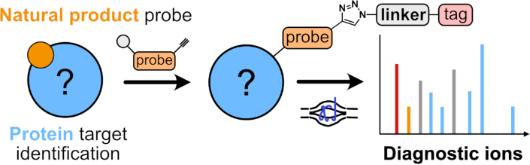
- tag in cell lysate, the proteins are loaded onto the carboxylate magnetic beads and aggregated with the beads by addition of an organic solvent, for example ethanol or acetonitrile. The subsequent washes of the carboxylate magnetic beads with proteins by an organic solvent–water mixture or organic


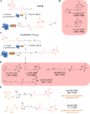


Multicomponent syntheses of pyrazoles via (3 + 2)-cyclocondensation and (3 + 2)-cycloaddition key steps
Beilstein J. Org. Chem. 2024, 20, 2024–2077, doi:10.3762/bjoc.20.178


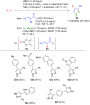


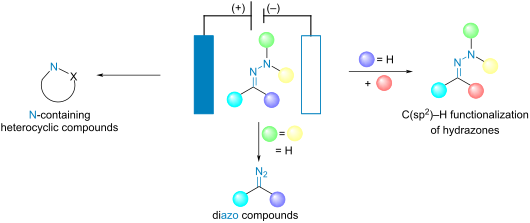
Harnessing the versatility of hydrazones through electrosynthetic oxidative transformations
Beilstein J. Org. Chem. 2024, 20, 1988–2004, doi:10.3762/bjoc.20.175
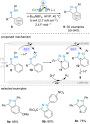
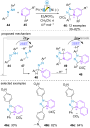
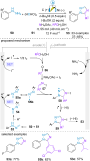
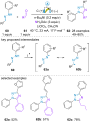
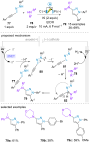
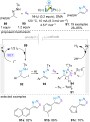
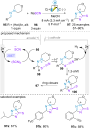
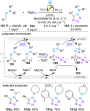
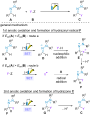
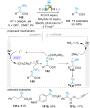
- arylpropynal-derived NH-arylhydrazones 77 and secondary amines 78 in moderate to good yields. Potassium iodide was employed as electrolyte and mediator in ethanol in an undivided cell equipped with a carbon graphite and a platinium cathode. The transformation initiated with the electrochemical generation of









1,2-Difluoroethylene (HFO-1132): synthesis and chemistry
Beilstein J. Org. Chem. 2024, 20, 1955–1966, doi:10.3762/bjoc.20.171

- and co-workers [93]. Therein, a mixture of products, with diethyl 2-chloro-1,2-difluoroethylphosphonate as main compound, was formed (Scheme 15). This mixture was reacted with absolute ethanol, and the esters formed were separated by distillation and characterized. The authors did not point out which


Regioselective alkylation of a versatile indazole: Electrophile scope and mechanistic insights from density functional theory calculations
Beilstein J. Org. Chem. 2024, 20, 1940–1954, doi:10.3762/bjoc.20.170
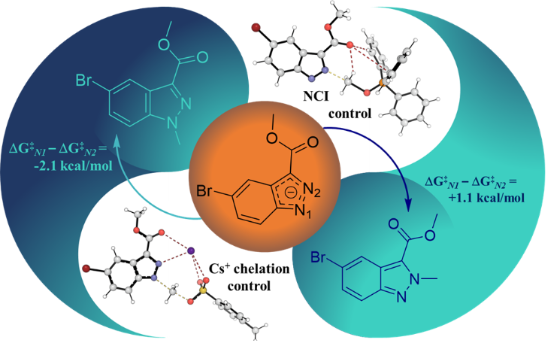
- spectroscopy (see Supporting Information File 1). From the yield of products 8 and 9, we decided to explore new reaction conditions to improve the yields of the N1-substituted indazole analogs. As shown in Scheme 2, compound 12 was prepared by treating ethanol (10) with tosyl chloride (11) in the presence of 4


Negishi-coupling-enabled synthesis of α-heteroaryl-α-amino acid building blocks for DNA-encoded chemical library applications
Beilstein J. Org. Chem. 2024, 20, 1922–1932, doi:10.3762/bjoc.20.168
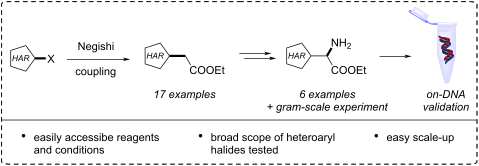
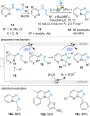
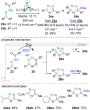
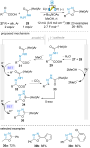
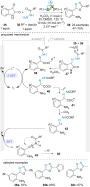
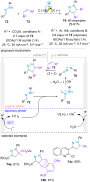
- results, thiazole 2b, benzothiazole 2i and benzimidazole 2t react very well with sodium nitrite in an acidic environment (Scheme 6, red section). Among the various subclasses of compounds, pyrazole 2l exhibited a high reactivity using t-BuONO and EtONa in ethanol (Scheme 6, red section). On the other hand


The Groebke–Blackburn–Bienaymé reaction in its maturity: innovation and improvements since its 21st birthday (2019–2023)
Beilstein J. Org. Chem. 2024, 20, 1839–1879, doi:10.3762/bjoc.20.162
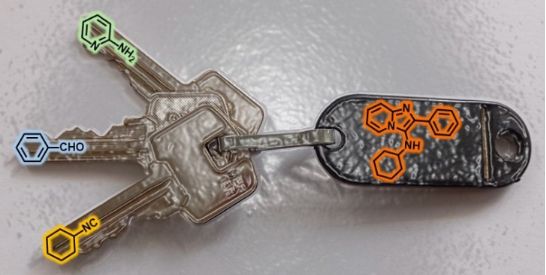
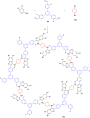
- that time, along with some 30 solvents. The most widely used conditions, however, remained those originally discovered by Groebke, Blackburn and Bienaymé, namely the use of Sc(OTf)3, perchloric acid or p-toluenesulfonic acid as catalysts, and methanol, ethanol or toluene as solvents, or under solvent
- on different substrates, the conditions were similar: 20 mol % of the catalyst, ethanol as solvent at 80 °C in the first case, 30 mol % of catalyst, ethylene glycol at 90 °C in the second case; however, a striking difference appears when the reaction was carried out in the absence of silver catalyst
- . prepared the Brønsted acid ionic liquid 7, based on the 1-(butyl-4-sulfonic)-3-methylimidazolium cation, (Scheme 4) and tested it in the model reaction reported in Scheme 2 (R = t-Bu), obtaining a 71% yield using 20 mol % of catalyst in ethanol as the solvent under reflux conditions. The yield could be






Ugi bisamides based on pyrrolyl-β-chlorovinylaldehyde and their unusual transformations
Beilstein J. Org. Chem. 2024, 20, 1773–1784, doi:10.3762/bjoc.20.156
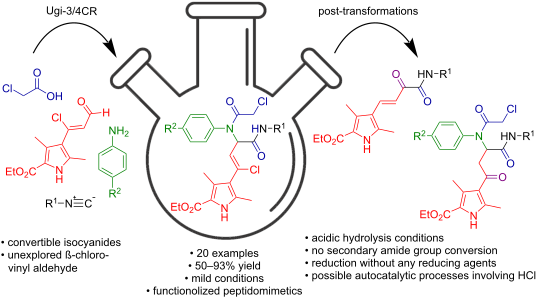
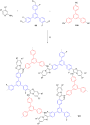
- possibilities for subsequent post-transformation reactions. The synthesis of the target Ugi bisamides 5–8 was carried out at room temperature in ethanol with stirring for 24–48 hours (depending on the type of starting material) with a yield of 54–93% (Table 1). It is worth noting that the Ugi-4CR reaction also
- led to the formation of bisamides 5–8 when other solvents were used, e.g., methanol or acetonitrile. However, the yields of the targeted reaction products in methanol were generally lower than in ethanol, while the procedure in acetonitrile was not suitable for all reagents. It is known that the Ugi
- to drive the process towards the desired hydrolysis of the secondary amide group, we performed the post-Ugi transformation under MW activation in ethanol or acetonitrile (Scheme 3, conditions B or C). However, the application of MW irradiation did not change the course of the reaction, and as under




Syntheses and medicinal chemistry of spiro heterocyclic steroids
Beilstein J. Org. Chem. 2024, 20, 1713–1745, doi:10.3762/bjoc.20.152
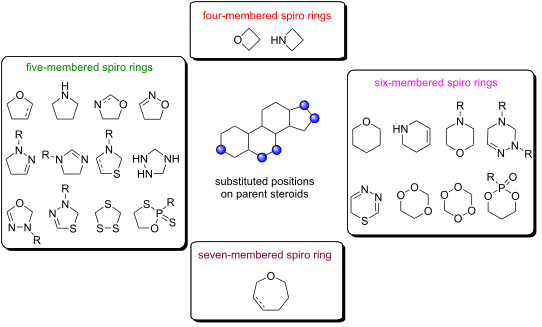
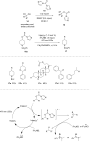
- % by condensing unsaturated ketones 84 with aniline under refluxing ethanol. These intermediates were then subjected to a reaction with excess mercaptoacetic acid (also known as thioglycolic acid) in refluxing benzene, resulting in the formation of spiro 1,3-thiazolidin-4-one derivatives with good
- compound underwent further transformation through reaction with p-fluorobenzaldehyde in dry ethanol, yielding the corresponding 4-fluoroarylidene derivative 92 in an overall yield of 27%. The described reaction sequence was successfully replicated using testosterone and progesterone to produce a N-aryl-1,3
- )-spiro[cholest-5-en-3,2’-[1,3,4]-oxadiazoline] (99) through the acylation of semicarbazone 98 using freshly distilled acetic anhydride and pyridine at 80 °C [55]. Semicarbazone 98 was initially obtained via condensation of cholest-5-en-3-one (97) with semicarbazide hydrochloride in a refluxing ethanol


New triazinephosphonate dopants for Nafion proton exchange membranes (PEM)
Beilstein J. Org. Chem. 2024, 20, 1623–1634, doi:10.3762/bjoc.20.145

- ]methylphosphonate (10). The following hydrogenolysis under H2/Pd/C conditions in ethanol, afforded the desired diethyl (4-hydroxyphenyl)methylphosphonate (7), in an overall yield of 80%. The synthesis of diethyl [hydroxy(4-hydroxyphenyl)methyl]phosphonate (11) [55] started with the reaction of 4-hydroxybenzaldehyde




Rapid construction of tricyclic tetrahydrocyclopenta[4,5]pyrrolo[2,3-b]pyridine via isocyanide-based multicomponent reaction
Beilstein J. Org. Chem. 2024, 20, 1436–1443, doi:10.3762/bjoc.20.126
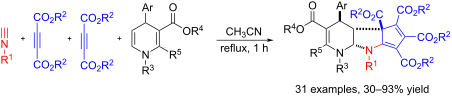
- ), dimethyl but-2-ynedioate (2a) and 5,6-unsubstituted dihydropyridine 3a as standard reaction. The main results are summarized in Table 1. The expected product was not observed when the three-component reaction was carried out in methanol, ethanol or tetrahydrofuran at room temperature (Table 1, entries 1–3


Challenge N- versus O-six-membered annulation: FeCl3-catalyzed synthesis of heterocyclic N,O-aminals
Beilstein J. Org. Chem. 2024, 20, 1412–1420, doi:10.3762/bjoc.20.123
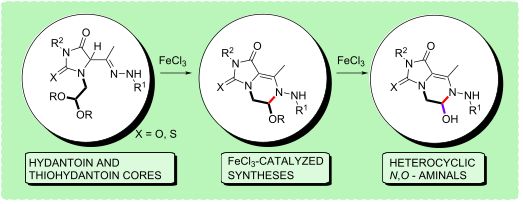
- . Based on our previous findings [17][18][19], the initial nucleophilic addition of α-aminoacetals 2a,b as nitrogen source to the activated heterodiene system of 4-methoxycarbonyl-DDs 1a–f in dichloromethane (DCM) or ethanol (EtOH) at room temperature affords N-aminohydrazone derivatives I (Scheme 2
- of 5a decreased, while utilizing ethanol the reaction proceeded slowly and produced a complicated mixture in which both 5a and 6a were not detected (Table 1, entries 6–8). With the optimized conditions in hand (Table 1, entry 5), a selection of N-3-functionalized (thio)hydantoins (4a–r, 1 mmol) were




Generation of alkyl and acyl radicals by visible-light photoredox catalysis: direct activation of C–O bonds in organic transformations
Beilstein J. Org. Chem. 2024, 20, 1348–1375, doi:10.3762/bjoc.20.119
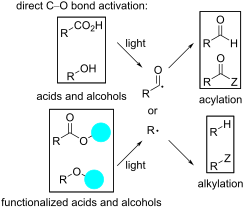
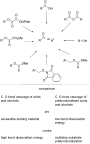
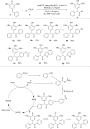
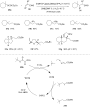
- breakdown of ethyl vinyl ether and trapping of ethanol, yielding radical 84. To regenerate the photocatalyst, PhSSPh functioned as an oxidant. After protonation upon the β-elimination step, PhS− contributed a hydrogen atom to both 83 and 84, alongside regeneration of the HAT catalyst. Lastly, the acetal








Synthesis of 1,2,3-triazoles containing an allomaltol moiety from substituted pyrano[2,3-d]isoxazolones via base-promoted Boulton–Katritzky rearrangement
Beilstein J. Org. Chem. 2024, 20, 1334–1340, doi:10.3762/bjoc.20.117
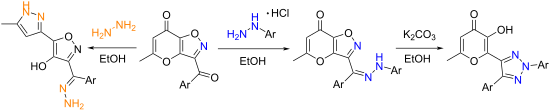
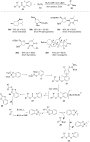
- obtained in three steps from allomaltol by a previously described method [27][28] Earlier, we have shown that hydrazone 3a can be synthesized by reaction of compound 1a with phenylhydrazine (5) in ethanol using a catalytic amount of p-TsOH (Scheme 2). Next, we supposed that hydrochlorides of arylhydrazines
- can be used as starting materials in the studied condensation. We tested this hypothesis using the interaction of ketone 1b and phenylhydrazine hydrochloride (2a). It was shown that reflux of the starting compounds in ethanol for 1 h leads to the target hydrazone 3b in 64% yield (Scheme 3). It should


Mechanistic investigations of polyaza[7]helicene in photoredox and energy transfer catalysis
Beilstein J. Org. Chem. 2024, 20, 1236–1245, doi:10.3762/bjoc.20.106
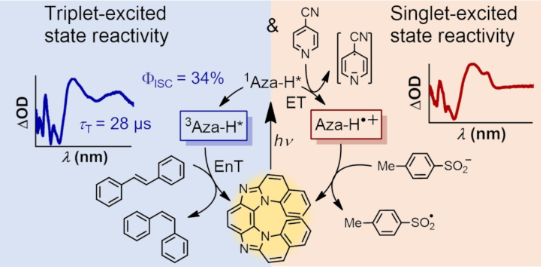
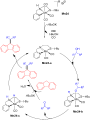
- protonation of Aza-H, both in its ground state and in the excited singlet state (see Figure S10 in Supporting Information File 1 and the corresponding section for details). Based on our studies in aqueous ethanol, Aza-H is a weak photobase but protonation is seen to be unimportant in neutral and alkaline




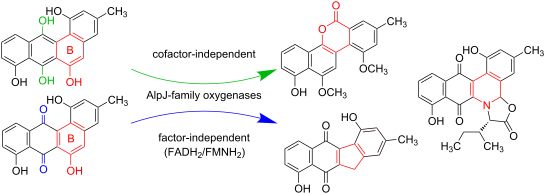
Cofactor-independent C–C bond cleavage reactions catalyzed by the AlpJ family of oxygenases in atypical angucycline biosynthesis
Beilstein J. Org. Chem. 2024, 20, 1198–1206, doi:10.3762/bjoc.20.102
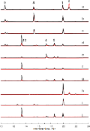
- incubated at 30 °C for 30 min. Reactions were terminated with 2 M HCl (2 μL) and then extracted with ethyl acetate (500 μL). The extracts were dried using a miVac Duo concentrator (SP Scientific), redissolved in 20 μL ethanol, and then analyzed by HPLC. Reaction mixtures of AlpG, AlpJ, Flu17, or JadG were




Manganese-catalyzed C–C and C–N bond formation with alcohols via borrowing hydrogen or hydrogen auto-transfer
Beilstein J. Org. Chem. 2024, 20, 1111–1166, doi:10.3762/bjoc.20.98
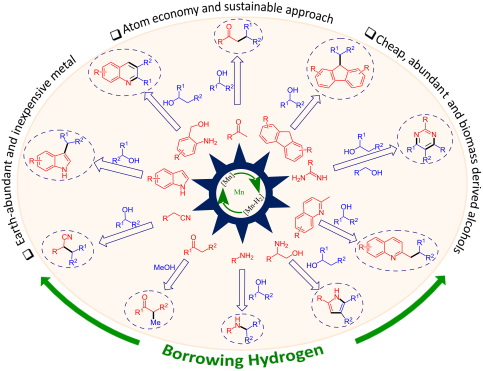
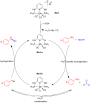
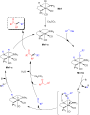
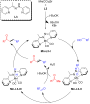
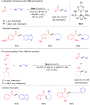
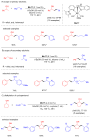
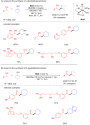
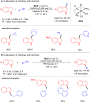
- different ketones with several alcohols (aliphatic and benzylic) was carried out at 140 °C for 24 h in the presence of 2 mol % Mn4 and 10 mol % of Cs2CO3 and provided up to 97% of the desired alkylated products. Notably, the alkylation of ketones using ethanol as a coupling partner was also established
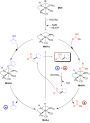
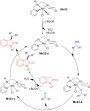
- . Furthermore, β-alkylation of 1-phenyl-1-ethanol with benzylic alcohols was also studied with 2 mol % of the Mn4 pre-catalyst, 5 mol % of Cs2CO3 in t-AmOH at 135 °C for 20 h (Scheme 32). NMR studies endorsed the formation of intermediates such as aldehyde, ketone, and α,β-unsaturated ketone. The proposed
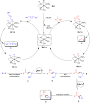
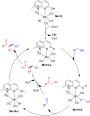
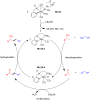
- dehydrogenation of alcohol-yielding Mn18-b species. Mn–H complex reduced the C=C and C=O bonds, yielding the fully reduced saturated alcohol products (Scheme 44). In 2019, the upgrading of bio-derived ethanol with widely available methanol for the production of isobutanol was developed by Liu and co-workers using























Kinetically stabilized 1,3-diarylisobenzofurans and the possibility of preparing large, persistent isoacenofurans with unusually small HOMO–LUMO gaps
Beilstein J. Org. Chem. 2024, 20, 1099–1110, doi:10.3762/bjoc.20.97
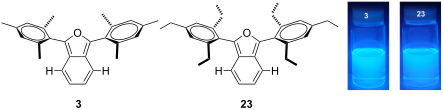
- evaporation at reduced pressure to give a light-yellow solid as crude product. The crude product was recrystallized using 5 mL of a hexane/ethanol mixture (10:1) and then air dried to give 26 as a white solid (0.11 g, 72%, Scheme 7). Mp 153.5–154.0 °C (from [15], 181–183 °C); 1H NMR (500 MHz, CDCl3) δ 7.76






Light on the sustainable preparation of aryl-cored dibromides
Beilstein J. Org. Chem. 2024, 20, 1076–1087, doi:10.3762/bjoc.20.95
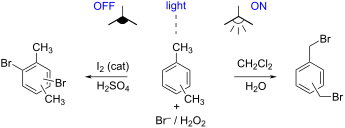
- , CDCl3) δ 7.42 (m, 1H), 7.33 (m, 1H), 7.32 (m, 2H), 4.48 (s, 4H) ppm. 1,5-Dibromo-2,4-dimethylbenzene (2b): Brown solid, yield: 87%. Recrystallisation from hot ethanol gave the pure product as pale-yellow solid. 1H NMR (400 MHz, 298 K, CDCl3) δ 7.68 (s, 1H), 7.10 (s, 1H), 2.31 (s, 6H) ppm. 1,4-Bis





