


Search results
Search for "green" in Full Text gives 1075 result(s) in Beilstein Journal of Organic Chemistry. Showing first 200.
Photoswitches beyond azobenzene: a beginner’s guide
Beilstein J. Org. Chem. 2025, 21, 1808–1853, doi:10.3762/bjoc.21.143
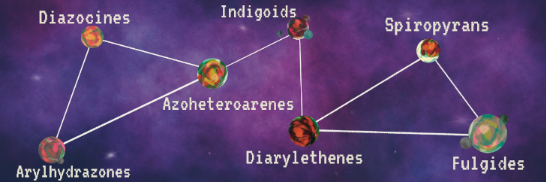
- series of compounds 34a–c (Scheme 9) which melt upon irradiation with UV light in the solid phase. Upon irradiation with green light, the compounds isomerise back to the solid phase. The large depth of light penetration of these compounds (>1400 µm for both UV and vis light) and the high capacity for




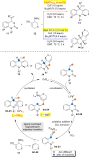
Fe-catalyzed efficient synthesis of 2,4- and 4-substituted quinolines via C(sp2)–C(sp2) bond scission of styrenes
Beilstein J. Org. Chem. 2025, 21, 1799–1807, doi:10.3762/bjoc.21.142
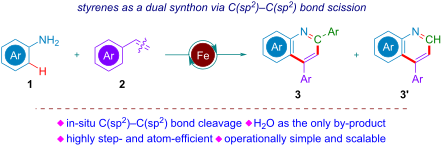
- features of this protocol include the use of O2 as an ideal, green oxidant, operational simplicity and scalability, high atom- and step-economy, and cost-effectiveness, collectively enabling the single-step synthesis of two medicinally relevant N-heterocycles in excellent combined yields. Keywords: C–C




Continuous-flow-enabled intensification in nitration processes: a review of technological developments and practical applications over the past decade
Beilstein J. Org. Chem. 2025, 21, 1678–1699, doi:10.3762/bjoc.21.132
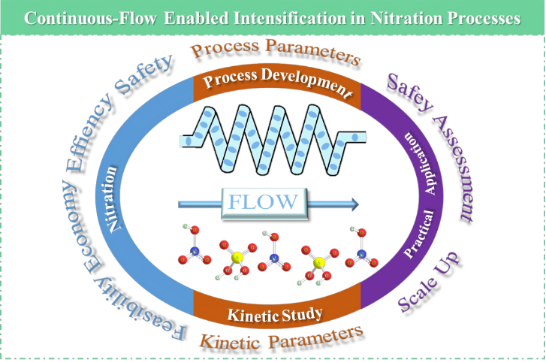
- potential in advancing the green transformation of the chemical industry while enhancing inherent process safety. Safety, cost-effectiveness, and operational efficiency serve as pivotal drivers for advancing flow chemistry in nitration processes. This review provides a comprehensive analysis of the



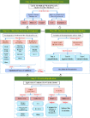
Influence of the cation in hypophosphite-mediated catalyst-free reductive amination
Beilstein J. Org. Chem. 2025, 21, 1661–1670, doi:10.3762/bjoc.21.130
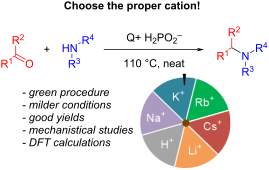
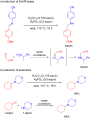
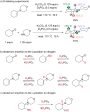
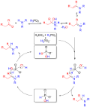
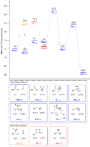
- , usage of classical reducing agents – H2 on Pd/C or NaBH4 did not show similar chemoselectivity [26]. Additionally, the NaH2PO2 usability is engaging due to fine green chemistry metrics, e.g., an E-factor less than 1 was reached, moreover the main wastes of this process were safe and useful as


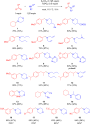
On the aromaticity and photophysics of 1-arylbenzo[a]imidazo[5,1,2-cd]indolizines as bicolor fluorescent molecules for barium tagging in the study of double-beta decay of 136Xe
Beilstein J. Org. Chem. 2025, 21, 1627–1638, doi:10.3762/bjoc.21.126
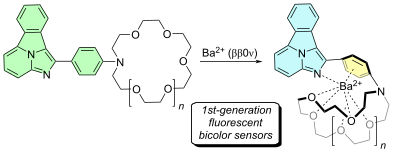
- show that, in the absence of barium, compound 18 exhibits almost coplanar components, so both systems form a combined fluorophore highlighted in green in Figure 5. The correlation between energy and this dihedral angle by means of a Karplus-like [31] equation up to the fourth degree in the form shows
- (⟨RBa0⟩)n denote the average Ba–O bond distances (in Å) for the different crown ethers. Distances between Ba2+ and the ring points of electron density of benzene (in green) are also gathered in (B). ΔGiso and ΔGrxn terms stand for the Gibbs energies (in kcal/mol) described in Scheme 2 and have been
- points at z = 1 are shown in light green. Calculateda absorption (λabs, in nm) and emission (λem, in nm) wavelengths of compound 19 at the free and barium perchlorate bound states, using different DFT functionals. Supporting Information Supporting Information File 51: Energies, calculated absorption and


Synthesis of an aza[5]helicene-incorporated macrocyclic heteroarene via oxidation of an o-phenylene-pyrrole-thiophene icosamer
Beilstein J. Org. Chem. 2025, 21, 1561–1567, doi:10.3762/bjoc.21.119
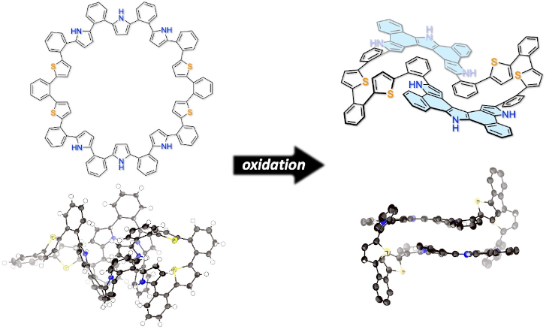
- two NH sites remained uncoordinated due to steric hindrance. Non-covalent interaction (NCI) plot analysis revealed distinct intramolecular π–π dispersion interactions between the two aza[5]helicene moieties (green surface in Figure 4b) [29][30][31]. Optical properties The electronic absorption and


General method for the synthesis of enaminones via photocatalysis
Beilstein J. Org. Chem. 2025, 21, 1535–1543, doi:10.3762/bjoc.21.116
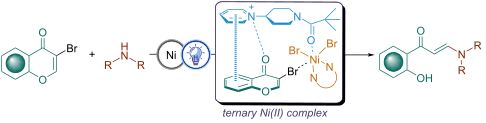
- ]. Thus, the use of visible light as an energy source provides more efficient chemical transformations and minimize the use of harmful reagents, the generation of waste and the consumption of energy, fulfilling several principles of Green Chemistry and promoting greener opportunities for organic synthesis




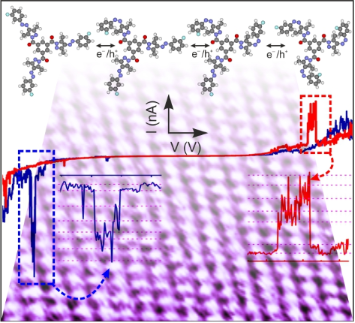
Highly distinguishable isomeric states of a tripodal arylazopyrazole derivative on graphite through electron/hole-induced switching at ambient conditions
Beilstein J. Org. Chem. 2025, 21, 1496–1507, doi:10.3762/bjoc.21.112
- Supporting Information File 1. The AFM images of the ultra-thin film reveal domains of assembled molecules shown as bright contrast, marked by green and yellow dashed lines in Figure 2a,b. The pristine graphite surface has a median contrast. The molecular domains are growing as long islands with well-defined
- graphite lattice, which has 3-fold symmetry [33][34][35]. Each of the orientations has a mirror domain as well, making a total of six orientations for the islands on the surface. The orientations of the islands are marked by yellow and green 3-fold arrowheads in Figure 2a,b. The mirror orientations are
- indicated by green double-headed arrows and are separated by 6.3 ± 0.1 nm. The magnitude of the spacing suggests that the line-like features are originating due to a super-periodic pattern of molecular assembly, namely a moiré pattern [33][34][35]. This further suggests that the molecular adlayer is forming



Copper catalysis: a constantly evolving field
Beilstein J. Org. Chem. 2025, 21, 1477–1479, doi:10.3762/bjoc.21.109
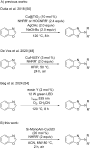
- -workers demonstrates that the efficient and green direct C–H amination of benzoxazoles can be catalyzed by copper chloride salts in acetonitrile in the absence of any acidic, basic, or oxidizing additives [8]. Both CuCl and CuCl2 were found to be extremely efficient in promoting the reactions, which
Microwave-enhanced additive-free C–H amination of benzoxazoles catalysed by supported copper
Beilstein J. Org. Chem. 2025, 21, 1462–1476, doi:10.3762/bjoc.21.108
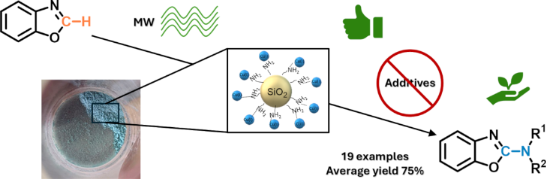
- offers wide-ranging potential for substrate expansion and the functionalisation of bioactive compounds. This study presents a green and efficient C–H amination, catalysed by CuCl and CuCl2, in acetonitrile without acidic, basic or oxidant additives that is accelerated by microwave (MW) irradiation and is
- -amination of benzoxazoles by transition-metal-catalysed reactions that traditionally involve aryl halide scaffolds [11][12][13][14]. However, these procedures entail disadvantages that need to be overcome if green chemistry criteria are to be met; high temperatures, long reaction times, the need for ligands
- reported in numerous green protocols, offer significant advantages over the use of conventional heating. The goal was to utilise selective, volumetric dielectric heating to save time and energy, enable selective catalysis and generally achieve higher selectivity and yields [53][55][56]. Building on the



Advances in nitrogen-containing helicenes: synthesis, chiroptical properties, and optoelectronic applications
Beilstein J. Org. Chem. 2025, 21, 1422–1453, doi:10.3762/bjoc.21.106
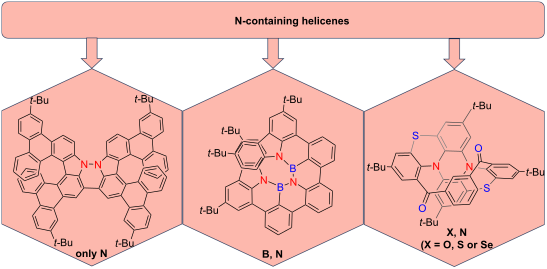
- incorporating dual heptagonal rings [37]. Compound 23a exhibits dynamic chirality, aggregation-induced emission (AIE), and intense CPL (|glum| = 1.7 × 10⁻²), whereas compound 23f, with lateral π-extension, shows enhanced thermal stability and green emission at 517 nm (Table 7). Kuehne and co-workers reported
- excellent PLQYs – 99% and 90% in solution, and 80% and 77% in PMMA-doped films, respectively. In 2024, Wang’s group developed a B,N-embedded hetero[8]helicene 47, exhibiting narrow green emission at 531 nm (FWHM = 36 nm), a high PLQY of 93%, and outstanding CP-OLED performance (EQE = 32.0%; |gEL| = 7.74
- -containing derivatives showed red-shifted emission, broader FWHM, lower PLQYs, and diminished BCPL values, indicating a trade-off between extended conjugation and emissive efficiency. Yin’s group introduced 1,4-BN motifs into compounds 51a and 51b, which emitted blue-green light at 474 and 465 nm

Tautomerism and switching in 7-hydroxy-8-(azophenyl)quinoline and similar compounds
Beilstein J. Org. Chem. 2025, 21, 1404–1421, doi:10.3762/bjoc.21.105
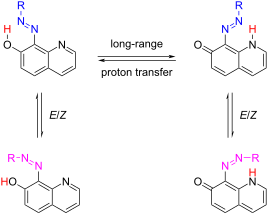
- corresponding state. The Franck–Condon states of the tautomers, existing in solution, are given in green. Changes of the absorbance of compound 1 at 465 nm in toluene upon turning on and off the irradiation source (365 nm). a) Change of ΔE(K-E) in kcal/mol as a function of the substitution on different
- -acceptor sites are given in red and blue, respectively. The axle of intramolecular rotation is given in green. The twisting angles α and β are indicated in magenta. Perspective switching compounds, generated by the computational quantum chemistry calculations. Relative stability (M06-2X/TZVP) and spectral




High-pressure activation for the solvent- and catalyst-free syntheses of heterocycles, pharmaceuticals and esters
Beilstein J. Org. Chem. 2025, 21, 1374–1387, doi:10.3762/bjoc.21.102
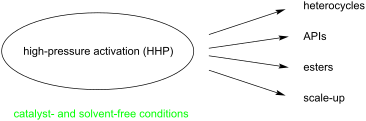
- reactions were carried out at ambient pressure (control) and under HHP (up to 3.8 kbar) conditions. These representative reactions provided higher yields for the products and HHP enabled truly green processes that are catalyst- and solvent-free, to occur with high yields and producing only non-toxic by
- are one of the major driving forces in green synthesis [1][2]. High hydrostatic pressure (HHP) activation, one of such methods, is based on mechanical compression force. The typical pressure range is 2–20 kbar that is orders of magnitude greater than the conditions traditionally employed in chemistry
- protocol was even applied in the elegant syntheses of platencin [30], and steroid derivatives [31]. Despite these encouraging applications, there is a broad area to be developed for the advancement of green synthesis efforts. Continuing our program on developing environmentally benign synthetic methods [32


Recent advances in amidyl radical-mediated photocatalytic direct intermolecular hydrogen atom transfer
Beilstein J. Org. Chem. 2025, 21, 1306–1323, doi:10.3762/bjoc.21.100
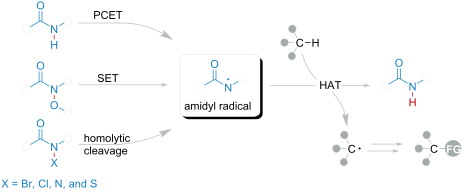
- and the relatively green chemistry of generating amidyl radicals. Amidyl radicals offer several advantages that enhance their applicability in organic synthesis: 1) The BDE of amidyl N–H bond is more than 105 kcal/mol, relative to the bond (C–H, Si–H, B–H, and Ge–H) which BDE is lower than 100 kcal
- modified. In recent years, photocatalysis has been widely adopted due to its green and efficient nature [45][46][47][48][49][50][51]. The generation of amidyl radical is implemented by HRP. Six different methods (Figure 2c), which have been developed for visible-light mediated reactions, could generate
- the research of direct functionalization via HAT processes and the development of green chemistry in photocatalysis, this review will focus on the generation of amidyl radicals and reaction mechanisms and highlight the photocatalyzed reaction characteristics. This review aims to provide researchers






Recent advances and future challenges in the bottom-up synthesis of azulene-embedded nanographenes
Beilstein J. Org. Chem. 2025, 21, 1272–1305, doi:10.3762/bjoc.21.99
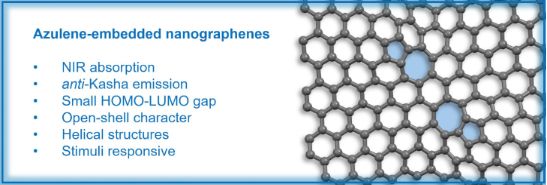
- or green colours of 157–159 and azulene-like weak absorption due to S0→S1 transition. Strong chiroptical responses were revealed by ECD spectra, with the maximum |gabs| values reaching 0.022 (at 421 nm) and 0.021 (at 427 nm) for 158, and 159, respectively. These values are among the highest |gabs




Recent advances in oxidative radical difunctionalization of N-arylacrylamides enabled by carbon radical reagents
Beilstein J. Org. Chem. 2025, 21, 1207–1271, doi:10.3762/bjoc.21.98
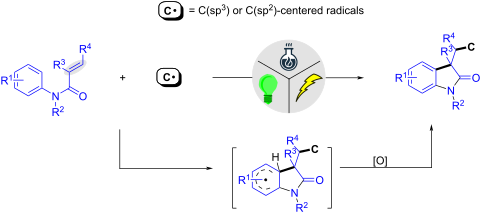
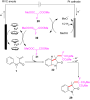
- radical C, which adds to the N-arylacrylamide, followed by intramolecular cyclization and deprotonation to form the final products 19. To further expand the radical difunctionalization toolbox, electrochemical approaches have emerged as a green and efficient alternative, offering precise redox control
- from N-cyanamide alkenes (Scheme 27) [16]. This approach is notable for its alignment with the principles of green chemistry, utilizing the metal-free photocatalyst 4CzIPN under visible light conditions. In this system, N-cyanamide alkene 54 and BrCF2CO2Et 55 were used as model substrates, with 4CzIPN












Optimized synthesis of aroyl-S,N-ketene acetals by omission of solubilizing alcohol cosolvents
Beilstein J. Org. Chem. 2025, 21, 1201–1206, doi:10.3762/bjoc.21.97
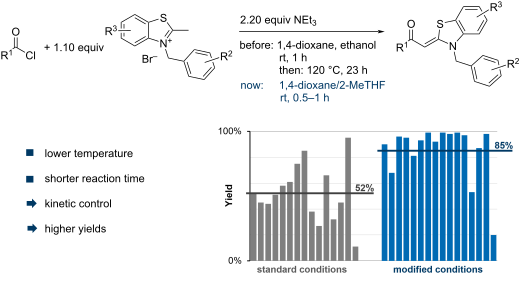
- . This can be obtained from renewable biomass and is therefore considered to be a "green" solvent. In 2-MeTHF (conditions (C)), product 1f was isolated with a yield of 95% and derivative 1h with a yield of 91%. This shows that the sustainable solvent is a potent alternative to 1,4-dioxane. With the new


Selective monoformylation of naphthalene-fused propellanes for methylene-alternating copolymers
Beilstein J. Org. Chem. 2025, 21, 1183–1191, doi:10.3762/bjoc.21.95
- (open circles) isotherms of [3.3.3]_oligo (dark red), [3.3.3]_linear (red), [3.3.3]_branch (orange), [4.3.3]_oligo (purple), [4.3.3]_linear (blue), and [4.3.3]_branch (green). a) CO2 at 298 K and b) N2 at 77 K. Formylation of naphthalene-fused propellanes. Properties of methylene-alternating


Enhancing chemical synthesis planning: automated quantum mechanics-based regioselectivity prediction for C–H activation with directing groups
Beilstein J. Org. Chem. 2025, 21, 1171–1182, doi:10.3762/bjoc.21.94
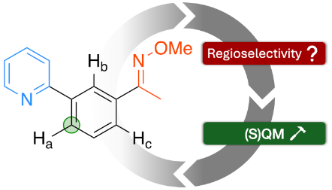
- predict the experimentally observed reaction site with 78% accuracy over the whole dataset when using no energy threshold, meaning that only the reaction site corresponding to the lowest-energy complex is predicted to be the reaction centre. In Figure 9A, the predictions, correct (green) or wrong (red
- with the experimentally observed reaction site in green and the predicted reaction site marked by a blue circle. For molecule 1, we can see in the original paper from Yeung et al. [26] that the reaction preceding the C–H activation is an intramolecular cyclization between the C atom marked in green and
- single-point calculations did not result in better agreement with experimental observations. The ten molecules with their experimentally observed main reaction site in green and all predicted reaction sites within a 1 kcal·mol−1 threshold as a blue circle are shown in Figure 11. Using the previously


A multicomponent reaction-initiated synthesis of imidazopyridine-fused isoquinolinones
Beilstein J. Org. Chem. 2025, 21, 1161–1169, doi:10.3762/bjoc.21.92
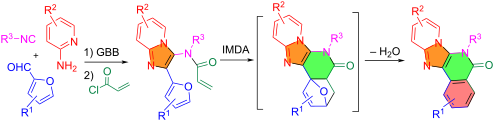
- –Bienaymé (GBB); imidazopyridine; intramolecular Diels–Alder (IMDA); isoquinolinone; multicomponent reaction (MCR); re-aromatization; Introduction Multicomponent reactions (MCRs) have intrinsic green chemistry advantages of synthetic efficiency and operational simplicity. Performing post-condensational




Supramolecular assembly of hypervalent iodine macrocycles and alkali metals
Beilstein J. Org. Chem. 2025, 21, 1095–1103, doi:10.3762/bjoc.21.87
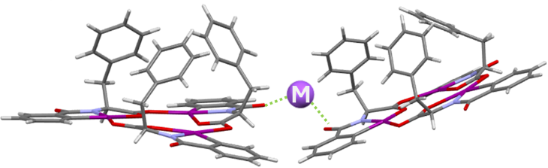
- the electrophilic core highlighted by a smaller area of red color surrounded by green color of 1. Electron-rich periphery oxygens (formerly the carbonyl of benzoic acid) are highlighted by a greater area of red color. 1H NMR titration experiment of 1 with LiBArF20 at an incremental equivalency in


Recent advances in synthetic approaches for bioactive cinnamic acid derivatives
Beilstein J. Org. Chem. 2025, 21, 1031–1086, doi:10.3762/bjoc.21.85
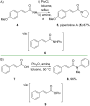
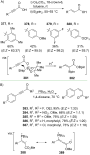
- excellent yield (Scheme 2) [32]. The formed anhydride 3 was smoothly converted to the amide at room temperature. This method provides a green approach by allowing cinnamic acid derivatization in water as a benign solvent. Similarly, Rajendran and Rajan (2023) reported a one-pot transamidation of cinnamamide
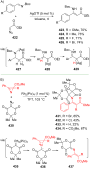
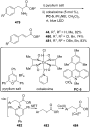
- situ formation of an active enol ester 26. The phenol was formed in situ during the second step from phenylboronic acid oxidation utilizing H2O2 (30%) as green oxidant (Scheme 8B) [40]. Sureshbabu and co-workers (2023) activated the carboxyl group of 4-hydroxycinnamic acid (1) by selectively reacting
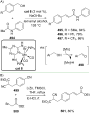
- /N-acylation reactions, metal catalysts, particularly precious transition metals, are considered less sustainable due to their limited availability. Therefore, metal-free catalysis methods have emerged as an alternative to respond to the green chemistry agenda. For instance, Huy and Mbouhom (2019








































On the photoluminescence in triarylmethyl-centered mono-, di-, and multiradicals
Beilstein J. Org. Chem. 2025, 21, 964–998, doi:10.3762/bjoc.21.80
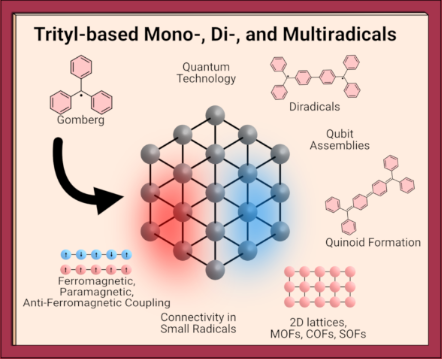
- Gomberg (see TTM and PTM in Figure 1a) [31]. Gomberg’s radical emits light in the green region of the visible spectrum, which is shifted bathochromically by substituting the ortho- and para-positions of the trityl phenyl rings with halogens. However, all symmetrical halo-trityl radicals exhibit low ϕ









Recent advances in controllable/divergent synthesis
Beilstein J. Org. Chem. 2025, 21, 890–914, doi:10.3762/bjoc.21.73

- Jilei Cao Leiyang Bai Xuefeng Jiang Hainan Institute of East China Normal University, State Key Laboratory of Petroleum Molecular & Process Engineering, Shanghai Key Laboratory of Green Chemistry and Chemical Process, School of Chemistry and Molecular Engineering, East China Normal University




Unraveling cooperative interactions between complexed ions in dual-host strategy for cesium salt separation
Beilstein J. Org. Chem. 2025, 21, 845–853, doi:10.3762/bjoc.21.68

- colors: green or grey = C, white = H, blue = N, red = O, orange = S, and purple = Cs. For the crystal structure, the overall stoichiometry of Cs+, PO43−, 18-crown-6 and anion receptor is 3:1:3:1. Phosphate anion is encapsulated inside the hexaurea cavity and stabilized by 12 × N–H···O hydrogen bonds





