Search results
Search for "kinetic" in Full Text gives 627 result(s) in Beilstein Journal of Organic Chemistry. Showing first 200.
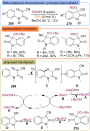
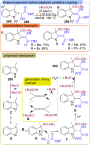
Silver(I) triflate-catalyzed post-Ugi synthesis of pyrazolodiazepines
Beilstein J. Org. Chem. 2025, 21, 915–925, doi:10.3762/bjoc.21.74
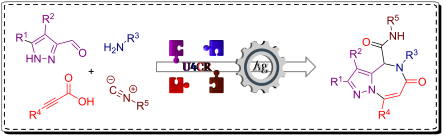
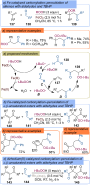
- reduction with LiAlH₄, which led to a further decrease in the degree of unsaturation of the pyrazolodiazepine core, while the more sterically hindered exocyclic amide moiety remained intact. However, both reactions were accompanied by partial epimerization, and careful kinetic control was therefore required




Recent advances in controllable/divergent synthesis
Beilstein J. Org. Chem. 2025, 21, 890–914, doi:10.3762/bjoc.21.73

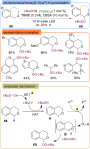
- enantioselective access to both enantiomers of chiral P(V) molecules 47 or 48 using a single chiral NBE catalyst. Time control Time control of chemical reactivity offers an inherent strategy to program synthetic pathways through kinetic discrimination of transient intermediates. Diverging from additive-dependent
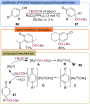
- in the absence of a Brønsted acid additive, the opposite enantiomer 52 was obtained. Mechanistically, an initial kinetic resolution (KR) of (rac)-50 occurs via an Ir-catalyzed asymmetric allylic amination. Due to the higher reactivity of (S)-50, it reacts with 6-hydroxyisoquinoline within 6 minutes
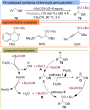
- six-membered nickel ring captures radicals and undergoes reductive elimination to form β-products (kinetic control); at high temperatures, the formation of a five-membered nickel ring leads to α-products (thermodynamic control). Therefore, the formation of the more stable nickel ring drives migration


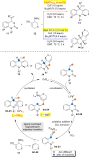


Synthesis and photoinduced switching properties of C7-heteroatom containing push–pull norbornadiene derivatives
Beilstein J. Org. Chem. 2025, 21, 807–816, doi:10.3762/bjoc.21.64
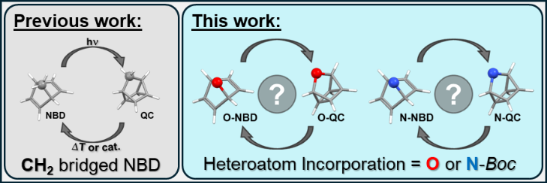
- observations made during prolonged irradiation experiments. Due to the thermal instability of O-QC2 noted during the investigation, kinetic experiments for determining the half-life time t1/2 were not conducted. However, the addition of CoII-porphyrin POR allowed for the successful regeneration of the parent O


Development and mechanistic studies of calcium–BINOL phosphate-catalyzed hydrocyanation of hydrazones
Beilstein J. Org. Chem. 2025, 21, 755–765, doi:10.3762/bjoc.21.59
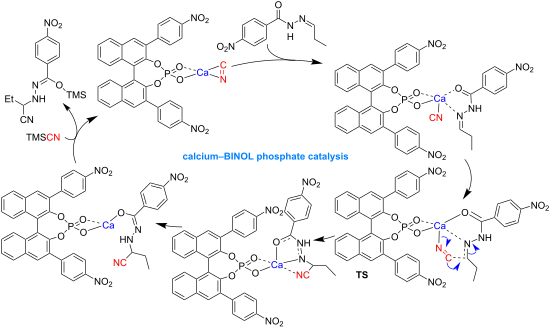
- kcal·mol−1 higher in energy, resulting in a theoretical ee value of 74% (at 263 K), if pure Z-hydrazone would be used and under the assumption of kinetic reaction control. In contrast, the E-hydrazone gives preferably the "R" product (with a theoretical ee value of 64%). The transition state which gives
- of the relative stabilities of different forms of this complex. Consequently, under kinetic reaction control, enantioselectivity would decrease over time as the reaction progresses. This occurs because slower-reacting complexes would accumulate, leading to a gradual equilibration of reaction rates
- energy than that of the entry channel (1 + 7 + 8, Figure 3). Because the rate-determining and configuration-determining steps are different, reaction control of the whole multistep transformation in terms of enantioselectivity is therefore neither predominantly thermodynamic nor predominantly kinetic


Orthogonal photoswitching of heterobivalent azobenzene glycoclusters: the effect of glycoligand orientation in bacterial adhesion
Beilstein J. Org. Chem. 2025, 21, 736–748, doi:10.3762/bjoc.21.57
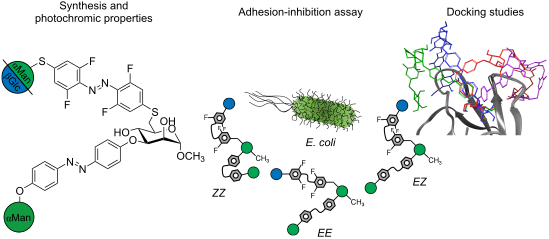
- thermodynamically stable EE isomer was followed over time starting from the PSS@365 nm. The kinetic traces of the relaxation process were recorded by 1H NMR spectroscopy at 37 °C (Supporting Information File 1, Figure S2) and the population of the EE, ZE, EZ, and ZZ isomers were plotted against time. Using a
- published tailor-made fitting program [24], the rate constants k1–k4 were extracted from the kinetic traces and are summarized in Table 2. The thermal relaxation of the glycoazobenzene antennas 3, 4, and 5, on the other hand, was monitored by UV–vis spectroscopy at 37 °C and the rate constants k5, k6, and
- from ZZ to ZE is practically not observed because it is so slow (for kinetic traces cf. Supporting Information File 1, Figure S2). Furthermore, the data reveal that the isolated glycoazobenzene antennas 3, 4, and 5 relax faster than the AB and ABF4 moieties comprised in the homobivalent glycocluster 2


Recent advances in allylation of chiral secondary alkylcopper species
Beilstein J. Org. Chem. 2025, 21, 639–658, doi:10.3762/bjoc.21.51
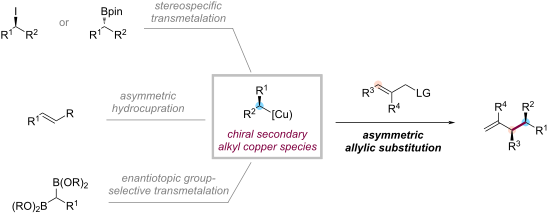
- otherwise predominant β-F elimination from the α-CF3-alkylcopper intermediate 39. Detailed kinetic studies confirmed the effect of the crown ether. When KOPiv was employed alone, the initial rate of defluorination increased by 1.57-fold, whereas the addition of 18-crown-6 reduced this acceleration to 1.22




Organocatalytic kinetic resolution of 1,5-dicarbonyl compounds through a retro-Michael reaction
Beilstein J. Org. Chem. 2025, 21, 473–482, doi:10.3762/bjoc.21.34
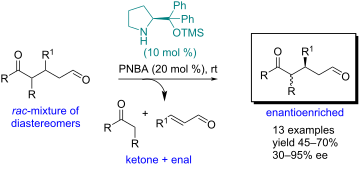
- , Universidad de Valladolid, Paseo Belén 7, 47011-Valladolid, Spain 10.3762/bjoc.21.34 Abstract The pharmaceutical chemical industry has long used kinetic resolution to obtain high-value compounds. Organocatalysis has recently been added to this strategy, allowing for the resolution of racemic mixtures with
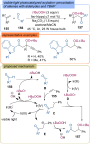
- low catalyst loadings and mild reaction conditions. This research focuses on the kinetic resolution of 1,5-dicarbonyl compounds using a retro-Michael reaction, co-catalyzed at room temperature with 20 mol % of the Jørgensen–Hayashi catalyst and PNBA. The study highlights the importance of conducting
- the kinetic resolution at a concentration of approximately ten millimolar (mM) to prevent the Michael retro-Michael equilibrium from affecting the process. Keywords: 1,5-dicarbonyl; equilibrium; kinetic resolution; organocatalysis; retro-Michael; Introduction For many years, enantiomers have been


New tandem Ugi/intramolecular Diels–Alder reaction based on vinylfuran and 1,3-butadienylfuran derivatives
Beilstein J. Org. Chem. 2025, 21, 444–450, doi:10.3762/bjoc.21.31
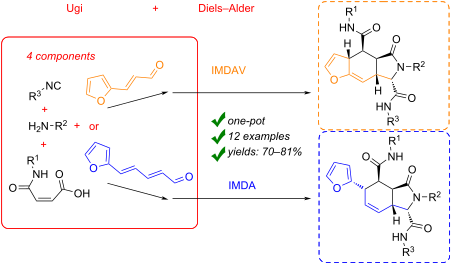
- a coordinated mechanism. Noteworthy, the primary kinetic product of the cycloaddition reaction 5 is not transformed into the thermodynamic product 6 via a H-shift at the last stage. The expected aromatization with the formation of a furan ring, as happens in similar reactions, does not occur (Scheme
- ,5,6,7,7a-hexahydro-3aH-furo[2,3-f]isoindoles via Ugi/IMDAV tandem reaction. Kinetic product 5 does not transform into thermodynamic product 6. Synthesis of compounds 6a. Synthesis of compound 7. Synthesis of compounds 9. Supporting Information Supporting Information File 4: Experimental procedures




Beyond symmetric self-assembly and effective molarity: unlocking functional enzyme mimics with robust organic cages
Beilstein J. Org. Chem. 2025, 21, 421–443, doi:10.3762/bjoc.21.30
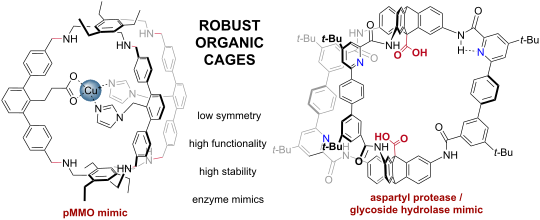
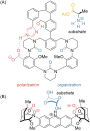
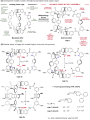
- self-directing and self-correcting, and the term “self-assembly” [290][291][292] often used [286][293][294][295][296]. Products can be thermodynamic or kinetic, but are often isolated by precipitation due to low solubility [297], though many have useful solubility [288][298]. Since POCs typically have
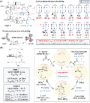
- ], which in many cases is the only way to understand pure substituent effects (e.g., on catalysis). To enable the validation of this process, experimentalists must collect data relevant to benchmarking computations: binding constants, kinetic barriers, crystal structures. In turn, this process will be




The effect of neighbouring group participation and possible long range remote group participation in O-glycosylation
Beilstein J. Org. Chem. 2025, 21, 369–406, doi:10.3762/bjoc.21.27
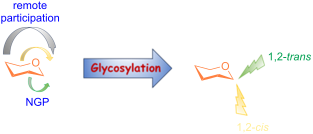
- ignored [26][27][28]. However, recent experimental, kinetic, and physical data reveal the incidence of more associative mechanisms [29][30][31] wherein the mechanistic pathway of glycosylation seems to lie at an interface of SN1–SN2 reaction (Scheme 1) [29]. The continuum mechanism expands in two
- pathway through an associative transition state to form the equatorial glycoside, 7. Surprisingly, recent evidences show that typical homogeneous glycosylation reactions in organic solution shift more towards the SN2 end of the mechanistic spectrum [32][33][34], with some exceptions [35]. The kinetic




Oxidation of [3]naphthylenes to cations and dications converts local paratropicity into global diatropicity
Beilstein J. Org. Chem. 2025, 21, 277–285, doi:10.3762/bjoc.21.20

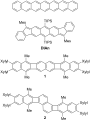
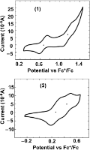
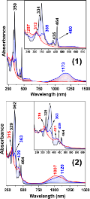
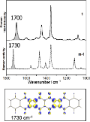
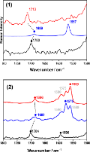
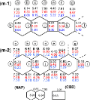
- ] reported a stable heptacene dication in concentrated sulfuric acid, a stability attributed to the intermolecular Coulomb repulsion between the charged molecules, which prevents the dimerization of the acene. This exciting finding suggests possible modes of kinetic stabilization of oxidized species of π


Effect of substitution position of aryl groups on the thermal back reactivity of aza-diarylethene photoswitches and prediction by density functional theory
Beilstein J. Org. Chem. 2025, 21, 242–252, doi:10.3762/bjoc.21.16
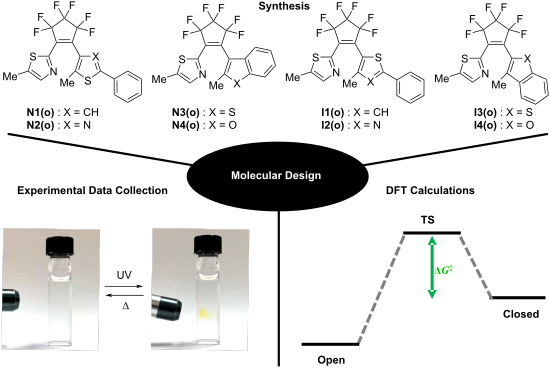
- family of photochromic compounds. This study explores the photochromic properties and thermal back reactivities of various aza-diarylethene regioisomers (N1–N4 and I1–I4) in n-hexane. These molecules exhibit fast thermally reversible photochromic reactions driven by 6π aza-electrocyclization. Kinetic


Dioxazolones as electrophilic amide sources in copper-catalyzed and -mediated transformations
Beilstein J. Org. Chem. 2025, 21, 200–216, doi:10.3762/bjoc.21.12
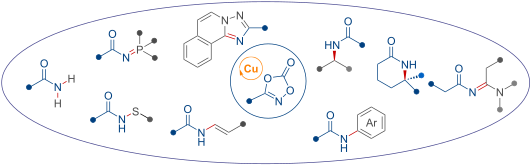
- substrate scope of boronic acids was limited in this transformation. To elucidate the reaction process, kinetic and control experiments were conducted, which led to the proposed reaction pathway for the copper-mediated synthesis of N-arylamides from dioxazolones as shown in Figure 4. Initially, copper(I


Recent advances in electrochemical copper catalysis for modern organic synthesis
Beilstein J. Org. Chem. 2025, 21, 155–178, doi:10.3762/bjoc.21.9

- enantioselectivity. First, the reaction of ketimine ester 33 and 2,3-dimethylhydroquinone at 10 °C provided the chiral 1,4-addition product 35 via dynamic kinetic asymmetric transformation (DyKAT). Conversely, when the reaction was performed at −10 °C, the reaction pathway switched from DyKAT to kinetic resolution








Recent advances in organocatalytic atroposelective reactions
Beilstein J. Org. Chem. 2025, 21, 55–121, doi:10.3762/bjoc.21.6
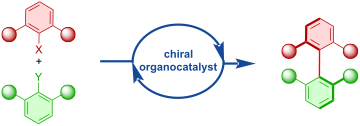
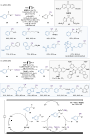
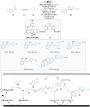
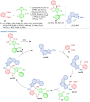
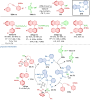
- enantioselectivities in similar desymmetrization reactions [39][40][41][42]. The dynamic kinetic resolution (DKR) of racemic 2-arylbenzaldehydes 62 with α-bromoenals 63 led to axially chiral products 64 [43]. Triazolium salt C20 as an NHC pre-catalyst was the most efficient for achieving high yields and enantiomeric
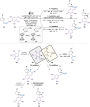
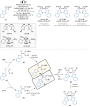
- enantioselectivities. Compound 66d was incorporated into a thiourea organocatalyst framework and successfully tested in kinetic resolution with 73% enantioselectivity. The chiral phosphoric acid (CPA) (R)-C22 was used to catalyze the formation of a C–N chiral axis in the axially chiral product 68 from biarylamines 67
- enantioselectivity during the nucleophilic addition, and the subsequent aromatization completes central-to-axial chirality conversion delivering products 68. Dynamic kinetic resolution of naphthylindoles 69 was performed by reaction with bulky electrophiles such as azodicarboxylates 70 or o-hydroxybenzyl alcohols 72






Emerging trends in the optimization of organic synthesis through high-throughput tools and machine learning
Beilstein J. Org. Chem. 2025, 21, 10–38, doi:10.3762/bjoc.21.3
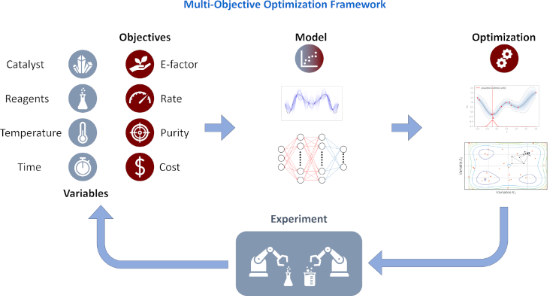
- rates and to make precise predictions using ML models. Traditionally, the optimization of a chemical reaction, the development of kinetic models, and optimization of analytical characterization parameters are undertaken independently. With this approach, many overlapping tasks are performed in parallel
- , thus leading to long lead times and inefficient personnel allocation. To overcome these issues, Sagmeister et al. [72] developed a dual modelling approach using a single platform that seamlessly integrates the calibration of PAT, reaction optimization, kinetic modelling, and parametrizes a process
- , using a scientific programming language called Julia, the collected data can be fitted to the kinetic model parameters, and in silico optimization of the reaction parameters can be performed. Machine-learning-driven optimization of chemical reactions Historically, optimization of chemical reactions has


Non-covalent organocatalyzed enantioselective cyclization reactions of α,β-unsaturated imines
Beilstein J. Org. Chem. 2024, 20, 3221–3255, doi:10.3762/bjoc.20.268
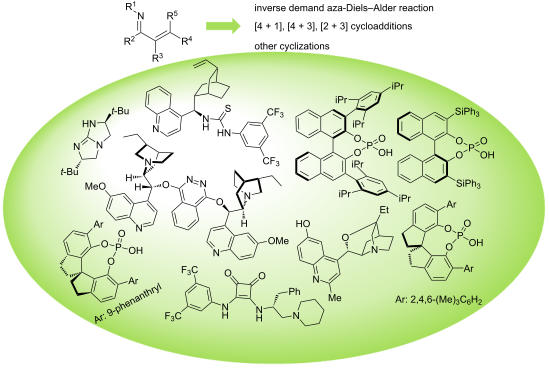
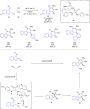
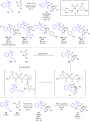
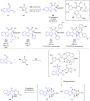
- calculations also revealed that due to kinetic control the activation of the C2 carbon of the dienolate is preferred vs the C4 atom, therefore only one regioisomer is observed. Additionally, the asymmetric IEDADA reaction could be performed at a higher scale (1 mmol) leading to the synthesis of the









Controlled oligomerization of [1.1.1]propellane through radical polarity matching: selective synthesis of SF5- and CF3SF4-containing [2]staffanes
Beilstein J. Org. Chem. 2024, 20, 3134–3143, doi:10.3762/bjoc.20.259
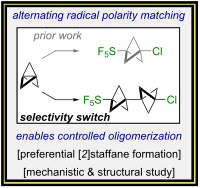
- here that the free energy of activation is lower for chlorination, albeit only by 0.4 kcal/mol. This is consistent with the notion that the kinetic preference can be overcome by increasing the concentration of 1 relative to CF3SF4Cl. In the second product-determining step, Cl atom abstraction by INT5


Advances in the use of metal-free tetrapyrrolic macrocycles as catalysts
Beilstein J. Org. Chem. 2024, 20, 3085–3112, doi:10.3762/bjoc.20.257
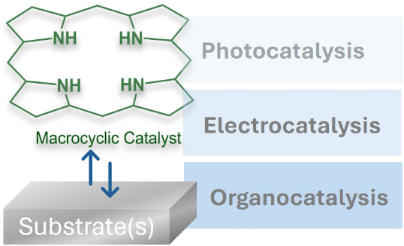
- concluded that both the presence of hydrogen-bond donor moieties (pyrrolic –NH groups) and a basic β-substituent are necessary to make the compound catalytically active. Further, authors have performed 1H NMR binding and kinetic studies and suggested that the reaction mechanism involves a simultaneous


Enantioselective regiospecific addition of propargyltrichlorosilane to aldehydes catalyzed by biisoquinoline N,N’-dioxide
Beilstein J. Org. Chem. 2024, 20, 3069–3076, doi:10.3762/bjoc.20.255
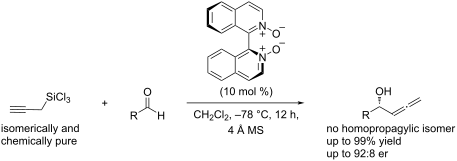
- ][15][16][17][18][19], the separation of which is by no means trivial [20] (Scheme 1). Nonetheless, substituents at the carbon atom indicated by γ (R2) of these reagents have been shown to bias the metallotropic rearrangement and/or the kinetic reactivity of the competing regioisomeric intermediates
- propargyltrichlorosilane [35][36] (Scheme 2). Other notable asymmetric catalytic approaches to prepare α-allenic alcohols (R2 = H) include the Corey–Bakshi–Shibata reduction of allenyl ketones [37], enzymatic [38][39][40], non-enzymatic [41] kinetic resolution of racemic α-allenic alcohols, and asymmetric 1,4


Extension of the π-system of monoaryl-substituted norbornadienes with acetylene bridges: influence on the photochemical conversion and storage of light energy
Beilstein J. Org. Chem. 2024, 20, 3061–3068, doi:10.3762/bjoc.20.254
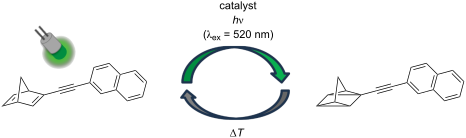
- that the triplet energy of 1i is significantly lower than 2.4 eV and even triplet sensitizers with lower triplet energies than that of [Ru(phen)3](PF6)2 could be employed for this reaction, which might even allow red light-driven switching. In addition to these kinetic studies, the photoisomerization
- intersystem crossing (ISC), internal conversion (IC), or quenching by structural relaxation, etc. Finally, the half-life, t1/2, of the quadricyclane derivatives 2h–l,n was determined by kinetic analysis of the thermally induced cycloreversion to the corresponding norbornadiene derivatives 1h–l,n at 60 °C


Cyclodextrin-based rotaxanes for polymer materials: challenge on simultaneous realization of inexpensive production and defined structures
Beilstein J. Org. Chem. 2024, 20, 3026–3049, doi:10.3762/bjoc.20.252
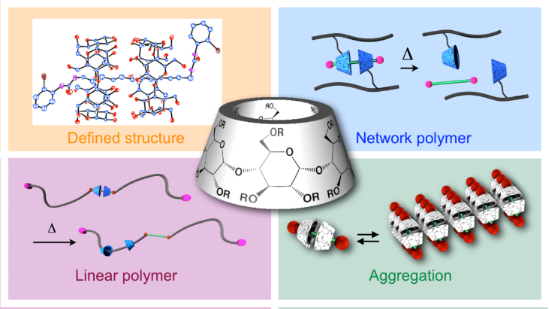
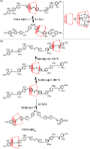
- reported the pseudorotaxane equilibrium observed by mixing α-CD and the axle molecules bearing methylpyridinium moieties on their ends, where the bigger rim of CD (the head side) was likely to include the dumbbell (Figure 8A) [71][72]. Concurrently, Komiyama and co-workers performed the kinetic analysis of
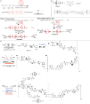
- , and its dynamic nature was comprehensively clarified by thermodynamic analysis. This motivated us to integrate this motif into the polymer system. Further details of the thermodynamic analyses with the actual kinetic parameters are discussed in the original articles [46][47]. To integrate this motif
- after the de-crosslinking of the gel. In addition to the qualitative observation by the naked eye, the quantitative kinetic analysis of this decrosslinking was conducted by fluorescence spectroscopy. Such a quantitative study became possible thanks to the defined rotaxane structure, which supported the






Advances in radical peroxidation with hydroperoxides
Beilstein J. Org. Chem. 2024, 20, 2959–3006, doi:10.3762/bjoc.20.249
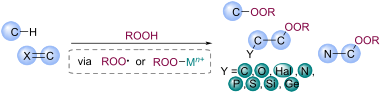
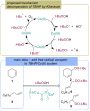
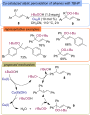
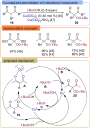
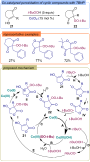
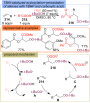
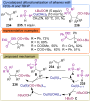
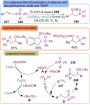
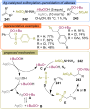
- -exchanged Montmorillonite K10 [63] were presented (Scheme 19). Chemical and kinetic data confirm that the mechanisms of the described processes are probably of a radical nature with the formation of MOO-t-Bu complexes [61]. The proposed pathway of the peroxidation is shown on the example of 9-substituted































4,6-Diaryl-5,5-difluoro-1,3-dioxanes as chiral dopants for liquid crystal compositions
Beilstein J. Org. Chem. 2024, 20, 2940–2945, doi:10.3762/bjoc.20.246
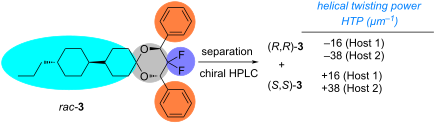
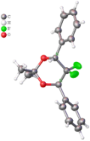
- still remain elusive and are not well understood [29]. Recently we have become interested in the preparation of racemic [30] anti- and highly enantioenriched 2,2-difluoro-1,3-diols [30][31][32] through an acylative double catalytic kinetic resolution (DoCKR) process [33]. While the 1,3-diol motif is


Copper-catalyzed yne-allylic substitutions: concept and recent developments
Beilstein J. Org. Chem. 2024, 20, 2739–2775, doi:10.3762/bjoc.20.232
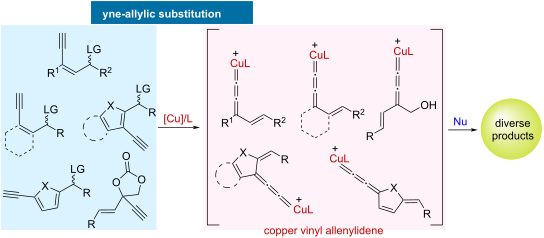
- stereocenter of the product is controlled by the catalyst. A single crystal of Cu(I) was investigated by X-ray and proved to be the dicopper complex, while the Cu(II) catalyst was revealed as mononuclear copper coordinated with two ligands. Further kinetic isotope experiments and nonlinear relationship studies
- confirmed that a copper–ligand monomer complex exists in the mechanism through nonlinear relationship experiments and kinetic studies (Scheme 17). He et al. [68] developed the regio- and enantioselective monofluoroalkylation of yne-allylic esters using fluorinated malonates as the starting materials, giving
- showed that the reaction exhibits a negative nonlinear effect, while the kinetic experiments indicate that a mono-copper catalyst might be involved in the rate-limiting step. They speculated that the observed nonlinear effect might arise from the existence of both the inactive homo-dimer of ligands and