


Search results
Search for "properties" in Full Text gives 2375 result(s) in Beilstein Journal of Organic Chemistry. Showing first 200.
Configuration–packing synergy enabling integrated crystalline-state RTP and amorphous-state TADF
Beilstein J. Org. Chem. 2026, 22, 224–236, doi:10.3762/bjoc.22.16
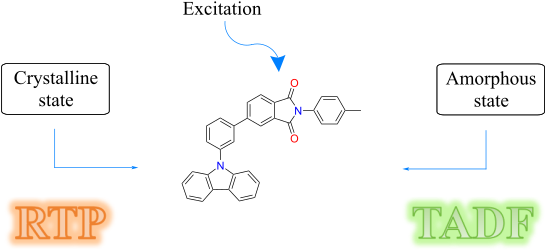
- influencing the electronic properties and excited-state dynamics of 1. Building on the crystallographic data, quantum-chemical calculations were performed using the Gaussian 09 software at the B3LYP level of theory. The calculations revealed that the highest occupied molecular orbital (HOMO) is primarily
- exhibit TADF, which is a process where delayed fluorescence is observed due to thermal activation. Alternatively, the material may also exhibit RTP, depending on the environmental conditions and the specific molecular interactions. These findings highlight the promising photophysical properties of 1
- and RTP. This result provides valuable insights into the excited-state dynamics of 1 and its potential for optoelectronic applications. In order to fully characterize the solid-state emission properties of 1, a comprehensive set of measurements was performed, including steady-state and post-excitation


Synthesis of diaryl phosphates using phytic acid as a phosphorus source
Beilstein J. Org. Chem. 2026, 22, 213–223, doi:10.3762/bjoc.22.15
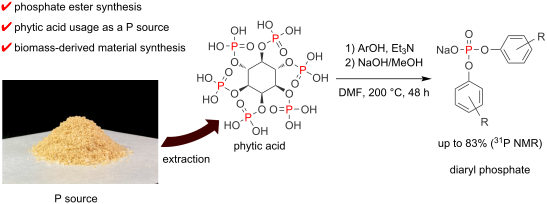
- phosphorus source [15]. There are three types of phosphate esters – monoesters, diesters, and triesters – which differ in their physical properties, reactivities, and practical applications (Figure 1). Phosphate monoesters and diesters are commonly found in biomolecules such as nucleobases and adenosine




Streptoquinolines A and B, new antibacterial meroterpenoids produced by Streptomyces sp. TMPU-A0679
Beilstein J. Org. Chem. 2026, 22, 185–191, doi:10.3762/bjoc.22.12
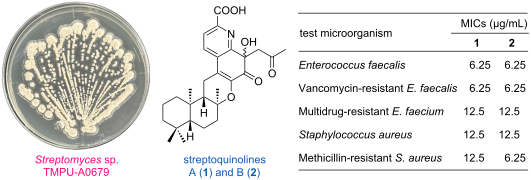
- preparative HPLC, yielding streptoquinolines A (1, 7.50 mg) and B (2, 8.05 mg). The physicochemical properties of 1 and 2 are summarized in Table 1. Compounds 1 and 2 showed characteristic absorption maxima at 200–202, 214, 231–234, 312, and 349–350 nm in UV spectra. Common IR absorption bands at 3414–3427
- undertaking the total synthesis of this putative natural precursor to further confirm its structure and biological properties. To date, only two structurally related meroterpenoids to 1 and 2 have been reported: thallusin [7] and saccharoquinoline [8], both of which share a drimane-type sesquiterpene skeleton
- ) and B (2). Structural elucidation of compounds 1 and 2 by 2D NMR experiments. ROESY correlations of 1. Physicochemical properties of 1 and 2. 1H and 13C NMR chemical shifts in 1 and 2.a MICs of 1 and 2. Supporting Information Supporting Information File 12: MS and NMR spectra of streptoquinolines A


Improved synthesis and physicochemical characterization of the selective serotonin 2A receptor agonist 25CN-NBOH
Beilstein J. Org. Chem. 2026, 22, 175–184, doi:10.3762/bjoc.22.11
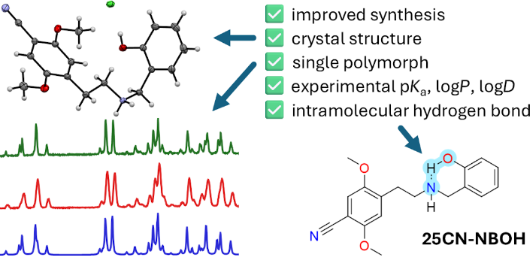
- characterization of 25CN-NBOH and report key physicochemical properties in the solid state as well as in the solution state, namely stability, ionization, solubility, partition coefficient, and membrane permeability. We show that the hydrochloride salt is a stable and well-defined crystalline compound that is also
- respect to the physiochemical properties and handling of the compound in various research scenarios. Keywords: intramolecular hydrogen bond; membrane permeability; solubility; stability; synthesis; Introduction In recent years, classical psychedelics such as psilocybin and LSD have re-emerged as
- selective 5-HT2AR activation in vitro and in vivo [6]. A review published in 2021 provide an in-depth introduction to the pharmacological properties and various applications [7]. More recent examples include the mapping of the cortical correlates of the so-called head-twitch response in mice [8


A new synthesis of Tyrian purple (6,6’-dibromoindigo) and its corresponding sulfonate salts
Beilstein J. Org. Chem. 2026, 22, 167–174, doi:10.3762/bjoc.22.10
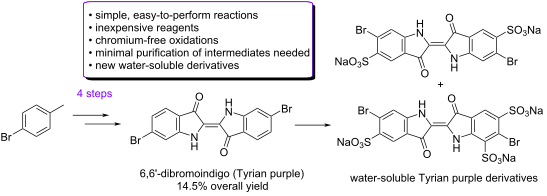
- ][17]. In this work, we describe a more direct, chromium-free synthesis of 1 using inexpensive p-bromotoluene (5), as a starting material, which is also suitable for obtaining similar analogs. Moreover, we describe the sulfonation of 1, which yields a water-soluble dye similar in properties to indigo


Asymmetric Mannich reaction of aromatic imines with malonates in the presence of multifunctional catalysts
Beilstein J. Org. Chem. 2026, 22, 151–157, doi:10.3762/bjoc.22.8
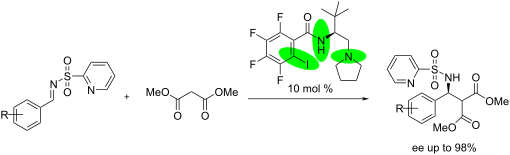
- product in a slightly less enantioselective way (71% ee). When comparing the halogen bond donor properties of tetrafluoroiodophenyl and iodophenyl moieties, the latter is weaker as it is less electron-withdrawing. However, there is a very small difference between reactivity and selectivity for catalysts E


Design and synthesis of an axially chiral platinum(II) complex and its CPL properties in PMMA matrix
Beilstein J. Org. Chem. 2026, 22, 143–150, doi:10.3762/bjoc.22.7
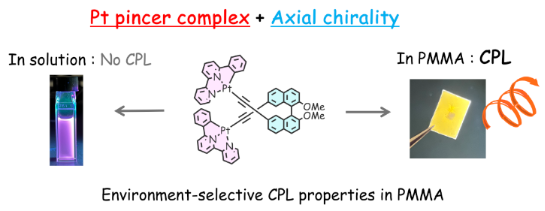
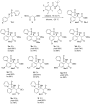
- two platinum(II) chromophore units, leading to the chiroptical properties in the MLCT region through exciton coupling under restricted molecular motion. Keywords: axial chirality; chiral chemistry; circularly polarized luminescence (CPL); phosphorescence; platinum(II) complex; Introduction
- , pincer-type platinum(II) complexes have attracted particular attention, owing to the structural robustness imparted by tridentate chelating ligands and their excellent luminescent properties [12][13][14][15][16][17]. These complexes have been widely investigated, not only for practical application but
- also from the perspective of fundamental chemistry. In recent years, the design and synthesis of luminescent pincer-type platinum(II) metal complexes incorporating chirality, as well as the study of their physicochemical properties, have gained significant interest [18][19][20][21][22]. Such efforts


Symmetrical D–π–A–π–D indanone dyes: a new design for nonlinear optics and cyanide detection
Beilstein J. Org. Chem. 2026, 22, 131–142, doi:10.3762/bjoc.22.6
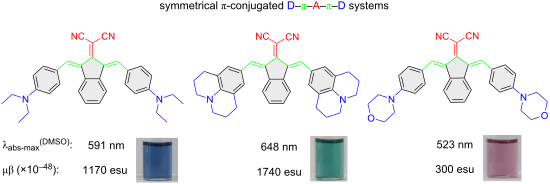
- 10.3762/bjoc.22.6 Abstract Three indan-2-one-based donor–π–acceptor–π–donor type dyes with symmetric donor groups were synthesized and characterized to study their nonlinear optical (NLO) properties and their potential use in the rapid and selective determination of cyanide. The designed structures
- colorimetric and optical changes. Because of the strong donor–acceptor structure, second-order NLO properties were studied by measuring electric field-induced second harmonic (EFISH) values, which showed significant second-order NLO responses. The experimental results were explained using density functional
- theory (DFT) methods. The dyes also exhibit chemosensor properties, showing selectivity for cyanide via a Michael addition mechanism that causes the disappearance of the ICT band, and a significant color change was observed in both organic and aqueous media. In addition, the interaction mechanism between


Highly electrophilic, gem- and spiro-activated trichloromethylnitrocyclopropanes: synthesis and structure
Beilstein J. Org. Chem. 2026, 22, 123–130, doi:10.3762/bjoc.22.5
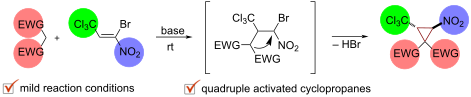
- biologically active properties. Thus, barbamide exhibits molluscicidal activity [7], and sintokamide A is active against prostate cancer [8] (Figure 1). As derivatives of strained and unique structure and properties [9][10] cyclopropanes are of interest for entering into various transformations along the path
- groups seems attractive for both theoretical chemistry and the synthesis of 2-aminocyclopropanecarboxylic acids, of which representatives have biologically active properties against kynurenine-3-monooxygenase [25] and GABA receptors [26]. Such aminocyclopropane derivatives can be classified as donor


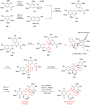
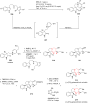
Total synthesis of natural products based on hydrogenation of aromatic rings
Beilstein J. Org. Chem. 2026, 22, 88–122, doi:10.3762/bjoc.22.4
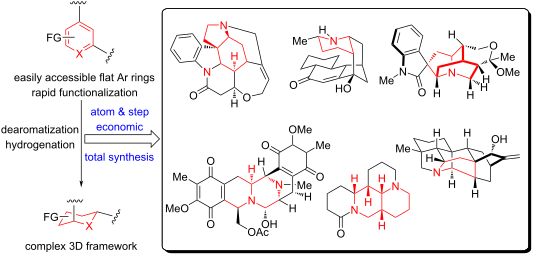
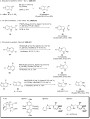
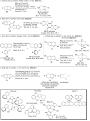
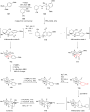
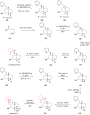
- sustained interest from synthetic chemists worldwide due to their pronounced antibacterial and anticancer properties. Since their discovery, bis-THIQ scaffolds have been constructed primarily through the Pictet–Spengler reaction, a cyclization strategy that continues to be widely employed in total synthesis


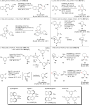
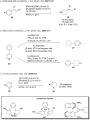
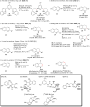
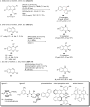









Advances in Zr-mediated radical transformations and applications to total synthesis
Beilstein J. Org. Chem. 2026, 22, 71–87, doi:10.3762/bjoc.22.3
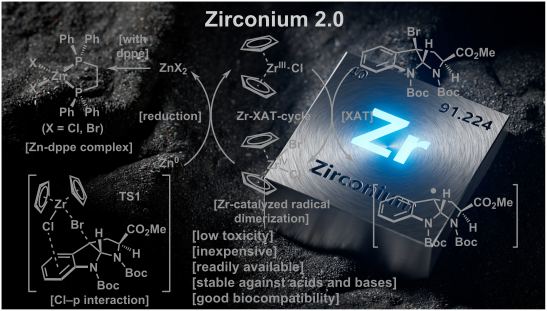
- properties [1]. Among its notable physical attributes is its high corrosion resistance: metallic zirconium is exceptionally stable toward acids and bases at ambient temperature and is less susceptible to corrosion than titanium. Its low toxicity and excellent biocompatibility have historically supported the
- available materials, in benzene afforded the Zr(RCNN)2 complex 18. Investigation of the photoredox properties of the synthesized complex revealed trends similar to those of known photosensitizers, suggesting its potential utility as a photosensitizer [15]. Accordingly, the Zr(MeCNN)2 complex was employed as
- widely employed in the field of organic synthesis. This widespread use is underpinned by zirconium’s abundance in the Earth’s crust and its low toxicity, among other advantageous properties. Traditionally, its applications have predominantly involved two-electron processes via hydrozirconation. In recent








Reactivity umpolung of the cycloheptatriene core in hexa(methoxycarbonyl)cycloheptatriene
Beilstein J. Org. Chem. 2026, 22, 64–70, doi:10.3762/bjoc.22.2
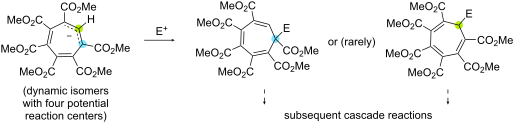
- , the antiaromatic properties of anion 2 [21] allow to regard these reactions as one of those driven by the relief of antiaromaticity [22][23][24][25][26][27]. Results and Discussion In our previous work [21], we demonstrated that most cycloheptatrienyl anions prefer conformers distorted to an allylic


Sustainable electrochemical synthesis of aliphatic nitro-NNO-azoxy compounds employing ammonium dinitramide and their in vitro evaluation as potential nitric oxide donors and fungicides
Beilstein J. Org. Chem. 2025, 21, 2739–2754, doi:10.3762/bjoc.21.211
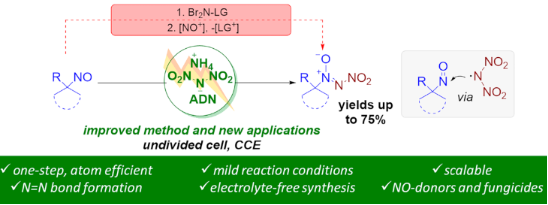
- , structures, and redox properties, effective synthetic strategies for the construction of N–N and N–O systems remain markedly underdeveloped. Unlike traditional methods for constructing C–C and C–Het bonds, the number of methods for selective N–N [1][5][19][20][21][22][23][24][25][26][27][28][29] and N–O [30
- Griess test results, all synthesized nitro-NNO-azoxy compounds released high fluxes of NO (36–137%) exceeding those of CAS-1609 (22.1%) and NG (15.3%). Interestingly, azoxy derivatives 2a–e,i showed NO-donor properties only in the presence of ʟ-cysteine proposing the thiol-dependent mechanism of NO
- release. At the same time, compounds 2f–h demonstrated moderate NO-donor properties in the absence of ʟ-cysteine, which can be associated with a more complex mechanism of NO release for these substances. Importantly, azoxy species 3f and 4f showed no difference in NO-donor properties irrespective of the





Competitive cyclization of ethyl trifluoroacetoacetate and methyl ketones with 1,3-diamino-2-propanol into hydrogenated oxazolo- and pyrimido-condensed pyridones
Beilstein J. Org. Chem. 2025, 21, 2716–2729, doi:10.3762/bjoc.21.209
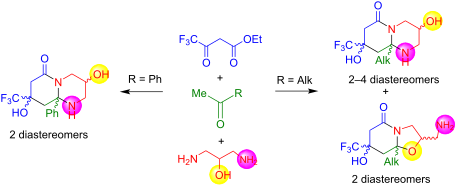
- to be obtained in one stage using commercially available reagents [1][2][3]. Their ambident properties make 3-oxo esters convenient reagents for the use in multicomponent syntheses, with the Hantzsch [4][5] and Biginelli [6][7][8] reactions being the best known. In the transformations, 3-oxo esters
- the one hand, owing to the fact that the pyridine framework is widespread among natural compounds [40][41], and, on the other hand, because of the unique properties of fluorine [42][43][44][45]. In this work, 1,3-diaminopropan-2-ol (3) has for the first time been introduced into the reaction of ethyl
- biological properties of the synthesized compounds. We focused primarily on their potential antiviral activity, since a moderate anti-influenza effect of the related octahydropyrido[1,2-a]pyrimidinones was previously revealed [24]. The series of bicycles 4att, 4a–dct, 4atc, 4acc, 5ctc were tested against


Tandem hydrothiocyanation/cyclization of CF3-iminopropargyl alcohols with NaSCN in the presence of AcOH
Beilstein J. Org. Chem. 2025, 21, 2694–2702, doi:10.3762/bjoc.21.207
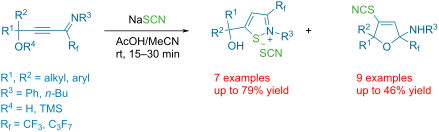
- motif in various biologically active molecules and materials due to its unique physical, chemical, and biological properties [28][29][30]. SCN and trifluoromethyl groups have proved to be versatile moieties in the design and development of numerous active pharmaceutical ingredients, agrochemicals, drugs



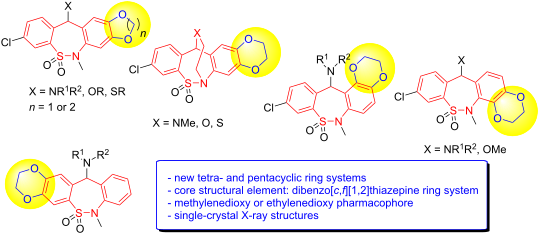
Synthesis of new tetra- and pentacyclic, methylenedioxy- and ethylenedioxy-substituted derivatives of the dibenzo[c,f][1,2]thiazepine ring system
Beilstein J. Org. Chem. 2025, 21, 2645–2656, doi:10.3762/bjoc.21.205
- 100 μL platinum pan in 25 mL/min nitrogen atmosphere. Melting properties of the amorphous samples (21b, 38d, 54f) were also studied by a TA Instruments Discovery DSC differential scanning calorimeter in the 25–120 °C temperature range with a 10 °C/min heating rate using 2.5 to 3.0 mg sample in a


Thiazolidinones: novel insights from microwave synthesis, computational studies, and potentially bioactive hybrids
Beilstein J. Org. Chem. 2025, 21, 2618–2636, doi:10.3762/bjoc.21.203
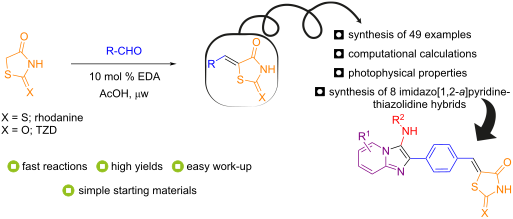
- compounds 3n and 4n was carried out using torsion angle analysis and 13C NMR chemical shift calculations to evaluate the absence of expected signals in the NMR spectra of these compounds. Their photophysical properties were also assessed, confirming a preference for a fluorescence mechanism via an ICT
- available drugs [1]. These structures exhibit unique properties that influence pharmacokinetic and pharmacodynamic parameters, including lipophilicity, polarity, hydrogen-bonding capacity, and toxicological profiles [2][3][4]. Among them, five-membered multi-heterocyclic (FMMH) rings are privileged
- ], antioxidant [34], cytotoxic [35], and antiproliferative [36]. The structures of these compounds allow the synthesis of a large collection of bioactive molecules due to their nucleophilic and electrophilic properties [37]. One of the forms of modifications is at the methylene group, particularly in the 5






Efficient solid-phase synthesis and structural characterization of segetalins A–H, J and K
Beilstein J. Org. Chem. 2025, 21, 2612–2617, doi:10.3762/bjoc.21.202
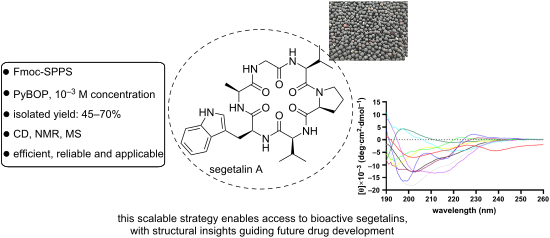
- properties (3). Given their unique structural features and pharmacological potential, segetalins have become important targets for both synthetic chemistry and drug development. However, efficient and general synthetic routes to access this family have remained limited over the past decades. Previous


Total syntheses of highly oxidative Ryania diterpenoids facilitated by innovations in synthetic strategies
Beilstein J. Org. Chem. 2025, 21, 2553–2570, doi:10.3762/bjoc.21.198
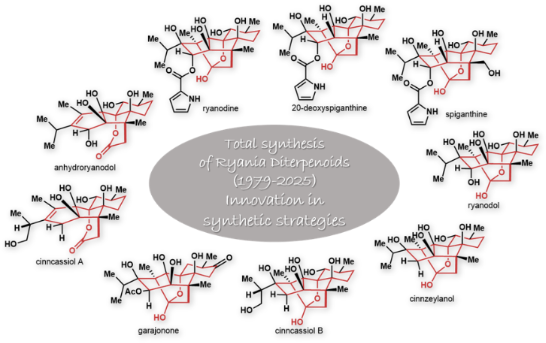
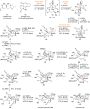
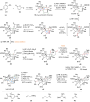
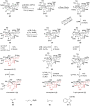
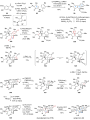
- products continue to attract considerable research interest due to their intricate chemical architectures and distinctive biological properties. Through decades of dedicated effort, synthetic chemists have accomplished the total synthesis of several members within this family that share a common core







Pentacyclic aromatic heterocycles from Pd-catalyzed annulation of 1,5-diaryl-1,2,3-triazoles
Beilstein J. Org. Chem. 2025, 21, 2524–2534, doi:10.3762/bjoc.21.194
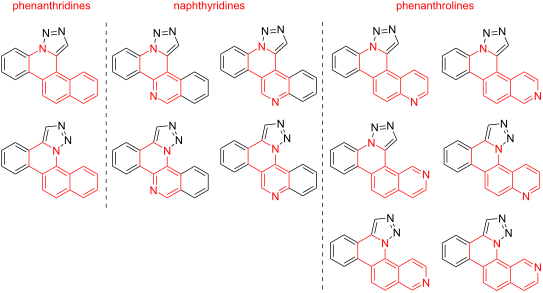
- , there remains a wide range of chemical space representing these heterocycles that has not yet been explored. Hence, there is an ongoing interest in identifying synthetic strategies to access unreported ring structures and in characterizing the resulting physical and biological properties of such
- other bioactive properties [37][38][39][40][41][42][43][44]. In contrast, examples of 1,5-diaryl-1,2,3-triazoles with quinoline or isoquinoline subunits are lacking [45]. The neighboring proximity of the arene subunits in such 1,5-regioisomers allows for potential intramolecular annulation to form
- physical and biological properties of such polycyclic aromatic heterocycles would serve as an initial evaluation of their potential use in chemical, material, and therapeutic applications. Results and Discussion The two-step approach used to prepare the target pentacyclic aromatic heterocycles 13–18 via


Effect of a photoswitchable rotaxane on membrane permeabilization across lipid compositions
Beilstein J. Org. Chem. 2025, 21, 2498–2512, doi:10.3762/bjoc.21.192
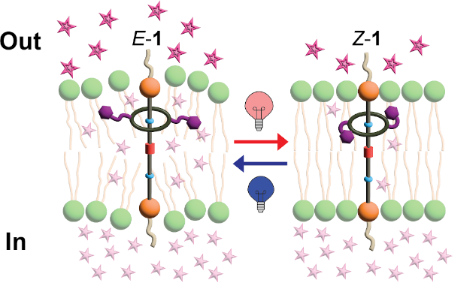
- photochemical process occurs, which triggers the release from only the vesicles containing EYPC. These findings underscore the significance of both the physical and chemical properties of the bilayer in enabling effective light-triggered cargo release through rotaxane activation. Keywords: lipid membrane
- proteins that are responsible for essential cellular functions [1]. As a result, the function and properties of lipid membranes are significantly influenced by their lipid composition, which varies across various domains of life, including mammalian, prokaryotic, and plant cells, and even between
- bacteria or malignant cells like cancer) [5][6], or to influence membrane protein function and thereby control cellular behavior [7][8]. One promising approach is the development of light-activated molecules that can modulate membrane properties upon irradiation, enabling remote activation with high




Palladium-catalyzed regioselective C1-selective nitration of carbazoles
Beilstein J. Org. Chem. 2025, 21, 2479–2488, doi:10.3762/bjoc.21.190
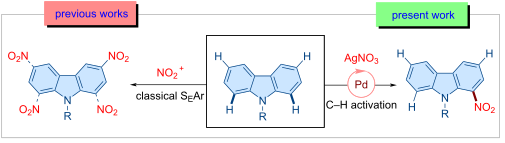
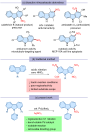
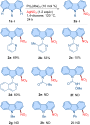
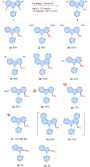
- functionalization of carbazoles via C–H activation [48][49][50][51][52][53][54][55][56][57][58][59][60][61]. Among the variously substituted carbazole scaffolds, nitro-substituted carbazoles exhibit a diverse range of medicinal properties and serve as key starting materials for the synthesis of bioactive compounds


Ex-situ generation of gaseous nitriles in two-chamber glassware for facile haloacetimidate synthesis
Beilstein J. Org. Chem. 2025, 21, 2465–2469, doi:10.3762/bjoc.21.188
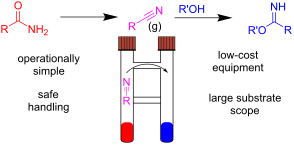
- trifluoroacetonitrile [24]. Schmidt published the first synthesis of glycosyl trifluoroacetimidates and concluded that their glycosyl-donor properties were similar to the trichloroacetimidates, but more difficult to prepare and purify [24]. In contrast to these observations, Nakajima et al. reported the


The intramolecular stabilizing effects of O-benzoyl substituents as a driving force of the acid-promoted pyranoside-into-furanoside rearrangement
Beilstein J. Org. Chem. 2025, 21, 2456–2464, doi:10.3762/bjoc.21.187
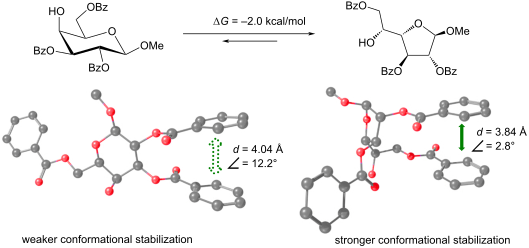
- preferable while for the α-isomers the preference is for the pyranoside. Again, for the phenyl β-ᴅ-galactosides the DLPNO-CCSD(T) approach predicted prevalence of the furanoside form. However, phenyl group differs from methyl in electronic properties and in size. We suppose that these differences may cause




Transformation of the cyclohexane ring to the cyclopentane fragment of biologically active compounds
Beilstein J. Org. Chem. 2025, 21, 2416–2446, doi:10.3762/bjoc.21.185
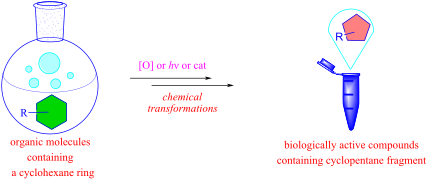
- objects for investigating the possibility of using them in the synthesis of compounds of iridoid topology. Iridoids belong to the class of terpenoids and are secondary metabolites of plants, as well as multi-tasking objects [5][17][18]. Studies on the pharmacological properties of iridoids have shown
- ) (Scheme 20). Indanes (benzocyclopentanes) and their derivatives are widely used in materials science and nanotechnology and have important biological properties such as anti-allergic, antitumor, anticonvulsive, antihypercholesteremic, herbicidal, fungicidal and antimicrobial activity [60]. In [58], a
- the study of inflammatory diseases and other bioactive properties. Epoxidation of 230 with m-chloroperoxybenzoic acid (m-CPBA) gave the epoxide 231. Subsequent addition of excess BF3·OEt2 led to a semipinacol rearrangement, affording 232 in 65% yield as a single diastereomer. The aldehyde 232 was then





