Search results
Search for "radical" in Full Text gives 900 result(s) in Beilstein Journal of Organic Chemistry. Showing first 200.
Chiral phosphoric acid-catalyzed asymmetric synthesis of helically chiral, planarly chiral and inherently chiral molecules
Beilstein J. Org. Chem. 2025, 21, 1864–1889, doi:10.3762/bjoc.21.145
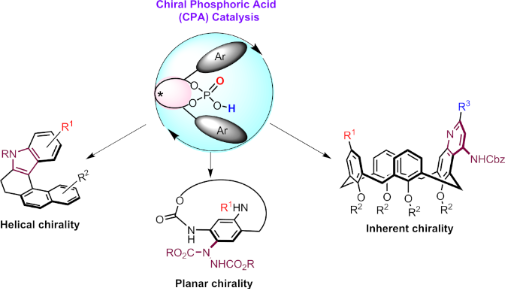
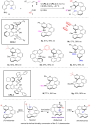
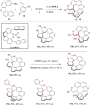
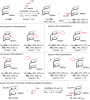
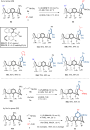
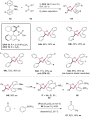
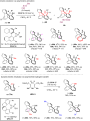
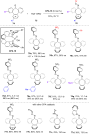
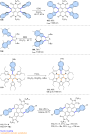
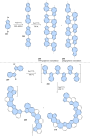
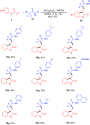
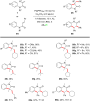
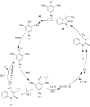
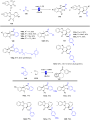
- enantioselectivity. Overall, with the recent rapid advancements of CPA catalysis, along with the utilization of CPA catalysts in asymmetric radical chemistry, transition metal-catalyzed reactions and photoredox chemistry, we envision that CPA catalysts will continue to play a central role in the future asymmetric









Continuous-flow-enabled intensification in nitration processes: a review of technological developments and practical applications over the past decade
Beilstein J. Org. Chem. 2025, 21, 1678–1699, doi:10.3762/bjoc.21.132
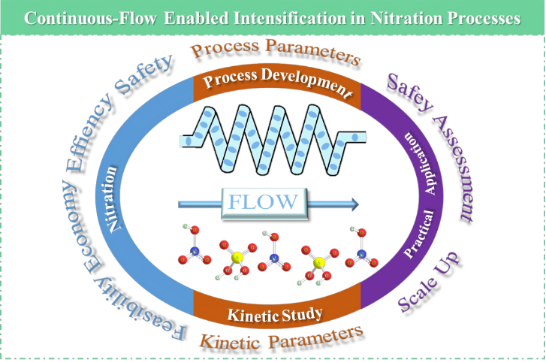
- aliphatic counterparts) due to their predictable electrophilic substitution mechanisms and relatively mild reaction conditions, which enable superior controllability and regioselectivity. Unlike aromatic nitrations that predominantly follow ionic mechanisms, aliphatic systems governed by free radical
- , scalability for mass production, and broad substrate applicability. Nitration reactions using inorganic nitrating reagents predominantly occur through two distinct mechanistic pathways: free radical and ionic mechanisms. The free radical-mediated nitration pathways using inorganic nitrating reagents remain
- mechanistic classifications are not absolute – an aliphatic nitration may occasionally proceed via ionic pathways, whereas certain aromatic systems demonstrate free radical-mediated reactivity. A notable example of free radical involvement in aromatic nitration was reported by Murray et al., who elucidated a



Influence of the cation in hypophosphite-mediated catalyst-free reductive amination
Beilstein J. Org. Chem. 2025, 21, 1661–1670, doi:10.3762/bjoc.21.130
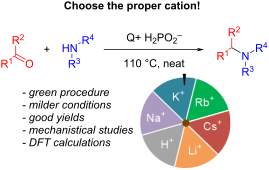
- fertilizers in agrochemistry phosphates [20]. Multiple literature reports indicate that changing the alkali metal cations can strongly affect diverse chemical processes including radical reactions [27], electrochemical processes [28], and biomass pyrolysis [29]. However, hypophosphites derived from alkali
- synthesis of esters of phosphonous or alkylphosphinic acids [33][34][35]. Only a single application of cesium hypophosphite was shown in the literature. CsH2PO2 was prepared in situ and used for formation C–P bond by radical addition to unsaturated carboxylic acids [36 ]To summarize the above, it is crucial


Photocatalysis and photochemistry in organic synthesis
Beilstein J. Org. Chem. 2025, 21, 1645–1647, doi:10.3762/bjoc.21.128
- , and flow chemistry are being harnessed to push the limits of light-driven reactions [36]. Terada and colleagues show in this thematic issue how flow chemistry is used to significantly improve the yield of a π-Lewis acidic metal-catalyzed cyclization–radical addition sequence [37]. Recently, chemists
- -mediated organic synthesis has also resulted in a renaissance of radical chemistry. Once regarded as “[…] messy, unpredictable, unpromising and essentially mysterious” [39], radical-based methods have become central to modern organic chemistry, spanning applications in the life sciences. The Perspective

3-Aryl-2H-azirines as annulation reagents in the Ni(II)-catalyzed synthesis of 1H-benzo[4,5]thieno[3,2-b]pyrroles
Beilstein J. Org. Chem. 2025, 21, 1595–1602, doi:10.3762/bjoc.21.123
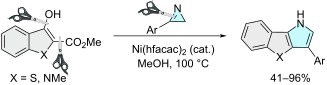
- -containing compounds [1][2][3]. Such reactions can be initiated by electrophilic, nucleophilic or radical reagents, photoirradiation or proceed under acid-, metal-, or photocatalytic conditions. This strategy of azirine ring expansion is applicable to the synthesis of a variety of 4‒9-membered N-heterocycles
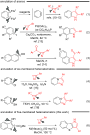
- intermediate formation of free radical species [9]. A similar reaction of N-acetyl substituted indole 9c produced [3 + 2] cycloaddition products 12 in even lower yield (4%). However, the main reaction product turned out to be unstable compound 13, which, nevertheless, was isolated in 40% yield as a single



Thermodynamic equilibrium between locally excited and charge transfer states in perylene–phenothiazine dyads
Beilstein J. Org. Chem. 2025, 21, 1577–1586, doi:10.3762/bjoc.21.121
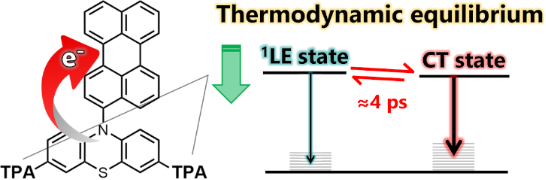
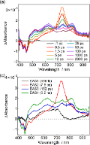
- -state bleach signals at 425 and 445 nm and positive transient absorption bands at 505, 582, and 725 nm were observed (0.3 ps). The overall spectral features were highly similar to those previously reported for Pe–PTZ [15], particularly the characteristic band at 582 nm, which was assigned to the radical
- anion of the Pe moiety. Additionally, a shoulder signal observed near 500 nm was attributed to the radical cation of the PTZ(TPA) unit. However, although previous studies selectively excited the Pe moiety and attributed the 725 nm band to the LE state of Pe moiety, such an assignment may not be directly
- the PTZ(TPA)2 moiety and the Pe radical anion almost instantaneously. The electron transfer occurs extremely rapidly (within the instrumental response function, <100 fs), likely via a direct CT transition. Subsequently, both signals showed growth components with time constants of 2.4 and 639 ps




General method for the synthesis of enaminones via photocatalysis
Beilstein J. Org. Chem. 2025, 21, 1535–1543, doi:10.3762/bjoc.21.116
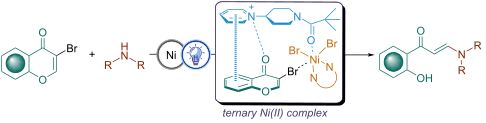
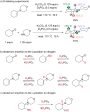
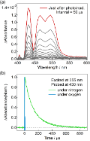
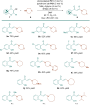
- semipreparative scale for the reaction of 3-bromochromone (7a, 5.0 mmol) to afford enaminone 9a in a 68% isolated yield (Scheme 3). In terms of the reaction mechanism, TEMPO completely inhibited the reaction, implying the possibility of a radical intermediate in the reaction (Scheme 4A). Moreover, the TEMPO
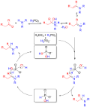
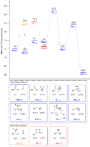
- oxidative state PC1* that interacts with morpholine (8a) to generate the corresponding aminium radical cation. To gain a better understanding of the process, the formation of the enaminone product 9a was monitored overtime by 1H NMR, which confirmed that the the reaction was complete within 2 h. Furthermore
- . Simultaneously, acridinium photocatalyst PC1 absorbed energy and transitioned from the ground state to excited state under visible-light irradiation. This excited state PC1* is quenched by the amine, generating the amine radical cation and PC1 radical via a single-electron transfer (SET) process. Then, the C−Br




Calcium waste as a catalyst in the transesterification for demanding esters: scalability perspective
Beilstein J. Org. Chem. 2025, 21, 1520–1527, doi:10.3762/bjoc.21.114
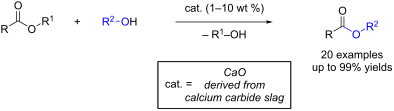
- , lactones and triglycerides with medium hydrocarbon radical lengths (C5, C9–10 and C12) and the results are summarized in Scheme 2. All reactions were carried out at the boiling point of methanol (65 °C), with different CS600 loading and reaction times. The transesterification of ethyl esters to the


Photoredox-catalyzed arylation of isonitriles by diaryliodonium salts towards benzamides
Beilstein J. Org. Chem. 2025, 21, 1480–1488, doi:10.3762/bjoc.21.110
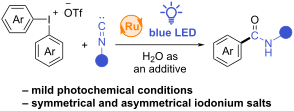
- (Scheme 3 and Supporting Information File 1, supplementary note 2). Our experiments clearly demonstrated that electron-poor aryls gave better yields in case of both symmetrical and unsymmetrical iodonium salts. In general, such results cannot be associated with the stability of radical species, which does
- the iodonium salt, leading to the generation of an aryl radical, aryl iodide, and Ru(III). The formation of the aryl radical was corroborated through a trapping experiment utilizing TEMPO as a radical scavenger (Scheme 4 and Supporting Information File 1, 5. Control experiments, Figure S18). The
- resulting aryl radical is subsequently captured by an isonitrile molecule, forming an imidoyl radical intermediate X1. The intermediate X1 facilitates the reduction of the Ru(III) species back to Ru(II) thereby completing the photoredox cycle, with the formation of the cationic intermediate X2. We propose


Advances in nitrogen-containing helicenes: synthesis, chiroptical properties, and optoelectronic applications
Beilstein J. Org. Chem. 2025, 21, 1422–1453, doi:10.3762/bjoc.21.106
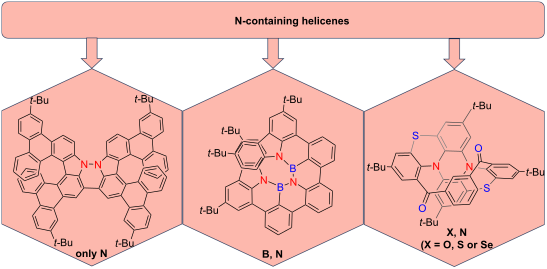
- electronic behaviors reminiscent of nitrogen-doped azulenes, featuring strong absorption dissymmetry factors (|gabs|) at 345 nm – 1.2 × 10⁻² for compound 20a, 1.0 × 10⁻² for 20d, and 1.3 × 10⁻² for 20e (Table 5). Notably, the radical cation form of compound 20e (20e•+) exhibits pronounced CD signals
- BCPL value of 13.2 M−1 cm−1. Notably, compound 21c undergoes reversible redox interconversion to its radical cation 21c•+ and dicationic 21c2+ states via chemical oxidation, enabling controllable switching between antiaromatic and aromatic configurations. These results provide a compelling strategy for
- two radical aza[7]helicenes, 24a and 24b, exhibiting distinct photophysical behaviors [38]. Compound 24b features a higher PLQY (0.43), while 24a demonstrates doublet-state CPL (|glum| = 5.0 × 10⁻⁴), highlighting the potential of helicene radicals for spintronic applications. Meng’s group synthesized

Oxetanes: formation, reactivity and total syntheses of natural products
Beilstein J. Org. Chem. 2025, 21, 1324–1373, doi:10.3762/bjoc.21.101
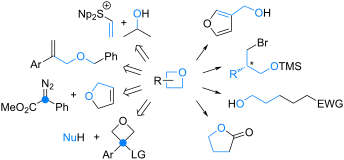
- homoallylic alcohols 18/19 via metal hydride atom transfer/radical polar crossover (MHAT/RPC) method (Scheme 6) [41]. This mild and high-yielding protocol displays good functional group tolerance and has a broad substrate scope, even providing access to medicinally relevant spirooxetanes. The proposed MHAT
- /RPC mechanism starts with a single-electron oxidation of the cobalt catalyst followed by a reaction with the siloxane to generate a cobalt–hydride complex. Subsequent hydride transfer to the alkene produces radical pair 23 which collapses to alkylcobalt intermediate 24. Another single-electron
- , amides or esters and occurs under very mild conditions that are also suitable for a late-stage functionalisation of complex molecules. The transformation is based on an H-atom transfer to photochemically oxidised quinuclidine followed by an annulation of the resulting ketyl radical 32 with








Recent advances in amidyl radical-mediated photocatalytic direct intermolecular hydrogen atom transfer
Beilstein J. Org. Chem. 2025, 21, 1306–1323, doi:10.3762/bjoc.21.100
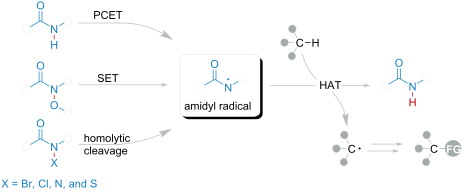
- abstract hydrogen atoms from these C–H bonds and directly functionalize these bonds via radical reactions (Figure 1c) [11][12][13][14][15][16][17][18]. This approach involves HAT reagents abstracting hydrogen atoms from C–H bonds to generate highly reactive C-centered radicals, which can subsequently form
- (Figure 1c) [19][20][21][22][23][24][25][26][27], serve as key species for the HAT process. These HR were generated from different HAT reagent precursors (HRP) in a variety of strategies. Among these, amidyl radical HRPs have gained significant attention in recent years due to their ease of HRP synthesis
- /mol (Figure 2a) [28][29][30]. Almost 5 kcal/mol difference between two species could spontaneously undergo a HAT process. That also justifies the selectivity and efficiency of amidyl radical serving as HAT reagent. 2) Recent research indicated a critical correlation between electronic effects and






Recent advances and future challenges in the bottom-up synthesis of azulene-embedded nanographenes
Beilstein J. Org. Chem. 2025, 21, 1272–1305, doi:10.3762/bjoc.21.99
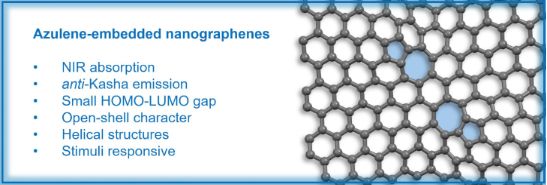
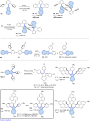
- by a naphthalene-to-azulene rearrangement. The alternative radical cation mechanism has a higher energy barrier than the arenium cation-mediated reaction. Notably, only one of the pentagon–heptagon pairs exhibits an azulene-like electronic structure and aromaticity, as confirmed by the analysis of
- calculated NICS values. Similarly, Liu and co-workers reported the synthesis of two related nanographenes from precursor 38 (Scheme 6) [47]. Oxidation using DDQ/TfOH yielded two PAHs 39 and 40 in 34% and 22% yield, respectively. The authors postulated here formation of azulene moiety through radical cation
- ]. Notably, PAH 109 forms an air-stable radical cation after oxidation. A similar intramolecular oxidation of two adjacent azulene units was also reported with the use of FeCl3 as an oxidant [73] or in one step during Suzuki coupling between 1,8-dibromonaphthalene and borylated azulene [74]. The ease of




Recent advances in oxidative radical difunctionalization of N-arylacrylamides enabled by carbon radical reagents
Beilstein J. Org. Chem. 2025, 21, 1207–1271, doi:10.3762/bjoc.21.98
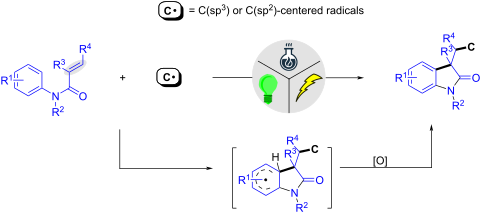
- , People’s Republic of China Zhejiang Lvgu Biopharmaceutical Co., Ltd., No.16 Bailian Road, Nanmingshan Street, Lishui City 323000, Zhejiang Province, China 10.3762/bjoc.21.98 Abstract The field of radical-mediated functionalization of N-arylacrylamides has experienced considerable advancements in recent
- years, particularly in the domain of oxidative radical difunctionalization reactions employing carbon radical reagents. This approach provides a powerful and versatile strategy for the concurrent introduction of two distinct functional groups across the double bond of N-arylacrylamides, facilitating the
- rapid construction of complex molecular architectures. This review aims to summarize the diverse strategies for inducing intramolecular transformations of N-arylacrylamides using various carbon radical reagents, including methods initiated by photonic, thermal, or electrochemical processes, which have












Synthesis of β-ketophosphonates through aerobic copper(II)-mediated phosphorylation of enol acetates
Beilstein J. Org. Chem. 2025, 21, 1192–1200, doi:10.3762/bjoc.21.96
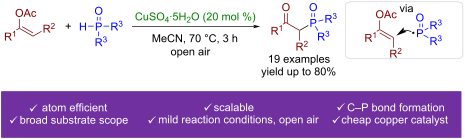
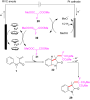
- efficiency, strong basic or acidic conditions, and excess of organohalides as starting materials. Recent years have witnessed the upsurge of free-radical oxidative phosphorylation transformations that became a reliable strategy for the construction of C–P bonds in organophosphorus chemistry [2][32][33][34
- leading to β-ketophosphonates have been reported [41][42][43][44][45][46][47][48][49][50][61], challenges in this area still exist primely in the search for new available synthetic equivalents of alkynes and alkenes for effective radical C–P bond formation. Enol acetates are potentially versatile
- precursors of α-substituted carbonyl compounds that have been recently applied as coupling partners for radical functionalization with the formation of C–C [63][64][65][66] and C–Het [67][68][69][70] bonds. The ready availability of enol acetates from the corresponding carbonyl compounds in just one


Recent advances in synthetic approaches for bioactive cinnamic acid derivatives
Beilstein J. Org. Chem. 2025, 21, 1031–1086, doi:10.3762/bjoc.21.85
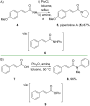
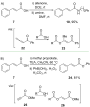
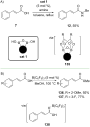
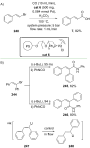
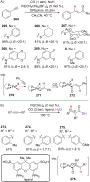
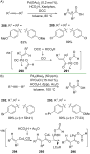
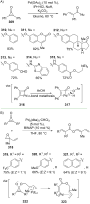
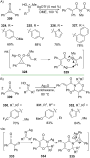
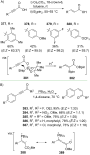
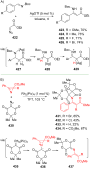
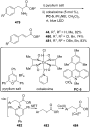
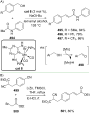
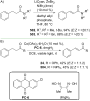
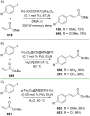
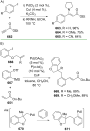
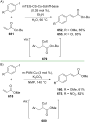
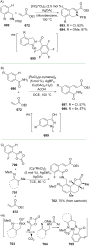
- O atom of the carboxylate group. For instance, Coote and co-workers (2019) reported electrochemical methylation of cinnamic acid 7 using the TEMPO-Me reagent via reactive radical cation 59 to give the corresponding methyl ester 44 in moderate yield (Scheme 21A) [53]. Wang and co-workers (2019
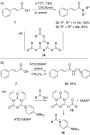
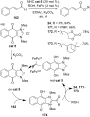
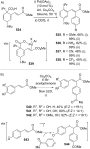
- CuBr promoted hydrogen atom abstraction from the amide 94 resulting in the benzylic radical species 95, followed by oxidation to give acyliminium species 96. Luque and co-workers (2020) developed a biogenic carbonate of CuO–CaCO3 to catalyze solvent- and additive-free amidation reactions in air
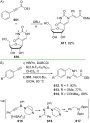
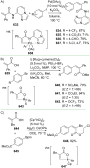
- proceeding via C–N-bond cleavage of the oxidized tertiary amine 116 (Scheme 35) [70]. Cinnamic acid (7) was activated by forming the acyl radical 118 after −OPyf group cleavage from 117. Recently, Li and co-workers (2024) studied visible-light-mediated FeCl3-catalyzed reductive transamidation of nitro








































Biobased carbon dots as photoreductants – an investigation by using triarylsulfonium salts
Beilstein J. Org. Chem. 2025, 21, 1024–1030, doi:10.3762/bjoc.21.84
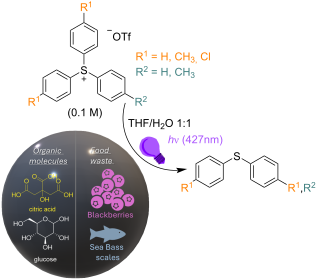
- , with particular attention to the 1,2-difunctionalization of olefins by alkyl halides via atom transfer radical addition processes in the presence of amorphous nitrogen-doped carbon dots (Scheme 1a) [20]. In the framework of this research topic, we decided to investigate the use of carbon dots as
- from direct photoreactivity [24][25], sulfonium salts can be easily reduced under photoredox-catalyzed conditions [20][21][22], and the resulting radical undergoes homolytic cleavage of one of the C–S bonds, releasing an aryl radical Ar• and a diaryl sulfide Ar2S. Subsequently, triarylsulfonium ions
- material was observed, thus pointing out the key role of CDs in the process. Some additional irradiation was carried out to identify the aryl radical released during the irradiation. Unfortunately, when the reaction was conducted in the presence of both furan and allyl phenyl sulfone [27] no arylation


Recent total synthesis of natural products leveraging a strategy of enamide cyclization
Beilstein J. Org. Chem. 2025, 21, 999–1009, doi:10.3762/bjoc.21.81
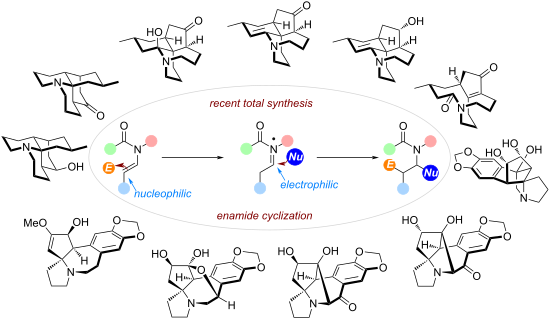
- have attracted considerable attention due to their promise in the total synthesis of alkaloids [16]. Notably, these valuable compounds can be employed as efficient synthons in enamide–alkyne cycloisomerization, [n + m] cycloadditions, pericyclic reactions, and radical cyclizations. A comprehensive
- bridge cycle [36][37]. The excellent diastereoselectivity in this radical cyclization was further rationalized by DFT calculations, which suggests an energy discrepancy of the hydrogen atom transfer process from different faces of the resulting α-hydroxyl radical. Final reduction of the ketone and amide




On the photoluminescence in triarylmethyl-centered mono-, di-, and multiradicals
Beilstein J. Org. Chem. 2025, 21, 964–998, doi:10.3762/bjoc.21.80
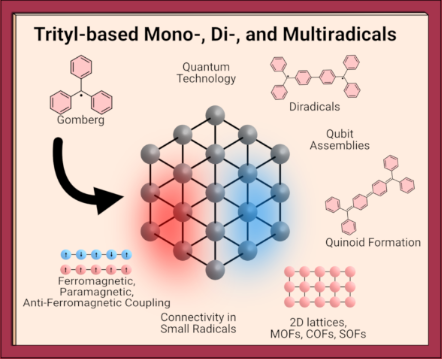
- unresolved questions that must be addressed to unlock the full potential of trityl-based radicals in advanced technological applications. Keywords: Chichibabin hydrocarbon; COF; Gomberg radical; MOF; Müller hydrocarbon; Thiele hydrocarbon; Introduction Gomberg-type, triarylmethyl-centered radicals
- ][14]. While first examples of radical emitters in light-emitting diodes (LEDs) only delivered around 12% internal quantum efficiency [7], representing no improvement compared to conventional emitters, optimization of the donor-functionalized TTM radical and of the device geometry quickly allowed
- demonstration of LEDs with 100% internal quantum efficiency [8][12]. Modern approaches also incorporate light-emitting TTM radical derivatives into LEDs based on thermally activated delayed fluorescence to moderate excited triplet, doublet, and singlet states in an attempt to improve the overall device and


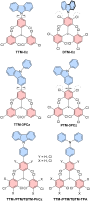

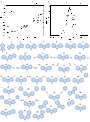


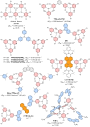




Study of tribenzo[b,d,f]azepine as donor in D–A photocatalysts
Beilstein J. Org. Chem. 2025, 21, 935–944, doi:10.3762/bjoc.21.76

- computational study to design new PCs to be employed in atom transfer radical polymerization (O-ATRP) [17]. Notably, the sulfur-based structure 2 showed excellent performance for this transformation. One year later, the same research group reported its use in a reversible addition-fragmentation chain-transfer
- surprisingly, 5e showed only traces of 8, even with an E*ox of −1.85 V (Table 2, entry 5). Under the oxidative quenching study, we also evaluated the photocatalytic potential of the new family of D–A compounds in the atom transfer radical addition (ATRA) reaction involving styrene and tosyl chloride (TsCl), as
- facilitated by reduced photocatalyst (PC) and the interaction of 15 with the radical cation of DIPEA. The best result, again, was attributed to molecule 5a with 60% isolated yield (Table 5, entry 1). In contrast, molecule 5b showed the worst performance with 41% NMR yield (Table 5, entry 2). For compounds 5c



Recent advances in controllable/divergent synthesis
Beilstein J. Org. Chem. 2025, 21, 890–914, doi:10.3762/bjoc.21.73

- environment around the copper center disfavors a direct interaction with nucleophilic alkyl radicals. Instead, the reaction proceeds via an outer-sphere mechanism, where the alkyl radical reacts with the copper-activated C=N unsaturated bond, enabling stereocontrolled C(sp3)–C(sp3) coupling. In contrast, with
- L9, and reagents, delivering enantioenriched 2-/3-alkyl-substituted pyrrolidines with excellent regio- and enantioselectivity (up to 97% enantiomeric excess). Radical-clock experiments and deuterium-labeled silane studies revealed that cobalt catalysis proceeded via irreversible Co–H migratory
- ) and (3 + 2) cyclization strategies. Two distinct pathways were established: (1) The titanium-catalyzed ring opening of bicyclobutane (BCB) 32 generates a γ-carbonyl radical intermediate Int-42, which undergoes trapping by vinylazide 33. Subsequent dinitrogen extrusion produces an iminyl radical




Recent advances in the electrochemical synthesis of organophosphorus compounds
Beilstein J. Org. Chem. 2025, 21, 770–797, doi:10.3762/bjoc.21.61
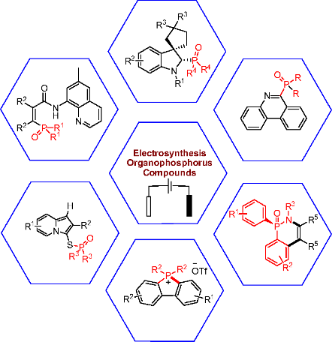
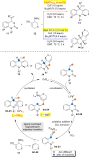
- that when the reaction was carried out in the presence of TEMPO as a radical scavenger, a side product, TEMPO-P(O)R2, was formed (it was confirmed using high-resolution mass spectrometry). The results revealed that the reaction proceeded in a radical pathway (Scheme 1). Based on the cyclic voltammetry
- nickel as the cathode in the presence of tetrabutylammonium bromide (TBAB) at the constant current of 6 mA. The electrodes used in the reaction are all in plate form. The presence of TBAB causes the resulting bromide anion to oxidize to bromine radical and react with R2P(O)–H to produce a radical
- performed in the presence of TEMPO, the product of TEMPO-P(O)R2 was formed, which showed that the process proceeded through a radical path. In addition, the reaction was carried out in an electrochemical environment with an undivided cell, using graphite and platinum plate electrodes as the anode and


Entry to 2-aminoprolines via electrochemical decarboxylative amidation of N‑acetylamino malonic acid monoesters
Beilstein J. Org. Chem. 2025, 21, 630–638, doi:10.3762/bjoc.21.50
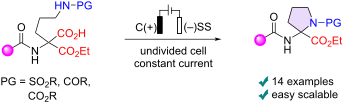
- addressed. Initially, we hypothesized that 11a may form by a single-electron oxidation/decarboxylation (Kolbe reaction) of 9a to generate carbon-centered radical, followed by hydrogen abstraction from solvent. To verify the hypothesis, an electrolysis of acid 9d was performed under optimized conditions
- observed by LC–MS when the electrolysis was performed in 5:1 MeCN/D2O (Scheme 2, reaction 2). The considerably higher O–H bond dissociation energy (119 kcal/mol) [12] as compared to that of the C–H bond in MeCN (86 kcal/mol) [13] renders the hydrogen atom abstraction from water by a carbon-centered radical



Formaldehyde surrogates in multicomponent reactions
Beilstein J. Org. Chem. 2025, 21, 564–595, doi:10.3762/bjoc.21.45
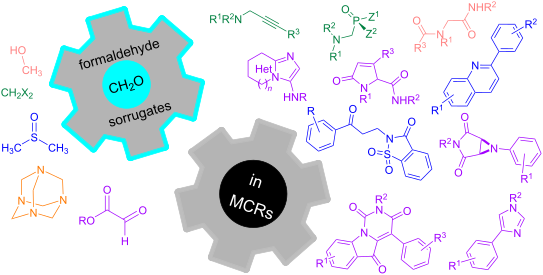
- this case, the mechanism appears to proceed through the formation of free radical species, where APS plays the role of oxidant and radical activator of DMSO, generating reactive radical species of DMSO or dimethyl sulfone that react with the nitrogen of saccharine compound 19 without the need for a
- catalyst. Another recent example for the use of DMSO as C1 synthon was reported by Bhattacharjee et al. They used DMSO in a 3CR to install a methylene unit between an indazole 24 and a carboxylic acid 25 (Scheme 18) [52]. Under radical conditions using K2S2O8, they obtained a series of carboxylic acid
- salts and TEMPO as the radical initiator/oxidant couple that promoted the intramolecular radical cyclization of suitable 1,3-dicarbonyl Ugi adducts 54 and 55 (Scheme 45) [108][109]. The stabilization of the enol in the 1,3-dicarbonyl Ugi adduct allows single-electron transfer (SET) with the anion


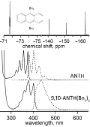
Deep-blue emitting 9,10-bis(perfluorobenzyl)anthracene
Beilstein J. Org. Chem. 2025, 21, 515–525, doi:10.3762/bjoc.21.39
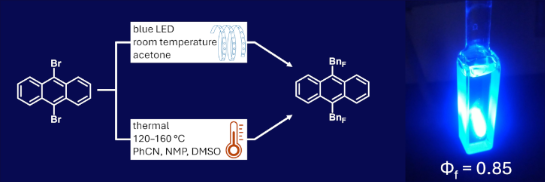
- higher selectivity with milder reaction temperatures. The weaker C(sp2)–Br bond is easier to cleave than a C(sp2)–H bond, resulting in a higher likelihood of radical substitution at those positions. To the best of our knowledge, there are no previous examples of perfluorobenzyl substitution of any PAH(Br