


Search results
Search for "three-component coupling" in Full Text gives 55 result(s) in Beilstein Journal of Organic Chemistry.
Regioselective ester cleavage during the preparation of bisphosphonate methacrylate monomers
Beilstein J. Org. Chem. 2011, 7, 364–368, doi:10.3762/bjoc.7.46
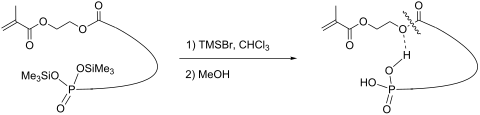
- –5c started from 6-aminohexanoic acid (11) and 11-aminoundecanoic acid (12), respectively. The three component coupling of 11, respectively 12, with paraformaldehyde and dimethyl phosphite furnished bisphosphonates 13 and 14 in excellent yields. These latter compounds were then reduced


Palladium- and copper-mediated N-aryl bond formation reactions for the synthesis of biological active compounds
Beilstein J. Org. Chem. 2011, 7, 59–74, doi:10.3762/bjoc.7.10
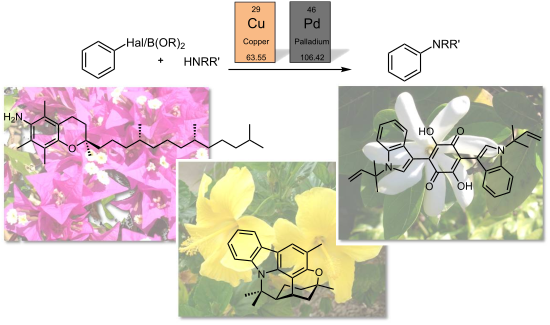
- catalytic synthetic sequence is an inexpensive and efficient route to the target compounds (Scheme 12) [64]. A three-component coupling reaction of 2-bromobenzenethiol 57, a primary amine 58 and 1-bromo-2-iodobenzenes 59, also targeting promazine derivatives 60, was successfully under palladium catalysis




One-pot three-component synthesis of quinoxaline and phenazine ring systems using Fischer carbene complexes
Beilstein J. Org. Chem. 2010, 6, No. 52, doi:10.3762/bjoc.6.52
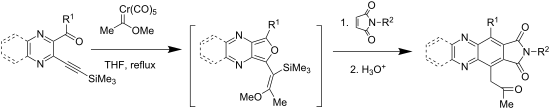
- Priyabrata Roy Binay Krishna Ghorai Department of Chemistry, Bengal Engineering and Science University, Shibpur, Howrah 711103, India 10.3762/bjoc.6.52 Abstract One-pot three-component coupling of o-alkynylheteroaryl carbonyl derivatives with Fischer carbene complexes and dienophiles leading to
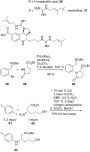
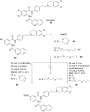
- ] using palladium catalyzed Sonogashira coupling reactions as depicted in Scheme 2. Iodoketone 6A was prepared in 80% yield from (3-chloro-2-pyrazinyl)phenylmethanone [35] by halogen exchange with NaI in acetonitrile. The three component coupling reaction of pyrazinyl ketone 1A, carbene complex 2 and N
- quinoxaline derivative 5b as the sole product after exposure to mild acid. The three component coupling reaction of o-alkynyl quinoxaline carbonyl derivative 1C, carbene complex 2 and N-phenylmaleimide/N-methylmaleimide was also examined (Table 1, entry 3 & 4). In these cases, tandem generation and trapping


Radical carbonylations using a continuous microflow system
Beilstein J. Org. Chem. 2009, 5, No. 34, doi:10.3762/bjoc.5.34
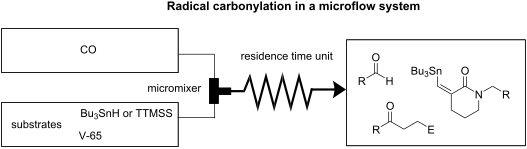
- pressurized carbon monoxide gas. Good to excellent yields of carbonylated products were obtained via radical formylation, carbonylative cyclization and three-component coupling reactions, using tributyltin hydride or TTMSS as a radical mediator. Keywords: continuous flow system; microreactor; radical
- able to obtain the desired six-membered ring lactam 8 in good yield (entry 4). Using a similar microflow system, we then carried out a three-component coupling reaction comprised of 1-iodooctane (9), CO, and methyl vinyl ketone in the presence of tributyltin hydride [24], which also worked well to give
- acyl radical traps (entries 6 and 7 ). Gratifyingly, in both cases, good yields of the three-component coupling products were formed by using reduced CO pressure. Conclusion We have developed a facile platform to conduct radical carbonylation under CO pressure in a flow system comprised of a T-shaped


Cobalt(II) chloride catalyzed one-pot synthesis of α-aminonitriles
Beilstein J. Org. Chem. 2005, 1, No. 8, doi:10.1186/1860-5397-1-8

- , efficient, and practical method for the synthesis of α-aminonitriles through a one-pot three component coupling of aldehydes, amines, and potassium cyanide using a catalytic amount of cobalt(II) chloride. The major feature of this method is that it is truly a one-pot protocol that does not need a separate


Other Beilstein-Institut Open Science Activities



