Search results
Search for "benzene" in Full Text gives 874 result(s) in Beilstein Journal of Organic Chemistry. Showing first 200.
Effect of substitution position of aryl groups on the thermal back reactivity of aza-diarylethene photoswitches and prediction by density functional theory
Beilstein J. Org. Chem. 2025, 21, 242–252, doi:10.3762/bjoc.21.16
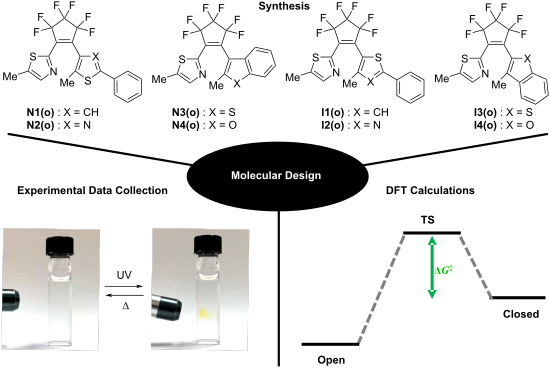
- push–pull derivatives bearing electron-donating and electron-withdrawing groups at the para-position of the benzene rings are known to exhibit very fast thermal isomerizations [53]. Velasco and co-workers also reported that a pyrimidine-based azophenol exhibits thermal back reaction on the nanosecond
- time scale [54]. Langton and co-workers demonstrated that the thermal isomerization rate of azobenzenes can be tuned over a time scale spanning 107 seconds by introducing appropriate chalcogens and halogens at the ortho-position of the benzene rings [55]. Thus, investigation of the strategies to


Visible-light-promoted radical cyclisation of unactivated alkenes in benzimidazoles: synthesis of difluoromethyl- and aryldifluoromethyl-substituted polycyclic imidazoles
Beilstein J. Org. Chem. 2025, 21, 234–241, doi:10.3762/bjoc.21.15
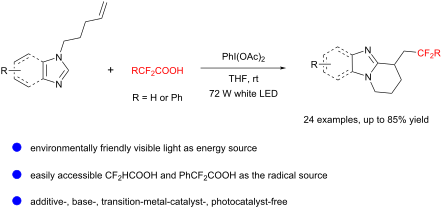
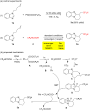
- 2019, Gouverneur and co-workers reported a hydrodifluoromethylation of unactivated alkenes, wherein a CF2H radical was generated from CF2HCOOH using (diacetoxyiodo)benzene (PIDA) and light [21]. This CF2H radical then added to the double bond to form a new alkyl radical, which underwent hydrogen atom
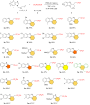
- good tolerance for both electron-withdrawing groups such as fluorine (–F), bromine (–Br), and chlorine (–Cl), as well as electron-donating substituents like methoxy (–OMe) and methyl (–Me), yielding the corresponding 6-membered tricyclic imidazoles in moderate to good yields (3b–h). Benzene rings


Recent advances in organocatalytic atroposelective reactions
Beilstein J. Org. Chem. 2025, 21, 55–121, doi:10.3762/bjoc.21.6
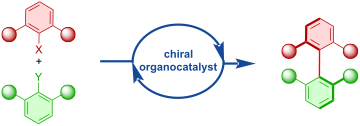
- heteroannulation [50]. The SPINOL-derived chiral phosphoric acid C26 catalyzed the formation of axially chiral products 81 from diarylketones 79a–f and ketoesters 80a–c (Scheme 26). The substrate scope contained a broad range of substituents, including electron-donor groups and whole benzene rings. The authors
- , adding a hydroxy group to the benzene ring of indoles 111 and reacting them with tosyl-protected iminoquinone 109 with the help of CPA C30 led to the shift in regioselectivity providing different axially chiral products 113. All products were obtained with high degree of enantiomeric purity as well as
- . Transition-state calculations gave insight into possible reaction pathways. CPA C48-activated substrates react and rearomatization of the benzene ring leads to the intermediate Int-66. In the presence of an oxidant, axially chiral product 213 is formed. Otherwise, nitrogen-initiated intramolecular






Synthesis, structure and π-expansion of tris(4,5-dehydro-2,3:6,7-dibenzotropone)
Beilstein J. Org. Chem. 2025, 21, 1–7, doi:10.3762/bjoc.21.1
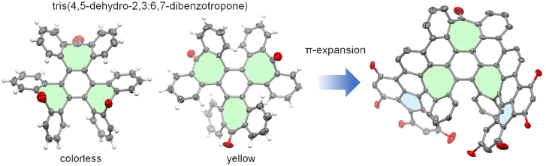
- in the reported crystal structure of 1·CH2Cl2 [22]. The side view of compound 1 indicates that two of its carbonyl groups are oriented upwards while the third one points downwards. Compound 1 comprises three [5]helicenoid moieties, each containing three benzene rings and two seven-membered rings. In
- the colorless crystal, two of these [5]helicenoid moieties display P and M helix structures respectively, whereas the third moiety (colored in light blue) adopts a structure with approximate plane symmetry, recognized as a transition state for the enantiomerization of helicenes. The central benzene
- presents an apparently twisted central benzene ring with large torsion angles: C1–C2–C3–C4 at 19.5°, C3–C4–C5–C6 at 21.8°, and C5–C6–C1–C2 at 21.5°. The crystallization of the two conformers of 1 in different polymorphs suggests the flexibility of its polycyclic skeleton, with both its [5]helicenoid and


Surprising acidity for the methylene of 1,3-indenocorannulenes?
Beilstein J. Org. Chem. 2024, 20, 3144–3150, doi:10.3762/bjoc.20.260
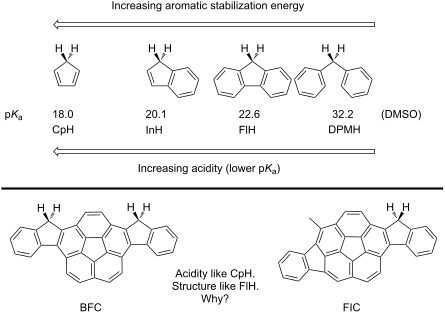
- benzene [7][8]. Furthermore, the trend of pKa values for CpH, InH, and FlH correlates with the reduction of the aromatic stabilization energy for the anion across the series [1][2]. At first glance, this model supports the notion that the relative pKa values of cyclopentadienes embedded in polynuclear
- like BIC and FIC? Let us consider a perspective based on the teachings of Clar and Loschmidt. Clar held the electron sextet as the paragon of aromaticity [14] and Loschmidt considered benzene a "group element" [15]. Combining these perspectives, one can view PAH networks as graphs comprised of Clar
- conformationally planar-locked 2,3-diphenylindene (pKa 17.7 in DMSO [17]. The CL perspective also allows one to create graphs with points representing the aromatic elements, such as, benzene, Cp anion, pyrrole, etc. (Scheme 2, top). Triphenylene is a simple cyclic graph of three benzene elements and their direct


Enantioselective regiospecific addition of propargyltrichlorosilane to aldehydes catalyzed by biisoquinoline N,N’-dioxide
Beilstein J. Org. Chem. 2024, 20, 3069–3076, doi:10.3762/bjoc.20.255
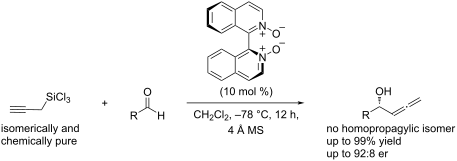
- (Me and MeO) on the benzene ring substantially lowered the chemical yields while they did not affect the enantioselectivity (2g,h). Likewise, electron-rich aldehydes 1i,j as well as the aliphatic aldehyde 1k provided moderate yields. These aldehydes gave substantially lower enantioselectivities than


Extension of the π-system of monoaryl-substituted norbornadienes with acetylene bridges: influence on the photochemical conversion and storage of light energy
Beilstein J. Org. Chem. 2024, 20, 3061–3068, doi:10.3762/bjoc.20.254
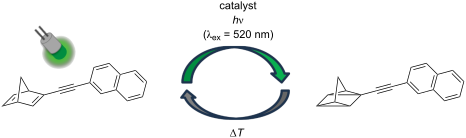
- acetylenes at ca. 85 ppm and 95 ppm were observed. The norbornadienes 1h–l,n exhibit very good solubility in organic solvents, like ethyl acetate, chloroform, or benzene, whereas they have poor solubility in cyclohexane, acetonitrile, or ethanol. In polar protic solvents, like methanol or water, they are
- bis- and tris-norbornadienyl-substituted benzene derivatives. Photometric monitoring of the irradiation of 1h (A), 1i (B), 1j (C), 1k (D), 1l (E), and 1n (F); λex = 315 nm (1h, 1i, 1k, and 1l) or 340 nm (1j, 1n). Insets: plot of absorption at long-wavelength maximum versus irradiation time t


Cyclodextrin-based rotaxanes for polymer materials: challenge on simultaneous realization of inexpensive production and defined structures
Beilstein J. Org. Chem. 2024, 20, 3026–3049, doi:10.3762/bjoc.20.252
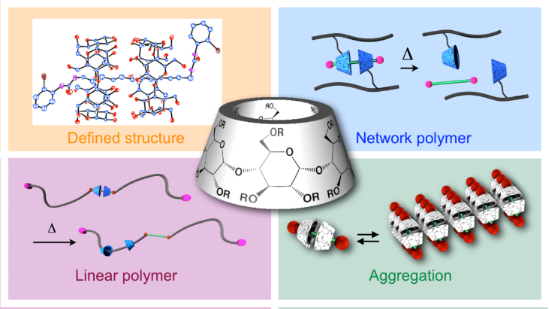
- substituted benzene ring, and γ-CD can host further bigger guest molecules, such as pyrene or two aliphatic chains, in one cavity. The ability of CD to form an inclusion complex structure is drastically affected by the cavity size or the modification strategy for the hydroxy groups on CD. To evaluate the
- α-CD-based rotaxane comprising a stilbene axle that was synthesized by the Suzuki coupling reaction to light irradiation (Figure 6, right) [58]. In this structure, α-CD was first located on the trans-stilbene moiety, after which it moved to the benzene ring moiety via the cis-isomerization of the
- into the polymer system, further modification and structural analyses were performed [48][74]. The axle end was easily modified by bromination of the benzene ring and successive transition metal–catalyzed cross-coupling reaction, such as Suzuki or Sonogashira coupling (Figure 10A). Furthermore, the






The charge transport properties of dicyanomethylene-functionalised violanthrone derivatives
Beilstein J. Org. Chem. 2024, 20, 2921–2930, doi:10.3762/bjoc.20.244
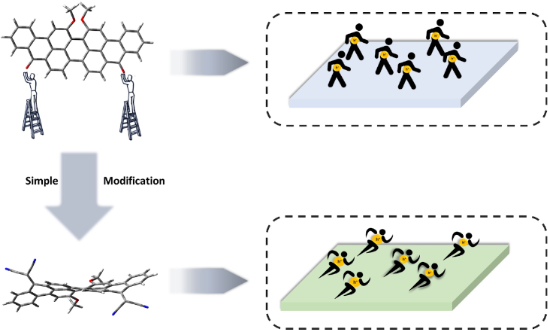
- systems to determine if this drawback can be overcome while maintaining the favourable properties of PDIs. Violanthrones are a class of materials featuring a large π-conjugated system composed of nine fused benzene rings with two carbonyl groups, in the 5 and 10 positions (Figure 1). The related


N-Glycosides of indigo, indirubin, and isoindigo: blue, red, and yellow sugars and their cancerostatic activity
Beilstein J. Org. Chem. 2024, 20, 2840–2869, doi:10.3762/bjoc.20.240
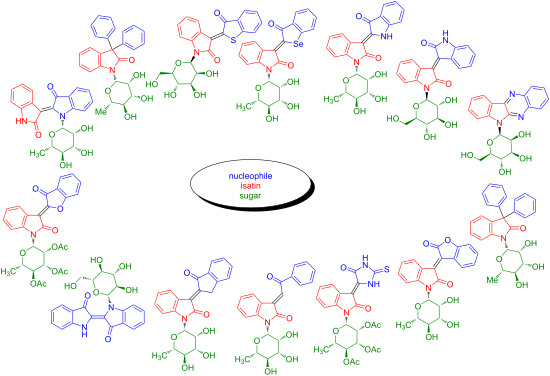
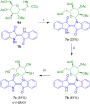
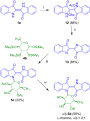
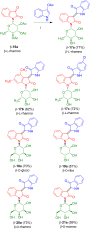
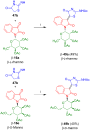
- described above, glycosides 81 were inactive against cancer and melanoma cell lines. 3,3-Diaryloxindole-N-glycosides The Friedel–Crafts acylation of isatin-N-rhamnoside β-16a with benzene (82a) afforded 3,3-diphenyloxindole-N-rhamnoside β-83a in 94% yield (Scheme 44) [63]. Deprotection of the latter
- afforded β-84a in 88% yield. Friedel–Crafts acylation of isatin-N-glycosides β-16c–e with benzene, toluene, anisole, and N,N-dimethylaniline and subsequent deprotection afforded 3,3-diaryloxindole-N-glycosides β-84b–l (Scheme 45) [63]. Some of the products showed antiproliferative activity against










Synthesis and antimycotic activity of new derivatives of imidazo[1,2-a]pyrimidines
Beilstein J. Org. Chem. 2024, 20, 2806–2817, doi:10.3762/bjoc.20.236
- Figure 5A for compound 4e. The heterocyclic nitrogen is indeed orientated towards the haem iron, with an N–Fe distance of 2.8 Å, which is slightly higher than the distance of 2.1 Å in the crystal complex with the inhibitor voriconazole. The benzene substituent on the C-6 atom is located in a hydrophobic
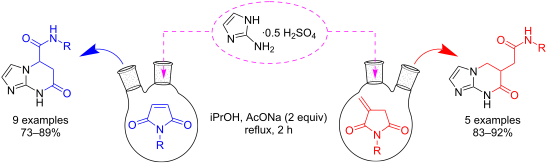
- the formation of a coordination bond; the benzene moiety is located in a hydrophobic pocket. bThe conformations of compounds 4a–e are identical, whereas the position of compound 5e (red) is significantly different. Reaction of 2-aminoimidazole (1) with N-substituted maleimides (2) and N


Synthesis of fluoroalkenes and fluoroenynes via cross-coupling reactions using novel multihalogenated vinyl ethers
Beilstein J. Org. Chem. 2024, 20, 2691–2703, doi:10.3762/bjoc.20.226

- –Miyaura cross-coupling. The reaction of 1b or 1c, which had a m-methoxy or p-nitro group on the benzene ring, with 4a proceeded smoothly to furnish 2p or 2q in good yieds (Table 3, entries 15 and 16). A phenyl group could be introduced into 1d possessing an ester moiety in moderate yield, whereas the
- -coupling between 1 derived from various phenols and 5a. Vinyl ethers 1b–d were converted into enynes 3t–v in 29–35% yields (Table 4, entries 19–21). The reaction using 1e, which bears an amino group on the benzene ring, did not complete despite requiring a long reaction time (Table 4, entry 22). Therefore


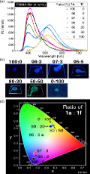
Photoluminescence color-tuning with polymer-dispersed fluorescent films containing two fluorinated diphenylacetylene-type fluorophores
Beilstein J. Org. Chem. 2024, 20, 2682–2690, doi:10.3762/bjoc.20.225
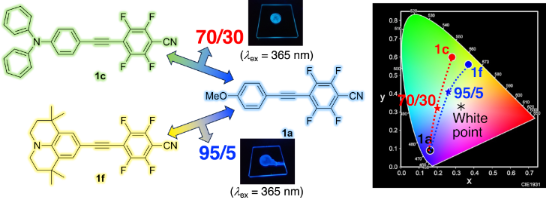
- as electron-donating groups was shown to promote intramolecular charge transfer (ICT) and shifted the PL wavelength to longer wavelengths, resulting in yellow or orange fluorescence in the solid state [21][22]. In addition, cross-linking between the amino group and attached benzene ring effectively


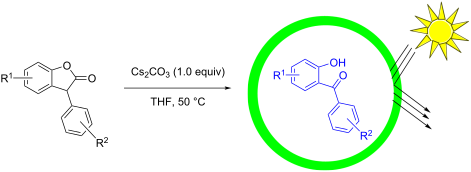
Transition-metal-free decarbonylation–oxidation of 3-arylbenzofuran-2(3H)-ones: access to 2-hydroxybenzophenones
Beilstein J. Org. Chem. 2024, 20, 2655–2667, doi:10.3762/bjoc.20.223
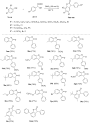
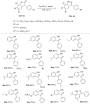
- tabulated in Table 2, and compiled data for all compounds are included in Supporting Information File 1, Table S12. As can be seen from Table 2, an electron-donating substituent on either of the benzene rings increases the compound’s UV protection abilities, via increasing the electron density. However, the
- presence of a strong-electron donating substituent, e.g., a -OCH3 on the benzene ring attached to the carbonyl center has a more pronounced effect on the UV-protection abilities (4bb, 4cb, 4eb and 4fb) since it increases the electron density on the carbonyl center, and hence the hydrogen bonding between




A review of recent advances in electrochemical and photoelectrochemical late-stage functionalization classified by anodic oxidation, cathodic reduction, and paired electrolysis
Beilstein J. Org. Chem. 2024, 20, 2500–2566, doi:10.3762/bjoc.20.214
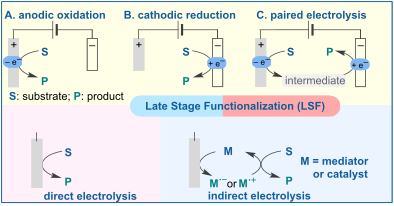
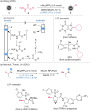
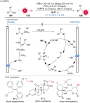
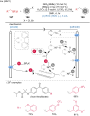
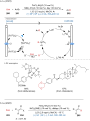
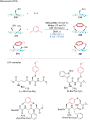
- , several structurally diverse aromatic acetals have been synthesized. Dehydroabietic and norcholanoic acid derivatives have been effectively modified using the developed protocol. The reaction is reported to involve the oxidation of the benzene core, followed by electron transfer to the radical cation, and


























Phenylseleno trifluoromethoxylation of alkenes
Beilstein J. Org. Chem. 2024, 20, 2434–2441, doi:10.3762/bjoc.20.207
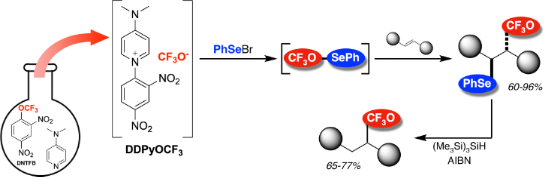
- )benzene (DNTFB) [66][67]. This DDPyOCF3 solution has shown a good reactivity to obtain various fluorinated compounds and especially trifluoromethoxylated molecules [68][69][70][71]. As another chapter of this research program, we propose here an easy and complementary access to CF3O-substituted alkyl




Catalysing (organo-)catalysis: Trends in the application of machine learning to enantioselective organocatalysis
Beilstein J. Org. Chem. 2024, 20, 2280–2304, doi:10.3762/bjoc.20.196

- organocatalysis, NCIs are often a major factor in determining selectivities, which are hard to describe via standard molecular descriptors. Therefore, Orlandi et al. [61] introduced computed NCI distances and energies between benzene and a probe residue as descriptors for NCIs (Figure 5). Notably, the NCI
- energies are inspired by previous work from Wheeler and Houk [90][91] and are defined as the computed energetic difference between the complex of the benzene ring and the probe residue and the separated species. Orlandi et al. used the NCI parameters in combination with other descriptors to model the


gem-Difluorination of carbon–carbon triple bonds using Brønsted acid/Bu4NBF4 or electrogenerated acid
Beilstein J. Org. Chem. 2024, 20, 2261–2269, doi:10.3762/bjoc.20.194
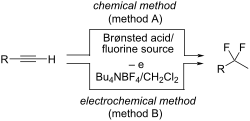
- ) was reacted with the Brønsted acid (X equiv) and the fluorine source (Y equiv) in the solvent (4 mL) at temperature of T (°C) for Z hours. The chemical yield of the desired product, (5,5-difluorohexyl)benzene (2a), was evaluated for reaction optimization by using the 19F nuclear magnetic resonance
- analysis in the case of 16 mA [53]. With the successful formation of (5,5-difluorohexyl)benzene (2a) by the chemical (method A) and electrochemical oxidation (method B) methods in hand, we have investigated the scope and limitations of gem-difluorination for various alkynes (Table 2). Electrochemical



Metal-free double azide addition to strained alkynes of an octadehydrodibenzo[12]annulene derivative with electron-withdrawing substituents
Beilstein J. Org. Chem. 2024, 20, 2234–2241, doi:10.3762/bjoc.20.191
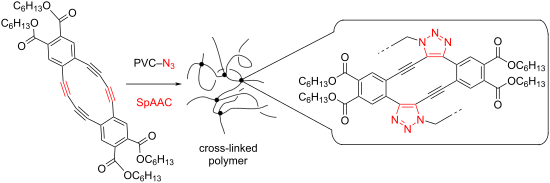
- -ethynyltriazole derivative (out-) (6b) adducts were formed. To determine the chemical structure of the product, the NOESY measurement was conducted. The NOESY spectrum suggested the intermolecular through-space coupling between two benzene protons (Figure S10 in Supporting Information File 1). This result




Selective hydrolysis of α-oxo ketene N,S-acetals in water: switchable aqueous synthesis of β-keto thioesters and β-keto amides
Beilstein J. Org. Chem. 2024, 20, 2225–2233, doi:10.3762/bjoc.20.190

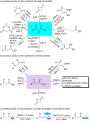
- products 2a–l. A variety of valuable functional groups on the benzene ring of 1b–j, such as methyl, methoxy, trifluoromethyl, and halogen atoms (F, Cl, Br, I), were well compatible with reaction conditions A. Most notably, unlike work by Li et al. [40], S-ethyl 3-oxo-3-(4-(trifluoromethyl)phenyl



Novel truxene-based dipyrromethanes (DPMs): synthesis, spectroscopic characterization and photophysical properties
Beilstein J. Org. Chem. 2024, 20, 2163–2170, doi:10.3762/bjoc.20.186
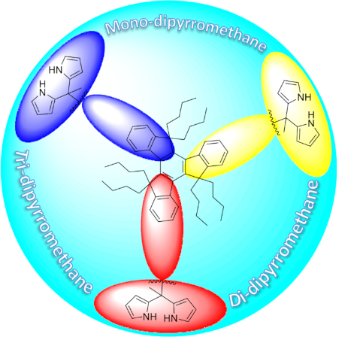
- – sharing a common benzene ring at the centre [1]. The notable structural signatures of truxene are its rigid, planar and C3-symmetric skeleton, wherein three peripheral phenylene ring systems are all meta-positioned with respect to the congested central benzene ring, so that all four benzene rings are co


Multicomponent syntheses of pyrazoles via (3 + 2)-cyclocondensation and (3 + 2)-cycloaddition key steps
Beilstein J. Org. Chem. 2024, 20, 2024–2077, doi:10.3762/bjoc.20.178


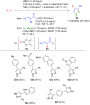


Regioselective alkylation of a versatile indazole: Electrophile scope and mechanistic insights from density functional theory calculations
Beilstein J. Org. Chem. 2024, 20, 1940–1954, doi:10.3762/bjoc.20.170
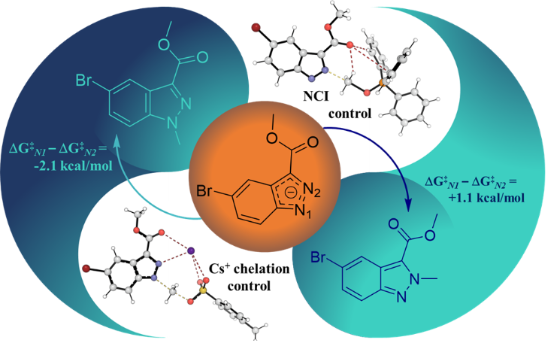
- to be driven by stabilizing non-covalent interactions. Specifically, the carbonyl O in N2-s-cis shows NCIs with one of the benzene rings of PPh3 as well as a hydrogen bond-like NCI with a H-atom of the electrophilic methyl. Thus, the partitioning between transition states favor the N2-pathway over


2-Heteroarylethylamines in medicinal chemistry: a review of 2-phenethylamine satellite chemical space
Beilstein J. Org. Chem. 2024, 20, 1880–1893, doi:10.3762/bjoc.20.163
- comparable to the original [1]. The main purpose of this approach is quality improvement, such as activity, selectivity, bioavailability, metabolism, and/or toxicity, while expanding the chemical space surrounding bioactive compounds [2][3]. Benzene-to-heteroaromatic ring replacement represents a classical
- structural hopping strategy, as five- or six-membered heterocyclic aromatic rings are widespread entities in drug discovery [4]. In this sense, any bioactive molecule enclosing a benzene ring in its initial optimization stages could undergo a heteroaromatic replacement. 2-Phenethylamines are notable
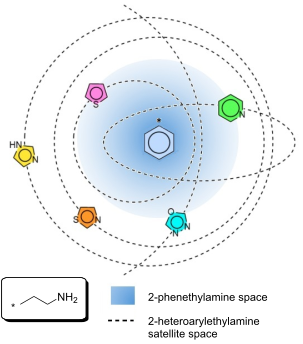
- bioactive compounds towards different disease-related receptors, as it was described in our previous work [5]. By means of benzene ring aromatic rescaffolding, it is possible to access the 2‑heteroarylethylamine neighboring space. This satellite chemical region is rich not only in structures displaying




The Groebke–Blackburn–Bienaymé reaction in its maturity: innovation and improvements since its 21st birthday (2019–2023)
Beilstein J. Org. Chem. 2024, 20, 1839–1879, doi:10.3762/bjoc.20.162
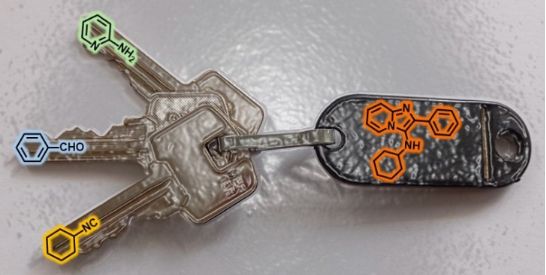
- Ganesher [57] reported the one-pot cascade synthesis of indole-imidazo[1,2,a]pyridine hybrids 61 (Scheme 23). In this study, the convertible isocyanide 1-isocyano-2-(2,2-dimethoxyethyl)benzene (59, Kobayashi–Wessjohann isocyanide) was utilized as one of the precursors in the GBB reaction. The acetal
- organic monomers via a different type of organic reaction [66]. Wang et al. reported for the first time the synthesis of COFs via the GBB reaction [67]. In their study, 1,3,5-tris(3-fluoro-4-formylphenyl)benzene (99), 1,3,5-tris(4-isocyanophenyl)benzene (100) and 2-aminopyridines were engaged in the GBB