


Search results
Search for "green" in Full Text gives 1075 result(s) in Beilstein Journal of Organic Chemistry. Showing first 200.
Synthesis and photoinduced switching properties of C7-heteroatom containing push–pull norbornadiene derivatives
Beilstein J. Org. Chem. 2025, 21, 807–816, doi:10.3762/bjoc.21.64
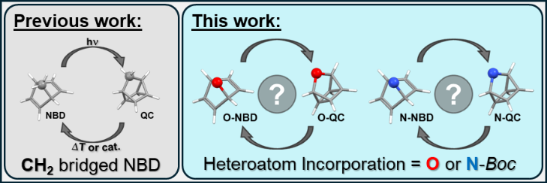
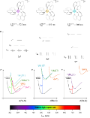
- belonging to the scaffold of O-QC1 arise. Further, the singlet signal corresponding to the CH3 group of the tosyl moiety shifts from 2.45 ppm to 2.47 ppm. A spectrum containing approximately a 45:55 ratio of O-NBD1/O-QC1 can be found after 140 minutes of irradiation (Figure 2b, green). A different behavior


Recent advances in the electrochemical synthesis of organophosphorus compounds
Beilstein J. Org. Chem. 2025, 21, 770–797, doi:10.3762/bjoc.21.61
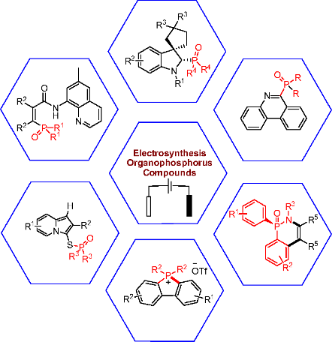
- Babak Kaboudin Milad Behroozi Sepideh Sadighi Fatemeh Asgharzadeh Department of Chemistry, Institute for Advanced Studies in Basic Sciences (IASBS), Gava Zang, Zanjan 45137-66731, Iran 10.3762/bjoc.21.61 Abstract In this review, we describe recent advances in electrochemical green methods for the
- electrosynthesis as a green, precise, and low-cost method to prepare phosphorous structures. Keywords: electrosynthesis; green synthesis; organophosphorus compounds; P–C bond formation; P–heteroatom bond formation; Introduction The electrochemical synthesis is a valuable and beneficial method for the preparation
- recent years on developing new methods for synthesizing organophosphorus compounds [22][23][24][25][26][27][28][29][30][31][32][33][34][35]. Developing sustainable and green methods for synthesizing organophosphorus materials is a growing field. Methods based on photocatalysis [36], flow-based


New advances in asymmetric organocatalysis II
Beilstein J. Org. Chem. 2025, 21, 766–769, doi:10.3762/bjoc.21.60
- from a brief Web of Science analysis of the 6,700 articles, published within the past 25 years, retrieved through a search of the keywords “asymmetric organocatalysis”. Organocatalysis is now part of various areas of chemistry, spanning as far as polymer, materials, as well as green and sustainable

Copper-catalyzed domino cyclization of anilines and cyclobutanone oxime: a scalable and versatile route to spirotetrahydroquinoline derivatives
Beilstein J. Org. Chem. 2025, 21, 749–754, doi:10.3762/bjoc.21.58
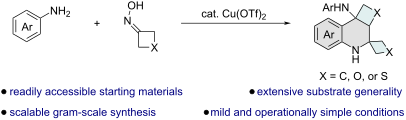
- the desired product. Keywords: copper catalysis; cyclobutane-fused tetrahydroquinolines; domino cyclization reaction; green synthesis; Introduction Tetrahydroquinolines (THQs) represent a privileged scaffold in medicinal chemistry, exhibiting a broad spectrum of biological activities and serving as


Orthogonal photoswitching of heterobivalent azobenzene glycoclusters: the effect of glycoligand orientation in bacterial adhesion
Beilstein J. Org. Chem. 2025, 21, 736–748, doi:10.3762/bjoc.21.57
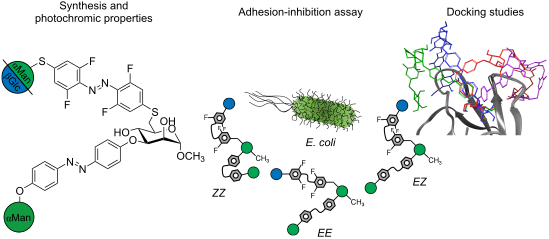
- protocol [41], the fluorescent GFP (green fluorescent protein)-expressing strain PKL1162 was applied to mannan-coated microtiter plates. In this assay, fluorescence intensity correlates with the number of adhered bacterial cells. The photoswitches 1–5 (cf. Figure 1) were used as inhibitors of bacterial
- to the O-azobenzene (AB) photoswitch. (Orthogonal) photoswitching alters the relative spatial orientation of the two sugar units. Glucose (Glc) moieties are colored in blue and mannose (Man) in green according to the symbol nomenclature for carbohydrates (SNFG) [29][30]. A: Wavelength-selective
- ) is depicted as ribbon diagram and the ligands are displayed as stick models (glycoclusters 1 and 2: EE: blue; ZZ: violet; EZ: green; ZE: red). Superposition of the isomers shows the similarity of the binding of the terminal mannoside antenna within the FimH CRD and the different orientations of the


Synthesis of HBC fluorophores with an electrophilic handle for covalent attachment to Pepper RNA
Beilstein J. Org. Chem. 2025, 21, 727–735, doi:10.3762/bjoc.21.56
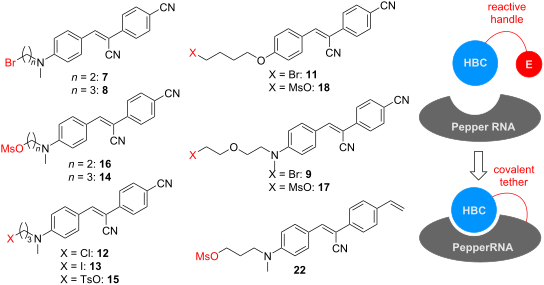
- )cyanophenylacetonitrile) fluorophores for easy access, which will contribute to the rapid dissemination of the RNA imaging approaches associated therewith. Keywords: covalent RNA labeling; FLAP; fluorophore synthesis; HBC530; self-alkylating ribozymes; Introduction The discovery of fluorescent reporters, such as green

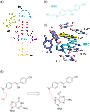


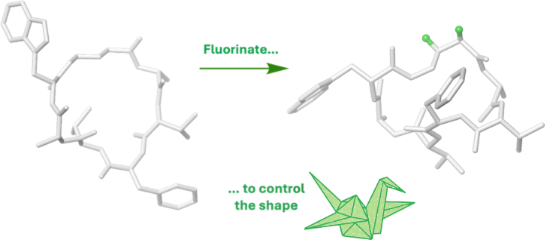
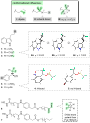
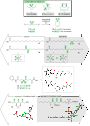
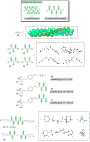
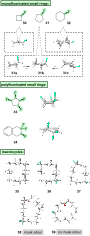
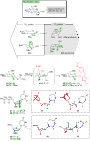
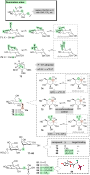
Origami with small molecules: exploiting the C–F bond as a conformational tool
Beilstein J. Org. Chem. 2025, 21, 680–716, doi:10.3762/bjoc.21.54




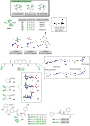
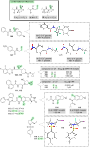


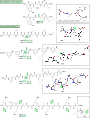


Sequential two-step, one-pot microwave-assisted Urech synthesis of 5-monosubstituted hydantoins from L-amino acids in water
Beilstein J. Org. Chem. 2025, 21, 596–600, doi:10.3762/bjoc.21.46
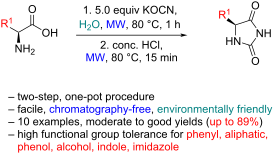
- exceptional functional group tolerance, accommodating phenyl, aliphatic, phenol, alcohol, heterocyclic, and sulfide groups. This scalable, rapid, and eco-friendly strategy offers a promising avenue for the efficient synthesis of hydantoins, aligning with green chemistry principles and expanding the
- advantages over conventional heating, such as enhanced reaction rates and yields [17]. Microwave irradiation is also aligned with our group’s sustainability goals of adhering to the principles of green chemistry [18]. Following our previous works in the synthesis and evaluation of biologically active
- ” aspect of the protocol under microwave irradiation conditions, which enables rapid conversion of the starting materials to the products in water – a green solvent – in less than two hours makes this protocol an expedient and environmentally benign synthesis of hydantoins from amino acids. The scalability


Formaldehyde surrogates in multicomponent reactions
Beilstein J. Org. Chem. 2025, 21, 564–595, doi:10.3762/bjoc.21.45
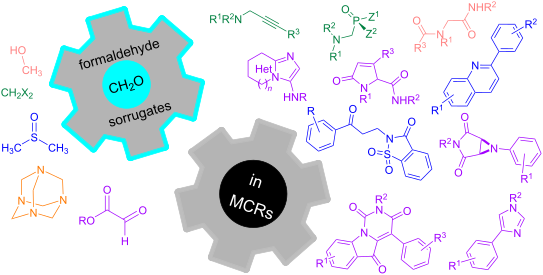
- concerns and improved reaction control can be addressed, paving the way for more efficient and sustainable synthetic methodologies. Keywords: cascade reactions; formaldehyde surrogates; green chemistry; heterocycles; multicomponent reactions; Introduction Organic chemistry is a mature discipline that has
- temperatures, no specifically prepared solvents), one-pot, batch processes leading to tandem or cascade reactions, resource efficiency through the application of the 12 principles of Green Chemistry, and readily available starting materials such as waste materials from food production processes [1][2][3]. In
- diversification or scaffold decoration [4]. In these reactions, three or more compounds react together in one single reaction step to generate a more complex product where most of the atoms of starting materials are present [5]. This high atom economy positions MCRs as ecofriendly (green) reactions because their


Deep-blue emitting 9,10-bis(perfluorobenzyl)anthracene
Beilstein J. Org. Chem. 2025, 21, 515–525, doi:10.3762/bjoc.21.39
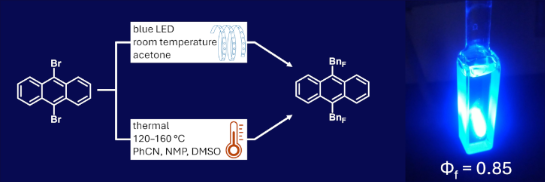
- provides yet another example of the structural flexibility of perfluorobenzylated compounds and their sensitivity towards chemical environment [18]. The molecules are arranged in two distinct columns, colored red and green that are skewed from one another by 31.2°. There is no significant π–π overlap
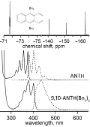
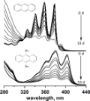
- stacked columns of ANTH moieties are colored red and green, BnF groups are colored in yellow, and H atoms have been omitted for clarity. In the off-side view (bottom right), both, F and H atoms are omitted for a better overview. Absorption spectra of ANTH and 9,10-ANTH(BnF)2 in CH2Cl2 recorded over the





Unprecedented visible light-initiated topochemical [2 + 2] cycloaddition in a functionalized bimane dye
Beilstein J. Org. Chem. 2025, 21, 500–509, doi:10.3762/bjoc.21.37
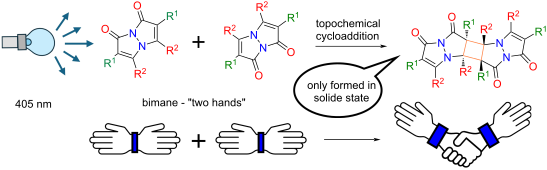
- crystal lattice and are often reversible, requiring either high-energy light or heat for initiation [6][7][8]. Notably, topochemical polymerizations align with the principles of green chemistry, as they are solvent-free and do not involve toxic reagents [9]. The highly ordered and uniform nature of


Photomechanochemistry: harnessing mechanical forces to enhance photochemical reactions
Beilstein J. Org. Chem. 2025, 21, 458–472, doi:10.3762/bjoc.21.33
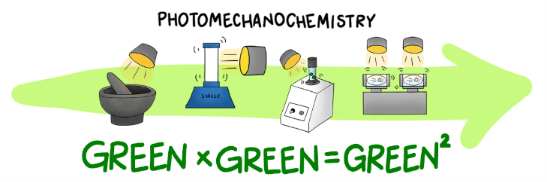
- developed, where additional energy is applied to increase mixing such as pulsation [26][27][28], ultrasound energy [29], segmented flow [30], or mechanical stirring [31]. In line with the recent emphasis on Green Chemistry principles [32][33], alternatives have been developed in order to reduce the amount
- (5 mol %) was irradiated with green light while being milled in a 25 mL PMMA milling jar with 15 ZrO2 balls of 5 mm in diameter at 25 Hz. The expected product 8.2 was obtained in 68% yield after isolation. A comprehensive set of control experiments highlighted the essential role of mechanochemistry




Antibiofilm and cytotoxic metabolites from the entomopathogenic fungus Samsoniella aurantia
Beilstein J. Org. Chem. 2025, 21, 327–339, doi:10.3762/bjoc.21.23
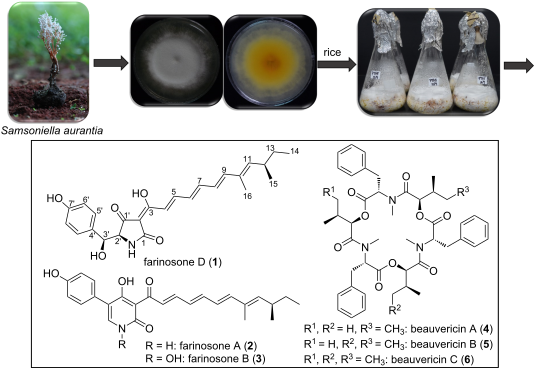
- experimental (black) and simulated Boltzmann-averaged (red: (2’S,3’S,12S)-1; green: (2’S,3’S,12R)-1) ECD spectra of compound 1. A plausible biosynthetic pathway of 1–3. Biofilm inhibition and eradication assessment via CV staining assay. A) S. aureus biofilm inhibition by farinosone D (1) and farinosone A (2


Red light excitation: illuminating photocatalysis in a new spectrum
Beilstein J. Org. Chem. 2025, 21, 296–326, doi:10.3762/bjoc.21.22

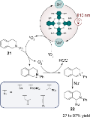
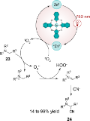
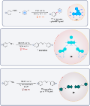
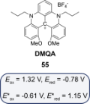
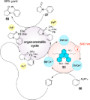
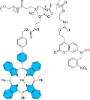
- , red-light photocatalysis enables innovative applications in phototherapy and controlled drug release, exploiting its tissue penetration and low cytotoxicity. Together, these developments underscore the versatility and impact of red-light photocatalysis, positioning it as a cornerstone of green organic
- chemistry with significant potential in synthetic and biomedical fields. Keywords: green chemistry; medicinal chemistry; organic photochemistry; photocatalysis; red-light mediated transformations; Introduction Red-light-activated photocatalysis has recently gained significant interest as a tool for
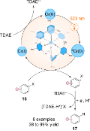
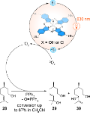
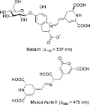
- from spinach has been employed as a green and sustainable photocatalyst for the red-light-induced oxidation of organoboron compounds, a method that stands out for its environmental and operational simplicity [39]. The authors have developed a mild protocol utilizing red light to oxidize a wide range of















Synthesis of disulfides and 3-sulfenylchromones from sodium sulfinates catalyzed by TBAI
Beilstein J. Org. Chem. 2025, 21, 253–261, doi:10.3762/bjoc.21.17
- Zhenlei Zhang Ying Wang Xingxing Pan Manqi Zhang Wei Zhao Meng Li Hao Zhang School of Chemistry and Material Engineering, Anhui Provincial Key Laboratory of Green Carbon Chemistry, Engineering Research Center of Biomass Conversion and Pollution Prevention of Anhui Educational Institutions, Biomass
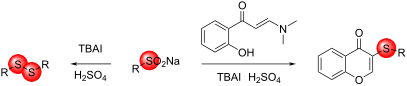
- antibody–drug coupling (ADCs), in which the active drug released in the target cell by selectively breaking the disulfide bond [11]. Given the wide applicability of disulfides, the development of efficient, green, mild, and cost-effective methods for the organic synthesis of disulfides is of significant


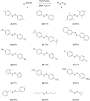
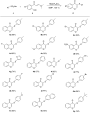


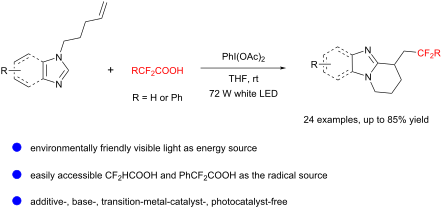
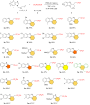
Visible-light-promoted radical cyclisation of unactivated alkenes in benzimidazoles: synthesis of difluoromethyl- and aryldifluoromethyl-substituted polycyclic imidazoles
Beilstein J. Org. Chem. 2025, 21, 234–241, doi:10.3762/bjoc.21.15
- Yujun Pang Jinglan Yan Nawaf Al-Maharik Qian Zhang Zeguo Fang Dong Li New Materials and Green Manufacturing Talent Introduction and Innovation Demonstration Base, Hubei University of Technology, 430068 Wuhan, China Department of chemistry, Faculty of Science, An Najah National University, Nablus
- Hubei Provincial Key Laboratory of Green Materials for Light Industry (202107B06) and the Doctoral Research Start-up Fund of Hubei University of Technology (XJKY20220023) for financial support.


Heteroannulations of cyanoacetamide-based MCR scaffolds utilizing formamide
Beilstein J. Org. Chem. 2025, 21, 217–225, doi:10.3762/bjoc.21.13
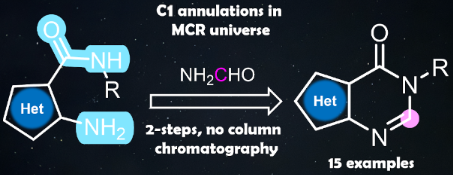
- Goals (SDGs), wherein the 7th goal focuses on ensuring access to affordable, renewable and clean energy [1]. Moreover, the European Union has committed to ambitious environmental targets as part of the European Green Deal [2]. Advancements in C1 chemistry are pivotal to achieving this equilibrium. As




Quantifying the ability of the CF2H group as a hydrogen bond donor
Beilstein J. Org. Chem. 2025, 21, 189–199, doi:10.3762/bjoc.21.11
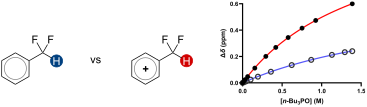
- ; titration studies; DFT calculations. Acknowledgements High-Performance Computing at the University of Rhode Island and the Massachusetts Green High-Performance Computing Center (MGHPCC) are gratefully acknowledged. Funding This research was made possible by the use of equipment available through the Rhode



Reactivity of hypervalent iodine(III) reagents bearing a benzylamine with sulfenate salts
Beilstein J. Org. Chem. 2024, 20, 3281–3289, doi:10.3762/bjoc.20.272
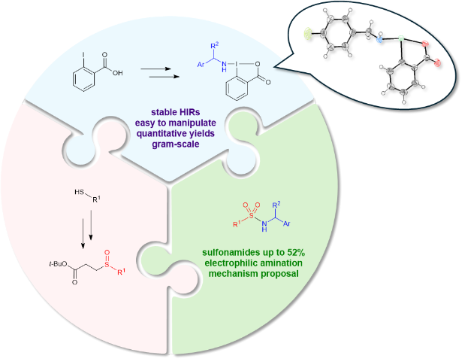
- : 4a (2 equiv), NaH (2.4 equiv), 2a, TEMPO (10 mol %), degassed DMF (0.055 M). NO – not observed. Mechanism proposed for sulfonamide 5, β-sulfinyl ester 4, disulfide 7, and sulfide 3 formations. The ionic steps are illustrated in green, whereas the radical steps appear in purple [35]. Optimization of
- thank the Fundação para a Ciência e Tecnologia (FCT, project 2022.04623.PTDC, fellowship 2022.11629.BD (J.C.). The authors also thank the support by the Associate Laboratory for Green Chemistry – LAQV which is financed by national funds from FCT/MCTES (UIDB/50006/2020 DOI 10.54499/UIDB/50006/2020, UIDP



Efficient synthesis of fluorinated triphenylenes with enhanced arene–perfluoroarene interactions in columnar mesophases
Beilstein J. Org. Chem. 2024, 20, 3263–3273, doi:10.3762/bjoc.20.270
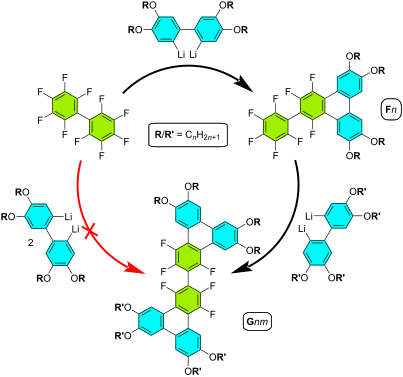
- fluorescence emission spectroscopies reveal green photoluminescence with fluorescence quantum yields of up to 33% for the Fn derivatives. The J-aggregation for the inner fluorine-substituted dimers Gnm is energetically and stereoelectronically more favorable and G66 exhibits thin-film fluorescence with a large
- been studied in various solutions and thin film: G66 emitted green light in solution with an absolute photoluminescent quantum yield of ca. 33%. Results and Discussion Synthesis and characterization We have recently generalized a very efficient “palladium-free” synthesis for the preparation of a
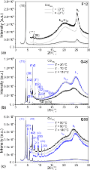
- along the main axes: ORTEP diagram showing 50% thermal ellipsoid probability: carbon (gray), fluorine (green), and hydrogen (white). POM textures, observed between crossed polarizers of Janus and dimer, F6, F12, G66, and G48, respectively, as representative examples. More images can be seen in




Advances in the use of metal-free tetrapyrrolic macrocycles as catalysts
Beilstein J. Org. Chem. 2024, 20, 3085–3112, doi:10.3762/bjoc.20.257
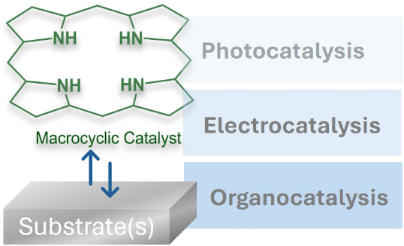
- Metal-free tetrapyrrolic macrocycles as supramolecular organocatalysts Supramolecular organocatalysis has recently attracted emerging attention as a green alternative to metal-based catalysis [24][25][26]. Organocatalysis using macrocyclic scaffolds such as crown ethers, cyclodextrins, cucurbiturils
- macrocycles, both synthetic and found in nature, and their ability to act as organocatalysts, metal-free porphyrin macrocycles have a potential to be excellent candidates for green, cost-effective catalysts of various organic transformations including asymmetric synthesis. 2 Metal-free tetrapyrrolic


Extension of the π-system of monoaryl-substituted norbornadienes with acetylene bridges: influence on the photochemical conversion and storage of light energy
Beilstein J. Org. Chem. 2024, 20, 3061–3068, doi:10.3762/bjoc.20.254
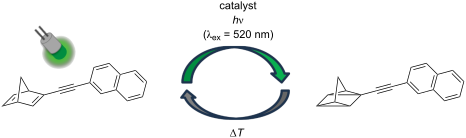
- up to 8 h at room temperature. Furthermore, the norbornadienes were transformed quantitatively into their quadricyclane photoproducts by irradiation with green light (520 nm) in the presence of a photosensitizer. Keywords: light energy conversion; photochemistry; photochromism; quadricyclanes
- converted quantitatively into quadricyclanes by irradiation with green light. Thus, it was shown with the latter results that the photosensitization with suitable triplet sensitizers enables mild conversion of visible light in chemical energy in quantitative photoreactions of norbornadienes, even in cases


Chemical structure metagenomics of microbial natural products: surveying nonribosomal peptides and beyond
Beilstein J. Org. Chem. 2024, 20, 3050–3060, doi:10.3762/bjoc.20.253

- based on a dataset of known pairs of nonribosomal code/substrate BB. c) An analysis that compared the known vs predicted NRP BBs grouped based on their chemical structures found both oversampled (green)/underexplored (blue) niches in the NRP chemical space; the analysis was performed across all bacteria


Cyclodextrin-based rotaxanes for polymer materials: challenge on simultaneous realization of inexpensive production and defined structures
Beilstein J. Org. Chem. 2024, 20, 3026–3049, doi:10.3762/bjoc.20.252
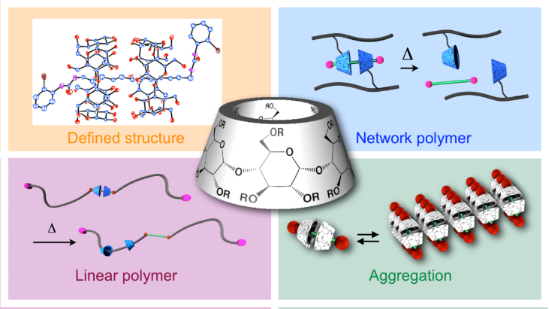
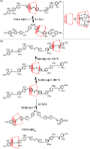
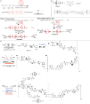
- fluorescence (Figure 15C,D). Namely, the fluorescence of the initial RCP in DMF was observed as a blue emission by the naked eye, while according to the degradation, the dumbbell species spread throughout the solution and the [3]rotaxane structure disappeared, resulting in the light green color fluorescence of






Tunable full-color dual-state (solution and solid) emission of push–pull molecules containing the 1-pyrindane moiety
Beilstein J. Org. Chem. 2024, 20, 3016–3025, doi:10.3762/bjoc.20.251

- Table S1 and Figure S1, Supporting Information File 1). The electronic absorption spectra were characterized by a pronounced maximum in the visible region centered at 431–448 nm. Emission maxima of compound 1c were more significantly affected by the change of polarity and ranged from 475 nm (blue-green
- 1 in toluene were characterized by a high fluorescence quantum yield, reaching 87.5% for the para-methoxy-substituted derivative 1c. Emission maxima in DMSO were found to be in the range of 506–721 nm (Figure 6, right), associated with a fluorescence color from green to red (Figure 7, bottom). The
- contrast to related compounds A (Figure 1), were characterized by solid-state emission (Table 4 and Figure 8). This was apparently caused by the presence of the dimethylene bridge, preventing intermolecular interactions. Emission maxima of compounds 1 ranged from 540–767 nm, namely from the green to the





