Search results
Search for "ligand" in Full Text gives 1053 result(s) in Beilstein Journal of Organic Chemistry. Showing first 200.
Recent advances in the electrochemical synthesis of organophosphorus compounds
Beilstein J. Org. Chem. 2025, 21, 770–797, doi:10.3762/bjoc.21.61
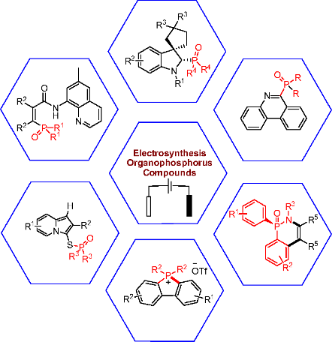
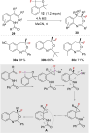
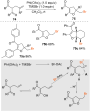
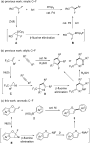
- . Studies showed that a Mn catalyst is critical for synthesizing derivatives of phenanthridine-based diarylphosphine oxides. The reaction yield decreased in the absence of the ligand, and eliminating both the ligand and manganese salt suppressed the reaction. Moreover, a slight decrease in the reaction
- carried out in a divided cell using platinum electrodes as the anode and cathode in the presence of pyridine as a base and ligand (Scheme 14). The catalyst behavior of palladium is attributed to its ability to form palladium clusters of specific sizes that exhibit high catalytic activity. However, this
- can lead to lower reaction yields because various reaction pathways, including those involving unstable metal-organic intermediates, may become involved. Cyclic voltammetry analysis in both solution and solid phases, using a carbon paste electrode (CPE), revealed that the nature of the bridging ligand


Development and mechanistic studies of calcium–BINOL phosphate-catalyzed hydrocyanation of hydrazones
Beilstein J. Org. Chem. 2025, 21, 755–765, doi:10.3762/bjoc.21.59
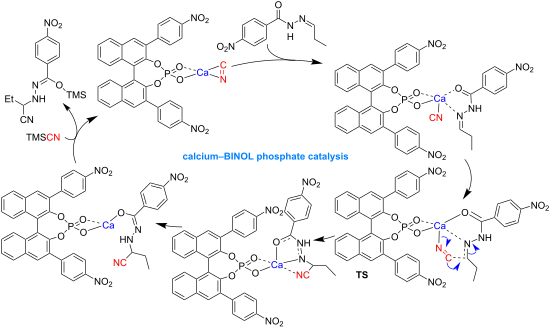
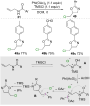
- BINOL phosphate/Ca(OiPr)2. In the presence of two equivalents of TMSCN, complex 4 gave a quantitative conversion to the product 2, whereby the phosphoric acid BIPO4-H ligand 3 did not catalyze this hydrocyanation. At room temperature, a nearly full conversion can already be achieved within 2–12 hours
- 4 for non-enantioselective hydrocyanation of hydrazone 1, we sought to demonstrate the enantioselective hydrocyanation by employing enantiopure BINOL phosphate 5 as ligand for calcium (Table 2). In order to compare the activity of this complex with that of BINOL phosphate 5 itself, as reported in
- reaction of the chiral ligand 5 with Ca(OiPr)2, varying the ratio from 2:1 to 6.6:1, respectively (Table 2, entries 1–3). The amount of calcium salt added influences the reaction yield, which decreases when the fraction of Ca(OiPr)2 is lowered (Table 2, entry 3), while the good enantioselectivity remains


Orthogonal photoswitching of heterobivalent azobenzene glycoclusters: the effect of glycoligand orientation in bacterial adhesion
Beilstein J. Org. Chem. 2025, 21, 736–748, doi:10.3762/bjoc.21.57
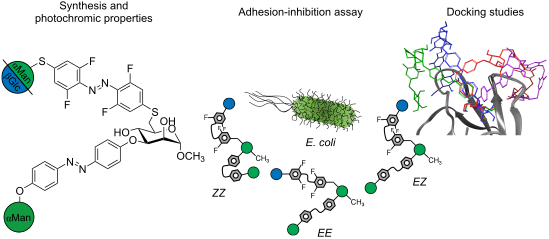
- glycophotoswitches in their different isomeric states led to new insights into the role of ligand orientation in carbohydrate recognition. The experimental results were underpinned by molecular modeling. Keywords: azobenzene glycoconjugates; carbohydrate recognition; docking; FimH; orthogonal photoswitching
- scaffold molecules, respectively [14][15], – differing inhibitory properties in carbohydrate-specific bacterial adhesion resulted. To further investigate the effect of relative ligand orientation in carbohydrate recognition, we and others have utilized photoswitchable glycoconjugates [16][17][18][19
- is specific for α-ᴅ-mannopyranosides [26][27][28]. As shown earlier, a Glc unit can enhance the affinity of the respective glycoconjugate to FimH when conjugated in an appropriate relative orientation to the Man ligand [14][15]. Therefore, it is of particular interest to compare the various isomeric


Synthesis of HBC fluorophores with an electrophilic handle for covalent attachment to Pepper RNA
Beilstein J. Org. Chem. 2025, 21, 727–735, doi:10.3762/bjoc.21.56
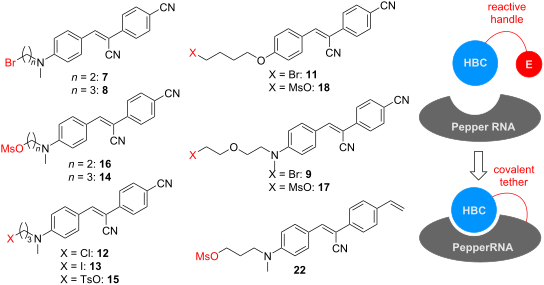
- are non-covalently bound to their fluorophore and despite high (usually nanomolar) binding affinities this can pose problems for RNA live-cell imaging. For instance, diffusion of the ligand and non-specific binding lead to unfavorable background and/or signal loss [10]. To address these problems, our
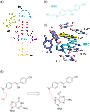
- fluorophore derivatives bind the Pepper aptamer with affinities in the low nanomolar range [12]. Crystal structure analyses revealed that in the ligand binding pocket, a characteristic hydrogen bond is formed between the hydroxy group of the N-hydroxyethyl substituent of HBC and the N7 of G41 [12][13]. We
- 14 (Figure 2). Synthesis of a bifunctional Pepper dye Encouraged by the efficient attachment of the bromo- and mesyloxypropyl-modified HBC fluorophores to the Pepper aptamer, we generated a bifunctional HBC ligand with a second handle that is available for bioorthogonal reactions. The original



Origami with small molecules: exploiting the C–F bond as a conformational tool
Beilstein J. Org. Chem. 2025, 21, 680–716, doi:10.3762/bjoc.21.54
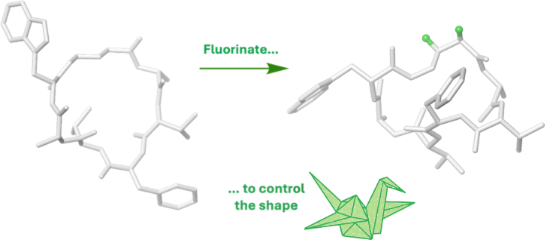
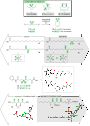
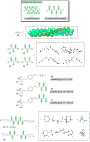
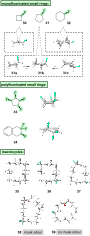
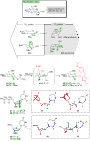
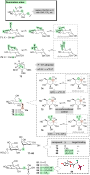
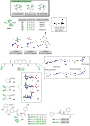
- each case, the conformational outcome is determined by an interplay between electrostatic effects (I, Figure 11), hyperconjugation (II, Figure 11), intramolecular H-bonding (III, Figure 11), and sterics. For example, consider the G-quadruplex ligand 94 (Figure 11). This molecule contains two








Asymmetric synthesis of fluorinated derivatives of aromatic and γ-branched amino acids via a chiral Ni(II) complex
Beilstein J. Org. Chem. 2025, 21, 659–669, doi:10.3762/bjoc.21.52
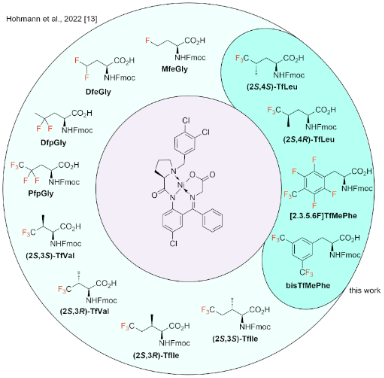
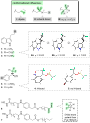
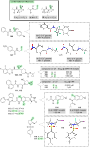
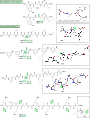
- temperature, the precipitated ligand was filtered and washed with H2O (15 mL). The filtrate was concentrated under reduced pressure to a volume of 30 mL. Again, the precipitated ligand was filtered and washed with H2O (15 mL). Both fractions of the ligand were united and dried in vacuo at 40 °C. To the
- (10.6 g, 12.8 mmol, 1.0 equiv) in DME (42.7 mL). The resulting mixture was stirred at 60 °C for 2 h. After cooling to room temperature, the precipitated ligand was filtered and washed with H2O (20 mL). The filtrate was concentrated under reduced pressure to a volume of 40 mL. Again, the precipitated
- ligand was filtered and washed with H2O (20 mL). Both fractions of the ligand were united and dried in vacuo at 40 °C. To the filtrate, MeCN (25.6 mL) and EDTA-Na2 (4.77 g, 12.8 mmol, 1.0 equiv) were added and the reaction mixture was stirred at room temperature for 2 h. Subsequently, the solution was


Recent advances in allylation of chiral secondary alkylcopper species
Beilstein J. Org. Chem. 2025, 21, 639–658, doi:10.3762/bjoc.21.51
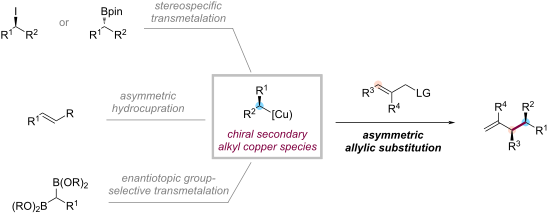
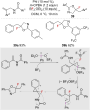
- the Li/I exchange is essential for preventing racemization of the configurationally labile organolithium intermediate. The subsequent transmetalation with CuBr·P(OEt)3 introduces P(OEt)3 as a supporting ligand, which plays a vital role in stabilizing the resulting chiral organocopper species 14. A key
- dependent on both the leaving group of the allylic electrophile and the choice of the supporting ligand. When (+)-1,2-bis{(2S,5S)-2,5-diphenylphospholano}ethane {(S,S)-Ph-BPE} (L1) was employed as the supporting chiral ligand, initially allylic chloride was found to provide the desired product 32 with
- phosphate. The absolute stereochemistry of the products was found to be consistent with that of previously reported CuH-catalyzed transformations using (S,S)-Ph-BPE (L1) as the supporting ligand, suggesting a common mode of stereoinduction. In parallel, Hoveyda and co-workers demonstrated the first copper




Photocatalyzed elaboration of antibody-based bioconjugates
Beilstein J. Org. Chem. 2025, 21, 616–629, doi:10.3762/bjoc.21.49
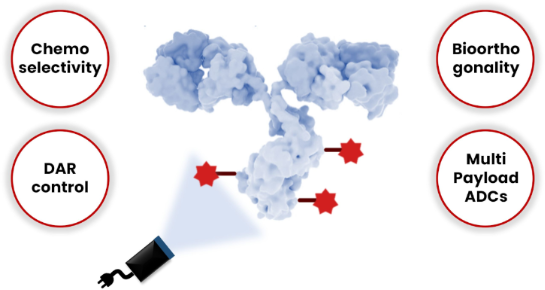
- functionalized ruthenium complex and a fragment crystallizable (Fc) ligand anchored to a magnetic bead, enabling the localized generation of singlet oxygen near antibodies (Figure 4B). The short lifetime and limited diffusion of singlet oxygen ensure exclusive reactions with proximal histidine residues. This
- researchers identified high-affinity binding sites for the ligand within the Fc domain. This structural analysis allowed precise determination of amino acid residue positions and orientations. Upon photoirradiation, the pLeu within the pFcBP generated a carbene from the diazirine moiety. This transformation


Total synthesis of (±)-simonsol C using dearomatization as key reaction under acidic conditions
Beilstein J. Org. Chem. 2025, 21, 601–606, doi:10.3762/bjoc.21.47
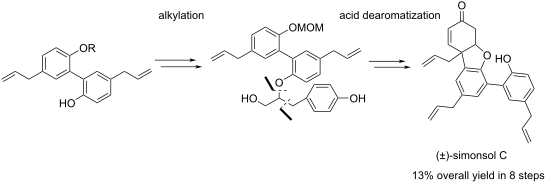
- alcohol 19 was isolated in 89% yield. The copper-catalyzed replacement of the bromine substituent in 19 with a hydroxy group was achieved in the presence of a catalytic amount of oxalamide ligand I [13]. This transformation is critical for enabling further functionalization and the reaction conditions


Formaldehyde surrogates in multicomponent reactions
Beilstein J. Org. Chem. 2025, 21, 564–595, doi:10.3762/bjoc.21.45
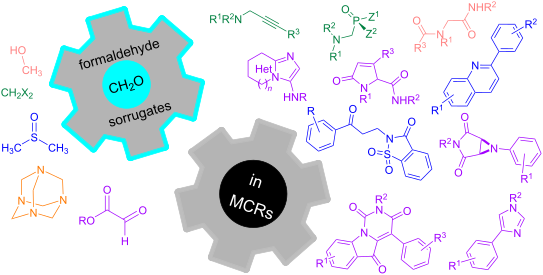
- addition) more temperature dependent. However, in the case of nickel catalysis, during AHA coupling, a suitable ligand, such as bipyridine, is needed for the in situ formation of a metal complex that activates the C–H and C–X bond [67]. The solvents used most in the AHA coupling are CH3CN [62][65][66][67


Synthesis of electrophile-tethered preQ1 analogs for covalent attachment to preQ1 RNA
Beilstein J. Org. Chem. 2025, 21, 483–489, doi:10.3762/bjoc.21.35
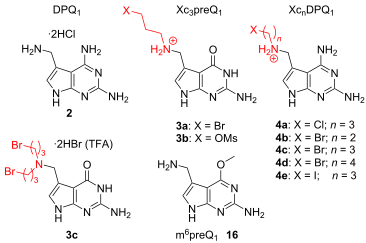
- an electrophilic handle for the covalent attachment of the ligand to the RNA. The simplicity of the underlying design of irreversibly bound ligand–RNA complexes has provided a new impetus in the fields of covalent RNA labeling and RNA drugging. Here, we present short and robust synthetic routes for
- mRNA domain, namely the preQ1 class-I riboswitch (preQ1-I) from Thermoanaerobacter tengcongensis. By rigorously analyzing the high-resolution structures available for this ligand–RNA complex, the approach exploits the natural, sequence-inherent reactivity hotspots of RNA and thus avoids the use of
- 3b in almost quantitative yield. The bis(3-bromopropyl)-modified ligand 3c was generated by heating preQ1 together with bis(3-hydroxypropyl)amine. It is noteworthy that the amine exchange reaction is thought to proceed via a purine methide intermediate [11]. Subsequent treatment of the diol with


Beyond symmetric self-assembly and effective molarity: unlocking functional enzyme mimics with robust organic cages
Beilstein J. Org. Chem. 2025, 21, 421–443, doi:10.3762/bjoc.21.30
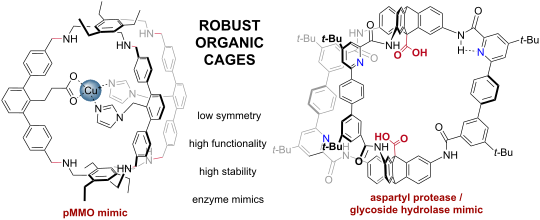
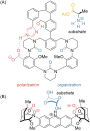
- formation possible in metal–ligand bonding provides chemists with a shortcut to access 3D scaffolds. When well-designed linkers and metals are combined, discrete cages emerge as the thermodynamic product (Figure 5A) [22][142][143][144]. Typically, rigid linkers are required to enforce geometry, although a
- compartmentalization of contrasting reactivities is possible to avoid such incompatibilities [189][199][200][201]. Likewise, the lability of metal–ligand dative bonds can make post-assembly modifications of MOCs challenging [202][203] – for instance it is difficult to lock the dative bonds in place, and reactions that
- chemistry [200]. “Switchable” metal-organic cages [212] use a stimulus like light to change ligand geometries. This often triggers disassembly since new geometries can lead to new thermodynamic minima, though where geometric changes are tolerated within the original structure the stimuli can trigger guest




Red light excitation: illuminating photocatalysis in a new spectrum
Beilstein J. Org. Chem. 2025, 21, 296–326, doi:10.3762/bjoc.21.22

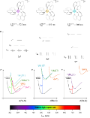
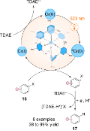
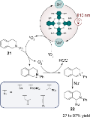
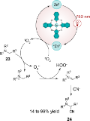
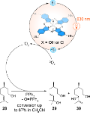
- and a given substrate or a sacrificial species. In the case of the metal-based complexes, the absorption band associated to the metal-to-ligand charge transfer (MLCT) is generally addressed even though other types of excitations like ligand-to-metal charge transfer, ligand- and metal-based excitation
- have been proven to be efficient in photoredox catalysis [9][10][11][12]. Actually, MLCT enables a charge separation for which the ligand-based electron can trigger a chemical reduction while the metal-centered hole, a chemical oxidation. This type of excitation is particularly enhanced in heavy metals
- , where the low-lying excited state often corresponds to the metal-to-ligand charge transfer (MLCT) transition. As the atomic number increases, relativistic effects become more pronounced, leading to the contraction of s and p orbitals while the d and f orbitals expand and become more diffuse. While these















Visible-light-promoted radical cyclisation of unactivated alkenes in benzimidazoles: synthesis of difluoromethyl- and aryldifluoromethyl-substituted polycyclic imidazoles
Beilstein J. Org. Chem. 2025, 21, 234–241, doi:10.3762/bjoc.21.15
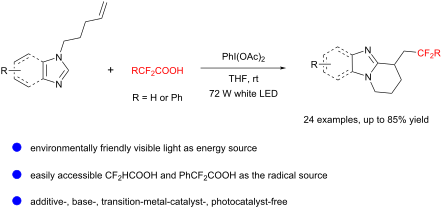
- mixture, which significantly impeded the progress of the desired reaction. Therefore, on the basis of the above experimental results and previous reports [21][27][28][29][30], we proposed a possible reaction mechanism (Scheme 3b), taking CF2HCOOH as the illustrative example. Initially, a double ligand


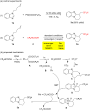
Dioxazolones as electrophilic amide sources in copper-catalyzed and -mediated transformations
Beilstein J. Org. Chem. 2025, 21, 200–216, doi:10.3762/bjoc.21.12
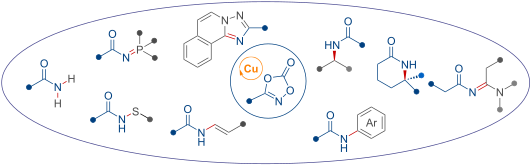
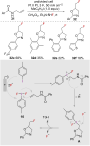
- , the Chang group elegantly unveiled a protocol for an enantioselective C–N bond formation, introducing δ-lactams from dioxazolones using a copper(I) catalyst and a chiral BOX ligand [74]. As shown in Scheme 2, dioxazolones containing aryl and heteroaryl groups were converted into the corresponding
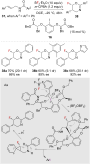
- conducted using a catalytic amount of copper acetate and a phenanthroline ligand, with a stoichiometric amount of silane serving as the reductant. Both aryl- and alkyl-substituted dioxazolones proved to be compatible under the standard reaction conditions, yielding the desired primary amides 28a–f. Notably


Recent advances in electrochemical copper catalysis for modern organic synthesis
Beilstein J. Org. Chem. 2025, 21, 155–178, doi:10.3762/bjoc.21.9

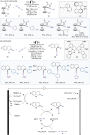
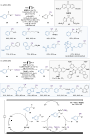
- decreasing the oxidation potential. A range of functional groups, such as halides, ethers, and heterocycles, were tolerated well, yielding the corresponding enantioenriched products 14 with high enantioselectivity in the presence of chiral bisoxazoline ligand L2. A possible mechanism is depicted in Figure 5
- quinine as a chiral ligand under standard conditions, the chiral product was obtained with a high yield and 79% ee. Enantioselective C(sp3)–H functionalization is an attractive strategy for synthesizing chiral molecules. Significant progress has been achieved in transition-metal-catalyzed asymmetric C–H
- . Subsequent intramolecular amine transfer to the radical cation intermediate 53, followed by ligand exchange, yields amination product 49 and Cu(I) species 55. Cu(II) catalyst 50 is regenerated by anodic oxidation, thereby completing the catalytic cycle. In 2019, Nicholls et al. reported a Cu-catalyzed








Nickel-catalyzed cross-coupling of 2-fluorobenzofurans with arylboronic acids via aromatic C–F bond activation
Beilstein J. Org. Chem. 2025, 21, 146–154, doi:10.3762/bjoc.21.8
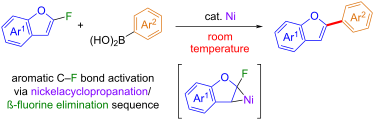
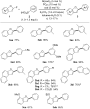
- catalyst, PCy3 (20 mol %) as a ligand, and K2CO3 (2.0 equiv) as a base, the desired arylated naphthofuran 3bb was obtained in 75% yield (Table 1, entry 1). Reducing the reaction temperature improved the yield of 3bb, reaching a quantitative yield when the reaction was performed at room temperature (Table 1



Cu(OTf)2-catalyzed multicomponent reactions
Beilstein J. Org. Chem. 2025, 21, 122–145, doi:10.3762/bjoc.21.7

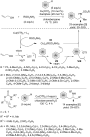
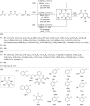
- known processes, a particular Mannich-type reaction was realized in water in the presence of a dendritic 2,2’-bipyridine ligand 2 and Cu(OTf)2 (Scheme 2) [16]. The hydrophobic ligand surrounding the metal revealed to be essential for the organic synthesis in water, thus increasing the reaction yields
- the coupling with copper triflate as catalyst, without ligand, co-catalyst or other additives. The reaction involved the formation of the imine XVII followed by alkynylation to propargylamine XVIII, cyclization, and oxidation to quinoline 23 (Scheme 17) [34]. Three component oxidative annulation to
- -methylthiazole-2-carboxaldehyde as chelating agent, in the presence of copper triflate and the chiral diamine ligand 28. The stereoselectivity was directed by the formation of a proposed catalyst complex 29 involving two molecules of Schiff base (Scheme 22) [39]. The three-component annulation of aldehydes






Recent advances in organocatalytic atroposelective reactions
Beilstein J. Org. Chem. 2025, 21, 55–121, doi:10.3762/bjoc.21.6
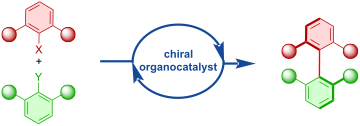
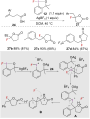
- transformed through a series of reactions to a diphenylphosphine group and used as a ligand for Pd-catalyzed reactions. De novo ring formation was utilized in the synthesis of N–N axially chiral N-pyrrolylindoles 98 and N-pyrrolylpyrroles 100 with the help of CPA C27 (Scheme 31) [55]. Starting from either
- a CPA to be used as an organocatalyst or to a phosphoramidite to be used as a chiral ligand. Testing these new structures on known stereoselective transformations, the authors achieved high yields and enantioselectivities (up to 98% yield and 97% ee). Wang et al. performed asymmetric (4 + 3






Emerging trends in the optimization of organic synthesis through high-throughput tools and machine learning
Beilstein J. Org. Chem. 2025, 21, 10–38, doi:10.3762/bjoc.21.3


Synthesis, structure and π-expansion of tris(4,5-dehydro-2,3:6,7-dibenzotropone)
Beilstein J. Org. Chem. 2025, 21, 1–7, doi:10.3762/bjoc.21.1
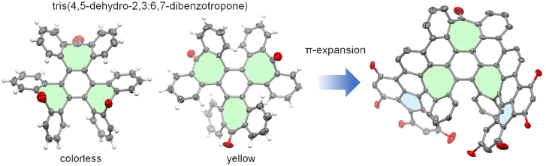
- yield of 90%. Then, the Ni-mediated Yamamoto coupling reaction of 6 enabled cyclotrimerization to give trione 1 in a yield of 30%. It is worth mentioning that using 1,10-phenanthroline as the ligand in the Yamamoto coupling [25][26] led to a higher yield of compound 1 than using 2,2’-bipyridine. With


Synthesis of acenaphthylene-fused heteroarenes and polyoxygenated benzo[j]fluoranthenes via a Pd-catalyzed Suzuki–Miyaura/C–H arylation cascade
Beilstein J. Org. Chem. 2024, 20, 3290–3298, doi:10.3762/bjoc.20.273
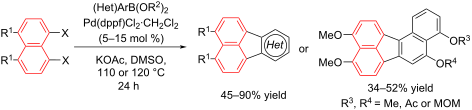
- ) ligand 4 were reported by Cowley and co-workers in 2010 [14]. In addition to heterocyclic fluoranthene analogues, highly oxygenated benzo[j]fluoranthenes are commonly encountered fungal natural products with important biological activities [15]. Bulgarein (5) is an example of such a benzo[j]fluoranthene


Intramolecular C–H arylation of pyridine derivatives with a palladium catalyst for the synthesis of multiply fused heteroaromatic compounds
Beilstein J. Org. Chem. 2024, 20, 3256–3262, doi:10.3762/bjoc.20.269
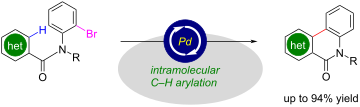
- % yield. The yield is improved to 94% when the reaction is performed with PPh3 as a ligand of palladium. The reaction is examined with amides derived from unsubstituted picoline, 6-methylpicoline, and 2,6-pyridinedicarboxylic acid in a similar manner to afford the cyclized products in 70%, 77%, and 87
- ; phosphine ligand; pyridine amides; Introduction Transition-metal-catalyzed synthetic reactions have recently attracted much attention in synthetic organic chemistry [1][2]. C–H Arylation reactions catalyzed by a transition metal are of particular interest because these reactions involve rather superior
- resulted in a decreased yield (27%) (Table 1, entries 4 and 5). It was found that increasing the amount of potassium carbonate to a three-fold excess improved the yield of 2a to 59% in the reaction at 110 °C shown in entry 6 of Table 1. Next, the effect of the ligand of the palladium catalyst was examined


Multicomponent reactions driving the discovery and optimization of agents targeting central nervous system pathologies
Beilstein J. Org. Chem. 2024, 20, 3151–3173, doi:10.3762/bjoc.20.261
- donepezil, employing a widely accepted tauopathy model in SH-SY5Y cells. Notably, compound 7a was identified as the most promising multitarget-directed ligand in the study, exhibiting superior neuroprotection compared to both MK-886 and the commercial drug donepezil in a cell viability MTT assay. These
- proposed as promising neuroprotective targets in several chronic progressive disorders such as AD and PD [51]. Recently, in 2023, Figuerola-Asencio et al. [52] synthesized a series of novel compounds derived from ML192, an antagonist ligand for GRP55. This receptor responds to certain cannabinoids
- , among others. Ugi reaction: The D2 dopamine receptor (DRD2) is the target of different drugs, including antipsychotics, antiparkinsonian agents, and addiction-related disorders. Aripiprazole and cariprazine are prototypes of newer antipsychotic drugs with a bitopic ligand structure, which includes both


Hypervalent iodine-mediated intramolecular alkene halocyclisation
Beilstein J. Org. Chem. 2024, 20, 3113–3133, doi:10.3762/bjoc.20.258
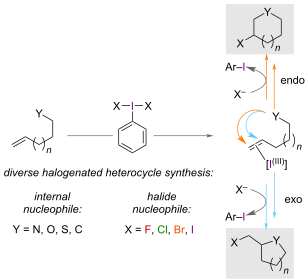
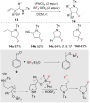
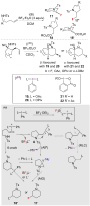
- proposed by the authors (Scheme 3). Activation of the HVI reagent by H-bonding leads to ligand exchange to give an aminofluoro iodonium intermediate A. Cyclisation occurs via nitrogen attack on the alkene to then give aziridinium intermediate B. Subsequent nucleophilic attack by fluoride on the more
- iodoarene difluoride 10 being generated from iodosylarene 9 (ArI=O) and HF, with iodosylarene itself generated by aryl iodide and m-CPBA. Ligand exchange of iodoarene difluoride with nitrogen and reaction with the alkene forms aziridinium intermediate A which, after nucleophilic attack by fluoride, forms
- (Scheme 10). The selectivity of the reaction was also found to be influenced by the presence of electrolytes like TBABF4, and the ligand attached to I(III). Carboxyfluorination was observed, in which a ligand from the iodane, e.g., OAc, OPiv or o-I-OBz, adds and was found to compete with fluoroamination