Search results
Search for "non-covalent interactions" in Full Text gives 112 result(s) in Beilstein Journal of Organic Chemistry.
Assembly of synthetic Aβ miniamyloids on polyol templates
Beilstein J. Org. Chem. 2015, 11, 2646–2653, doi:10.3762/bjoc.11.284
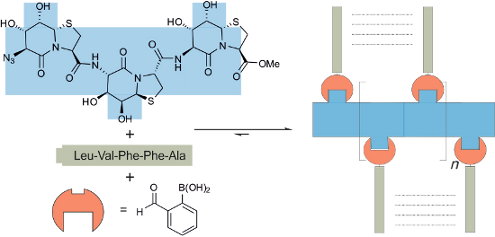
- the template limits the aggregation degree. a) Peptide boronic acids 1 and 2 are schematically shown as green sticks (peptide) with a red gripper (boronic acid) and the template is blue. The peptide must be short enough to prevent the fibrillation shown on the right. b) Non-covalent interactions


Aggregation behaviour of amphiphilic cyclodextrins: the nucleation stage by atomistic molecular dynamics simulations
Beilstein J. Org. Chem. 2015, 11, 2459–2473, doi:10.3762/bjoc.11.267
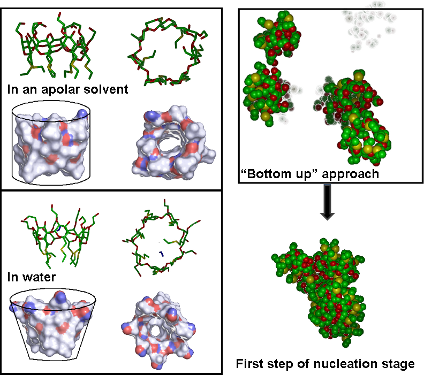
- place both in apolar solvent and in water in terms of the geometry of the aggregates and of their interaction energy in a given solvent. In the proposed approach the different shapes assumed by aCD and the non-covalent interactions with the solvent may lead to different macro-aggregates, either micelles


Size-controlled and redox-responsive supramolecular nanoparticles
Beilstein J. Org. Chem. 2015, 11, 2388–2399, doi:10.3762/bjoc.11.260
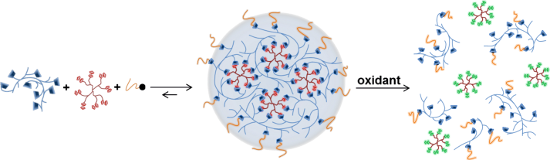
- nanostructured materials composed of molecular building blocks [1]. This fabrication strategy has been used to form supramolecular nanoparticles (SNPs) in which multiple copies of different building blocks interact via specific, non-covalent interactions [2]. They have the potential to be used in biomedical


Conformational equilibrium in supramolecular chemistry: Dibutyltriuret case
Beilstein J. Org. Chem. 2015, 11, 2105–2116, doi:10.3762/bjoc.11.227
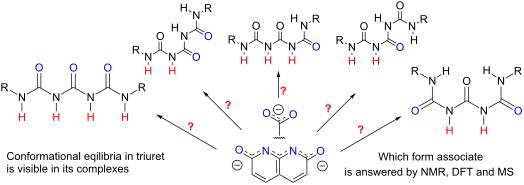
- ; hydrogen bonding; NMR; rotamerism; supramolecular chemistry; Introduction The hydrogen bond (HB) is one of the most common non-covalent interactions. Since it stabilizes, for example, the double helix of DNA and influences peptide folding it is quite reasonable to assume that HBing is crucial for
- [62][63] model of solvation (chloroform). The M05 functional suggested for non-covalent interactions [64][65] was used to sustain the methodology from our previous publications [9][10][50][66]. The Synchronous Transit-Guided Quasi-Newton method [67][68] has been used for optimization of the transition


Ru complexes of Hoveyda–Grubbs type immobilized on lamellar zeolites: activity in olefin metathesis reactions
Beilstein J. Org. Chem. 2015, 11, 2087–2096, doi:10.3762/bjoc.11.225
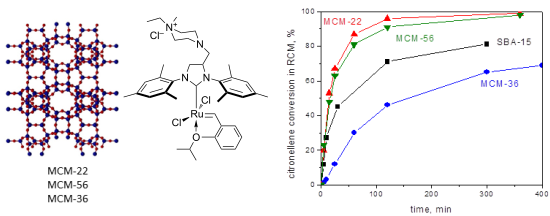
- developed [1][5][13]; most of them are based on surface modification by specially designed linkers providing covalent bond linkage between the support and Ru complex. Hoveyda–Grubbs type catalysts are also capable of direct (linker-free) immobilization by means of non-covalent interactions [8][14][15][16
- −) and their immobilization on silica, and mesoporous molecular sieves MCM-41 and SBA-15 [21]. XPS analysis revealed that complexes were attached to the surface by non-covalent interactions and both cationic and anionic parts were present on the surface. The hybrid catalysts prepared were active in RCM


Polythiophene and oligothiophene systems modified by TTF electroactive units for organic electronics
Beilstein J. Org. Chem. 2015, 11, 1749–1766, doi:10.3762/bjoc.11.191
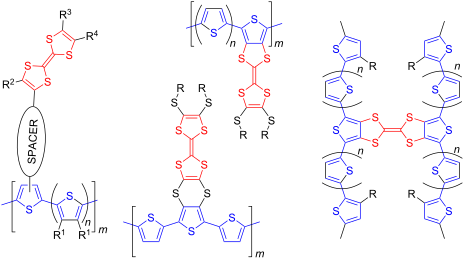
- system to 2D with a significant contribution from S···S non-covalent interactions [26]. This gave a record transition temperature among TTF mixed valence ambient pressure superconductors in the salt κ-(BEDT-TTF)2Cu[N(CN)2]Br [27]. In an attempt to create macromolecular compounds with multi-electron redox
- between thiophenes C and G is higher (18.36°) but the two S-atoms are involved in a weak non-covalent interaction with a distance of 3.81 Å between them. The strong π–π stacking interaction and the presence of multiple S–S non-covalent interactions in the H-shaped TTF-oligothiophene system 54 (n = 2) made


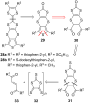


Thiazole-induced rigidification in substituted dithieno-tetrathiafulvalene: the effect of planarisation on charge transport properties
Beilstein J. Org. Chem. 2015, 11, 1148–1154, doi:10.3762/bjoc.11.129
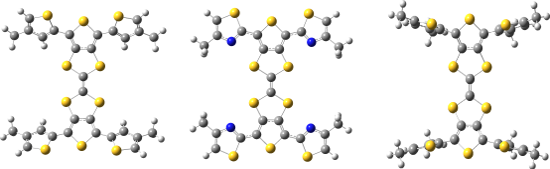
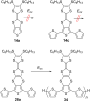
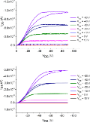
- demonstrated that the substitution of thiophene units for thiazoles was found to increase the observed charge transport, which is attributed to induced planarity through S–N interactions of adjacent thiazole nitrogen atoms and TTF sulfur atoms and better packing in the bulk. Keywords: non-covalent
- interactions; organic field effect transistor (OFET); organic semiconductors; tetrathiafulvalene; thiazole; Introduction The TTF moiety has received much attention in the field of organic electronics owing to its reliable redox behaviour [1], good charge transport properties [2] and scope for



Synthesis of photoresponsive cholesterol-based azobenzene organogels: dependence on different spacer lengths
Beilstein J. Org. Chem. 2015, 11, 1089–1095, doi:10.3762/bjoc.11.122
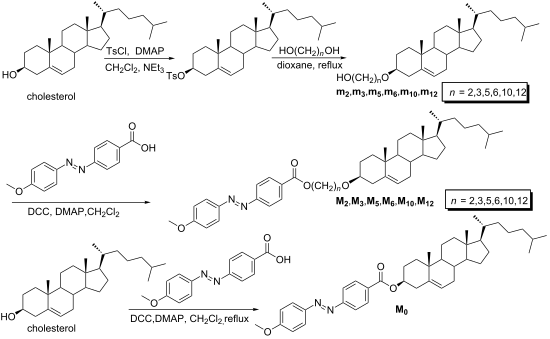
- ], etc. The driving force for the spontaneous formation of gel could be relatively non-covalent interactions such as π–π stacking [4][5][6][7], hydrogen bonding [7][8][9], dipole–dipole [10], and van der Waals interactions [11][12]. A series of cholesterol-based gelators were reported [13][14][15]. These


Mechanical stability of bivalent transition metal complexes analyzed by single-molecule force spectroscopy
Beilstein J. Org. Chem. 2015, 11, 817–827, doi:10.3762/bjoc.11.91
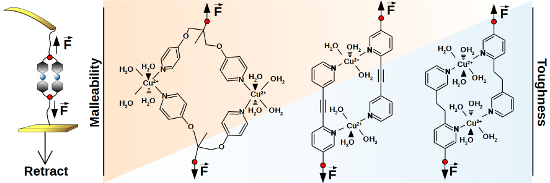
- important in biochemistry [1] and supramolecular chemistry [2], but still not fully understood on the level of individual non-covalent interactions [3]. Synthetic supramolecular systems are ideal for a quantitative analysis of multivalency on the level of single molecules, because specific ligand design can
- clamp motifs, as suggested by Sikora et al. [19]. For example, zipper-type unfolding requires less force than shear-type denaturation. However due to the high complexity of biological multivalent interactions less is known about the influence from individual non-covalent interactions. Here, well defined




Regulation of integrin and growth factor signaling in biomaterials for osteodifferentiation
Beilstein J. Org. Chem. 2015, 11, 773–783, doi:10.3762/bjoc.11.87
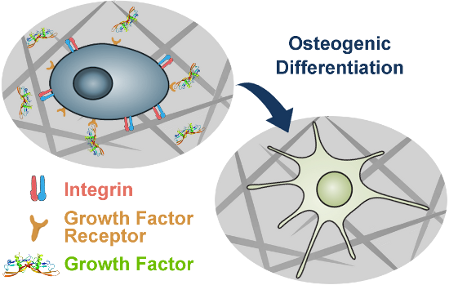
- , which can stimulate cell growth and differentiation, have also been employed for bone treatment [8][9]. Growth factors are water soluble proteins embedded in the ECM network mainly via non-covalent interactions with glycosaminoglycanes (GAG) [10]. Therefore, the ECM serves as a reservoir by establishing




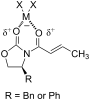
Diastereoselective and enantioselective conjugate addition reactions utilizing α,β-unsaturated amides and lactams
Beilstein J. Org. Chem. 2015, 11, 530–562, doi:10.3762/bjoc.11.60
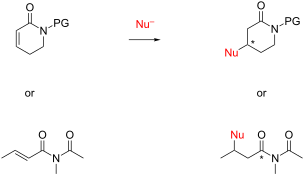
- available materials. Organocatalysts can be placed into two catagories: 1) catalysts that covalently attach themselves to the starting materials (e.g., enamine [269] and iminium [270] catalysis) and 2) catalysts that interact with the starting materials through non-covalent interactions (e.g., hydrogen




Release of β-galactosidase from poloxamine/α-cyclodextrin hydrogels
Beilstein J. Org. Chem. 2014, 10, 3127–3135, doi:10.3762/bjoc.10.330
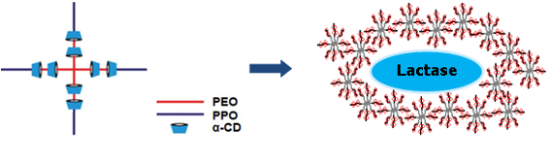
- are able to form host–guest complexes by the inclusion of hydrophobic molecules. Cyclodextrins also act as hosts in the formation of inclusion compounds with polymer chains through non-covalent interactions [10]. For instance, incorporation of 5% α-CD transforms dilute Tetronic solutions into gels


A one-pot multistep cyclization yielding thiadiazoloimidazole derivatives
Beilstein J. Org. Chem. 2014, 10, 2989–2996, doi:10.3762/bjoc.10.317
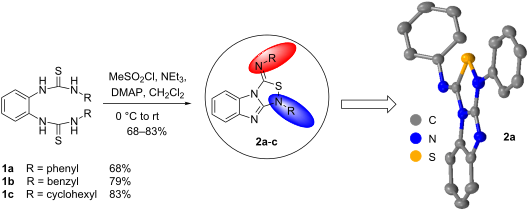
- with a 6-31G(d,p) basis set for hydrogen to include polarization on hydrogen and the 6-31G(d) basis set for the other main group elements using NWChem 6.3 [15]. During optimization, we utilized Grimme’s D3 dispersion [16] for a better description of non-covalent interactions like hydrogen bonding and π


Come-back of phenanthridine and phenanthridinium derivatives in the 21st century
Beilstein J. Org. Chem. 2014, 10, 2930–2954, doi:10.3762/bjoc.10.312

- shape, whereas the high polarizability (and permanent positive charge of N-5 alkylated derivatives) also plays an important role in aromatic and electrostatic interactions with polynucleotides. Moreover, non-covalent interactions with DNA and RNA can be reversibly controlled by a pH-induced positive
- allows the incorporation of considerably long substituents at 3,8- positions available for attachment to DNA and RNA and/or various additional non-covalent interactions with the polynucleotide backbone. The ethidium bromide incorporated as an artificial DNA base (18, Figure 9) at specific sites in duplex


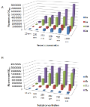
Synthesis and biological evaluation of novel N-α-haloacylated homoserine lactones as quorum sensing modulators
Beilstein J. Org. Chem. 2014, 10, 2539–2549, doi:10.3762/bjoc.10.265
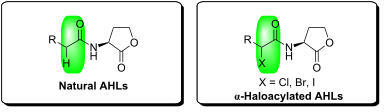
- with high structural deviation from the parent autoinducer [15]. In biological processes, covalent binding and non-covalent interactions are encountered in many protein-ligand interactions as well as in protein secondary structures and are of great significance. In the past years, it was shown that the



Towards the sequence-specific multivalent molecular recognition of cyclodextrin oligomers
Beilstein J. Org. Chem. 2014, 10, 2428–2440, doi:10.3762/bjoc.10.253
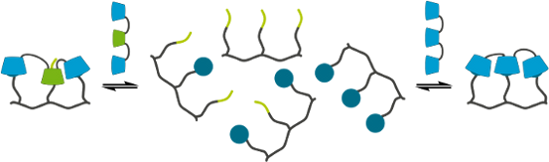
- -covalent interactions stable yet reversible systems are generated, which are responsive to external stimuli. These advantages have made synthetic multivalent systems interesting for a broad field of applications. In the case of medicinal applications multivalent molecules have been used as inhibitors of
- binding partner [1]. In recent years multivalency has been recognized to play a major role in almost all biological processes, e.g., the recognition of cells by other cells, bacteria or viruses, the adhesion of cells or signal transduction pathways [2]. By the combination of multiple, rather weak non


Molecular recognition of AT-DNA sequences by the induced CD pattern of dibenzotetraaza[14]annulene (DBTAA)–adenine derivatives
Beilstein J. Org. Chem. 2014, 10, 2175–2185, doi:10.3762/bjoc.10.225
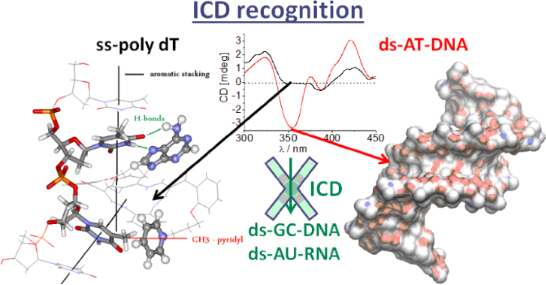
- /RNA intercalation, minor or major groove binding, and external electrostatic binding [1]. However, non-covalent interactions involving small molecules (Mw < 600) can only rely on a small number of interacting groups, while the steric parameters of DNA/RNA binding sites are also quite limited


Improving the reactivity of phenylacetylene macrocycles toward topochemical polymerization by side chains modification
Beilstein J. Org. Chem. 2014, 10, 1613–1619, doi:10.3762/bjoc.10.167
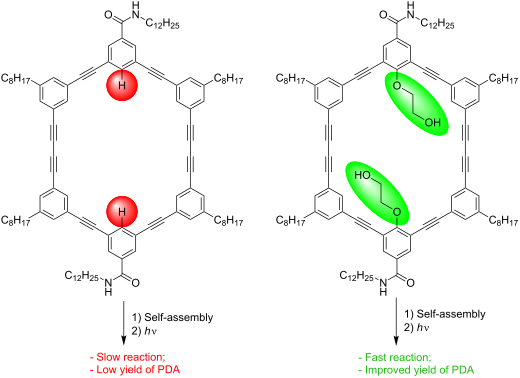
- ; phenylacetylene macrocycles; polydiacetylenes; topochemical polymerization; Introduction The self-assembly of molecular building blocks is an increasingly popular method for the preparation of new semiconducting materials. Rational design of building blocks and their assembly using non-covalent interactions can


Substitution effect and effect of axle’s flexibility at (pseudo-)rotaxanes
Beilstein J. Org. Chem. 2014, 10, 1299–1307, doi:10.3762/bjoc.10.131
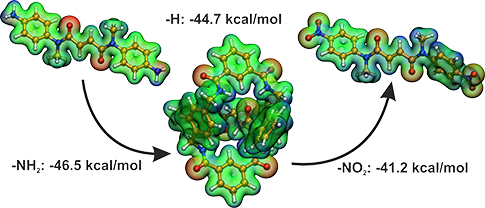
- non-covalent interactions between the axle and the wheel. Therefore, the understanding of these (mostly) attractive forces is crucial for the development of the field. Also, by understanding how one can modify or even tune the axle–wheel interplay, rotaxanes for different purposes can be designed
- enhancing the applicability of such materials. This study aims to understand rotaxanes with respect to its non-covalent interactions on the molecular level and to contribute to a more rational design of new molecular machines. Therefore, we investigated the energetics by substitution the rotaxanes with
- of non-covalent interactions. The distances R1, R2, and R3 are significantly smaller in the crystal compared to the gas phase structure. The torsion angles φ1 and φ2 describe the relative tilting between the flexible phenyl rings, which differs by more than 10° between crystal and gas phase. All


Conformational analysis of 2,2-difluoroethylamine hydrochloride: double gauche effect
Beilstein J. Org. Chem. 2014, 10, 877–882, doi:10.3762/bjoc.10.84
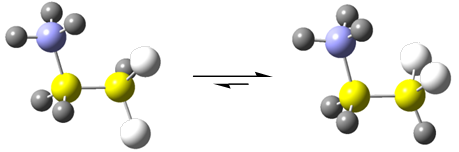
- bond. Likewise, the 'quantum' nature of this hydrogen bond (the nF→σ*NH interaction) is not detected by NBO analysis. However, the new non-covalent interaction (NCI) approach, which is based on the electron density and its derivatives, enables the identification of non-covalent interactions by means of

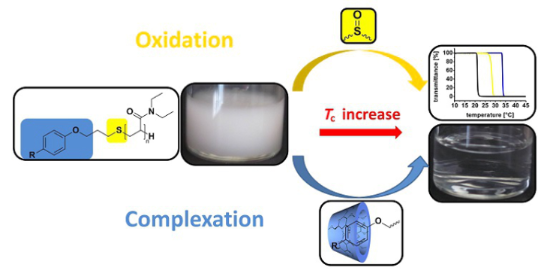
End-group-functionalized poly(N,N-diethylacrylamide) via free-radical chain transfer polymerization: Influence of sulfur oxidation and cyclodextrin on self-organization and cloud points in water
Beilstein J. Org. Chem. 2014, 10, 680–691, doi:10.3762/bjoc.10.61
- defined by J. M. Lehn in the 1970`s as “chemistry of the intermolecular bond” [1][2]. However, its origin goes back to Fisher`s “lock and key” model and also to Watson and Cricks description of the role of H-bonds in DNA double helical structures. Both examples represent the importance of non-covalent
- interactions in living systems [3][4]. Since then, the field of self-assembly through molecular recognition has attracted much attention also in the design of smart materials. In this context, cyclodextrins (CD) are of interest as ring shaped host molecules, e.g., for the design of stimuli-responsive hydrogels


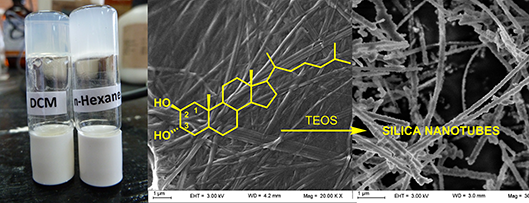
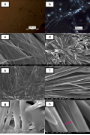
Self-assembly of 2,3-dihydroxycholestane steroids into supramolecular organogels as a soft template for the in-situ generation of silicate nanomaterials
Beilstein J. Org. Chem. 2013, 9, 1826–1836, doi:10.3762/bjoc.9.213
- , electrochemistry, light-harvesting materials and so on [1][2][3][4][5][6]. These small molecules self-assemble into regular supramolecular structures through non covalent interactions such as ion–ion, dipole–dipole, hydrogen bonding, π–π stacking, van der Waals, host–guest, and ion coordination, and in so doing


Computational study of the rate constants and free energies of intramolecular radical addition to substituted anilines
Beilstein J. Org. Chem. 2013, 9, 1620–1629, doi:10.3762/bjoc.9.185

- -pair wise potential is added to a standard DFT result [26]. A thorough energy benchmark study of various density functionals for general main group thermochemistry, kinetics and non-covalent interactions (GMTKN30 benchmark set) [27] showed that Zhao and Truhlar’s PW6B95 functional [28] in combination


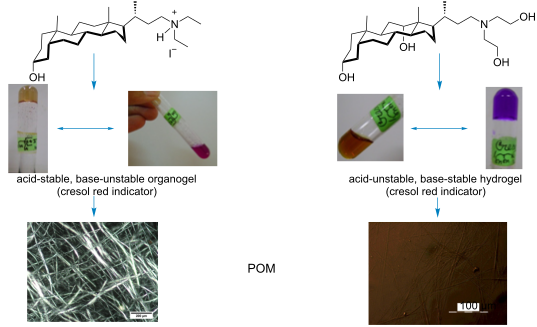
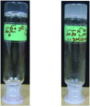
Protonation and deprotonation induced organo/hydrogelation: Bile acid derived gelators containing a basic side chain
Beilstein J. Org. Chem. 2011, 7, 304–309, doi:10.3762/bjoc.7.40
- -assembled structures form mainly due to weak non-covalent interactions such as hydrogen-bonding, van der Waals forces, π–π interactions, charge-transfer interactions etc. in organogels, whereas, in aqueous gels, the major driving force for aggregation is hydrophobic interaction [2]. A number of






Supramolecular FRET photocyclodimerization of anthracenecarboxylate with naphthalene-capped γ-cyclodextrin
Beilstein J. Org. Chem. 2011, 7, 290–297, doi:10.3762/bjoc.7.38
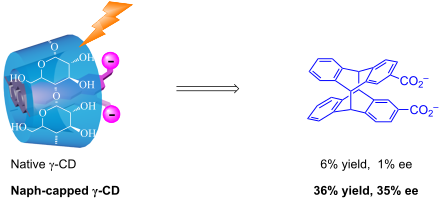
- non-covalent interactions in the ground state [4][5][6][7][8][9][10][11]. The geometrical and functional complementarity and the subsequent induced fit between chiral host and guest substrate should play a crucial role in determining the stereochemical fate of chiral photoreaction, and therefore the