


Search results
Search for "preparation" in Full Text gives 2117 result(s) in Beilstein Journal of Organic Chemistry. Showing first 200.
Convenient alternative synthesis of the Malassezia-derived virulence factor malassezione and related compounds
Beilstein J. Org. Chem. 2025, 21, 1730–1736, doi:10.3762/bjoc.21.135
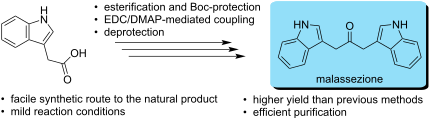
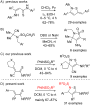
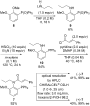
- -protected malassezione, which upon deprotection yields malassezione in an overall yield of ca. 20%. This is an improvement over the preparation of the isonitrile followed by an Fe hydride initiated isonitrile–olefin intramolecular coupling reaction, which generated malassezione with an overall yield of ca
- [20], or, more recently, (iii) prepared via an Fe hydride initiated isonitrile–olefin intramolecular coupling reaction (Scheme 1A) [18]. The reported synthetic route relies on an initial 4-step preparation of the isonitrile precursor, which was accomplished in an overall yield of ca. 14%. The
- subsequent iron-catalyzed reaction afforded 1 in only 35% yield. To avoid the low-yielding preparation of the isonitrile, we elected to use commercially available indole-3-acetic acid as the starting material, and to utilize an approach similar to that described for the synthesis of dibenzylketones from the


Approaches to stereoselective 1,1'-glycosylation
Beilstein J. Org. Chem. 2025, 21, 1700–1718, doi:10.3762/bjoc.21.133
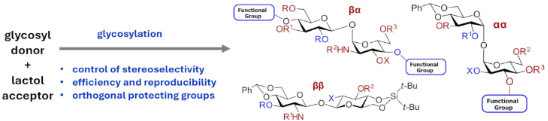
- review includes only the most relevant and recent developments in the preparation of α,α-linked 1,1'-glycosides. The review places particular emphasis on the synthesis of unsymmetrical trehalose derivatives, both with respect to the nature of the monosaccharide components (Glc, Gal, Man, GlcN, GalN, etc
- approach for the preparation of TMS-protected α-lactol acceptors was employed in the synthesis of a series of partially desymmetrized 1,1'-α,α-linked disaccharides (Scheme 13). 6-O-TBDPS-protected TMS-α-glucoside 161 was coupled with thioglycoside donor 160, furnishing the α,α-1,1'-disaccharide 162 with
- groups, particularly with regard to their type and positioning on the monosaccharide units. Other protocols allow for the preparation of highly desymmetrized 1,1'-disaccharides, albeit sometimes at the expense of only moderate isolated yields. Achieving stereoselectivity on the lactol acceptor side


Catalytic asymmetric reactions of isocyanides for constructing non-central chirality
Beilstein J. Org. Chem. 2025, 21, 1648–1660, doi:10.3762/bjoc.21.129
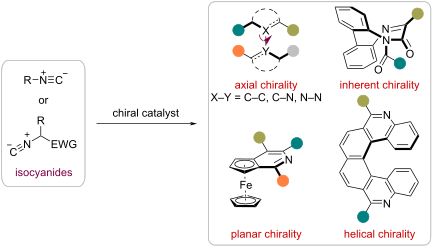
- ], insertion reactions [16][17][18], cycloaddition reactions (e.g., [4 + 1], [3 + 2]) [19][20], and others [21][22][23]. Particularly, isocyanides have been widely exploited toward the preparation of centrally chiral structures through transition-metal-catalyzed or organocatalytic asymmetric reactions [24][25
- substrates under the standard conditions (Scheme 4b). On one hand, such findings demonstrated that the second cyclization determines enantioselectivity; on the other hand, it provided a practical way to the preparation of unsymmetrical pyrido[6]helicenes 26. Isocyanide-based multicomponent reactions Except
- chiral catalyst. Central-to-axial chirality transfer In parallel with Zhu’s work, Du, Chen, and co-workers reported an alternative way for the preparation of axially chiral 3-arylpyrroles [41] through a catalytic asymmetric Barton–Zard reaction [42] via central-to-axial chirality transfer strategy [43




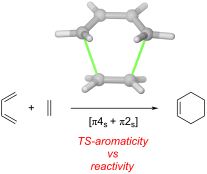
Transition-state aromaticity and its relationship with reactivity in pericyclic reactions
Beilstein J. Org. Chem. 2025, 21, 1613–1626, doi:10.3762/bjoc.21.125
- to the preparation of triazaphospholes and triazaarsoles, π-conjugated species with potential applications in materials science due to their luminescent properties [98]. However, these heavier alkyne analogues are typically kinetically unstable, which limits their use as dipolarophiles. Despite that


3-Aryl-2H-azirines as annulation reagents in the Ni(II)-catalyzed synthesis of 1H-benzo[4,5]thieno[3,2-b]pyrroles
Beilstein J. Org. Chem. 2025, 21, 1595–1602, doi:10.3762/bjoc.21.123
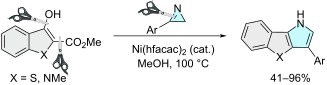
- reagents for the preparation of 3-aryl-substituted benzo[4,5]thieno[3,2-b]pyrroles by the annulation of the 1H-pyrrole ring to the benzo[b]thiophene system (Scheme 1, reaction 6). The behavior of indoles as aza-analogs of the benzo[b]thiophenes under the identified catalytic annulation conditions is also

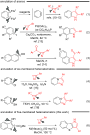


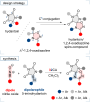
Facile synthesis of hydantoin/1,2,4-oxadiazoline spiro-compounds via 1,3-dipolar cycloaddition of nitrile oxides to 5-iminohydantoins
Beilstein J. Org. Chem. 2025, 21, 1552–1560, doi:10.3762/bjoc.21.118

- examples of oxindole/1,2,4-oxadiazole [20] and hydantoin/1,2,4-triazoline [22] spiro-compounds. Synthesis of dipolarophiles (5-iminohydantoins 2a–i). Preparation of the dipole precursors 4a–d. 32CA reactions of nitrile oxides with 5-iminohydantoins (synthesis of spiro-compounds 5a–l). Isolated yields are



Azide–alkyne cycloaddition (click) reaction in biomass-derived solvent CyreneTM under one-pot conditions
Beilstein J. Org. Chem. 2025, 21, 1544–1551, doi:10.3762/bjoc.21.117
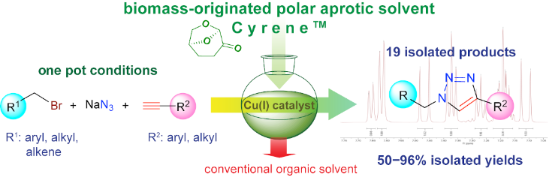
- further the applicability of the present synthetic method. Due to the excellent solvating power of CyreneTM, the “one-pot” synthesis of 1,2,3-triazoles could be proposed to eliminate the preparation and isolation steps of azide components. This could open an even greener and facile protocol for CuAAC


General method for the synthesis of enaminones via photocatalysis
Beilstein J. Org. Chem. 2025, 21, 1535–1543, doi:10.3762/bjoc.21.116
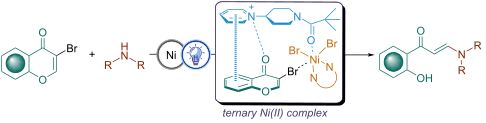
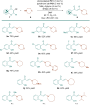
- act as both electrophiles and nucleophiles [7]. This makes enaminones very reactive, providing an excellent scaffold for organic synthesis. Thus, enaminones are valuable building blocks in the preparation of several carbocyclic [8][9][10][11], heterocyclic [12][13][14][15][16][17][18] as well as
- enaminones has attracted much attention over the past decades. Kuwano’s group described the synthesis of enaminones from ethyl ketones via a nickel-catalyzed selective β-amination (Scheme 1A) [31]. The preparation of enaminones can also be achieved by the reaction of aldehydes and calcium carbide in the




Ambident reactivity of enolizable 5-mercapto-1H-tetrazoles in trapping reactions with in situ-generated thiocarbonyl S-methanides derived from sterically crowded cycloaliphatic thioketones
Beilstein J. Org. Chem. 2025, 21, 1508–1519, doi:10.3762/bjoc.21.113
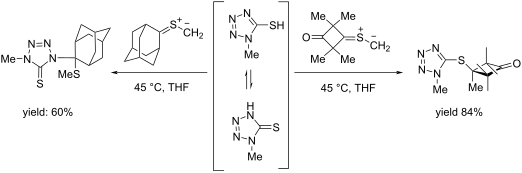
- ]-cycloaddition of respective thiocarbonyl dipolarophiles (preferably non-enolizable thioketones) with diazomethane, was demonstrated as a favorable method for their generation [5][6]. In the past three decades, 1,3-dipoles 1 have extensively been studied as useful building blocks for the preparation of various
- (for synthesis of 4b,c, and 4e, see ref. [15]). The solution of diazomethane (CH2N2) in pentane was prepared without distillation and determination of the concentration following a procedure described in an earlier publication [28]. Preparation of 2c as a new precursor of thiocarbonyl S-methanide 1c
- . Witczak (Wilkes University) for stimulating discussions in the course of preparation of the manuscript. Funding Financial support by the University of Łódź within the IDUB grant (2023-2024) is acknowledged (G.M.). The authors (A. O. and M. D.-B.) thank the Polish Ministry of Science and Higher Education


Highly distinguishable isomeric states of a tripodal arylazopyrazole derivative on graphite through electron/hole-induced switching at ambient conditions
Beilstein J. Org. Chem. 2025, 21, 1496–1507, doi:10.3762/bjoc.21.112
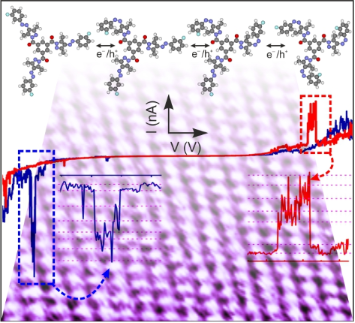
- experimental conditions. The choice of molecules that can be studied under ultra-high vacuum (UHV) is limited due to the requirement of their thermal stability and UHV compatible sublimation temperature. Therefore, the solution-based preparation method and solid-state measurements at ambient conditions hold
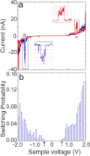
- accommodate ≈200 Tbits in a 1 cm2 area. Experimental Preparation of adlayer The FNAAP molecule is synthesized as per our previous report [29]. Ultra-thin films were prepared by drop casting from ethanolic solutions of molecules (concentration between 10−5 to 10−6 M) on freshly cleaved highly oriented



Heterologous biosynthesis of cotylenol and concise synthesis of fusicoccane diterpenoids
Beilstein J. Org. Chem. 2025, 21, 1489–1495, doi:10.3762/bjoc.21.111
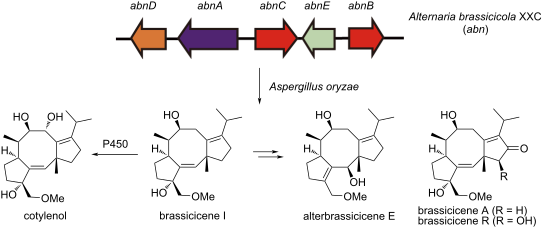
- diterpenoids, including alterbrassicicene E and brassicicenes A and R in 4 or 5 chemical steps from brassicicene I. This strategy lays the foundation for the preparation of fusicoccane diterpenoids and their analogues for biological studies. Keywords: cotylenol; fusicoccane diterpenoids; heterologous
- chemical steps. This work lays the foundation for the preparation of fusicoccane natural products and exploration of their biological activities. Selected fusicoccane diterpenoids and overview of this study. (a) Representative members of the fusicoccane diterpenoid family. (b) This work: heterologous


Photoredox-catalyzed arylation of isonitriles by diaryliodonium salts towards benzamides
Beilstein J. Org. Chem. 2025, 21, 1480–1488, doi:10.3762/bjoc.21.110
- bioactive compounds. According to the DrugBank there are more than 250 approved drugs classified as amides [2]. Just recently, between February 2021 and June 2022, sixteen anticancer drugs containing an amide bond have been approved by the U.S. FDA [3]. Consequently, the preparation of amides has garnered
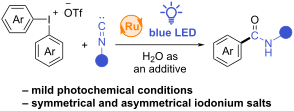
- low tolerance to sensitive functional groups. Due to these reasons, alternative routes toward the preparation of amides are still in great demand in modern synthetic chemistry [5]. The arylation of isonitriles was introduced nearly a decade ago as an alternative synthetic pathway for the preparation
- . Control experiments, Figure S20). Conclusion In conclusion, a novel synthetic methodology for the preparation of benzamides from isonitriles and diaryliodonium salts has been proposed utilizing visible-light photoredox ruthenium-based catalysis. Both symmetrical and unsymmetrical diaryliodonium salts were


Copper catalysis: a constantly evolving field
Beilstein J. Org. Chem. 2025, 21, 1477–1479, doi:10.3762/bjoc.21.109
- by Son and co-workers illustrates recent advancements in the use of dioxazolones in synthetic transformations with copper salts [4]. The authors remark that these catalytic systems, which employ dioxazolones as electrophilic amide sources, were applied for the preparation of diverse amidated products
- , who focus on the preparation of phenethylamines and phenylisopropylamines via reduction of substituted β-nitrostyrenes using a system of sodium borohydride and copper(II) chloride [9]. The transformations are performed in one pot and proceed under mild conditions. The β-nitrostyrene products could be
Microwave-enhanced additive-free C–H amination of benzoxazoles catalysed by supported copper
Beilstein J. Org. Chem. 2025, 21, 1462–1476, doi:10.3762/bjoc.21.108
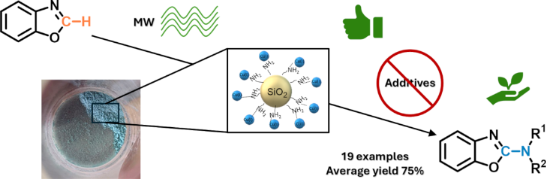
- anti-inflammatory activity [8]. Moreover, they can be applied in disorders of the central nervous system, such as insomnia and Alzheimer’s disease [9][10]. The preparation of 2-aminobenzoxazoles classically proceeds via cyclocondensation reactions from pre-functionalised precursors, or via the C2
- efficiency. In the context of the C2 amination of azoles, to the best of our knowledge, only a few studies [48][50] have explored this approach, suggesting significant opportunities for further development and improvement. Building on our previous experience in the preparation and characterisation of
- in the preparation (theoretical loading). This suggests that optimum catalyst distribution and activity is achieved with 5 wt % supported CuCl. The two catalysts were also characterised by FTIR and DR UV–vis spectroscopy, to obtain information about the grafted aminopropyl ligand and inserted copper



Reactions of acryl thioamides with iminoiodinanes as a one-step synthesis of N-sulfonyl-2,3-dihydro-1,2-thiazoles
Beilstein J. Org. Chem. 2025, 21, 1397–1403, doi:10.3762/bjoc.21.104
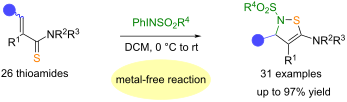
- Chemistry for Metals and Molecules, Department of Chemistry, KU Leuven, Celestijnenlaan 200F, Leuven B-3001, Belgium 10.3762/bjoc.21.104 Abstract A one-step method has been developed for the preparation of 2,3-dihydro-2-sulfonyl-3,4,5-substituted 1,2-thiazoles by the reaction of acryl thioamides and
- was synthesized. Experimental Thioamides 1a,f,g,l,r [19], 1b,c,d,e,j,u,x [20] and iodonium salts 2a [21] and 2f [22] were synthesized according to the previously described methods. The structures of all thioamides used in this study are provided in Supporting Information File 1. Preparation of
- precipitate was filtered off and washed with cold ethanol and diethyl ether. Preparation of 2-sulfonyl-2,3-dihydro-1,2-thiazoles 3 (general procedure). Method A. The corresponding thioamide 1 (1.0 equiv) and DCM (1 mL) was added to an oven-dried standard microwave vial with a volume of 10 mL. The resulting



High-pressure activation for the solvent- and catalyst-free syntheses of heterocycles, pharmaceuticals and esters
Beilstein J. Org. Chem. 2025, 21, 1374–1387, doi:10.3762/bjoc.21.102
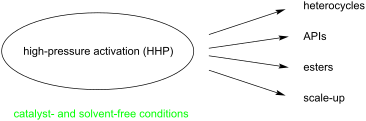
- hydrostatic pressure (HHP) was found to be an efficient activation method in several catalyst- and solvent-free reactions and has found application for the syntheses of heterocycles and the preparation of active pharmaceutical ingredients (APIs) via acylation and acid- and solvent-free esterification. The
- ][33][34][35], especially in the realm of high pressure chemistry [36][37], in the present work we demonstrate a variety of new, catalyst- and additional solvent-free applications of HHP to develop green synthesis methods. Here, we describe several cyclization reactions for the preparation of a variety


Oxetanes: formation, reactivity and total syntheses of natural products
Beilstein J. Org. Chem. 2025, 21, 1324–1373, doi:10.3762/bjoc.21.101
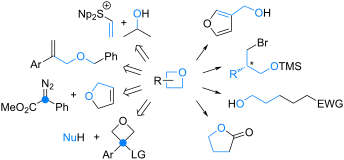
- is to provide a comprehensive review of oxetanes in terms of their preparation and synthetic utility. Because multiple reviews of similar formats covering literature up to late 2015 have already been published [12][32][33][34], we will discuss primarily the most recent advancements since the year
- intramolecular E2 elimination. Finally, the importance and power of the intramolecular Williamson etherification has also been demonstrated by the kilogram-scale synthesis of oxetane intermediate 41, which is a key intermediate in the preparation of the previously mentioned IDO1 inhibitor 2 (Scheme 9) [16
- a preparation of oxetanes via silicon-directed electrophilic cyclisation of homoallylic alcohols 49 (Scheme 12) [46]. The reaction was promoted by a bromonium cation and moderate to high yields of oxetanes 50 were obtained. The authors claim the reaction was diastereospecific for disubstituted








A multicomponent reaction-initiated synthesis of imidazopyridine-fused isoquinolinones
Beilstein J. Org. Chem. 2025, 21, 1161–1169, doi:10.3762/bjoc.21.92
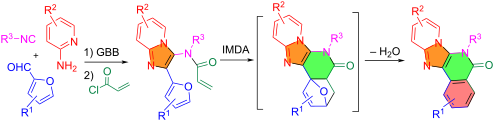
- R1 residue on the furan ring was found to have the most significant impact on the IMDA reaction. A bromine atom at the 3- or the 4-position resulted in products 8a–i in 66–86% yields, while a bromine atom or a methyl group at the 5-position inhibited the IMDA reaction in the preparation of 8j and 8k
- thiophene to reduce the diene's reactivity or altering the electrophilicity of the dienophile. Based on the computational analysis of the transition states, reaction mechanisms for the IMDA and the dehydration re-aromatization process are proposed in Scheme 5. In the IMDA reaction for the preparation of
- group on the imidazopyridine moiety have direct electronic impact on the IMDA reaction. This integrated reaction process provided a new avenue for the preparation of heterocyclic scaffolds with potential biological activity. Experimental General procedure for the synthesis of intermediates 4 and 6 The




Synthetic approach to borrelidin fragments: focus on key intermediates
Beilstein J. Org. Chem. 2025, 21, 1135–1160, doi:10.3762/bjoc.21.91
- ) attached to the allyl precursor 114. Iteration of this process required ozonolysis of 113, followed by its conversion to an organometallic intermediate 116, which was then reacted with allyl 114 to yield another deoxypropionate product, 117. The synthesis began with the preparation of the precursor chiral
- undesired oxidation to the corresponding phosphane oxide. The work continued with the preparation of the chiral organometallic reagent 124. Starting from known bromide 122, which was readily accessible from Roche ester (R)-121 [52] or 1,3-diol 123 [53][54] through literature procedures, the Grignard reagent
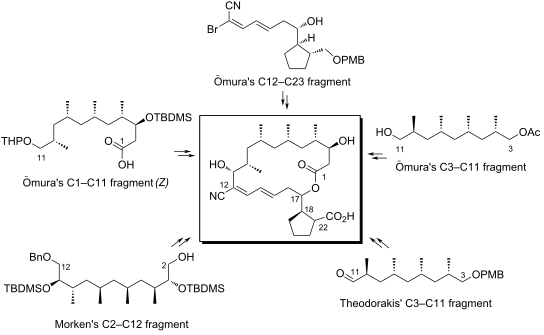
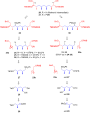
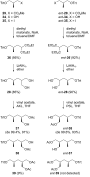
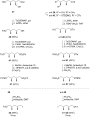
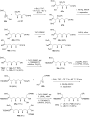
- applications in medicinal chemistry. Chemical structure of borrelidin (1). Synthetic strategy for Morken’s C2–C12 intermediate 20 as reported by Uguen et al. [41]. Preparation of monoacetates 37 and ent-38 by Uguen et al. [41]. Preparation of sulfones 27 and ent-27 by Uguen et al. [41]. Attempts to couple








Recent advances in synthetic approaches for bioactive cinnamic acid derivatives
Beilstein J. Org. Chem. 2025, 21, 1031–1086, doi:10.3762/bjoc.21.85
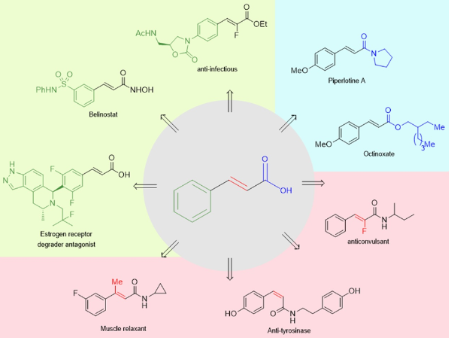
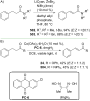
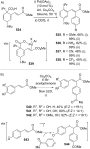
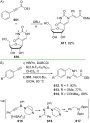
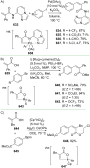
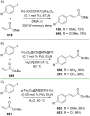
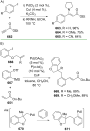
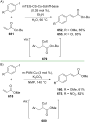
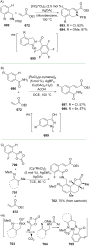
- Cinnamic acid derivatives represent a significant class of biologically active compounds exhibiting a broad spectrum of activities, such as antifungal, antidengue, antimetastatic, antimicrobial, antibacterial, and anticancer properties. Their preparation has attracted considerable attention due to their
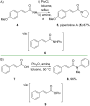
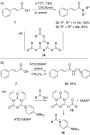
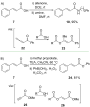
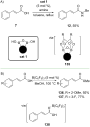
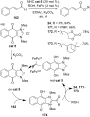
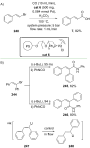
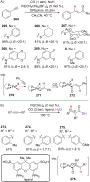
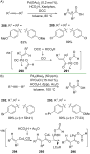
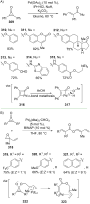
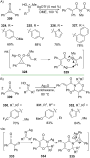
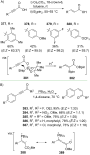
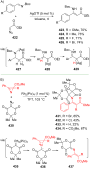
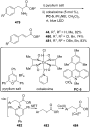
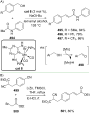
- reaction (143) to activate the isothiocyanate as the coupling partner (Scheme 44) [83]. On the other hand, nucleophile activation could also be achieved via a catalytic oxidation reaction. For instance, Ablajan and co-workers (2024) reported the preparation of phenyl cinnamate (24) starting from the acid
- with nucleophilic cinnamonitrile 149 to give benzocyclooctene 150 via iodonium intermediate 151 (Scheme 46) [86]. 2.2 Oxidative acylations Cinnamic ester or amide preparation could also be achieved by oxidizing cinnamyl alcohol, aldehyde, imine, and ketone as an alternative to the traditional O/N








































Biobased carbon dots as photoreductants – an investigation by using triarylsulfonium salts
Beilstein J. Org. Chem. 2025, 21, 1024–1030, doi:10.3762/bjoc.21.84
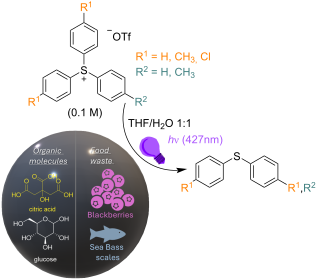
- carbon precursors, including citric acid, glucose, and two kinds of biowaste, namely bass scales and blackberry residues arising from the production of preserves and jams and furnished by Rigoni di Asiago s.r.l. The strategy employed for the preparation of CDs were pyrolysis and hydrothermal treatment


Pd-Catalyzed asymmetric allylic amination with isatin using a P,olefin-type chiral ligand with C–N bond axial chirality
Beilstein J. Org. Chem. 2025, 21, 1018–1023, doi:10.3762/bjoc.21.83
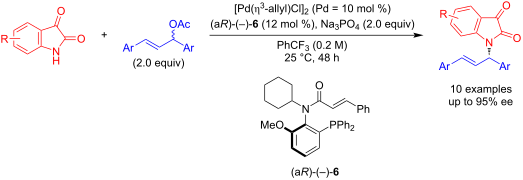
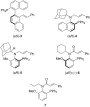
- further conversion of (S)-13a into the malononitrile derivative (S)-16 without loss of optical purity. Compound 1 and 2. Chiral ligands 3–7. Preparation and optical resolution of 7. Pd-catalyzed asymmetric allylic amination of acetate 12 (Ar = Ph) or 15 (Ar = p-ClC6H4) with isatin derivatives 11 using (aR




Studies on the syntheses of β-carboline alkaloids brevicarine and brevicolline
Beilstein J. Org. Chem. 2025, 21, 955–963, doi:10.3762/bjoc.21.79

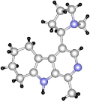
- their accessibility for pharmacological measurements. Results and Discussion In the present study, we aimed to develop a novel, scalable synthesis of brevicarine (2) and an alternative synthetic approach for the preparation of brevicolline (1), both based on the common key intermediate 3 [9]. The
- has been elaborated rendering the preparation of larger amounts of the target compound possible. NMR data of brevicarine base and dihydrochloride salt were fully assigned for a further confirmation of their structure. In the course of the unsuccessful attempts for a new synthesis of brevicolline, we
- nitrovinylindole 19. New synthesis variants for the preparation of brevicarine alkaloid (2) and its synthetic derivative N-methylbrevicarine (27). Preparation of carbamate 28 and subsequent reduction with LiAlH4. Experiments for the synthesis of racemic brevicolline ((±)-1), and formation of unexpected products


A convergent synthetic approach to the tetracyclic core framework of khayanolide-type limonoids
Beilstein J. Org. Chem. 2025, 21, 926–934, doi:10.3762/bjoc.21.75
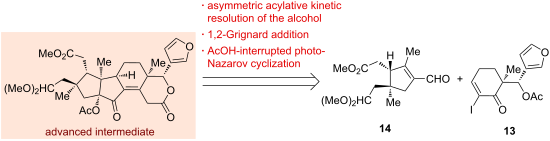
- essential tertiary alcohol at C1. The β-hydroxylactone moiety (D ring) in 11 could be introduced through an intramolecular aldol condensation [35] of acetate 12. Ultimately, the preparation of 12 could be traced back to aldehyde 14 through 1,2-Grignard addition with an organomagnesium reagent [36] prepared
- from α-iodoenone 13. Our synthesis began with the preparation of α-iodoenone 13 (Scheme 2). The α-monomethylation of cyclohexenone 15 was efficiently carried out with LDA, HMPA, and MeI [37], producing enone 16 in 78% yield. Subsequently, a diastereoselective aldol reaction between 16 and 3-furaldehyde




Recent advances in the electrochemical synthesis of organophosphorus compounds
Beilstein J. Org. Chem. 2025, 21, 770–797, doi:10.3762/bjoc.21.61
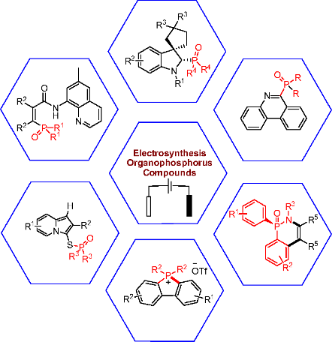
- electrosynthesis as a green, precise, and low-cost method to prepare phosphorous structures. Keywords: electrosynthesis; green synthesis; organophosphorus compounds; P–C bond formation; P–heteroatom bond formation; Introduction The electrochemical synthesis is a valuable and beneficial method for the preparation
- the gram-scale preparation of some samples. An electrochemical flow system was used in this method, in which carbon and platinum electrodes were used as the anode and cathode, respectively, at a constant current of 55 mA (Scheme 8). Due to the steric hindrance caused by the tert-butyl group, the
- )(OR)2. The final product was formed by a simple nucleophilic substitution of the phosphorus center (Scheme 20). The N–P bond formation is a critical process in organic synthesis due to the preparation of various materials with different biological and medicinal activities. In 2021 Wang et al. [65





